• Skip to main content
  • Skip to primary sidebar
  • Home
  • News
  • Featured
  • More News ⌄
    • SatNews
    • SatMagazine
    • MilSatMagazine
  • Events ⌄
    • MilSat Symposium
    • SmallSat Symposium
    • Satellite Innovation
  • Contacts
  • SUBSCRIPTION

SmallSat News

You are here: Home / Archives for editorial

editorial

Congress desires LEO, but threats are real

December 1, 2025 by editorial

Chris Forrester — Just before the holiday the U.S. Congressional Research Service (a non-partisan research operation) released a study which addressed the potential to bridge the ‘digital divide’. There are filings with the International Telecommunication Union for some 1 million proposed non-Geosynchronous Orbit (GSO) satellites. This means multiple headaches for the regulators and existing operators.

Most recent work in the U.S. and in other developed countries have concentrated their efforts by boosting terrestrial connectivity with fibre — increasingly to the home — and ensuring that if ‘hard-wired’ telcos cannot reach the home then cellular operators can bridge the gap.

But if there’s no cellular then remote communities and business and individual users can only depend on satellite, and in the recent past there have been a handful of perfectly satisfactory suppliers in the shape of ViaSat, Iridium, Intelsat/SES, EchoStar/Hughes, Iridium and Globalstar/Apple to step into the void, albeit at a price!

Now there’s Starlink and Eutelsat’s OneWeb, and during 2026 there will be rival satellite systems from AST SpaceMobile and Amazon Leo as well as the likes of Lynk Global and by 2027 Canada’s Lightspeed to provide competition and connectivity. Then there’s potential constellations from Viasat/Space42 and Greg Wyler’s E-Space as well as those from China and Russia.  But adding tens of thousands of new orbiting satellites poses extreme risks, says a new highly detailed and comprehensive 160-page report from investment firm Summit Ridge Group (SRG).
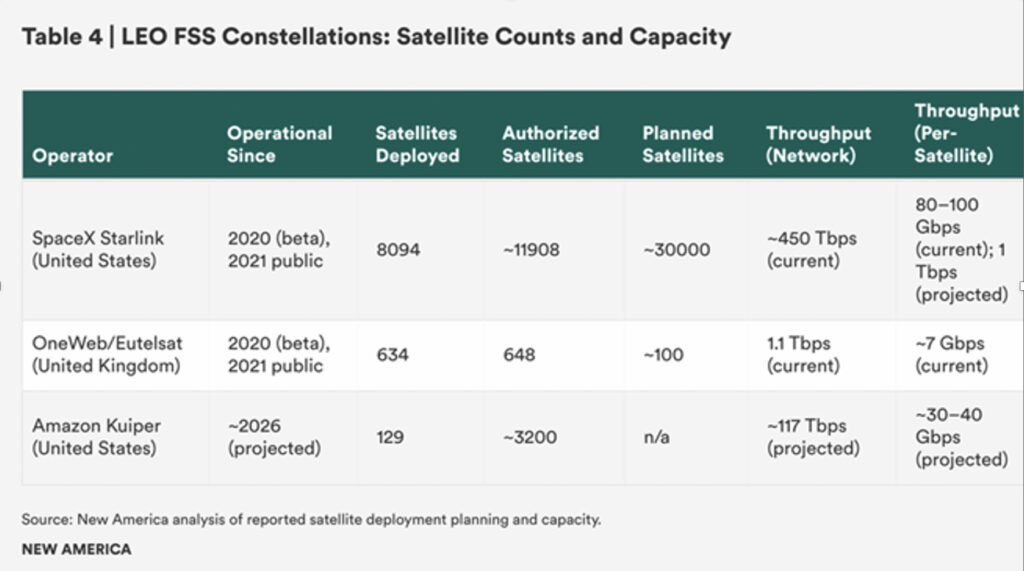
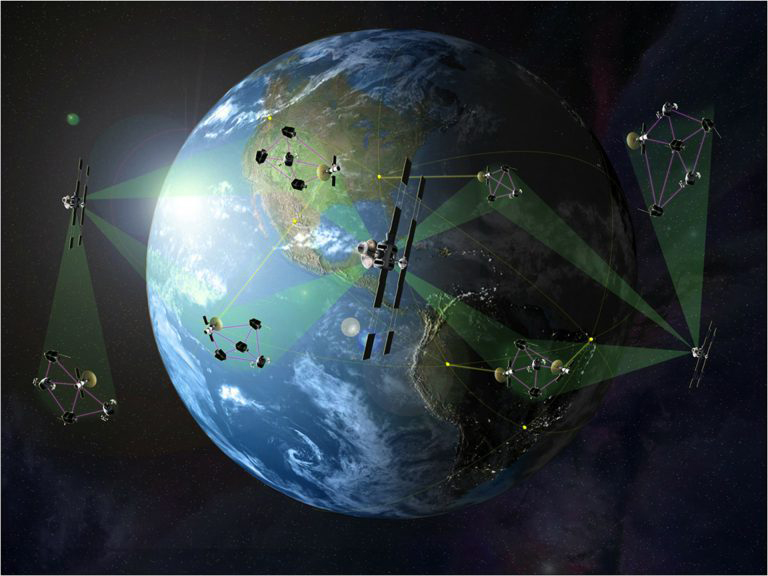
SRG cautions that orbital space in Low Earth Orbit (LEO) is becoming increasingly crowded with communication satellites, and policy developments have simply failed to keep up. This report, prepared by the LEO Policy Working Group, seeks to provide policymakers with a forward-looking assessment of the evolving risks in space.

The study highlights three central themes that U.S. policymakers will need to address:
(1) enabling effective spectrum sharing and coexistence
(2) fostering a sustainable competitive environment in a rapidly evolving industry; and
(3) optimizing LEO connectivity’s role in closing the digital divide.

SRG’s work started some years ago and followed on from a series of Round Tables and the establishing of the LEO Satellite Forum. Over the past year, Wireless Future and ICLE brought together stakeholders with industry, public policy, academic, and regulatory expertise to explore the challenges facing the development and deployment of LEO satellites for universal connectivity.

The Forum has a distinguished panel of highly qualified members and top of their list of findings is that the current satellite-licensing system is overly slow, bespoke, and burdensome. “It could be improved by a shift to clear, uniform ex ante rules and conditions, with targeted ex post enforcement as needed. Second, the report endorses a new U.S.-led framework for satellite spectrum sharing, allowing higher power and more extensive spectrum access for LEOs in shared bands. Finally, a robust spectrum pipeline is needed to create far greater spectrum availability for both fixed satellite service (FSS) and mobile satellite service (MSS), which can be achieved through modern interference protection frameworks, coordinated sharing, and allocating more bands for satellite use.”

The report talks extensively of the threat to the existing satellite players from “foreign entities”. The report says: “In contrast to terrestrial broadband or other communications sectors where private demand has primarily set the pace,

 LEO competition has been significantly shaped from the outset by state sponsorship, subsidies, and strategic mandates. At the same time, even private commercial systems controlled by foreign interests may pose a threat to these same political economy considerations, given long-standing concerns of foreign infrastructure and its tension with national security.”

These threats do not only mean the risks from (say) Chinese or Russian interference. There are many Mid-East countries, for example, where citizens are restricted from accessing non-local websites. The report says that this means LEO cannot be understood as a textbook competitive market; it is instead a hybrid arena where “strategic statecraft and economics continually overlap […] and distorts the market away from free-market competition.”

The FCC has promised to speed up its regulatory examinations of all satellite activity, but the pressures are considerable. The SRG study reminds readers that currently the FCC’s ‘in-tray’ holds an unprecedented number of LEO constellations which have been proposed in recent years. “Across four separate regulatory proceedings, over 20 entities have sought a license to provide FSS operations to the U.S. market alone. More than half of these planned systems have either been authorized or remain pending before the FCC. More broadly, filings before the ITU now reference more than one million proposed non-geostationary satellites. While the eventual realization of these proposed systems could reduce market concentration, such an outcome remains uncertain in the foreseeable future.”
Filed Under: Featured, News

SpaceX Forges Ahead with Transporter-15

December 1, 2025 by editorial

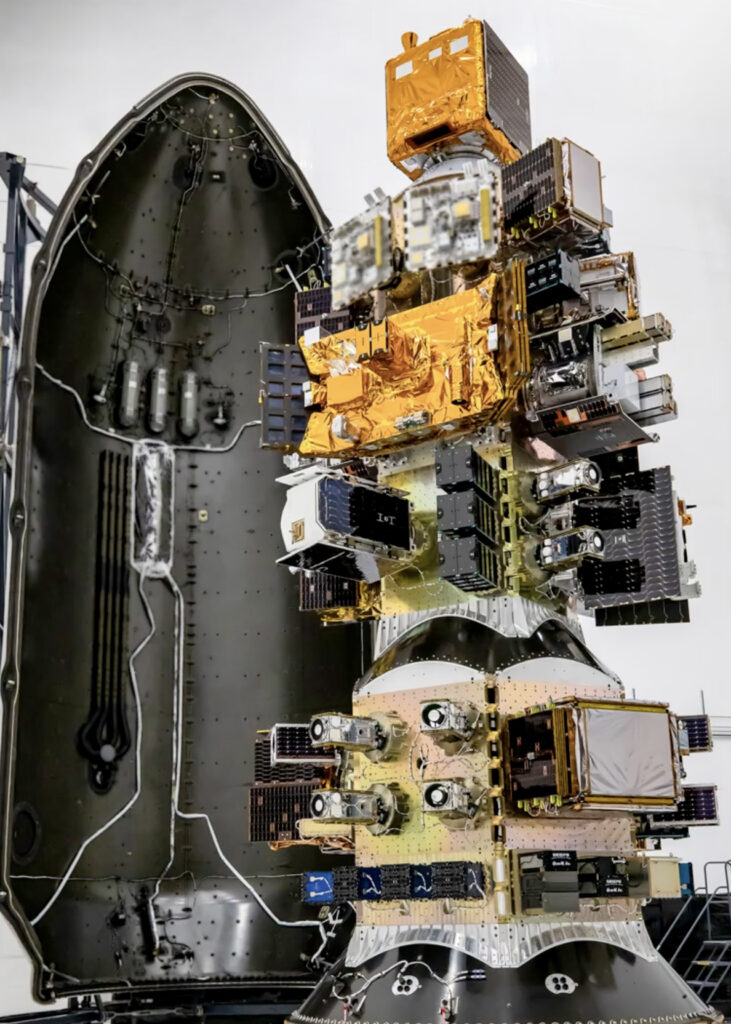
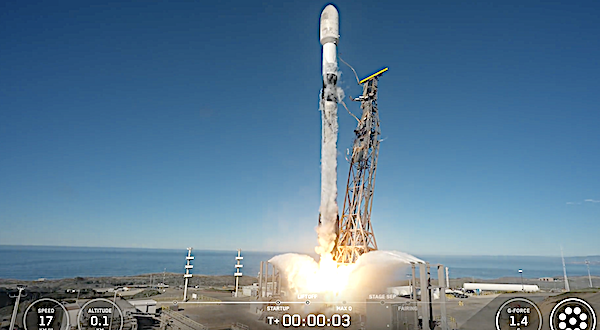
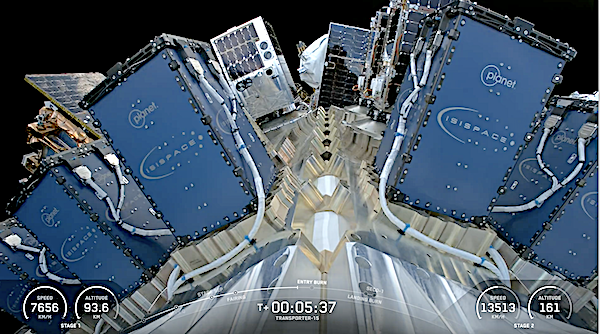
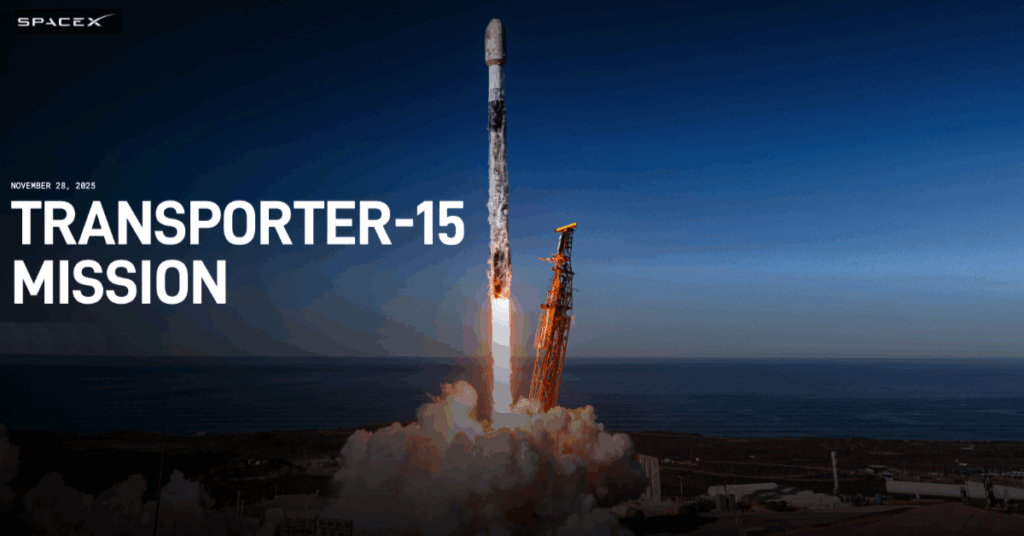
The SpaceX Transporter-15 rideshare mission successfully launched on Friday, November 28, 2025, from Vandenberg Space Force Base in California, carrying 140 small satellites into a sun-synchronous orbit. 

The mission, the 19th dedicated smallsat rideshare flight for SpaceX, deployed a diverse manifest of 140 payloads for a global customer base, making it one of the largest small-satellite deployments ever. Payloads included: 

  • Earth Observation Satellites: 
  • Environmental Monitoring: Satellites were deployed for monitoring Earth’s water cycle and other environmental factors.
  • Scientific and Commercial Payloads: 
  • Integrators: Key payload integration providers included Exolaunch, which managed the deployment of 59 satellites, and SEOPS Space, which deployed 11 spacecraft. 

The Falcon 9 rocket lifted off at 10:44 a.m. PST (1:44 p.m. EST / 18:44 UTC) on November 28, 2025, from Space Launch Complex 4E (SLC-4E) at Vandenberg Space Force Base, California.

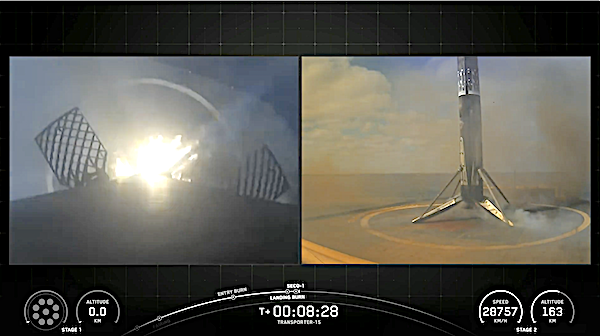
A flight-proven Falcon 9 first stage booster (B1071) completed its 30th flight before landing successfully on the “Of Course I Still Love You” droneship in the Pacific Ocean.

Payloads included Taiwan’s Formosat-8A, the first in a planned eight-satellite remote-sensing constellation. Planet Labs also deployed multiple Flock 4H satellites for Earth imaging.

In addition to Formosat-8A and the Planet Labs satellites, the SpaceX Transporter-15 mission carried a diverse manifest of other notable scientific and commercial payloads, including: 

  • Mauve: A commercial astronomy satellite developed by UK startup Blue Skies Space, carrying a small ultraviolet telescope to study stellar flares and young stars hosting exoplanets.
  • Varda Space Industries’ Winnebago-5 (W-5): A re-entry capsule designed to process pharmaceuticals in microgravity and return them to Earth, using a NASA-developed C-PICA thermal protection system.
  • D-Orbit’s ION Satellite Carriers: The mission deployed two Orbital Transfer Vehicles (OTVs), named Galactic Georgius and Stellar Stephanus, which carried multiple customer satellites and hosted payloads, including the Italian optical intersatellite link (OISL) mission for the European Space Agency (ESA).
  • NASA-funded CubeSats: These included the R5-S7, a technology demonstration satellite from NASA’s Johnson Space Center for rapid, low-cost technology prototyping, and the 3UCubed-A satellite, a collaboration between multiple universities to measure precipitating electrons and UV emissions in Earth’s auroral regions.
  • CTC-1: Three satellites built by Space Telecommunications Inc. to test “Spacecoin,” a communications protocol that uses blockchain technologies for secure communications.
  • Black Kite-1 (RIoT-1): An 8U satellite from Taiwan’s Rapidtek, part of a project to establish a prototype constellation for global IoT (Internet of Things) communications.
  • Umbra-11: Another synthetic aperture radar (SAR) spacecraft for Umbra, an Earth imaging company providing high-resolution radar data.
  • ESA’s WISDOM mission: Supported by ESA’s NAVISP program, this 6U satellite will demonstrate collision avoidance and safe deorbiting capabilities by separating into two smaller CubeSats in orbit. 

The successful mission underscores the efficiency and high cadence of SpaceX’s rideshare program, offering affordable and flexible access to space for numerous organizations worldwide. For further information on the mission and SpaceX’s launch services, please visit the SpaceX website.

Images via SpaceX

Filed Under: News

AAC Clyde Space to advance next-generation on-board computer

December 1, 2025 by editorial

AAC Clyde Space has been awarded SEK 4.7 million from the ESA Phi-Lab Sweden program to develop the foundation for its next-generation on-board computer. The work will be carried out by AAC Clyde Space in Uppsala, together with its subsidiary Spacemetric in Sollentuna and the KTH Royal Institute of Technology in Stockholm.

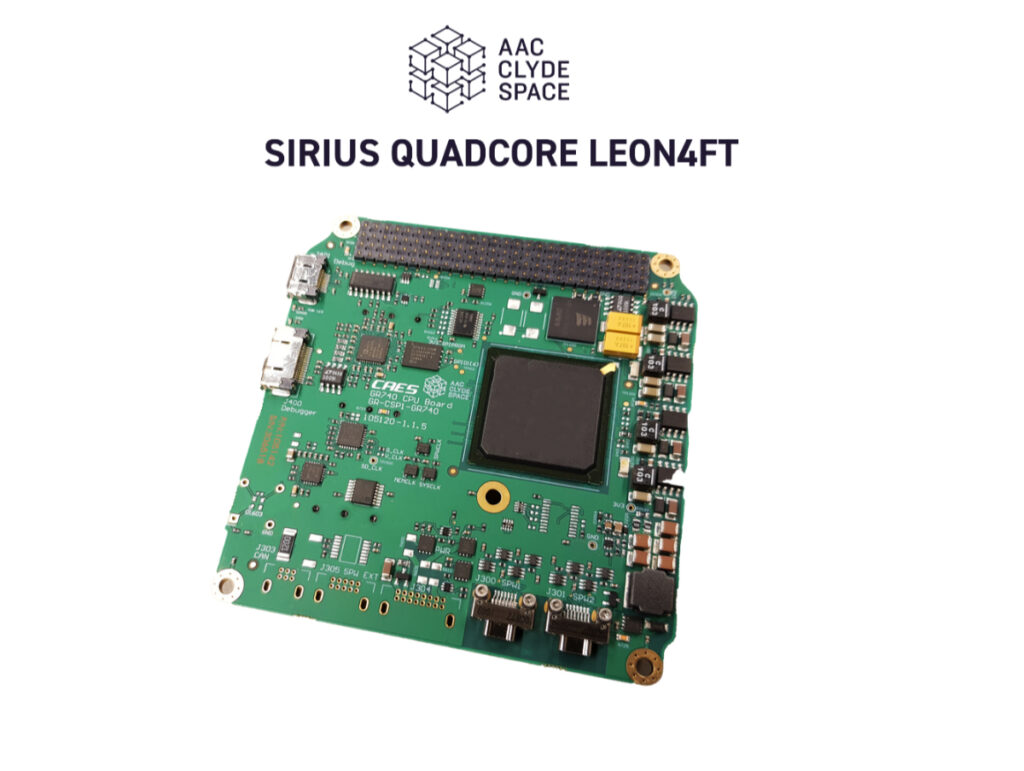
The project builds on the company’s flight-proven Sirius computer family and prepares the introduction of Sirius EDGE, a new AI-ready platform for small satellites and UAVs.

The SPEED project brings together AAC Clyde Space’s hardware development in Uppsala with Spacemetric’s software expertise, supported by KTH’s research into specialized low-power chip technology. This combination shows how the Group’s vertically integrated model strengthens its ability to develop advanced capabilities entirely in-house.

The project runs until the fourth quarter of 2026 and will deliver a laboratory demonstrator for Sirius EDGE. The platform is suitable for both civilian and security-related missions, supporting applications across satellites and UAVs. The technology will form part of AAC Clyde Space’s portfolio of space products and support the company’s long-term strategy to deliver high-value, space-based data services.

Filed Under: News

SpaceX’s Transporter-15 mission transports 140 payloads on Friday from California

November 30, 2025 by editorial

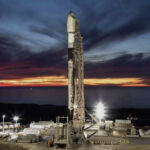
On Friday, November 28 at 10:44 a.m. PT, Falcon 9 launched the Transporter-15 mission to sun-synchronous orbit from Space Launch Complex 4E (SLC-4E) at Vandenberg Space Force Base in California.

Locked and loaded with 140 payloads

On board this mission were 140 payloads, including cubesats, microsats, hosted payloads, and orbital transfer vehicles carrying 13 of those payloads to be deployed at a later time.

This was the 30th flight for the first stage booster supporting this mission which previously launched NROL-87, NROL-85, SARah-1, SWOT, Transporter-8, Transporter-9, NROL-146, Bandwagon-2, NROL-153, NROL-192, Transporter-14, and 18 Starlink missions. Following stage separation, the first stage landed on the Of Course I Still Love You droneship, which was stationed in the Pacific Ocean.

SpaceX readies for Transporter 15 dedicated rideshare mission on Wednesday from California available at affordable rates

SpaceX is targeting Wednesday, November 26 for Falcon 9’s launch of the Transporter-15 mission to sun-synchronous orbit from Space Launch Complex 4E (SLC-4E) at Vandenberg Space Force Base in California. The 57-minute launch window opens at 10:18 a.m. PT.

Transporter 15 is a dedicated rideshare mission by SpaceX. SpaceX’s SmallSat Rideshare Program provides small satellite operators with regularly scheduled, dedicated Falcon 9 rideshare missions to SSO for ESPA class payloads for as low as $300,000 per mission that includes up to 50kg of payload mass.

A live webcast of this mission will begin about 15 minutes prior to liftoff, which you can watch on X @SpaceX. You can also watch the webcast on the X TV app.

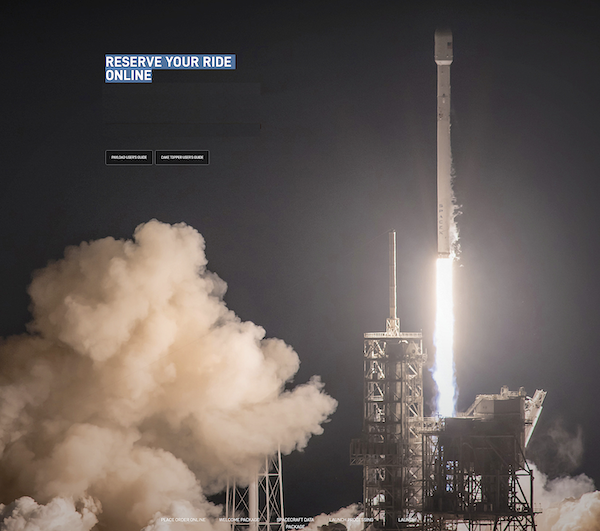
Find all the information you need to make a reservation online, everything from plate configuration to technical specifications to licensing information. Once your reservation request is approved, SpaceX will provide you with a welcome package outlining next steps for launch.

Payloads are received at the launch site around L-30 and processed in a SpaceX facility. More details can be found in the Rideshare User’s Guide.

This will be the 30th flight for the first stage booster supporting this mission which previously launched NROL-87, NROL-85, SARah-1, SWOT, Transporter-8, Transporter-9, NROL-146, Bandwagon-2, NROL-153, NROL-192, Transporter-14, and 18 Starlink missions. Following stage separation, Falcon 9 will land on the Of Course I Still Love You droneship stationed in the Pacific Ocean.

There is the possibility that residents of and visitors to Santa Barbara, San Luis Obispo, and Ventura counties may hear one or more sonic booms during the launch, but what residents experience will depend on weather and other conditions.

Filed Under: News

Spire Global launches 11 satellites

November 29, 2025 by editorial

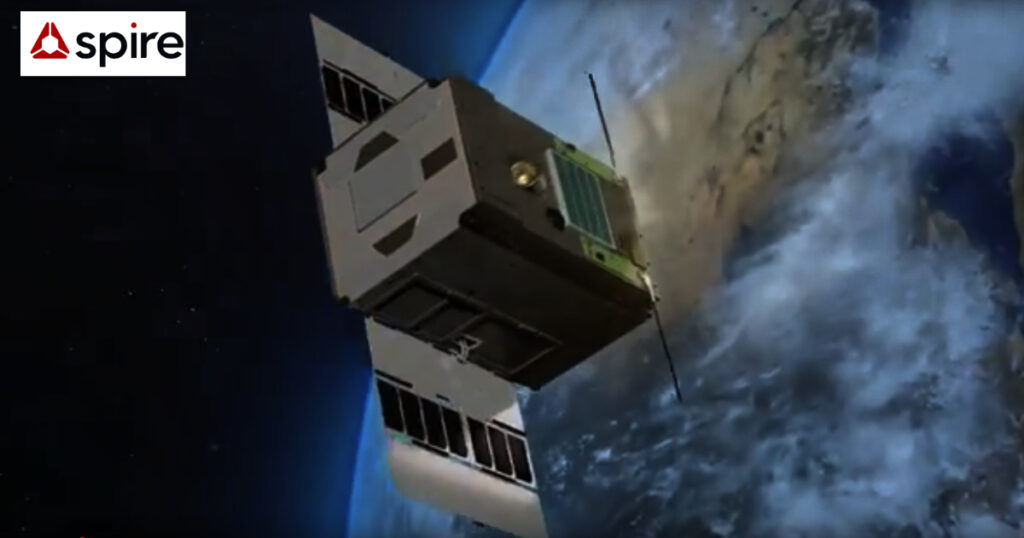
Spire Global, Inc. (NYSE: SPIR) launched 11 satellites aboard SpaceX’s Transporter-15 mission from Vandenberg Space Force Base.

The launch included satellites for Spire’s Space Services customers, along with three replenishment satellites.

Spire launched two satellites for GHGSat carrying payloads to monitor greenhouse gas emissions, expanding GHGSat’s constellation dedicated to high-resolution methane detection.Spire has designed and now operates a total of five satellites for GHGSat.

Spire also launched four satellites for Lacuna Space, each combining a Spire-built platform with Lacuna’s latest-generation IoT payloads. The satellites expand Lacuna’s global constellation designed to deliver low-cost, reliable connectivity to sensors and mobile equipment in remote or underserved regions.

Spire also launched three satellites carrying advanced Radio Occultation (RO) and Automatic Identification System (AIS) payloads to deliver high-quality atmospheric and radio-frequency data for global weather, climate, and commercial intelligence.

This marks Spire’s sixth launch of 2025, bringing the Company’s total number of satellites launched this year to 39 and more than 230 overall.

Filed Under: News

The IRIDE constellation adds 8 more smallsats

November 29, 2025 by editorial

The Italian EO IRIDE program with OBH Italia as the prime has added eight satellites to their second constellation, Eaglet II.

Italy’s Eaglet II smallsats being prepared for launch. Photo is courtesy of OHB Italia.

The Eaglet II satellites lifted off on board a Falcon 9 rocket at 19:44 CET (10:44 local time), November 28th, from Vandenberg Space Force Base in California, U.S. All satellites were placed into orbit about one hour after launch. Acquisition of signal for all satellites was confirmed several hours later by OHB’s Mission Control Centre in Rome.

Data from the IRIDE satellites, of which there are now 16 in orbit, will support products such as maps, monitoring services and multi-temporal analysis. Each satellite in the Eaglet II constellation carries a multispectral, high-resolution optical instrument, as well as an Automatic Identification System (AIS) instrument.

OHB Italia is the prime contractor for the satellite. They will orbit at an altitude between 467 km and 625 km above Earth’s surface and provide images with ground resolution of about 2 m. The Flight Operations Segment (FOS) was developed by Telespazio on SITAEL’s PLATINO platform and Leonardo’s hyperspectral radar sensor.

Filed Under: News

Twin satellites launch to scout for water

November 29, 2025 by editorial

Climate change effects on the Earth’s water cycle and the availability of water on our planet are the missions of the first European Space Agency Scout mission.

Launched from Vandenberg SFB, the twin HydroGNSS smallsats were launched on November 28, 2025, as a payload within a SpaceX Falcon 9 rocket as a member of the Transporter-15 rideshare flight.

Surrey Satellite Technology Ltd. (SSTL), this missions prime, has received signals from the satellites, indicating that both of them are safely in their assigned orbits.around Earth.

A technique—GNSS reflectometry—finds these satellites, which orbit the Earth with 180 degrees of separation, capturing L-band signals from navigation systems, such as GPS and Galileo, and then transmit L-band microwave signals that change when reflected off the Earth’s surface. These signals are then compared with the signals received from the navigation satellite and uncover the valuable information about water cycle properties and more. These systems gather high-quality data and capture more detailed and definitive data from ground-based GPS-reflection sites, more accurately than has previously been available.

In order to accomplish these tasks, each of the HydroGNSS smallsats carry a zenith and nadir antenna that comprise a delay doppler mapping receiver. The received signals are processed into delay Doppler maps.

Simonetta Cheli, the ESA’s Director of Earth Observation Programs, said, “HydroGNSS marks an important milestone for this new family of rapid, low-cost, Earth observation missions, and we extend our thanks to the missions prime, SSTL. We look forward to seeing how HydroGNSS will employ reflectometry to deliver valuable insights into key, hydrological variables that shape Earth’s water cycle.”

Filed Under: Featured, News

Dawn Aerospace + Cosmoserve Space sign strategic MoU to advance in-space refueling

November 24, 2025 by editorial

Dawn Aerospace and Cosmoserve Space have signed a Memorandum of Understanding (MoU) to partner on enabling sustainable and scalable in-space servicing through refueling and debris removal technologies.

The strategic MoU expresses both parties’ intent to explore future collaboration on integrating Dawn’s refuelable propulsion systems and in-space refueling service; Loop, with Cosmoserve Space’s debris capture and removal missions.

Cosmoserve and Dawn Aerospace MoU Signing

Active debris removal represents one of the most complex challenges in space operations, requiring precise maneuvering, extended mission durations, and reliable propulsion systems. By combining Dawn Aerospace’s refueling and propulsion capabilities with Cosmoserve Space’s debris-removal platforms, the partnership aims to enhance mission endurance and reduce the environmental impact of space activity.

The key focus area of the MoU includes the investigation of technical interfaces, operational synergies and potential future missions, using the core technologies of both companies.

Filed Under: News

ST Engineering to support UAE’s space ambitions with SAR satellite

November 24, 2025 by editorial

ST Engineering has been selected by FADA, the space-focused entity under EDGE Group, to deliver a synthetic aperture radar (SAR) satellite as part of the UAE National SAR Constellation Program, Sirb.

This project is aimed at enhancing the UAE’s Earth Observation (EO) capabilities and includes the design and delivery of the satellite and the mission control infrastructure necessary to capture high-resolution radar images for critical applications such as disaster response, environmental monitoring and national security.

The satellite will have state-of-the-art imaging with sub-meter resolution and a high-speed downlink. Beyond the SAR satellite, ST Engineering will design and deliver the infrastructure required for its operation. This mission control system will enable flexible and real-time satellite monitoring, ensuring that the satellite provides reliable day-and-night, all-weather imaging.

The satellite will align with FADA’s roadmap, enhancing UAE’s space-based capabilities for government and commercial use. The program will draw on EDGE Group’s depth of expertise in advanced technologies across defence and commercial fields.

The project moves into its next phase after completing the SAR system design review, with assembly and integration of the satellite to follow, along with rigorous operational testing. The collaboration will continue to strengthen the UAE’s position as a global leader in space technology.

Mr. Low Jin Phang, President of ST Engineering’s Digital Systems business, said, “FADA’s selection of ST Engineering for this strategic project underscores our proven leadership in space technology and our ability to design and produce commercial Earth observation satellites. We are committed to delivering end-to-end solutions that meet the UAE’s strategic needs and contribute to its vision of building a resilient, self-sustaining space ecosystem.”

Filed Under: Featured, News

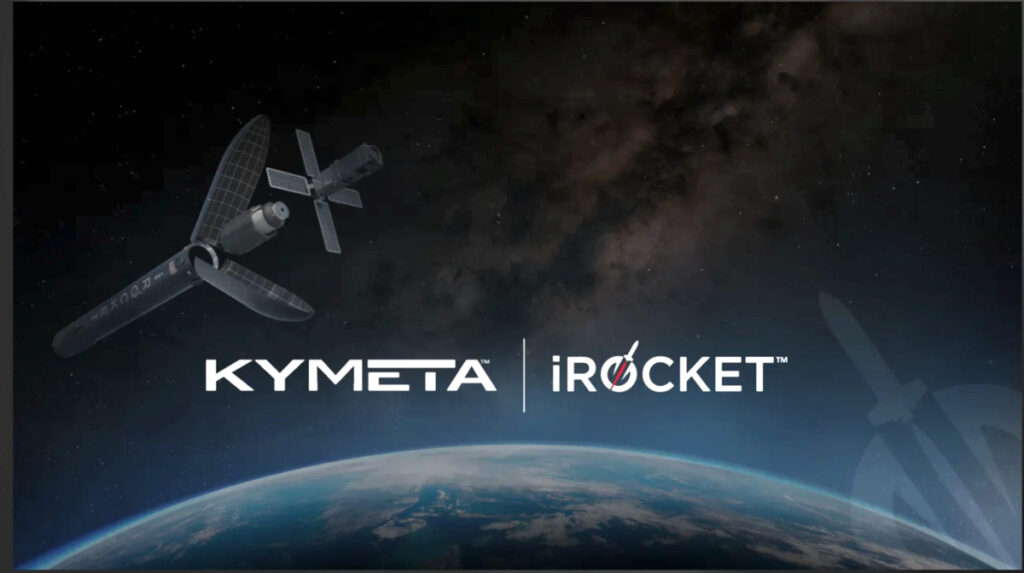
Kymeta + iRocket announce strategic partnership to power the Golden Dome with always connected missile interceptor technology

November 20, 2025 by editorial

Kymeta Corporation and Innovative Rocket Technologies Inc. (iRocket) have engaged in a strategic collaboration to further develop, integrate and test Kymeta’s new, conformal, multi-orbit technology within iRocket’s missile interceptors.

As the Pentagon increases its reliance on commercial providers for defense technology, specifically satellite services, this partnership will enable a new generation of always-connected, highly responsive interceptor systems – a capability widely viewed as essential to the future Golden Dome vision for continental defense.

By integrating its conformal technology into iRocket’s missiles, Kymeta will enable multi-orbit, real-time satellite connectivity that delivers mid-course updates, improves accuracy, and enhances resilience in contested environments.

Kymeta’s conformal antenna innovation leverages the distinctive electromagnetic properties of metamaterials, the company’s proven engineering foundation. The conformal antenna innovation supersedes gimbaled or phased array systems, enabling a surface-integrated design that blends seamlessly into the interceptor’s body, reducing drag and detectability, while improving performance.

The lightweight, low profile of metamaterial components, combined with iRocket’s cutting-edge propulsion and interceptor capabilities, will deliver significant improvements in mission performance. These include:

  • Enhanced interceptor performance: precise, agile beam steering for sensors and communications dramatically improves accuracy and effectiveness
  • Reduced size, weight and power (SWaP): elimination of bulky mechanical parts, enabling smaller, lighter, and more power-efficient systems critical for range, speed, and maneuverability
  • Superior signal detection and security: dynamic, low-power beamforming enhances tracking and communication while minimizing thermal and electromagnetic signatures for survivability in contested environments
  • Comms resiliency: multi-orbit and multi-band connectivity supports a full PACE communications framework

iRocket views this partnership as a catalyst for breakthrough capabilities. This initiative marks a new chapter in leveraging advanced technologies for national security and defense, providing resilient, always-connected interceptor capability that will underpin the Golden Dome’s continental defense architecture. The two companies will begin joint development and testing immediately, with initial integration trials planned for second half of 2026.

With the U.S. government pushing to integrate cutting-edge commercial technology into military capabilities faster, and more flexibly, than traditional rigid procurement strategies allow, our work with iRocket meets this need and demonstrates how our metamaterial technology and their advanced rockets can jointly deliver critical new defense capabilities,” said Manny Mora, President and CEO of Kymeta. “We have demonstrated the power of our metamaterials for mobile, multi-orbit satellite communications. Now, we are applying that same innovation to help solve some of the most complex challenges in missile defense and space domain awareness.”

Integrating Kymeta’s metamaterial technology is a game-changer for our missile and space platforms,” said Asad Malik, Founder, Chairman and CEO of iRocket. “This collaboration will enable us to build smarter, faster, and more efficient systems that can outperform existing technologies. It is a critical step toward advancing our mission of delivering rapid, responsive, and reusable capabilities to the defense and space sectors.”

Filed Under: News

  • « Go to Previous Page
  • Page 1
  • Interim pages omitted …
  • Page 6
  • Page 7
  • Page 8
  • Page 9
  • Page 10
  • Interim pages omitted …
  • Page 338
  • Go to Next Page »

Primary Sidebar

WEEKLY NEWSLETTER

Archives

  • June 2026
  • May 2026
  • April 2026
  • March 2026
  • February 2026
  • January 2026
  • December 2025
  • November 2025
  • October 2025
  • September 2025
  • August 2025
  • July 2025
  • June 2025
  • May 2025
  • April 2025
  • March 2025
  • February 2025
  • January 2025
  • December 2024
  • November 2024
  • October 2024
  • September 2024
  • August 2024
  • July 2024
  • June 2024
  • May 2024
  • April 2024
  • March 2024
  • February 2024
  • January 2024
  • December 2023
  • November 2023
  • October 2023
  • September 2023
  • August 2023
  • July 2023
  • June 2023
  • May 2023
  • April 2023
  • March 2023
  • February 2023
  • January 2023
  • December 2022
  • November 2022
  • October 2022
  • September 2022
  • August 2022
  • July 2022
  • June 2022
  • May 2022
  • April 2022
  • March 2022
  • February 2022
  • January 2022
  • December 2021
  • November 2021
  • October 2021
  • September 2021
  • August 2021
  • July 2021
  • June 2021
  • May 2021
  • April 2021
  • March 2021
  • February 2021
  • January 2021
  • December 2020
  • November 2020
  • October 2020
  • September 2020
  • August 2020
  • July 2020
  • June 2020
  • May 2020
  • April 2020
  • March 2020
  • February 2020
  • January 2020
  • December 2019
  • November 2019
  • October 2019

© 2019–2026 SatNews

Insert/edit link

Enter the destination URL

Or link to existing content

    No search term specified. Showing recent items. Search or use up and down arrow keys to select an item.
      x
      Sign Up Now!

      Enjoy a free weekly newsletter with recent headlines from the global SmallSat industry.

      Invalid email address
      We promise not to spam you. You can unsubscribe at any time.
      Thanks for subscribing! You will now receive weekly SmallSat News updates.
      We love our advertisers.
      And you will too!

      Please disable Ad Blocker to continue... We promise to keep it unobtrusive.
      We promise not to spam you. You can unsubscribe at any time.
      Invalid email address
      Thanks for subscribing!