• Skip to main content
  • Skip to primary sidebar
  • Home
  • News
  • Featured
  • More News ⌄
    • SatNews
    • SatMagazine
    • MilSatMagazine
  • Events ⌄
    • MilSat Symposium
    • SmallSat Symposium
    • Satellite Innovation
  • Contacts
  • SUBSCRIPTION

SmallSat News

You are here: Home / Archives for Featured

Featured

Aurora to deliver a Plasma Brake for SpeQtral’s quantum key distribution satellite

January 17, 2024 by editorial

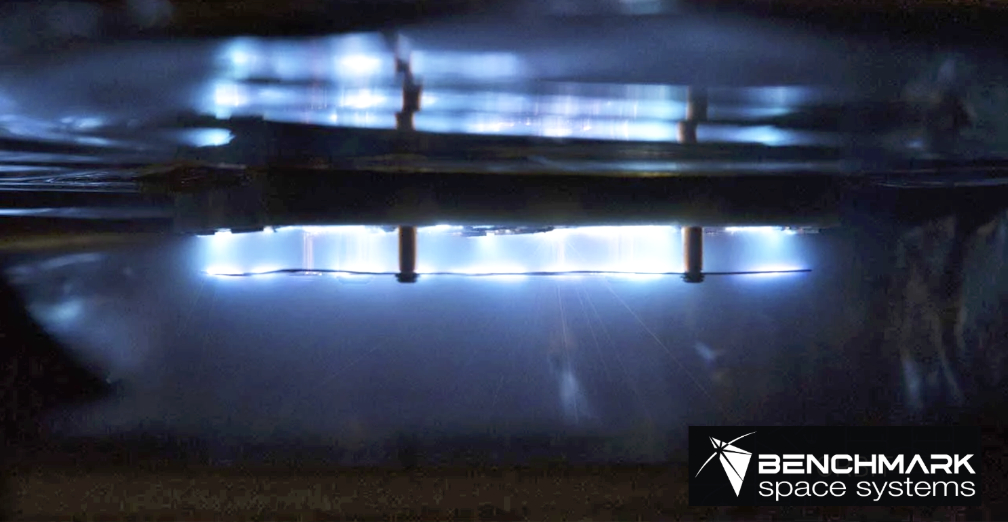
Aurora Propulsion Technologies, together with SpeQtral, last month signed a deal for the former to deliver a Plasma Brake for SpeQtral’s next satellite.

The Plasma Brake is a deorbiting system that disposes of the satellite by safely bringing it back into the atmosphere after its mission is finished. This CubeSat “TunaCan” Plasma Brake is designed to be a plug-and play solutions for any CubeSats that have no space for a large thruster system but does include a free TunaCan slot that can be used by a Plasma Brake, allowing compliance with space debris mitigation regulation.

The Plasma Brake works by deploying a charged microtether that interacts with the LEO plasma environment, creating a drag force. This allows it to generate a small amount of thrust continuously and indefinitely, also on higher orbits up to 1000 km where aerodynamic drag is not an option.

The SpeQtral-1 mission will be SpeQtral’s second quantum key distribution (QKD) satellite, serving as a pathfinder commercial demonstrator and defining future QKD services. The mission follows the SpeQtre technology demonstrator mission, itself built on technologies demonstrated on the 2019 SpooQy-1 CubeSat.

The SpeQtral-1 satellite is one of the first in the world to contain both BB84 and BBM92 quantum payloads in a CubeSat form factor. Operating at an altitude of 500 kms in SSO, SpeQtral-1 can provide quantum keys to any location on Earth.

The BBM92 payload offers unparalleled security, and the BB84 payload offers higher key rates allowing seamless integration with fiber QKD networks around the globe. SpeQtral-1 brings cutting-edge quantum communication technologies, enabling partners and customers to securely transmit their data with highest levels of encryption.

Perttu Yli-Opas, the CEO of Aurora Propulsion Technologies, said, “This mission is a great example of a business-oriented satellite that simply must have a deorbiting solution with a minimal footprint – which we’re more than happy to provide.”

Filed Under: Featured, News

John Deere + SpaceX to expand rural connectivity for farmers

January 17, 2024 by editorial

Deere & Company (NYSE: DE) has entered into an agreement with SpaceX to provide SATCOM service to farmers — using the Starlink network, this solution will allow farmers facing rural connectivity challenges to fully leverage precision agriculture technologies.

This partnership, an industry first, will enable John Deere customers to be more productive, profitable, and sustainable in their operations as they continue to provide food, fuel, and fiber for their communities and a growing global population.

The SATCOM solution will connect new and existing machines through satellite internet service and ruggedized satellite terminals. This will fully enable technologies, such as autonomy, real-time data sharing, remote diagnostics, enhanced self-repair solutions, and Machine-to-Machine (M2M) communication, all of which help farmers work more efficiently while minimizing downtime.

John Deere’s SATCOM solution will leverage SpaceX’s Starlink satellite internet constellation. To activate this solution, John Deere dealers will install a ruggedized Starlink terminal on compatible machines, along with a 4G LTE JDLink modem to connect the machine to the John Deere Operations Center. The SATCOM solution will initially be available through a limited release in the United States and Brazil starting in the second half of 2024.

“The value of connectivity to farmers is broader than any single task or action. Connectivity unlocks vast opportunities that were previously limited or unavailable,” said Aaron Wetzel, Vice President of Production and Precision Ag Production Systems at John Deere. “For example, throughout the year, farmers must complete tasks within extremely short windows of time. This requires executing incredibly precise production steps while coordinating between machines and managing machine performance. Each of these areas are enhanced through connectivity, making the entire operation more efficient, effective, and profitable.”

“John Deere has led the agriculture equipment industry for more than two decades with satellite-based precision guidance technology,” said Jahmy Hindman, Senior Vice President & Chief Technology Officer at John Deere. “Now, we are bringing satellite communications service to the farm at scale so farmers with cellular coverage challenges can maximize the value of connectivity to their operations. The SATCOM solution unlocks the John Deere tech stack so every farmer can fully utilize their current precision agriculture technology in addition to the new innovative solutions they will deploy in the future. We initiated this process with a fierce focus on delivering value to our customers, and this partnership ensures we have a solution that meets their needs today and in the future.”

Filed Under: Featured, News

Safran to equip LeoStella satellite constellations

January 12, 2024 by editorial

LeoStella is pursuing its partnership with Syrlinks, a Safran Electronics & Defense company, that will equip LeoStella’s latest-generation of LS-300 satellite buses with its high-performance, resilient, N-SPHERE GNSS receiver for applications.

The N-SPHERE solution is a new-generation, GNSS receiver designed by Syrlinks and implements the latest state-of-the-art positioning and synchronization techniques to achieve real-time precise onboard orbit determination (P2OD). N-SPHERE can be synchronized with various GNSS systems and offers high-precision positioning, of the order of 10 centimeters.

The integration of this very high precision localization capability into the LS-300 bus gives LeoStella access to international defense customers.

“We’re delighted to be pursuing our collaboration with LeoStella, based on the selection of our advanced GNSS receiver,” said Jean-Marie Bétermier, Senior Vice President Space, Safran Electronics & Defense. “There’s no better vote of confidence than continued collaboration with a customer. It shows that our products are dependable and always at the forefront of technology.”

“Syrlinks and LeoStella have built a solid partnership over the course of several collaborative programs,” said Kylie Hall, Supply Chain Manager for LeoStella. “LeoStella is looking forward to building N-SPHERE into the development of its future satellite platforms, which marks an important milestone in our ongoing partnership.”

Filed Under: Featured, News

Axelspace raises million$$ + closes Series D funding round

December 21, 2023 by editorial

Axelspace Holdings Corporation has completed the firm’s Series D funding round raising approximately JPY 6.24 billion (equivalent to $44.0 million) — this round sees the allocation of new shares to SMBC-GB Growth I Investment Limited Partnership, several other venture capitals, and corporate investors and brings the cumulative amount of equity financing to approximately JPY 14.3 billion.

Axelspace Corporation, a wholly owned subsidiary of Axelspace Holdings, will use the new funds to meet more diverse customer demands. This involves enhancing EO services through the expansion of the company’s proprietary smallsat constellation that currently consists of five satellites that provide full-scale services to public and private sectors as well as optical data relay operations.

In the 15 years since its establishment in 2008, Axelspace has a proven track record in the development and operation of a total of nine smallsats, including a technology demonstration satellite for the Japan Aerospace Exploration Agency (JAXA).

In addition to the EO service “AxelGlobe,” which started in 2015, Axelspace has been progressing its R&D to realize an innovative one-stop service, “AxelLiner.” This service was announced in 2022 aiming to offer feasibility studies, designing, manufacturing, launch, and on-orbit operations for microsatellites, and its demo satellite is expected to launch in early 2024.

“We would like to express our gratitude to the investors who, despite challenging market conditions, have decided to invest in us, demonstrating confidence in our future business growth. This August, we celebrated the company’s 15th anniversary. Although it was not an easy road, we have steadily accumulated achievements and evolved our business with invaluable assistance from many people. With this financing, we hope to further solidify the business foundations of both AxelGlobe and AxelLiner services and to establish ourselves as a leading player in providing comprehensive microsatellite solutions.” — Yuya Nakamura, the President and CEO of Axelspace Holdings

Filed Under: Featured, News

Firefly Aerospace ready to Launch Alpha FLTA004 for no earlier than December 20

December 20, 2023 by editorial

Alpha FLTA004 Livestream with NASA Spaceflight

As Firefly’s second responsive space operation, Fly the Lightning will get on-orbit capabilities into the hands of U.S. warfighters faster

Firefly Aerospace recently reported that the company’s Alpha FLTA004 Fly the Lightning mission is prepared to launch no earlier than December 20, with backup dates through December 22, depending on local weather — the daily 20-minute launch window will open at 9:18 am PST.

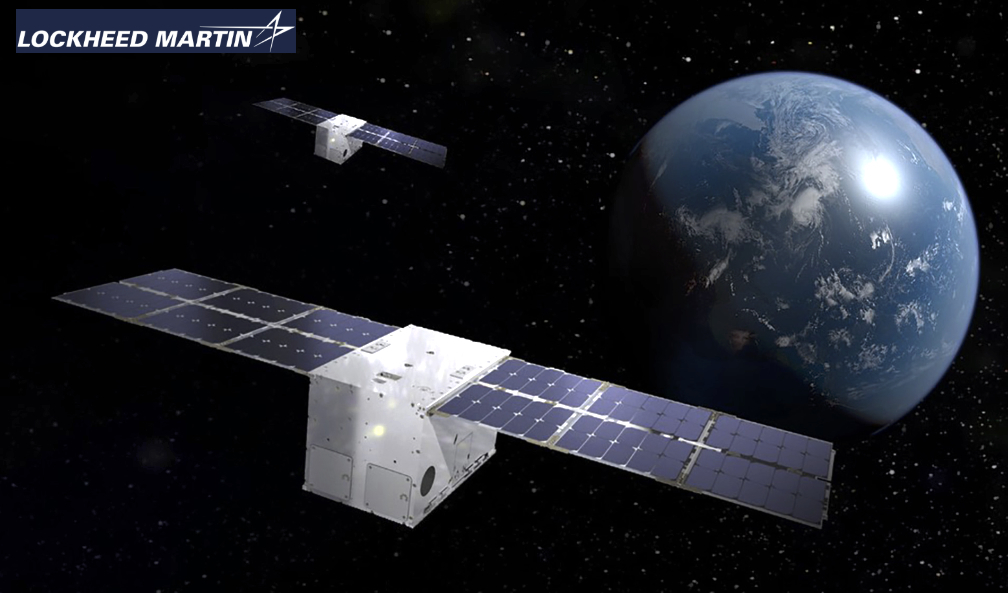
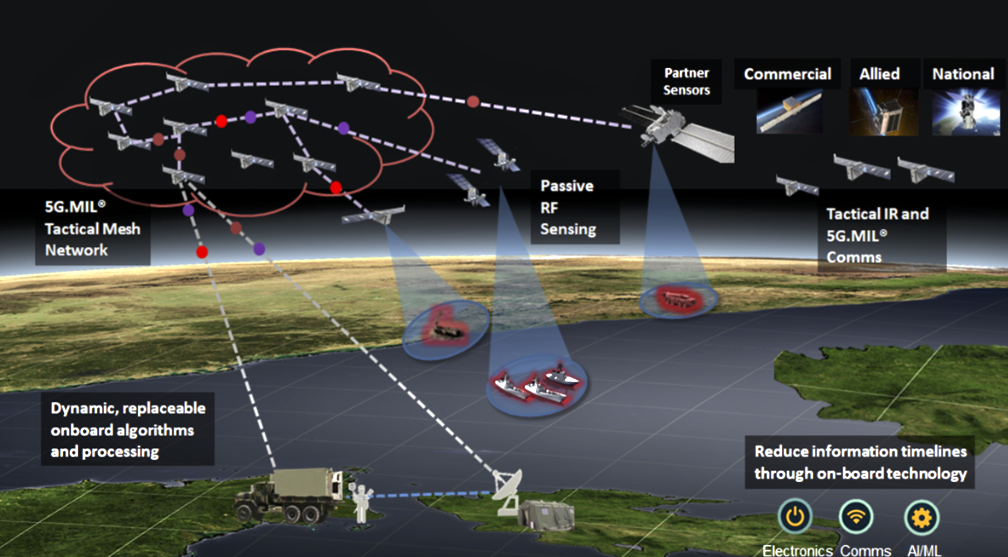
The Fly the Lightning mission will deploy an Electronically Steered Antenna (ESA) payload developed by Lockheed Martin to demonstrate rapid delivery of on-orbit capabilities for U.S. warfighters. As a secondary objective, the mission team will further demonstrate responsive space capabilities by tracking and improving the total working hours required from payload receival to launch readiness compared to Alpha FLTA003, the record-breaking VICTUS NOX mission.

“On the heels of our successful Alpha launch for the U.S Space Force, the Firefly team will continue to push the limits and set new standards in the industry, operating at a rapid pace for Alpha FLTA004 and future missions in response to the needs of our customers,” said Bill Weber, CEO of Firefly Aerospace. “This team is utilizing lessons from our VICTUS NOX mission to fundamentally change how quickly both government and commercial customers can process their payloads and launch assets to space.”

During the final launch operations, the team will transport the payload faring to the launch pad and mate it to Firefly’s Alpha rocket using similar responsive operations to VICTUS NOX. The launch is being observed by members of the U.S. Space Force Tactically Responsive Space team to inform future missions and the requirements for repeatable on-demand launch capabilities.

“Through the VICTUS NOX demonstration, the Space Force proved the United States can rapidly respond to national security threats in space on an unprecedented timeline,” said Lt. Col. Justin Beltz, Materiel Leader and Chief of the Small Launch and Targets Division of the U.S. Space Force. “We’re now focused on transforming Tactically Responsive Space from a groundbreaking achievement into a repeatable capability. By partnering with Firefly to observe Alpha FLT004, we can continue to build synergy with commercial industry and further define the training, infrastructure, and operational requirements for long-term repeatability.”

Fly the Lightning will launch from Firefly’s SLC-2 complex at the Vandenberg Space Force Base in California. Firefly’s new payload processing facility at its launch site allows the team to rapidly fuel and integrate payloads in a clean room environment. The company’s flight-proven Alpha rocket, lifting more than 1,000 kg to LEO, further enables direct, on-demand deliveries when and where customers need to fly. 

“What we’re most excited about is that this mission features several firsts – a new payload, built rapidly in a new way, with Firefly as a new launch partner,” said Bob Behnken, director of Technology Acceleration for Lockheed Martin’s Ignite organization. “This also marks the first of our self-funded technology demonstrations through Lockheed Martin’s Ignite organization, created to accelerate development projects like this, push limits and expand capabilities for customers.”

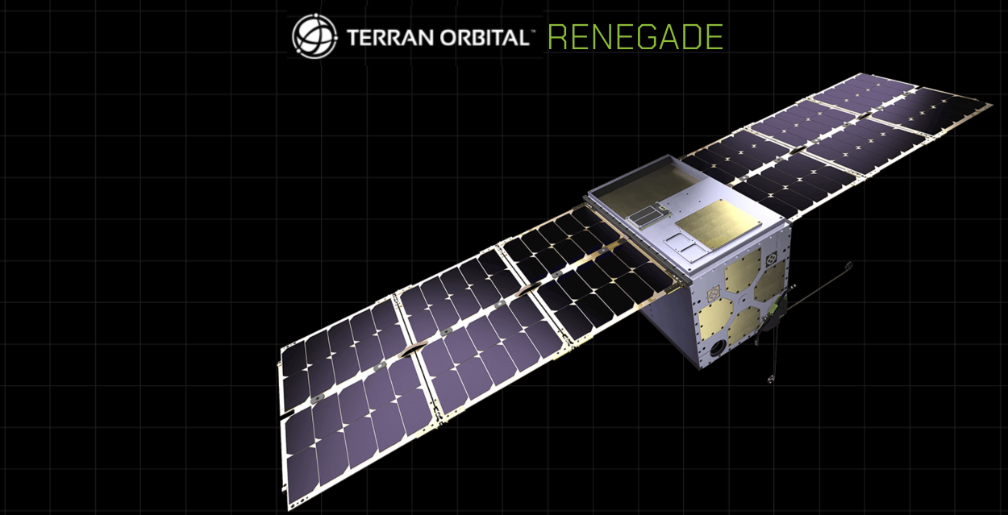
Lockheed Martin’s ESA demonstrator payload, integrated on a Terran Orbital Nebula smallsat bus.

The payload was developed by Lockheed Martin’s Ignite organization stood up to focus on exploratory research and development, accelerating the pace of technology development, and introducing new product innovations.

Filed Under: Featured, News

Ovzon receives SATCOM-as-a-Service order from Swedish Space Corporation (SSC)

December 17, 2023 by editorial

Ovzon recently received an order from Swedish Space Corporation (SSC) for Ovzon’s SATCOM-as-a-Service, including Ovzon mobile satellite terminals — the service will be delivered during 2024 with the initial rollout to occur during Q1 — the delivery of terminals will start immediately. The total order value amounts to 135 million Swedish Krona.

Ovzon SATCOM-as-a-Service distinguishes itself in the market by its ability to support critical missions with assured connectivity that can transmit and receive large amounts of data by seamlessly integrating performance, mobility and resiliency. 

“Resilient communications services via satellite are an important tool in both civil society and national security. With the help of Ovzon, we can offer a robust SATCOM service which is attractive to both traditional space actors and new industries.” — Stefan Gustafsson, Senior Vice President Strategy and Sustainable Business, SSC.

“This significant order strengthens our collaboration with SSC and emphasizes our joint focus on supporting Swedish government agencies. Having a strategic presence in space and being able to ensure reliable satellite communications is of critical importance for both security and the wider public infrastructure in today’s society.”— Per Norén, CEO, Ovzon.

Follow the preparations for the launch of Ovzon 3 and join the digital launch event at this direct link…

Filed Under: Featured, News

UPDATE: Rocket Lab’s The Moon God Awakens launch is delayed again…

December 13, 2023 by editorial

UPDATE: Rocket Lab will launch the TSUKUYOMI-I synthetic aperture radar (SAR) satellite for Japan-based Earth imaging company the Institute for Q-shu Pioneers of Space, Inc. (iQPS). The company is now targeting no earlier than December 15, 2023, UTC, with a two hour, daily window.

Original news posting…

Due to inclement weather conditions, Rocket Lab has rescheduled the Electron launch of the iQPS GEO payload to late Thursday (December 14th) from Launch Complex 1 in Mahia, New Zealand.

The Moon God Awakens’ is scheduled to launch from Pad B at Launch Complex 1 in Mahia, New Zealand and will carry a single satellite for iQPS. Named after the Japanese God of the Moon, the QPSSAR- 5 satellite “TSUKUYOMI-I” is a synthetic-aperture radar satellite that will collect high-resolution images of Earth.

The satellite will join another iQPS satellite on-orbit that will ultimately be a 36-satellite constellation capable of monitoring Earth at specified points every 10 minutes.

This mission will be Rocket Lab’s 10th launch of 2023, exceeding the firm’s previous annual launch record of nine. ‘The Moon God Awakens’ will be Rocket Lab’s 42nd Electron launch, overall.

An FAA-licensed spaceport, Launch Complex 1 can provide up to 120 launch opportunities every year. From the site, it is possible to reach orbital inclinations from SSO through to 30 degrees, enabling a wide spectrum of inclinations to service the majority of the satellite industry’s missions to low Earth orbit.

Located within Launch Complex 1 are Rocket Lab’s private range control facilities, two 100K satellite cleanrooms, a launch vehicle assembly facility which can process multiple Electrons at once, and administrative offices. Operating a private orbital launch site alongside its own range and mission control centers allows Rocket Lab to reduce the overhead costs per mission, resulting in a cost effective launch service for satellite operators.

In addition to Launch Complex 1, Rocket Lab operates an additional launch site, Launch Complex 2, at the Mid- Atlantic Regional Spaceport within NASA’s Wallops Flight Facility on Virginia’s Eastern Shore. Launch Complex 2 can support up to 12 missions per year. By operating two launch complexes in two hemispheres, Rocket Lab provides customers with flexible, responsive launch opportunities.

The live stream of the launch will be viewable at this direct link…

Filed Under: Featured, News

SmallSat Symposium update: Two new keynotes

December 13, 2023 by editorial

Filed Under: Featured, News

Millennium Space Systems completes missile track custody CDR ahead of schedule

December 12, 2023 by editorial

Millennium Space Systems (MSS), a Boeing [NYSE: BA] company, has completed the space vehicle Critical Design Review (CDR) for its Epoch 1 space vehicles less than a year after award.

This effort is part of the Missile Track Custody (MTC) prototype project, awarded by Space Systems Command (SSC) through the Space Enterprise Consortium (SpEC). SSC’s SpEC program is managed by the National Security Technology Accelerator (NSTXL).

The successful completion of the CDR means that Millennium Space Systems is now authorized to start production on six space vehicles for SSC’s MTC Epoch 1 project. These space vehicles are scheduled for delivery and launch in late 2026.

The review for the full space segment of the program with a complete space vehicle and constellation design was done less than five months after the Preliminary Design Review, which was completed in just four months.

“Our team is thrilled to see how quickly this project is moving. I believe that using SpEC’s Other Transaction Authority (OTA) is the most efficient way of connecting the government with performers like Millennium Space Systems. SpEC’s OTA allows companies like Millennium to harness the potential to enact real change for our nation safety and in this case, in missile tracking technologies. The SpEC OTA’s efficiency continues to innovate as evident in the Epoch 1 Space Vehicle effort for SSC’s MTC program. The unique thing about SpEC is its partnerships that leverages flexibility and rapidness especially working within compressed timelines to deliver solutions to strengthen our nation’s Missile Warning/Missile Tracking technologies and safeguarding our national security.” — Mike Malinowski, Director of SpEC at NSTXL

Filed Under: Featured, News

Australian Government funding to accelerate Neumann Space space tech development with Spire Global

December 6, 2023 by editorial

Neumann Space has made known that Australian Government funding will enable the company to adapt the Neumann Drive® for an on-orbit demo mission with Spire Global.

Neumann Space is a founding partner of the Australian Space Manufacturing Network (ASMN) project led by Gilmour Space Technologies and made possible through funding under the Australian Government’s Modern Manufacturing Initiative (MMI) Collaboration stream.

Neumann Space will use Australian Government funding received under this program to work together with Spire on this mission to rapidly adapt, integrate, launch and verify the performance of the next generation Neumann Drive® on-board one of Spire’s proven satellite platforms. The Neumann Drive® incorporates a unique propulsion technology that uses solid metallic propellant to enable superior mobility in space for satellites and spacecraft, including improved safety, efficiency, and the ability for it to be transported and stored fully fuelled and integrated.

To support the mission, Neumann Space and Spire Global signed an MoU to advance the development of better on-space propulsion for satellites. The MoU outlines the companies’ intent to collaborate on an on-orbit demonstration mission with the integration of the Neumann Drive® on a Spire smallsat.

Recently, Neumann Space launched the company’s second propulsion system into space and continues to invest in a dedicated program of on-orbit missions over the next 18 months to commercialize the firm’s technology.

“Mobility is integral to the success of the new space economy, and this underpins our mission with Spire to deliver a better, more advanced propulsion solution. We are excited about the opportunity the ASMN project has provided us to work together with Spire to further the development of this sovereign space technology and to tailor our technology to their needs in delivering greater knowledge and insights about Earth.” — Neumann Space’s CEO, Herve Astier

“We’re excited to continue to support and contribute to Australia’s space ecosystem by partnering with innovative organisations like Neumann Space to leverage our Space as a Service model to quickly and efficiently launch space missions that drive technological advancements.” — Jonathon Brain, APAC Regional Business Development Director for Space Services at Spire

Filed Under: Featured, News

  • « Go to Previous Page
  • Page 1
  • Interim pages omitted …
  • Page 16
  • Page 17
  • Page 18
  • Page 19
  • Page 20
  • Interim pages omitted …
  • Page 59
  • Go to Next Page »

Primary Sidebar

WEEKLY NEWSLETTER

Archives

  • May 2026
  • April 2026
  • March 2026
  • February 2026
  • January 2026
  • December 2025
  • November 2025
  • October 2025
  • September 2025
  • August 2025
  • July 2025
  • June 2025
  • May 2025
  • April 2025
  • March 2025
  • February 2025
  • January 2025
  • December 2024
  • November 2024
  • October 2024
  • September 2024
  • August 2024
  • July 2024
  • June 2024
  • May 2024
  • April 2024
  • March 2024
  • February 2024
  • January 2024
  • December 2023
  • November 2023
  • October 2023
  • September 2023
  • August 2023
  • July 2023
  • June 2023
  • May 2023
  • April 2023
  • March 2023
  • February 2023
  • January 2023
  • December 2022
  • November 2022
  • October 2022
  • September 2022
  • August 2022
  • July 2022
  • June 2022
  • May 2022
  • April 2022
  • March 2022
  • February 2022
  • January 2022
  • December 2021
  • November 2021
  • October 2021
  • September 2021
  • August 2021
  • July 2021
  • June 2021
  • May 2021
  • April 2021
  • March 2021
  • February 2021
  • January 2021
  • December 2020
  • November 2020
  • October 2020
  • September 2020
  • August 2020
  • July 2020
  • June 2020
  • May 2020
  • April 2020
  • March 2020
  • February 2020
  • January 2020
  • December 2019
  • November 2019
  • October 2019

© 2019–2026 SatNews

Insert/edit link

Enter the destination URL

Or link to existing content

    No search term specified. Showing recent items. Search or use up and down arrow keys to select an item.
      x
      Sign Up Now!

      Enjoy a free weekly newsletter with recent headlines from the global SmallSat industry.

      Invalid email address
      We promise not to spam you. You can unsubscribe at any time.
      Thanks for subscribing! You will now receive weekly SmallSat News updates.
      We love our advertisers.
      And you will too!

      Please disable Ad Blocker to continue... We promise to keep it unobtrusive.
      We promise not to spam you. You can unsubscribe at any time.
      Invalid email address
      Thanks for subscribing!