• Skip to main content
  • Skip to primary sidebar
  • Home
  • News
  • Featured
  • More News ⌄
    • SatNews
    • SatMagazine
    • MilSatMagazine
  • Events ⌄
    • MilSat Symposium
    • SmallSat Symposium
    • Satellite Innovation
  • Contacts
  • SUBSCRIPTION

SmallSat News

You are here: Home / Archives for Featured

Featured

Rocket Lab signs a multi-launch deployment deal

July 14, 2023 by editorial

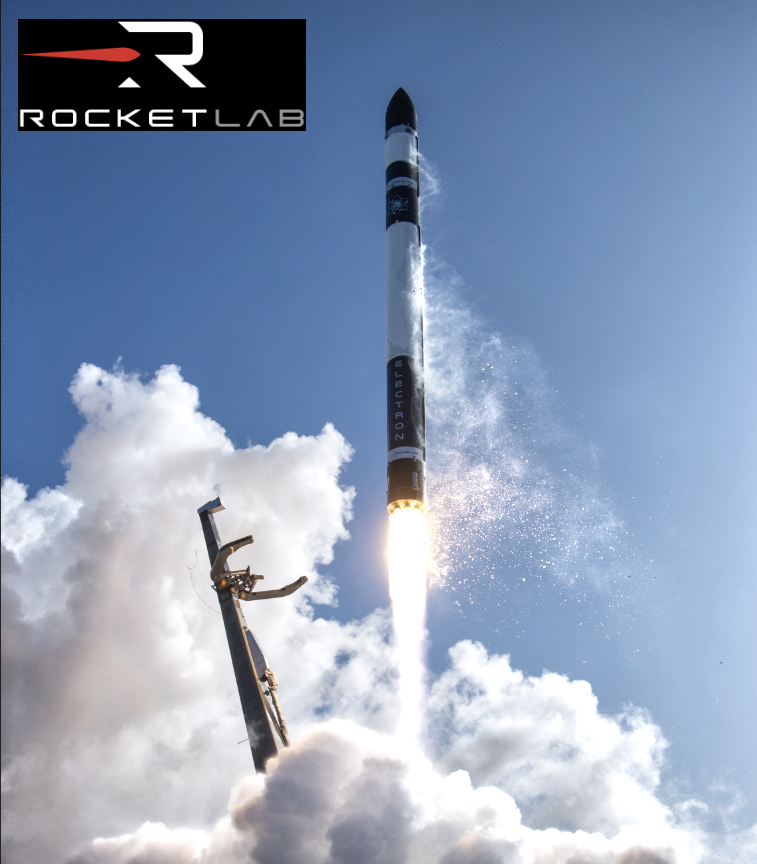
Photo of Rocket Lab’s third launch for Synspective, The Owl Spreads Its Wings, that was launched in September of 2022. Image is courtesy of the company.

Rocket Lab USA, Inc. (Nasdaq: RKLB) has signed a deal with Synspective to launch two, dedicated, Electron missions — these new missions bring the total number of Electron launches contracted by Synspective to six in number.

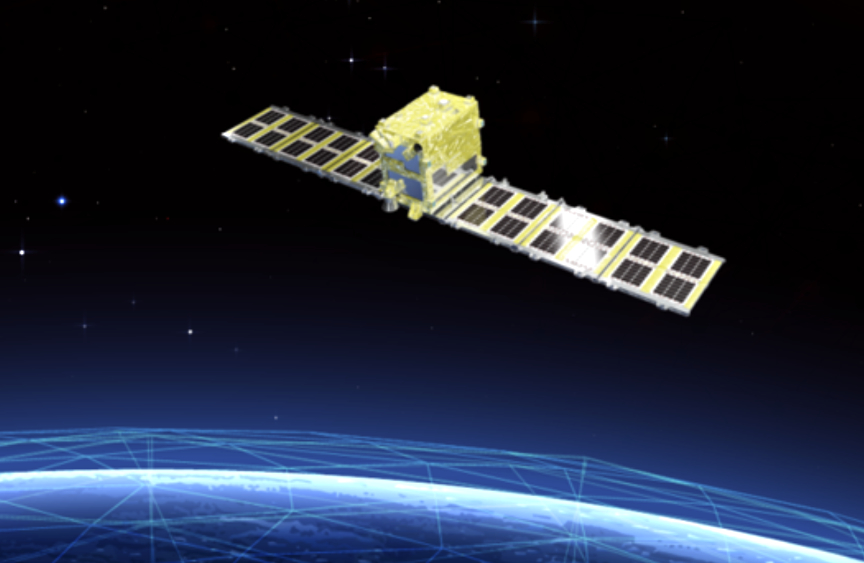
Rocket Lab has been launching for Synspective since 2020 when the Company deployed the first satellite in their synthetic aperture radar (SAR) constellation that is designed to deliver imagery that can detect millimeter-level changes to the Earth’s surface from space. Since that first mission, Rocket Lab has been the sole launch provider for Synspective’s StriX constellation to date, successfully deploying three StriX satellites across three dedicated Electron launches.

Artistic rendition of Synspective’s StrX 100 kg. SAR smallsat on-orbit.

Including the two new missions, Rocket Lab is now scheduled to launch three missions for Synspective beginning in late 2023 from Launch Complex 1 in New Zealand.

Aerial photo of Rocket Lab’s Launch Complex 1 in New Zealand.

In addition to providing Synspective with a high degree over schedule and orbit by flying as a dedicated mission, Rocket Lab also delivers the unique ability to perform an advanced mid-mission maneuver with the Electron rocket’s Kick Stage to shield the StriX satellite from the sun to reduce radiation exposure ahead of payload deployment.

Synspective joins several commercial constellation operators that have signed multi-launch agreements on Electron this year, including HawkEye 360 and Capella Space.

“It’s an honor to be entrusted with the continued deployment of Synspective’s constellation. We’re proud to enable them to build out their constellation with precision and efficiency, giving Synspective ultimate schedule and orbit flexibility with frequent dedicated launch opportunities. We’re delighted to continue delivering this unique ability to Synspective through our continued partnership.” — Peter Beck, Founder and CEO, Rocket Lab

“As we celebrate our three-year partnership with Rocket Lab, which began with our first StriX-α satellite in 2020, we are thrilled to entrust them with two more contracts for our StriX satellite launches. Their unwavering reliability and precision have been pivotal to our successful deployments. We’re looking forward to the upcoming launches and the new insights to enhance our satellite data and solution service in line with our customer needs.” — Dr. Motoyuki Arai, Founder and CEO, Synspective

Filed Under: Featured, News

ITU Radio Regulations Board approves waiver for Rivada LEO constellation and the company signs an MoU with IEC Telecom

July 12, 2023 by editorial

Rivada Space Networks recently announced that the ITU’s Radio Regulations Board has waived the requirement that Rivada place 10% of its constellation into orbit this year.

The ITU waiver process seeks clear evidence of funding, manufacturing and launch contracts as well as coordination with other systems. Having reviewed the submission made by Liechtenstein’s telecommunications regulator and filing administration (the “Amt für Kommunikation”), the ITU Radio Regulations Board determined that Rivada can proceed to its second deployment milestones of placing 144 satellites (plus six on-orbit spares) by June of 2026 and an additional 144 satellites (plus six on-orbit spares) by September of 2026.

“The Office for Communications has put its trust in the ITU process and is delighted about the positive decision of the RRB. These filings were secured at a very early stage in the development of NGSO constellations for global connectivity and are an important asset – not only for Liechtenstein. A shortage of launch capacity and delays in technology development have been significant challenges to overcome in order to deploy these constellations in the stipulated timeframe. The perseverance of Rivada and ITU’s positive decision mean that the deployment of the constellations can move forward for the benefit of all the stakeholders.” — Dr. Rainer Schnepfleitner, Director of the AK of Liechtenstein

“Rivada has the manufacturing and launch contracts in place to complete the constellations and launch 600 satellites by 2028, within the timeframe allowed by the ITU. We are working very closely with the regulator to make sure that all the conditions attached to these filings are satisfied and to ensure the success of these ground-breaking satellite constellations. We are building something unique, which we call the OuterNET: the first truly private global network, on which data travels through space alone and not over terrestrial networks to provide ultra secure communications anywhere on the globe.” — Declan Ganley, CEO, Rivada

Additionally, Rivada Space Networks and IEC Telecom have signed a Memorandum of Understanding (MoU) to enable innovative connectivity solutions for land and maritime communications.

IEC Telecom is an international satellite service operator offering satellite communication solutions to governments, public institutions, and enterprises across the world. IEC Telecom specializes in digitalization for the maritime industry as well as providing remote communications on land where GSM coverage is not available as well as delivering dependable communication for humanitarian operations and special missions. For urban networks, the company provides a powerful, satellite back-up to ensure business continuity.

The communications landscape is developing rapidly with providers now able to offer first-generation, LEO satellite connectivity. However, not all LEO networks are created equal — what Rivada is now providing is the first, true “OuterNET”, a global, low latency, point-to-point, connectivity network of LEO satellites. What sets Rivada apart is the nexgen unique architecture combining inter-satellite laser links with advanced onboard data routers to create an optical mesh network in space.

This approach to “orbital networking,” where data stays in space, enables access to an ultra-secure satellite network with pole-to-pole reach, offering end-to-end latencies similar to or better than terrestrial fiber. By routing traffic on a physically separated network, Rivada provides a layer of defence for any organization that needs to securely share data over long distances.

For the humanitarian sector, IEC Telecom will leverage Rivada’s OuterNET to provide leading NGO agencies with enhanced connectivity for the coordination of humanitarian efforts, the safety of remote workers, the security of NGO assets, and the sustainability of long-term operations. From housing and food distribution to education and medicine, all field requirements will be supported to allow humanitarian missions to expand their reach and multiply their scope of services.

In addition to land connectivity services, IEC Telecom will use Rivada’s OuterNET to provide enhanced ICT infrastructure for the maritime environment, further expanding digitalization at sea. IEC Telecom offers cyber-secure network solutions optimized for the maritime sector.

Powered by Rivada’s OuterNET, these technologies will support digital decarbonization globally by helping vessels improve onboard operations, leading to reduced fuel consumption.

“This partnership supports IEC Telecom’s commitment to pursue innovation for the best customer experience. Rivada’s service will allow us to expand our network’s SLA and offer high-throughput data connectivity ‘Fiber-like’ in the sky versus DSL-like today. We are excited to explore cost-effective packages for the humanitarian sector and test the resilience of maritime connectivity in the open sea. We are confident that Rivada is on its way to becoming a key market player in the SATCOM world.” — Erwan Emilian, CEO & Partner, IEC Telecom Group

“We are delighted to be working with IEC Telecom to support their high throughput voice and data services. We are moving full speed ahead to deploy the first true OuterNET, with its unique data-connectivity capabilities. Both of our companies see the importance of providing ultra-secure, highly reliable low latency communications anywhere on the globe.” — Declan Ganley, CEO, Rivada Space Networks

Rivada Space Networks is set to deploy and operate the first true “OuterNET”: a global, low latency, point-to-point, connectivity network of LEO satellites. By connecting its satellites with lasers, Rivada Space Networks will provide resellers and B2B customers with the ability to securely connect any two points on the globe with low latency and high bandwidth. The constellations, comprising 600 low-earth-orbit communications satellites, will represent a fundamental change in the availability of secure, global, end-to-end enterprise-grade connectivity for Telecom, Enterprise, Maritime, Energy and Government Services markets. Rivada Space Networks is a wholly owned subsidiary of Rivada Networks, Inc.

Filed Under: Featured, News

Momentum, Eutelsat and OneWeb to provide connectivity solutions for the oil & gas industry

July 7, 2023 by editorial

Momentum, a provider of enterprise connectivity solutions in remote areas throughout North and South America, announced an enhanced agreement that will enable Momentum to use OneWeb’s high-speed, low-latency satellite fleet, on top of Eutelsat’s ADVANCE global connectivity solution.

This partnership will help to bring high-performance communications services to Oil & Gas projects and facilities across Canada and the U.S. Momentum is already a customer of Eutelsat, who, consequently, will be distributing OneWeb’s LEO satellite communications services along with its existing connectivity products in a number of key markets. 

By leveraging OneWeb’s stable global LEO satellite network, Momentum’s oil & gas customers will be able to remotely control, monitor, manage and secure critical infrastructure at multiple site locations in real-time. Momentum’s broad solution-set is a great fit for clients who require the ability to connect multiple, critical sites, enabling them to reach any remote area and implement an available and managed service. 

Integrating satellites services from Eutelsat and OneWeb, Momentum will deliver a full suite of true enterprise business network connectivity solutions to its clients, providing capacity, high-speed, low-latency services with quick setup and development, support structures and services in place on the backend. By gaining access to stable and fast download and upload speeds, along with low latency, remote Oil & Gas clients can trust that critical business data is being safely and reliably transferred to and from their head offices. 

Brad Kossowan, Chief Operating Officer of Momentum, commented, “Our enhanced partnership with Eutelsat and OneWeb is a game-changer for oil & gas operators in remote locations. It supports the growing demand for real-time data, monitoring and managing operations on site or remote, crew communications and wellness. Eutelsat’s robust offer for high-end connectivity solutions, paired with OneWeb’s global LEO constellation is the perfect complement to our enterprise connectivity services.” 

Cyril Dujardin, General Manager Connectivity Business Unit of Eutelsat, said, “Through our partnership with OneWeb, we are proud to collaborate and provide Momentum with new, advanced connectivity solutions. With this hybrid approach we can give clients tailor-made, dynamic and high-performance communication services, leveraging our industry experience know-how and providing end-to-end support.” 

Carole Plessy, VP Global Maritime & Europe Region of OneWeb, concluded, “We are excited to partner with Momentum, who brings industry-leading experience that will enable OneWeb to expand our capabilities within the energy sector. By bringing together our complementary services, we’ll bring next-generation connectivity to oil & gas customers across North America.”

Filed Under: Featured, News

AAC Clyde Space wins million££ satellite order

July 6, 2023 by editorial

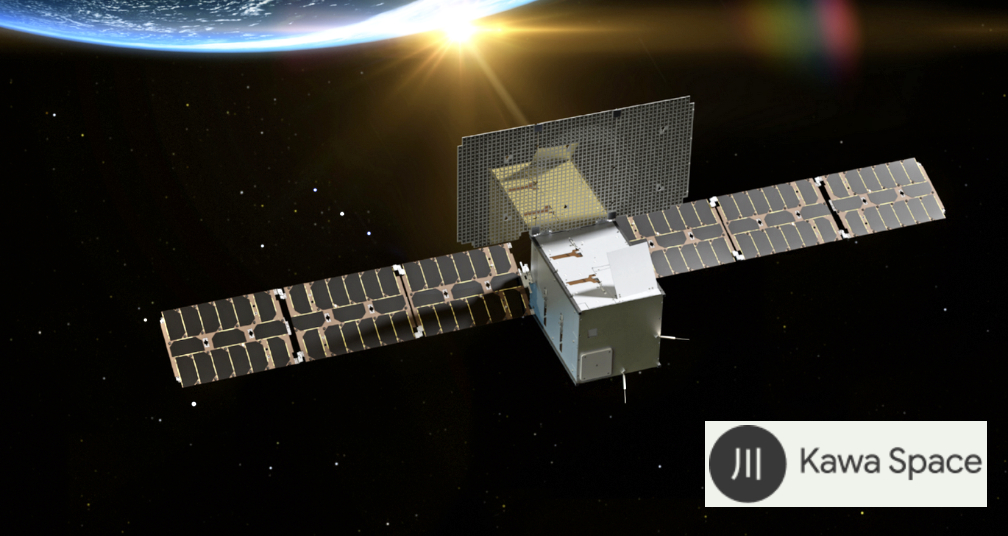
AAC Clyde Space recently won a £1.25 million from the New Space company Kawa Space for a 6U EPIC LINK smallsat and payload — the satellite is planned for delivery during Q4 2024.

The aim of the project is to demonstrate the technology for a future constellation of satellites that support Kawa Space’s existing, ocean monitoring platform. Kawa Space will use the data captured by the satellite for cargo ship route monitoring and to track illegal, unreported, and unregulated fishing.

“This order shows how our approach of developing standard satellites is delivering infrastructure solutions, that our customers can rely on to build their business. I am delighted to be able to welcome Kawa Space as a new customer of AAC Clyde Space as they share our vision of making space available to many more in order to improve life on Earth.” — Luis Gomes, CEO, AAC Clyde Space

“We are thrilled to announce our collaboration with AAC Clyde Space to build Kawa’s KSS-BOBCAT demo mission. This partnership will harness our collective expertise to showcase cutting-edge technologies in spectrum monitoring and build a brand new dataset for our end customers.” — Kris Nair, CEO, Kawa Space

Filed Under: Featured, News

Firefly Aerospace signs agreement with Lockheed Martin for Alpha launch services

July 4, 2023 by editorial

Firefly Aerospace, Inc. has signed a launch agreement with Lockheed Martin to support a technology demo mission that will launch aboard Firefly’s Alpha vehicle (image above).

Firefly’s Alpha rocket provides affordable and responsive launch services with the capability to lift more than 1,000 kg. to LEO. The vehicle uses Firefly’s patented, tap-off, cycle propulsion technology and carbon composite, sandwich structures to reduce mass and costs and improve strength and reliability. As a launch provider, Firefly provides an important capability to Lockheed Martin in supporting access to space for that company’s key spacecraft technologies.

“Firefly’s flight-proven hardware and rapid launch capabilities are well-aligned with Lockheed Martin’s mission needs, and we’re proud to serve as one of their launch providers,” said. “We have the infrastructure, technologies, systems, and a dedicated team in place to provide on-demand launch services for both government and commercial customers.” — Bill Weber, CEO, Firefly Aerospace

“We are working with Firefly because of their innovative performance in offering access to space for small payloads on Firefly Alpha. We look forward to collaborating with them, as we focus on creating a resilient launch environment for our upcoming technology demonstration.” — Dan Tenney, Vice President, Strategy and Business development, Lockheed Martin Space

Firefly is an end-to-end space transportation company with launch, lunar, and in-space services. As an all-American company headquartered in central Texas, Firefly is focused on delivering responsive, reliable, and affordable space access for government and commercial customers. Firefly’s small- to medium-lift launch vehicles, Space Utility Vehicles, and Blue Ghost lunar landers provide the space industry with a single source for missions from LEO to the surface of the Moon and beyond.

Filed Under: Featured, News

SpiderOak demos OrbitSecure on Ball Aerospace payload

June 27, 2023 by editorial

SpiderOak has successfully achieved flight heritage through the deployment and demo of the firm’s OrbitSecure platform in space.

SpiderOak conducted rigorous testing of its end-to-end, data security solution on a Ball Aerospace prototype payload that is currently operational in LEO. The payload incorporates Ball Aerospace’s Open Software System (BOSS) framework, supporting containerized applications that can be modified on-orbit, as well as real-time, data processing functions.

Through close collaboration between SpiderOak and Ball Aerospace teams, the OrbitSecure technology was seamlessly deployed to and integrated into the Ball hosted payload while on orbit, demonstrating that data level zero-trust can be achieved on deployed systems despite the size, weight, and power limitations in space.

Taking zero-trust security to zero-gravity environments, OrbitSecure leverages a unique combination of no-knowledge encryption and distributed-ledger software to meet the unique demands of cybersecurity in space. OrbitSecure overcomes the constraints of traditional hardware-based protections utilizing a new, fully decentralized key management system allowing for full availability and continued operations in space despite disconnected or highly contested networks.

OrbitSecure’s software-based approach makes it quickly adaptable to counter new and evolving cyber threats while providing enhanced decentralized space resiliency to multi-vendor, multi-network, mesh proliferated LEO networks. Dramatically reducing a space operator’s attack surface with OrbitSecure disrupts any adversary’s attempts to counter, modify, or contest space communications and satellite services.

Though rigorously tested in flat sat environments by industry leaders such as Raytheon, Northrop and Lockheed Martin, the Ball Aerospace announcement represents the first time a partner has successfully deployed the OrbitSecure capability in space.

The prototype payload launched in January as the first mission in Ball Aerospace’s rideshare program, part of Ball’s focus on the rapid and affordable development and demonstration of technologies on orbit.

“Successfully operating any military system in an operationally relevant environment is always a big milestone. In the unforgiving environment of space, there is no stronger validation that a system is ready for deployment. I am thrilled with SpiderOak’s achievement!” — Ellen Pawlikowski, retired four-star U.S. Air Force General and member of SpiderOak’s Space Advisory Board

“This successful demonstration completes a major milestone in advancing OrbitSecure as the satellite operator’s choice for data security and resiliency in space. While other cyber solutions have only been demonstrated terrestrially, this achievement with Ball Aerospace proves our unique COTS (commercial off the shelf) software works equally well on orbit as it has on the ground for many years.” — Dave Pearah, CEO, SpiderOak

“The Space Force has openly acknowledged the ever-expanding cyber threats targeting space assets. This successful demonstration of SpiderOak’s OrbitSecure technology onboard Ball’s hosted payload, which launched earlier this year, is a step towards fortifying the resilience of our space ecosystem.” — Jake Sauer, Vice President and Chief Technologist, Ball Aerospace

“On-orbit tests underway by Ball Aerospace of SpiderOak’s OrbitSecure offer the promise of an efficient path to secure space systems based on blockchain technology,” stated . “Cybersecurity solutions for space systems must respect the space, power, weight, and cost constraints under which these systems operate. I look forward to the results of this first, on-orbit demonstration of SpiderOak’s cybersecurity approach. It’s also exciting that SpiderOak is a member of the Space Information Sharing and Analysis Center, demonstrating the center’s commitment to encouraging our country’s space sector to explore cutting-edge cybersecurity solutions.” — Samuel Visner, Vice Chair, Board of Directors, Space Information Sharing and Analysis Center (Space ISA)

SpiderOak is a 100% U.S.-owned and operated software company that delivers end-to-end cybersecurity and resiliency solutions for civil, military, and commercial space operations. Our commercially available products are built upon a foundation of zero-trust encryption and distributed ledger, ensuring the confidentiality, integrity, and availability of your most sensitive data in the space domain.

Filed Under: Featured, News

Safran + Terran Orbital sign MoU to produce electric propulsion systems for satellites in the U.S. — TIME magazine names the latter to their Most Influential Companies list

June 27, 2023 by editorial

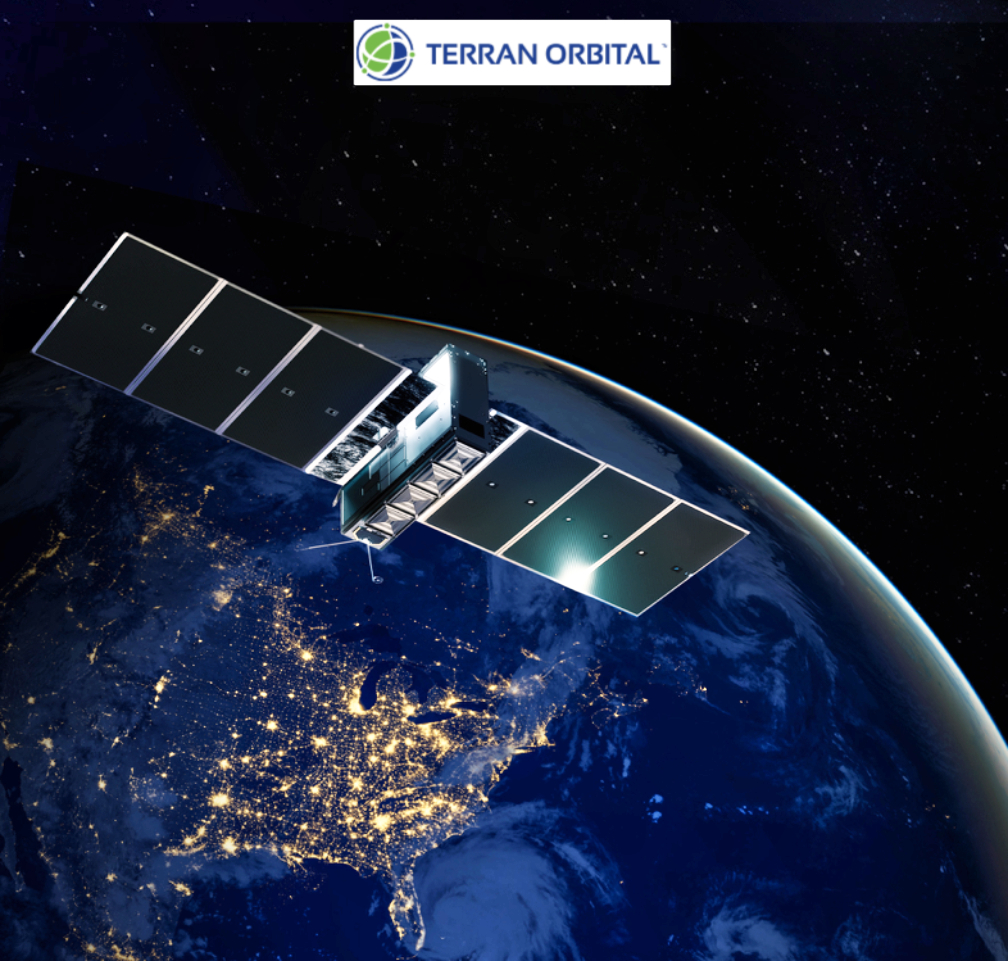
Safran Electronics & Defense and Terran Orbital (NYSE: LLAP) have signed a Memorandum of Agreement (MoU) to study and validate the prerequisites for production of a new generation of electric propulsion systems for satellites in the United States, based on Safran’s PPSX00 plasma thruster.

Safran Electronics & Defense, via Safran Spacecraft Propulsion, and Terran Orbital, will initiate an in-depth analysis to determine the technical, industrial and economic prerequisites for a new U.S.-based production line for electric propulsion systems. The location under consideration is a Terran Orbital facility in Irvine, California, which produces smallsats.

In addition to providing the American space industry with a local source of satellite thrusters, contributing to the economy and employment, this new line will match Safran’s production facilities in France, eventually doubling the company’s international production capacity.

Developing effective and sustainable propulsion systems for satellites is a critical challenge worldwide, as increasingly stringent international regulations stipulate greater sustainability and resilience in spacecraft. A higher degree of spacecraft maneuverability is needed to avoid collisions, along with a system to deorbit LEO satellites at the end of their service life.

Safran’s PPSX00 plasma thrusters, rated at about one kilowatt of power, will be used to meet the burgeoning mobility requirements of LEO satellites.

“Our alliance with Terran Orbital will contribute to the emergence of a complementary source of supply for electric propulsion systems to meet the growing needs of the space industry.” — Jean-Marie Bétermier, Senior Vice President Space at Safran Electronics & Defense

“This deal reflects Safran Electronics & Defense’s faith in the value of Terran Orbital’s industry-leading products and innovative personnel, while adding to our strategic investments to create more scalable, automated, vertically integrated production systems. Terran Orbital looks forward to working with Safran Electronics & Defense to create top-of-the-line propulsion systems that make spacecraft more resilient and maneuverable at faster delivery rates and lower costs for our national security and commercial customers.” — Marc Bell, Terran Orbital’s Chief Executive Officer and Chairman

Additionally, Time magazine last week named Terran Orbital (NYSE: LLAP) to the TIME100 Most Influential Companies list, honoring the satellite manufacturer and services provider and other firms for their “extraordinary impact around the world.”

Time recognized companies based on their “impact, innovation, ambition, and success,” with Terran Orbital spotlighted for its design, production, launch planning, mission operations, and in-orbit support for military, civil, and commercial satellite customers.

The magazine solicited company nominations from outside experts and the magazine’s global network of contributors and correspondents to spotlight “a diverse group of 100 businesses helping chart an essential path forward” for humanity.

Time’s recognition comes as Terran Orbital marks its 10th anniversary and a string of successes serving the aerospace and defense industries. Recent accomplishments include developing and co-operating the Cislunar Autonomous Positioning System Technology Operations and Navigation Experiment (CAPSTONE).

“Terran Orbital is thrilled Time magazine is recognizing us for producing cost-effective, cutting-edge satellites in an influential companies list that includes pioneers, industry leaders, innovators, disruptors, and tech titans from around the globe. Terran Orbital is honored to join the ranks of a TIME100 Most Influential Companies list that has included the likes of Apple, Amazon, Google-parent Alphabet, Disney, Microsoft, Moderna, Ford, and the NFL.” — Marc Bell, Chairman, CEO and Co-Founder, Terran Orbital

Filed Under: Featured, News

Space Flight Laboratory (SFL) completes the Telesat LEO 3 smallsat build

June 22, 2023 by editorial

Space Flight Laboratory (SFL) has completed the build of the Telesat LEO 3 demo smallsat and shipped the spacecraft from the Toronto integration facility to New Zealand where the satellite arrived this week at Rocket Lab Launch Complex 1.

Photo of Rocket Lab’s Launch Complex 1 in New Zealand

Following inspection to ensure the satellite shipped safely, LEO 3 will be integrated with the Rocket Lab Electron launch vehicle. Launch is scheduled for no earlier than Q3 of 2023. Once on-orbit, LEO 3 will provide continuity for customer and ecosystem vendor testing campaigns after the decommissioning of Telesat’s Phase 1 LEO satellite.

 The Telesat LEO 3 microsatellite, developed by Space Flight Laboratory (SFL) and shown here at the SFL integration facility in Toronto, has arrived at the Rocket Lab launch site in New Zealand.

Based in Ottawa, Ontario, Telesat selected SFL to build LEO 3 on a relatively, aggressive schedule. With a mass of 30 kg, the 30x30x45 cm satellite is based on SFL’s scalable and versatile DEFIANT smallsat platform. Currently, more than a dozen DEFIANT satellites are on-orbit, serving SFL clients in a variety of applications.

“SFL is pleased to have been chosen by Telesat to meet the challenge of building a cost-effective microsatellite with a robust design to achieve its high-bandwidth demonstration goals in Telesat’s target orbit. This continues SFL’s long standing history of enabling business success through smaller satellites developed at low cost.” – Dr. Robert E. Zee, Director, SFL

SFL’s 25-year heritage includes 65 operational successes totaling 250 cumulative years in orbit, with an additional 27 satellites under development or awaiting launch. Customized payloads include a wide range of applications related to Earth observation, atmospheric monitoring, ship tracking, communication, radio frequency (RF) geolocation, technology demonstration, space astronomy, solar physics, space plasma, and other scientific research.

Filed Under: Featured, News

Septentrio collaborates with Xona on PULSAR™ GNSS receiver

June 16, 2023 by editorial

Septentrio has been collaborating with Xona Space Systems to develop an experimental receiver that is compatible with the latter’s multi-frequency PULSAR™ signals.

This multi-frequency receiver that supports Xona’s LEO PNT signals will be one of the first to decode all PULSAR™ signals in parallel with other standard GNSS* signals. This makes it ideal for testing Xona’s upcoming LEO-PNT constellation in a simulated environment, since live signals are not yet available. LEO-PNT is a satellite navigation system that consists of low orbit satellites, which provide geographic positioning, a concept similar to a GNSS system such as GPS.

Xona Space Systems is pioneering the nexgen of space-based PNT (Positioning, Navigation, and Timing) to answer the need for more secure, accurate, and robust services.

The PULSAR™ system will consist of 260 LEO satellites orbiting the Earth 25 times closer than GPS satellites. The higher signal power resulting from closer proximity to Earth and the modernized signal design provide opportunities for better multipath mitigation and higher accuracy, as well as increased interference and spoofing protection.

High accuracy and resilient operation are also the main pillars on which Septentrio has built their PNT receivers over the last two decades, providing reliable positioning and timing solutions to critical infrastructure and industrial applications such as precision agriculture, construction, robotics and much more.

“We are thrilled to welcome Septentrio to the PULSAR ecosystem,” said . “Septentrio is well-known as an industry leader in developing high-quality and resilient GNSS products. As Xona PULSAR signals become available, a Septentrio receiver will offer users an opportunity to be the first to experiment with PULSAR and GNSS in many different scenarios.” — Bryan Chan, VP of Business Development and Strategy, Xona

“We are excited to collaborate with Xona Space Systems during this new era for PNT technology. After our deep involvement in various expansions of the GNSS ecosystem, most notably Galileo for receivers of both reference networks and user applications, it is exciting to leverage our experience in the next phase of space-based PNT, which has opened up with LEO-PNT.” — Jan Van Hees, Business Development Director at Septentrio

  • Global Navigation Satellite System including the American GPS, European Galileo, Russian GLONASS, Chinese BeiDou, Japan’s QZSS and India’s NavIC. These satellite constellations broadcast positioning information to receivers which use it to calculate their absolute position.

Filed Under: Featured, News

Muon Space ‘s 1st satellite is successfully launched + deployed

June 15, 2023 by editorial

Muon Space has announced the successful deployment of the company’s first satellite, MuSat-1.

Mu-Sat-1, photo is courtesy of Muon Space

The ESPA-class spacecraft, which launched on SpaceX’s Transporter-8 mission from Vandenberg Space Force Base on Monday, June 12, is Muon Space’s first satellite on-orbit and an important step toward the firm’s Climate Constellation, which will use a new generation of sensors to monitor Earth’s climate and ecosystems.

Muon Space’s Climate Constellation will dramatically improve temporal cadence and sampling, producing sub-hourly global measurements. MuSat-2 and MuSat-3 are close behind — establishing a regular launch cadence to enable a growing constellation for Climate Intelligence data. Each satellite carries next-generation sensors that will provide transformative, actionable insights on Earth’s vital signs and the fingerprints of a changing planet.

“This launch is a testament to the incredible team we’ve assembled here at Muon Space who have designed, built, and now launched an ESPA-class spacecraft in less than two years. MuSat-1 is just the beginning as we push the limit of smallsat technology to produce actionable climate data on a global scale.”
— Jonny Dyer, CEO, Muon Space

“We were able to design, build, and launch a mission on an incredibly short timeline because we relied on a ‘fail fast’ approach to the spacecraft design. We went through multiple design iterations for all subsystems and are gratified to see how well our platform is operating in space. The communication with MuSat-1 helps us accelerate our development of upcoming satellites in the constellation.”
— Paridhi Desai, MuSat program lead

Founded in 2021, Muon Space is launching a new generation of smallsats and sensors to monitor Earth’s climate and ecosystems with unprecedented fidelity. Muon Space’s state-of-the-art facility in the heart of Silicon Valley is optimized for manufacturing spacecraft and integrating payloads at scale. Regular launches beginning in June, 2023 provide ever-increasing data sets addressing important geophysical and environmental applications and a platform to deliver new technologies to space. Muon Space’s experienced science and engineering teams are uniquely suited to deliver the most exquisite and reliable remote sensing solutions at the speed and scale required to address our most urgent climate challenges.

Filed Under: Featured, News

  • « Go to Previous Page
  • Page 1
  • Interim pages omitted …
  • Page 21
  • Page 22
  • Page 23
  • Page 24
  • Page 25
  • Interim pages omitted …
  • Page 60
  • Go to Next Page »

Primary Sidebar

WEEKLY NEWSLETTER

Archives

  • June 2026
  • May 2026
  • April 2026
  • March 2026
  • February 2026
  • January 2026
  • December 2025
  • November 2025
  • October 2025
  • September 2025
  • August 2025
  • July 2025
  • June 2025
  • May 2025
  • April 2025
  • March 2025
  • February 2025
  • January 2025
  • December 2024
  • November 2024
  • October 2024
  • September 2024
  • August 2024
  • July 2024
  • June 2024
  • May 2024
  • April 2024
  • March 2024
  • February 2024
  • January 2024
  • December 2023
  • November 2023
  • October 2023
  • September 2023
  • August 2023
  • July 2023
  • June 2023
  • May 2023
  • April 2023
  • March 2023
  • February 2023
  • January 2023
  • December 2022
  • November 2022
  • October 2022
  • September 2022
  • August 2022
  • July 2022
  • June 2022
  • May 2022
  • April 2022
  • March 2022
  • February 2022
  • January 2022
  • December 2021
  • November 2021
  • October 2021
  • September 2021
  • August 2021
  • July 2021
  • June 2021
  • May 2021
  • April 2021
  • March 2021
  • February 2021
  • January 2021
  • December 2020
  • November 2020
  • October 2020
  • September 2020
  • August 2020
  • July 2020
  • June 2020
  • May 2020
  • April 2020
  • March 2020
  • February 2020
  • January 2020
  • December 2019
  • November 2019
  • October 2019

© 2019–2026 SatNews

Insert/edit link

Enter the destination URL

Or link to existing content

    No search term specified. Showing recent items. Search or use up and down arrow keys to select an item.
      x
      Sign Up Now!

      Enjoy a free weekly newsletter with recent headlines from the global SmallSat industry.

      Invalid email address
      We promise not to spam you. You can unsubscribe at any time.
      Thanks for subscribing! You will now receive weekly SmallSat News updates.
      We love our advertisers.
      And you will too!

      Please disable Ad Blocker to continue... We promise to keep it unobtrusive.
      We promise not to spam you. You can unsubscribe at any time.
      Invalid email address
      Thanks for subscribing!