• Skip to main content
  • Skip to primary sidebar
  • Home
  • News
  • Featured
  • More News ⌄
    • SatNews
    • SatMagazine
    • MilSatMagazine
  • Events ⌄
    • MilSat Symposium
    • SmallSat Symposium
    • Satellite Innovation
  • Contacts
  • SUBSCRIPTION

SmallSat News

You are here: Home / Archives for Featured

Featured

Space Flight Laboratory (SFL) completes the Telesat LEO 3 smallsat build

June 22, 2023 by editorial

Space Flight Laboratory (SFL) has completed the build of the Telesat LEO 3 demo smallsat and shipped the spacecraft from the Toronto integration facility to New Zealand where the satellite arrived this week at Rocket Lab Launch Complex 1.
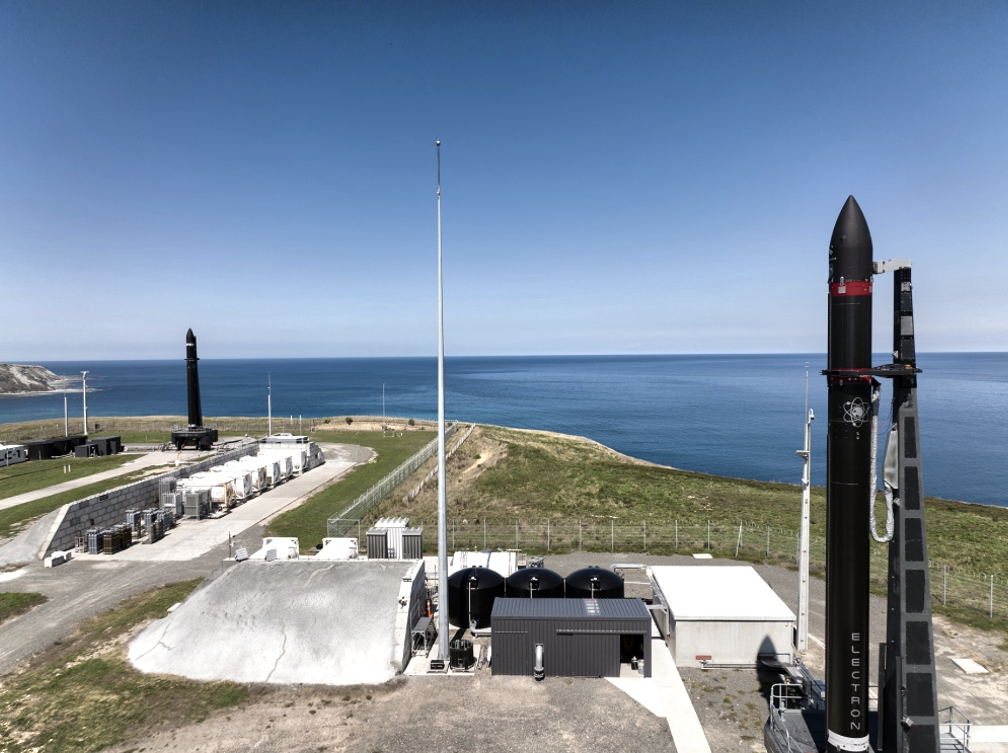
Photo of Rocket Lab’s Launch Complex 1 in New Zealand

Following inspection to ensure the satellite shipped safely, LEO 3 will be integrated with the Rocket Lab Electron launch vehicle. Launch is scheduled for no earlier than Q3 of 2023. Once on-orbit, LEO 3 will provide continuity for customer and ecosystem vendor testing campaigns after the decommissioning of Telesat’s Phase 1 LEO satellite.
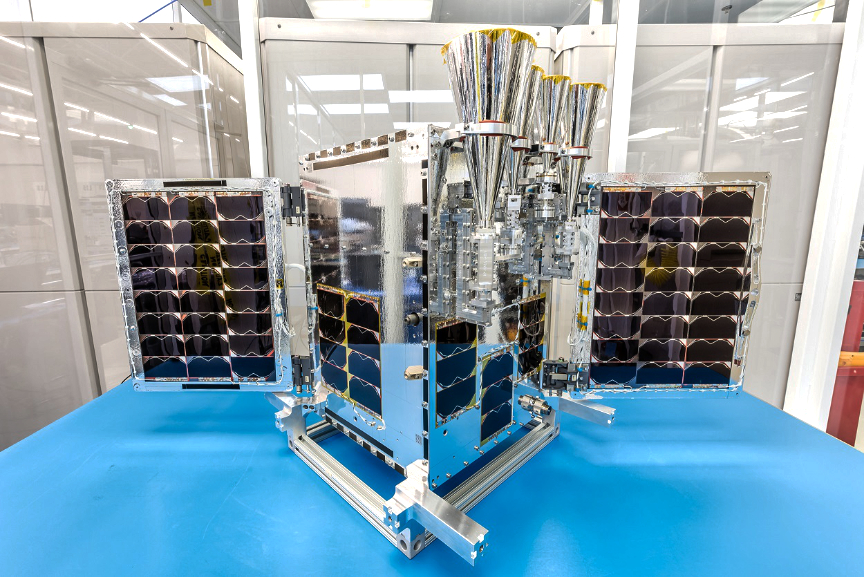
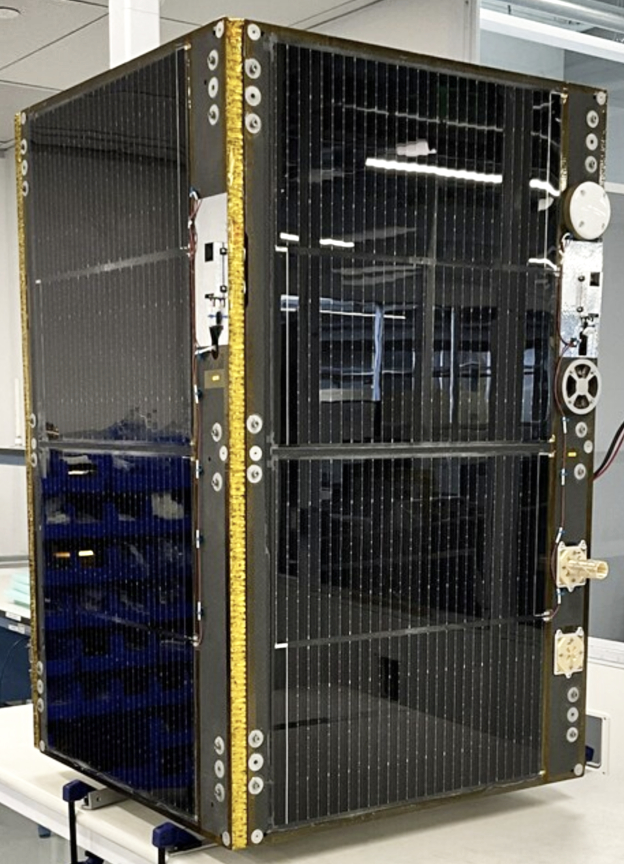
 The Telesat LEO 3 microsatellite, developed by Space Flight Laboratory (SFL) and shown here at the SFL integration facility in Toronto, has arrived at the Rocket Lab launch site in New Zealand.

Based in Ottawa, Ontario, Telesat selected SFL to build LEO 3 on a relatively, aggressive schedule. With a mass of 30 kg, the 30x30x45 cm satellite is based on SFL’s scalable and versatile DEFIANT smallsat platform. Currently, more than a dozen DEFIANT satellites are on-orbit, serving SFL clients in a variety of applications.

“SFL is pleased to have been chosen by Telesat to meet the challenge of building a cost-effective microsatellite with a robust design to achieve its high-bandwidth demonstration goals in Telesat’s target orbit. This continues SFL’s long standing history of enabling business success through smaller satellites developed at low cost.” – Dr. Robert E. Zee, Director, SFL

SFL’s 25-year heritage includes 65 operational successes totaling 250 cumulative years in orbit, with an additional 27 satellites under development or awaiting launch. Customized payloads include a wide range of applications related to Earth observation, atmospheric monitoring, ship tracking, communication, radio frequency (RF) geolocation, technology demonstration, space astronomy, solar physics, space plasma, and other scientific research.
Filed Under: Featured, News

Septentrio collaborates with Xona on PULSAR™ GNSS receiver

June 16, 2023 by editorial

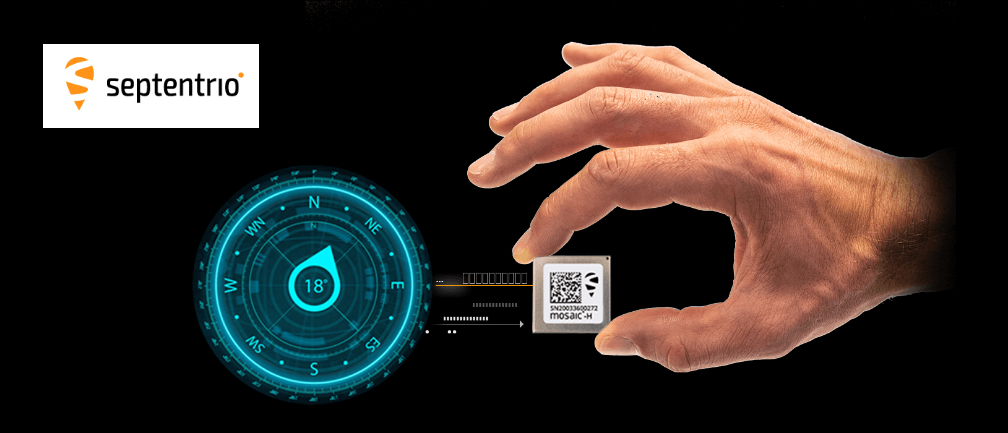
Septentrio has been collaborating with Xona Space Systems to develop an experimental receiver that is compatible with the latter’s multi-frequency PULSAR™ signals.

This multi-frequency receiver that supports Xona’s LEO PNT signals will be one of the first to decode all PULSAR™ signals in parallel with other standard GNSS* signals. This makes it ideal for testing Xona’s upcoming LEO-PNT constellation in a simulated environment, since live signals are not yet available. LEO-PNT is a satellite navigation system that consists of low orbit satellites, which provide geographic positioning, a concept similar to a GNSS system such as GPS.

Xona Space Systems is pioneering the nexgen of space-based PNT (Positioning, Navigation, and Timing) to answer the need for more secure, accurate, and robust services.

The PULSAR™ system will consist of 260 LEO satellites orbiting the Earth 25 times closer than GPS satellites. The higher signal power resulting from closer proximity to Earth and the modernized signal design provide opportunities for better multipath mitigation and higher accuracy, as well as increased interference and spoofing protection.

High accuracy and resilient operation are also the main pillars on which Septentrio has built their PNT receivers over the last two decades, providing reliable positioning and timing solutions to critical infrastructure and industrial applications such as precision agriculture, construction, robotics and much more.

“We are thrilled to welcome Septentrio to the PULSAR ecosystem,” said . “Septentrio is well-known as an industry leader in developing high-quality and resilient GNSS products. As Xona PULSAR signals become available, a Septentrio receiver will offer users an opportunity to be the first to experiment with PULSAR and GNSS in many different scenarios.” — Bryan Chan, VP of Business Development and Strategy, Xona

“We are excited to collaborate with Xona Space Systems during this new era for PNT technology. After our deep involvement in various expansions of the GNSS ecosystem, most notably Galileo for receivers of both reference networks and user applications, it is exciting to leverage our experience in the next phase of space-based PNT, which has opened up with LEO-PNT.” — Jan Van Hees, Business Development Director at Septentrio

  • Global Navigation Satellite System including the American GPS, European Galileo, Russian GLONASS, Chinese BeiDou, Japan’s QZSS and India’s NavIC. These satellite constellations broadcast positioning information to receivers which use it to calculate their absolute position.

Filed Under: Featured, News

Muon Space ‘s 1st satellite is successfully launched + deployed

June 15, 2023 by editorial

Muon Space has announced the successful deployment of the company’s first satellite, MuSat-1.

Mu-Sat-1, photo is courtesy of Muon Space

The ESPA-class spacecraft, which launched on SpaceX’s Transporter-8 mission from Vandenberg Space Force Base on Monday, June 12, is Muon Space’s first satellite on-orbit and an important step toward the firm’s Climate Constellation, which will use a new generation of sensors to monitor Earth’s climate and ecosystems.

Muon Space’s Climate Constellation will dramatically improve temporal cadence and sampling, producing sub-hourly global measurements. MuSat-2 and MuSat-3 are close behind — establishing a regular launch cadence to enable a growing constellation for Climate Intelligence data. Each satellite carries next-generation sensors that will provide transformative, actionable insights on Earth’s vital signs and the fingerprints of a changing planet.

“This launch is a testament to the incredible team we’ve assembled here at Muon Space who have designed, built, and now launched an ESPA-class spacecraft in less than two years. MuSat-1 is just the beginning as we push the limit of smallsat technology to produce actionable climate data on a global scale.”
— Jonny Dyer, CEO, Muon Space

“We were able to design, build, and launch a mission on an incredibly short timeline because we relied on a ‘fail fast’ approach to the spacecraft design. We went through multiple design iterations for all subsystems and are gratified to see how well our platform is operating in space. The communication with MuSat-1 helps us accelerate our development of upcoming satellites in the constellation.”
— Paridhi Desai, MuSat program lead

Founded in 2021, Muon Space is launching a new generation of smallsats and sensors to monitor Earth’s climate and ecosystems with unprecedented fidelity. Muon Space’s state-of-the-art facility in the heart of Silicon Valley is optimized for manufacturing spacecraft and integrating payloads at scale. Regular launches beginning in June, 2023 provide ever-increasing data sets addressing important geophysical and environmental applications and a platform to deliver new technologies to space. Muon Space’s experienced science and engineering teams are uniquely suited to deliver the most exquisite and reliable remote sensing solutions at the speed and scale required to address our most urgent climate challenges.

Filed Under: Featured, News

Comtech + E-Space team up to make space-powered connectivity services available + actionable anywhere

June 14, 2023 by editorial

Comtech (NASDAQ: CMTL) and E-Space are now collaborating together to develop and deploy innovative, space-based communications solutions and IoT services to support predominantly government and targeted commercial customers.

The collaboration will leverage Comtech’s portfolio of industry leading technologies and strategic partnerships, coupled with E-Space’s future advanced space system, inclusive of the firm’s global, LEO constellation and unique device capabilities, to provide customers with secure, resilient global connectivity services. The E-Space space system, optimized with edge Artificial Intelligence (edge AI), will enable the delivery of new smart applications, real-time actionable insights and suggested courses of action.

E-Space is building a satellite infrastructure that will blur the line between satellite and terrestrial communications network capabilities for delivering IoT connectivity. E-Space’s advanced technology will enable a new class of ubiquitous, real-time communications capabilities, which is expected to reduce device costs and increase coverage.

Comtech delivers innovative approaches to automate workflows, enhance safety, improve reliability and reduce system downtime. The Company holds hundreds of patents spanning terrestrial and satellite communications as well as location-based services, and its technologies are currently fielded in over 200 countries.

Comtech is expanding its already vast portfolio of solutions and services through EVOKE, Comtech’s Innovation Foundry, as well as through strategic partnerships with world class innovators, like E-Space. These relationships provide customers with unprecedented access to data and insights that deliver meaningful value and uncover a number of new economic growth opportunities in diverse global markets.

“Continuous connectivity is a fundamental need in today’s information-driven society that will generate ongoing demand to blend terrestrial, wireless and satellite networks. By teaming with E-Space, we will provide end users with reliable, global connectivity to enable near real-time predictive insights that will drive efficiency, reduce operator burden and empower individuals by providing access to new technologies.”
— Ken Peterman, President and CEO, Comtech

“Combining the expertise and resources from Comtech and E-Space will help revolutionize the way defense and commercial companies leverage space-powered data to connect, communicate and put intelligence into action. From providing warfighters up-to-the-minute situational awareness to ensuring logistics providers have incredible insights into every asset in a shipment – we will be able to provide unique information sets that will enable smarter operations.”
— Greg Wyler, Founder, Chairman, CEO, E-Space

Comtech Telecommunications Corp. is a leading global technology company providing terrestrial and wireless network solutions, next-generation 9-1-1 emergency services, satellite and space communications technologies, and cloud native capabilities to commercial and government customers around the world. Our unique culture of innovation and employee empowerment unleashes a relentless passion for customer success. With multiple facilities located in technology corridors throughout the United States and around the world, Comtech leverages our global presence, technology leadership, and decades of experience to create the world’s most innovative communications solutions.

E-Space is bridging Earth and space to enable hyper-scaled deployments of Internet of Things (IoT) solutions and services. The Company is fundamentally changing the design, economics, manufacturing, coverage limitations and service delivery of space-powered IoT connectivity. Its advanced, sustainable low Earth orbit (LEO) space infrastructure will blur the line between satellite and terrestrial communications networks, creating a new class of ubiquitous, real-time communications capabilities that enable end-users to connect, track, sense and act on edge AI optimized data, gathered from billions of novel E-Space devices deployed planet-wide. Learn more about E-Space at: e-space.com and follow the Company on LinkedIn and Instagram.

Filed Under: Featured, News

Rocket Lab spacecraft built for Varda are successfully operating on-orbit

June 13, 2023 by editorial

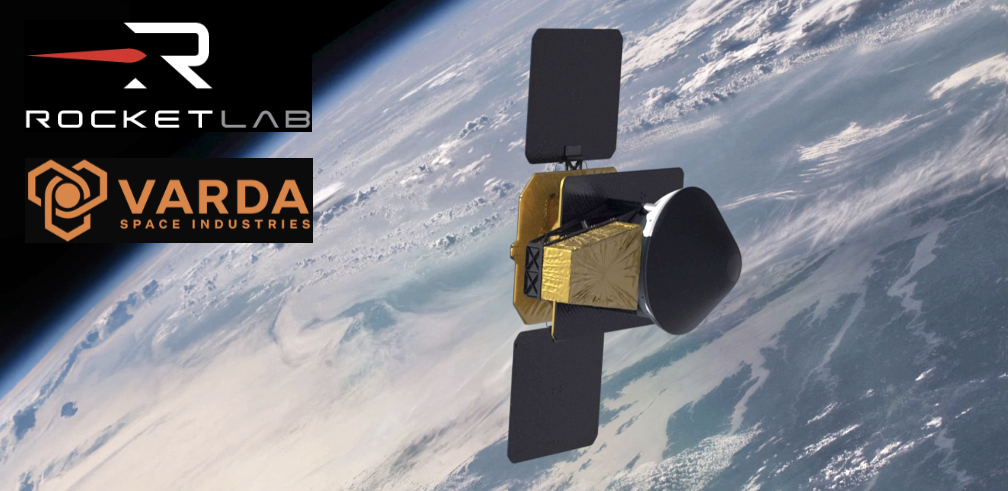
Rocket Lab USA, Inc. (Nasdaq: RKLB) has announced the the firm’s spacecraft built for Varda Space Industries (“Varda”) is successfully operating on-orbit after launching from Vandenberg Space Force Base on June 12th on SpaceX’s Transporter-8 mission at 14:35 PDT (21:35 UTC).

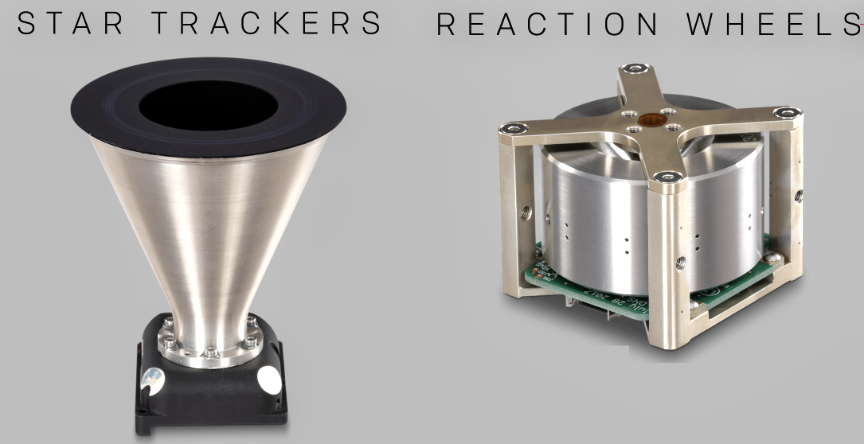
The spacecraft was developed, manufactured and tested at Rocket Lab’s Spacecraft Production Facility in Long Beach, California, and incorporates Rocket Lab-designed and manufactured components and software, including star trackers, propulsion system, reaction wheels, solar panels, flight software, radios, composite structures and tanks, and separation systems.

The spacecraft will provide power, communications, propulsion, and attitude control to Varda’s 120 kg capsule that will produce pharmaceutical products in microgravity and return them to Earth. Upon completion of the in-space manufacturing phase of Varda’s mission, Rocket Lab’s spacecraft will place Varda’s hypersonic re-entry capsule (carrying finished pharmaceuticals on board) on a return trajectory to Earth.

The spacecraft is the first of four ordered by Varda to support in-space pharmaceutical manufacturing, with the second spacecraft currently undergoing assembly, integration, and testing.

The Varda spacecraft are part of a growing list of complete satellites in development by Rocket Lab, including a $143 million subcontract by MDA to lead the design and manufacture of 17 spacecraft buses for Globalstar’s new LEO satellites.

Leveraging the Company’s vertically integrated space systems capabilities, Rocket Lab spacecraft incorporate components and subsystems produced in-house to deliver cost efficiencies and accelerated production timelines. Rocket Lab components and subsystems have been successfully flown on more than 1,000 spacecraft globally.

“Congratulations to our Space Systems team and to Varda on the start of an incredibly exciting and important mission. From technology demonstration missions in low Earth orbit to complex missions to the Moon, and now in-space manufacturing, Rocket Lab spacecraft are enabling innovation on orbit. By leveraging our deep vertical integration across Space Systems we’ve been able to deliver a high-quality spacecraft to Varda on a rapid timeline to accelerate their mission and we look forward to delivering many more.”
— Brad Clevenger, Vice President, Rocket Lab Space Systems

“We’re thrilled to have partnered with Rocket Lab on our first demonstration mission. Varda has managed to go from opening our office doors to a first flight in just two and a half years. In addition to the incredible team we have at Varda, one of the key enablers to this speed was because we could focus on our core expertise, re-entry, and manufacturing, while leveraging Rocket Lab’s Photon spacecraft platform.”
— Nicholas Cialdella, Head of Vehicles at Varda

Filed Under: Featured, News

Six satellites mfg’d by Kongsberg NanoAvionics reach orbit via the SpaceX Transporter-8 mission

June 13, 2023 by editorial

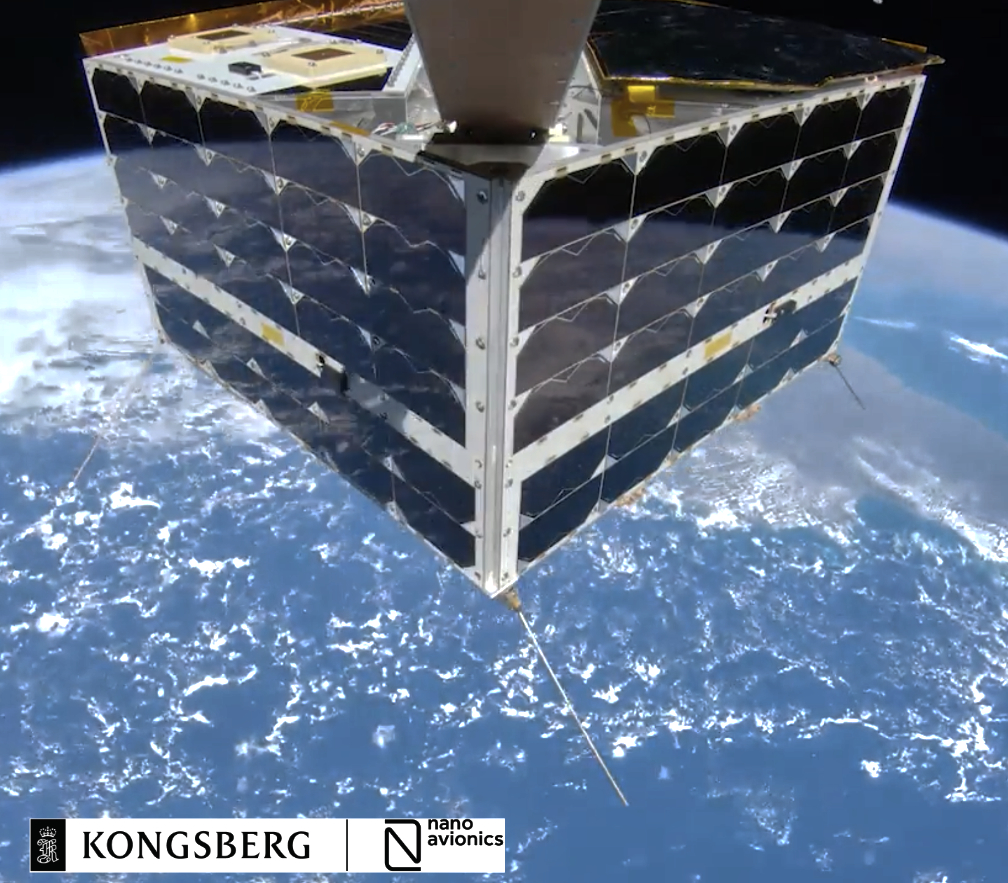
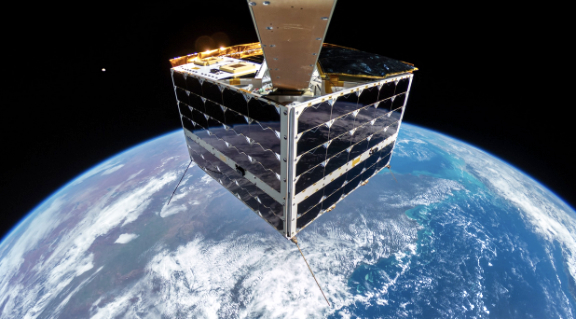
Kongsberg NanoAvionics (NanoAvionics) had six of their manufactured satellites reaching orbit today’s as payloads aboard the SpaceX Transporter-8 mission.

One of them, Tiger-4, belongs to telecoms operator OQ Technology and will expand the world’s first and largest 5G Narrowband-IoT constellation in LEO. The 6U smallsat is the fourth satellite manufactured for OQ Technology by NanoAvionics.

The second payload from NanoAvionics is a 16U, optical, Earth Observation (EO) satellite named “GEI-SAT” and is owned by Satlantis, a Spanish-based developer as well as the manufacturer of “Earth & Universe Observation” payloads for smallsats. The satellite is a precursor of a Satlantis’ remote sensing constellation intended to perform atmospheric CH4 measurements with high spatio-temporal resolution and simultaneous geolocation of source emitters.

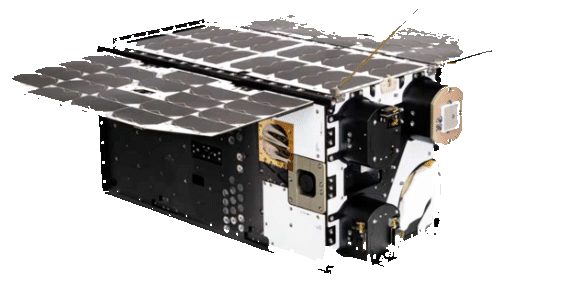
This smallsat will be used to monetize and obtain quantification of methane emissions in the oil & gas (O&G) industry. NanoAvionics supplied the mission with the M16P satellite bus (pictured to the right) and mission integration services.

The other four satellites ordered by three unnamed companies include one smallsat for remote sensing mission using RF, two technology demo satellites plus an MP42H (pictured to the left) orbital reconnaissance demo smallsat that acquire highly accurate measurements of spacecraft and objects in orbit to reduce the threat of in-space collisions.

All satellites were manufactured at NanoAvionics’s MAIT (manufacturing, assembly, integration, and testing) facility in Vilnius, Lithuania, established to meet the demands for serial smallsat production for constellations by commercial, civil, and governmental organisations.

“The SpaceX Transporter-8 mission marks our 12th manufactured satellite to launch this year alone. Most of these satellites are from existing customers, highlighting their satisfaction and continued trust in our services and capabilities to quickly build high-quality and cost-efficient nano- and microsatellites. We are also working on delivering and readying for launch over a dozen more satellites for our customers, including this year’s first assembled 100+ kg microsatellite, by the end of the year.”
— Vytenis J. Buzas, Founder and CEO, NanoAvionics

Filed Under: Featured, News

Sidus Space to launch LizzieSat™ via SpaceX

June 8, 2023 by editorial

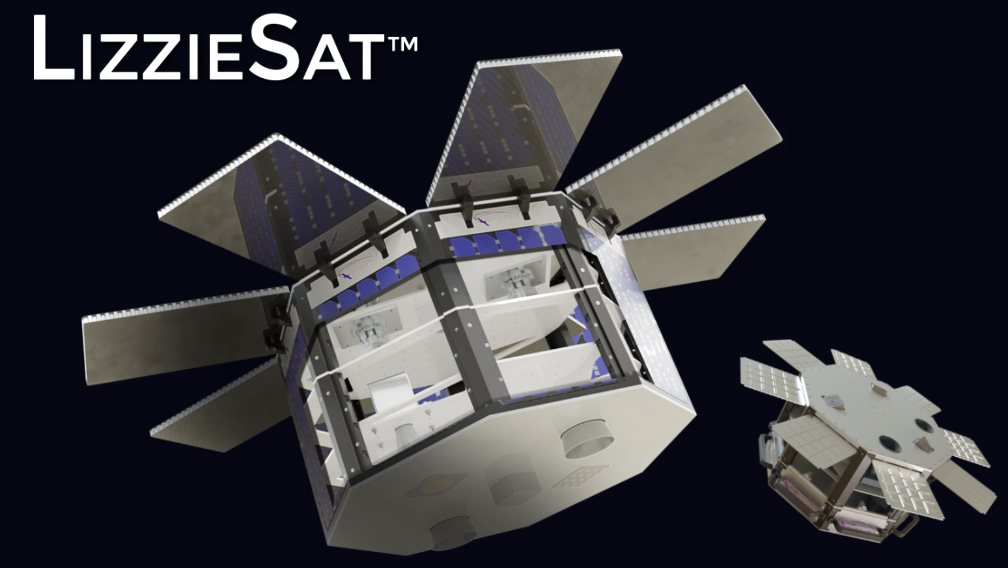
Sidus Space (NASDAQ: SIDU) will launch hyperspectral and multispectral imaging as well as Edge Artificial Intelligence (AI) incorporated into the company’s LizzieSat™ satellite via SpaceX Transporter missions starting in 2024.
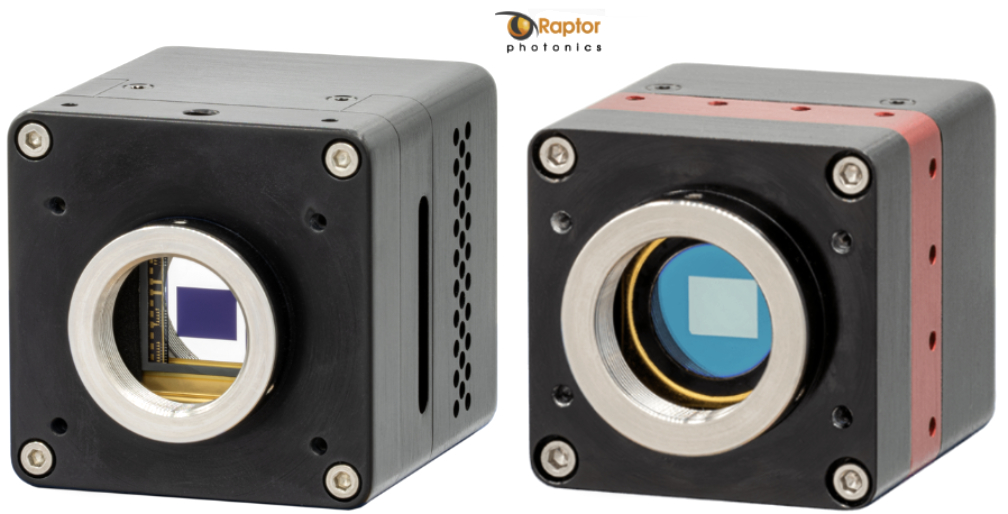

Raptor Photonics’ OWL (left) + Hawk (right) HD cameras

LizzieSat’s hyperspectral and multispectral imaging capability will be provided by the Owl 1280 and Hawk 1920 HD cameras made by Raptor Photonics. Sidus is building its space-based infrastructure of multi-mission satellites with hyperspectral, multispectral and other sensors to provide monitoring services and solutions to multiple sectors and industries.

Sidus’ sub-5m ground sampling distance (GSD) multispectral SWIR, coupled with sub-10m hyperspectral imagery capabilities provides the Company with a competitive advantage in serving the $55.6 billion smallsat market. Additionally, the Company’s robust ground coverage and Edge AI accelerates the receipt of actionable data sent to the ground by parsing key identifying information before transmission.

Sidus’ satellites are expected to circle the Earth every 95 minutes, with communication gaps less than 10 minutes on each orbit. This gap can be closed completely as additional ground stations are secured. This provides customers with satellite access near-real-time data transmission.

The Company plans to monetize its imagery both through previously negotiated contracts and through its agreement with Skywatch and others to sell imagery on their storefront. This hyperspectral and multispectral capability is also key to the Sidus’ strategy to generate recurring revenue streams from new customers as Sidus builds its LizzieSat constellation.

Sidus plans to launch its first LizzieSat on the SpaceX Transporter mission scheduled for later this year and has contracted with SpaceX to launch on four additional flights, with two currently scheduled for 2024 and two more scheduled for 2025, allowing the Company to establish a regular launch cadence for its customers. The Company plans to begin offering hyperspectral and multispectral imaging from its LizzieSats scheduled for launch on SpaceX’s transporter mission in the first quarter of next year.

“LizzieSat’s hyperspectral and multispectral imaging capability will provide potential data solutions for a variety of market verticals within the estimated $1 trillion space economy anticipated by 2040. Key industries that will benefit and provide markets for this imaging include agriculture, climate change, renewables, mining, and oil and gas. We look forward to further development of our LizzieSat constellation as we seek to develop and provide access to space-based data on-demand for any problem set or business need.”
— Carol Craig, Founder & CEO of Sidus Space

Filed Under: Featured, News

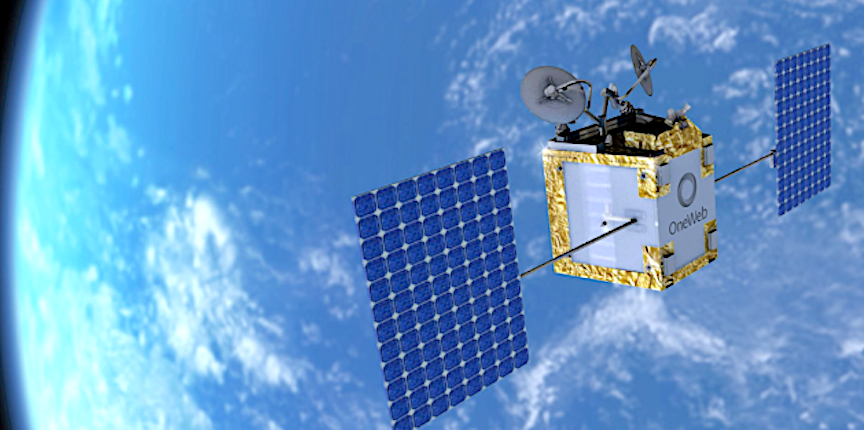
OneWeb’s successful airline milestones for 2023

June 6, 2023 by editorial

With its global LEO satellite constellation now complete, hardware on-track for certification, and anticipated major airline deals — OneWeb moves from laying the foundation for an enhanced inflight connectivity experience, to actually making better onboard connectivity. 

OneWeb, the low Earth orbit satellite connectivity company, has achieved key milestones as part of its objective to connect the unconnected and bridge the digital divide on land, at sea and in the air. OneWeb’s philosophy of ‘for the industry, by the industry’ approach to aviation has been well received by its technology, integration, and distribution partners. 

OneWeb, the low Earth orbit satellite connectivity company, has achieved key milestones as part of its objective to connect the unconnected and bridge the digital divide on land, at sea and in the air.

On March 26, OneWeb completed its 18th launch (its third this year), achieving a significant milestone in the history of OneWeb and the future of connectivity on Earth. The launch, which took place from Sriharokita, India, brought the total number of OneWeb’s satellites in orbit to 618 satellites that exceeds the 588 active satellites needed to achieve global coverage. By the year-end, OneWeb will be ready to roll out global coverage, enhancing its existing connectivity solutions that are already live in regions north of 50-degrees latitude as it brings new areas online. 

Commenting on the launch, Ben Griffin, VP Mobility at OneWeb said, “With this launch, OneWeb has become the first broadband LEO constellation that is truly complete and the only one with effective polar coverage north and south. We’re also the only LEO network operator with high-quality service level agreements and a robust technical network to fully support mobility customers. We remain on course to deliver global coverage by the end of 2023 — with aviation services coming online in early 2024.” 

In February, OneWeb, together with partners Intelsat and Stellar Blu, successfully tested a hybrid satcom solution leveraging both LEO and GEO satellite networks during flight tests. Testing took place on Intelsat’s Bombardier CRJ-700 regional jet outfitted with the new electronically-steered antenna (ESA) built in conjunction with Stellar Blu and OneWeb. This is the only commercially available product in the aviation industry that has been proven to operate on both OneWeb’s low Earth orbit satellites and geostationary satellites. 

Peak inflight download speeds exceeded 275Mbps, facilitating applications such as live virtual meetings, media streaming – and with the enhanced low latency of the OneWeb network, cloud computing without interruption. 

Ben Griffin, VP Mobility at OneWeb said, “The ability for OneWeb to integrate with existing GEO constellations will provide airlines with flexibility and peace of mind as the new LEO capabilities of the OneWeb network are deployed and proven. We expect certification of this ground-breaking antenna in Q1, 2024.” 

Due to the large physical footprint and weight penalties associated with existing hardware installations, regional jet fleets have, up to now, gone without inflight broadband, or have been served by air-to-ground solutions that haven’t always met the need. But Alaska Airline’s decision early this year to offer “streaming fast” Wi-Fi on its E175 fleet, beginning in 2024, validates the need for regional connectivity.  

This antenna enables global streaming-fast inflight Wi-Fi service and is available to airlines around the world.

Alaska Airlines has selected Intelsat for an industry-first regional IFC upgrade and will become the first customer for the OneWeb/Stellar Blu developed ESA that Intelsat successfully tested in February.  

In a press release about this news, Alaska Airlines touted the benefits of being able to access both LEO and GEO constellations through the new antenna: 

“Intelsat’s state-of-the-art satellite Wi-Fi equipment will be the first commercial application of an electronically steered antenna that communicates with both low Earth orbit and geostationary satellites located 22,000 miles from Earth. With LEO at just 300 miles from the Earth’s surface, thousands of small satellites circling the planet ensure stronger connectivity with lower latency, or delay in telecommunications.” 

At the 2023 Aviation Achievement Awards in Dubai on February 28, OneWeb was named Best New Satellite Service. Accepting the award on behalf of OneWeb was Ben Griffin Vice President Mobility and AMEA Region. 

Commenting on the achievement, he said, “We thank the team at Creative Middle East, as well as our trusted technology and distribution partners for this award — which is testament to the validity of this strategy.” 

Filed Under: Featured, News

UPDATE: SpaceX Dragon delivering replenishments to ISS + smallsats for deployment

June 5, 2023 by editorial

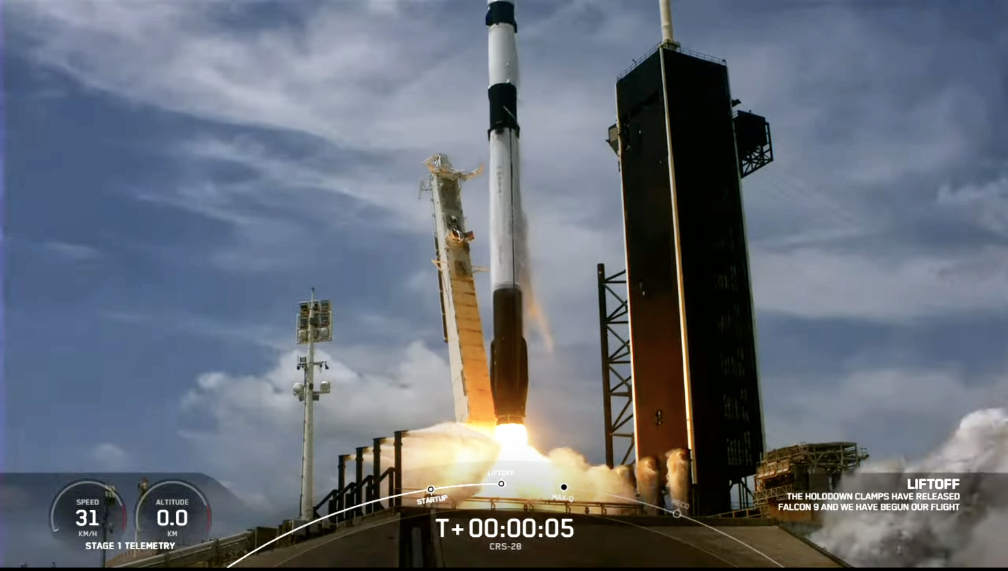
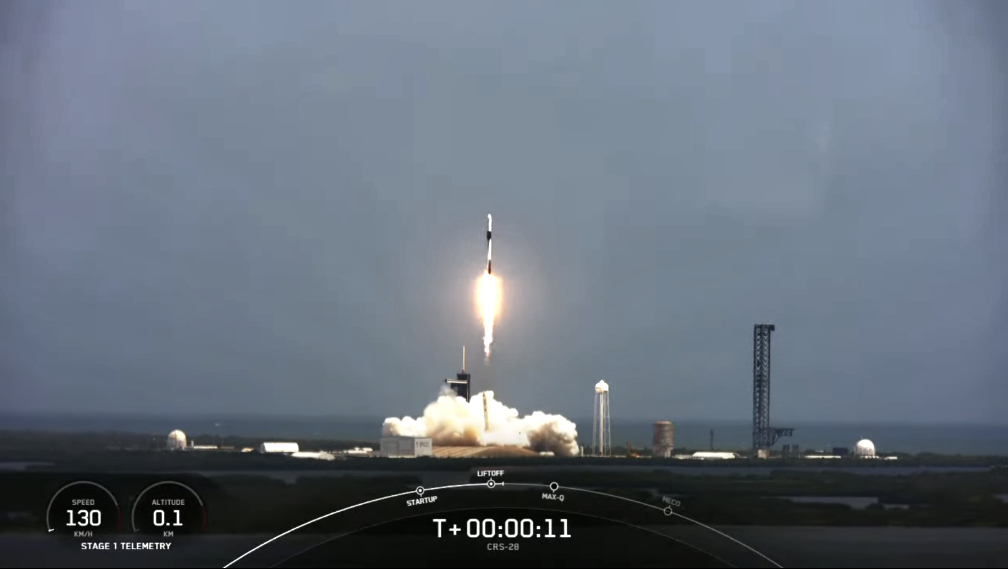
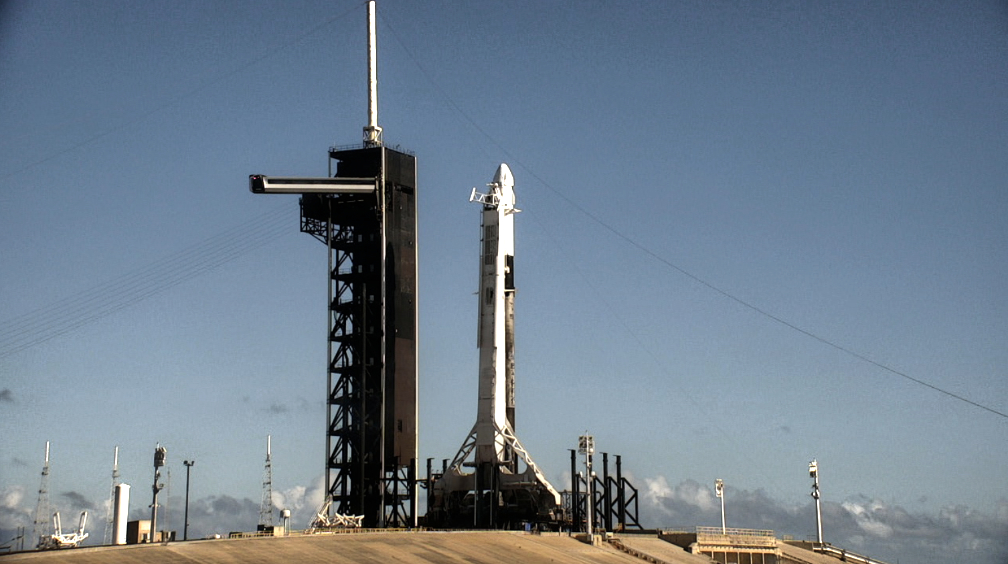
On Monday, June 5th., at 11:47 a.m., ET, a SpaceX Falcon 9 launched Dragon’s 28th Commercial Resupply Services mission (CRS-28) to the International Space Station (ISS) from Launch Complex 39A (LC-39A) at NASA’s Kennedy Space Center in Florida — this is the fourth flight for this Dragon capsule.

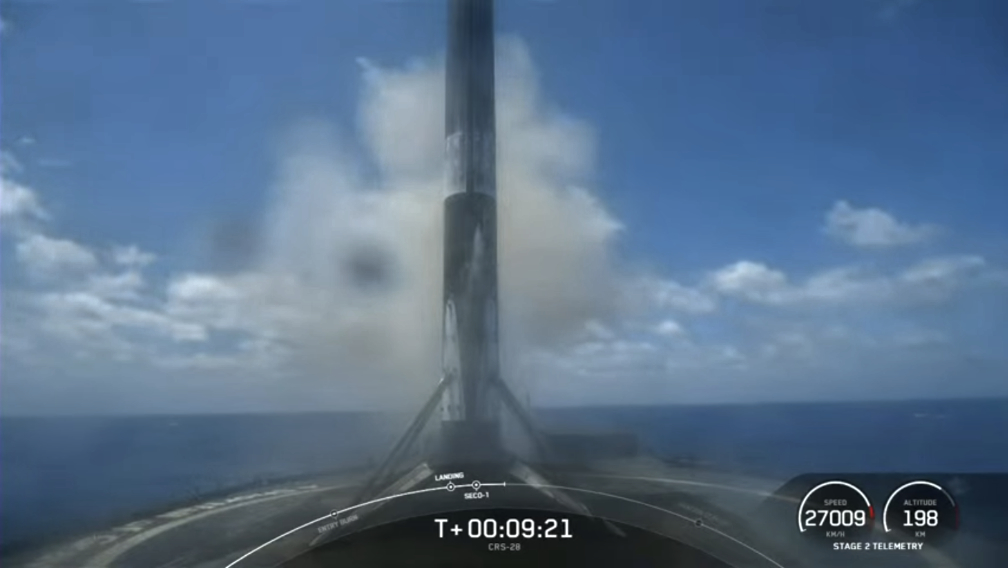
Following stage separation, Falcon 9’s first stage landed on the Just a Shortfall of Gravitas droneship in the Atlantic Ocean, being the 198th successful 1st stage landing for the company.

Dragon will autonomously dock with the space station on Tuesday, June 6th, at approximately 5:50 a.m. ET (9:50 UTC). to deliver 7,000+ pounds of supplies to the ISS.

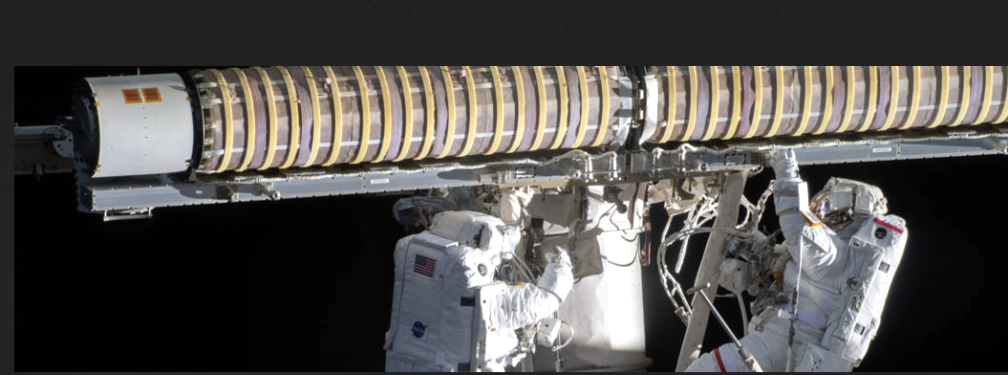
The SpaceX Dragon will deliver a pair of IROSAs (International Space Station Roll Out Solar Arrays) that, once installed, will expand the energy-production capabilities of the microgravity complex.

The spacecraft will also deliver the following:

Thunderstorm Watch
What Happens Above Thunderstorms (Thor-Davis), an investigation from ESA (European Space Agency), will observe thunderstorms from the space station. This vantage point will allow researchers to see the electrical activity from above, particularly the inception, frequency, and altitude of recently discovered blue discharges. Scientists plan to estimate the energy of these phenomena to determine their effect on the atmosphere. A better understanding of lightning and electrical activity in Earth’s atmosphere could improve atmospheric models and provide a better understanding of Earth’s climate and weather.

Helping Plants Chill in Space
Plants exposed to environmental stress, including spaceflight, undergo changes to adapt, but those changes may not be passed on to the next generation. Plant Habitat-03 (PH-03) will assess whether plants grown in space can transfer such adaptations to the next generation and, if so, whether a change continues through subsequent generations or stabilizes.The investigation will create a second generation of plants using seeds previously produced in space and returned to Earth. Results could provide insight into how to grow multiple generations of plants to provide food and other services on future space missions. This investigation also could support development of strategies for adapting crops and other economically important plants to marginal and reclaimed habitats on Earth.

Testing a Telomere Technique
Telomeres, genetic structures that protect our chromosomes, shorten with age and wear. But research has shown that telomeres lengthen in space. Genes in Space-10 will test a technique for measuring telomere length in microgravity, where methods typically employed on Earth are difficult to use due to gravity. The experiment will explore whether telomere lengthening in space is caused by proliferation of stem cells –undifferentiated cells that give rise to specific body components and that typically have long telomeres. Understanding the mechanism behind telomere lengthening could reveal possible effects on astronaut health during long-duration missions. Results also could lay the groundwork for a variety of related research to benefit future space travel and people on the ground. Genes in Space is a national contest for students in grades seven through 12 to design biotechnology experiments for space. The program is sponsored by miniPCR, Math for America, Boeing, New England Biolabs Ltd., and the International Space Station National Laboratory.

Thawing Ice, Solar Storms, and Attitude Recovery
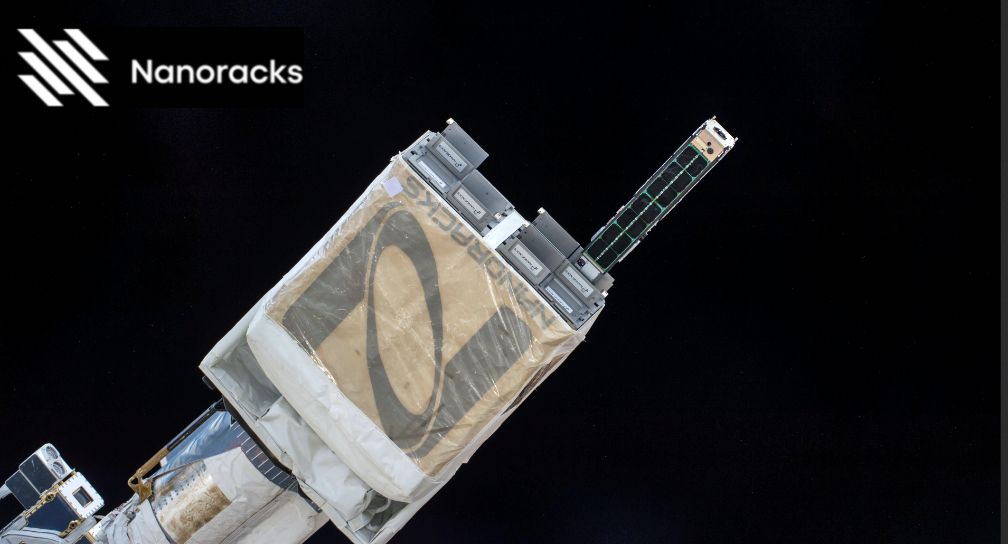
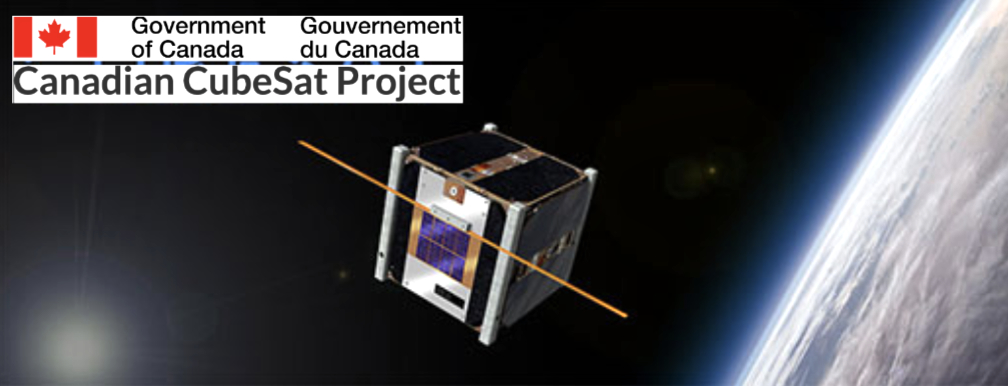
Mission 26 for the station’s Nanoracks CubeSat Deployer (NRCSD) includes Educational Space Science and Engineering CubeSat Experiment Mission (ESSENCE), sponsored by the International Space Station National Laboratory and developed by universities in Canada and Australia. It carries a wide-angle camera to monitor thawing of ice and permafrost in the Canadian Arctic, which could provide a better understanding of the effects on Earth’s climate and support better local infrastructure planning. The satellite also carries a solar energetic proton detector to collect data on periods of solar activity that emit highly energized radioactive protons that can damage the structure and electronic components of spacecraft. Understanding these effects could help make future CubeSats more resistant to radiation. In addition, the investigation demonstrates a novel method to recover control of a satellite’s attitude, or orientation, if a control mechanism fails. ESSENCE is part of the Canadian CubeSat Project, led by CSA (Canadian Space Agency).

Watching Cosmic Weathering
Iris, sponsored by the International Space Station National Laboratory, observes weathering of geological samples exposed to direct solar and background cosmic radiation and determines whether changes are visually detectable. The investigation also demonstrates experimental sun sensors, torque rods (which provide attitude control and detumbling for satellites), and a battery heater. A collaboration between graduate, undergraduate, and middle school students in Canada, the project provides hands-on experience that promotes interest in science, technology, engineering, and mathematics studies and careers. Results also could provide insight into weathering processes on planetary bodies and, when combined with data from asteroid sampling missions, improve understanding of the origins of asteroids. Iris is part of the Canadian CubeSat Project, led by CSA.

Filed Under: Featured, News

World’s 1st hacking testbed in space to launch on the SpaceX CRS-28 mission on June 5th

June 5, 2023 by editorial

SpaceX’s Falcon 9 rocket, with the company’s Dragon spacecraft atop, stands ready for liftoff at NASA Kennedy Space Center’s Launch Complex 39A in Florida on June 4, 2023, ahead of the company’s 28th resupply services mission to the International Space Station. Liftoff is scheduled for 12:12 p.m. EDT. Photo credit: NASA

Six cubesats are set to launch on SpaceX’s 28th Commercial Resupply Services (CRS) mission to the International Space Station (ISS), where they will be deployed — among these smallsats, the Aerospace Corporation will launch Moonlighter, the world’s first and only hacking sandbox in space.

A hacking sandbox is a form of cyber security technology that allows hackers to perform tests that could identify methods for preventing the hacking of satellite systems in space. Through this project, which is sponsored by the ISS National Laboratory and supported by Nanoracks, Aerospace will introduce the nation’s top cyber professionals to Moonlighter and its ability to fill gaps in cyber security testing in space.

Developed in partnership with U.S. Space Systems Command and the Air Force Research Laboratory, Moonlighter, a mid-size 3U smallsat, will enable real-time cyber security testing on-orbit for the first time. Moonlighter will allow cyber security professionals and some of the world’s best hackers to do space-based cyber experiments that are repeatable, realistic, and secure.

Moonlighter is a 3U cubesat developed to enable real-time cyber security testing on-orbit.
Image is courtesy of The Aerospace Corporation

Moonlighter will be part of Hack-A-Sat 4, an annual challenge supported by the Aerospace Corporation, the U.S. Air Force, and the U.S. Space Force, where finalists will get the chance to hack the CubeSat in orbit during DEF CON, a convention for hackers held in August. With a growing space-based economy and increasing competition in the space environment, Myrick said Moonlighter is a critical tool for strengthening cyber security in space.

In addition to Moonlighter, five student-developed CubeSats are also launching on SpaceX CRS-28. These CubeSats are part of the Canadian CubeSat Project, which was created to increase student engagement in science, technology, engineering, and mathematics (STEM) and prepare the future space industry workforce.

SpaceX CRS-28 is targeted for launch no earlier than June 5 at 12:35 p.m. EDT. This mission will include multiple ISS National Lab-sponsored payloads.

“We wanted to build something new from the ground up to fill gaps in cyber activities in space, where the vehicles to do cyber security testing in orbit have not existed,” said . “When we say it’s a sandbox, Moonlighter is like a playground where we provide the space and the tools for professional hackers to perform cyber exercises and test out new technology. We hope this will lead to more cyber-resilient architectures for future space missions.”
— Aaron Myrick, project leader for Aerospace

Filed Under: Featured, News

  • « Go to Previous Page
  • Page 1
  • Interim pages omitted …
  • Page 22
  • Page 23
  • Page 24
  • Page 25
  • Page 26
  • Interim pages omitted …
  • Page 61
  • Go to Next Page »

Primary Sidebar

WEEKLY NEWSLETTER

Archives

  • August 2026
  • July 2026
  • June 2026
  • May 2026
  • April 2026
  • March 2026
  • February 2026
  • January 2026
  • December 2025
  • November 2025
  • October 2025
  • September 2025
  • August 2025
  • July 2025
  • June 2025
  • May 2025
  • April 2025
  • March 2025
  • February 2025
  • January 2025
  • December 2024
  • November 2024
  • October 2024
  • September 2024
  • August 2024
  • July 2024
  • June 2024
  • May 2024
  • April 2024
  • March 2024
  • February 2024
  • January 2024
  • December 2023
  • November 2023
  • October 2023
  • September 2023
  • August 2023
  • July 2023
  • June 2023
  • May 2023
  • April 2023
  • March 2023
  • February 2023
  • January 2023
  • December 2022
  • November 2022
  • October 2022
  • September 2022
  • August 2022
  • July 2022
  • June 2022
  • May 2022
  • April 2022
  • March 2022
  • February 2022
  • January 2022
  • December 2021
  • November 2021
  • October 2021
  • September 2021
  • August 2021
  • July 2021
  • June 2021
  • May 2021
  • April 2021
  • March 2021
  • February 2021
  • January 2021
  • December 2020
  • November 2020
  • October 2020
  • September 2020
  • August 2020
  • July 2020
  • June 2020
  • May 2020
  • April 2020
  • March 2020
  • February 2020
  • January 2020
  • December 2019
  • November 2019
  • October 2019

© 2019–2026 SatNews

Insert/edit link

Enter the destination URL

Or link to existing content

    No search term specified. Showing recent items. Search or use up and down arrow keys to select an item.
      x
      Sign Up Now!

      Enjoy a free weekly newsletter with recent headlines from the global SmallSat industry.

      Invalid email address
      We promise not to spam you. You can unsubscribe at any time.
      Thanks for subscribing! You will now receive weekly SmallSat News updates.
      We love our advertisers.
      And you will too!

      Please disable Ad Blocker to continue... We promise to keep it unobtrusive.
      We promise not to spam you. You can unsubscribe at any time.
      Invalid email address
      Thanks for subscribing!