• Skip to main content
  • Skip to primary sidebar
  • Home
  • News
  • Featured
  • More News ⌄
    • SatNews
    • SatMagazine
    • MilSatMagazine
  • Events ⌄
    • MilSat Symposium
    • SmallSat Symposium
    • Satellite Innovation
  • Contacts
  • SUBSCRIPTION

SmallSat News

You are here: Home / Archives for Featured

Featured

Shooting star satellite’s first steps toward rhe multi-billion-dollar space entertainment market

April 25, 2023 by editorial

Space technology company ALE has announced the firm’s plans to launch the next SKY CANVAS satellite into orbit, a major step forward in the world’s first, human-made, shooting star project.

This is the first step toward ALE realizing the company’s ambition to usher in a new era of sustainable space entertainment over the next decade, boosting the global space business as well as advancing essential climate science research and education.

The new ALE-3 satellite — scheduled to launch in 2024 — will gather climate information in the mesosphere, the layer of the Earth’s atmosphere directly above the stratosphere and below the thermosphere. Atmospheric data gathered in the mesosphere has the potential to provide valuable new insights into Earth’s climate and weather.

The latest news about ALE-3 follows the launch of ALE’s SKY CANVAS Community Club, a dynamic platform dedicated to fostering the exchange of knowledge and actively sharing ideas around space, astronomy, and science. The SKY CANVAS Community Club will provide a place for members to be kept informed about exciting developments at ALE, including the human-made shooting star experience, with lots more exciting benefits to be announced, in due course.

ALE has already completed two successful SKY CANVAS satellite launches (ALE-1 and ALE-2), putting two satellites into orbit in January and December of 2019. The next SKY CANVAS satellite launch (ALE-3) will take place in 2024, and the first commercial service of SKY CANVAS is scheduled to take place in 2025, when ALE hopes to inspire a new generation of space and science enthusiasts across the world by giving them the opportunity to view the world’s first live human-made meteor shower.

The SKY CANVAS Community Club is an edutainment project where space enthusiasts can:

  • Meet like-minded space fanatics in ALE’s online Discord community
  • Get access to interesting educational content in the form of interviews, presentations, and AMAs with space industry experts and thought leaders
  • Follow the journey of SKY CANVAS as ALE prepares to deliver the first ever human-made shooting star experience
  • Find out about other exciting space related news and events
  • Obtain lots of member-only benefits as VIP Pass holders

“The mesosphere represents a critical part of Earth’s climate system. Indeed, the mesosphere is where the ozone protecting us from harmful ultraviolet radiations is produced and where atmospheric tides occur shaping the large scale atmospheric movement. Investigating the mesosphere is of utter importance to combat climate change and SKY CANVAS is uniquely capable to bring very valuable large multi-point measurements with its human-made meteor shower. SKY CANVAS represents an amazing outreach opportunity to inspire the next generation of STEM students and bring a novel and mesmerising experience for people on Earth, allowing ’space entertainment’ to be fully intwined with high level space and Earth’s climate science.” — Dr. Gilles Bailet, Research Associate in Emerging Space Technologies at University of Glasgow.

“Our purpose and our strategic goal at ALE is to create a space entertainment market by the 2030s that supports fundamental science, and to become a pioneer in this market. Fundamental science is a source of innovation and contributes to social and economic development through the accumulation and sustained creation of new knowledge, findings, inventions, and other research results. ALE’s values are the fundamental sciences themselves, and we believe that their promotion is extremely important. ALE embodies the power of fundamental science in our three core values: curiosity, pathfinder and evolution.” — Dr. Lena Okajima, founder and CEO of ALE

Filed Under: Featured, News

Swedish Space Corporation (SSC) issues a contract for Ovzon’s SATCOM-as-a-Service

April 24, 2023 by editorial

Ovzon has received a new order for Ovzon SATCOM-as-a-Service from their partner, Swedish Space Corporation (SSC) — the service will be delivered during the second quarter of 2023.

Ovzon’s SATCOM-as-a-Service is a leading, integrated, satellite communications solution and includes Ovzon’s mobile satellite terminals, highly resilient and high-performance satellite networks industry service and support.

With this order, Ovzon further deepens its collaboration with SSC in the continued dialogue with customers within Swedish government agencies. SSC is also a crucial partner in the delivery of the service.

“We are very pleased to receive this new order from SSC. We look forward to further expand our already excellent collaboration. Our own satellite Ovzon 3, with its unique capabilities, is high on the agenda. Together with SSC, we provide the Swedish market with a world leading, integrated, and highly efficient satellite communication service based on Swedish technology and innovation.”” — Per Norén, CEO of Ovzon.

Filed Under: Featured, News

Comtech secures strategic contracts for hybrid designed, high-speed SATCOM solution

April 20, 2023 by editorial

Comtech recently secured multiple orders for significant quantities of the company’s CDM-780 high-speed software defined modems — these modems will be delivered to satellite operators as well as to the DoD who will be assessing, evaluating, and fielding these modems in a variety of scenarios to enable broad scale government and commercial deployments to provide end users with access to high-speed connectivity in some of the hardest to reach places in the world.

Comtech’s CDM-780 is one of the highest capacity, Commercial-Off-The-Shelf (COTS) gateway SATCOM solutions available today. Through a software-defined architecture, the CDM-780 is designed to readily adapt and evolve over time to deliver SATCOM services that can transition across HTS and vHTS networks, as well as LEO/MEO/GEO constellations.

“Our CDM-780 is uniquely positioned to support the blending of communications services across multiple, diverse satellite orbits and networks. These contracts illustrate our continuing technology leadership and fluency in future networking capabilities that can help our customers democratize access to communications and empower individuals, communities, businesses, and governments across the globe.” — Ken Peterman, President and CEO, Comtech

Filed Under: Featured, News

Northrop Grumman rapidly completes their CDR for the Tranche 1 Transport Layer

April 19, 2023 by editorial

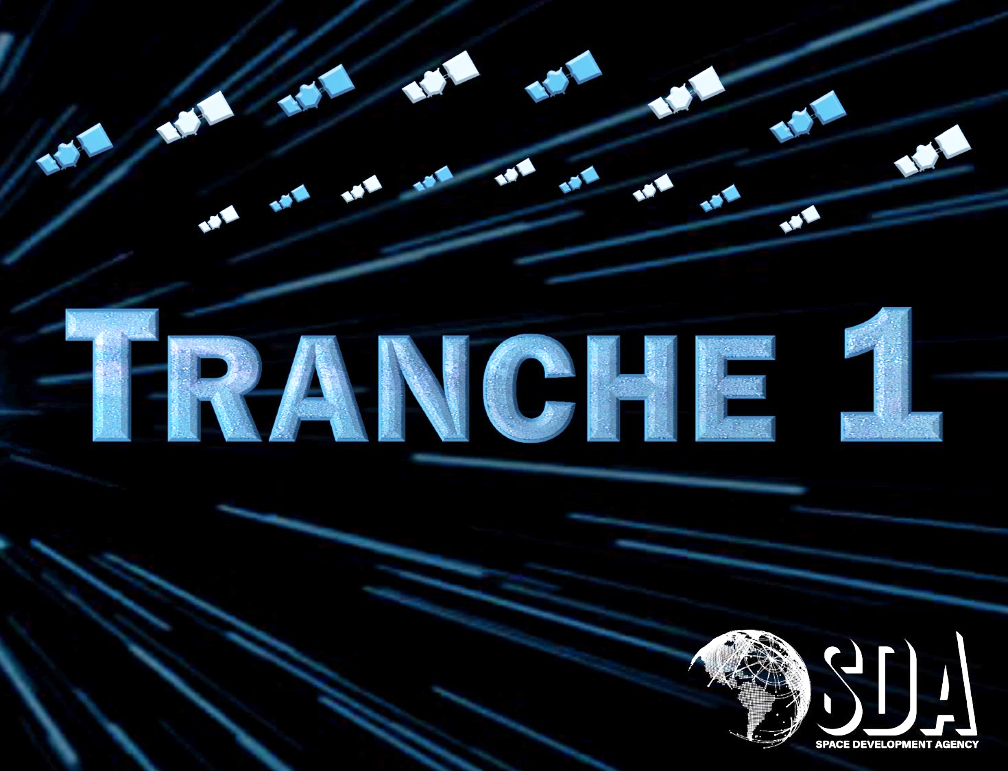
Northrop Grumman Corporation (NYSE: NOC) recently completed a critical design review (CDR) for the firm’s Tranche 1 Transport Layer (T1TL), part of Space Development Agency’s (SDA) LEO network designed to communicate vital information to wherever it’s needed to support U.S. troops on the ground, quickly and securely.

The Space Development Agency has formerly announced that Northrop Grumman is under contract to develop and build 42 Tranche 1 Transport Layer satellites and 14 Tranche 1 Tracking Layer satellites as part of its Proliferated Warfighter Space Architecture. Image is courtesy of Northrop Grumman.

The Tranche 1 Transport Layer (T1TL) communication satellites will provide resilient, low-latency, high-volume data transport supporting U.S. military missions around the world. Designed to connect elements of an integrated sensing architecture, the network will deliver persistent, secure connectivity, and serve as a critical element for advancing the U.S. Department of Defense’s vision for Joint All Domain Command and Control.

The Defense Department’s efforts to bring Joint All Domain Command and Control, or JADC2, to the warfighter, will provide a better way to sense, make sense of and act on the volumes of information generated into today’s joint, all-domain warfighting environment. Photo By: Jennifer Gonzalez, U.S. Marine Corps

SDA formerly announced that Northrop Grumman is under contract to provide the agency with 56 satellites, including the 42 communication satellites in the Tranche 1 Transport layer and 14 for the Tranche 1 Tracking layer, which includes an infrared sensor payload. The Tracking layer program recently completed its preliminary design review. Northrop Grumman is also providing the ground system for both its Transport and Tracking constellations.

“We are leveraging our commercial marketplace partnerships to deliver a rapid, affordable, highly effective solution for SDA. Our T1TL solution builds on our decades of end-to-end mission expertise. We are uniquely capable of delivering a credible capability to support the warfighter.” — Blake Bullock, vice president, communication systems, strategic space systems, Northrop Grumman

Filed Under: Featured, News

The ThrustMe NPT30-I2 iodine electric propulsion system launched on board the NorSat-TD satellite

April 18, 2023 by editorial

The Norwegian Space Agency’s NorSat-TD satellite was successfully launched onboard a SpaceX Falcon 9 rocket from the Vandenberg Space Force Base in California — the satellite is fitted with a ThrustMe NPT30-I2 iodine fueled electric propulsion system.

Extending the satellites’ lifetime through collision avoidance and end-of-mission deorbiting soon will not be an option but the only solution to keep space activities. The tens of thousands of satellites to be launched in the next decade heighten global concerns about the need to manage both the growth of satellites and the potential for damaging debris from poorly managed space systems. The economic and environmental sustainability of the space industry will increasingly rely on efficient and effective propulsion solutions.

That the Norwegian Space Agency technology demonstrator mission NorSat-TD was successfully launched with the iodine electric propulsion system NPT30-I2 is evidence of the growing trend toward onboarding such systems on contemporary satellites. Committed to the safe and sustainable use of space, ThrustMe propulsion technology included on the NorSat-TD mission was selected for its technical merits and relevance to the mission parameters.

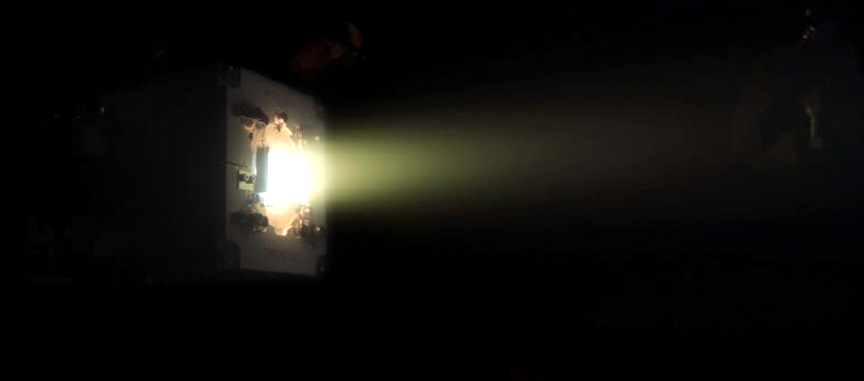
The NPT30-I2 iodine propulsion system firing. Photo is courtesy of ThrustMe.

Designed for the next generation of streamlined satellites, the NPT30 is an intelligent, turnkey, electric propulsion system that uses solid iodine propellant. It provides the high total impulse required by these satellites for deployment, significant orbit changes, collision avoidance maneuvers, and end-of-life removal to minimize space debris and free up critical operational orbits.

With one more system on-orbit, ThrustMe enhances the Norwegian capacity to navigate and operate the NorSat-TD satellite in LEO. Highlighted goals of this mission include enhancing the space agency’s experience with propulsive satellite operations and improving its space safety capacity by supporting the development of space situational awareness and traffic management systems for Norway’s upcoming future missions.

Funding for the system on this mission was underwritten by the French space agency CNES as an institutional partner to the mission. Industrialization of ThrustMe’s NPT30-I2 product portfolio is supported by the European Commission via the EU-funded EMBRACE II project.

ThrustMe is the go-to provider of high-performing on-orbit space propulsion and space hardware testing solutions for customers across the globe. It offers a portfolio of disruptive, deeply integrated and smart in-orbit space propulsion solutions designed for the emerging industrialized constellation space era. The company was the world’s first to demonstrate an iodine-fueled electric propulsion system in space and in so doing achieved a goal the space industry had pursued for over 60 years. Today, ThrustMe is delivering propulsion systems to major satellite constellations backed with support from ground testing to in-orbit maneuvering strategies.

Filed Under: Featured, News

Blue Canyon Technologies receives JPL smallsats build award

April 17, 2023 by editorial

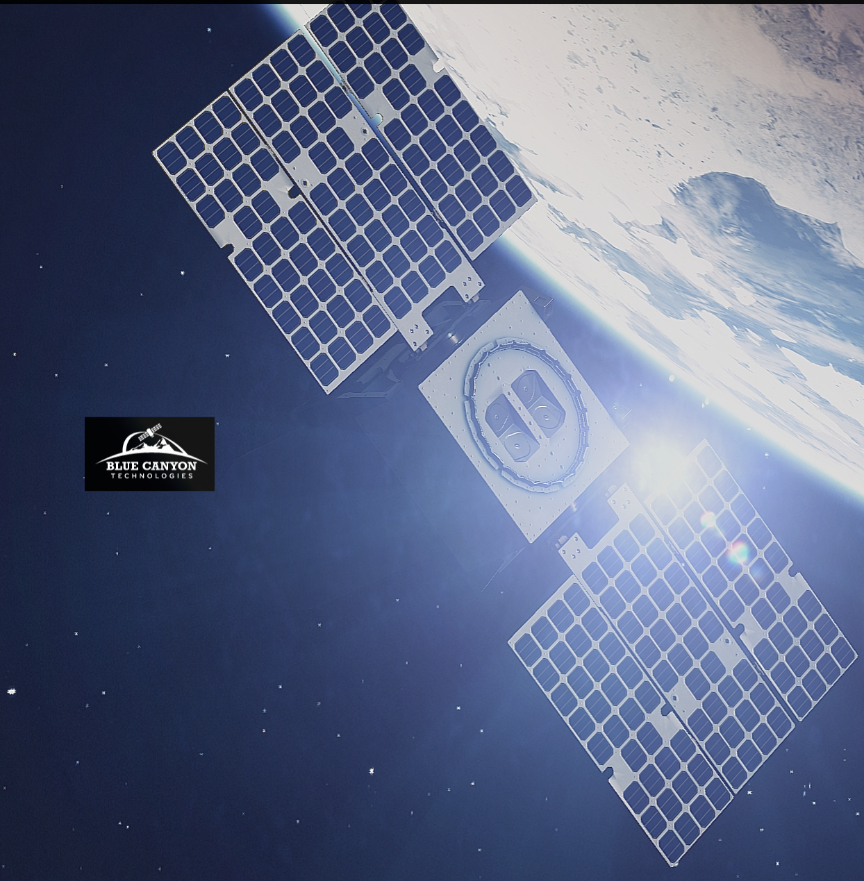
Blue Canyon Technologies, a Raytheon Technologies (NYSE: RTX) subsidiary, will design and manufacture three smallsats to support NASA’s Investigation of Convective Updrafts, or INCUS, mission. The principal investigator is Susan van den Heever of Colorado State University.

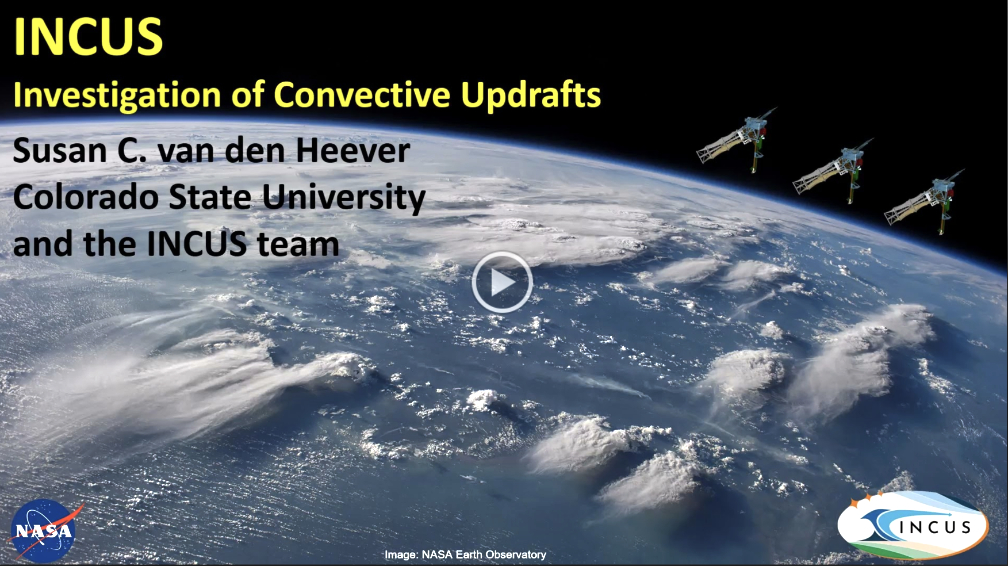
The INCUS mission — led by Colorado Stare University and managed by NASA’s Jet Propulsion Laboratory – aims to better understand the complex dynamics of thunderstorms and their impact on Earth’s climate and weather models.

Blue Canyon’s smallsats will fly in tandem coordination, each displaying a dynamic atmospheric radar and dynamic microwave radiometer measuring the atmospheric conditions of Earth.

Blue Canyon’s work will be performed at the firm’s Crescent Constellation Factory located in Lafayette, Colorado.

“BCT’s successful science exploration programs and our experience controlling large flexible structures will be key to supporting this critical science mission.” — Jeff Schrader, President, Blue Canyon Technologies.

INCUS overview video

Filed Under: Featured, News

Orbital Sidekick launches their 1st Satellites for the GHOSt constellation

April 16, 2023 by editorial

Orbital Sidekick (OSK) recently engaged in the successful launch of GHOSt 1 and 2, the first satellites in the company’s planned GHOSt(™) (Global Hyperspectral Observation Satellite) constellation — this was accomplished aboard the Transporter 7 rideshare mission on a SpaceX Falcon 9 rocket.



Artistic rendition of GHOSt satellites on-orbit, courtesy of Orbital Sidekick

OSK will deploy four more satellites later this year aboard the Transporter 8 and Transporter 9 rideshare missions to complete the company’s initial constellation. By year’s end, GHOSt will consist of six equivalent, hyperspectral imaging smallsats, each featuring a proprietary hyperspectral imager unique to OSK.

Now in orbit, these first two GHOSt satellites will capture nearly 500 bands of light across the electromagnetic spectrum, with 20x greater sensitivity than traditional monitoring. The payload will produce the highest resolution, commercial, hyperspectral imagery ever in orbit, with a ground sampling distance of eight meters. This advanced imaging capability will support OSK’s Spectral Intelligence Global Monitoring Application (SIGMA™) platform, which provides access to OSK’s data archive, analytics engine, and intelligent satellite tasking system for commercial and inherently governmental applications.

OSK’s current customers include major energy companies Energy Transfer, Williams, ONEOK, and Colonial Pipeline Co. (CPC). The company is also a partner of the intelligent Pipeline Integrity Program (iPIPE) which supports emerging technologies for improved pipeline integrity and leak detection. Further, OSK will advance its mineral exploration efforts, leveraging its advanced, hyperspectral sensor and analytics to support sustainable operations in the industry. The launch of GHOSt is enabling frequent monitoring of global oil and gas pipeline assets, and mineral exploration initiatives, through its SIGMA(™) intelligence platform and will enhance the industry’s ability to meet and exceed compliance and regulatory obligations while supporting environmental sustainability pursuits and a low carbon future.

In addition to the energy and mining sectors, the company has secured government contracts to supply hyperspectral data to the United States Department of Defense through its partnerships with In-Q-Tel, the U.S. Air Force (U.S.A.F.) and U.S. Space Force (USSF). In March, the National Reconnaissance Office (NRO) selected OSK for its latest focus area study of commercial, space-based, hyperspectral imaging (HSI) capabilities under the agency’s Strategic Commercial Enhancements (SCE) Broad Agency Announcement (BAA), further strengthening OSK’s relationship with the defense and intelligence communities.

GHOSt builds on the constellation’s satellite precursors, named Aurora and HEIST, which launched in June 2021 and September 2018, respectively. These space-based technology demonstrator sensors established the company’s capability to operate in space while providing enhanced data sets for commercial, government, and scientific entities.

Today, OSK’s market-leading sensing capabilities will enable its customers in the energy, government and defense, extraction, infrastructure, agriculture, and forestry industries to make vital decisions with expansive coverage, rapid revisit times, leading-edge spatial resolution, and greater spectral capability than any competing service.

“From day one, OSK’s strategy has been about commercializing the highest resolution hyperspectral imagery and intelligence available. The successful launch of our first two GHOSt constellation satellites signifies our team’s ability to execute on this vision, while scaling our commercial product and establishing our leadership position in the market.” — Dan Katz, CEO, Orbital Sidekick

“It’s gratifying to see our goal of commercializing this cutting-edge technology come to fruition. The GHOSt constellation will now offer unparalleled insights into critical infrastructure and areas of the planet, enabling us to reach new heights in supporting sustainability and safety efforts, anywhere in the world.” — Tushar Prabhakar, COO, Orbital Sidekick

Filed Under: Featured, News

Blue Canyon Technologies receives JPL smallsats build award

April 14, 2023 by editorial

Blue Canyon Technologies, a Raytheon Technologies (NYSE: RTX) subsidiary, will design and manufacture three smallsats to support NASA’s Investigation of Convective Updrafts, or INCUS, mission. The principal investigator is Susan van den Heever of Colorado State University.

The INCUS mission — led by Colorado State University and managed by NASA’s Jet Propulsion Laboratory – aims to better understand the complex dynamics of thunderstorms and their impact on Earth’s climate and weather models.

Blue Canyon’s smallsats will fly in tandem coordination, each displaying a dynamic atmospheric radar and dynamic microwave radiometer measuring the atmospheric conditions of Earth.

Blue Canyon’s work will be performed at the firm’s Crescent Constellation Factory located in Lafayette, Colorado.

“BCT’s successful science exploration programs and our experience controlling large flexible structures will be key to supporting this critical science mission.” — Jeff Schrader, President, Blue Canyon Technologies.

INCUS overview video

Filed Under: Featured, News

GomSpace receives 845 k euros order from Argotec

April 13, 2023 by editorial

Argotec has placed an order with GomSpace for power systems at a value of 845,000 euros to be delivered over the coming 12 months, to be completed by Q1 of 2024.

GomSpace NanoPower P80 unit

“We are happy that GomSpace technologies and expertise in power systems are recognized by a company like Argotec. NanoPower P80 and BP8 are our latest releases of power systems building our track record in managing on-orbit energy. NanoPower product series can be used in a multitude of configurations, which allows our customers to benefit from product reliability strategy, while building specific use cases.” — Carsten Drachmann, CEO, GomSpace.

Filed Under: Featured, News

Fly Your Satellite! design booster teams starts baseline design reviews

April 11, 2023 by editorial

Fly Your Satellite! Design Booster is an educational program for university student teams that have a preliminary CubeSat design — ESA offers the students support and expert advice, guiding them through the stages necessary to develop an initial idea into a robust final plan.

Photo of the selected ESA CubeSat teams

A key milestone within this process is a Baseline Design Review, which helps flag issues and ultimately empowers students to make effective design choices.

The Baseline Design Review is tailored from the ESA standard review process to fit the scope of university student projects. Six teams incorporating more than 200 students have now reached this stage with meetings between students and ESA experts taking place between April 3 and 21, 2023:

  • 6S Politecnico di Milano, Italy
  • AlbaSat Università degli di Studi di Padova, Italy
  • BIXO University of Vigo, Spain
  • ROSPIN-SAT-1 Politehnica University of Bucharest, Romania
  • SAGE ETH Zurich, Switzerland
  • ST3LLAR-Sat1 Universidad Carlos III de Madrid, Spain

Ever since the official program kick-off last November, each participating team has been working hard on a key document called a CubeSat Project File. This contains a detailed description of the satellite, project management, and assembly, integration and verification (AIV) plans.

These CubeSat Project Files were sent to ESA experts and the Fly Your Satellite! team in advance, who studied them carefully to identify potential issues. Every point flagged is known as a Review Item Discrepancy (RID), and these form the foundation of the Baseline Design Review. During a series of online meetings, dubbed “colocations meetings,” ESA and Fly Your Satellite! experts are currently discussing RIDs with the teams, enhancing students‘ knowledge of the topics, and allowing them to interpret and implement solutions to their CubeSat design.

Upon completion of the Baseline Design Review, the students will be tasked with completing the actions identified in these RIDs. It is normal for there to be a long list and teams will have about one year to make enhancements, consolidate their detailed designs, and test prototypes.

The Final Design Review will then take place, which will conclude with the teams presenting their fully refined CubeSat mission design.

Fly Your Satellite winning team logos

Filed Under: Featured, News

  • « Go to Previous Page
  • Page 1
  • Interim pages omitted …
  • Page 24
  • Page 25
  • Page 26
  • Page 27
  • Page 28
  • Interim pages omitted …
  • Page 60
  • Go to Next Page »

Primary Sidebar

WEEKLY NEWSLETTER

Archives

  • June 2026
  • May 2026
  • April 2026
  • March 2026
  • February 2026
  • January 2026
  • December 2025
  • November 2025
  • October 2025
  • September 2025
  • August 2025
  • July 2025
  • June 2025
  • May 2025
  • April 2025
  • March 2025
  • February 2025
  • January 2025
  • December 2024
  • November 2024
  • October 2024
  • September 2024
  • August 2024
  • July 2024
  • June 2024
  • May 2024
  • April 2024
  • March 2024
  • February 2024
  • January 2024
  • December 2023
  • November 2023
  • October 2023
  • September 2023
  • August 2023
  • July 2023
  • June 2023
  • May 2023
  • April 2023
  • March 2023
  • February 2023
  • January 2023
  • December 2022
  • November 2022
  • October 2022
  • September 2022
  • August 2022
  • July 2022
  • June 2022
  • May 2022
  • April 2022
  • March 2022
  • February 2022
  • January 2022
  • December 2021
  • November 2021
  • October 2021
  • September 2021
  • August 2021
  • July 2021
  • June 2021
  • May 2021
  • April 2021
  • March 2021
  • February 2021
  • January 2021
  • December 2020
  • November 2020
  • October 2020
  • September 2020
  • August 2020
  • July 2020
  • June 2020
  • May 2020
  • April 2020
  • March 2020
  • February 2020
  • January 2020
  • December 2019
  • November 2019
  • October 2019

© 2019–2026 SatNews

Insert/edit link

Enter the destination URL

Or link to existing content

    No search term specified. Showing recent items. Search or use up and down arrow keys to select an item.
      x
      Sign Up Now!

      Enjoy a free weekly newsletter with recent headlines from the global SmallSat industry.

      Invalid email address
      We promise not to spam you. You can unsubscribe at any time.
      Thanks for subscribing! You will now receive weekly SmallSat News updates.
      We love our advertisers.
      And you will too!

      Please disable Ad Blocker to continue... We promise to keep it unobtrusive.
      We promise not to spam you. You can unsubscribe at any time.
      Invalid email address
      Thanks for subscribing!