• Skip to main content
  • Skip to primary sidebar
  • Home
  • News
  • Featured
  • More News ⌄
    • SatNews
    • SatMagazine
    • MilSatMagazine
  • Events ⌄
    • MilSat Symposium
    • SmallSat Symposium
    • Satellite Innovation
  • Contacts
  • SUBSCRIPTION

SmallSat News

You are here: Home / Archives for Featured

Featured

WATCH HERE: Live Keynote With Dr. Frank Turner @ SmallSat Symposium 2022

February 5, 2022 by editorial

Join the live broadcast of Dr. Frank Turner, Technical Director, Space Development Agency as he presents a keynote speech at this year’s SmallSat Symposium.

Keynote will begin at 11:30 AM Pacific Time on February 10th

Dr. Frank Turner is the Technical Director for the Space Development Agency. He has extensive public and private sector experience in the management and direction of advanced technology research, development, test and evaluation of current and emerging military systems.

Dr. Turner began his career as an officer in the United States Air Force, served as a Government Program Manager and certified acquisition professional, a senior leader in industry for both large and small companies, and as a senior analyst for both the Defense Threat Reduction Agency and Defense Advanced Research Projects Agency. His expertise spans space systems, directed energy, nuclear weapons effects, systems engineering and architectures, and operational evaluation and employment. Has successfully led some of the nation’s most difficult and challenging RDT&E programs, creating technical advantage for America’s warfighters.

Dr. Turner has academic degrees in physics, biology, business and engineering and has completed military education with the U.S. Air Force, U.S. Navy and U.S. Marine Corps.

Filed Under: Featured, News

WATCH HERE: Fireside Chat With Mark Dankberg & Jim Bridenstine @ SmallSat Symposium 2022

February 5, 2022 by editorial

Join the live broadcast of Mark Dankberg, Executive Chairman, Viasat & Jim Bridenstine, Senior Advisor, Acorn Growth Companies as they present a special Fireside Chat at this year’s SmallSat Symposium.

Presentation will begin at 12:00 PM Pacific Time on February 9th

Mark Dankberg
Executive Chairman
Viasat

Mark Dankberg co-founded Viasat Inc. in 1986, and has held the position of Executive Chairman of the Board and Chief Executive Officer since inception. Under his leadership, Viasat has consistently been recognized as one of America’s fastest growing technology companies.

Mark is an acknowledged industry expert in communications technology, satellite, aerospace and defense, and is the leading visionary for a new generation of high-capacity satellite systems that are poised to deliver worldwide broadband coverage by 2021. He has co-authored several military standards on satellite networking, and holds a number of patents in communications and satellite networking technologies. He has participated on Department of Defense advisory panels and has testified before a Congressional committee on high technology growth companies and IPOs as well as before the House Subcommittee on Telecommunications regarding communications technologies for rural broadband.

Jim Bridenstine
Senior Advisor
Acorn Growth Companies

Jim Bridenstine is a Senior Advisor at Acorn Growth Companies, an Oklahoma City based private equity company that invests exclusively in aerospace, defense, and intelligence.

Before joining Acorn, Jim served as the 13th Administrator of NASA, where he was responsible for managing NASA’s 70,000-person workforce and $23 billion annual budget.  Under his leadership, NASA reestablished an American human spaceflight program, which was lost after the retirement of the Space Shuttles in 2011.  He also created NASA’s Artemis program to establish the first permanent presence on the Moon with commercial and international partners and enable a path to Mars.

Before being appointed as NASA Administrator, Jim served in the United States House of Representatives from Oklahoma’s First Congressional District from 2013 to 2018.  He was a member of the House Armed Services Committee and the House Science, Space, and Technology Committee where he chaired the Subcommittee on the Environment.

Prior to Congress, Jim served as a pilot in the United States Navy acquiring 1900 flight hours and 333 landings on an aircraft carrier.  He flew combat missions in Afghanistan (2002) and Iraq (2003) off the USS Abraham Lincoln, where he earned an Air Medal and Navy Commendation Medal with Combat “V”.  Originally an E-2C Hawkeye pilot, he transitioned to the F-18 Hornet and flew as an aggressor (Red Air) at the Naval Strike and Air Warfare Center, the parent command to TOPGUN.

Jim serves on the Board of Directors for Viasat, Inc., the Board of Trustees of the Aerospace Corporation, and he Chairs the Board of Advisors for Voyager Space.

Jim earned a triple major from Rice University in Economics, Business, and Psychology and an MBA from Cornell University.  He lives in Tulsa with his wife Michelle and three children: Walker (15), Sarah (13), and Grant (9).

Filed Under: Featured, News

WATCH HERE: Live Keynote With Dr. Chris Boshuizen @ SmallSat Symposium 2022

February 5, 2022 by editorial

Join the live broadcast of Dr. Chris Boshuizen, Partner, DCVC – Data Collective Venture Capital as he presents a keynote speech at this year’s SmallSat Symposium.

Keynote will begin at 12:00 PM Pacific Time on February 8th

Dr. Chris Boshuizen is an Australian astronaut, scientist, entrepreneur, investor, and musician. Currently a Partner at DCVC, a deep tech investment company in San Francisco where he focuses on funding cutting edge space companies, Boshuizen completed his PhD in physics at The University of Sydney before accepting a position at the NASA Ames Research Center in California. There Dr. Boshuizen established Singularity University and most notably co-created the NASA Phonesat.

After leaving NASA he co-founded Planet Labs, the first company to employ nanosatellites in a commercial capacity, radically reducing the cost of lifting payloads into space and paving the way for today’s large constellations of spacecraft. Today, Planet operates the largest fleet of Earth-observing satellites and maps the entire surface of the Earth daily, enabling key insights into our changing world that were previously unobtainable. Boshuizen was the 2014 Advance Global Australian of the Year award winner, and has subsequently become a member of the Advance Board of Directors where he is an active spokesperson for successful Australians abroad. Boshuizen is also a musician and releases music under the name “Dr. Chrispy”.

Dr. Boshuizen flew to space as a commercial astronaut on Blue Origin’s New Shepard NS-18 mission on October 13, 2021.

Filed Under: Featured, News

NASA Awards Space Flight Laboratory To Develop Two SmallSats For Astrophysics Pioneers Program

February 3, 2022 by editorial

Artist’s conception of the NASA StarBurst astrophysics mission. Credit: NASA Marshall Space Flight Center.

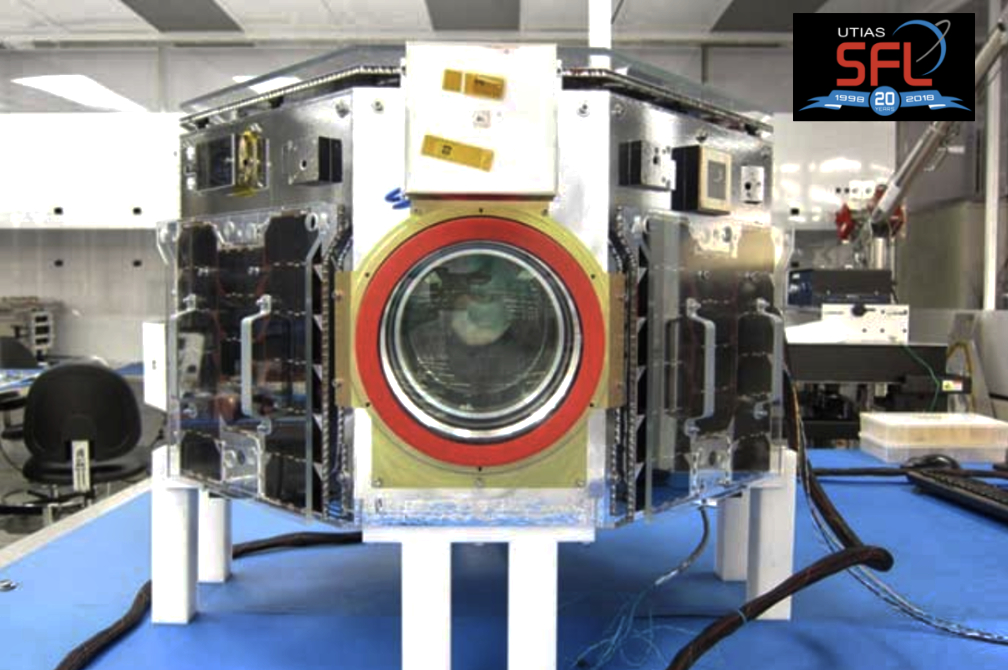
Space Flight Laboratory (SFL) will develop two small spacecraft for the new NASA Astrophysics Pioneers Program. SFL will provide the spacecraft platforms, perform system integration, and conduct system testing for the StarBurst and Aspera astrophysics missions, led by Marshall Space Flight Center (MSFC) and the University of Arizona, respectively.

Initiated in 2020, the NASA Astrophysics Pioneers Program seeks to develop small-scale astrophysics missions using small satellites, balloons, and modest International Space Station payloads to explore cosmic phenomena – each at a maximum mission cost of $20 million. SFL was chosen in 2021 to complete platform concept designs for two of the four first-round Astrophysics Pioneers missions.

“Following the system requirements reviews, NASA has given approval to both MSFC and the University of Arizona to proceed with mission implementation. SFL is proud to contribute to both teams moving forward with development of the ground-breaking StarBurst and Aspera missions,” said SFL Director Dr. Robert E. Zee. “Our microspace approach to building high-performance, affordable smaller satellites aligns perfectly with NASA’s goal of finding cost-effective new ways to conduct astrophysics research.”

Artist’s rendering of the NASA Aspera astrophysics mission. Credit: University of Arizona.

SFL will develop the StarBurst platform on an ESPA-Grande variant of its scalable DAUNTLESS bus. Led by NASA Marshall Space Flight Center with Daniel Kocevski serving as principal investigator, the 250-kg StarBurst will detect high-energy gamma ray emissions from events such as the merger of neutron stars. These phenomena are believed to form most of the heavy metals, including gold and platinum, in the universe. StarBurst could observe up to 10 neutron star mergers every year.

For the Aspera mission, SFL will use a larger variant of its scalable DEFIANT microsatellite platform. Under leadership of the University of Arizona with Carlos Vargas as principal investigator, the 60-kg Aspera satellite will study galaxy evolution through observation of ultraviolet light. This data will reveal the inflow and outflow of hot gases in the space between galaxies, known as intergalactic medium, a major component of the universe.

In addition to building, integrating and testing the two small satellite buses, SFL will support the launch, commissioning, and operation of StarBurst and Aspera, which are tentatively scheduled for launch in 2025.

SFL is a microspace provider that offers a complete suite of nano-, micro- and small satellites, including high-performance, low-cost CubeSats, that satisfy the needs of a broad range of mission types from 3 to 500 kilograms. Dating from 1998, SFL’s heritage of on-orbit successes includes 72 satellites and distinct missions related to Earth observation, atmospheric monitoring, ship tracking, communication, radio frequency (RF) geolocation, technology demonstration, space astronomy, solar physics, space plasma, and other scientific research.

In its 24-year history, SFL has developed CubeSats, nanosatellites, and microsatellites that have achieved more than 173 cumulative years of operation in orbit. These microspace missions have included SFL’s attitude control and, in some cases, formation-flying capabilities. Other core SFL-developed components include modular (scalable) power systems, onboard radios, flight computers, and control software.

Filed Under: Featured, News

NASA Selects 12 Companies To Provide Launch Services For VADR Missions

January 27, 2022 by editorial

NASA has selected 12 companies to provide launch services for the agency’s Venture-Class Acquisition of Dedicated and Rideshare (VADR) missions, providing new opportunities for science and technology payloads and fostering a growing U.S. commercial launch market.

The award selections are:

  • ABL Space Systems of El Segundo, California
  • Astra Space Inc. of Alameda, California
  • Blue Origin Florida LLC of Merritt Island, Florida
  • L2 Solutions LLC of Houston
  • Northrop Grumman Systems Corporation of Chandler, Arizona
  • Phantom Space Corporation of Tucson, Arizona
  • Relativity Space Inc. of Long Beach, California
  • Rocket Lab USA Inc. of Long Beach, California
  • Spaceflight Inc. of Seattle
  • Space Exploration Technologies Corp. (SpaceX) of Hawthorne, California
  • United Launch Services LLC of Centennial, Colorado
  • Virgin Orbit LLC of Long Beach, California

The fixed-price indefinite-delivery/indefinite-quantity contracts have a five-year ordering period with a maximum total value of $300 million across all contracts. The acquisition also includes a special on-ramp provision to enable additional providers and incumbents to submit proposals introducing launch services for new capabilities not available or identified at the time of the initial contract award.

The VADR contract will provide a broad range of Federal Aviation Administration-licensed commercial launch services capable of delivering payloads ranging from cubesats to Class D missions to a variety of orbits. These smallsats and Class D payloads tolerate relatively high risk and serve as an ideal platform for technical and architecture innovation, contributing to NASA’s science research and technology development.

The VADR acquisition builds on previous procurement efforts such as the Venture Class Launch Services (VCLS) and VCLS Demo 2 contracts that are fostering development of new, small launch vehicles for NASA payloads.

Firm-fixed-price task orders will be issued to provide the launch services under these contracts for NASA and NASA-sponsored missions. Launches under the VADR contract will align with commercial practices, using less NASA oversight to achieve lower launch costs.

NASA’s Launch Services Program at the agency’s Kennedy Space Center in Florida will manage the VADR contracts. The agency works with private industry, mission, and international partners to launch science payloads ranging from small satellites with colleges and universities to NASA’s highest priority missions.

“We are incredibly excited to announce the awardees for VADR from a broad range of established and emerging launch providers and launch service aggregators and brokers,” said Bradley Smith, director of launch services at NASA Headquarters in Washington. “This speaks to our expertise in understanding the launch market as we crafted VADR to maximize our efforts in enabling a growing U.S launch industry. With this new tool in our toolbox, these tremendously flexible contracts will meet a wide variety of NASA science and technology needs, further enhancing the agency’s Launch Services Program’s reputation as Earth’s bridge to space.”

Filed Under: Featured, News

LEO B’Band Connectivity Coming To India From Hughes + OneWeb

January 24, 2022 by editorial

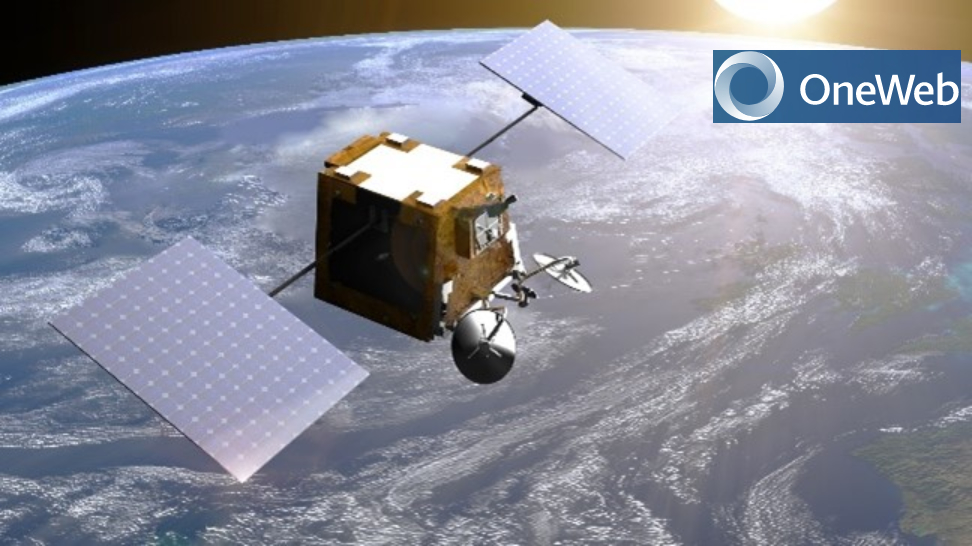
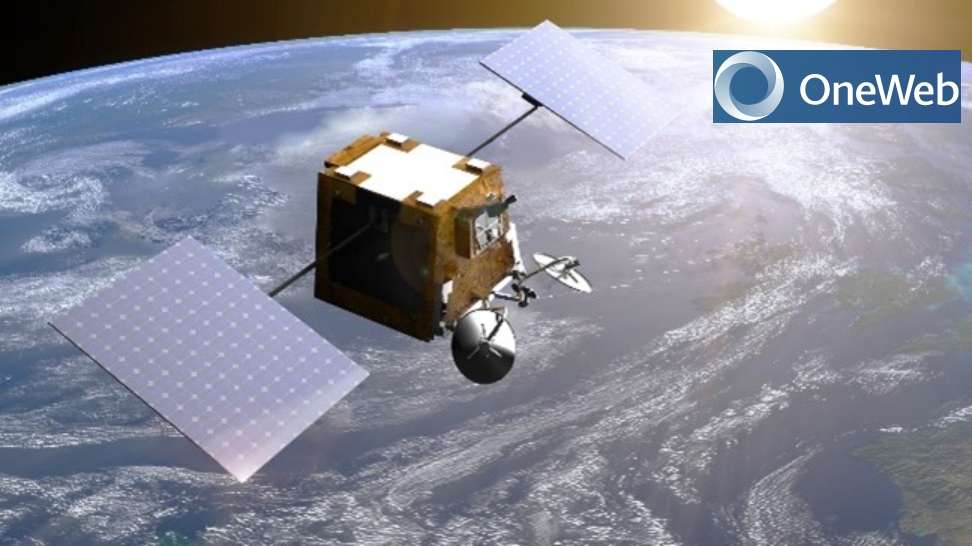
OneWeb and Hughes Network Systems LLC (“Hughes”) have a strategic, six-year, Distribution Partner agreement to provide LEO connectivity services across India.

The arrangement between OneWeb and Hughes Communications India Private Ltd. (HCIPL), a joint venture between Hughes and Bharti Airtel Limited (“Airtel”) follows the Memorandum of Understanding (MoU) signed by the companies in September of 2021.

As the leading satellite broadband provider in India , HCIPL is well positioned to deliver services to enterprise and government with OneWeb capacity, especially in areas outside the reach of fiber connectivity. OneWeb will connect towns, villages, and local and regional municipalities in those hardest-to-reach areas, playing a critical role in bridging the digital divide.

This agreement expands upon an established relationship between the two companies. Hughes, through its parent company, EchoStar, is a longstanding and supportive OneWeb shareholder. The company is also an ecosystem partner to OneWeb, developing gateway electronics — including for those in Gujarat and Tamil Nadu — and the core module that will power every user terminal for the system.

Hughes also is the prime contractor on an agreement with the U.S. Air Force Research Lab (AFRL) to integrate and demonstrate managed LEO SATCOM using OneWeb capacity in the Arctic region.

In each of its core markets, OneWeb works with carefully selected distribution partners providing new business and expansion opportunities while supporting its goal of bringing improved digital communication services to some of the hardest-to-reach parts of the world. OneWeb’s most recent satellite launch on December 27, 2021, brought the firm’s total in-orbit satellites to 394 in number, that being 60 percent of the planned 648 LEO satellite fleet.

OneWeb plans to commence global service by the end of 2022 as demand continues from telecommunications providers, aviation and maritime markets, ISPs, and governments worldwide for its low-latency, high-speed connectivity services.

Service offerings under this agreement are subject to all appropriate regulatory approvals and licenses.

Filed Under: Featured, News

Nanoavionics Confirms Signal Receptions From 3 On-Orbit Smallsats Launched By SpaceX’s Transporter-3 Mission

January 20, 2022 by editorial

NanoAvionics has confirmed the reception of signals and healthy telemetry data from all of the three smallsats that were launched into LEO via the successful SpaceX Transporter-3 mission.

The rideshare mission that went into orbit on January 13, 2022, included one of the largest and heaviest cubesats ever built and launched. The 16U smallsat is the first of five satellites contracted to NanoAvionics by British company Sen, to establish video streaming media to provide real-time, Ultra-High Definition (UHD) videos of Earth.

Also aboard the Falcon-9 rocket was HYPSO-1, a 6U smallsat built for the Norwegian University of Science and Technology (NTNU), to conduct ocean research. From its Sun-Synchronous Orbit (SSO), HYPSO-1 (HYPer-spectral Satellite for ocean Observation) will monitor algal blooms and other aspects of ocean health in an autonomous synergy with robotic agents around the Norwegian coast — this is the first of the two satellites NanoAvionics will supply to the program.

The third NanoAvionics built satellite that went into LEO onboard Transporter-3 is the 3U IoT smallsat DEWA-SAT 1, part of DEWA’s (Dubai Electricity & Water Authority) Space-D program and will support the digitization of Dubai’s power and water networks. Through an ambitious program and with the expertise of NanoAvionics, DEWA intends to enhance its flexibility and agility in monitoring and managing its electrical and water networks. Through Space-D, DEWA also expects to reduce costs, improve its asset use and provide sustainable, efficient and reliable power and water services to its customers.

Following the successful SpaceX launch, the third in a series of dedicated rideshare missions for smallsats, NanoAvionics confirmed signal acquisition and healthy telemetry from all of the three satellites.

"The really interesting thing about video as a type of data is that it has a storytelling power,” said Charles Black, CEO of Sen, during a livestream event of the SpaceX launch by NanoAvionics. "We want to empower people to witness the evolution of life on Earth (and eventually – beyond) and to monitor the health of the planet. We also want to empower them by giving this information directly, in the hope that this will not only enable people to take action but also inspire global change about the way we look after the planet. “It's been fantastic to work with NanoAvionics and their engineers. They have taken on all kinds of technical challenges in terms of the avionics and satellite build to accommodate our payload and optimize its performance.”
“This is a fantastic start for us, our customers and all space enthusiasts,” said Vytenis J. Buzas, founder and CEO of NanoAvionics. “While the commercial space sector has seen hundreds of small satellites being launched, there are only a few 16U satellites in orbit. We are very happy to pioneer this form factor and push the capability limits of this satellite’s bus volume in many technical ways. I’m looking forward to watching the first video streams of Sen’s satellite. The launch of the three satellites continues a successful 2021 that saw NanoAvionics doubling its revenue, growing our team by more than 50 percent, and building our first microsatellite bus MP42 for our own commercial rideshare program. We also assembled 16 custom satellites last year and have 27 more in progress. This year, we plan to launch 14 of those, including our first microsat, the MP42 – the industry's first commercially available modular microsat bus. And we have almost finished all construction works for our brand new MAIT (manufacturing, assembly, integration and test) facility in Vilnius, where we’ll begin operations soon.”

Filed Under: Featured, News

EO Firm Satellogic To Acquire Million$$$ In Investment + Will Go Public

January 19, 2022 by editorial

Liberty Strategic Capital, a private equity firm founded and led by former Secretary of the Treasury Steven T. Mnuchin, has entered into a definitive agreement to invest $150 million in Satellogic, Inc. (“Satellogic”), in connection with its merger involving CF Acquisition Corp. V (“CFV”), a special purpose acquisition company (SPAC) sponsored by Cantor Fitzgerald and pursuant to which Satellogic will become a publicly traded company.

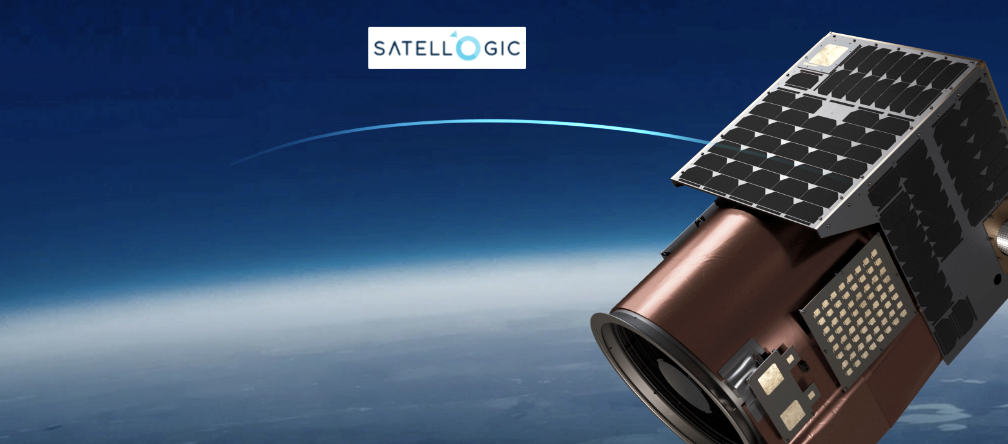
Satellogic specializes in high-resolution imagery of the Earth’s surface obtained through a constellation of LEO satellites. Liberty’s contemplated investment brings the total capital raised to more than $265 million, net of expected redemptions of CFV stock, and including a $100 million combined investment led by SoftBank and Cantor Fitzgerald, among other top-tier institutional investors. This will be Liberty Strategic Capital’s third investment since the company’s founding.

CFV was formed as a “blank check” company in January of 2020 and completed an IPO in February of 2021 at a price of $10 per unit. In July 2021, CFV and Satellogic announced plans to merge at an implied enterprise value of $850 million. The stockholder vote of CFV to approve the proposed merger is currently scheduled for January 24, 2022.

In exchange for this investment, Liberty will receive 20,000,000 Class A ordinary shares of Satellogic at $7.50 per share, as well as 5,000,000 warrants with a strike price of $10 per share and 15,000,000 warrants with a strike price of $15 per share. Upon closing, Satellogic’s Class A ordinary shares are expected to be listed on NASDAQ under the ticker symbol “SATL”.

Satellogic is a provider of low-cost, sub-meter satellite imagery to governments and commercial customers worldwide with plans to remap the entirety of the Earth’s surface once each day. Legacy approaches to Earth imaging have depended on large, complex satellites that were expensive to manufacture and launch, making it difficult for users to obtain imagery quickly and cheaply. Satellogic has developed a differentiated, highly efficient small satellite network that promises to unlock access to near real-time, high-resolution imagery for a multitude of users, helping businesses to farm more efficiently, monitor oil pipelines for leaks, and manage forest replantings, among other uses.

In connection with Liberty’s investment in Satellogic, Liberty will secure two board seats. Secretary Mnuchin will join Satellogic’s Board of Directors as Non-Executive Chairman. Liberty’s investment is contingent upon the completion of CFV’s merger with Satellogic and is further subject to a waiting period under the Hart-Scott-Rodino Act.

Secretary Mnuchin, Founder and Managing Partner of Liberty Strategic Capital, said, “It is hard to overstate the importance of up-to-date, high resolution Earth imagery as an aid to decision making across a broad variety of contexts. As Satellogic builds out its network to provide daily remaps of the Earth’s surface at a low cost, we believe the company is well positioned to provide governments and businesses with the information they need to make better, more well-informed decisions with respect to a host of pressing problems. We are excited to partner with Satellogic as they continue to innovate in this exciting and growing market.”
Emiliano Kargieman, CEO of Satellogic, said, “We are thrilled to welcome Secretary Mnuchin to the Satellogic Board of Directors, and Liberty and its investors to our ownership as a public company. This transaction is a significant step as we continue towards our plan of daily sub-meter resolution world remaps ready to address vast and affordable commercial applications.”
Howard W. Lutnick, Chairman and CEO of Cantor Fitzgerald and CFV, said, “I’m excited Secretary Mnuchin and the team at Liberty share our enthusiasm for the enormous value daily images of the entire Earth’s surface at sub-meter resolution could unlock, which is now possible with the funding achieved. Satellogic’s low earth images will bring many opportunities to the private sector and governments world-wide.”
Paul, Weiss, Rifkind, Wharton & Garrison LLP is serving as legal counsel to Liberty Strategic Capital. Cantor Fitzgerald & Co. is serving as financial advisor and capital markets advisor to CFV as well as placement agent on the PIPE, with Hughes Hubbard & Reed LLP serving as legal counsel to CFV. J.P. Morgan is serving as financial advisor to Satellogic, with Friedman Kaplan Seiler & Adelman LLP and Greenberg Traurig LLP serving as legal counsel.

Founded in 2010 by Emiliano Kargieman and Gerardo Richarte, Satellogic is the first vertically integrated geospatial company, driving real outcomes with planetary-scale insights. Satellogic is building the first scalable, fully automated Earth Observation platform with the ability to remap the entire planet at both high-frequency and high-resolution, providing accessible and affordable solutions for customers.

Filed Under: Featured, News

January 13th Scheduled For SpaceX’s Transporter-3 Mission Launch

January 13, 2022 by editorial

SpaceX is targeting Thursday, January 13 for a Falcon 9 launch of Transporter-3 to orbit from Space Launch Complex 40 (SLC-40) at Cape Canaveral Space Force Station in Florida.

The 29-minute launch window opens at 10:25 a.m. EST, or 15:25 UTC, and a backup opportunity is available on Friday, January 14, with the same window.

Falcon 9’s first stage booster previously launched Crew Demo-2, ANASIS-II, CRS-21, Transporter-1, and five Starlink missions.

Following stage separation, SpaceX will land Falcon 9’s first stage on Landing Zone 1 (LZ-1) at Cape Canaveral Space Force Station.

Transporter-3 is SpaceX’s third, dedicated, rideshare mission, and on board this launch are 105 spacecraft (including smallsats and Orbital Transfer Vehicles( OTV)).

Watch the live launch webcast starting about 15 minutes before liftoff. 

Filed Under: Featured, News

Arianespace To Launch ESA’s FLEX & ALTIUS Satellites Via Vega-C Rocket

January 13, 2022 by editorial

Artistic rendition of FLEX on-orbit, courtesy of ESA.

A contract signed with Arianespace secures the joint launch for two satellites that will further the knowledge of our home planet. Scheduled to lift off on a new class of rocket, ESA’s Vega-C, from Europe’s Spaceport in mid-2025, FLEX will yield new information about the health of the world’s plants and Altius will deliver profiles of ozone and other trace gases in the upper atmosphere to support services such as weather forecasting.

The contract was signed by ESA’s Acting Director of Earth Observation Programs, Toni Tolker-Nielsen, ESA’s Director of Space Transportation, Daniel Neuenschwander, and CEO at Arianespace, Stéphane Israël.

FLEX is an Earth Explorer research mission. Earth Explorers, which are pivotal to ESA’s FutureEO program, are built to show how pioneering space technology can return novel information about how our planet works as a system and to better understand our rapidly changing world.

Although essentially built for science, many of these missions also deliver information that has direct practical uses. Moreover, once the technology and applications have been proven, Earth Explorers, importantly, provide the sound heritage for future satellite missions designed to provide systematic data for services that benefit daily life.

FLEX will help address one of our biggest challenges: understanding the health of Earth’s vegetation, which is critical to improve food security.

The planet’s growing global population is placing mounting pressure on the production of food, animal feed, biological fuels and pharmaceutical products. It is estimated that there will have to be more than a 50% increase in agricultural production by 2050 to meet demand. Understanding plant health and productivity is therefore essential to managing resources. FLEX will shine a light on plant health FLEX will shine a light on plant health

Although photosynthesis is one of the most fundamental processes on the planet, it has not been possible to measure it directly on large spatial scales. However, when plants photosynthesize, they emit a faint fluorescent glow. This glow is invisible to the naked eye, but, remarkably, it can be measured from space. Carrying a novel instrument called the Fluorescence Imaging Spectrometer, FLEX will measure this fluorescent signal to shed new light on the functioning of our vegetation. The information will be used to assess the functioning, health and stress of plants.

Altius is a smaller class satellite, but it will fill a very important gap in the continuation of ‘limb’ measurements for atmospheric science. It is being developed within ESA’s Earth Watch program and financed mainly by Belgium, with contributions from Canada, Luxembourg and Romania. This new mission is being built to deliver vertical profiles of ozone and other atmospheric gases.

Artistic rendition of the Altius smallsat, courtesy of ESA.

While the ozone hole over Antarctica has been recovering in recent years, it is still a serious concern. And, needless to say, the understanding and monitoring of Earth’s atmosphere, with the rise in greenhouse gases that fuel climate change, is one of the most serious environmental issues humankind is currently facing.

Carrying an instrument that images in the ultraviolet, visible and near-infrared channels, the Atmospheric Limb Tracker for Investigation of the Upcoming Stratosphere, or Altius for short, will measure both stratospheric ozone and other atmospheric trace gases such as nitrogen dioxide and aerosols that affect air quality.

As its name suggests, Altius will not look straight down on Earth, but will observe the atmosphere along Earth’s horizon. The ‘limb-sounding’ technique allows trace gases such as ozone to be profiled so that concentrations can be seen at different altitudes with high vertical resolution.

The contract, now signed with Arianespace, ensures passage into space for these precious satellite missions from Europe’s Spaceport in French Guiana.

Artistic rendition of Vega-C on the launch pad, courtesy of ESA.

Both satellites will be taken into orbit on ESA’s new Vega-C rocket. Building on the current Vega class, the first Vega-C will first take to the skies in 2022.

Vega-C is more powerful than its predecessor and is capable of a wide range of mission types. It is a single body rocket about 35 meters high with a mass at liftoff of 210 tons. It is able to place about 2200 kg. in a reference 700 km.-polar orbit, meeting the needs of European institutions and industry.

While the contract to launch FLEX and Altius assumes they will be launched on the same rocket in mid-2025, there is provision for alternative shared launches, should there be a drift in the timing of their relative development processes.

Filed Under: Featured, News

  • « Go to Previous Page
  • Page 1
  • Interim pages omitted …
  • Page 36
  • Page 37
  • Page 38
  • Page 39
  • Page 40
  • Interim pages omitted …
  • Page 61
  • Go to Next Page »

Primary Sidebar

WEEKLY NEWSLETTER

Archives

  • August 2026
  • July 2026
  • June 2026
  • May 2026
  • April 2026
  • March 2026
  • February 2026
  • January 2026
  • December 2025
  • November 2025
  • October 2025
  • September 2025
  • August 2025
  • July 2025
  • June 2025
  • May 2025
  • April 2025
  • March 2025
  • February 2025
  • January 2025
  • December 2024
  • November 2024
  • October 2024
  • September 2024
  • August 2024
  • July 2024
  • June 2024
  • May 2024
  • April 2024
  • March 2024
  • February 2024
  • January 2024
  • December 2023
  • November 2023
  • October 2023
  • September 2023
  • August 2023
  • July 2023
  • June 2023
  • May 2023
  • April 2023
  • March 2023
  • February 2023
  • January 2023
  • December 2022
  • November 2022
  • October 2022
  • September 2022
  • August 2022
  • July 2022
  • June 2022
  • May 2022
  • April 2022
  • March 2022
  • February 2022
  • January 2022
  • December 2021
  • November 2021
  • October 2021
  • September 2021
  • August 2021
  • July 2021
  • June 2021
  • May 2021
  • April 2021
  • March 2021
  • February 2021
  • January 2021
  • December 2020
  • November 2020
  • October 2020
  • September 2020
  • August 2020
  • July 2020
  • June 2020
  • May 2020
  • April 2020
  • March 2020
  • February 2020
  • January 2020
  • December 2019
  • November 2019
  • October 2019

© 2019–2026 SatNews

Insert/edit link

Enter the destination URL

Or link to existing content

    No search term specified. Showing recent items. Search or use up and down arrow keys to select an item.
      x
      Sign Up Now!

      Enjoy a free weekly newsletter with recent headlines from the global SmallSat industry.

      Invalid email address
      We promise not to spam you. You can unsubscribe at any time.
      Thanks for subscribing! You will now receive weekly SmallSat News updates.
      We love our advertisers.
      And you will too!

      Please disable Ad Blocker to continue... We promise to keep it unobtrusive.
      We promise not to spam you. You can unsubscribe at any time.
      Invalid email address
      Thanks for subscribing!