
• Skip to main content
  • Skip to primary sidebar
  • Home
  • News
  • Featured
  • More News ⌄
    • SatNews
    • SatMagazine
    • MilSatMagazine
  • Events ⌄
    • MilSat Symposium
    • SmallSat Symposium
    • Satellite Innovation
  • Contacts
  • SUBSCRIPTION

SmallSat News

You are here: Home / Archives for Featured

Featured

ALL.SPACE and Telesat Government Solutions engage in terminal collaboration for Lightspeed

August 25, 2025 by editorial

Recently, Telesat Government Solutions, a wholly-owned subsidiary of Telesat (Nasdaq and TSX: TSAT), and ALL.SPACE announced a Memorandum of Understanding to integrate ALL.SPACE user terminals with the Telesat Lightspeed Low Earth Orbit (LEO) network.
Telesat Government Solutions will provide detailed Telesat Lightspeed network interface specifications to facilitate the development of ALL.SPACE multi-orbit, electronically steered terminals. The companies will collaborate on joint customer use-case evaluations and field demonstrations utilizing Telesat’s LEO 3 demonstration satellite. This collaboration is intended to ensure that ALL.SPACE terminals achieve type certification and are fully operational when Telesat Lightspeed services commence in late 2027.

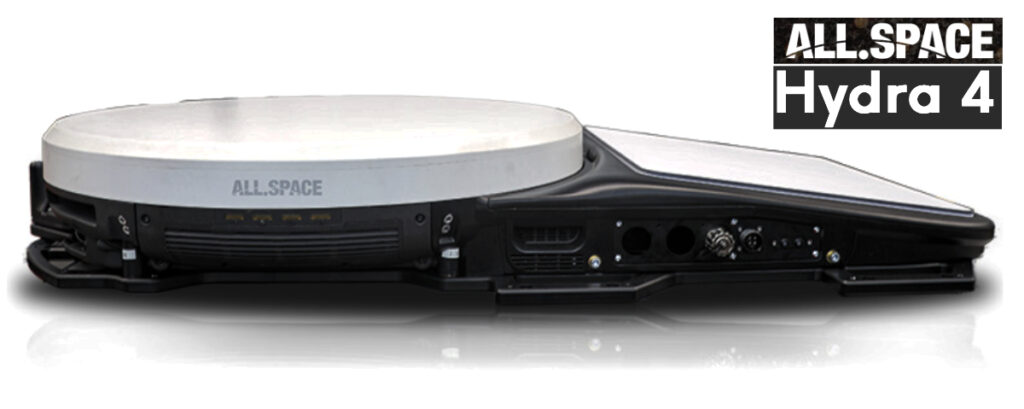
Development efforts will include the ALL.SPACE Hydra-2 MAX terminal that maintains two simultaneous satellite connections with commercial and military Ka-band spacecraft across GEO, MEO and LEO orbits.

Additionally, the collaboration extends to the advanced Hydra-4 MAX MILSATCOM terminal that connects to four satellites simultaneously by combining a Hydra-2 MAX terminal, a Ku-band terminal and a global L-band antenna into a single chassis.
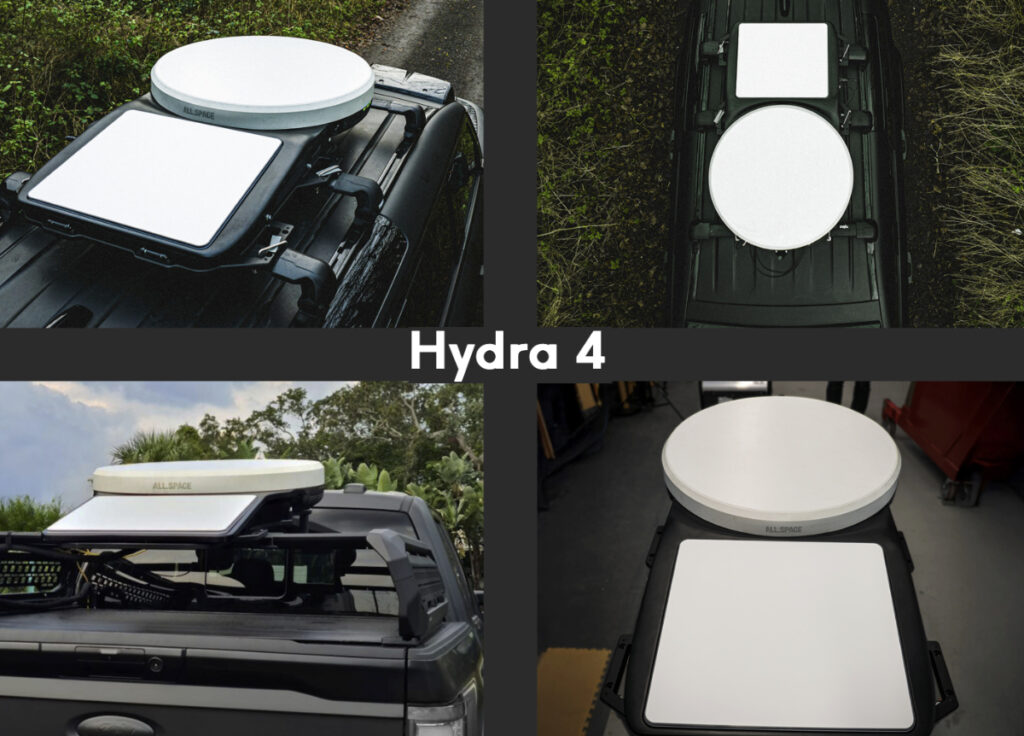
This important collaboration will ensure that Hydra 2 and Hydra 4 terminals that are deployed today, including those delivered to the U.S. Navy and U.S. Army, can seamlessly access Telesat Lightspeed in the future.

Chuck Cynamon, President of Telesat Government Solutions, said, “As the Department of Defense pursues proliferated architectures for assured connectivity, secure, ruggedized multi-band and multi-orbit terminals provide increased flexibility and resiliency in the congested and contested battlespace. The combination of our secure, advanced Telesat Lightspeed services and innovative ALL.SPACE terminals will increase operational advantage for the DoD in the digital battlespace.”

Paul McCarter, CEO of ALL.SPACE, said, “The future of resilient, global connectivity hinges on multi-orbit, multi-network architectures and our collaboration with Telesat marks a powerful step forward. Integrating our field-proven Hydra terminals with the advanced Telesat Lightspeed LEO capabilities will give government and defense users a critical operational edge – enabling seamless, secure, and scalable communications across every domain. This joint effort reflects our shared commitment to delivering the most agile and interoperable SATCOM solutions on the market.”


Filed Under: Featured, News

Globalstar secures early government wins

August 20, 2025 by editorial

Globalstar (NASDAQ: GSAT) has gained significant momentum in the government market through multiple recent contract awards and strategic partnerships.

Leveraging the company’s Low Earth Orbit (LEO) satellite constellation, licensed spectrum assets, and advanced networking technologies, Globalstar is delivering mission-critical communications solutions for defense and other government agencies and applications.

Recent contract awards and expanding government solutions capabilities include:

  • Satellite-Enabled Software-Defined Communications: Globalstar completed a successful proof of concept with Parsons, a leading defense technology provider, advancing the solution to the commercial phase with the parties executing a commercial access agreement. The software-defined waveform technology addresses critical challenges in compromised signal environments and was developed to enable rapid deployment across diverse, mission-critical applications. The partnership is expected to provide accelerated go-to-market channels for other Globalstar developed government and defense products and services.
  • Advanced XCOM RAN-Based 5G Research: XCOM RAN will be used to evaluate high-capacity architecture for 5G defense applications. The technology’s plug-and-play architecture and high reliability capabilities, combined with Band 53 spectrum assets, enable rapid ad-hoc deployments worldwide for mission-critical applications including autonomous systems support, tactical operations centers, and training facilities using XR technologies.
  • Strategic Defense Agency Collaboration: Globalstar entered into a Cooperative Research and Development Agreement with the U.S. Army to demonstrate edge computing capabilities for enhanced situational awareness and decision-making in tactical environments. This collaboration, combined with expanding opportunities for secure asset tracking and location services across defense applications, demonstrates the versatility of Globalstar’s satellite solutions with global coverage and low latency for mission-critical government operations.

Globalstar’s combination of satellite constellation, licensed spectrum assets, and advanced 5G RAN technologies enables seamless connectivity solutions that transition between satellite and terrestrial networks based on operational needs, providing defense and government customers with unmatched flexibility and resilience across critical mission requirements.

With current contracts expected to generate a minimum of $60 million in revenue over the next five years, Globalstar’s growing government customer base is projected to significantly increase this revenue category. Additionally, the Company’s expanding pipeline of opportunities across defense and government agencies positions this market vertical to deliver revenue significantly larger than current contracted minimums.

These recent wins validate the mission-critical reliability of our satellite and terrestrial solutions in the most demanding operational environments,” said Dr. Paul E. Jacobs, Globalstar CEO. “The government area of our business has established a strong foothold and represents an important growth driver for the Company.“

Filed Under: Featured, News

Oxford Space Systems deploys VHF isoflux helical antenna for Startical’s ECHOES project

August 11, 2025 by editorial

Screenshot

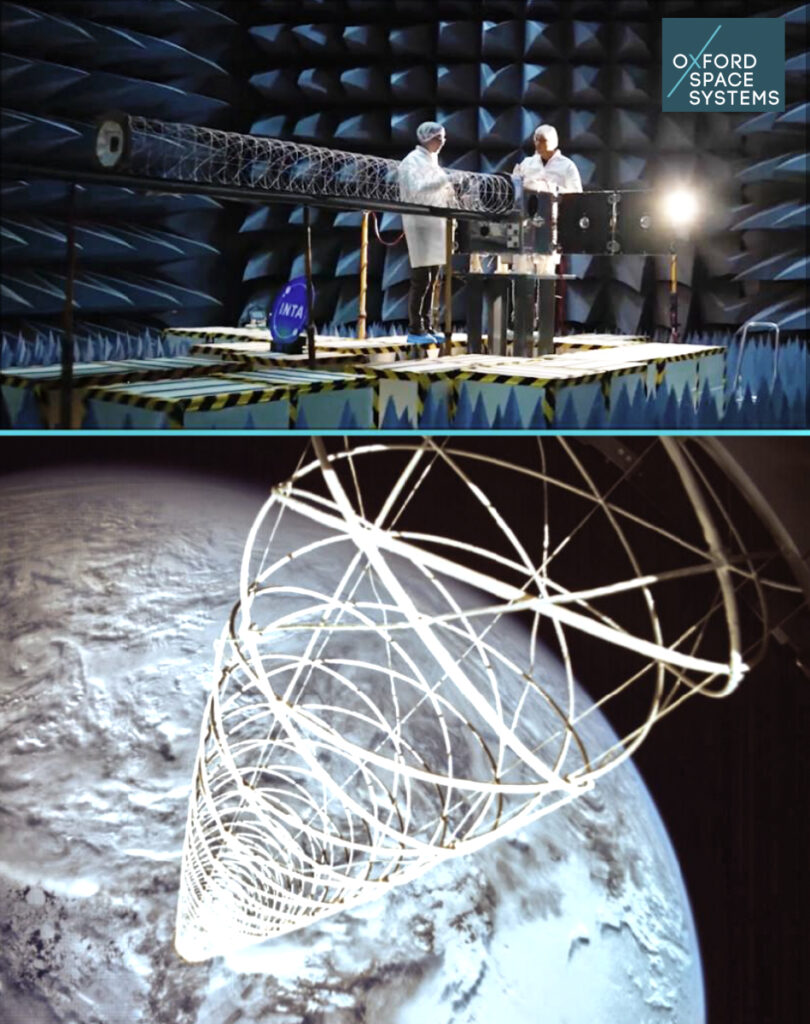
Oxford Space Systems has completed the in-space deployment of the company’s large Very High Frequency (VHF) isoflux helical antenna on the IOD-2 mission for Startical‘s ECHOES project, marking a significant milestone in the advancement of space-based air traffic management (ATM).

The antenna, nearly 4 meters in length and designed to operate within the 117 to 138 MHz range, is a crucial component of the ECHOES initiative, contributing to enhanced global communication and surveillance capabilities for ATM purposes.

The ECHOES project, spearheaded by Startical—a joint venture between ENAIRE (the Spanish air navigation service provider) and Indra (one of the world’s leading companies in defence, air traffic, and space)—aims to prove the viability of space-based communications and surveillance capabilities for ATM services in a real scenario. This concept will revolutionize air navigation through a constellation of satellites that provide global VHF communication.

The antenna developed by Oxford Space Systems as an ECHOES project subcontractor and integrated onto the satellite enables radio connectivity in remote areas where reliable communication is essential to future air traffic management.

The ECHOES project, performed within the SESAR Joint Undertaking (SJU) framework and compromising of Startical, ENAIRE and Indra, as well as Nav Portugal, DLR, Crida and Mitiga, has received substantial funding from the European Union, supported by the Climate, Infrastructure and Environment Executive Agency (CINEA) under the Connecting Europe Facility (CEF Transport).

This financial backing, along with the technical expertise of Oxford Space Systems, Startical, ENAIRE and Indra, ensures that the project will set new standards in air traffic management, particularly in regions where traditional systems are less effective.

Sean Sutcliffe, CEO of Oxford Space Systems, said, “We are delighted that Startical has announced the successful deployment in-space of Oxford Space Systems’ antenna for their ECHOES project. This project demonstrates the ability of Oxford Space Systems to deliver high performance, technically demanding deployable antennas within a tight timescale while conducting a rigorous design, development and verification program. In this case the program took just 12 months from first order to delivery, including designing and testing an innovative antenna to meet Startical’s requirements. This was enabled by our team’s ability to draw on extensive product knowledge and heritage, rapid execution with a strong integrated project team covering the range of skills needed, and the highly collaborative approach with the project partners—Startical, Indra and NanoAvionics.”

Filed Under: Featured, News

RTX’s Blue Canyon Technologies announces new + larger spacecraft

August 8, 2025 by editorial

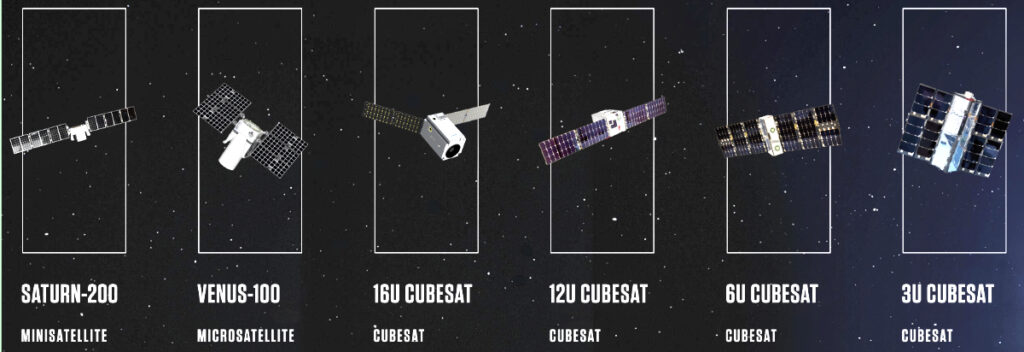
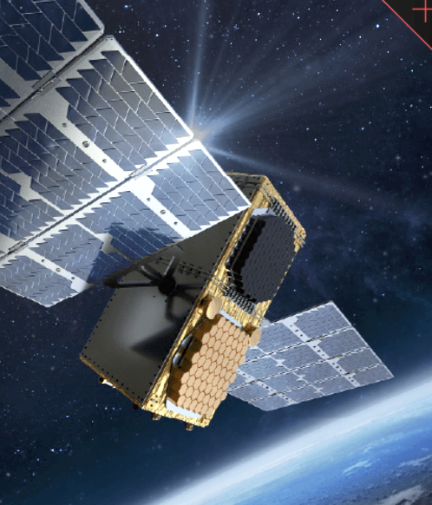
Blue Canyon Technologies recently unveiled the firm’s latest spacecraft bus, the Saturn-400. This new, larger satellite offers flexibility and reliability to help customers achieve their mission objectives more effectively.

Additional smallsats available from the company

The Saturn-400 spacecraft offers increased payload capacity, allowing for more instruments and larger sensors for complex missions—up to 600 kg—depending on the launch vehicle. It’s also the company’s first satellite to offer an optional built-in attitude control system, known as a control moment gyroscope, which enhances its agility and stability.

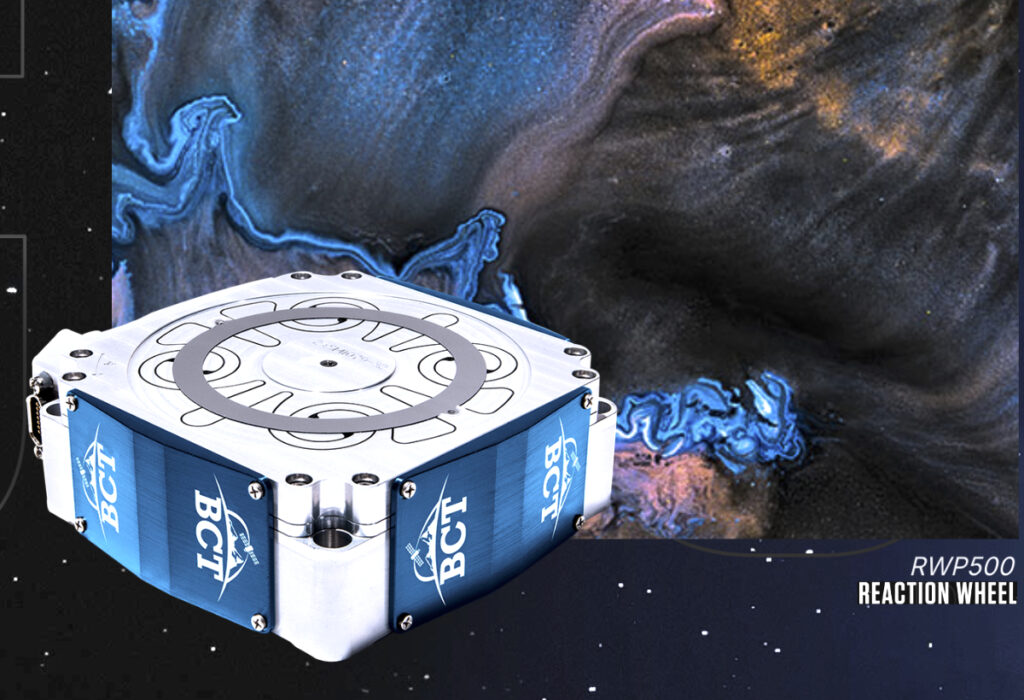
As an alternative to the integrated control moment gyroscope, the Saturn-400 offers three reaction wheel options: Blue Canyon’s RW4, RW8, and the larger RW16. Reaction wheels use motor-driven flywheels for attitude control, while CMGs use a spinning rotor and motorized gimbals. Both options provide precise, low-jitter agility, allowing customers to optimize performance based on their mission needs and budget.

The Saturn-400 has rideshare capability while offering higher power and volume scaling through larger solar arrays and scalable power subsystems up to two kilowatts.

Our advanced control moment gyroscope technology is a key differentiator for Blue Canyon, and is now available in a turnkey spacecraft,” said Chris Winslett, general manager of Blue Canyon Technologies. “The Saturn-400 shares commonality with many BCT products, all of which leverage the same modular software. This approach enhances efficiency and lowers program risk, enabling customers to meet mission needs more quickly and affordably.”

Since the company’s inception, Blue Canyon has launched 83 small satellites and more than 2,700 components in support of successful missions in dynamic environments and in multiple orbital classifications, including interplanetary journeys.

Filed Under: Featured, News

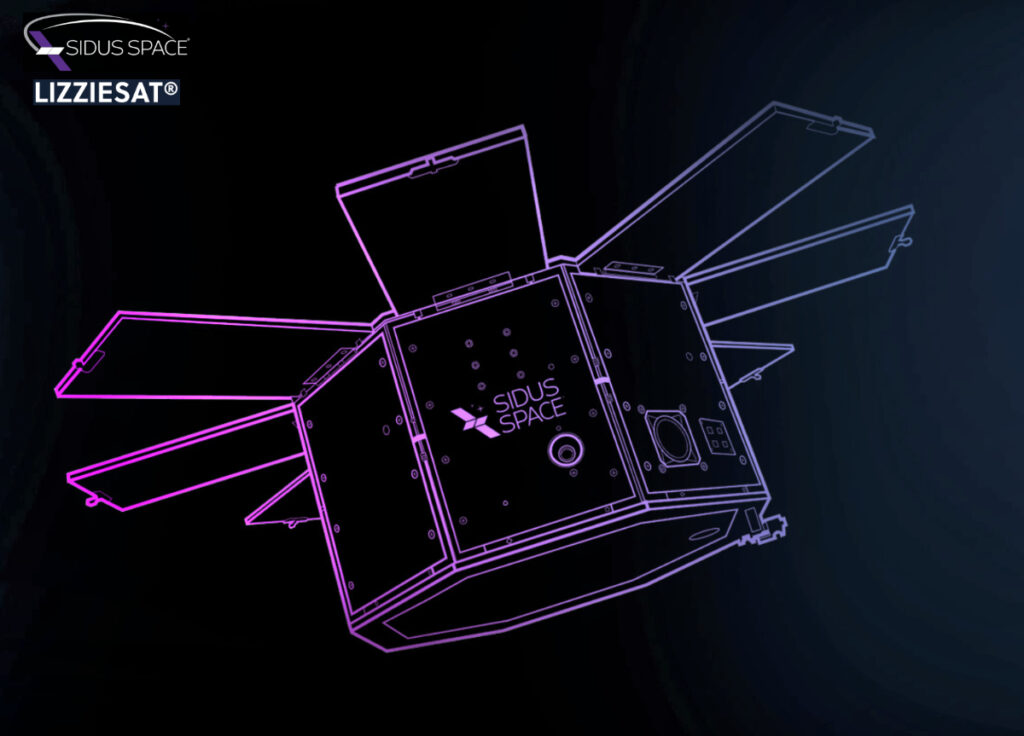
Sidus Space deploys advanced SpacePilot software for autonomous ops + commissions LizzieSat®-3 Attitude Determination + Control System

August 7, 2025 by editorial

Sidus Space (NASDAQ: SIDU) has successfully deployed the company’s new, autonomous, guidance, navigation, and control (GNC) software, SpacePilot, and has also commissioned the Attitude Determination and Control System (ADCS) on LizzieSat®-3 (LS3).

Designed for next-generation satellite operations, SpacePilot integrates real-time star tracker, sun sensor, magnetometer, gyroscope, and GPS data onboard LS3 to enable high-precision orbital control with minimal ground intervention. Key features include:

  • Attitude Determination: Real-time estimation of spacecraft orientation for mission-critical accuracy
  • Attitude Control: Stabilization and mission-aligned adjustments to support payload operations
  • Optimal Trajectory: Fuel-efficient, time-optimized flight paths for extended mission life
  • Autonomous Guidance: Precise rendezvous and proximity operations (RPO) with minimal operator input
  • Adaptive Autonomy: Dynamic response to changing orbital conditions and fault scenarios
  • Lightweight Design: Optimized for resource-constrained small satellite platforms

The successful commissioning of the ADCS marks a critical step toward LS3’s full mission readiness. With the deployment of autonomous SpacePilot, the satellite can achieve accurate sun-pointing for maximum power generation, stabilize payload orientation for improved data collection, and maintain antenna alignment for reliable communications. This milestone also paves the way for more rapid commissioning of the remaining onboard technologies, including Sidus’s proprietary sensor suite.

LS3’s successful commissioning and SpacePilot deployment reinforce Sidus Space’s commitment to advancing autonomous satellite technologies as part of its growing LizzieSat® constellation.

Activating SpacePilot and commissioning the ADCS marks a critical milestone for LS3’s mission,” said Carol Craig, Founder and CEO of Sidus Space. “This software enables a higher level of autonomy, ensuring greater efficiency and mission resilience while reducing reliance on ground resources.”

Filed Under: Featured, News

Ascending Node Technologies enables missions to automate constellation design

August 3, 2025 by editorial

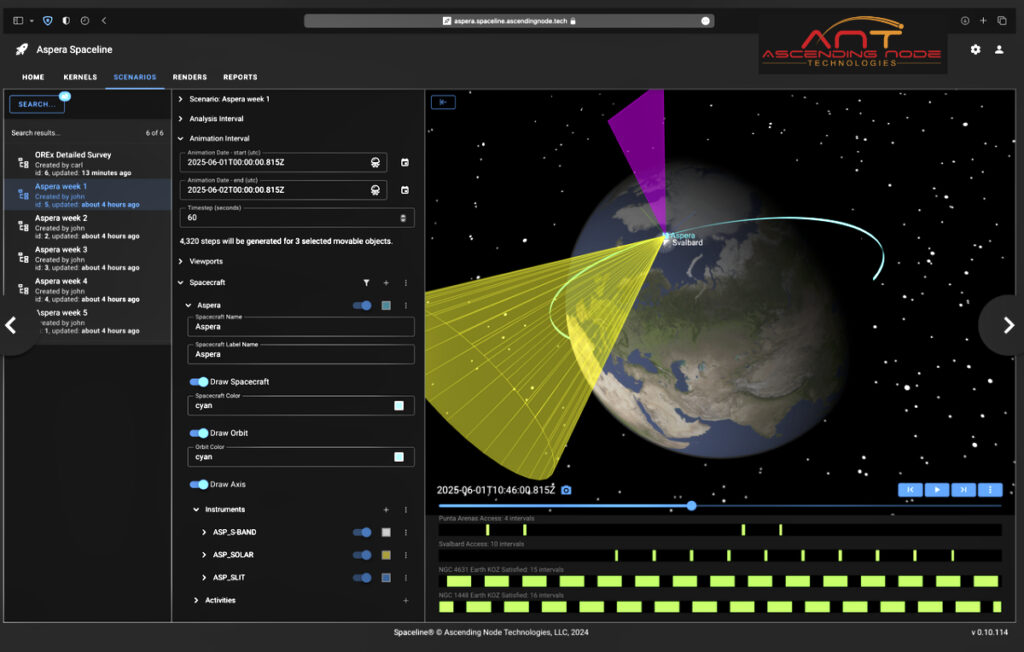
Ascending Node Technologies (ANT) has unveiled the company’s Spaceline® constellation design tool that enables startups and established operators to collectively plot, create, and simulate systems tailormade to their mission plans and operations.

This first-of-its-kind, collaborative design tool allows project engineers and developers to plug mission specs and requirements into ANT’s Spaceline visualization software platform, which does the math and provides an accurate blueprint for new and expanding constellations.

Spaceline enables operators to clearly see how their constellations will perform in the future and helps to ensure they deploy the right number of spacecraft and deliver the necessary coverage and services, such as Earth and orbital debris observation.

The new constellation design tool joins the affordable web-based Spaceline suite of data analysis and visualization capabilities developed to help today’s dispersed mission teams effectively collaborate in real time during every mission phase, from design through live operations and post-mission review.

Spaceline is a relatively small investment that enables multi-million-dollar missions to dramatically boost operational accuracy, efficiency, and productivity by automating and streamlining many of the manual, cumbersome calculations and processes still in use today.

NASA is relying on Spaceline and the Ascending Node Technologies team as a critical asset of its $20 million Aspera small-sat UV astrophysics mission set to explore nearby galaxies from LEO beginning next year.

NASA and the University of Arizona space team are leveraging Spaceline to help solve the mysteries surrounding how galaxies evolve and obtain fuel for the formation of stars.

Spaceline was born from NASA’s historic and complex OSIRIS-REx (Origins, Spectral Interpretation, Resource Identification, and Security – Regolith Explorer) asteroid sample collection mission that traveled to the near-Earth asteroid Bennu to retrieve rock and dust samples as part of a seven-year exploration.

By the time asteroid samples were delivered to Earth in 2023, a trio of OSIRIS-REx engineers and scientists had founded Ascending Node Technologies and revolutionized the space industry’s slow, siloed, costly, and often manual data processing practices.

Multiple NASA Small Business Innovation Research (SBIR) contracts have funded next-generation Spaceline visualization apps and enhancements to the Spaceline visualization software platform.

The industry continues to underestimate the complexity of space, so our web-based Spaceline architecture and new design tool allow teams to collaborate, develop ideas, create and operate a simulated constellation long before the first spacecraft is launched,” said John Kidd, Chief Aerospace Engineer for Ascending Node Technologies. “The ability to effectively plug-in specific mission data and automatically create constellations of spacecraft to meet specific objectives allows startups to build a compelling case for venture funding and big operators to grow with accuracy and confidence.”

Filed Under: Featured, News

SFL Missions Inc. awarded contract for AISSat-4 nanosatellite development

July 31, 2025 by editorial

The Norwegian Space Agency (NOSA) has awarded a contract to SFL Missions Inc. to develop the AISSat-4 maritime ship tracking microsatellite for launch in less than one year. AISSat-4 is needed to expand operational capacity in Norway’s maritime situational awareness network.

AISSat-4 is being developed on SFL’s SPARTAN 6U nanosatellite platform and will carry a single payload—a miniaturized Automatic Identification System (AIS) receiver built by Kongsberg Seatex of Trondheim, Norway. The SPARTAN bus is space proven with 18 commercial communications satellites previously deployed using this platform.

SFL Missions is uniquely prepared to develop AISSat-4 on an accelerated schedule. Additionally, the SPARTAN platform relies on heritage hardware and software and is easily tailored to accommodate the AIS receiver and antennas.

Norway launched the first ship-tracking satellite of its operational AISSat series in 2010 and then funded a parallel series of larger NorSat microsatellites. While the smaller AISSat nanosatellites each carry a single payload focused solely on collection of AIS signals, the NorSats each operate a ship-tracking device along with one or more technology demonstration payloads. NorSat-1 and -2 are both eight years old and have operated beyond their five-year design lives.

Norway’s leadership in space-based maritime monitoring includes eight spacecraft spanning more than 15 years, all of which were developed with SFL…

AISSat-1 was launched in 2010 with funding from Norwegian Defence Research Establishment (FFI) to prove that AIS signals from ships at sea could be detected by an AIS receiver in orbit. AISSat-1 was quickly transitioned to operational status where it collected data for 12 years.

AISSat-2, a twin to AISSat-1, launched as an operational asset in 2014 until decommissioning nine years later.

NorSat-1 and -2 launched in 2017, each carrying successively improved AIS receivers developed by Kongsberg Seatex. Additionally, NorSat-1 carries two experimental space science instruments, while NorSat-2 tested a two-way communication VHF data exchange device.

NorSat-3 launched in 2021 with an experimental radar navigation detector to augment the ship-tracking capabilities of its AIS receiver.

NorSat-TD launched in 2023 with a suite of technology demonstration payloads including a Dutch-built laser communications device that successfully enabled faster, more secure optical transmission of data between the spacecraft and ground station.

NorSat-4 launched in January 2025 carrying a fifth-generation AIS receiver complemented by a first-of-its-kind low-light imaging camera to detect and identify “dark” ships not operating their AIS transponders.

AISSat-4, now under development, will have the capacity to capture 1.5 million unique AIS signals every day even in crowded shipping lanes.

Additionally, Norwegian AIS data collected from space will continue to serve as the mainstay of the Blue Justice Ocean Surveillance Program initiated by Norway in September of 2023 to fight international fisheries crimes. Participants in this program share coastal data to uncover illegal fishing activities worldwide.

Under the leadership of NOSA and the Norwegian Coastal Administration, Norway operates the world’s most extensive and sophisticated space-based marine monitoring system to protect the safety of vessels and sustainability of resources in its vast territorial waters.

We have extensive experience in implementing AIS missions, and therefore we have the expertise and design heritage needed to implement the AISSat-4 mission on a short schedule,” said Dr. Robert E. Zee, SFL Missions Director and CEO.

More broadly,” he added, “SFL Missions Inc. has the capacity to work on many satellite missions concurrently, and since the team is vertically integrated, it maintains full control over the subsystem and spacecraft level assembly, integration, and testing schedules.

The societal benefits we gain from collecting AIS information from satellites is significant. It is therefore important that we ensure the maintenance of this capability,” said Coastal Administration Director Einar Vik Arset. “AISSat-4 will be a valuable addition at a time when several of our operational satellites are nearing the end of their expected lifespan.”

Filed Under: Featured, News

Forrester’s Digest: Airbus shapes new organization structure

July 8, 2025 by editorial

Airbus Defence and Space states they are implementing a new organization structure to shape the company’s future competitiveness, with more than 2,000 jobs to go.

The new organization came into effect on July 1st. The Division has completed all information and consultation processes on European as well as national levels for its adaptation plan and has reached productive agreements with its social partners.

This process followed an announcement in October 2024 to adapt the Division’s organisation and workforce in light of a continued complex business environment, especially in the Space Systems segment where significant financial charges were recorded in 2023 and 2024,” noted Airbus.

Among others, the company announced it would reduce up to 2,043 positions, predominantly management overhead functions, and provide stronger end-to-end accountability to its three business lines—Air Power, Space Systems and Connected Intelligence—in order to better cope with business requirements in the future. As confirmed at the beginning of the information and consultation process, there will be no compulsory redundancies, stressed Airbus.

Airbus is backing the probable merger of its space division with those of Thales and Leonardo.

I thank our social partners and our Airbus Defence and Space colleagues for their constructive engagement and contributions throughout this process. Navigating organisational change is never straightforward for any party, particularly when it involves adapting our workforce. The current geopolitical landscape requires a stronger, faster and more resilient European defence and security industry. Our new structure delivers on this requirement through an efficient and effective end-to-end responsibility for our three businesses and a significantly optimized cost structure while preserving the ability and capacity to benefit from growing defence spending,” said Mike Schoellhorn, CEO Airbus Defence and Space.

Filed Under: Featured, News

Novaspace’s Report indicates defense spending fuels $182.6 billion (€155bn) miniaturization of technologies + EO satellite boom

July 3, 2025 by editorial

The 18th edition of Novaspace’s Earth Observation Satellite Systems report finds 5,770 EO satellites set to launch by 2034, fuelling a $182.6 billion (€155bn) market surge, as national defence priorities shape space strategy

“A new generation of defense suppliers is emerging as countries look to promote the development of national EO ecosystems, with momentum expected to increase in the coming years,” said Federico Banfi, project manager at Novaspace. “This shift in priorities is accelerating procurement cycles and offering the market more agile, cost-effective, and modular systems supported by advanced software and AI.”

Going forward, defence satellites are poised to lead new deployments. This trend is increasingly visible with recent projected budget cuts in commercial Earth observation data procurement reinforcing this strategic shift. U.S. agencies are increasingly prioritizing data from internal, defence-operated assets over commercial sources, driving the move toward sovereign, secure space capabilities.

This growth is enabled by the miniaturization of technologies supporting the deployment of smallsat constellations in various types of orbits, carrying an increasing range of sensors that could be hosted on-board. 2025 marks the start of the Very Low Earth Orbit (VLEO) and VVHR era, set to disrupt competition going forward. The Chinese Chutian constellation deployed its first prototype in 2024 and is preparing for larger deployment this year. In the U.S., commercial players have also started deployment, signaling a new generation of high-resolution, low-latency capabilities.

Performance, longevity, and cost efficiency now outweigh mass as key priorities. Heavier smallsat associated enhanced capabilities meet growing defence and mission demands, while launch costs remain manageable. Sub-50 kg satellites, once 82 per cent of commercial launches, are expected to drop below 50 percent, highlighting this market is shifting toward more complex and diversified missions.

Filed Under: Featured, News

Rocket Lab completes CDR for SDA’s T2TL-Beta constellation

July 3, 2025 by editorial

Rocket Lab National Security LLC, a wholly-owned subsidiary of Rocket Lab USA (Nasdaq: RKLB), successfully completed the firm’s Critical Design Review (CDR) for the Space Development Agency’s (SDA) Tranche 2 Transport Layer-Beta (T2TL-Beta) program.

The milestone follows Rocket Lab’s successful Preliminary Design Review (PDR) in late 2024, confirms that spacecraft design, manufacturing approach, and systems architecture meet all mission requirements and enables the program to move into full-scale production.

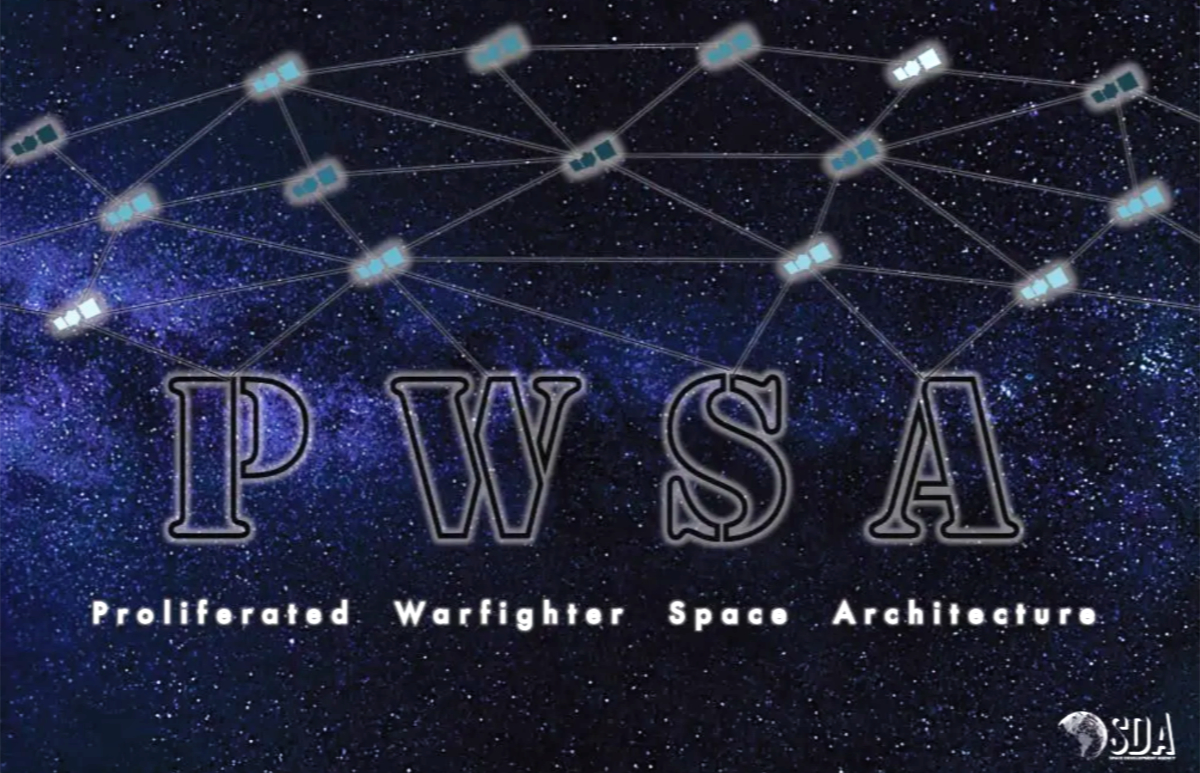
As a prime contractor, Rocket Lab will deliver a constellation of 18 spacecraft for the T2TL-Beta program, part of the Proliferated Warfighter Space Architecture, a resilient, low-latency communications network in LEO that support real-time connectivity for U.S. and allied forces worldwide.

Rocket Lab’s spacecraft for the T2TL-Beta program is based on its high-performance Lightning platform, tailored for the power and data-handling demands of national security LEO constellations. As a vertically integrated provider, Rocket Lab designs and manufactures its spacecraft buses and key subsystems in-house, including solar panels, composite structures, star trackers, reaction wheels, radios, avionics, flight and ground software, launch dispensers, and more allowing the Company to maintain tight control over quality, cost, and schedule.

The Proliferated Warfighter Space Architecture is reshaping how the U.S. secures space for the joint force, and Rocket Lab is proud to be a contributor,” said Brad Clevenger, President of Rocket Lab National Security. “With proven platforms and in-house production across key systems, we’re building the backbone of resilient on-orbit capability for the warfighter. Our successful completion of CDR further demonstrates our ability to deliver trusted technology at the speed and scale needed to support national security space.”

Filed Under: Featured, News

  • « Go to Previous Page
  • Go to page 1
  • Interim pages omitted …
  • Go to page 3
  • Go to page 4
  • Go to page 5
  • Go to page 6
  • Go to page 7
  • Interim pages omitted …
  • Go to page 58
  • Go to Next Page »

Primary Sidebar

WEEKLY NEWSLETTER

Archives

  • February 2026
  • January 2026
  • December 2025
  • November 2025
  • October 2025
  • September 2025
  • August 2025
  • July 2025
  • June 2025
  • May 2025
  • April 2025
  • March 2025
  • February 2025
  • January 2025
  • December 2024
  • November 2024
  • October 2024
  • September 2024
  • August 2024
  • July 2024
  • June 2024
  • May 2024
  • April 2024
  • March 2024
  • February 2024
  • January 2024
  • December 2023
  • November 2023
  • October 2023
  • September 2023
  • August 2023
  • July 2023
  • June 2023
  • May 2023
  • April 2023
  • March 2023
  • February 2023
  • January 2023
  • December 2022
  • November 2022
  • October 2022
  • September 2022
  • August 2022
  • July 2022
  • June 2022
  • May 2022
  • April 2022
  • March 2022
  • February 2022
  • January 2022
  • December 2021
  • November 2021
  • October 2021
  • September 2021
  • August 2021
  • July 2021
  • June 2021
  • May 2021
  • April 2021
  • March 2021
  • February 2021
  • January 2021
  • December 2020
  • November 2020
  • October 2020
  • September 2020
  • August 2020
  • July 2020
  • June 2020
  • May 2020
  • April 2020
  • March 2020
  • February 2020
  • January 2020
  • December 2019
  • November 2019
  • October 2019

© 2019–2026 SatNews

Insert/edit link

Enter the destination URL

Or link to existing content

    No search term specified. Showing recent items. Search or use up and down arrow keys to select an item.
      x
      Sign Up Now!

      Enjoy a free weekly newsletter with recent headlines from the global SmallSat industry.

      Invalid email address
      We promise not to spam you. You can unsubscribe at any time.
      Thanks for subscribing! You will now receive weekly SmallSat News updates.
      We love our advertisers.
      And you will too!

      Please disable Ad Blocker to continue... We promise to keep it unobtrusive.
      We promise not to spam you. You can unsubscribe at any time.
      Invalid email address
      Thanks for subscribing! Please check your email for further instructions.