• Skip to main content
  • Skip to primary sidebar
  • Home
  • News
  • Featured
  • More News ⌄
    • SatNews
    • SatMagazine
    • MilSatMagazine
  • Events ⌄
    • MilSat Symposium
    • SmallSat Symposium
    • Satellite Innovation
  • Contacts
  • SUBSCRIPTION

SmallSat News

You are here: Home / Archives for News

News

Rocket Lab’s new contract with Spire Global and NorthStar for upcoming launch to monitor space from space

June 22, 2023 by editorial

Image of a previous launch from Rocket Lab’s launch complex 1 in New Zealand

Rocket Lab USA, Inc. (Nasdaq: RKLB), a global provider of launch services and space systems, announced that it has signed a dedicated launch agreement with Spire Global (NYSE: SPIR) (“Spire”) to deliver its first four Space Situational Awareness (SSA) satellites to low Earth orbit for its Space Services customer NorthStar Earth & Space Inc. (“NorthStar”).

The dedicated mission on Electron will deploy the satellites to a 530km circular orbit from Rocket Lab Launch Complex 1 in New Zealand during a launch window that opens in September 2023. To meet NorthStar’s program requirements, Spire has selected Rocket Lab to launch the satellites on an accelerated timeline within five months of contract signing. Spire has previously launched with Rocket Lab on Electron’s first two commercial missions, Still Testing and Its Business Time, in 2018.

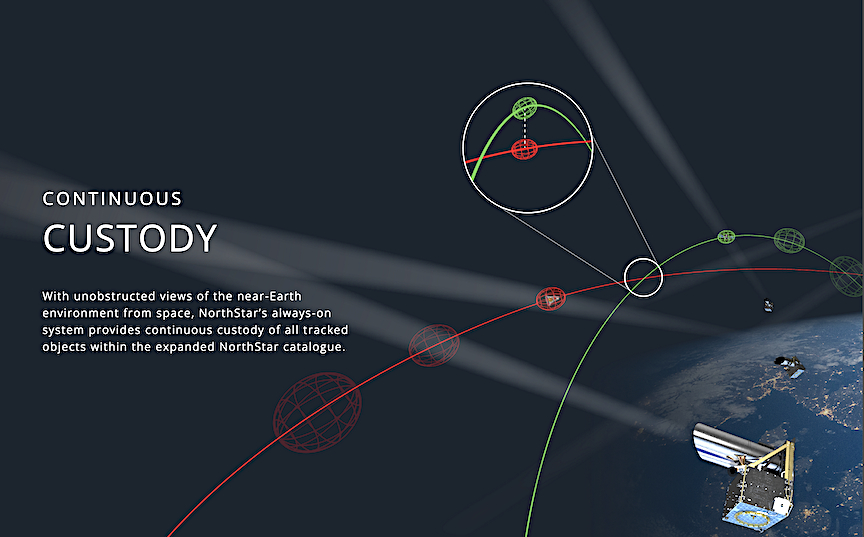
NorthStar, headquartered in Montreal, Canada, is the first commercial SSA service provider to actively scan and monitor space from space. NorthStar’s block of four satellites, built and operated by Spire, will be the first to simultaneously monitor all near-Earth orbits from space, delivering a radically enhanced level of SSA services to the global satellite community, with timely and precise information for space object detection, tracking, orbit determination, collision avoidance, navigation, and proximity alerts.
Rocket Lab founder and CEO, Peter Beck, said, “As with all satellite constellations, the precise placement of the first satellites for a particular mission is critical to the constellation’s future success. With Electron’s agility, reliability, and proven precision to place satellites exactly where they need to go, dedicated missions like this one for Spire and NorthStar are our bread and butter. Space debris is a global issue and the responsibility of all space users, so it’s great to be supporting a mission with a focus on making Earth’s orbit safer for everyone.”

This mission was originally manifested to launch with a now defunct launch provider but has been added to Rocket Lab’s 2023 launch manifest to provide an expedited launch, demonstrating Rocket Lab’s proven flexible and responsive launch capability.

Stewart Bain, CEO of NorthStar added, “With the untimely setback in launch services, maintaining NorthStar’s plan to launch this year had presented an exceptional challenge. But we are confident that we have found an excellent, proven launch specialist in Rocket Lab. We recognize the highly effective effort from both Spire Global and Rocket Lab to preserve our plans to make a meaningful contribution to the safety and sustainability of space by launching our unique services this fall.”

Frank Frulio, general manager of Spire Space Services, concluded, “We developed the Space as a Service model to take the previously prohibitive cost, complexity, and risk out of the equation. This allows innovative companies like NorthStar to develop and deploy cutting edge solutions from the vantage point of space, focusing on solving some of the most significant problems we face today. Rocket Lab offers the flexibility of a dedicated launch that meets the requirements of NorthStar’s mission, giving us the ability to launch the satellites on our timeline and to the exact orbit needed.”


Filed Under: News

Rivada Space Networks partners with Artel LLC for mission critical connectivity

June 22, 2023 by editorial

Rivada Space Networks (RSN) and Artel LLC have signed a Memorandum of Understanding (MoU) and Master Services Agreement (MSA) to bring a new level of high security and low latency satellite communications to government markets through LEO constellations.

Artel LLC provides secure network communication services to U.S. Government (USG) agencies. Based in the U.S, Artel is a carrier-agnostic, network integrator and that allows the company to develop customized solutions for customers, providing cost-effective, on-time delivery of global terrestrial and satellite network communication services, cyber security, risk management, and information technology solutions.

Rivada’s first-of-its-kind, LEO constellation will offer access to a secure satellite network with pole-to-pole reach, offering end-to-end latencies similar to, or better than, terrestrial fiber. The RSN satellite architecture combines inter-satellite laser links with advanced onboard data routers to create an optical mesh network in space. This approach to “orbital networking” delivers a highly secure data network by routing traffic on a physically separated network, providing a layer of defense for any organization that needs to securely share data over long distances. It is a unique capability for operations in the government services, enterprise, telecom, maritime and energy markets.

Artel is already using first generation LEO constellations to deliver secure, government communications. In anticipation of the USG’s requirements to make use of advanced LEO systems, Artel will now work with Rivada to ensure the latest innovation in secure space architecture is available for mission critical connectivity.

“We are committed to delivering state-of-the-art technology solutions to the US Government. The Rivada constellation brings a new level of security, performance and global reach that will enable our customers to not only expand their current networks but also address new market opportunities. We are excited to partner with RSN to provide the next generation of secure connectivity.” — Ed Spitler, Head of Satcoms Programs, Artel

“Rivada has a long history of providing mission critical communications, including deploying an emergency network for first responders in the aftermath of Hurricane Katrina in Louisiana. Now with the advanced capabilities of our LEO satellite constellation, where data travels through space alone, we are building something unique, which we call the ‘OuterNET.’ This new, real private network will provide ultra secure, highly reliable low latency communications anywhere on the globe. And with our manufacturing and launch-services agreements in place, we are moving ahead at full speed to provide our partners with our ground-breaking constellation.” — Declan Ganley, CEO, Rivada Space Networks

Filed Under: News

Space Flight Laboratory (SFL) completes the Telesat LEO 3 smallsat build

June 22, 2023 by editorial

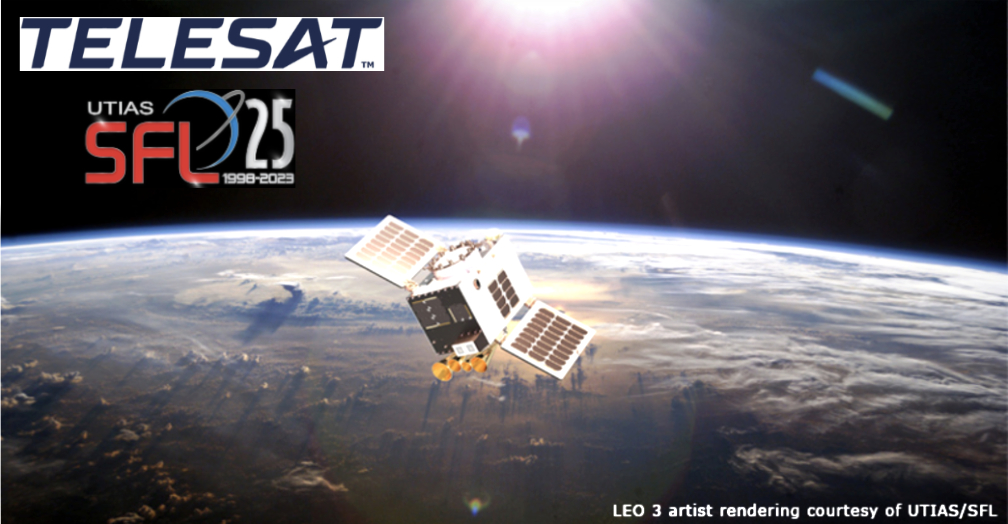
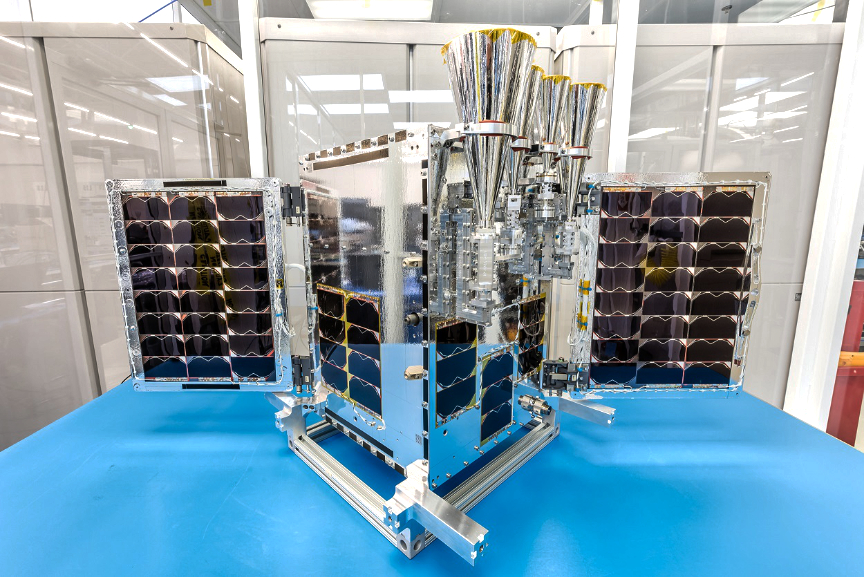
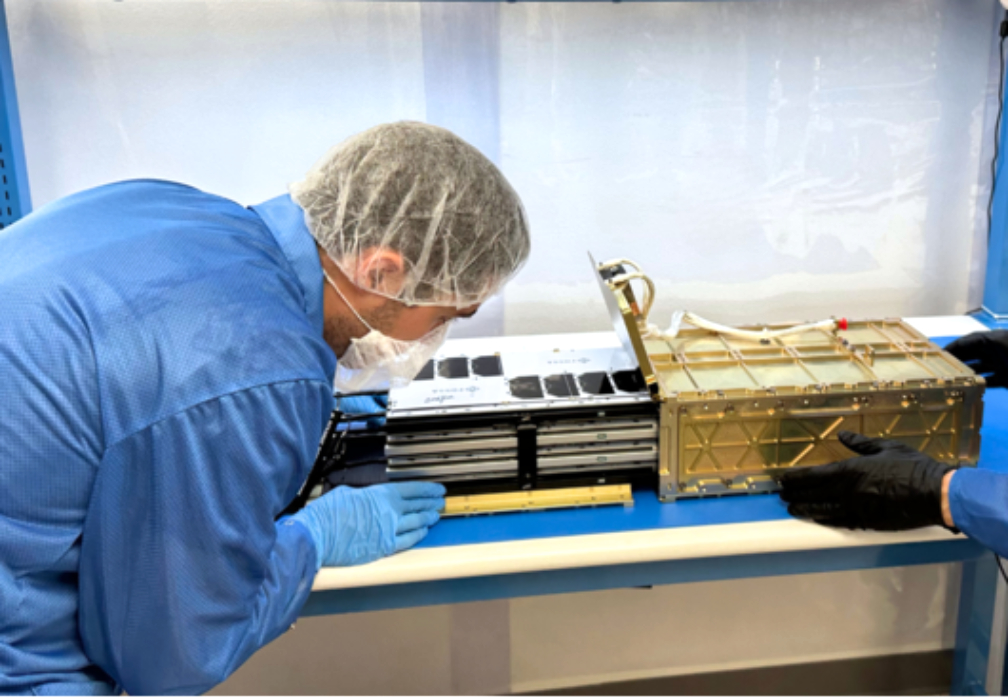
Space Flight Laboratory (SFL) has completed the build of the Telesat LEO 3 demo smallsat and shipped the spacecraft from the Toronto integration facility to New Zealand where the satellite arrived this week at Rocket Lab Launch Complex 1.

Photo of Rocket Lab’s Launch Complex 1 in New Zealand

Following inspection to ensure the satellite shipped safely, LEO 3 will be integrated with the Rocket Lab Electron launch vehicle. Launch is scheduled for no earlier than Q3 of 2023. Once on-orbit, LEO 3 will provide continuity for customer and ecosystem vendor testing campaigns after the decommissioning of Telesat’s Phase 1 LEO satellite.

 The Telesat LEO 3 microsatellite, developed by Space Flight Laboratory (SFL) and shown here at the SFL integration facility in Toronto, has arrived at the Rocket Lab launch site in New Zealand.

Based in Ottawa, Ontario, Telesat selected SFL to build LEO 3 on a relatively, aggressive schedule. With a mass of 30 kg, the 30x30x45 cm satellite is based on SFL’s scalable and versatile DEFIANT smallsat platform. Currently, more than a dozen DEFIANT satellites are on-orbit, serving SFL clients in a variety of applications.

“SFL is pleased to have been chosen by Telesat to meet the challenge of building a cost-effective microsatellite with a robust design to achieve its high-bandwidth demonstration goals in Telesat’s target orbit. This continues SFL’s long standing history of enabling business success through smaller satellites developed at low cost.” – Dr. Robert E. Zee, Director, SFL

SFL’s 25-year heritage includes 65 operational successes totaling 250 cumulative years in orbit, with an additional 27 satellites under development or awaiting launch. Customized payloads include a wide range of applications related to Earth observation, atmospheric monitoring, ship tracking, communication, radio frequency (RF) geolocation, technology demonstration, space astronomy, solar physics, space plasma, and other scientific research.

Filed Under: Featured, News

EnduroSat’s Balkan constellation selected by ESA + the EU for the Copernicus Contributing Missions

June 22, 2023 by editorial

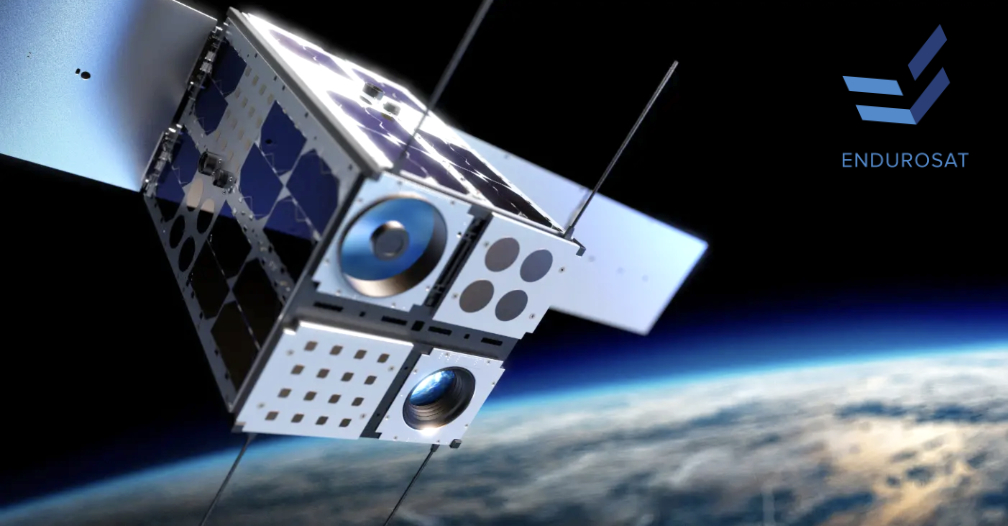
EnduroSat’s Balkan Constellation has been selected by ESA and the European Union (EU) for the Copernicus Contributing missions.

The Balkan Constellation is another step in EnduroSat’s mission of making space data universally accessible.

The Balkan Constellation’s 120 smallsats will provide the Balkans and the EU with unprecedented visit time, real-time cloud-based monitoring services, and AI-powered detection. The provided space data will accelerate access to maritime surveillance, humanitarian, and ecological support, as well as environmental monitoring.

Balkan-01 is a 16U smallsat, equipped with a cutting-edge, multispectral camera. The onboard processing of deep neural networks will enable new use cases for imagery analytics. The first satellite is scheduled for launch in Q2 of 2024.

“We are honored to initiate this partnership with ESA and EU. We have been investing significant time and efforts to democratize access to space data and the Balkan Constellation is another step toward accomplishing our vision. Helping to build competitive Balkan space activities that contribute to the success of the Copernicus Program is a must for the future of the European space sector.” — Raycho Raychev, Founder and CEO, EnduroSat.

Filed Under: News

Kuva Space awarded millions of euros with a commercial contract as the sole provider for Copernicus hyperspectral data services

June 20, 2023 by editorial

Earth Observation (EO) company Kuva Space has been awarded a five-year commercial contract worth 5 million euros to be the world’s sole provider of hyperspectral data services for the European Commission’s Copernicus Contributing Missions (CCM) program.

Selected by the European Space Agency, Kuva Space will demonstrate its proprietary technological capabilities to monitor farming and aquaculture crops, forests, methane release, and harmful algae blooms in seas and coastal areas. Kuva Space’s hyperspectral data services will facilitate the development of new and accurate commercial services for Copernicus users and beyond, helping them make financially smarter and environmentally responsible decisions related to global issues like food security, carbon capture, and safety and security.

Kuva Space’s commercial smallsat constellation, equipped with a patented hyperspectral camera, can capture scientific-grade data on details like crop types and their health, soil conditions, biomass, biodiversity, and marine chemical pollutants, at scale. Leveraging its AI-driven analytics platform, Kuva Space transforms the collected data into actionable insights, empowering users to monitor, identify, and forecast changes and their impact in near real time.

The availability and usage of hyperspectral data has previously been limited or non-existent in EO. With near real-time hyperspectral data, industries such as agriculture, insurance and finance, carbon and environment, and safety and security get access to reliable, verifiable and robust insights when making decisions.

For example, farmers worldwide are facing increased vulnerability due to extreme weather conditions. Kuva Space’s hyperspectral imaging can detect subtle changes in crop health, enabling early disease detection, pest management, stress assessment, and damage evaluation with daily measurements. This contributes to enhancing food security and productivity, particularly in developing countries that require crop insurance policies based on accurate and rapid “proof-of-loss” assessments. Moreover, the data services provided by Kuva Space can facilitate effective crop trading with timely and up-to-date forecasts when setting prices to trade.

Another example is in the carbon credit market, which is expected to grow to around $250 billion by 2050. Kuva Space can offer frequent hyperspectral measurements that can unlock the potential of blue carbon capture (carbon captured by the world’s ocean and coastal ecosystems) and agricultural offsets. By capturing data frequently, changes in carbon stocks, vegetation health, and ecosystem dynamics can be tracked over time.

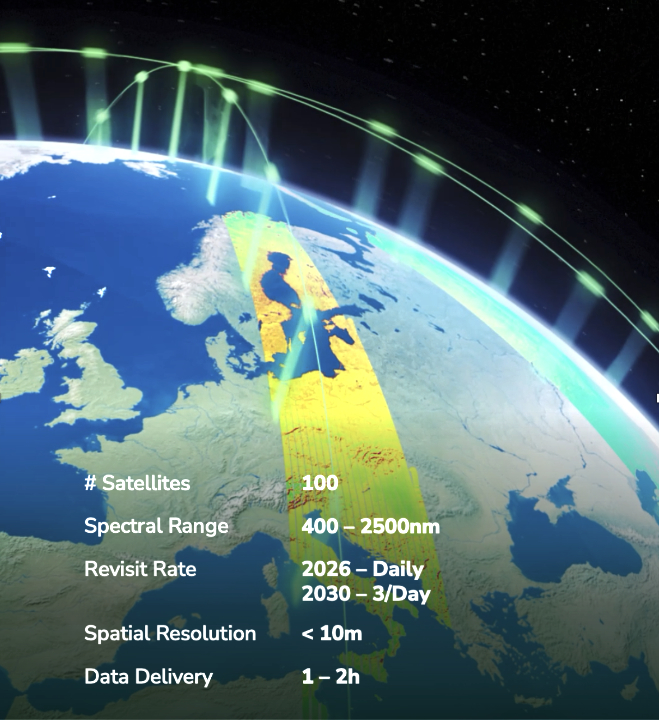
Kuva Space will launch its Hyperfield-1 smallsat in November of 2023 before launching four, Gen2 smallsats in 2024. This will mark the initial stage of Kuva Space’s planned constellation, which aims to eventually deploy as many as 100 satellites by 2030 to measure the material composition of any target on Earth sub daily, heightening society’s ability to meet climate and safety and security challenges.

With local representation in Finland, Japan, Belgium, the USA, and the UK, Kuva Space has raised 6.5 million euros in total funding from Reaktor Ventures, Voima Ventures, Nordic Foodtech VC, VTT Technical Research Centre of Finland, and public funding from ESA Philab and Business Finland. The company is currently raising its Series A round.

“We are honored to have been awarded this opportunity to bring our unique hyperspectral innovation and expertise to the esteemed Copernicus community. We look forward to closely collaborating with European Space Agency experts to validate our data quality and capabilities. This program represents a remarkable opportunity to help shape the high standard for hyperspectral data services within the EU and globally. The economic viability of generating continuous, reliable, and affordable hyperspectral data has been hindered by the large size and high costs associated with massive spaceborne hyperspectral instruments. However, Kuva Space’s compact, innovative space and hyperspectral camera technology have overcome these challenges. We are seriously committed to improving life on Earth.” — Jarkko Antila, CEO of Kuva Space

“With a time-series view of the coastal and marine ecosystems and agricultural landscapes, we bring accountability, trust and pricing transparency to the entire market and fuel its growth.” — Tuomas Tikka, CTO and Co-Founder, Kuva Space

Filed Under: News

SatVu’s HOTSAT-1 is successfully launched

June 20, 2023 by editorial

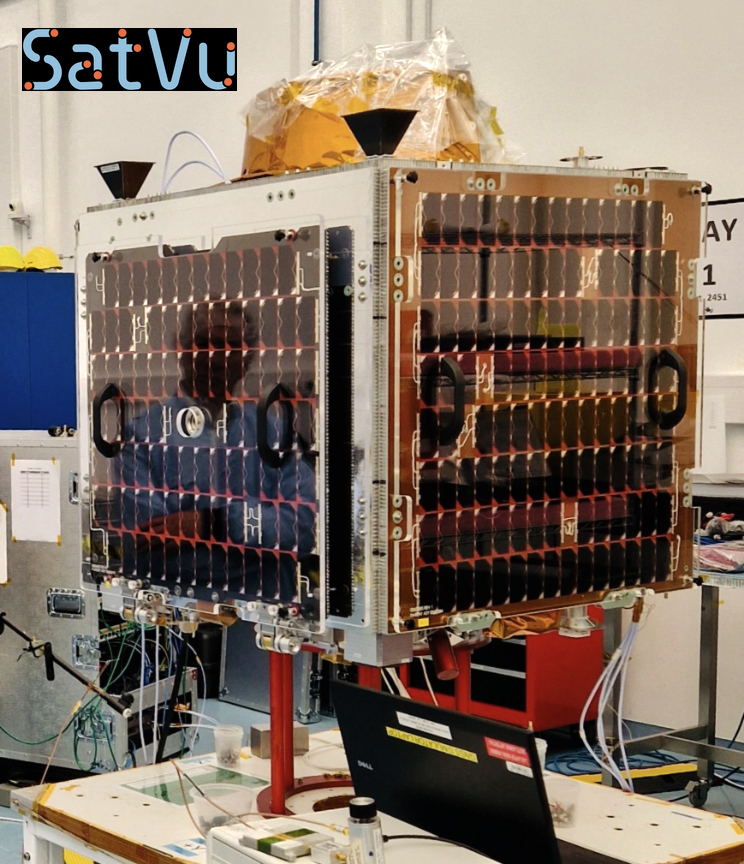
HOTSAT-1 (photo above), the first satellite in the planned constellation to be launched by SatVu, launched with SpaceX from the Vandenberg Space Force Base in California on June 12th and now on-orbit and initial communication with the satellite has been established.

SatVu’s space-enabled climate technology will provide valuable and unique insight into economic activity and energy efficiency for a range of industries aligning with global Net Zero goals. SatVu has already secured customer commitments through its Early Access Option Program (EAP) valued at over £128 million ($160 million).

Designed and manufactured in the UK in partnership with Surrey Satellite Technologies (SSTL), the teams incorporated thermal imaging technology into the design of HOTSAT-1.

The Fieldfisher team was led by John Worthy, partner and head of Fieldfisher’s Space Projects group, supported by Senior Associate Alex Harbin and other members of the firm’s Space Projects group.

HOTSAT-1 will offer substantial cost-saving energy efficiency benefits to the public and private sectors. As satellite data already contributes to 50% of all climate change metrics, the addition of SatVu’s infrared dataset will be a game-changer in monitoring the impact of human activity on the planet. From assessing heat loss in structures, to measuring energy efficiency, HOTSAT-1’s geospatial data will empower strategic planning to expedite the journey towards decarbonization globally. After successful completion of the commissioning process, SatVu expects to receive first images in July and start commercial operations in October.

HOTSAT-1 offers 3.5 meter resolution and excellent video capability, all the while maintaining a sensitivity of less than 2 degrees Celsius. This satellite video generation capability enables the detection of highly dynamic features and the creation of 3D profiles, facilitating a multitude of applications. From mitigating the effects of heat islands in urban centers to monitoring industrial processes, waterway pollution, ensuring energy efficiency, and assessing the health of solar farms, HOTSAT-1 is set to work with industries across the globe.

This successful launch follows SatVu’s recent news regarding the successful completion of the firm’s A2 funding round, where they raised £12.7 million. The company is now poised to reach their next commercial milestone, which will unlock new investment opportunities in their highly anticipated series B round.

“We are delighted to have supported SatVu in creating the platform for such a valuable contribution to managing thermal emissions and delivering NetZero. It is always exciting working with clients delivering innovative solutions from space to some of the major challenges facing the earth today. At a time when climate change and environmental issues are in the headlines every day, we see many more opportunities for companies with world-leading technologies, such as SatVu, to help address these vital areas.” — John Worthy, Partner and Head of Fieldfisher’s Space Projects Group

“It’s a delight working with John and the Space Projects Group and it’s a pleasure to share our successes with our partners, without whom, we wouldn’t be where we are now.” — Anthony Baker, CEO and Founder, SatVu

Filed Under: News

Canada’s Space Agency selects Canadian student teams who build and launch their own small satellites

June 16, 2023 by editorial

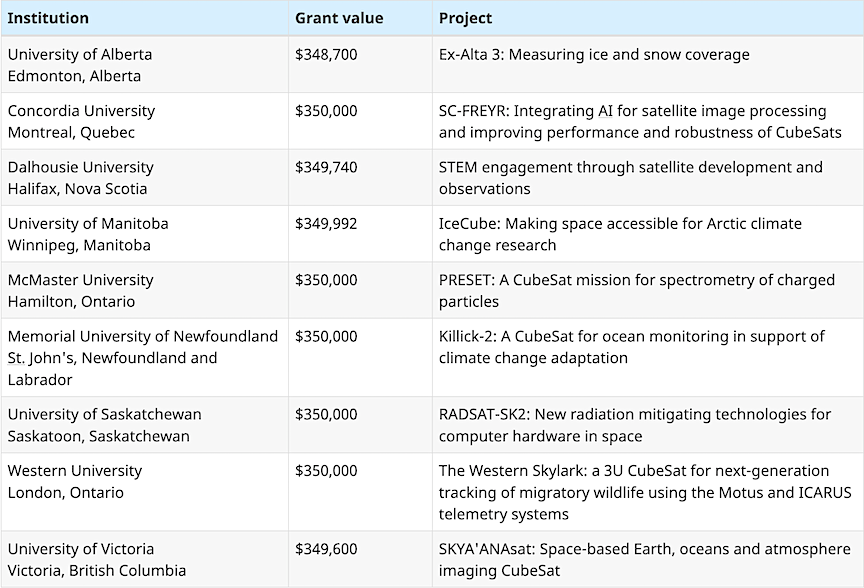
The Canadian Space Agency (CSA) has awarded nine grants representing $3.15 million under the CubeSats Initiative in Canada for STEM (CUBICS) to Canadian post-secondary institutions to advance space science and technology while training the next generation of space experts.

This initiative builds on the success of the Canadian CubeSat Project, which had a third launch of miniature satellites on June 5. 

Once tested and ready for space, the CubeSats were launched to, and deployed, from the ISS.

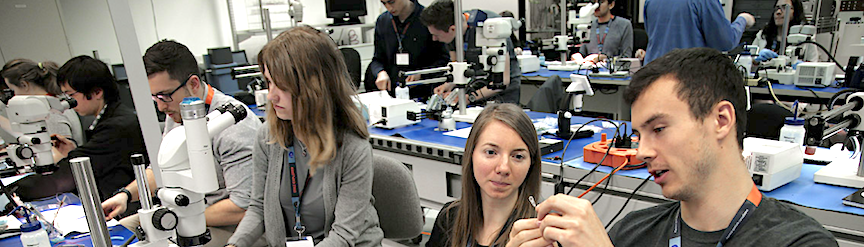
CUBICS gives students the unique opportunity to design, build, test, launch and operate their own miniature satellite — a CubeSat.

CSA experts will guide the teams as they plan and prepare their missions. Throughout the project, CSA experts, as well as representatives from the Canadian space industry, guide professors and students to optimize the success of each mission.

This unique hands-on experience provides students with the opportunity to acquire expertise in a wide variety of areas, ranging from science and technology to communicating their work to the public, and developing invaluable skills that will prepare them to become Canada’s next generation of space innovators.

The student teams will then operate their satellites and conduct science according to the objectives of their missions, which could last up to 12 months.

Filed Under: News

Septentrio collaborates with Xona on PULSAR™ GNSS receiver

June 16, 2023 by editorial

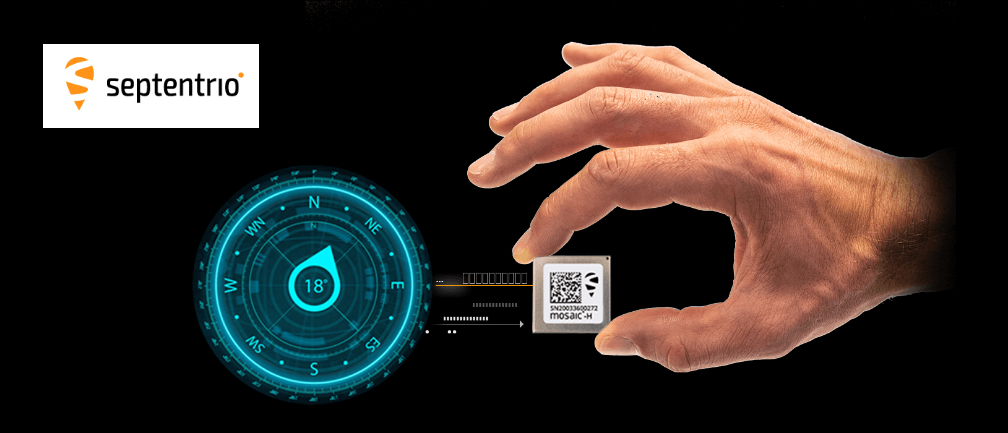
Septentrio has been collaborating with Xona Space Systems to develop an experimental receiver that is compatible with the latter’s multi-frequency PULSAR™ signals.

This multi-frequency receiver that supports Xona’s LEO PNT signals will be one of the first to decode all PULSAR™ signals in parallel with other standard GNSS* signals. This makes it ideal for testing Xona’s upcoming LEO-PNT constellation in a simulated environment, since live signals are not yet available. LEO-PNT is a satellite navigation system that consists of low orbit satellites, which provide geographic positioning, a concept similar to a GNSS system such as GPS.

Xona Space Systems is pioneering the nexgen of space-based PNT (Positioning, Navigation, and Timing) to answer the need for more secure, accurate, and robust services.

The PULSAR™ system will consist of 260 LEO satellites orbiting the Earth 25 times closer than GPS satellites. The higher signal power resulting from closer proximity to Earth and the modernized signal design provide opportunities for better multipath mitigation and higher accuracy, as well as increased interference and spoofing protection.

High accuracy and resilient operation are also the main pillars on which Septentrio has built their PNT receivers over the last two decades, providing reliable positioning and timing solutions to critical infrastructure and industrial applications such as precision agriculture, construction, robotics and much more.

“We are thrilled to welcome Septentrio to the PULSAR ecosystem,” said . “Septentrio is well-known as an industry leader in developing high-quality and resilient GNSS products. As Xona PULSAR signals become available, a Septentrio receiver will offer users an opportunity to be the first to experiment with PULSAR and GNSS in many different scenarios.” — Bryan Chan, VP of Business Development and Strategy, Xona

“We are excited to collaborate with Xona Space Systems during this new era for PNT technology. After our deep involvement in various expansions of the GNSS ecosystem, most notably Galileo for receivers of both reference networks and user applications, it is exciting to leverage our experience in the next phase of space-based PNT, which has opened up with LEO-PNT.” — Jan Van Hees, Business Development Director at Septentrio

  • Global Navigation Satellite System including the American GPS, European Galileo, Russian GLONASS, Chinese BeiDou, Japan’s QZSS and India’s NavIC. These satellite constellations broadcast positioning information to receivers which use it to calculate their absolute position.

Filed Under: Featured, News

Tyvak International supporting the Spei Satelles space mission

June 15, 2023 by editorial

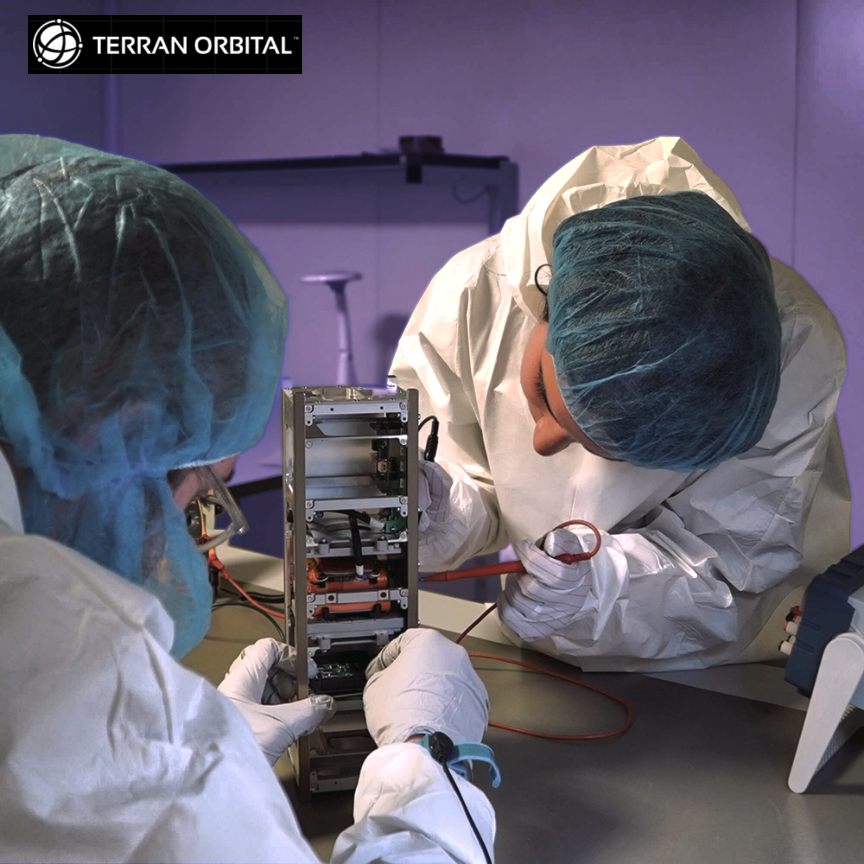
A satellite created with the help of Terran Orbital Corporation’s (NYSE: LLAP) Italian subsidiary, Tyvak International, was successfully launched on June 12th from Vandenberg SFB as part of the SpaceX Transporter-8 mission, carrying Pope Francis’s iconic “Statis Orbis” coronavirus pandemic prayer heavenward.

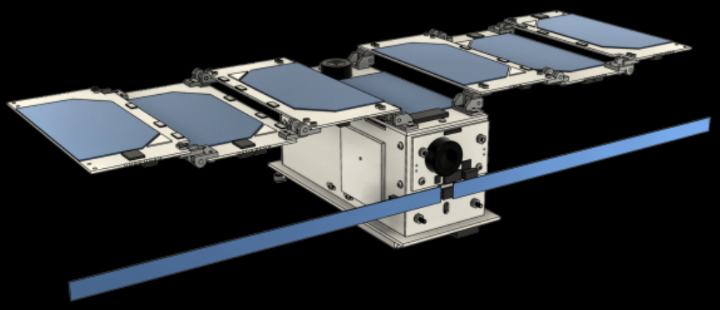
The Polytechnic University of Turin (PoliTO) CubeSat Team and DIANA Robotics Team designed the 3U CubeSat spacecraft for the papal Spei Satelles, or Satellites of Hope, space mission.

A technical team from Tyvak International, Terran Orbital’s Turin, Italy, subsidiary, supervised and supported the students’ six-month project to develop the satellite, which will operate from LEO. The Project has been promoted by the Dicastery for Communication of the Holy See in unity with the Pope, together with the Italian Space Agency.

Spei Satelles contains a nanobook, a 2-millimeter by 2-millimeter, 0.2-millimeter-thick silicon slab fabricated by the Institute of Photonics and Nanotechnology of the National Research Council of Italy. The book contains images and readings associated with Pope Francis’s famous March 27, 2020, public prayer. That March night, a solemn, solitary Pope Francis slowly ascended the steps of St. Peter’s Basilica in the rain before hoisting a cross above his head beneath a white canopy.

He encouraged the world to stay strong with a prayer delivered before an empty square that typically draws tens of thousands of people for papal speeches. In the viral speech, the pope called for humanity to unite to fight the pandemic with “the strength of faith, which frees us from fear and gives us hope.”

Now, the Spei Satelles mission will transmit Pope Francis’s messages of hope and unity in 437.5 MHz, a UHF amateur satellite band, during the satellite’s stay in sun-synchronous orbit 525 kilometers above Earth. Tyvak International includes several PoliTO alumni, who learned how to design, launch and operate nanosatellites in the same CubeSat Team Lab where they recently worked closely with the next generation of spacecraft engineers.

“It’s a huge honor for our company to be part of this historical and inspirational papal space mission. We’ve encouraged the passion and dedication of a new generation of space enthusiasts, while spreading a message of unity and hope.”
— Fabio Nichele, CEO of Tyvak International

“We are grateful to the Tyvak International team for their invaluable contribution to the development of Spei Satelles. Our students have been supported by incredible engineers, who shared their unique background on small satellites, making this experience a perfect example of a successful collaboration between industry and academia.”
— Sabrina Corpino, a PoliTO professor and project manager for the Spei Satelles mission

Filed Under: News

FOSSA Systems launches their nexgen IoT satellites

June 15, 2023 by editorial

FOSSA Systems‘ new LEO satellites, launched on June the 12th from Vandenberg Air Force Base to an altitude of 537 km, represent a breakthrough for satellite IoT, according to the company, due to the features and functionalities they incorporate — the new platform developed by FOSSA provides a considerable increase in capabilities over its predecessors in terms of power generation and capacity.

One of the main features of the FOSSASat-FEROX design is optimization; its high surface-to-volume ratio allows several satellites to be launched stacked in the same space as a larger satellite, yet still achieve similar performance to those satellites (up to 12U), but focused on communications, IoT and electromagnetic signal detection (SIGINT, signal intelligence)).

The FOSSASat-FEROX have established contact and the FOSSA team will start the commissioning period during the coming weeks — all of the necessary tests will be carried out to confirm the proper functioning of all subsystems.

After the launch, the first one in 2023, the Spanish startup expects to soon start deploying new batches of satellites in bulk to complete the first phase of its 80 satellite constellation that will provide its end-to-end service of IoT solutions to monitor all types of industrial assets and infrastructure in remote or difficult-to-access areas. FOSSA is currently carrying out pilot projects in the infrastructure, Oil & Gas, Utilities, Defence and Security and AgroTech sectors, among others.

With the launch of this new satellite platform, FOSSA Systems is once again positioning itself as a pioneer with its disruptive technology in global IoT connectivity services. This is a growing market, which currently has 10 billion connected devices that will grow to more than 25 billion by 2025 and, according to IoT Analytics forecasts, the market will reach $525 billion by 2027.

Designed and assembled at FOSSA’s headquarters in Madrid, they measure 60 x 20 x 2.5 cm when unfolded and have a mass of 2 kg. Like FOSSA’s other 13 smallsats, the new platforms will orbit the Earth approximately 15 times a day, allowing a single satellite to provide global coverage, anywhere on the planet.

FOSSA Systems is a Spanish startup specialized in the provision of dedicated space services and comprehensive IoT solutions. FOSSA offers turnkey solutions for companies and institutions of any size, enabling the monitoring of assets and infrastructure regardless of their location. FOSSA has verticalized the satellite manufacturing process, space operations and ground station services, and has launched 17 satellites into orbit since 2022. FOSSA is a pioneer in a market that currently has 10 billion connected devices and expects to surpass the 25 billion milestone by 2025.

Filed Under: News

  • « Go to Previous Page
  • Page 1
  • Interim pages omitted …
  • Page 113
  • Page 114
  • Page 115
  • Page 116
  • Page 117
  • Interim pages omitted …
  • Page 339
  • Go to Next Page »

Primary Sidebar

WEEKLY NEWSLETTER

Archives

  • September 2026
  • August 2026
  • July 2026
  • June 2026
  • May 2026
  • April 2026
  • March 2026
  • February 2026
  • January 2026
  • December 2025
  • November 2025
  • October 2025
  • September 2025
  • August 2025
  • July 2025
  • June 2025
  • May 2025
  • April 2025
  • March 2025
  • February 2025
  • January 2025
  • December 2024
  • November 2024
  • October 2024
  • September 2024
  • August 2024
  • July 2024
  • June 2024
  • May 2024
  • April 2024
  • March 2024
  • February 2024
  • January 2024
  • December 2023
  • November 2023
  • October 2023
  • September 2023
  • August 2023
  • July 2023
  • June 2023
  • May 2023
  • April 2023
  • March 2023
  • February 2023
  • January 2023
  • December 2022
  • November 2022
  • October 2022
  • September 2022
  • August 2022
  • July 2022
  • June 2022
  • May 2022
  • April 2022
  • March 2022
  • February 2022
  • January 2022
  • December 2021
  • November 2021
  • October 2021
  • September 2021
  • August 2021
  • July 2021
  • June 2021
  • May 2021
  • April 2021
  • March 2021
  • February 2021
  • January 2021
  • December 2020
  • November 2020
  • October 2020
  • September 2020
  • August 2020
  • July 2020
  • June 2020
  • May 2020
  • April 2020
  • March 2020
  • February 2020
  • January 2020
  • December 2019
  • November 2019
  • October 2019

© 2019–2026 SatNews

Insert/edit link

Enter the destination URL

Or link to existing content

    No search term specified. Showing recent items. Search or use up and down arrow keys to select an item.
      x
      Sign Up Now!

      Enjoy a free weekly newsletter with recent headlines from the global SmallSat industry.

      Invalid email address
      We promise not to spam you. You can unsubscribe at any time.
      Thanks for subscribing! You will now receive weekly SmallSat News updates.
      We love our advertisers.
      And you will too!

      Please disable Ad Blocker to continue... We promise to keep it unobtrusive.
      We promise not to spam you. You can unsubscribe at any time.
      Invalid email address
      Thanks for subscribing!