• Skip to main content
  • Skip to primary sidebar
  • Home
  • News
  • Featured
  • More News ⌄
    • SatNews
    • SatMagazine
    • MilSatMagazine
  • Events ⌄
    • MilSat Symposium
    • SmallSat Symposium
    • Satellite Innovation
  • Contacts
  • SUBSCRIPTION

SmallSat News

You are here: Home / Archives for News

News

Astrolight’s ATLAS-1 and Cailabs to demonstrate Space-to-Earth optical communications

July 7, 2023 by editorial

Astrolight demonstrates space-to-ground laser communication link

Cailabs and Astrolight entered into an agreement to launch a satellite mission hosting Astrolight’s space-to-Earth laser communication terminal ATLAS-1. The mutual objective of the mission is to establish laser communication downlinks and thereby demonstrate pointing, acquisition and tracking capabilities at gigabit per second data rates between ATLAS-1, manufactured by Astrolight, and Cailabs optical ground station (OGS).
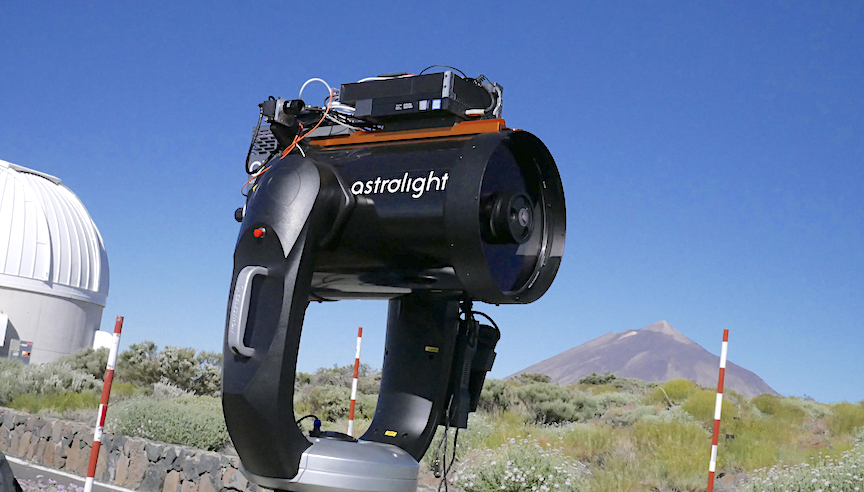
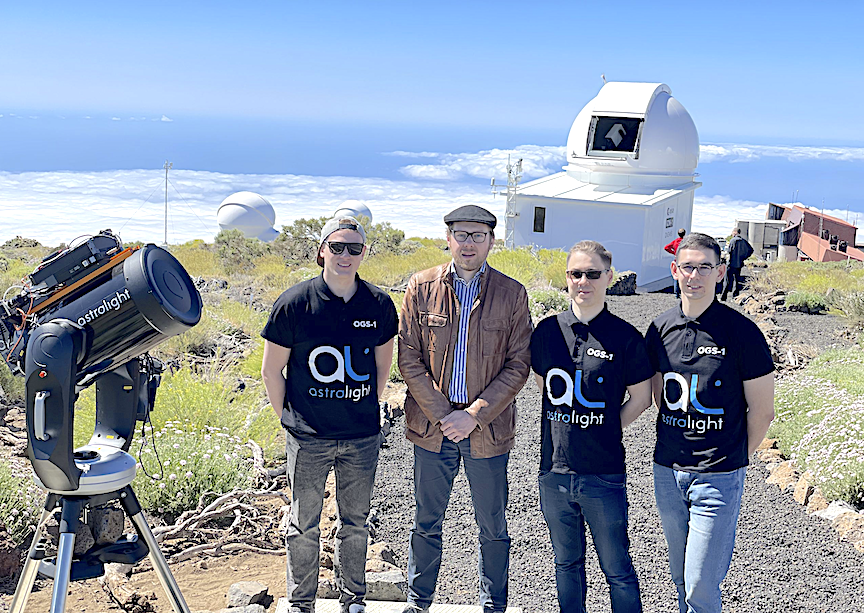
OGS-1 is the first fully portable optical ground station for laser communication with LEO satellites: all sub-assemblies fit into 3 Boxes that can be checked-in for a flight as a standard passenger luggage.

This mission will increase the technology readiness level of both Astrolight and Cailabs systems and pave the way for further commercialization of both products. ATLAS-1 is a demonstrator version of Astrolight’s ATLAS product line. Future versions of ATLAS will achieve even higher downlink speeds of over 10 Gbps. ATLAS design is optimized for Earth observation satellites with specific attention to small size and low power consumption.

Cailabs is a manufacturer of turnkey and multimission-OGS. Having a space-to-Earth laser communication terminal (LCT) for testing optical ground stations represents an additional means of validation for the company and its customers.
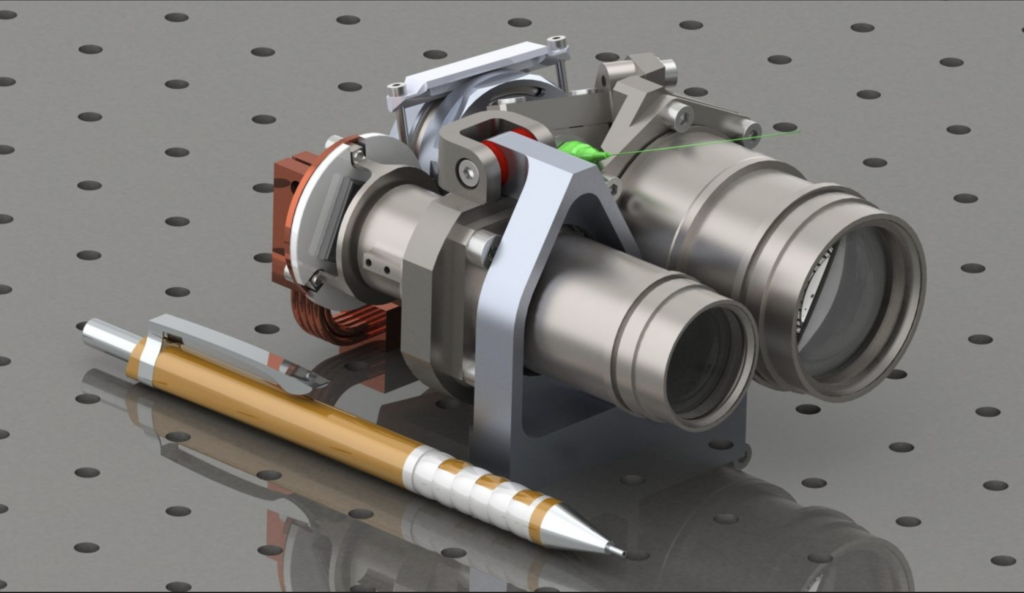
ATLAS-1 is the first generation of Astrolight’s space-to-Earth laser communication terminals with leading data rate and volume ratio in the market.

“It is a great example of two companies joining forces in order to achieve a common goal — implement an optical communication system that will overcome the bottleneck of space-to-Earth data downlink”, explains Laurynas Maciulis, co-founder and CEO of Astrolight.

“We look forward to demonstrating reliable and stable pointing, acquisition and tracking between ATLAS-1 and Cailabs OGS over as many passes as possible. This is a fundamental prerequisite for developing a commercial data downlink solution that will be useful to our customers. Space-to-Earth optical communication is challenging and most of the missions so far have failed just in this first step”, he continues.

“We are delighted to be working with Astrolight on this ambitious project. Few players today offer high data rate laser communication terminals with a small SWaP (Size, Weight and Power) for nanosatellites. Cailabs is pleased to collaborate with an emerging European actor in this field”, concludes Pu Jian, Chief Product Officer and Deputy CEO at Cailabs.
Filed Under: News

AAC Clyde Space wins million££ satellite order

July 6, 2023 by editorial

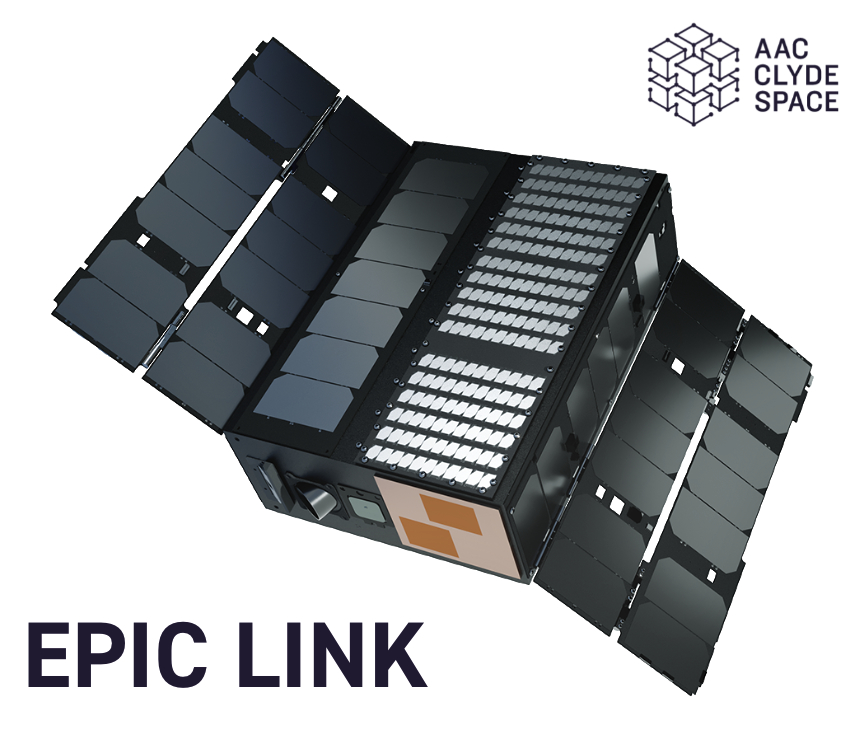
AAC Clyde Space recently won a £1.25 million from the New Space company Kawa Space for a 6U EPIC LINK smallsat and payload — the satellite is planned for delivery during Q4 2024.

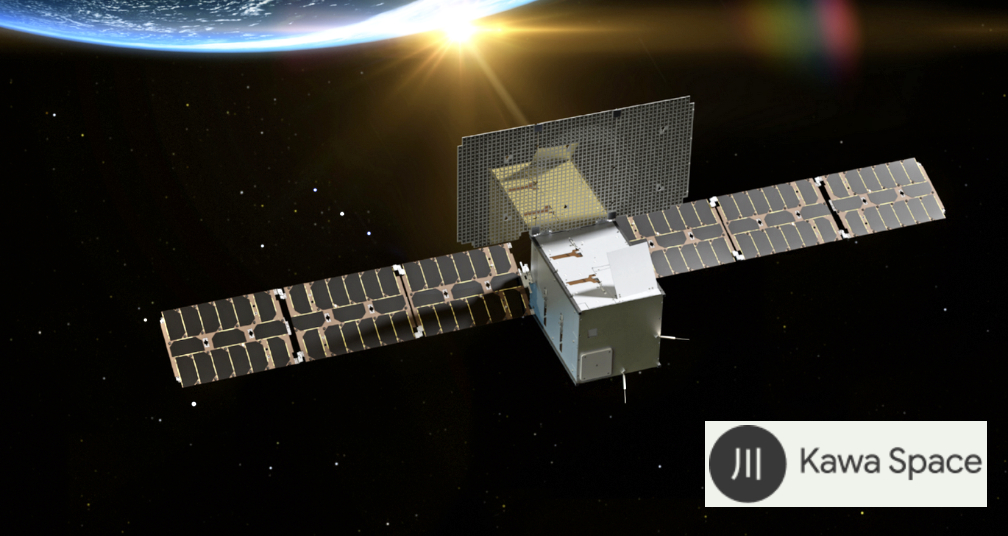
The aim of the project is to demonstrate the technology for a future constellation of satellites that support Kawa Space’s existing, ocean monitoring platform. Kawa Space will use the data captured by the satellite for cargo ship route monitoring and to track illegal, unreported, and unregulated fishing.

“This order shows how our approach of developing standard satellites is delivering infrastructure solutions, that our customers can rely on to build their business. I am delighted to be able to welcome Kawa Space as a new customer of AAC Clyde Space as they share our vision of making space available to many more in order to improve life on Earth.” — Luis Gomes, CEO, AAC Clyde Space

“We are thrilled to announce our collaboration with AAC Clyde Space to build Kawa’s KSS-BOBCAT demo mission. This partnership will harness our collective expertise to showcase cutting-edge technologies in spectrum monitoring and build a brand new dataset for our end customers.” — Kris Nair, CEO, Kawa Space

Filed Under: Featured, News

OQ Technology wins million€ ESA contract to build 3 advanced smallsats

July 5, 2023 by editorial

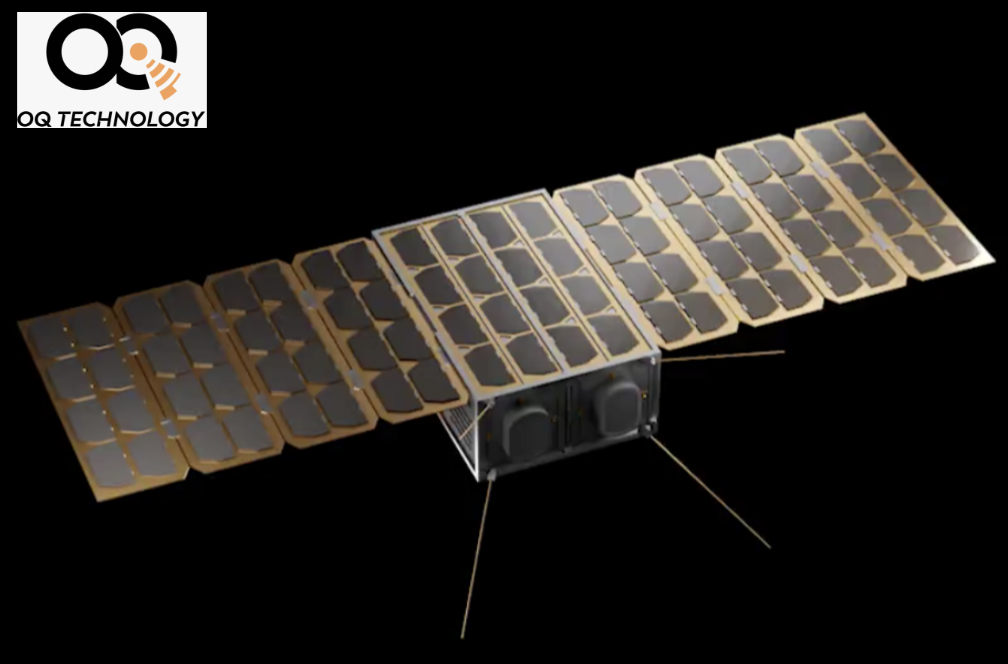
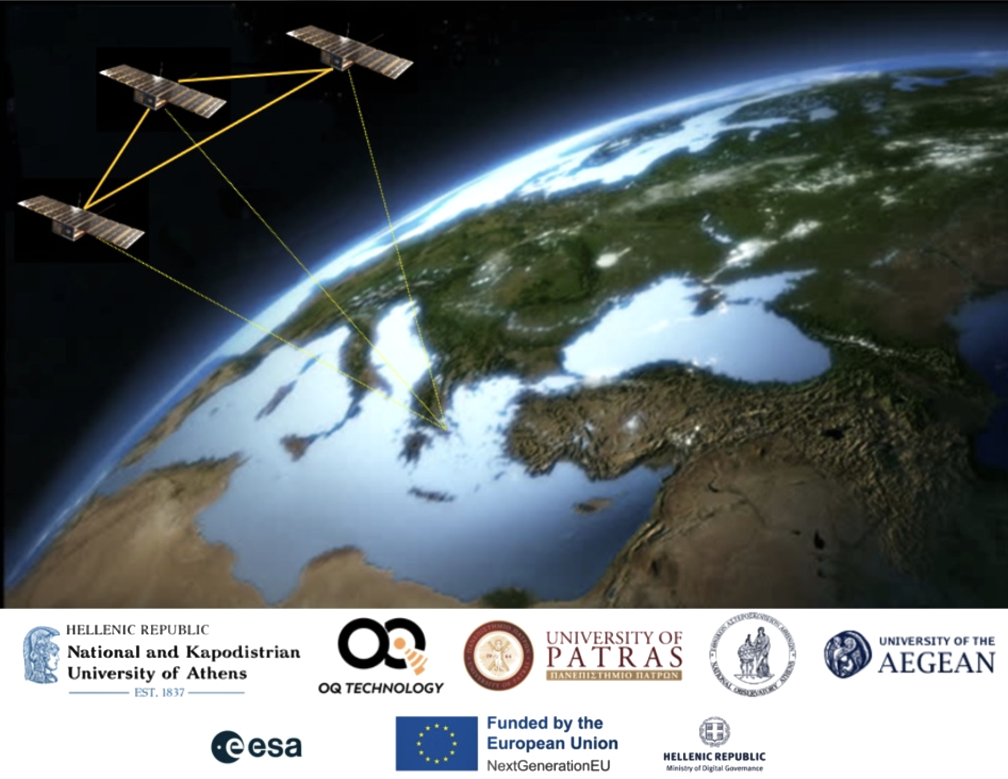
OQ Technology has been awarded a 1.1 million euros contract to design, build, integrate, test and demo three, advanced smallsats that will feature multiple payloads, providing space-based, 5G, narrowband Internet-of-Things (IoT) communications services, an optical communications link as well as hyperspectral EO data to support precision agriculture as part of the ERMIS mission.

ERMIS [Hellenic Cubesat Demonstration Mission] is a pathfinder demonstration of key space connectivity capabilities linked to Greece’s 200M€ national small satellite project using a constellation of small satellites.

OQ Technology Hellas is a subcontractor and a key member of the ERMIS consortium that is led by the National and Kapodistrian University of Athens (NKUA). Other members of the consortium include the University of Patras, the University of the Aegean and the National Observatory of Athens.

ERMIS-1 and ERMIS-2 cubesats built by OQ Hellas will host the payloads of OQ Technology Luxembourg to demonstrate 5G internet-of-things non-terrestrial network (5G-IoT-NTN) connectivity and additionally incorporate Inter-Satellite Link (ISL) to enhance its coverage.

The importance of 5G technology in satellite IoT rests in its ability to provide high-speed, reliable, and low-latency connectivity to a wide range of devices, including those in remote and difficult to reach locations. In satellite IoT, 5G technology enables the integration of satellite networks with terrestrial networks, creating a seamless and unified network that can support a wide range of applications, including smart agriculture, pipeline monitoring, transportation tracking, and much more. Moreover, 5G technology enables satellite IoT devices to operate in challenging environments, such as harsh weather conditions, remote locations, or disaster areas, where traditional communication networks may not be available.

Demonstrating and testing ISL for 5G IoT NTN will enable OQ Technology to offer enhanced coverage and faster speeds in delivering data to its customers reliably and seamlessly. The two smallsats will join OQ Technology growing 5G NB-IoT fleet. The technology is based on 3GPP Release 17 standardized 5G connectivity.

ERMIS-3, co-built by OQ Hellas with NKUA, will host payloads from the other members of the consortium to demo optical communications link and hyperspectral EO data to support precision agriculture.

The initiative underpins efforts – led by ESA on behalf of the Greek Ministry of Digital Governance – to expand the nascent space industry in Greece, enabling the digital transformation of society while creating jobs and generating prosperity, as part of the nation’s EU-funded Recovery and Resilience Facility. The ERMIS 4.8 million euros project is funded by the European Union – NextGenerationEU and by the Greek Ministry of Digital Governance.

“We are very pleased that Greece’s first small satellite constellation will be using game changing technologies in telecommunications, IoT/5G, hyperspectral imaging. A key and important aspect of our project is the cooperative nature of academia and industry leaders such as OQ. Working with a world innovator such as OQ will push national and European leadership in 5G/IoT and foster growth, new jobs and unique space applications which come with the use of 5G/IoT.” — Vaios Lappas, Department Head, Aerospace Science & Technology, University of Athens

“OQ Technology group companies are collaborating together on an European but also global level to leverage the capabilities and opportunities in these markets but also build new partnerships and skills – We work with global satellite manufacturers, nevertheless to accelerate our satellite 5G constellation deployment it is essential also to have the capability to deploy the ERMIS platforms carrying 5G NB-IoT payloads in the near future – We are very grateful to the European Space Agency (ESA) for granting our consortium the ERMIS opportunity, we are thankful to our trusted Greek consortium partners who made this proposal a success and we look forward to working together to bring ERMIS satellites to orbit soon.” — Omar Qaise, Founder and CEO, OQ Technology Group

Filed Under: News

Fleet Space names a new Chief Technology Officer

July 5, 2023 by editorial

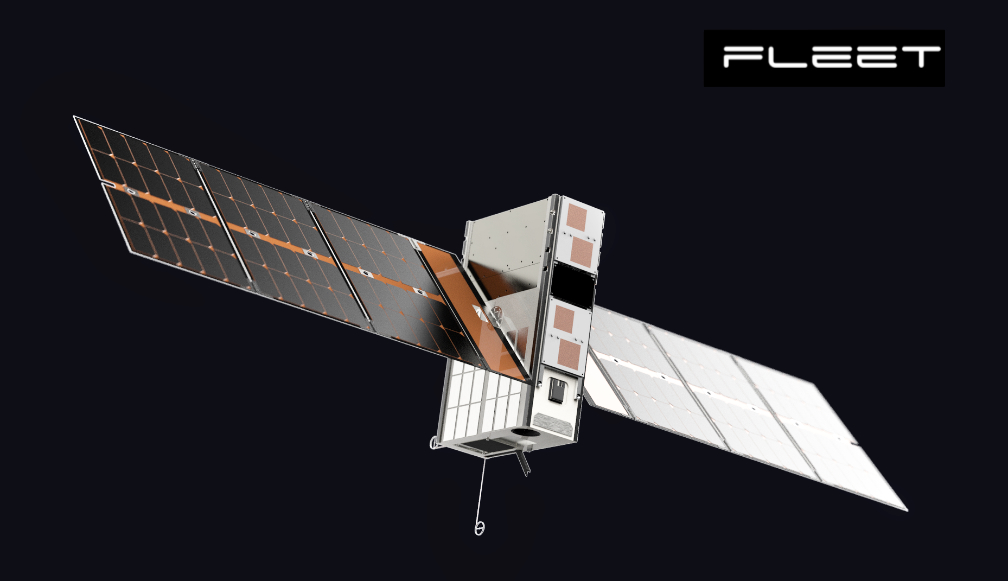
Fleet Space has appointed Dr. Matteo Genna as the firm’s new, Chief Technology Officer (CTO).

Dr. Matteo Genna

Matteo has been building space and near-space systems for almost 30 years. After gaining his Ph.D. in Physics from University of California, Berkeley, he joined Palo Alto-based SSL (now part of Maxar), where he led teams designing and building high-power, GEO communication satellites, LEO imaging satellites and interplanetary spacecraft and systems. Prior to joining Fleet, he headed the Remote Sensing business unit at World View Enterprises, building High Altitude Platforms Systems (HAPS) that are designed to image and measure the Earth from the stratosphere.

Matteo’s three decades’ technical and commercial experience in satellite systems will be crucial to Fleet’s long-term growth strategy for the ExoSphere product, which is already operational with more than 30 customers around the world. Following a hugely successful C Series funding round, which raised A$50 million, Fleet’s next growth phase is focused on the North American market, where ExoSphere is currently deployed on nickel exploration projects in Michigan, Minnesota and Ontario, Canada.

Matteo will be based in Tucson, Arizona, adding to Fleet’s existing presence in North America, centered on the company’s HQ in Houston, Texas. The company’s first international office outside Australia, this was established following Fleet’s oversubscribed Series B funding round ($26.4 million) in November 2021.

“I am very excited and proud to be part of the Fleet team. Building space systems that positively impact our lives on Earth is a lifelong passion and it’s clear that in ExoSphere, Fleet has something very special – a genuinely transformative technology that addresses some of humanity’s most profound and urgent challenges. Fleet Space is not only at the forefront of satellite-enabled services, but it also boasts a highly dynamic team with big bold ambitions and clever minds that are determined to make it happen. I’m eager to leverage my experience and expertise gained over nearly 30 years in the industry to drive the development of groundbreaking solutions that will shape the future of our planet. With the exceptionally talented team at Fleet Space, we will continue to push the boundaries of what is possible and deliver exceptional value to our customers.” — Dr. Matteo Genna, Chief Technology Officer, Fleet Space

Filed Under: News

Firefly Aerospace signs agreement with Lockheed Martin for Alpha launch services

July 4, 2023 by editorial

Firefly Aerospace, Inc. has signed a launch agreement with Lockheed Martin to support a technology demo mission that will launch aboard Firefly’s Alpha vehicle (image above).

Firefly’s Alpha rocket provides affordable and responsive launch services with the capability to lift more than 1,000 kg. to LEO. The vehicle uses Firefly’s patented, tap-off, cycle propulsion technology and carbon composite, sandwich structures to reduce mass and costs and improve strength and reliability. As a launch provider, Firefly provides an important capability to Lockheed Martin in supporting access to space for that company’s key spacecraft technologies.

“Firefly’s flight-proven hardware and rapid launch capabilities are well-aligned with Lockheed Martin’s mission needs, and we’re proud to serve as one of their launch providers,” said. “We have the infrastructure, technologies, systems, and a dedicated team in place to provide on-demand launch services for both government and commercial customers.” — Bill Weber, CEO, Firefly Aerospace

“We are working with Firefly because of their innovative performance in offering access to space for small payloads on Firefly Alpha. We look forward to collaborating with them, as we focus on creating a resilient launch environment for our upcoming technology demonstration.” — Dan Tenney, Vice President, Strategy and Business development, Lockheed Martin Space

Firefly is an end-to-end space transportation company with launch, lunar, and in-space services. As an all-American company headquartered in central Texas, Firefly is focused on delivering responsive, reliable, and affordable space access for government and commercial customers. Firefly’s small- to medium-lift launch vehicles, Space Utility Vehicles, and Blue Ghost lunar landers provide the space industry with a single source for missions from LEO to the surface of the Moon and beyond.

Filed Under: Featured, News

KSATlite network expands with a new ground station in South Korea

June 28, 2023 by editorial

KSAT is expanding the KSATlite network with the addition of a new ground station in Jeju, South Korea.

Equipped with three standardized KSATlite ground systems, the newly established ground station in South Korea solidifies KSAT’s commitment to expand its presence in the Asia-Pacific (APAC) region. The new ground station represents an expansion of coverage and increased capacity on the KSATlite network in line with KSAT’s ambition to provide reliable and efficient satellite communication solutions to customers worldwide.

The strategic location of the South Korean ground station enhances KSATlite’s capabilities to support a wide range of satellite missions with real time requirements, including EO and telecommunication. With robust tracking and control systems and standardized solutions, the network offers the ideal solution for smallsat operators to maximize their mission’s potential, capturing and transmitting data with seamless efficiency.

KSAT´s expansion into South Korea with the KSATlite antennas exemplifies the company’s dedication to meeting the growing demand of the global satellite industry. By establishing a presence in key locations worldwide, the KSATlite network provides customers with enhanced flexibility, reliability, and coverage optimized for constellation operators.

This expansion of the KSAT lite network is a result of the collaboration with Contec as the site owner in Jeju and local partner in South Korea.

Filed Under: News

SpiderOak demos OrbitSecure on Ball Aerospace payload

June 27, 2023 by editorial

SpiderOak has successfully achieved flight heritage through the deployment and demo of the firm’s OrbitSecure platform in space.

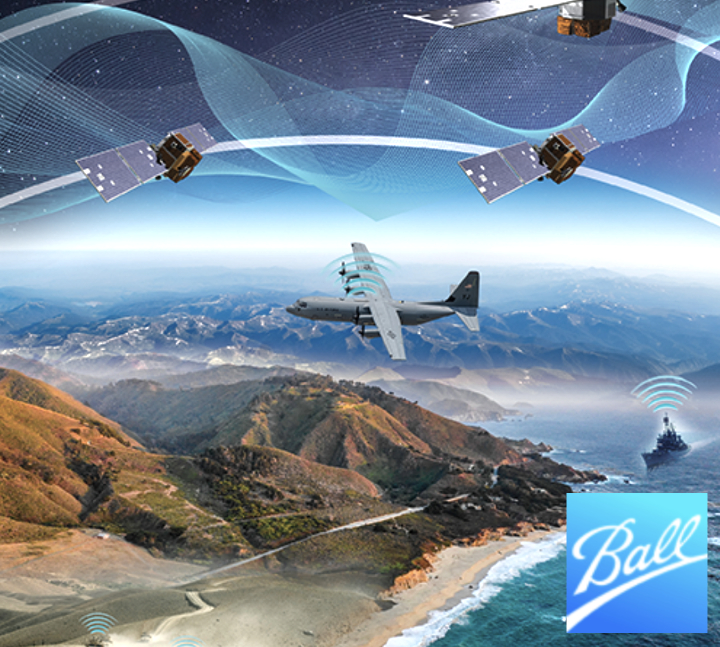
SpiderOak conducted rigorous testing of its end-to-end, data security solution on a Ball Aerospace prototype payload that is currently operational in LEO. The payload incorporates Ball Aerospace’s Open Software System (BOSS) framework, supporting containerized applications that can be modified on-orbit, as well as real-time, data processing functions.

Through close collaboration between SpiderOak and Ball Aerospace teams, the OrbitSecure technology was seamlessly deployed to and integrated into the Ball hosted payload while on orbit, demonstrating that data level zero-trust can be achieved on deployed systems despite the size, weight, and power limitations in space.

Taking zero-trust security to zero-gravity environments, OrbitSecure leverages a unique combination of no-knowledge encryption and distributed-ledger software to meet the unique demands of cybersecurity in space. OrbitSecure overcomes the constraints of traditional hardware-based protections utilizing a new, fully decentralized key management system allowing for full availability and continued operations in space despite disconnected or highly contested networks.

OrbitSecure’s software-based approach makes it quickly adaptable to counter new and evolving cyber threats while providing enhanced decentralized space resiliency to multi-vendor, multi-network, mesh proliferated LEO networks. Dramatically reducing a space operator’s attack surface with OrbitSecure disrupts any adversary’s attempts to counter, modify, or contest space communications and satellite services.

Though rigorously tested in flat sat environments by industry leaders such as Raytheon, Northrop and Lockheed Martin, the Ball Aerospace announcement represents the first time a partner has successfully deployed the OrbitSecure capability in space.

The prototype payload launched in January as the first mission in Ball Aerospace’s rideshare program, part of Ball’s focus on the rapid and affordable development and demonstration of technologies on orbit.

“Successfully operating any military system in an operationally relevant environment is always a big milestone. In the unforgiving environment of space, there is no stronger validation that a system is ready for deployment. I am thrilled with SpiderOak’s achievement!” — Ellen Pawlikowski, retired four-star U.S. Air Force General and member of SpiderOak’s Space Advisory Board

“This successful demonstration completes a major milestone in advancing OrbitSecure as the satellite operator’s choice for data security and resiliency in space. While other cyber solutions have only been demonstrated terrestrially, this achievement with Ball Aerospace proves our unique COTS (commercial off the shelf) software works equally well on orbit as it has on the ground for many years.” — Dave Pearah, CEO, SpiderOak

“The Space Force has openly acknowledged the ever-expanding cyber threats targeting space assets. This successful demonstration of SpiderOak’s OrbitSecure technology onboard Ball’s hosted payload, which launched earlier this year, is a step towards fortifying the resilience of our space ecosystem.” — Jake Sauer, Vice President and Chief Technologist, Ball Aerospace

“On-orbit tests underway by Ball Aerospace of SpiderOak’s OrbitSecure offer the promise of an efficient path to secure space systems based on blockchain technology,” stated . “Cybersecurity solutions for space systems must respect the space, power, weight, and cost constraints under which these systems operate. I look forward to the results of this first, on-orbit demonstration of SpiderOak’s cybersecurity approach. It’s also exciting that SpiderOak is a member of the Space Information Sharing and Analysis Center, demonstrating the center’s commitment to encouraging our country’s space sector to explore cutting-edge cybersecurity solutions.” — Samuel Visner, Vice Chair, Board of Directors, Space Information Sharing and Analysis Center (Space ISA)

SpiderOak is a 100% U.S.-owned and operated software company that delivers end-to-end cybersecurity and resiliency solutions for civil, military, and commercial space operations. Our commercially available products are built upon a foundation of zero-trust encryption and distributed ledger, ensuring the confidentiality, integrity, and availability of your most sensitive data in the space domain.

Filed Under: Featured, News

Safran + Terran Orbital sign MoU to produce electric propulsion systems for satellites in the U.S. — TIME magazine names the latter to their Most Influential Companies list

June 27, 2023 by editorial

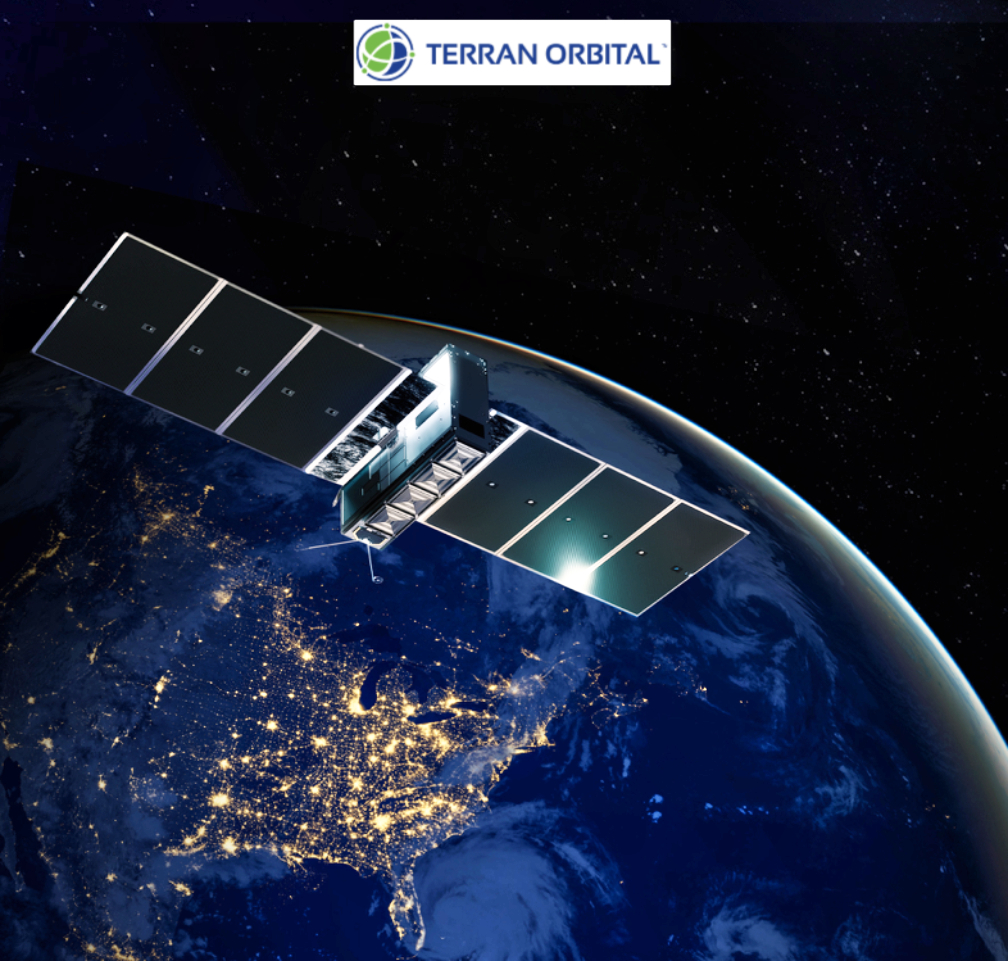
Safran Electronics & Defense and Terran Orbital (NYSE: LLAP) have signed a Memorandum of Agreement (MoU) to study and validate the prerequisites for production of a new generation of electric propulsion systems for satellites in the United States, based on Safran’s PPSX00 plasma thruster.

Safran Electronics & Defense, via Safran Spacecraft Propulsion, and Terran Orbital, will initiate an in-depth analysis to determine the technical, industrial and economic prerequisites for a new U.S.-based production line for electric propulsion systems. The location under consideration is a Terran Orbital facility in Irvine, California, which produces smallsats.

In addition to providing the American space industry with a local source of satellite thrusters, contributing to the economy and employment, this new line will match Safran’s production facilities in France, eventually doubling the company’s international production capacity.

Developing effective and sustainable propulsion systems for satellites is a critical challenge worldwide, as increasingly stringent international regulations stipulate greater sustainability and resilience in spacecraft. A higher degree of spacecraft maneuverability is needed to avoid collisions, along with a system to deorbit LEO satellites at the end of their service life.

Safran’s PPSX00 plasma thrusters, rated at about one kilowatt of power, will be used to meet the burgeoning mobility requirements of LEO satellites.

“Our alliance with Terran Orbital will contribute to the emergence of a complementary source of supply for electric propulsion systems to meet the growing needs of the space industry.” — Jean-Marie Bétermier, Senior Vice President Space at Safran Electronics & Defense

“This deal reflects Safran Electronics & Defense’s faith in the value of Terran Orbital’s industry-leading products and innovative personnel, while adding to our strategic investments to create more scalable, automated, vertically integrated production systems. Terran Orbital looks forward to working with Safran Electronics & Defense to create top-of-the-line propulsion systems that make spacecraft more resilient and maneuverable at faster delivery rates and lower costs for our national security and commercial customers.” — Marc Bell, Terran Orbital’s Chief Executive Officer and Chairman

Additionally, Time magazine last week named Terran Orbital (NYSE: LLAP) to the TIME100 Most Influential Companies list, honoring the satellite manufacturer and services provider and other firms for their “extraordinary impact around the world.”

Time recognized companies based on their “impact, innovation, ambition, and success,” with Terran Orbital spotlighted for its design, production, launch planning, mission operations, and in-orbit support for military, civil, and commercial satellite customers.

The magazine solicited company nominations from outside experts and the magazine’s global network of contributors and correspondents to spotlight “a diverse group of 100 businesses helping chart an essential path forward” for humanity.

Time’s recognition comes as Terran Orbital marks its 10th anniversary and a string of successes serving the aerospace and defense industries. Recent accomplishments include developing and co-operating the Cislunar Autonomous Positioning System Technology Operations and Navigation Experiment (CAPSTONE).

“Terran Orbital is thrilled Time magazine is recognizing us for producing cost-effective, cutting-edge satellites in an influential companies list that includes pioneers, industry leaders, innovators, disruptors, and tech titans from around the globe. Terran Orbital is honored to join the ranks of a TIME100 Most Influential Companies list that has included the likes of Apple, Amazon, Google-parent Alphabet, Disney, Microsoft, Moderna, Ford, and the NFL.” — Marc Bell, Chairman, CEO and Co-Founder, Terran Orbital

Filed Under: Featured, News

Rocket Lab to launch multiple satellites as part of an upcoming recovery mission

June 26, 2023 by editorial

Rocket Lab USA, Inc. (Nasdaq: RKLB) has announced that the company’s next Electron mission will deploy seven satellites to space and will include an attempt to recover the rocket’s booster after launch.

The ‘Baby Come Back’ mission, Rocket Lab’s 39th Electron launch, is scheduled to deploy from Pad A at Rocket Lab Launch Complex 1 in Mahia, New Zealand during a launch window that opens on July 14, 2023, UTC.

Rocket Lab’s Launch Complex 1, Mahia, New Zealand.

Rocket Lab is also planning to conduct a marine recovery of Electron’s first stage as part of this mission. Rocket Lab’s recovery team will retrieve Electron using a customized vessel and transport the stage back to Rocket Lab’s production complex for analysis. Data from this recovered stage will inform Rocket Lab’s ongoing recovery and reuse program.

The ‘Baby Come Back’ mission is a rideshare mission and will carry satellites for multiple customers.

Payloads aboard the ‘Baby Come Back’ mission include…

  • NASA
    NASA’s Starling mission is a four CubeSat mission designed to test technologies to enable future “swarm” missions. Spacecraft swarms refer to multiple spacecraft autonomously coordinating their activities to achieve certain goals. Starling will demonstrate technologies for in-space network communications, onboard relative navigation between spacecraft, autonomous maneuver planning and execution, and distributed spacecraft autonomy — an experiment for small spacecraft to autonomously react to observations, paving the way for future science missions.
  • Space Flight Laboratory (SFL)
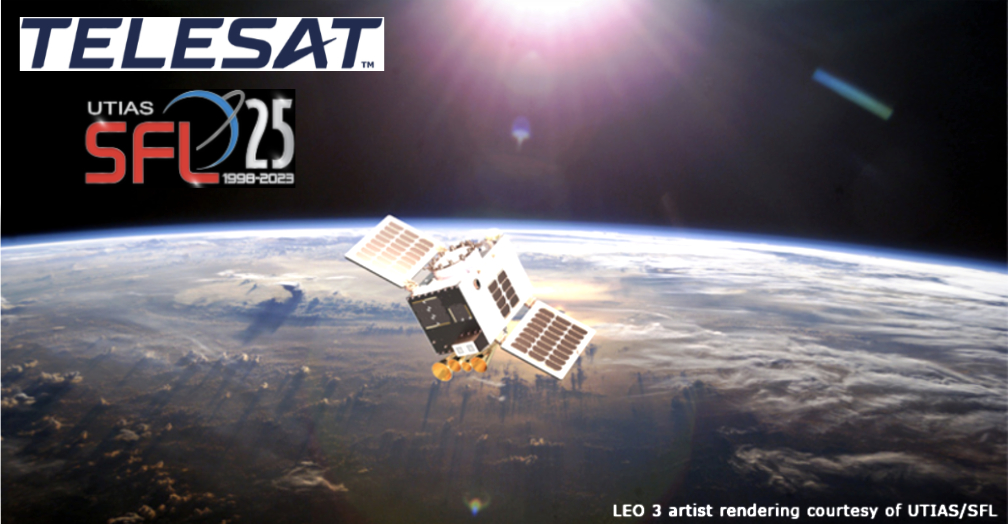
    Space Flight Laboratory (SFL) selected Rocket Lab to launch Telesat’s LEO 3 demonstration satellite that will provide continuity for customer and ecosystem vendor testing campaigns following the decommissioning of Telesat’s Phase 1 LEO satellite.
  • Spire Global
    Spire will launch two 3U satellites carrying Global Navigation Satellite System Radio Occultation (GNSS-RO) payloads to replenish its fully deployed constellation of more than 100 multipurpose satellites. Spire’s satellites observe the Earth in real time using radio frequency technology. The data acquired by Spire’s GNSS-RO payloads provide global weather intelligence that can be assimilated into weather models to improve the accuracy of forecasts. Spire is the largest producer of GNSS-RO weather data, collecting over 20,000 RO profiles a day.

“This mission demonstrates Rocket Lab’s ability to provide responsive space capabilities on accelerated timelines by making access to space possible for customers when they run into roadblocks. Electron is the world’s most reliable small launch vehicle and is demonstrating it can deliver customer’s payloads on their schedule.” — Peter Beck, Founder and Chief Executive Officer, Rocket Lab

Filed Under: News

Mynaric selected by Raytheon Technologies to supply optical communications terminals for SDA Tranche 1 Tracking Layer program 

June 23, 2023 by editorial

CONDOR Mk3

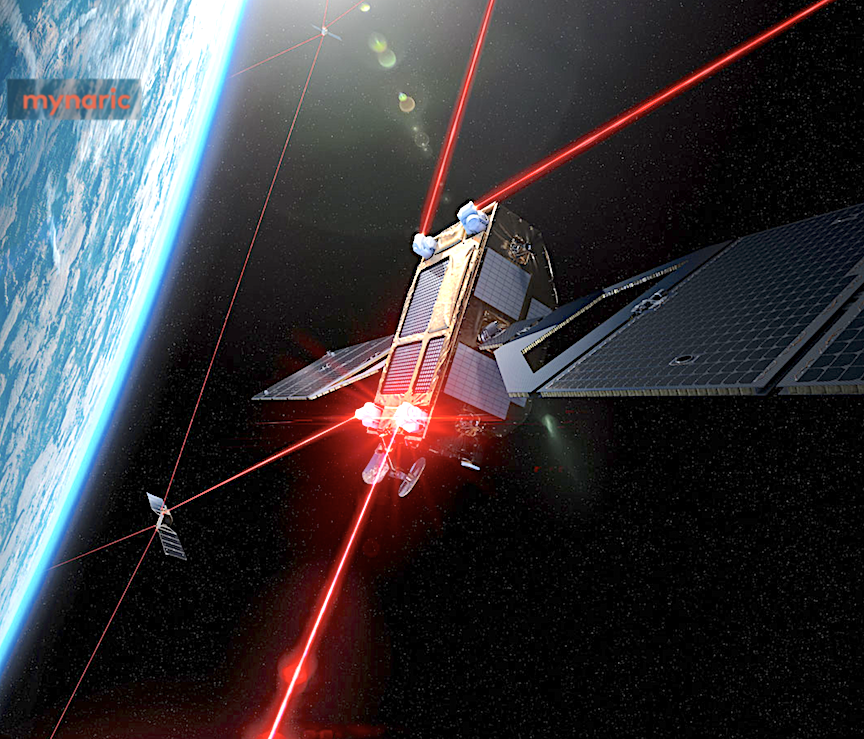
Mynaric (NASDAQ: MYNA) (FRA: M0YN), a provider of industrialized, cost-effective and scalable laser communications products, announced that it has been selected by Raytheon Technologies to supply optical communications terminals for the Space Development Agency (SDA) Tranche 1 Tracking Layer program. Raytheon Technologies was awarded the seven-vehicle mission satellite constellation in February 2023. Each satellite will feature three optical communications terminals, and a Ka-band, multi-beam payload for communications. Mynaric will supply 21 CONDOR Mk3 terminals to Raytheon for the program with the product deliveries expected in 2024. 

“This critical mission demands the very best in technology to ensure our nation’s security. Mynaric’s solution will enable us to achieve unparallel levels of data transmission and enhance our capabilities to protect and defend,” said Dave Broadbent, president of Space & C2 at Raytheon Intelligence & Space.  

Phase 1 of DARPA’s Space-BACN

The Tranche 1 Tracking Layer will detect, identify, and track hypersonic weapons and other advanced missiles from their earliest stages of launch through interception. Once fully deployed, the low-Earth orbit constellation of networked satellites will become the fifth plane of satellites providing missile warning and tracking for the U.S. Department of Defense. The program is a key element of the Proliferated Warfighter Space Architecture. 

“Our entire team is proud to support Raytheon Technologies and the SDA on this critical national defense program,” said Tina Ghataore, Chief Commercial Officer for Mynaric. “We have signaled to the market that our team works collaboratively with our customers to deliver industry-leading products that meet the SDA standards and requirements for interoperability.” 

Mynaric will also supply optical communications terminals to the 14 satellites developed by Northrop Grumman for the Tranche 1 Tracking Layer program. 

Telesat for the DARPA Blackjack program

Mynaric’s CONDOR family of optical communications terminals is specifically designed for mass deployment as part of government and commercial satellite constellations. It has previously been selected by Northrop Grumman for the SDA’s Tranche 1 Transport Layer program, by Loft Federal for SDA’s Experimental Testbed NExT, by Telesat for the DARPA Blackjack program and others. In addition, Mynaric was named a key development partner for Phase 1 of DARPA’s Space-BACN program, was selected by the European Space Agency (ESA) to investigate optical technologies for next generation high-throughput optical inter-satellite links and was selected by the German government for multiple projects to develop quantum communication capabilities.   

Filed Under: News

  • « Go to Previous Page
  • Page 1
  • Interim pages omitted …
  • Page 112
  • Page 113
  • Page 114
  • Page 115
  • Page 116
  • Interim pages omitted …
  • Page 339
  • Go to Next Page »

Primary Sidebar

WEEKLY NEWSLETTER

Archives

  • September 2026
  • August 2026
  • July 2026
  • June 2026
  • May 2026
  • April 2026
  • March 2026
  • February 2026
  • January 2026
  • December 2025
  • November 2025
  • October 2025
  • September 2025
  • August 2025
  • July 2025
  • June 2025
  • May 2025
  • April 2025
  • March 2025
  • February 2025
  • January 2025
  • December 2024
  • November 2024
  • October 2024
  • September 2024
  • August 2024
  • July 2024
  • June 2024
  • May 2024
  • April 2024
  • March 2024
  • February 2024
  • January 2024
  • December 2023
  • November 2023
  • October 2023
  • September 2023
  • August 2023
  • July 2023
  • June 2023
  • May 2023
  • April 2023
  • March 2023
  • February 2023
  • January 2023
  • December 2022
  • November 2022
  • October 2022
  • September 2022
  • August 2022
  • July 2022
  • June 2022
  • May 2022
  • April 2022
  • March 2022
  • February 2022
  • January 2022
  • December 2021
  • November 2021
  • October 2021
  • September 2021
  • August 2021
  • July 2021
  • June 2021
  • May 2021
  • April 2021
  • March 2021
  • February 2021
  • January 2021
  • December 2020
  • November 2020
  • October 2020
  • September 2020
  • August 2020
  • July 2020
  • June 2020
  • May 2020
  • April 2020
  • March 2020
  • February 2020
  • January 2020
  • December 2019
  • November 2019
  • October 2019

© 2019–2026 SatNews

Insert/edit link

Enter the destination URL

Or link to existing content

    No search term specified. Showing recent items. Search or use up and down arrow keys to select an item.
      x
      Sign Up Now!

      Enjoy a free weekly newsletter with recent headlines from the global SmallSat industry.

      Invalid email address
      We promise not to spam you. You can unsubscribe at any time.
      Thanks for subscribing! You will now receive weekly SmallSat News updates.
      We love our advertisers.
      And you will too!

      Please disable Ad Blocker to continue... We promise to keep it unobtrusive.
      We promise not to spam you. You can unsubscribe at any time.
      Invalid email address
      Thanks for subscribing!