• Skip to main content
  • Skip to primary sidebar
  • Home
  • News
  • Featured
  • More News ⌄
    • SatNews
    • SatMagazine
    • MilSatMagazine
  • Events ⌄
    • MilSat Symposium
    • SmallSat Symposium
    • Satellite Innovation
  • Contacts
  • SUBSCRIPTION

SmallSat News

You are here: Home / Archives for News

News

Comtech secures strategic contracts for hybrid designed, high-speed SATCOM solution

April 20, 2023 by editorial

Comtech recently secured multiple orders for significant quantities of the company’s CDM-780 high-speed software defined modems — these modems will be delivered to satellite operators as well as to the DoD who will be assessing, evaluating, and fielding these modems in a variety of scenarios to enable broad scale government and commercial deployments to provide end users with access to high-speed connectivity in some of the hardest to reach places in the world.

Comtech’s CDM-780 is one of the highest capacity, Commercial-Off-The-Shelf (COTS) gateway SATCOM solutions available today. Through a software-defined architecture, the CDM-780 is designed to readily adapt and evolve over time to deliver SATCOM services that can transition across HTS and vHTS networks, as well as LEO/MEO/GEO constellations.

“Our CDM-780 is uniquely positioned to support the blending of communications services across multiple, diverse satellite orbits and networks. These contracts illustrate our continuing technology leadership and fluency in future networking capabilities that can help our customers democratize access to communications and empower individuals, communities, businesses, and governments across the globe.” — Ken Peterman, President and CEO, Comtech

Filed Under: Featured, News

Rogue Space System’s first spacecraft ready for June launch

April 19, 2023 by editorial

Rogue Space systems, an In-Space Services company focused on providing repair, maintenance and space debris removal services with their autonomous robots successfully completed the final testing of their “Barry” (B1B2) spacecraft which includes Rogue’s Scalable Compute Platform, hosted hardware and software payloads, and situational awareness sensors, is now enroute to their partner Exolaunch for integration on the SpaceX Transporter-8 launch in June.

Rogue’s Orbital Robots – Orbots™

The completion of this testing is the final gate Rogue needed to pass to have their spacecraft launched on the SpaceX rideshare mission in June. The “Barry” spacecraft will test Rogue’s Scalable Compute Platform’s ability to aggregate multiple sensors and process the data in real time. Rogue will also be testing a number of both internal and customer developed algorithms, as well as customer hardware payloads.

“This is a first step in a cadence of in-space demonstrations of technologies we have developed here at Rogue through the SpaceWERX Orbital Prime Program. The team at Rogue has delivered at an exceptional speed and perseverance to get ‘Barry’ to space in a timeframe of just a few months.” says Jeromy Grimmett, Founder and CEO of Rogue. “Rogue has managed to get multiple technologies staged to reach a space heritage milestone as a result of Phase 1 STTR awards. This clearly shows our team’s ability to deliver extraordinary results to the U.S. Space Force.”

“Barry”, the maiden flight of New Hampshire-based Rogue Space Systems is expected to launch in June 2023 into a sun synchronous orbit in Low Earth Orbit from Vandenberg Space Force Base, California. Mission data will be used to inform and improve their next missions which are tentatively scheduled for 2024. Last year, Rogue was awarded a staggering 12 Phase 1 SBIR and STTR contracts from U.S. Space Force and National Science Foundation. “We are saving at least one surprise demonstration on-orbit from Barry as well as starting our business of hosting payloads with this mission, so stay tuned!” says Brent Abbott

Filed Under: News

Northrop Grumman rapidly completes their CDR for the Tranche 1 Transport Layer

April 19, 2023 by editorial

Northrop Grumman Corporation (NYSE: NOC) recently completed a critical design review (CDR) for the firm’s Tranche 1 Transport Layer (T1TL), part of Space Development Agency’s (SDA) LEO network designed to communicate vital information to wherever it’s needed to support U.S. troops on the ground, quickly and securely.

The Space Development Agency has formerly announced that Northrop Grumman is under contract to develop and build 42 Tranche 1 Transport Layer satellites and 14 Tranche 1 Tracking Layer satellites as part of its Proliferated Warfighter Space Architecture. Image is courtesy of Northrop Grumman.

The Tranche 1 Transport Layer (T1TL) communication satellites will provide resilient, low-latency, high-volume data transport supporting U.S. military missions around the world. Designed to connect elements of an integrated sensing architecture, the network will deliver persistent, secure connectivity, and serve as a critical element for advancing the U.S. Department of Defense’s vision for Joint All Domain Command and Control.

The Defense Department’s efforts to bring Joint All Domain Command and Control, or JADC2, to the warfighter, will provide a better way to sense, make sense of and act on the volumes of information generated into today’s joint, all-domain warfighting environment. Photo By: Jennifer Gonzalez, U.S. Marine Corps

SDA formerly announced that Northrop Grumman is under contract to provide the agency with 56 satellites, including the 42 communication satellites in the Tranche 1 Transport layer and 14 for the Tranche 1 Tracking layer, which includes an infrared sensor payload. The Tracking layer program recently completed its preliminary design review. Northrop Grumman is also providing the ground system for both its Transport and Tracking constellations.

“We are leveraging our commercial marketplace partnerships to deliver a rapid, affordable, highly effective solution for SDA. Our T1TL solution builds on our decades of end-to-end mission expertise. We are uniquely capable of delivering a credible capability to support the warfighter.” — Blake Bullock, vice president, communication systems, strategic space systems, Northrop Grumman

Filed Under: Featured, News

Northrop Grumman rapidly completes their CDR for the Tranche 1 Transport Layer

April 19, 2023 by editorial

Northrop Grumman Corporation (NYSE: NOC) recently completed a critical design review (CDR) for the firm’s Tranche 1 Transport Layer (T1TL), part of Space Development Agency’s (SDA) LEO network designed to communicate vital information to wherever it’s needed to support U.S. troops on the ground, quickly and securely.

The Space Development Agency has formerly announced that Northrop Grumman is under contract to develop and build 42 Tranche 1 Transport Layer satellites and 14 Tranche 1 Tracking Layer satellites as part of its Proliferated Warfighter Space Architecture. Image is courtesy of Northrop Grumman.

The Tranche 1 Transport Layer (T1TL) communication satellites will provide resilient, low-latency, high-volume data transport supporting U.S. military missions around the world. Designed to connect elements of an integrated sensing architecture, the network will deliver persistent, secure connectivity, and serve as a critical element for advancing the U.S. Department of Defense’s vision for Joint All Domain Command and Control.

The Defense Department’s efforts to bring Joint All Domain Command and Control, or JADC2, to the warfighter, will provide a better way to sense, make sense of and act on the volumes of information generated into today’s joint, all-domain warfighting environment. Photo By: Jennifer Gonzalez, U.S. Marine Corps

SDA formerly announced that Northrop Grumman is under contract to provide the agency with 56 satellites, including the 42 communication satellites in the Tranche 1 Transport layer and 14 for the Tranche 1 Tracking layer, which includes an infrared sensor payload. The Tracking layer program recently completed its preliminary design review. Northrop Grumman is also providing the ground system for both its Transport and Tracking constellations.

“We are leveraging our commercial marketplace partnerships to deliver a rapid, affordable, highly effective solution for SDA. Our T1TL solution builds on our decades of end-to-end mission expertise. We are uniquely capable of delivering a credible capability to support the warfighter.” — Blake Bullock, vice president, communication systems, strategic space systems, Northrop Grumman

Filed Under: News

Lockheed Martin CubeSats validate essential maneuvering capabilities for on-orbit servicing

April 19, 2023 by editorial

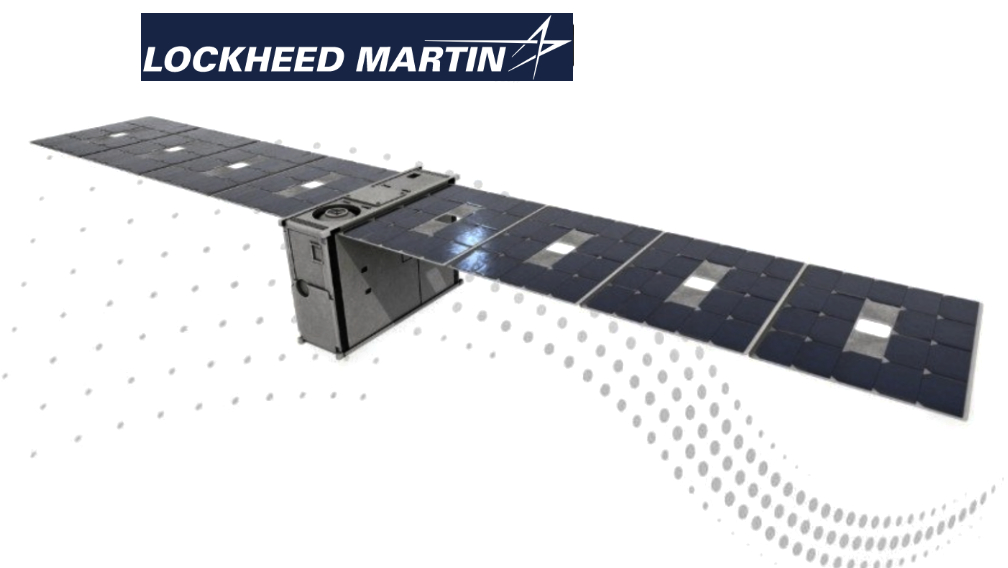
Lockheed Martin (NYSE: LMT) has announced that the firm’s In-space Upgrade Satellite System (LM LINUSS™) accomplished a successful, on-orbit demo, proving how smallsats can serve an essential role in sustaining critical space architectures. This is accomplished by regularly upgrading existing constellations with new capabilities and extending spacecraft design lifecycles.


LM LINUSS, a technology demo funded internally by Lockheed Martin, is comprised of two, LM 50™ 12U CubeSats. While on-orbit, the system demonstrated highly-automated, rendezvous and proximity operations (RPO) that enables complicated — yet precise — maneuvering across multi-satellite constellations. This allows on-orbit servicing coordination and upgrades at scale in any orbit. The RPO demonstration was part of Lockheed Martin’s mission to validate essential maneuvering capabilities for future space upgrade and servicing missions.

During the demo, one of the LM LINUSS CubeSats acted as the designated servicing vehicle, navigating a flightpath toward the second CubeSat, which represented the resident space object (RSO). As the servicing vehicle approached the RSO, on-board guidance algorithms made final real-time adjustments to complete its rendezvous operations. The culminating success was declared when the CubeSats maneuvered in a proximity of one another, demonstrating high confidence in conducting future, on-orbit servicing missions for customers.

In addition to RPO, these smallsats also accomplished additional technology demonstrations while on-orbit…

  • Performing automated maneuvers and using artificial intelligence to fly coordinated flightpaths, supporting a variety of operational conditions.
  • Using Lockheed Martin’s Horizon™ 2.0 command and control (C2) software and advanced RPO software.
  • Maintaining connection with a secure cloud-based architecture for mission telemetry, tracking and control.
  • Showcasing the company’s advanced SmartSat™ software.
  • Demonstrating miniaturized Space Domain Awareness capabilities.
  • Validating new onboard high-performance processing, low-toxicity propulsion, inertial measurement units, machine vision, and 3D-printed components.

LM LINUSS could be considered the most capable pair of CubeSats in geosynchronous Earth orbit today, based on customer community feedback. The spacecraft have higher bus density, payload accommodation and on-orbit processing than any other CubeSat, which helps enable revolutionary mission capabilities in the future. Part of Lockheed Martin’s LM 50 smallsat family, it is the collaborative integration of the company’s mission electro-optical payload deck with a next-generation bus from Terran Orbital Corporation. LM LINUSS and other Lockheed Martin pathfinders are helping create a more sustainable future, safely adding mission life and more.

“The LM LINUSS pathfinder is an excellent example of how Lockheed Martin is investing in innovation in the real world. Agile development, cloud-based operations, and smallsat platforms came together at speed and in orbit, where the real test of technology occurs. Through the accomplishments of LM LINUSS, Lockheed Martin is pioneering how future small and medium class missions will be upgraded on-orbit, and continuing to develop critical, breakthrough technologies that keep our customers ahead of ready.” — Johnathon Caldwell, Lockheed Martin, vice president and general manager, Military Space

“This LM LINUSS demonstration was a success for many reasons, including the fact that our team navigated the inherent challenges of a novel technology and validated our software for future missions. We will leverage what our team learned from LM LINUSS’ design, development, and operations to continue advancing Lockheed Martin’s innovative vision for on-orbit satellite servicing and upgrades.” — David Barnhart, a technology director at Lockheed Martin Space

Filed Under: News

Ascent Solar Technologies, Inc. intros space hardware development kits for solar applications

April 18, 2023 by editorial

Ascent Solar Technologies, Inc. (NASDAQ: ASTI) has introduced a new line of easy to integrate Space Hardware Development Kits (HDKs) during the Space Foundation Space Symposium in Colorado Springs, Colorado, from April 17-20, 2023.

Ascent’s new offer packages technologies and approaches, matured previously in collaborations with NASA and JAXA, into easy to consume HDKs that simplify the design and integration of solar power generation, accelerate mission schedules and boost spacecraft performance while delivering significant mass efficiencies. Benefits of the HDKs include:

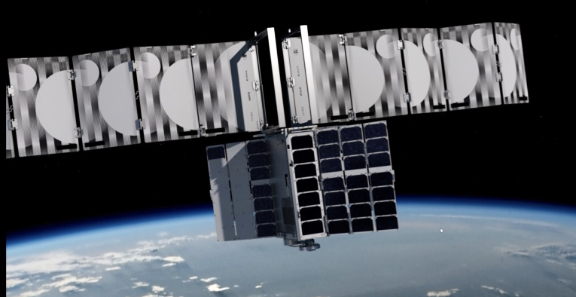
  • Engineered for Space: Solar cells encapsulated in space-rated laminate with unrivaled on-orbit specific power and longevity, as demonstrated on-orbit with NASA.
  • Plug & Fly™ Solar Integration: HDKs engineered to easily interface with proprietary and COTS components, including systems, subsystems and buses.

  • Modular Mission-Enabler: HDKs configurable to mission power, mass and delta-v budget requirements, including solar arrays optimized for LEO/GEO, and that are cislunar and deep space-capable.
  • Sustainable Space Solar Solution: Robust arrays that provide reliable power, even if impacted by micrometeoroid or orbital debris (without creating more space debris).
  • Assured, On-Time Delivery: In-house produced solar modules, backed by MW of proven production capacity.

“Balancing spacecraft cost, power, mass, and delta-v budgets often presents a challenge for space mission managers. Ascent now simplifies this process with our new range of Space HDKs, an innovative space power generation solution that takes a holistic approach to maximizing benefits to the mission, and its budget constraints, instead of optimizing to a subsystem component requirement. The Space HDKs are designed for missions of today and the future and include cubesat, smallsat, and electric propulsion optimized arrays that provide both vehicle mass savings and increased performance. Ascent is also developing even higher power, higher voltage, and more efficient space HDKs to serve the next generation of space missions.” — Julian Miller, Business Development Manager of ASTI

Filed Under: News

Ascent Solar Technologies, Inc. intros space hardware development kits for solar applications

April 18, 2023 by editorial

Ascent Solar Technologies, Inc. (NASDAQ: ASTI) has introduced a new line of easy to integrate Space Hardware Development Kits (HDKs) during the Space Foundation Space Symposium in Colorado Springs, Colorado, from April 17-20, 2023.

Ascent’s new offer packages technologies and approaches, matured previously in collaborations with NASA and JAXA, into easy to consume HDKs that simplify the design and integration of solar power generation, accelerate mission schedules and boost spacecraft performance while delivering significant mass efficiencies. Benefits of the HDKs include:

  • Engineered for Space: Solar cells encapsulated in space-rated laminate with unrivaled on-orbit specific power and longevity, as demonstrated on-orbit with NASA.
  • Plug & Fly™ Solar Integration: HDKs engineered to easily interface with proprietary and COTS components, including systems, subsystems and buses.
  • Modular Mission-Enabler: HDKs configurable to mission power, mass and delta-v budget requirements, including solar arrays optimized for LEO/GEO, and that are cislunar and deep space-capable.
  • Sustainable Space Solar Solution: Robust arrays that provide reliable power, even if impacted by micrometeoroid or orbital debris (without creating more space debris).
  • Assured, On-Time Delivery: In-house produced solar modules, backed by MW of proven production capacity.

“Balancing spacecraft cost, power, mass, and delta-v budgets often presents a challenge for space mission managers. Ascent now simplifies this process with our new range of Space HDKs, an innovative space power generation solution that takes a holistic approach to maximizing benefits to the mission, and its budget constraints, instead of optimizing to a subsystem component requirement. The Space HDKs are designed for missions of today and the future and include cubesat, smallsat, and electric propulsion optimized arrays that provide both vehicle mass savings and increased performance. Ascent is also developing even higher power, higher voltage, and more efficient space HDKs to serve the next generation of space missions.” — Julian Miller, Business Development Manager of ASTI

Filed Under: News

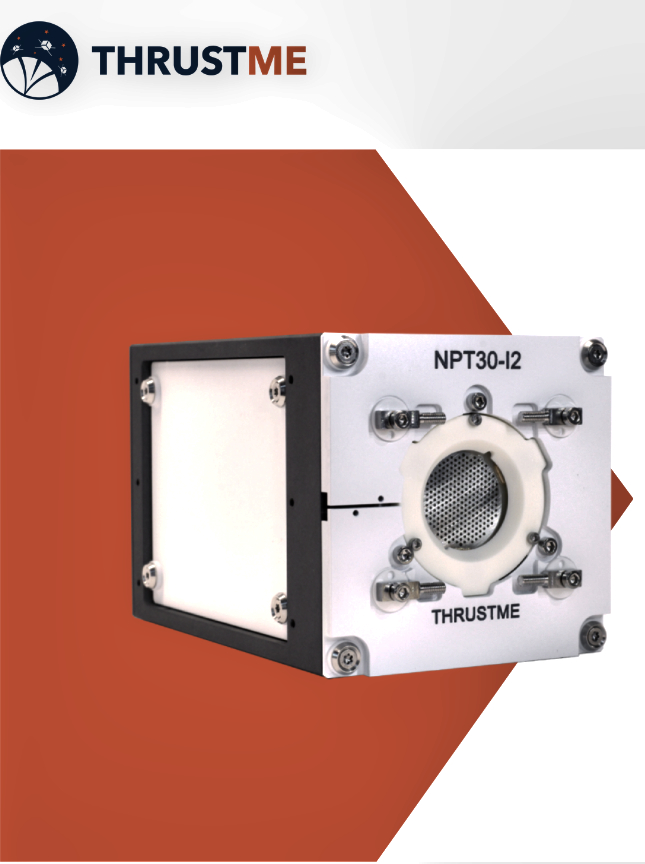
The ThrustMe NPT30-I2 iodine electric propulsion system launched on board the NorSat-TD satellite

April 18, 2023 by editorial

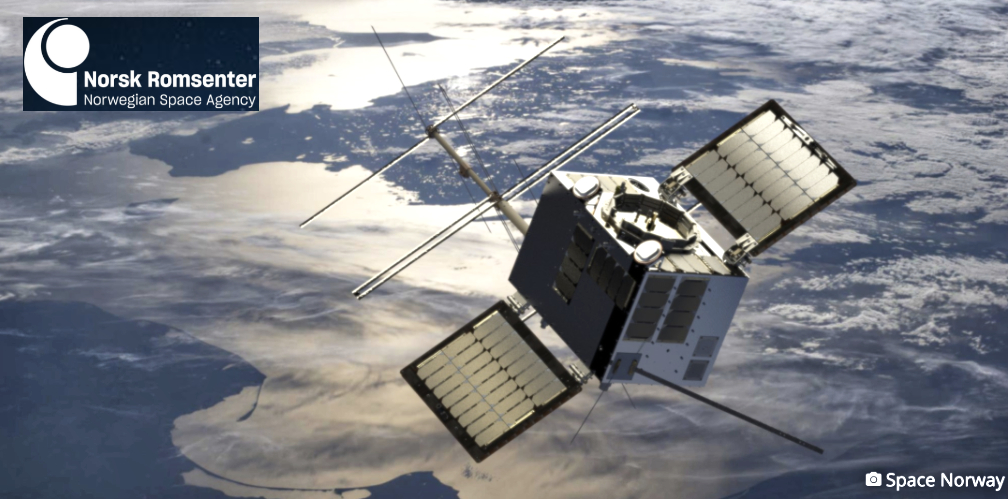
The Norwegian Space Agency’s NorSat-TD satellite was successfully launched onboard a SpaceX Falcon 9 rocket from the Vandenberg Space Force Base in California — the satellite is fitted with a ThrustMe NPT30-I2 iodine fueled electric propulsion system.

Extending the satellites’ lifetime through collision avoidance and end-of-mission deorbiting soon will not be an option but the only solution to keep space activities. The tens of thousands of satellites to be launched in the next decade heighten global concerns about the need to manage both the growth of satellites and the potential for damaging debris from poorly managed space systems. The economic and environmental sustainability of the space industry will increasingly rely on efficient and effective propulsion solutions.

That the Norwegian Space Agency technology demonstrator mission NorSat-TD was successfully launched with the iodine electric propulsion system NPT30-I2 is evidence of the growing trend toward onboarding such systems on contemporary satellites. Committed to the safe and sustainable use of space, ThrustMe propulsion technology included on the NorSat-TD mission was selected for its technical merits and relevance to the mission parameters.

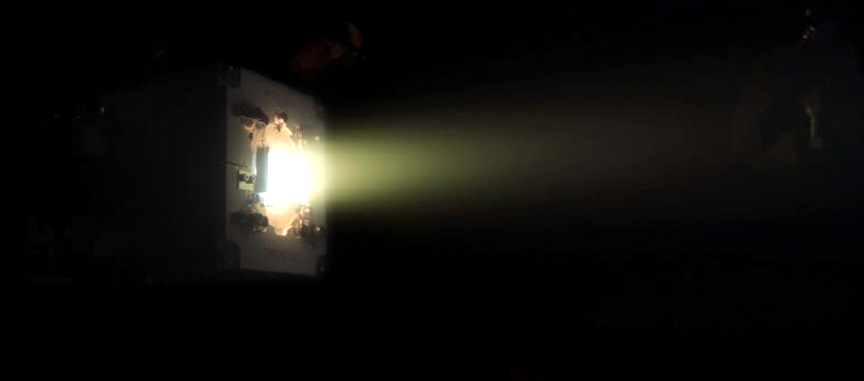
The NPT30-I2 iodine propulsion system firing. Photo is courtesy of ThrustMe.

Designed for the next generation of streamlined satellites, the NPT30 is an intelligent, turnkey, electric propulsion system that uses solid iodine propellant. It provides the high total impulse required by these satellites for deployment, significant orbit changes, collision avoidance maneuvers, and end-of-life removal to minimize space debris and free up critical operational orbits.

With one more system on-orbit, ThrustMe enhances the Norwegian capacity to navigate and operate the NorSat-TD satellite in LEO. Highlighted goals of this mission include enhancing the space agency’s experience with propulsive satellite operations and improving its space safety capacity by supporting the development of space situational awareness and traffic management systems for Norway’s upcoming future missions.

Funding for the system on this mission was underwritten by the French space agency CNES as an institutional partner to the mission. Industrialization of ThrustMe’s NPT30-I2 product portfolio is supported by the European Commission via the EU-funded EMBRACE II project.

ThrustMe is the go-to provider of high-performing on-orbit space propulsion and space hardware testing solutions for customers across the globe. It offers a portfolio of disruptive, deeply integrated and smart in-orbit space propulsion solutions designed for the emerging industrialized constellation space era. The company was the world’s first to demonstrate an iodine-fueled electric propulsion system in space and in so doing achieved a goal the space industry had pursued for over 60 years. Today, ThrustMe is delivering propulsion systems to major satellite constellations backed with support from ground testing to in-orbit maneuvering strategies.

Filed Under: Featured, News

A Transporter-7 achievement: Trio of Spire smallsats claim their orbits

April 18, 2023 by editorial

Spire Global, Inc. (NYSE: SPIR) launched three satellites on the SpaceX Transporter-7 mission from Vandenberg Space Force Base on April 14th — Spire Space Services, the Company’s Space as a Service business, launched two 6U satellites for their customers.

The KAUST Cubesat was successfully deployed above Saudi Arabia; image shown is taken live from the second stage of the SpaceX Transporter-7. Photo is courtesy of Spire/KAUST 2023.

Spire launched a satellite developed for King Abdullah University of Science and Technology (KAUST), which aims to collect high-quality and high-resolution data across global terrestrial, coastal and ocean ecosystems and to help observe and characterize natural resources.

The KAUST Cubesat was successfully deployed above Saudi Arabia; image shown is taken live from the second stage of the SpaceX Transporter-7. Photo is courtesy of Spire/KAUST 2023.

The 6U satellite hosts a hyperspectral camera with advanced on-board processing capabilities in combination with Spire’s Global Navigation Satellite System-Reflectometry (GNSS-R) sensor payload that will collect intelligence on soil moisture. The data collected will allow KAUST researchers to compile and analyze high-resolution imagery that can be used for mapping terrestrial habitats, monitoring vegetation health and condition, exploring coastal ecosystems and coral reefs, and advancing agro-ecological research, as well as many other Earth and environmental science applications.

“Working with Spire Space Services has allowed us to fast-track our satellite mission, which will provide unique insights to monitor, protect and preserve precious terrestrial and ocean systems in Saudi Arabia,. Spire’s expertise in GNSS-R paired with the hyperspectral instrument will yield valuable new information on both the state of existing ecosystems and for observing and characterizing changes resulting from ambitious national scale restoration and conservation strategies.” — Matthew McCabe, Director of the KAUST Climate and Livability Initiative

Satellite ADLER-2 on-orbit. Image is courtesy of OeWF/Spire/GRASP SAS Europe

Spire also launched ADLER-2, the second satellite developed in partnership between the Austrian Space Forum (OeWF), a national space research organization, and Findus Venture GmbH, an Austrian investor in new space technology. ADLER-2 continues the mission of ADLER-1, which was launched in January 2022, to provide insights into space debris in LEO and expand novel atmospheric sensing capabilities to study clouds and aerosols in the atmosphere. ADLER-2 carries three payloads that detect and track orbital debris and perform air quality measurements around the globe, and it is expected to increase the debris detection rate.

ADLER-2 (left) is twice as large as its predecessor ADLER-1. Image is courtesy of OeWF/Spire/GRASP SAS Europe

“Space debris is a challenging issue we must address as quickly as possible. To develop solutions, we first need a better overview of the current situation in Earth orbit. To that end, the Austrian Space Forum has teamed up with Spire Global, an expert when it comes to tailor made satellites and swiftly adjustable projects. With the successful launch and operation of ADLER-1, we now have proof of concept, and ADLER-2 will provide further valuable insights into space debris in Low Earth Orbit.” — Dr. Gernot Grömer, Director of the Austrian Space Forum

Spire also launched one satellite to support their own data solutions business, which encompasses the tracking of maritime, aviation, and weather activity from space. Spire’s data solutions constellation is fully deployed with high asset use and only requires about $10-12 million per year of capital expenditures to maintain. This satellite is furthering Spire’s competitive advantage while leveraging a technology improvement curve that is delivering 10X performance improvements every five years.

This satellite is equipped with Global Navigation Satellite System (GNSS) sensors to collect radio occultation (RO) and polarimetric radio occultation (PRO) data. These GNSS sensors gather precise data about the Earth’s atmosphere, including measurements on temperature, humidity, and precipitation, as well as ionospheric electron density. RO and PRO data can be assimilated into weather models to enhance the value and accuracy of global weather forecasts. Spire launched its initial PRO payloads, which were the first sent to orbit by a private company, in January 2023. Spire is the largest producer of radio occultation data, which is leveraged by government agencies such as NOAA, NASA, ECMWF, and EUMETSAT to drive global weather predictions.

The satellites were manifested on the mission through a multi-launch agreement between Spire and Exolaunch, which includes access to the Transporter missions through Exolaunch’s long-term launch arrangements with SpaceX. Spire will launch additional satellites on SpaceX Transporter missions later this year.

Spire Space Services, with a $39 billion total addressable market, allows organizations to deploy and scale their own satellite constellation at maximum speed and reliably, all through a subscription model that eliminates the high upfront cost of building and maintaining infrastructure in space. Commercial and government organizations can deploy and operate a constellation of satellites, a hosted payload, or a software application in space with Spire’s infrastructure.

“With Spire Space Services, our goal is to simplify space and make it accessible so that anyone is able to benefit from the insights and intelligence that can be garnered from the ultimate vantage point,. Both KAUST and ADLER-2 are prime examples of organizations that have leveraged our platform to build space-based applications and gather intelligence to promote sustainability on Earth and beyond.” — Frank Frulio, General Manager of Space Services, Spire

Filed Under: News

Blue Canyon Technologies receives JPL smallsats build award

April 17, 2023 by editorial

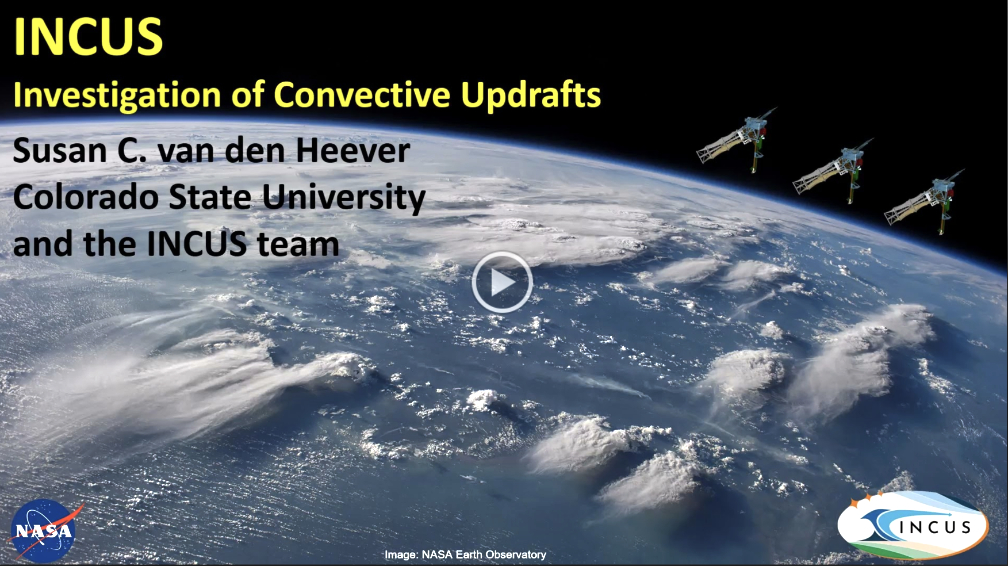
Blue Canyon Technologies, a Raytheon Technologies (NYSE: RTX) subsidiary, will design and manufacture three smallsats to support NASA’s Investigation of Convective Updrafts, or INCUS, mission. The principal investigator is Susan van den Heever of Colorado State University.

The INCUS mission — led by Colorado Stare University and managed by NASA’s Jet Propulsion Laboratory – aims to better understand the complex dynamics of thunderstorms and their impact on Earth’s climate and weather models.

Blue Canyon’s smallsats will fly in tandem coordination, each displaying a dynamic atmospheric radar and dynamic microwave radiometer measuring the atmospheric conditions of Earth.

Blue Canyon’s work will be performed at the firm’s Crescent Constellation Factory located in Lafayette, Colorado.

“BCT’s successful science exploration programs and our experience controlling large flexible structures will be key to supporting this critical science mission.” — Jeff Schrader, President, Blue Canyon Technologies.

INCUS overview video

Filed Under: Featured, News

  • « Go to Previous Page
  • Page 1
  • Interim pages omitted …
  • Page 125
  • Page 126
  • Page 127
  • Page 128
  • Page 129
  • Interim pages omitted …
  • Page 339
  • Go to Next Page »

Primary Sidebar

WEEKLY NEWSLETTER

Archives

  • September 2026
  • August 2026
  • July 2026
  • June 2026
  • May 2026
  • April 2026
  • March 2026
  • February 2026
  • January 2026
  • December 2025
  • November 2025
  • October 2025
  • September 2025
  • August 2025
  • July 2025
  • June 2025
  • May 2025
  • April 2025
  • March 2025
  • February 2025
  • January 2025
  • December 2024
  • November 2024
  • October 2024
  • September 2024
  • August 2024
  • July 2024
  • June 2024
  • May 2024
  • April 2024
  • March 2024
  • February 2024
  • January 2024
  • December 2023
  • November 2023
  • October 2023
  • September 2023
  • August 2023
  • July 2023
  • June 2023
  • May 2023
  • April 2023
  • March 2023
  • February 2023
  • January 2023
  • December 2022
  • November 2022
  • October 2022
  • September 2022
  • August 2022
  • July 2022
  • June 2022
  • May 2022
  • April 2022
  • March 2022
  • February 2022
  • January 2022
  • December 2021
  • November 2021
  • October 2021
  • September 2021
  • August 2021
  • July 2021
  • June 2021
  • May 2021
  • April 2021
  • March 2021
  • February 2021
  • January 2021
  • December 2020
  • November 2020
  • October 2020
  • September 2020
  • August 2020
  • July 2020
  • June 2020
  • May 2020
  • April 2020
  • March 2020
  • February 2020
  • January 2020
  • December 2019
  • November 2019
  • October 2019

© 2019–2026 SatNews

Insert/edit link

Enter the destination URL

Or link to existing content

    No search term specified. Showing recent items. Search or use up and down arrow keys to select an item.
      x
      Sign Up Now!

      Enjoy a free weekly newsletter with recent headlines from the global SmallSat industry.

      Invalid email address
      We promise not to spam you. You can unsubscribe at any time.
      Thanks for subscribing! You will now receive weekly SmallSat News updates.
      We love our advertisers.
      And you will too!

      Please disable Ad Blocker to continue... We promise to keep it unobtrusive.
      We promise not to spam you. You can unsubscribe at any time.
      Invalid email address
      Thanks for subscribing!