• Skip to main content
  • Skip to primary sidebar
  • Home
  • News
  • Featured
  • More News ⌄
    • SatNews
    • SatMagazine
    • MilSatMagazine
  • Events ⌄
    • MilSat Symposium
    • SmallSat Symposium
    • Satellite Innovation
  • Contacts
  • SUBSCRIPTION

SmallSat News

You are here: Home / Archives for News

News

Kongsberg NanoAvionics + Eycore to collaborate on next generation SAR satellites

July 31, 2025 by editorial

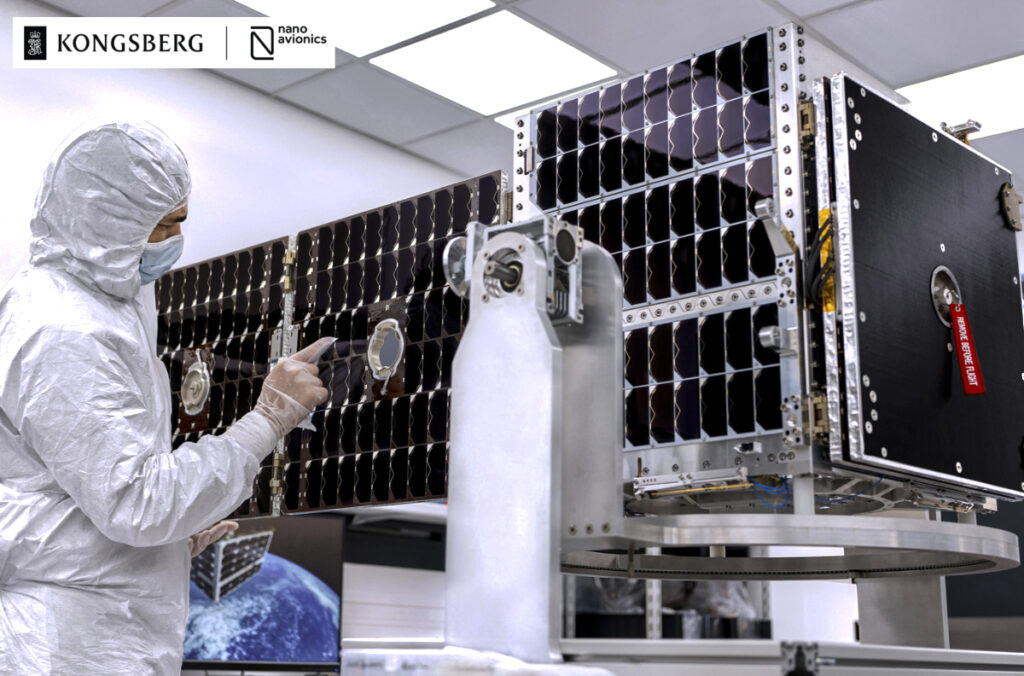
Kongsberg NanoAvionics MP42 satellite assembly, photo courtesy of the company

Eycore, an emerging developer of compact synthetic-aperture-radar (SAR) payloads, and small-satellite manufacturer Kongsberg NanoAvionics (NanoAvionics) now have an agreement that will place Eycore’s inaugural SAR demonstrator into orbit.
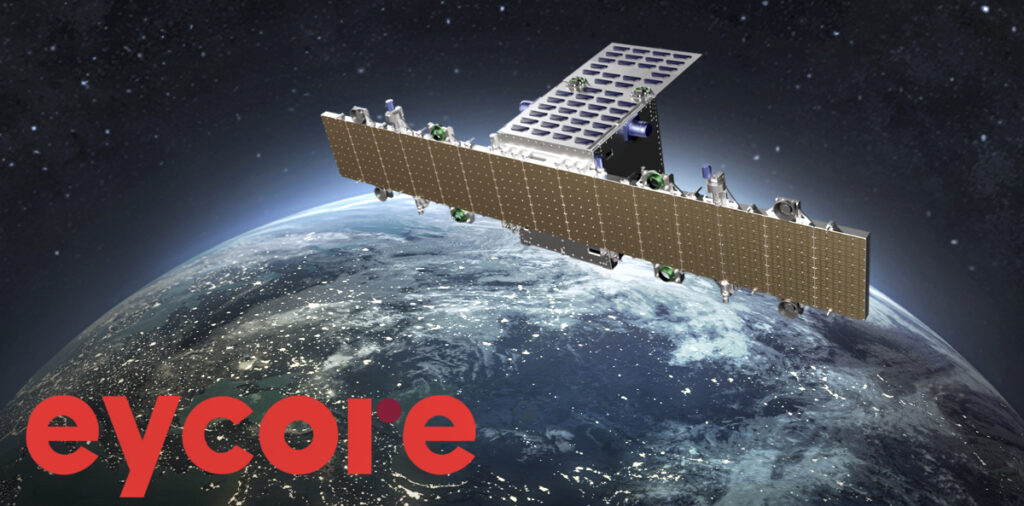
Artistic rendition of an Eyecore SAR satellite on-orbit, courtesy of the company

The flight will test Eycore’s X-band radar on NanoAvionics’ flight-proven MP42 microsatellite bus. It will lay the groundwork for an all-European, military-grade SAR solution that provides rapid, sovereign access to sub-meter, day-night, all-weather imagery for governments as well as NATO and allied defence applications. The launch aboard a SpaceX Falcon 9 Transporter rideshare mission is scheduled for the first quarter of 2026.
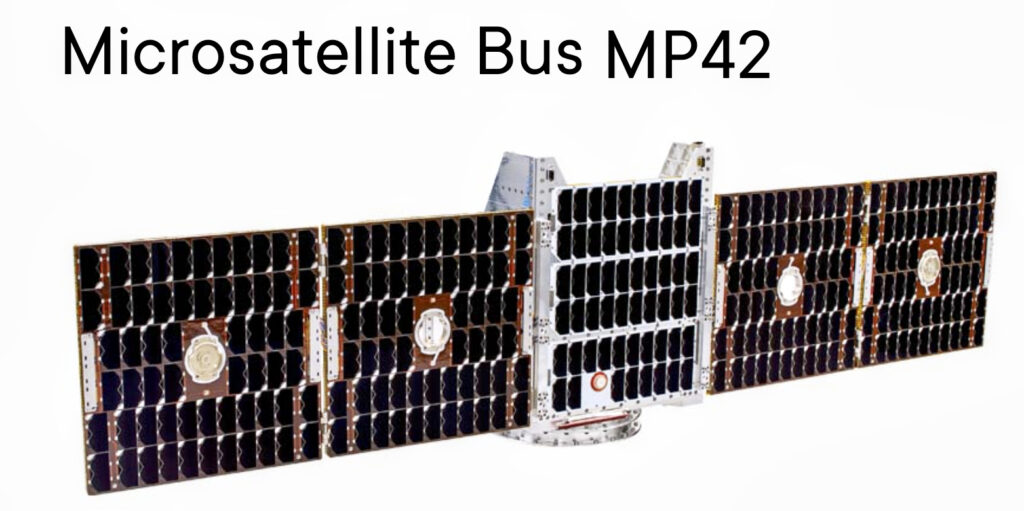
The spacecraft will operate from a 510 kilometer, sun-synchronous orbit (SSO). At the core of the mission is Eycore’s deployable active phased-array antenna. It consists of five panels, one fixed and four unfolding in space to create a large aperture without compromising launch volume.

NanoAvionics’ MP42 platform will provide the necessary peak power for the payload, data downlink, as well as the attitude control agility and stability required for various imaging modes for different intelligence requirements: Stripmap for continuous swath coverage Spotlight for sub-meter resolution of priority targets ScanSAR for very wide-area awareness.

Together, these modes enable operators to seamlessly shift from border-length surveillance to vehicle-level inspection, supporting a broad spectrum of operational needs across intelligence, surveillance, and reconnaissance (ISR), border security, maritime domain awareness, and rapid disaster response.

The companies have also been working in parallel on a satellite bus and next-generation payload, offering even higher resolution, wider swath, longer imaging times, higher incidence angle, and other improvements.
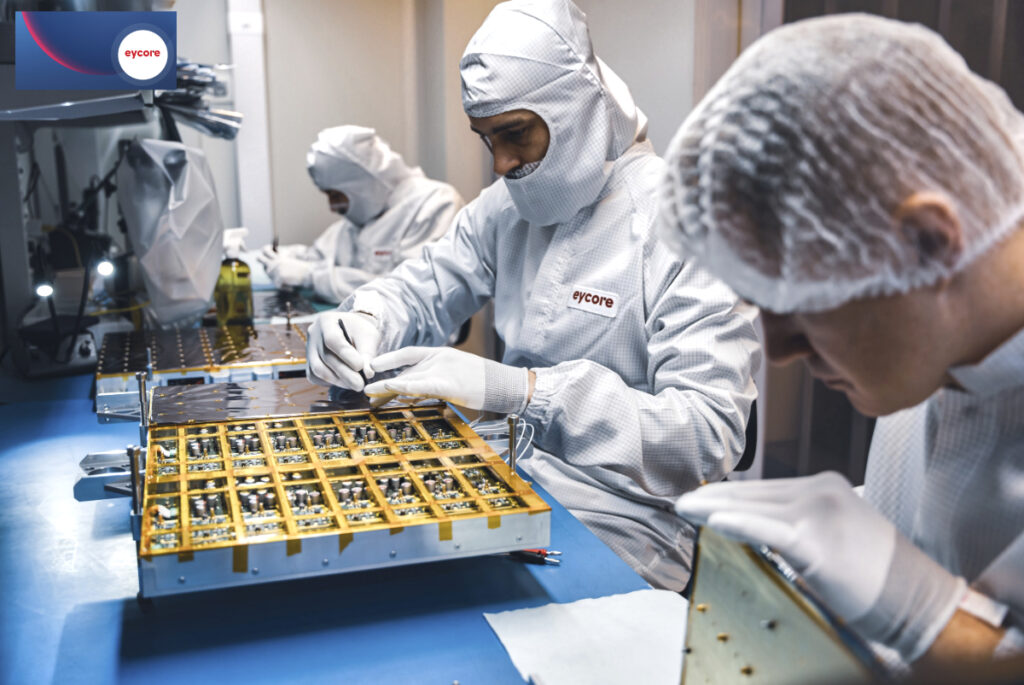
Eyecore SAR satellite assembly, photo courtesy of the company

Partnering with a reliable bus provider like Kongsberg NanoAvionics lets us focus on perfecting our SAR technology while de-risking the platform, launch, and operations,” said Tomasz Kusowski, Co-founder & VP of the Management Board of Eycore. “This demonstrator is the springboard for high-performance European SAR satellites that will deliver tactical data for national security and defense applications.”

Atle Wøllo, CEO of Kongsberg NanoAvionics, said, “Across Europe we are seeing rising demand for domestically controlled, all-weather Earth observation. By combining our small satellites with Eycore’s sensors, we are giving governments a fast, cost-effective path to sovereign SAR capabilities that strengthen national security and resilience.”

Filed Under: News

Forrester’s Digest: Amazon’s Kuiper readies next launches

July 30, 2025 by editorial

Amazon’s Project Kuiper, its would-be broadband satellite rival to Elon Musk’s Starlink, is gearing up for its next launches.

It has a new 100,000 square foot payload processing facility at Kennedy Space Center in Florida that is capable of preparing satellites for three near-simultaneous launch campaigns.

The facility, when fully operational, will turn out 100 satellites per month. Amazon says it is already building a secondary support site that will improve that output. Phase 1 of the build was opened in April.

Amazon says it has secured more than 80 launches to deploy its initial satellite constellation, using a combination of rockets from Arianespace, Blue Origin, SpaceX, and United Launch Alliance (ULA). Most of those missions will launch from Cape Canaveral, Florida, and now having its own dedicated payload processing facility nearby means Amazon can streamline satellite processing, integration, and encapsulation work, and move more quickly from the factory to the launch pad.

Project Kuiper opened a satellite production factory in Kirkland, Washington State, in 2024, that gives it the capacity to build up to five satellites per day at peak. Once satellites are built, tested, and cleared for launch, they are safely transported across the country to its new payload processing facility at Kennedy Space Center.

There are no precise dates for the next Kuiper launches other than a ULA (KV-01) launch on a Vulcan VC6L in Q3, and at least three on ULA Atlas rockets (KA-06, KA-07, KA-08) as well as three other Atlas launches without—as yet—fixed dates.

We’ve completed three missions in less than three months, and we’re continuing to pick up the pace as we prepare to begin delivering service to customers. Our facilities and team in Florida play a critical role in that process,” said Steve Metayer, VP/production operations at Project Kuiper. “At full capacity, this building will house three dispenser systems stacked full of Kuiper satellites, and a combination of fairings from rockets like Atlas V, Vulcan, New Glenn, and Falcon 9. There’s nothing else like it on the Space Coast.”

Filed Under: News

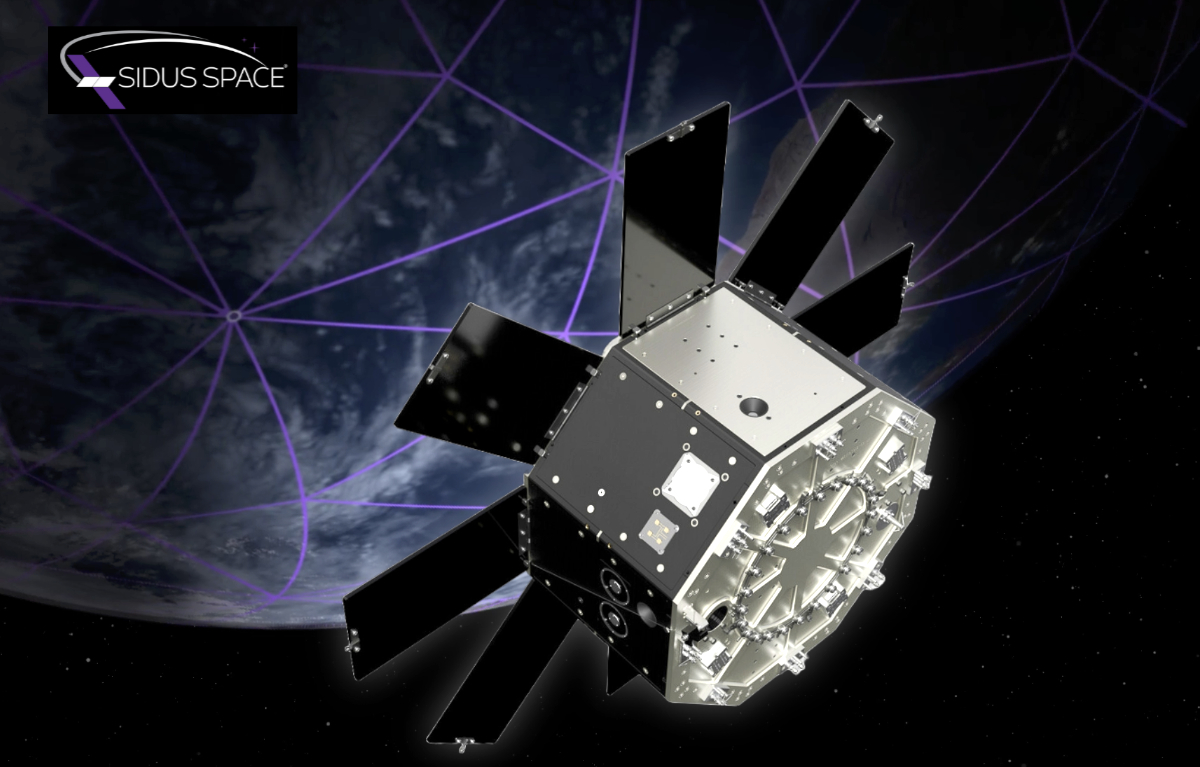
Sidus Space closes public offering

July 30, 2025 by editorial

Sidus Space, Inc. (Nasdaq: SIDU) closed its previously announced best-efforts public offering of 7,143,000 shares of its Class A common stock.

Each share of Class A common stock was sold at a public offering price of $1.05 per share for gross proceeds of approximately $7.5 million, before deducting the placement agent’s fees and offering expenses. All of the shares of common stock were offered by the Company.

The Company intends to use the net proceeds from the offering for (i) sales and marketing, (ii) operational costs, (iii) product development, (iv) manufacturing expansion and (v) working capital and other general corporate purposes.

This offering, coupled with our recently announced launch of our dual-use Fortis™ VPX product line with integrated AI/ML processing, positions Sidus to focus on significant growth opportunities,” said Carol Craig, the Company’s Chief Executive Officer.
Adarsh Parekh, Chief Financial Officer, said, “The additional capital bolsters our liquidity, allowing our team to fully focus on the execution of our strategy and high growth initiatives that we expect will drive real outcomes for our customers.”

ThinkEquity acted as sole placement agent for the offering.

Filed Under: News

SSC continues to transform acquisition of SATCOM capabilities—5 companies contracted

July 30, 2025 by editorial

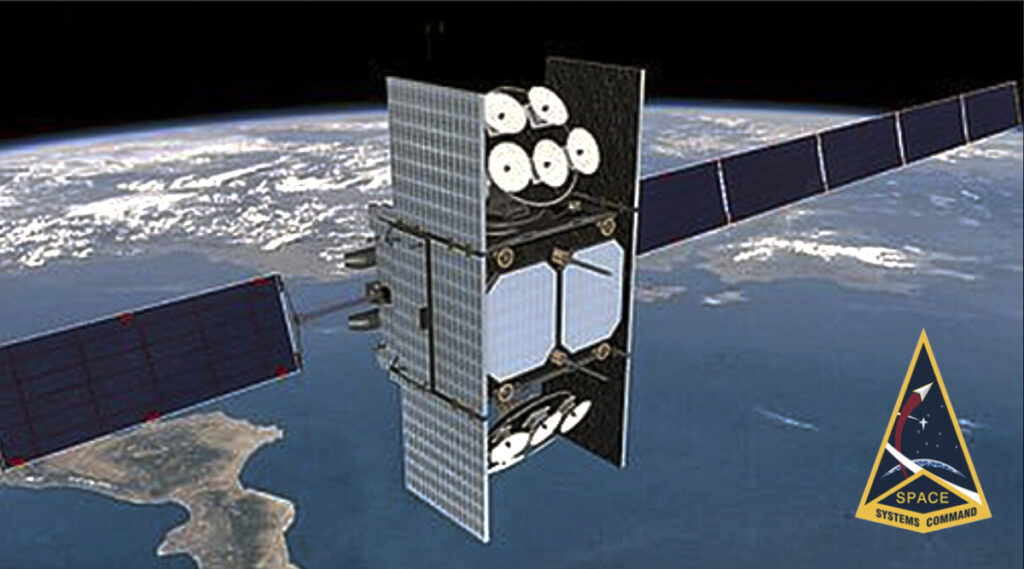
Artistic rendition of the Protected Tactical SATCOM payload will use the protected tactical waveform to provide anti-jamming communications to war fighters globally.
Image is courtesy of U.S. Space Systems Command.

The United States Space Force’s (USSF) Space Systems Command (SSC) continues to transform the way satellite communications (SATCOM) capabilities are acquired. The Command has awarded a Protected Tactical Satellite Communications (SATCOM) – Global (PTS-G) Indefinite Delivery/Indefinite Quantity (IDIQ) contract and initial five Firm Fixed Price orders under Delivery Order 1 (DO1) totaling $37.5 million to the following companies:

  • Viasat, Inc.
  • Northrop Grumman Systems Corporation
  • Astranis Space Technologies Corp
  • Intelsat General Communications LLC
  • The Boeing Company

PTS-G delivers resilience to military users worldwide with proliferated small satellites providing anti-jam capability in Geosynchronous Orbit (GEO). The DoD requires wideband global assured access for the tactical warfighter, ensuring their freedom to connect anytime, anywhere operations require. PTS-G is the cost-effective component of Space Force architecture that takes advantage of the advanced PTW waveform while maximizing use of existing user and gateway terminals.

During the first delivery order, each awardee will mature a design and provide demonstrations based upon their established commercial product lines, to meet PTS-G requirements. The results of this initial order will inform subsequent competition for follow-on production orders.

The initial PTS-G IDIQ award will be followed by an award in 2026 for the production of PTS-G Space Vehicles to meet IOC capability, with a projected launch in 2028, putting the first PTS-G satellite into orbit. A second wave of production awards for additional PTS-G satellite capability is planned for 2028, with launch planned for 2031.

Our PTS-G contract transforms how SSC acquires SATCOM capability for the warfighter,” said Cordell DeLaPena, Jr., program executive officer for SSC Military Communications and Positioning, Navigation and Timing. “The incorporation of commercial baseline designs to meet military capability significantly enhances the Space Force’s speed and efficiency to add capability to meet emerging threats.”

Erin Carper, division chief for SSC Tactical SATCOM, said, “By maximizing the use of commercially available products and awarding to a pool of offerors on this IDIQ contract, the Space Force ensures value for the DoD and taxpayer while driving competition and promoting the long-term viability of the SATCOM industrial base.”

Space Systems Command is the U.S. Space Force field command responsible for acquiring, developing, and delivering resilient capabilities to outpace emerging threats and protect our Nation’s strategic advantage in, from, and to space. SSC manages a $15.6 billion annual space acquisition budget for the Department of Defense, working with joint forces, industry partners, government agencies, academia, and allied nations.

Filed Under: News

Gilmour Space Technologies’ giant leap for Australia’s space capability with successful first test launch of Eris rocket

July 30, 2025 by editorial

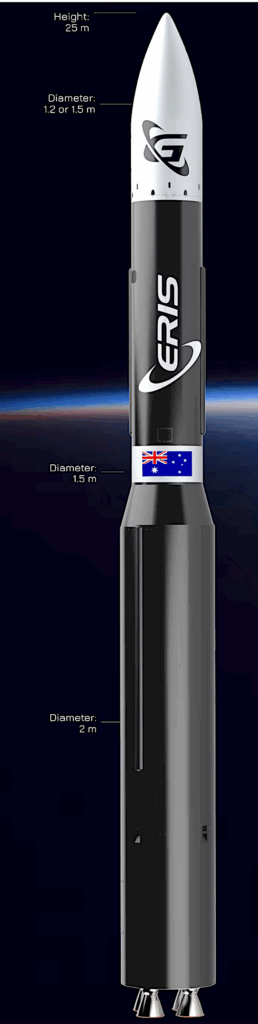
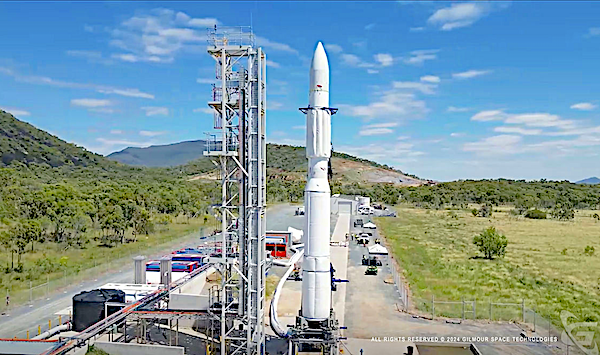
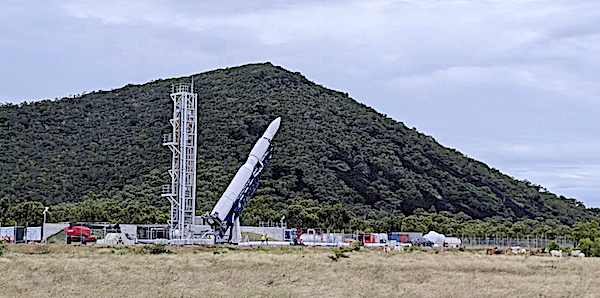
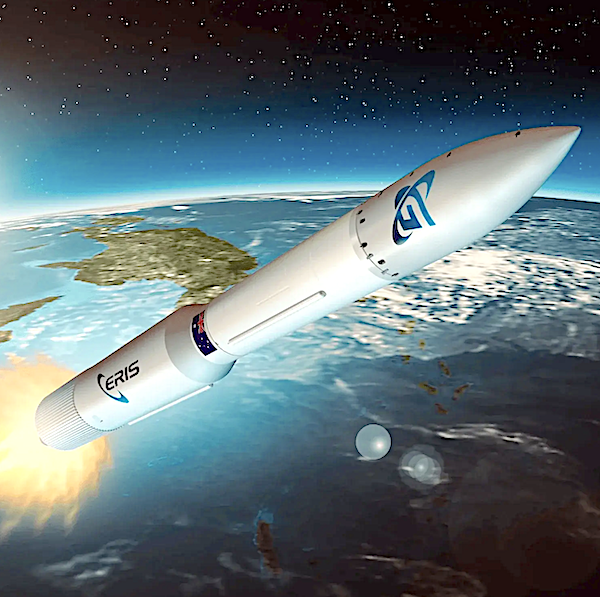
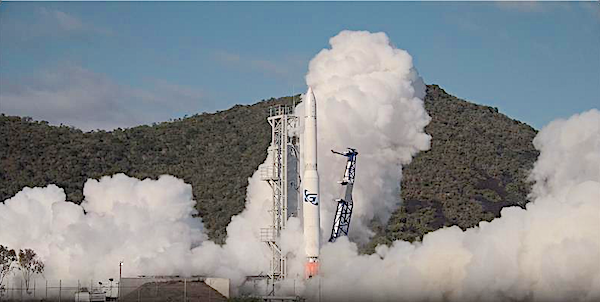
Gilmour Space Technologies has completed the maiden test launch of Australia’s first locally designed and built orbital rocket — a major milestone toward offering low-cost, responsive launch services for small satellites globally. The 23-meter, 30-tonne Eris rocket, powered by new hybrid propulsion technology, successfully lifted off from the Bowen Orbital Spaceport in North Queensland, achieving approximately 14 seconds of flight.

The TestFlight 1 campaign was the first integrated attempt of an orbital-class rocket designed and built entirely in Australia. It also marked the first use of the newly licensed Bowen Orbital Spaceport — Australia’s first commercial orbital launch site, built by Gilmour Space to support future missions.

Eris was developed almost entirely in-house — including propulsion, structures, avionics, software, and the spaceport itself — on a fraction of the budget available to most global launch companies.

“Space is hard,” said Adam Gilmour, CEO of Gilmour Space Technologies. “SpaceX, Rocket Lab and others needed multiple test flights to reach orbit. We’ve learned a tremendous amount that will go directly into improving our next vehicle, which is already in production.”

“Getting off the pad and into flight is a huge step forward for any new rocket program. This was the first real test of our rocket systems, our propulsion technology, and our spaceport — and it proved that much of what we’ve built works.”

Importantly, there were no injuries to any person and no adverse environmental impacts.

“Only six nations currently launch to orbit regularly — and just a handful are developing sovereign capability to join them,” he said. “We’ve now taken a big step toward joining that group.”

“Clearing the tower was a major milestone for our team. It showed that Australia can design, build, and launch rockets right here at home,” Gilmour said.

As part of this historic campaign, Gilmour Space worked closely with many stakeholders and regulators — including the Australian Space Agency, Civil Aviation Safety Authority, Air Services Australia, Maritime authorities, and others — to help shape and navigate the rules needed to safely launch rockets from Australia for the first time.

Initial data confirms that key systems performed well until the anomaly, including ignition, liftoff, first-stage thrust, range tracking and telemetry. The team is now reviewing flight data to understand the cause of the anomaly that led to early termination, with lessons already being applied to the next vehicle, which is in production.

Looking Ahead:
The TestFlight 1 mission represents the culmination of years of effort by a team of more than 200 people, over 500 Australian suppliers, and strong support from government and industry and close coordination with the Australian Space Agency, CASA, Airservices Australia, maritime authorities, and others. It is the next step in Gilmour’s mission to provide low-cost, responsive launch services for small satellites — a capability in growing demand globally.

The team will now review flight data and apply lessons learned to the next Eris rocket, with plans to launch again within [XX] months.

“Every test, especially the first, is a learning opportunity,” said Gilmour. “Congratulations to our talented team for getting us this far. Onward to TestFlight 2.”

Aussie, Gilmour Space Technologies, posts launch ‘will be back’ Wednesday

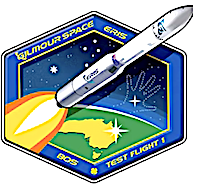
MISSION: Gilmour Space’s Eris TestFlight1 will be the first Australian-made rocket to attempt orbit, and the nation’s first orbital launch in over 50 years. The launch will be from Bowen Orbital Spaceport, a private orbital launch facility owned and operated by Gilmour Space hosts of the Eris Pad.

The forecast calls for a temperature of 63°F, clear skies, 3% cloud cover and a wind speed of 3mph.

29 July 2025

SCRUBBED FOR TODAY – BACK JULY 30

(7.30am to 5.30pm)​​​​

We scrubbed today (Jul 29) due to upper level winds exceeding our limits.

We’ll be back July 30, 7.30am to 5.30pm AEST

​​LAUNCH SITE: Bowen Orbital Spaceport, North Queensland.

*FAQ: Why does the launch date keep moving?

Rocket launches are complex and delays are normal. Weather, range availability, regulatory checks, final system tests (and last-minute anomalies!) can all affect when a rocket is ready to fly.​

No Earlier Than (NET) is the global standard for space launches, giving teams the flexibility to launch safely within an approved launch window—esp. important for a first-of-its-kind test flight, where every system is being put through its full end-to-end test for the very first time.

In Australia, that also means close coordination with the Australian Space Agency, CASA, Airservices Australia, maritime authorities, and more.

We’ll keep sharing the latest NET date so you can stay up to date, or feel free to check back after launch day. 

Australia’s Gilmour Space Technologies posts delay of launch now Tuesday. hopefully

Announcement today regarding the Eris launch has been pushed out one day as shown below:

The launch will be from Bowen Orbital Spaceport, a private orbital launch facility owned and operated by Gilmour Space hosts of the Eris Pad which has witnessed the launch of 0 rockets, including 0 orbital launch attempts.

28 July 2025

LAUNCH UPDATE: CURRENTLY TRACKING NET JULY 29 (Afternoon)* ​​​​

Thank you for your patience and support as we take this next step in Australia’s space journey.

We are currently expecting our launch window to open No Earlier Than (NET) Tuesday Jul 29. However, do monitor our website for updates.

On launch days, please note:​​​

  • Launch may occur any time between 7:30am – 5:30pm​​
  • Avoid designated Hazard Areas in land, air, and sea (see orange button for details)

> Pilots:  Check current NOTAMs (Notices to Airmen)​​​

> Mariners:  Refer to NOTMARs (Notice to Mariners)​​​​

> All:  Please monitor updates from CASA, Airservices Australia, Maritime Safety, and Gilmour Space.​​​

  • No advance notice will be given before liftoff
  • If we stand down (or scrub) for the day, we will confirm that here (and our Facebook page) by 5.30pm
  • A post-launch video and update will be shared as soon as possible

Ad astra per ardua

Australia’s Gilmour Space Technologies is prepping for their first Eris test flight on Saturday

After several delays Gilmour Space Technologies is planning up for their first Eris Test flight on Saturday, July 26, at 2:30 PM – 12:30 AM PDT.

The forecast calls for a temperature of 65°F, clear skies, 4% cloud cover and a wind speed of 3mph.

The launch will be from Bowen Orbital Spaceport, a private orbital launch facility owned and operated by Gilmour Space hosts of the Eris Pad which has witnessed the launch of 0 rockets, including 0 orbital launch attempts.

This will be the first Australian-made rocket, #Eris, to attempt orbit, and the nation’s first orbital launch in over 50 years.

From Gilmour on 16 July 2025​: LAUNCH SCRUBBED: NEXT WINDOW NET JULY 27

We’re standing down from this week’s launch window and aiming for our next opportunity starting July 27.

​Unfortunately, operational delays set us back a day and the latest upper wind forecasts have now ruled out a safe launch from Thursday through the rest of the week.

Not the outcome we hoped for, but that’s the nature of test flights. Chin up and eyes forward to NET 27 July! 

Australia’s Gilmour Space plans Wednesday for maiden launch of Eris Test Flight1

Gilmour Space Technologies is gearing up for their first Eris Test flight on Wednesday, July 16, at 2:30 PM – 12:30 AM PDT.

The launch will be from Bowen Orbital Spaceport, a private orbital launch facility owned and operated by Gilmour Space hosts of the Eris Pad which has witnessed the launch of 0 rockets, including 0 orbital launch attempts.

This will be the first Australian-made rocket, #Eris, to attempt orbit, and the nation’s first orbital launch in over 50 years.

Gilmour’s vision: ALL ORBITS. ALL PLANETS ®

The forecast calls for a temperature of 62°F, clear skies, 1% cloud cover and a wind speed of 6mph.

Australia’s Gilmour Space Technologies plans maiden flight of Eris Test Flight1 on July 16, nation’s first orbital launch in over 50 years

Gilmour Space plans a Tuesday, July 15, launch for the maiden flight of Eris Test Flight1 at 2:30 PM – 12:30 AM PDT. The launch will be from Bowen Orbital Spaceport, a private orbital launch facility owned and operated by Gilmour Space hosts of the Eris Pad which has witnessed the launch of 0 rockets, including 0 orbital launch attempts.

Eris TestFlight1 will be the first Australian-made rocket, #Eris, to attempt orbit, and the nation’s first orbital launch in over 50 years. Gilmour’s vision: ALL ORBITS. ALL PLANETS ®

The forecast calls for a temperature of 53°F, few clouds, 15% cloud cover and a wind speed of 7mph.

Gilmour Space Technologies is a venture-funded Australian space company headquartered in Queensland, Australia that is developing hybrid-engine rockets and associated technology to support the development of a low-cost space launch vehicle.

Australia’s Gilmour Space Technologies ready to launch maiden Eris Test flight the nation’s first orbital launch in over 50 years

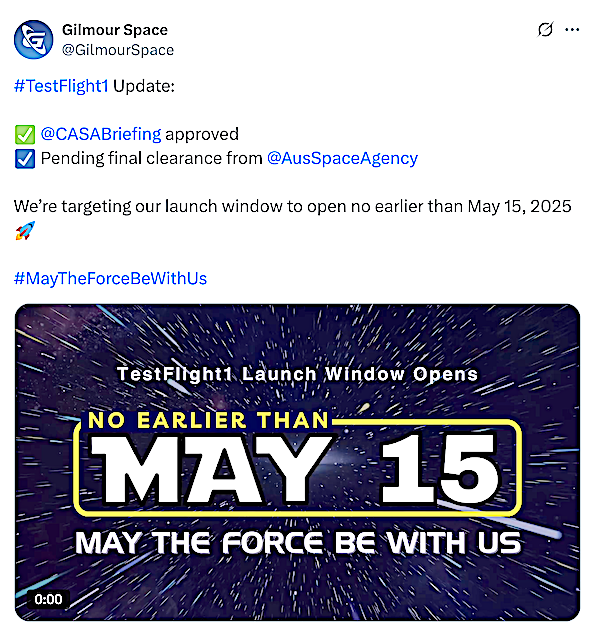
Gilmour Space Technologies is gearing up for their first Eris Test flight, no earlier than May 15. Gilmour Space’s Eris TestFlight1 will be the first Australian-made rocket, #Eris, to attempt orbit, and the nation’s first orbital launch in over 50 years. Gilmour’s vision: ALL ORBITS. ALL PLANETS ®

Weather forecast calls for a temperature of 77 °F, clear skies, 4% cloud cover and a wind speed of 5 mph.

Gilmour Space Technologies is the leading launch services company in Australia, located in Bowen Orbital Spaceport, North Queensland, ​providing valuable access to space to global Commercial and Defense customers. Backed by some of the country’s biggest investors, Gilmour Space is tracking to launch Eris orbital launch vehicles and ElaraSat bus/platforms to Low Earth Orbits (LEO) from 2025.

Bowen Orbital Spaceport hosts the Eris Pad which has witnessed the launch of 0 rockets, including 0 orbital launch attempts. While Bowen Orbital Spaceport, has been the site for 0 rocket launches. Private orbital launch facility owned and operated by Gilmour Space.

Gilmour has said that they plan to have fifty of their personnel based in Bowen for the inaugural launch. Eris’ maiden flight will be the first orbital launch attempt of an Australian rocket from Australian soil, according to co-founder and CEO Adam Gilmour.

Gilmour Space announces launch window for the Eris orbital rocket

The countdown is on—Gilmour Space Technologies has announced a launch window starting ‘no earlier than’ March 15 for the maiden flight of Eris, the first Australian-designed and built rocket aiming for orbit.

The news follows final airspace approvals from the Civil Aviation Safety Authority (CASA) and Airservices Australia, clearing the last regulatory hurdle before launch. It also marks the culmination of years of innovative R&D and manufacturing by the Gold Coast-based company, which developed the Eris launch vehicle and Bowen Orbital Spaceport in North Queensland.

Gilmour Space made history in March last year when its Bowen spaceport was granted the first orbital launch facility license in Australia, and when it secured the country’s first Australian Launch Permit for Eris Test Flight 1 in November. Now, with airspace arrangements finalised and mandatory notice given to the Australian Space Agency, the company is preparing for liftoff.

“This will be the first attempt of an Australian rocket to reach orbit from Australian soil,” said Adam Gilmour, co-founder and CEO of Gilmour Space. The company is backed by private investors including Blackbird, Main Sequence, Fine Structure Ventures, Queensland Investment Corporation, and superannuation funds such as HESTA and Hostplus. 

With the March 15 window fast approaching, Mr. Gilmour highlighted a few key points for those less familiar with rocket launches:

First, it’s important to understand that delays or ‘scrubs’ are a normal part of rocket launches. These can last anywhere from hours to days, or even weeks, and are often caused by weather conditions, technical issues, or other factors. “Safety is always the top priority. We’ll only launch when we’re ready, and when conditions are appropriate,” he said.

Secondly, the first launch is always the hardest. Reaching orbit is a highly complex engineering challenge, and every successful rocket company has faced setbacks in their early attempts—SpaceX, for one, did it on their fourth attempt. “It’s almost unheard of for a private rocket company to launch successfully to orbit the first time. Whether we make it off the pad, reach max Q, or get all the way to space, what’s important is that every second of flight will deliver valuable data that will improve our rocket’s reliability and performance for future launches.”

Thirdly, this is the path we must take to build the launch capability required to meet the growing demand for access to space. For Australia, launching locally-owned and controlled rockets from home soil also means more high-tech jobs, greater security, economic growth, and technological independence. “Only six countries in the world are launching regularly to space using their own technology, and Australia could soon join their ranks.”

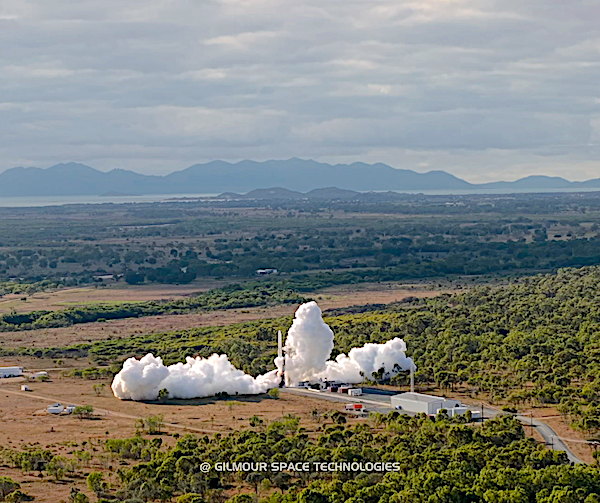
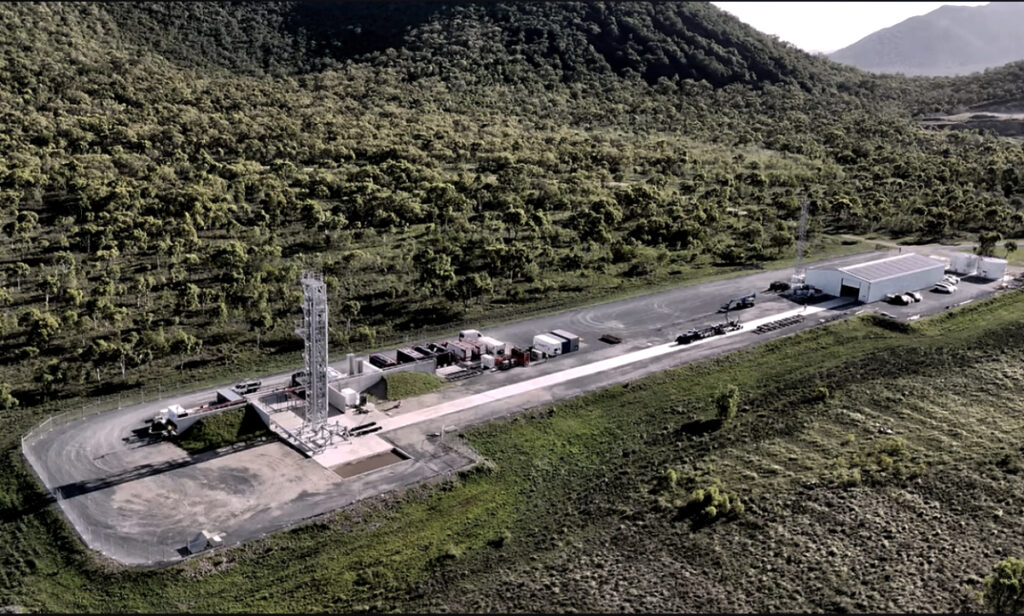
Aerial photo of the Bowen Aerial Spaceport, courtesy of Gilmour Space.

Finally, he said: “I want to thank our incredible team for all their hard work and dedication in getting to this critical first flight. Whatever happens next, know that you’ve already made history—we now build rockets in Australia. And this is only the beginning.”

​

Filed Under: News

Smallsat ready to test link for global 5G-broadband

July 28, 2025 by editorial

The LIDE satellite in the cleanroom ahead of launch. Image credit: Tyvak International

A small satellite designed to deliver direct 5G-broadband access from space to a compact ground device, supported by the European Space Agency (ESA), has made it into orbit after its launch.

The planned demonstration link is an early step in exploring space-enabled fast connectivity for inaccessible regions—highlighting future possibilities such as connecting rural schools and providing remote healthcare access.

The microwave-sized LIDE satellite, built by Tyvak International,—which was launched on July 23rd on board a SpaceX Falcon 9 rocket—will conduct the first-ever live demo of direct 5G broadband access from a nanosatellite to small ground devices. These include VSATs, similar to the kind used in civil protection operations or search and rescue missions, eliminating the need for large satellite dishes or complex setups.

While space-to-Earth communications have been tested before, this is the first time a trial will involve small satellites paired with compact, widely usable terminals. That difference gives researchers valuable insights into how future satellite internet could reach everyday users using practical, lightweight equipment.

Developed under ESA’s program of Advanced Research in Telecommunication Systems (ARTES) Space for 5G/6G & Sustainable Connectivity program line and led by Italian nanosatellite company Tyvak International, the mission marks a milestone in satellite telecommunications.

The LIDE satellite uses K-/Ka-band transponders that support fast data rates and more stable connectivity, even in challenging environments. By simulating actual user conditions on Earth, the project aims to verify the feasibility of connecting everyday devices to satellites using 5G architecture.

The 12U nanosatellite will run performance tests designed to demonstrate how fast the data can travel (throughput), how quickly the satellite responds (latency) and the clarity of the signal (signal-to-noise ratio). The one-year mission represents ESA’s first attempt to bridge traditional satellite communications with mobile 5G standards.

Antonio Franchi, Head of ESA’s Space for 5G/6G & Sustainable Connectivity program, said, “Unlocking orbital 5G connectivity will be a crucial achievement for all of Europe, and I am excited to see how much progress we are making in this direction. With the lessons learned from the LIDE mission, ESA Connectivity and Secure Communications helps the private space sector seize the opportunity to become global leaders in orbital 5G.”

Fabio Nichele, CEO of Tyvak International, said, “We are very pleased to be prime and active part of such an important project that can represent a point of reference for the development of satellite telecommunications infrastructures in our country and across Europe.”

Alberto Ginesi, Head of the Telecom System Section at ESA ESTEC, said, “Through this experimental mission, ESA reaffirms its commitment to support its member-states industry to be at the forefront of key space technology innovations – which are set to improve the performance and efficiency of future satellite telecommunication systems.”

Filed Under: News

Auriga Space raises $6 million to shoot rockets off an electromagnetic launch track

July 28, 2025 by editorial

While U.S.-based companies are launching more payloads into orbit than ever before, they’re still limited by the inefficiency of conventional rockets—with rockets, most of the weight is in the propellant, not the payload, and a huge portion of the propellant is burned simply battling Earth’s gravity and atmosphere.

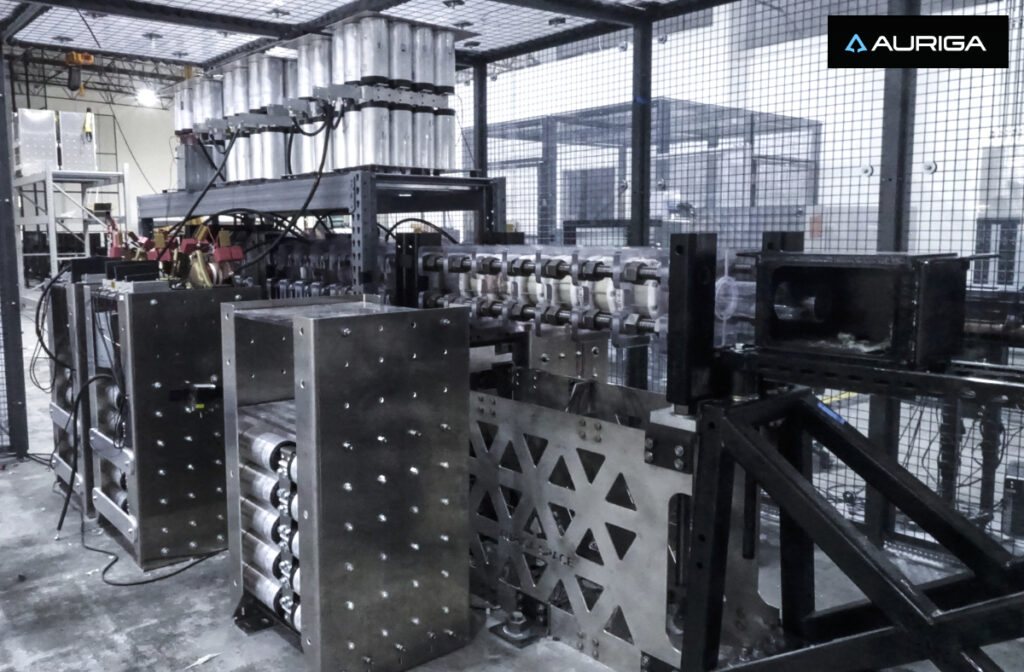
The launch track, photo courtesy of Auriga

Auriga Space is aiming to change the launch game. Instead of a first-stage booster, the California-based startup is developing a launch track that will use electricity to power powerful magnets. Those magnets will accelerate a small rocket to over six times the speed of sound.

Photo is courtesy of Auriga Space

The track’s final segment rises on a steep ramp, enabling the rocket to exit at hypersonic speed and only ignite its engine in the final push to orbit. Beyond propellant savings, the entire ground-based architecture is entirely (and rapidly) reusable.

“Less than 2% of the mass of the rocket is what gets into space,” Auriga founder and CEO, Winnie Lai. said in a recent interview. “So our ultimate goal here is to make space launch more efficient, and by increasing efficiency, we believe we can bring down the cost, and we can also enable much more frequent launches.”

Electromagnetic launchers are not a new idea: Auriga’s architecture is reminiscent of a rail gun or a maglev. But Lai argues that recent advancements in power electronics, especially being able to operate at higher voltages and higher powers, finally make the concept technologically and commercially viable.

The company is fueling its ambitions with a previously undisclosed $4.6 million seed round that closed at the beginning of the year and $1.4 million in new AFWERX and SpaceWERX contracts. The capital round was led by European firm OTB Ventures, with participation from Trucks Venture Capital and Seraphim Space. Auriga has raised $12.2 million across VC and DoD grants to-date.

The final system architecture, including the tunnel length and rocket size, are still being finalized. Even a very long track will still impart high-G loads on the vehicle, which could limit the types of satellites it can carry. The company has performed some initial studies on the survivability of satellite components under high-G loads that indicate they can survive higher Gs than standard testing assumed, Lai said.

Auriga is also considering the opportunity to do “custom work,” like adding some structure support so objects can withstand the higher Gs, depending on what the customer needs.

“If you look at munitions, you also look at missile launches, those experience very, very, very high Gs,” Lai said. “So we’re very confident there’s payloads up there that could survive our launch environments, but that’s still yet to be defined. If we want to bring down the Gs, then we make the launcher longer.”

Netflix, ElevenLabs, Wayve, Sequoia Capital— these are just a few of the heavy hitters that have joined the Disrupt 2025 agenda. Auriga will go to market first with hypersonic ground testing: This most recent direct-to-phase II Small Business Innovation and Research grant from AFWERX (the company’s second) will be used to commercialize an indoor, lab-scale track called Prometheus early next year, and an outdoor accelerator for full-scale hypersonic test articles called Thor. (The orbital launcher is dubbed Zeus.)

Customers tell Lai that the lack of affordable, on-demand test infrastructure is one of the main challenges in advancing hypersonic development. Prometheus and Thor aim to fill that gap and provide a market capability that is sorely lacking: customers will be able to perform multiple tests on the same test article under different flight conditions, at a lower cost and higher cadence than what’s currently available. It can also perform a number of different tests, like weather testing, aerodynamic tests, and impact testing using the same underlying architecture.

The company is also trying to address the demand from the U.S. Space Force for “responsive” launch, or the ability to launch payloads to orbit with little to no advance notice. While there have been some impressive demonstrations of responsive launch in the past 12 months, with companies like Firefly Space launching a rocket with a 24-hour notice, Auriga wants to shrink that time to a matter of minutes.

“We call an Uber, and we expect the Uber to show up in a matter of minutes,” Lai said. “I think that should be the case for space, as well.”

Filed Under: News

Sidus Space announces the pricing of the company’s public offering

July 28, 2025 by editorial

Sidus Space, Inc. (Nasdaq: SIDU) has announced the pricing of a best-efforts public offering of 7,143,000 shares of its Class A common stock.

Each share of Class A common stock is being sold at a public offering price of $1.05 per share for gross proceeds of approximately $7.5 million, before deducting the placement agent’s fees and offering expenses. All of the shares of common stock are being offered by the Company.

The Company intends to use the net proceeds from the offering for working capital and general corporate purposes. The offering is expected to close on July 29, 2025, subject to customary closing conditions. ThinkEquity is acting as sole placement agent for the offering.

The securities will be offered and sold pursuant to a shelf registration statement on Form S-3 (File No. 333-273430), including a base prospectus, filed with the U.S. Securities and Exchange Commission (the “SEC”) on July 26, 2023 and declared effective on August 14, 2023. The offering will be made only by means of a written prospectus. A preliminary prospectus supplement and accompanying prospectus describing the terms of the offering has been filed with the SEC on its website at www.sec.gov. A final prospectus supplement and accompanying prospectus related to the offering will be filed with the SEC and made available on the SEC’s website. Copies of the final prospectus supplement and the accompanying prospectus relating to the offering may also be obtained, when available, from the offices of ThinkEquity, 17 State Street, 41st Floor, New York, New York 10004.

Filed Under: News

MicroCarb launched

July 27, 2025 by editorial

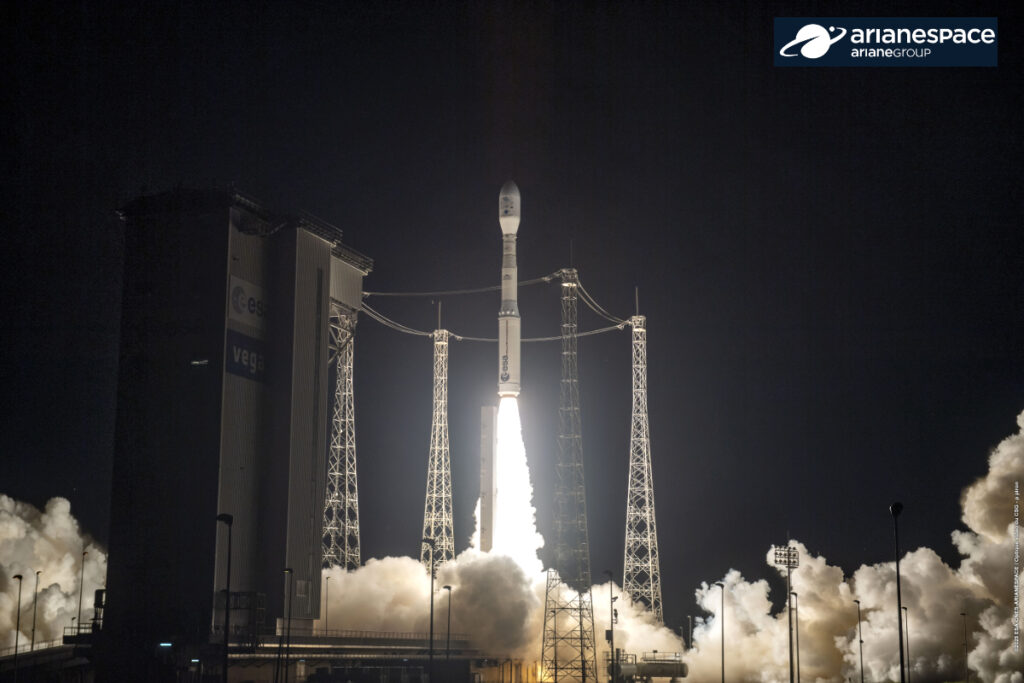
The launch of the MicroCarb satellite from Korou, French Guiana, by Arianespace.

The scientific mission, MicroCarb, led by the French space Agency CNES, was successfully launched from Europe’s Spaceport in Kourou, French Guiana.

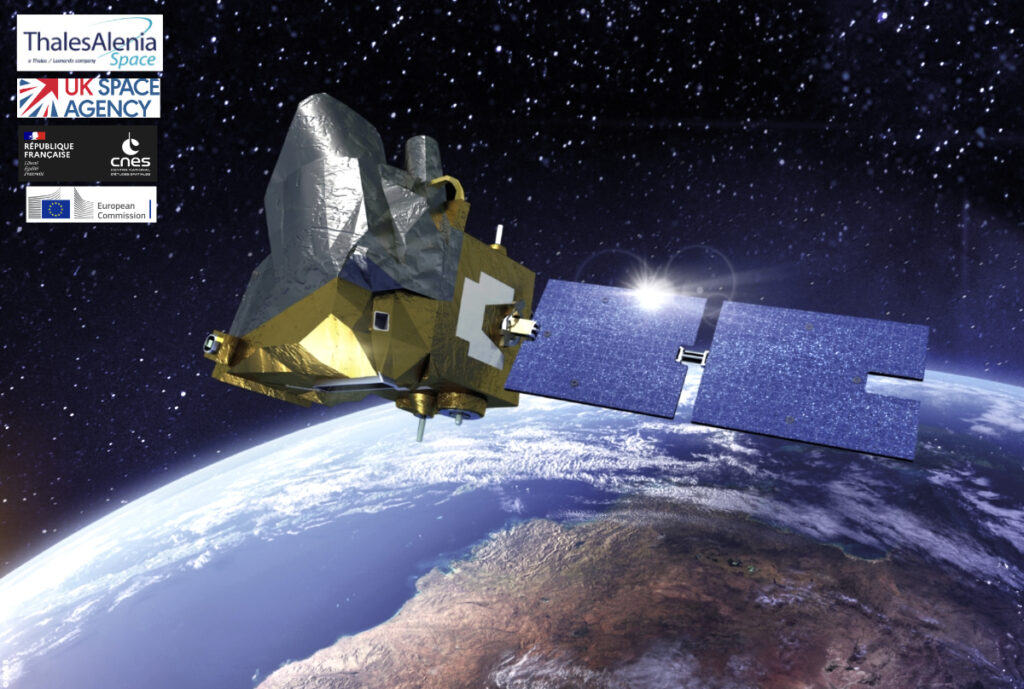
Artistic rendition of MicroCarb on-orbit

MicroCarb is a joint mission between the UK Space Agency and French Space Agency, Centre National d’Études Spatiales (CNES), serving as the prime contractor. The mission is co-financed by these two agencies, as well as by the European Commission and the French government within the framework of the Investments for the Future Program (PIA), managed by the National Research Agency (ANR).

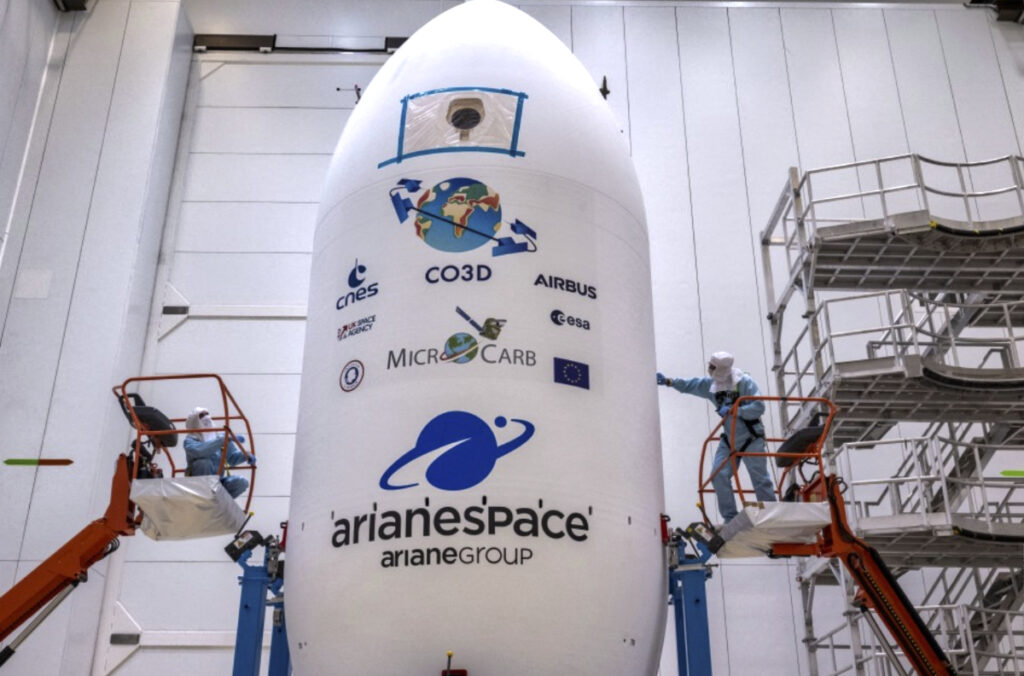
Working on the fairing for Vega-C flight VV27.
Photo credit: ESA-CNES-ARIANESPACE/Optique vidéo du CSG–S. Martin

The satellite is designed to precisely map atmospheric carbon dioxide (CO₂), capturing detailed data on emissions from human activities as well as absorption by natural sinks such as oceans and forests.

The satellite is built on the CNES Myriade platform. Thales Alenia Space, a joint venture between Thales (67%) and Leonardo (33%), completed the assembly, integration, and testing of the satellite platform at RAL Space in Harwell, UK, and was responsible for launch preparations. Airbus Defence and Space provided the instrument payload, the infrared spectrometer.

MicroCarb will operate in LEO at an altitude of 650 km and serves as a precursor to the European Union’s Copernicus Anthropogenic Carbon Dioxide Monitoring (CO2M) mission—a constellation of three satellites, with payloads supplied by Thales Alenia Space, that will deliver precise measurements for human-induced atmospheric carbon dioxide and methane. MicroCarb complements the CO2M mission by providing early observations and valuable data, enhancing our capability for CO₂ and methane monitoring to inform climate policy makers.

Additionally, a special city-scanning mode will enable the mapping of CO₂ distribution within urban areas, which are responsible for the majority of global emissions.

Richard Thorburn, CEO of Thales Alenia Space in the UK, said, “I am immensely proud of the contribution our teams in the UK and France have made to MicroCarb – Europe’s pioneering satellite for mapping carbon dioxide on a global scale. Huge thanks to CNES and to the UK Space Agency for the trust they have placed in us, enabling Thales Alenia Space to play a key role in advancing Europe’s leadership in climate monitoring and environmental science, and helping to protect our planet.”

Filed Under: News

SpaceX to launch Starlink Group 17-2 smallsats on Saturday

July 25, 2025 by editorial

For Fernando, a farmer from Taquaritinga, in the countryside of São Paulo, Starlink solved a problem that once seemed unsolvable. “We had tried other internet solutions before, but none of them were satisfactory,” says Fernando, who runs an agricultural business with his two brothers.

SpaceX’s Falcon 9 will launch on Saturday, July 26, Group 17-2 a batch of 24 smallsats for the Starlink mega-constellation into low Earth orbit at 1:34 – 10:28 am PDT, from Space Launch 4E, Vandenberg SFB, California.

The Falcon 9 first stage B1075 will attempt to land on ASDS Of Course I Still Love You (OCISLY) after its 19th flight. Booster B1075 last launched 05/23/2025 and has seen 18 successful launches and landings. Falcon 9 Block 5 booster first used for the Starlink Group 2-4 mission.

The second ASDS barge, Of Course I Still Love You (OCISLY) services launches in the Pacific Ocean and was the site of the first landing of a SpaceX Falcon 9 first stage during CRS-8, the launch of a Dragon spacecraft to the International Space Station.

Filed Under: News

  • « Go to Previous Page
  • Page 1
  • Interim pages omitted …
  • Page 21
  • Page 22
  • Page 23
  • Page 24
  • Page 25
  • Interim pages omitted …
  • Page 339
  • Go to Next Page »

Primary Sidebar

WEEKLY NEWSLETTER

Archives

  • August 2026
  • July 2026
  • June 2026
  • May 2026
  • April 2026
  • March 2026
  • February 2026
  • January 2026
  • December 2025
  • November 2025
  • October 2025
  • September 2025
  • August 2025
  • July 2025
  • June 2025
  • May 2025
  • April 2025
  • March 2025
  • February 2025
  • January 2025
  • December 2024
  • November 2024
  • October 2024
  • September 2024
  • August 2024
  • July 2024
  • June 2024
  • May 2024
  • April 2024
  • March 2024
  • February 2024
  • January 2024
  • December 2023
  • November 2023
  • October 2023
  • September 2023
  • August 2023
  • July 2023
  • June 2023
  • May 2023
  • April 2023
  • March 2023
  • February 2023
  • January 2023
  • December 2022
  • November 2022
  • October 2022
  • September 2022
  • August 2022
  • July 2022
  • June 2022
  • May 2022
  • April 2022
  • March 2022
  • February 2022
  • January 2022
  • December 2021
  • November 2021
  • October 2021
  • September 2021
  • August 2021
  • July 2021
  • June 2021
  • May 2021
  • April 2021
  • March 2021
  • February 2021
  • January 2021
  • December 2020
  • November 2020
  • October 2020
  • September 2020
  • August 2020
  • July 2020
  • June 2020
  • May 2020
  • April 2020
  • March 2020
  • February 2020
  • January 2020
  • December 2019
  • November 2019
  • October 2019

© 2019–2026 SatNews

Insert/edit link

Enter the destination URL

Or link to existing content

    No search term specified. Showing recent items. Search or use up and down arrow keys to select an item.
      x
      Sign Up Now!

      Enjoy a free weekly newsletter with recent headlines from the global SmallSat industry.

      Invalid email address
      We promise not to spam you. You can unsubscribe at any time.
      Thanks for subscribing! You will now receive weekly SmallSat News updates.
      We love our advertisers.
      And you will too!

      Please disable Ad Blocker to continue... We promise to keep it unobtrusive.
      We promise not to spam you. You can unsubscribe at any time.
      Invalid email address
      Thanks for subscribing!