• Skip to main content
  • Skip to primary sidebar
  • Home
  • News
  • Featured
  • More News ⌄
    • SatNews
    • SatMagazine
    • MilSatMagazine
  • Events ⌄
    • MilSat Symposium
    • SmallSat Symposium
    • Satellite Innovation
  • Contacts
  • SUBSCRIPTION

SmallSat News

You are here: Home / Archives for News

News

Sidus Space deploys advanced SpacePilot software for autonomous ops + commissions LizzieSat®-3 Attitude Determination + Control System

August 7, 2025 by editorial

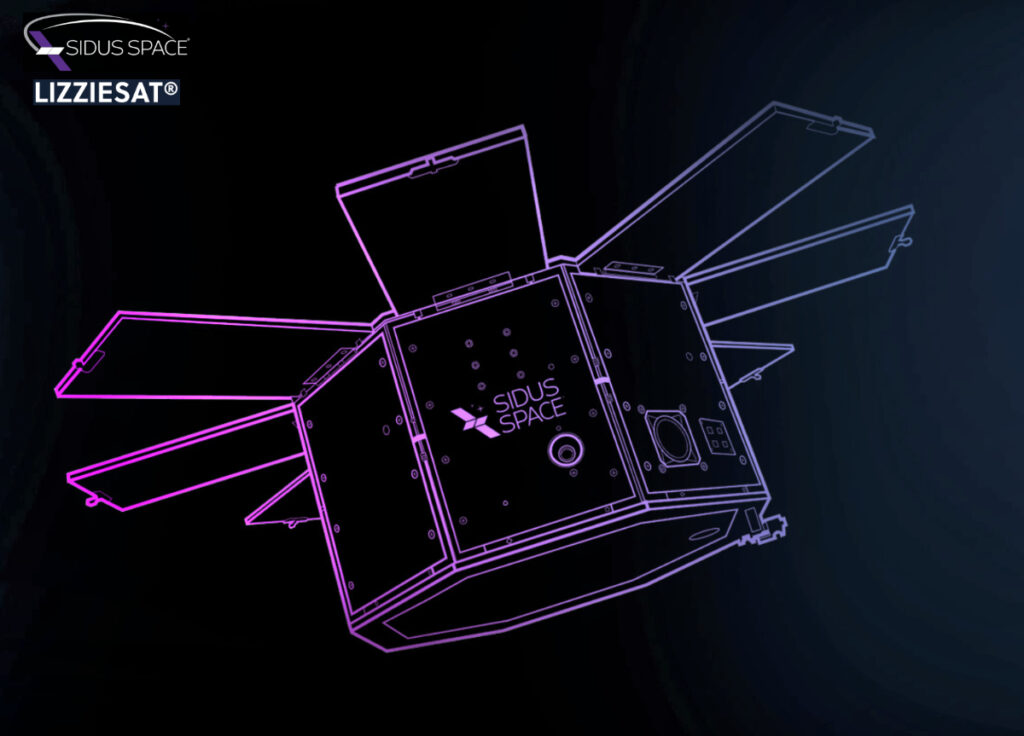
Sidus Space (NASDAQ: SIDU) has successfully deployed the company’s new, autonomous, guidance, navigation, and control (GNC) software, SpacePilot, and has also commissioned the Attitude Determination and Control System (ADCS) on LizzieSat®-3 (LS3).

Designed for next-generation satellite operations, SpacePilot integrates real-time star tracker, sun sensor, magnetometer, gyroscope, and GPS data onboard LS3 to enable high-precision orbital control with minimal ground intervention. Key features include:

  • Attitude Determination: Real-time estimation of spacecraft orientation for mission-critical accuracy
  • Attitude Control: Stabilization and mission-aligned adjustments to support payload operations
  • Optimal Trajectory: Fuel-efficient, time-optimized flight paths for extended mission life
  • Autonomous Guidance: Precise rendezvous and proximity operations (RPO) with minimal operator input
  • Adaptive Autonomy: Dynamic response to changing orbital conditions and fault scenarios
  • Lightweight Design: Optimized for resource-constrained small satellite platforms

The successful commissioning of the ADCS marks a critical step toward LS3’s full mission readiness. With the deployment of autonomous SpacePilot, the satellite can achieve accurate sun-pointing for maximum power generation, stabilize payload orientation for improved data collection, and maintain antenna alignment for reliable communications. This milestone also paves the way for more rapid commissioning of the remaining onboard technologies, including Sidus’s proprietary sensor suite.

LS3’s successful commissioning and SpacePilot deployment reinforce Sidus Space’s commitment to advancing autonomous satellite technologies as part of its growing LizzieSat® constellation.

Activating SpacePilot and commissioning the ADCS marks a critical milestone for LS3’s mission,” said Carol Craig, Founder and CEO of Sidus Space. “This software enables a higher level of autonomy, ensuring greater efficiency and mission resilience while reducing reliance on ground resources.”


Filed Under: Featured, News

Interstellar Technologies signs an alliance with Toyota Motor Corporation + Woven by Toyota

August 7, 2025 by editorial

Interstellar Technologies earlier this month signed a three-party business alliance with Toyota Motor Corporation and Woven by Toyota. The three parties will work together to establish a robust production system that enables frequent and cost optimized space transportation.

An alliance between Interstellar and the Toyota Group was initially announced in January of 2025 when Interstellar and Woven by Toyota entered into a two-party strategic capital and business alliance. Now, building on that foundation, Interstellar, Woven by Toyota, and Toyota Motor Corporation have signed a three-party business alliance agreement to advance vehicle development from one-off production to industrial-grade systems capable of supporting frequent launches.

Interstellar became the first startup to join “Toyota Woven City” as an Inventor, leveraging Toyota’s decades of manufacturing expertise and strengths.

Filed Under: News

Open Cosmos kicks off first rideshare mission for the European Commission’s IOD/IOV program

August 7, 2025 by editorial

Open Cosmos has signed the first work order contract as part of the In-Orbit Demonstration and Validation (IOD/IOV) program funded by the European Union’s Horizon Europe R&I Program.

Open Cosmos was selected as one of six European providers for this Frame Contract in January of 2025, as announced by the European Space Agency.

Marking a major milestone for European innovation, the European Commission and ESA established a pool of rideshare providers to accelerate access to space for groundbreaking technologies. Today, Open Cosmos is thrilled to move from selection to execution, officially starting its first rideshare service under this program.

Under this contract, Open Cosmos will deliver the first rideshare service to Luso Space, providing end-to-end support to the company on demonstrating and validating new on-orbit satellite technologies.

This contract recognizes Open Cosmos’s proven capability in designing, manufacturing, and operating space missions, with a 100% success rate in orbit. The company has demonstrated its readiness to offer comprehensive rideshare services, leveraging its flight-proven architecture compatible with a range of satellite form factors up to 500 kg microsats.

With six satellites currently on-orbit under Spanish ITU filing, and an additional four under design and manufacturing from Spain, alongside contributions to 22 more satellites contracted from other Open Cosmos subsidiaries, Open Cosmos is rapidly expanding its on-orbit infrastructure. This growth, coupled with its Open Constellation initiative, which aggregates heterogeneous space infrastructure for hosting additional payloads, highlights the company’s commitment to providing continuous and regular rideshare opportunities.

The implementation of the framework contract will be through individual Work Orders, with the first set of Work Orders already planned. Each Work Order will detail the specific tasks and deliverables, ensuring a streamlined and effective process for integrating IOD/IOV Experiments onto Open Cosmos’s spacecraft. Furthermore, Open Cosmos will establish Rideshare Service Agreements with each IOD/IOV Experiment Provider, ensuring a collaborative and successful mission for all parties involved.

Open Cosmos is committed to ensuring that all Rideshare Services rely on spacecraft and launch services based on EU solutions, reinforcing Europe’s self-reliance in space.

We are incredibly enthusiastic about this partnership with the EU and ESA supporting the fast validation of new European technologies, as part of our mission of making space more accessible”, said Rafael Jordá Siquier, CEO of Open Cosmos. “We have progressed at speed, signing the frame contract earlier this year and now kicking off the first work order for a launch next year.”

Zuzana Mazanova, Head of Unit at the European Commission, said, “This contract marks another step forward in realising the Horizon Europe vision — boosting technological sovereignty and innovation within the EU space sector. By supporting companies like Open Cosmos, we are enabling a new generation of European missions that advance science, commercial competitiveness, and sustainability in space.”

Patrice Kerhousse, IOD-IOV Programme Manager at European Space Agency (ESA), said, “The selection of Open Cosmos through this Frame Contract reflects our continued effort to strengthen the European rideshare ecosystem. We are committed to fostering a competitive market of service providers capable of supporting IOD/IOV missions with agility, reliability, and cost-effectiveness. Open Cosmos has demonstrated that capability, and we are confident in their ability to deliver.”

Filed Under: News

INNOSPACE achieves global compliance ISO 37301 certification

August 5, 2025 by editorial

INNOSPACE Space Launch Vehicles: HANBIT-Nano (Left) and HANBIT-TLV (Right)

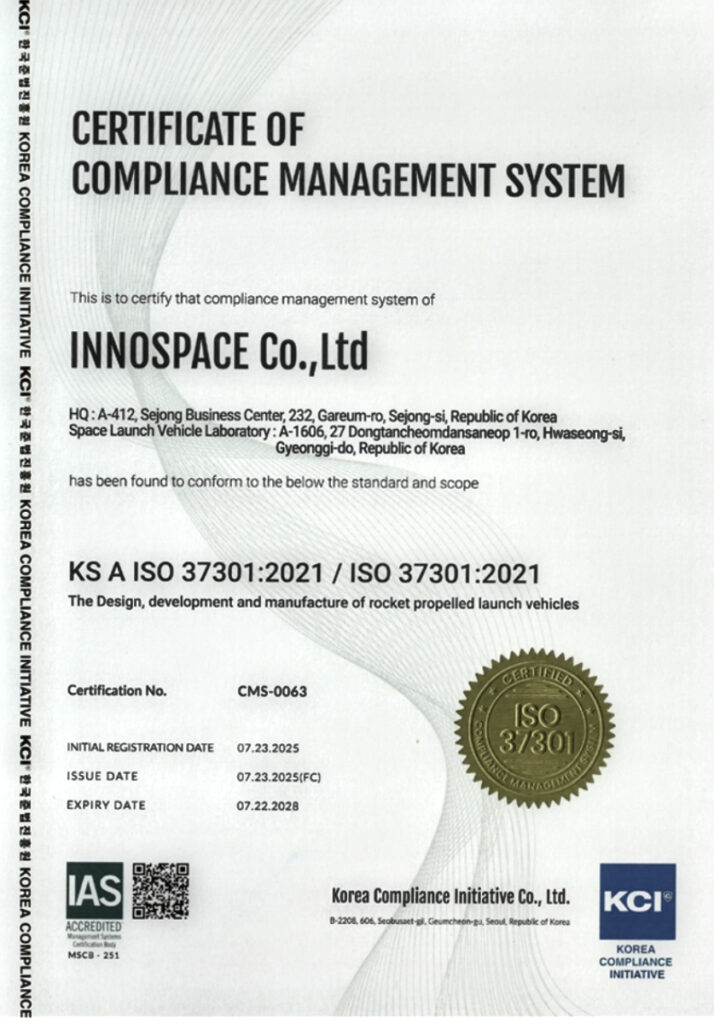
INNOSPACE (KS: 462350) has been awarded the ISO 37301 certification for its compliance management system (CMS), the globally recognized standard established by the International Organization for Standardization (ISO).

The certification validates that INNOSPACE has implemented a robust internal governance structure designed to proactively comply with legal and ethical obligations. As the first private space launch vehicle company in South Korea to earn this certification, INNOSPACE demonstrates its ethical compliance systems meet global criteria, solidifying the company’s credibility with international customers, partners, and oversight organizations.

Operating in one of the most complex and highly regulated industries, the space launch sector faces intricate demands such as cross-border export controls, security regulations, and aerospace quality certifications. INNOSPACE’s acquisition of ISO 37301 reinforces its capability to proactively manage compliance risks across the entire launch service lifecycle—from licensing and site operations to satellite transport and mission control—strengthening trust with clients and regulatory authorities around the world.

The certification marks another step in INNOSPACE’s phased rollout of global governance systems under its long-term ESG strategy. In January, the company achieved AS9100 certification for aerospace quality. Building on this momentum, INNOSPACE is preparing to sequentially implement additional international standards, including ISO 14001 (Environmental), ISO 45001 (Occupational Health & Safety), and ISO 27001 (Information Security), to reinforce its position as a reliable partner in the global space industry.

We view ethics and compliance not as a short-term task, but as a core value of sustainable management,” said Soojong Kim, Founder and CEO of INNOSPACE. “We will continue to actively implement this across the company, responding proactively to evolving global regulatory environments and building a transparent and accountable governance structure.”

Filed Under: News

Ascending Node Technologies enables missions to automate constellation design

August 3, 2025 by editorial

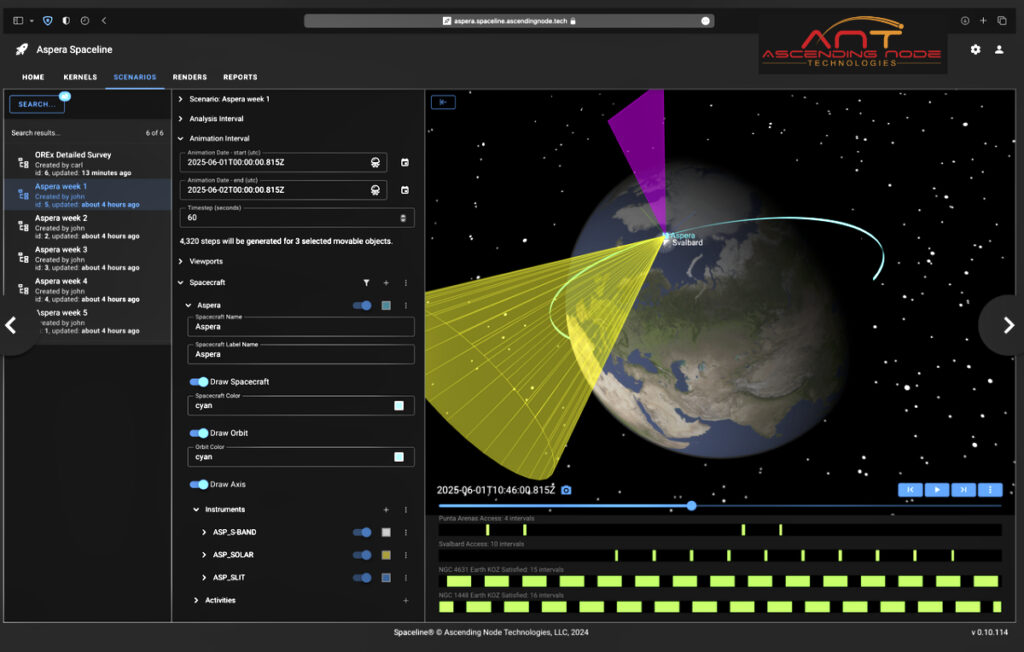
Ascending Node Technologies (ANT) has unveiled the company’s Spaceline® constellation design tool that enables startups and established operators to collectively plot, create, and simulate systems tailormade to their mission plans and operations.

This first-of-its-kind, collaborative design tool allows project engineers and developers to plug mission specs and requirements into ANT’s Spaceline visualization software platform, which does the math and provides an accurate blueprint for new and expanding constellations.

Spaceline enables operators to clearly see how their constellations will perform in the future and helps to ensure they deploy the right number of spacecraft and deliver the necessary coverage and services, such as Earth and orbital debris observation.

The new constellation design tool joins the affordable web-based Spaceline suite of data analysis and visualization capabilities developed to help today’s dispersed mission teams effectively collaborate in real time during every mission phase, from design through live operations and post-mission review.

Spaceline is a relatively small investment that enables multi-million-dollar missions to dramatically boost operational accuracy, efficiency, and productivity by automating and streamlining many of the manual, cumbersome calculations and processes still in use today.

NASA is relying on Spaceline and the Ascending Node Technologies team as a critical asset of its $20 million Aspera small-sat UV astrophysics mission set to explore nearby galaxies from LEO beginning next year.

NASA and the University of Arizona space team are leveraging Spaceline to help solve the mysteries surrounding how galaxies evolve and obtain fuel for the formation of stars.

Spaceline was born from NASA’s historic and complex OSIRIS-REx (Origins, Spectral Interpretation, Resource Identification, and Security – Regolith Explorer) asteroid sample collection mission that traveled to the near-Earth asteroid Bennu to retrieve rock and dust samples as part of a seven-year exploration.

By the time asteroid samples were delivered to Earth in 2023, a trio of OSIRIS-REx engineers and scientists had founded Ascending Node Technologies and revolutionized the space industry’s slow, siloed, costly, and often manual data processing practices.

Multiple NASA Small Business Innovation Research (SBIR) contracts have funded next-generation Spaceline visualization apps and enhancements to the Spaceline visualization software platform.

The industry continues to underestimate the complexity of space, so our web-based Spaceline architecture and new design tool allow teams to collaborate, develop ideas, create and operate a simulated constellation long before the first spacecraft is launched,” said John Kidd, Chief Aerospace Engineer for Ascending Node Technologies. “The ability to effectively plug-in specific mission data and automatically create constellations of spacecraft to meet specific objectives allows startups to build a compelling case for venture funding and big operators to grow with accuracy and confidence.”

Filed Under: Featured, News

York Space Systems launches BARD mission

August 3, 2025 by editorial

York Space Systems (York) launched the company’s BARD mission on July 23rd from Vandenberg Space Force Base and York made contact with the satellite on the first attempt—all systems are healthy on-orbit.

The mission will flight-demonstrate the Polylingual Experimental Terminal (PExT), an advanced communications payload designed to enable real-time interoperability between government and commercial satellite relay networks.

BARD was procured as a commercial mission from York and developed in collaboration with NASA’s Space Communications and Navigation (SCaN) Program and Johns Hopkins Applied Physics Laboratory (APL). The mission will flight-demonstrate PExT, an advanced communications payload designed to enable real-time interoperability between government and commercial satellite relay networks—a first-of-its-kind capability supporting NASA’s shift toward a commercial communications architecture.

The successful BARD launch comes only one month following the successful deployment of York’s Dragoon mission. Moreover, BARD is the second of five distinct missions York is executing in 2025 alone. From spacecraft design and manufacturing to full mission integration, launch, and operations, York’s end-to-end capabilities are enabling customers across the defense and commercial sectors to deploy critical space assets faster, more affordably, and with greater mission flexibility.

The success of BARD reinforces York’s commitment to delivering impactful missions with speed, resilience, and performance,” said Melanie Preisser, GM and Executive VP of York. “From Dragoon to BARD, we’re delivering complete space missions that meet the most urgent operational needs of our customers. York continues to lead the way in redefining how space-based capabilities are developed, launched, and operated.York Space Systems launches BARD mission.”

Filed Under: News

NearSpace Launch reaches major milestone of more than 1000 systems and subsystems

August 1, 2025 by editorial

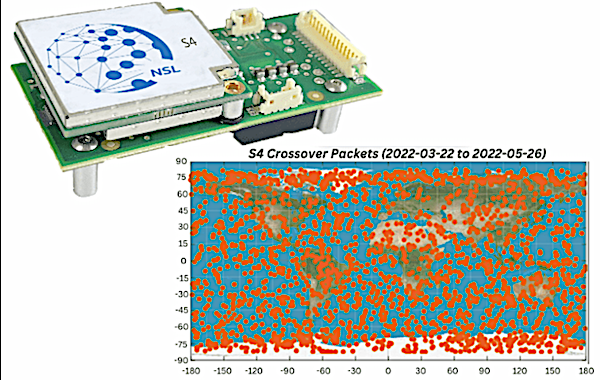
 NearSpace Launch, Inc. (NSL), provider in small satellite innovation and mission success, achieved a major milestone: over 1000 systems and subsystems successfully deployed in orbit. Since its founding in 2014, NSL has grown from a visionary startup into a strong spaceflight provider, delivering flight-proven solutions that support commercial, government, and scientific missions worldwide. The company’s portfolio includes full spacecraft, communications systems, EyeStar™ radios, ThinSat buses, Black Box™ mission recorders, and rapid-turn TT&C solutions.
            

“NearSpace Launch is a strategic partner of SEOPS and a company that understands how to achieve mission success. With over 1,000 systems on orbit, NSL celebrates a decade of innovation proving that relentless iteration and being obsessed with mission requirements results in trusted space capabilities” said Chad Brinkley, of SEOPS Space. With a proven track record of mission success across over 30 launches, NSL’s technologies are helping shape the future of low-Earth orbit (LEO) operations, enabling real-time telemetry, robust situational awareness, and simplified satellite integration.          

NSL’s systems are now part of numerous constellations projects and government initiatives, and its EyeStar radios are supporting global connectivity with 24/7 Iridium-based communications. As the company looks to the future, NSL remains committed to innovation, reliability, and expanding space access for emerging missions and new entrants alike.       

“This milestone represents more than just numbers,” said Dr. Hank Voss, Co-Founder of NearSpace Launch. “It reflects the dedication of our team, the strength of our partnerships, and the success of our mission to make space more accessible and resilient.”           

NearSpace Launch provides reliable, rapidly deployable satellite solutions including EyeStar™ radios, Black Box systems, and custom CubeSats. NSL has supported NASA, DoD, commercial, and u niversity missions with a focus on mission assurance, space domain awareness, and innovative communications.       

As it celebrates its “1000th” benchmark, NSL will be at the upcoming SmallSat conference in Salt Lake City, Utah, on August 10-13.

Filed Under: News

HawkEye 360 launches advanced GNSS interference detection capabilities

July 31, 2025 by editorial

HawkEye 360 Inc. has enhanced the firm’s GNSS Interference (GNSS-I) Detection product suite—these upgrades—designed with defense, intelligence, and national security operations in mind—offer unprecedented accuracy, coverage, and insight into global GPS jamming and spoofing threats.

The update includes a new wider frequency algorithm that better distinguishes individual emitters, incorporates GPS spoofing detection, and is terrain adjusted for better geolocation accuracy, delivering greater situational awareness and more precise geolocation of interference sources worldwide.

Many high-stakes operations rely heavily on accurate and uninterrupted GPS signals. Disruptions to these signals, whether through intentional interference or incidental factors, can introduce uncertainty and compromise the effectiveness of critical activities. HawkEye 360’s enhanced GNSS Interference Detection product suite supports strategic decision-making by providing timely, precise insight into potential signal disruptions, enabling stakeholders to better assess risk, respond confidently, and maintain operational continuity in dynamic environments.

With this release, HawkEye 360’s GNSS-I Detection product suite now provides…

  • 15x Increase in geolocation density
  • Spoofing Detection and differentiation
  • Terrain Adjusted for increased accuracy
  • Consistent Monitoring across wide areas of interest

Enabling Action in Contested Environments
These enhancements further solidify HawkEye 360’s commitment to equipping national security and defense partners with tools to operate confidently in GPS-denied or disrupted environments.

HawkEye 360’s new spoofing detection capability identifies potentially malicious transmitters that imitate legitimate GPS Course/Acquisition (PRN) codes—a tactic increasingly used to deceive aircraft and mislead navigation systems. The capability supports threat mitigation and trend analysis by detecting and geolocating these spoofers down to a kilometer-level precision.

In contested environments, timely RF intelligence is the key to mission success,” said Alex Fox, President, International Business Unit. “Traditional land, sea, and air systems struggle in Anti-Access/Area Denial environments, while our satellites provide global GNSS-I detection and geolocation coverage. These enhanced capabilities give defense and intelligence teams the ability to identify and neutralize threats before they disrupt operations, enabling faster decisions and sharper visibility into adversary behavior.”

We deliver high-confidence RF intelligence that helps defense and intelligence professionals protect assets, outmaneuver threats, and gain the upper hand in the spectrum,” said Todd Probert, President, U.S. Government Business Unit. “By adding terrain-aware modeling, we give our partners a decisive advantage in detecting and responding to GPS interference—whether they’re operating in rugged mountains or dense urban environments. They can act with confidence, knowing the data is both precise and actionable.”

Filed Under: News

BlackSky wins next phase of U.S. Navy Optical inter-satellite link research contract to advance Gen-3 comms for military ops

July 31, 2025 by editorial

BlackSky Technology Inc. (NYSE: BKSY) has won the next phase of a competitive U.S. Navy research contract to further develop optical inter-satellite link (OISL) terminal apps for its Gen-3 constellation.

BlackSky’s Gen-3 satellite, image courtesy of the company

The OISL terminals are expected to increase the speed at which very high-resolution imagery and other high-volume space-based data travel directly between satellites before downlinking to ground stations.

Under the development agreement, BlackSky will explore hardware and software design adaptations, novel operating concepts for commercial transport network nodes and establish new protocols for data movement. Future Gen-3 satellites will be equipped with optical inter-satellite link terminals compatible with both the Space Development Agency’s Transport Layer and commercial transport networks.

Laser-based OISLs create high-bandwidth, direct communication lines between satellites, reducing the time it takes to transmit and process data. In addition to reduced latency and decision making, OISLs can provide a more secure and resilient data transmission path, making them less susceptible to interference and jamming.

This important award directly supports BlackSky’s ability to deliver timely, high-impact intelligence that drive decisions all the way to the tactical edges of the frontline,” said Brian O’Toole, BlackSky CEO. “High-speed inter-satellite communication links are a critical innovation that makes BlackSky’s commercial remote sensing services a robust and viable option for fleet-wide tactical ISR operations. Extending our Gen-3 capabilities with optical intersatellite link terminals will give customers reliable access to real-time earth imaging capabilities across the full range of warfighting scenarios. Enhanced Gen-3 satellites are expected to deliver data to end users 10 times faster than current systems, with data volumes five times greater than existing capabilities.”

Filed Under: News

SFL Missions Inc. awarded contract for AISSat-4 nanosatellite development

July 31, 2025 by editorial

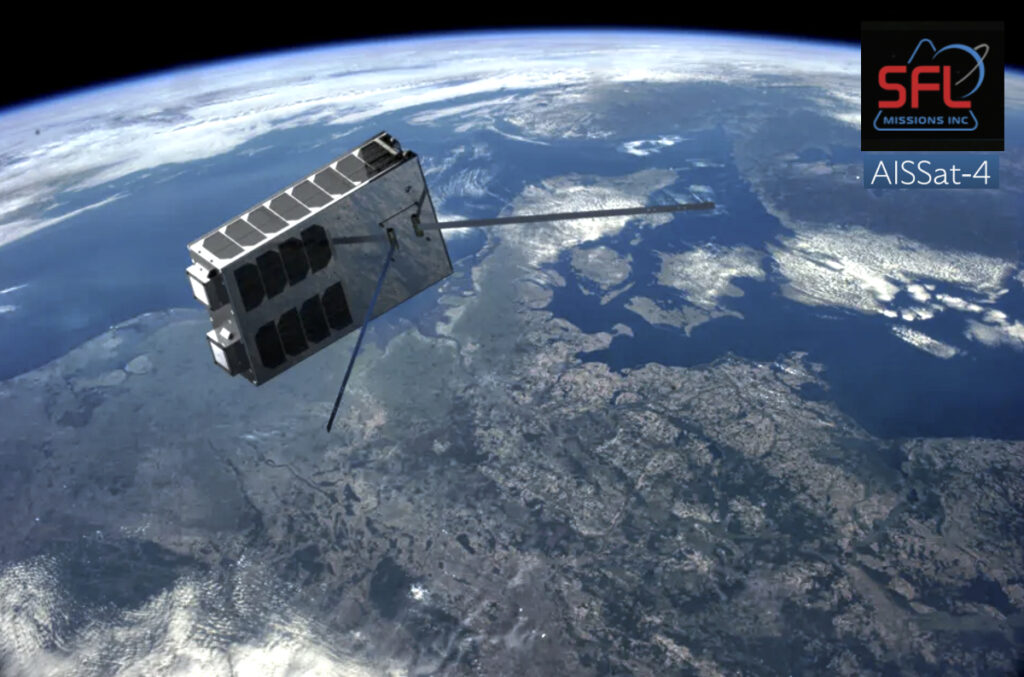
The Norwegian Space Agency (NOSA) has awarded a contract to SFL Missions Inc. to develop the AISSat-4 maritime ship tracking microsatellite for launch in less than one year. AISSat-4 is needed to expand operational capacity in Norway’s maritime situational awareness network.

AISSat-4 is being developed on SFL’s SPARTAN 6U nanosatellite platform and will carry a single payload—a miniaturized Automatic Identification System (AIS) receiver built by Kongsberg Seatex of Trondheim, Norway. The SPARTAN bus is space proven with 18 commercial communications satellites previously deployed using this platform.

SFL Missions is uniquely prepared to develop AISSat-4 on an accelerated schedule. Additionally, the SPARTAN platform relies on heritage hardware and software and is easily tailored to accommodate the AIS receiver and antennas.

Norway launched the first ship-tracking satellite of its operational AISSat series in 2010 and then funded a parallel series of larger NorSat microsatellites. While the smaller AISSat nanosatellites each carry a single payload focused solely on collection of AIS signals, the NorSats each operate a ship-tracking device along with one or more technology demonstration payloads. NorSat-1 and -2 are both eight years old and have operated beyond their five-year design lives.

Norway’s leadership in space-based maritime monitoring includes eight spacecraft spanning more than 15 years, all of which were developed with SFL…

AISSat-1 was launched in 2010 with funding from Norwegian Defence Research Establishment (FFI) to prove that AIS signals from ships at sea could be detected by an AIS receiver in orbit. AISSat-1 was quickly transitioned to operational status where it collected data for 12 years.

AISSat-2, a twin to AISSat-1, launched as an operational asset in 2014 until decommissioning nine years later.

NorSat-1 and -2 launched in 2017, each carrying successively improved AIS receivers developed by Kongsberg Seatex. Additionally, NorSat-1 carries two experimental space science instruments, while NorSat-2 tested a two-way communication VHF data exchange device.

NorSat-3 launched in 2021 with an experimental radar navigation detector to augment the ship-tracking capabilities of its AIS receiver.

NorSat-TD launched in 2023 with a suite of technology demonstration payloads including a Dutch-built laser communications device that successfully enabled faster, more secure optical transmission of data between the spacecraft and ground station.

NorSat-4 launched in January 2025 carrying a fifth-generation AIS receiver complemented by a first-of-its-kind low-light imaging camera to detect and identify “dark” ships not operating their AIS transponders.

AISSat-4, now under development, will have the capacity to capture 1.5 million unique AIS signals every day even in crowded shipping lanes.

Additionally, Norwegian AIS data collected from space will continue to serve as the mainstay of the Blue Justice Ocean Surveillance Program initiated by Norway in September of 2023 to fight international fisheries crimes. Participants in this program share coastal data to uncover illegal fishing activities worldwide.

Under the leadership of NOSA and the Norwegian Coastal Administration, Norway operates the world’s most extensive and sophisticated space-based marine monitoring system to protect the safety of vessels and sustainability of resources in its vast territorial waters.

We have extensive experience in implementing AIS missions, and therefore we have the expertise and design heritage needed to implement the AISSat-4 mission on a short schedule,” said Dr. Robert E. Zee, SFL Missions Director and CEO.

More broadly,” he added, “SFL Missions Inc. has the capacity to work on many satellite missions concurrently, and since the team is vertically integrated, it maintains full control over the subsystem and spacecraft level assembly, integration, and testing schedules.

The societal benefits we gain from collecting AIS information from satellites is significant. It is therefore important that we ensure the maintenance of this capability,” said Coastal Administration Director Einar Vik Arset. “AISSat-4 will be a valuable addition at a time when several of our operational satellites are nearing the end of their expected lifespan.”

Filed Under: Featured, News

  • « Go to Previous Page
  • Page 1
  • Interim pages omitted …
  • Page 20
  • Page 21
  • Page 22
  • Page 23
  • Page 24
  • Interim pages omitted …
  • Page 339
  • Go to Next Page »

Primary Sidebar

WEEKLY NEWSLETTER

Archives

  • August 2026
  • July 2026
  • June 2026
  • May 2026
  • April 2026
  • March 2026
  • February 2026
  • January 2026
  • December 2025
  • November 2025
  • October 2025
  • September 2025
  • August 2025
  • July 2025
  • June 2025
  • May 2025
  • April 2025
  • March 2025
  • February 2025
  • January 2025
  • December 2024
  • November 2024
  • October 2024
  • September 2024
  • August 2024
  • July 2024
  • June 2024
  • May 2024
  • April 2024
  • March 2024
  • February 2024
  • January 2024
  • December 2023
  • November 2023
  • October 2023
  • September 2023
  • August 2023
  • July 2023
  • June 2023
  • May 2023
  • April 2023
  • March 2023
  • February 2023
  • January 2023
  • December 2022
  • November 2022
  • October 2022
  • September 2022
  • August 2022
  • July 2022
  • June 2022
  • May 2022
  • April 2022
  • March 2022
  • February 2022
  • January 2022
  • December 2021
  • November 2021
  • October 2021
  • September 2021
  • August 2021
  • July 2021
  • June 2021
  • May 2021
  • April 2021
  • March 2021
  • February 2021
  • January 2021
  • December 2020
  • November 2020
  • October 2020
  • September 2020
  • August 2020
  • July 2020
  • June 2020
  • May 2020
  • April 2020
  • March 2020
  • February 2020
  • January 2020
  • December 2019
  • November 2019
  • October 2019

© 2019–2026 SatNews

Insert/edit link

Enter the destination URL

Or link to existing content

    No search term specified. Showing recent items. Search or use up and down arrow keys to select an item.
      x
      Sign Up Now!

      Enjoy a free weekly newsletter with recent headlines from the global SmallSat industry.

      Invalid email address
      We promise not to spam you. You can unsubscribe at any time.
      Thanks for subscribing! You will now receive weekly SmallSat News updates.
      We love our advertisers.
      And you will too!

      Please disable Ad Blocker to continue... We promise to keep it unobtrusive.
      We promise not to spam you. You can unsubscribe at any time.
      Invalid email address
      Thanks for subscribing!