
• Skip to main content
  • Skip to primary sidebar
  • Home
  • News
  • Featured
  • More News ⌄
    • SatNews
    • SatMagazine
    • MilSatMagazine
  • Events ⌄
    • MilSat Symposium
    • SmallSat Symposium
    • Satellite Innovation
  • Contacts
  • SUBSCRIPTION

SmallSat News

You are here: Home / Archives for News

News

AST SpaceMobile + Fairwinds Technologies demo world’s 1st tactical NTN connectivity over standard mobile devices

June 27, 2025 by editorial

AST SpaceMobile, Inc. (NASDAQ: ASTS) has successfully demo’d the world’s first Non-Terrestrial Network (NTN) tactical satellite communications delivering high-throughput data, voice, and video using unmodified mobile devices in collaboration with Fairwinds Technologies (a privately held company).

The field test showcased key defense-related use cases, including real-time connectivity to the Tactical Assault Kit (TAK) over a VPN, multimedia streaming via TAK, and secure multi-party video calls, all executed on standard, unmodified smartphones.

This milestone demonstration was conducted near AST SpaceMobile’s gateway facility on Oahu, Hawaii, with active participation from U.S. Indo-Pacific Command (USINDOPACOM), including representation from the U.S. Navy, Marine Corps, Army, U.S. Space Command, and the Office of the Under Secretary of Defense for Research and Engineering (OUSD R&E) FutureG team.

AST SpaceMobile collaborated with Fairwinds Technologies on this demonstration. Fairwinds is a trusted partner providing program integration and military tactical network support as AST SpaceMobile explores direct-to-device satellite communications for U.S. government and defense applications.

This effort follows the recent award by the Defense Innovation Unit (DIU) to the Fairwinds/AST SpaceMobile team under the Hybrid Space Architecture 2 initiative within DIU’s Space Portfolio. The project is jointly supported by DIU’s Cyber & Telecom Portfolio and aims to evaluate the viability of space-based direct-to-device communications for resilient, secure tactical networks in denied or austere environments.

This was the first in a series of planned prototype demonstrations to evaluate space-based mobile broadband for defense applications, with additional testing, including over open ocean environments, planned in the coming months as the team continues to push the boundaries of multi-domain, space-based tactical communications.

This demonstration represents a significant leap forward in advancing resilient, secure communications capabilities for the U.S. defense community,” said Chris Ivory, Chief Commercial and Government Business Officer at AST SpaceMobile. “We are proud to help enable a new layer of mobile connectivity—directly from space to standard smartphones, with no need for specialized equipment, in support of national security objectives.”

This is just the beginning,” said Timothy Hillner, Chief Technology Officer and Co-Founder of Fairwinds Technologies. “We’re honored to collaborate with AST SpaceMobile and the Defense Innovation Unit to deliver next-generation communications at the tactical edge – precisely where and when they’re needed most. Together, we’re enabling the future of command and control.”

Filed Under: News

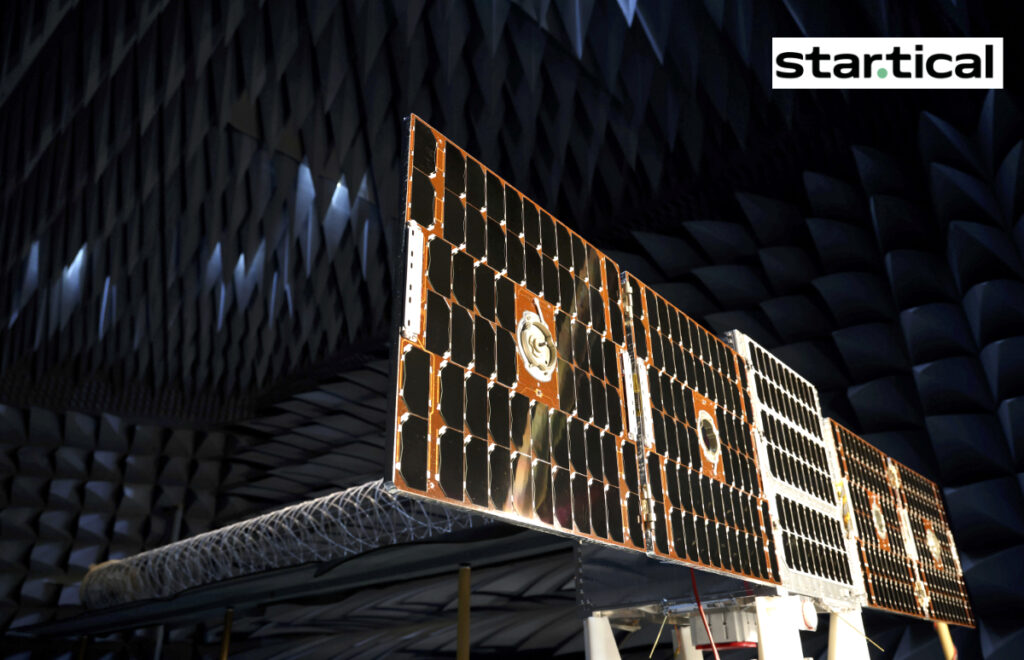
Startical launches the firm’s 2nd demo satellite — IOD-2

June 26, 2025 by editorial

IOD-2, Startical’s second demonstrator satellite and part of the EU-funded ECHOES project, will continue validating real-time VHF voice and data communications between aircraft pilots and air traffic controllers from space

Startical, the company created by ENAIRE and Indra, has successfully launched its second satellite, IOD-2, from Vandenberg Space Force Base in California.

The launch of IOD-2 follows the successful deployment of IOD-1 in March of 2025, that already made history by enabling the first-ever VHF voice communications between aircraft pilots and air traffic controllers via satellite, fully compliant with international aviation standards. These milestones accelerate the development of Startical’s future constellation of more than 200 Low Earth Orbit (LEO) satellites, designed to provide real-time VHF voice and data communications and aircraft surveillance, particularly in regions currently without coverage, such as oceans and remote areas.

With IOD-2, Startical intensifies its testing phase to demonstrate robust, real-time aeronautical communications and surveillance services from space. Additionally, it reflects Spain’s commitment and capabilities to innovate in the aerospace sector.

The mission is led by Startical ,while the engineering behind the mission systems and the satellite payload have been developed by Indra, with the support of ENAIRE.

Today, aircraft flying over oceans or remote regions must maintain wide separation due to the lack of real-time communication. Startical’s satellites will change that, enabling continuous monitoring and direct voice contact with pilots anywhere on Earth, allowing faster responses to storms, emergencies, or rerouting needs. It also paves the way for more direct and fuel-efficient routes, contributing to a greener aviation industry.

Like its predecessor, IOD-2 is part of ECHOES, a project co-founded by the European Union under the Connecting Europe Facility (CEF), managed by the European Climate, Infrastructure, and Environment Executive Agency (CINEA) and supported by the SESAR Joint Undertaking.

The project aims to demonstrate how satellite technology can enhance ATM services and reduce environmental impact. Both satellites will continue undergoing test over the South Atlantic, covering airspace managed by the Canary Islands, Azores, Dakar, Cape Verde, and Brazil. Beyond technological demonstration, these real-world tests will help define future international standards for satellite-based air traffic communications.1

The success of IOD‑1 proved that space-based VHF works. With IOD‑2, we advance Spain’s leadership in aerospace technology and reaffirm our mission to be the first company that will provide VHF voice and data global coverage for ATM,” said Juan Enrique González Laguna, General Manager of Startical.

Filed Under: News

KONGSBERG launches new satellites to complete N3X space constellation

June 26, 2025 by editorial

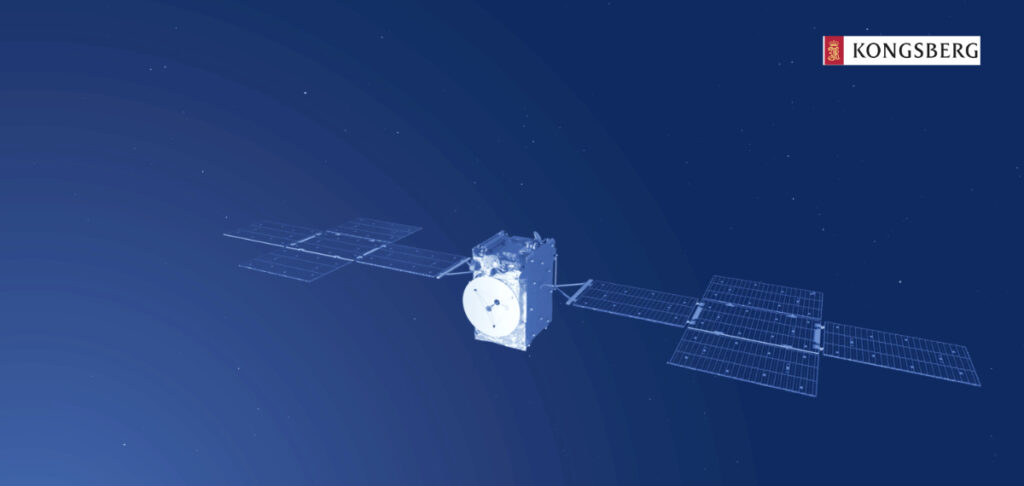
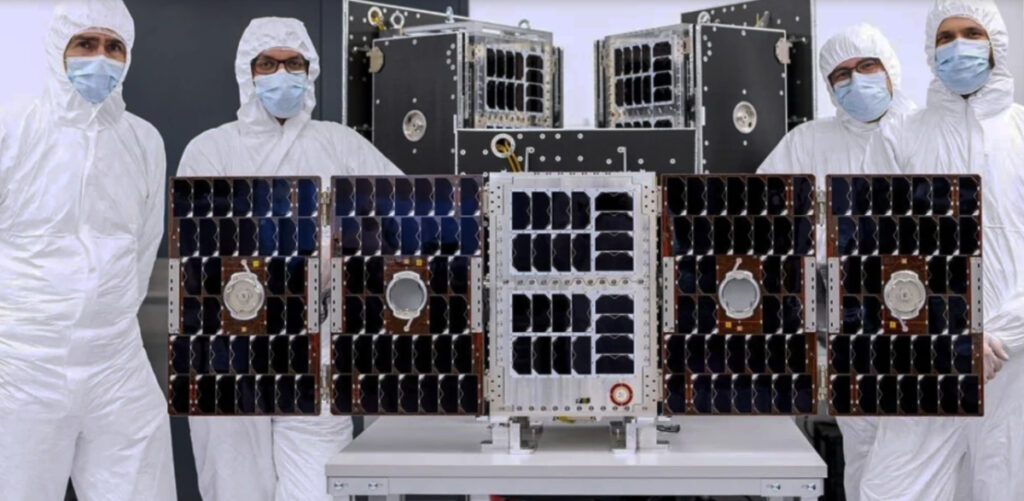
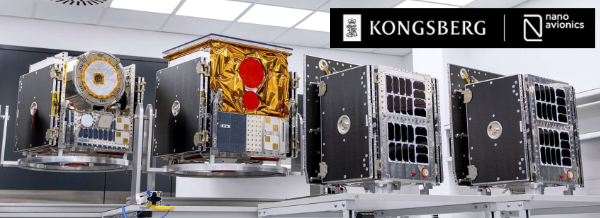
Kongsberg Defence & Aerospace (’KONGSBERG’) has completed the N3X satellite constellation with the successful launch of two new microsatellites—ARVAKER 2 and 3—aboard SpaceX’s Transporter-14 mission from California—the N3X satellite constellation is designed to enhance Norway’s maritime domain awareness.

The N3X constellation is built for persistent monitoring of maritime activity. Its payloads include an Automatic Identification System (AIS) receiver and a navigation radar detector (NRD) both supplied by Kongsberg Discovery, and the NRD designed by Norwegian Defence Research Establishment (FFI).

This combination enables N3X to identify cooperative vessels broadcasting AIS, as well as “dark vessels” that disable AIS but continue emitting radar signals. N3X satellites capture these emissions, allowing authorities to geolocate suspicious vessels and support maritime law enforcement, environmental monitoring, and rescue operations among other applications.

The data from N3X will be used by the Norwegian Armed Forces, as well as other Norwegian government institutions involved in maritime security such as the Coastal Administration, the Directorate of Fisheries, and Norwegian Customs.

The development and deployment of the N3X constellation highlights KONGSBERG’s vertically integrated space capability: Kongsberg NanoAvionics manufactured three microsatellite platforms for the constellation, Kongsberg Discovery delivered payloads and KSAT (Kongsberg Satellite Services) are providing satellite operations and a global ground station network for low-latency data access.

KONGSBERG companies and subsidiaries cover the full value chain to offer next-generation satellite systems, from delivering our own micro satellites and ground stations to market-leading data processing and analytics. KONGSBERG is uniquely positioned to deliver complete system solutions combing space segment with the ground systems to enhance data delivery and reduce latency. A central part of KONGSBERG’s capability is the ability to assemble, integrate and test satellites with sensitive and nationally controlled payloads in our facilities.

In addition to the N3X satellites, KONGSBERG also successfully integrated and deployed four additional satellite missions aboard the same SpaceX launch. These satellites, delivered by Kongsberg NanoAvionics, serve customers from Germany, Spain, and New Zealand, and will conduct missions in air traffic surveillance, thermal intelligence, and fundamental space research.

In total, KONGSBERG has launched 10 satellite missions so far in 2025, continuing its year-over-year expansion from the 9 missions launched in 2024 ̑

With the initial N3X satellite constellation on-orbit, KONGSBERG’s role as one of Europe’s most integrated space system and surveillance providers has been proved again. With this and future constellations, we are ready to support Norway and other global customers with technology and services to enhance maritime security,” said Eirik Lie, President of Kongsberg Defence & Aerospace.

Filed Under: News

Exolaunch deploys 45 customer satellites to orbit—their largest mission to date

June 25, 2025 by editorial

Exolaunch has successfully deployed 45 customer satellites on SpaceX’s Transporter-14 rideshare mission aboard the Falcon 9 launch vehicle. The mission marks a significant milestone for the company — its largest launch to date, further reinforcing its position as the premier launch integrator and deployment solution provider for global satellite missions.

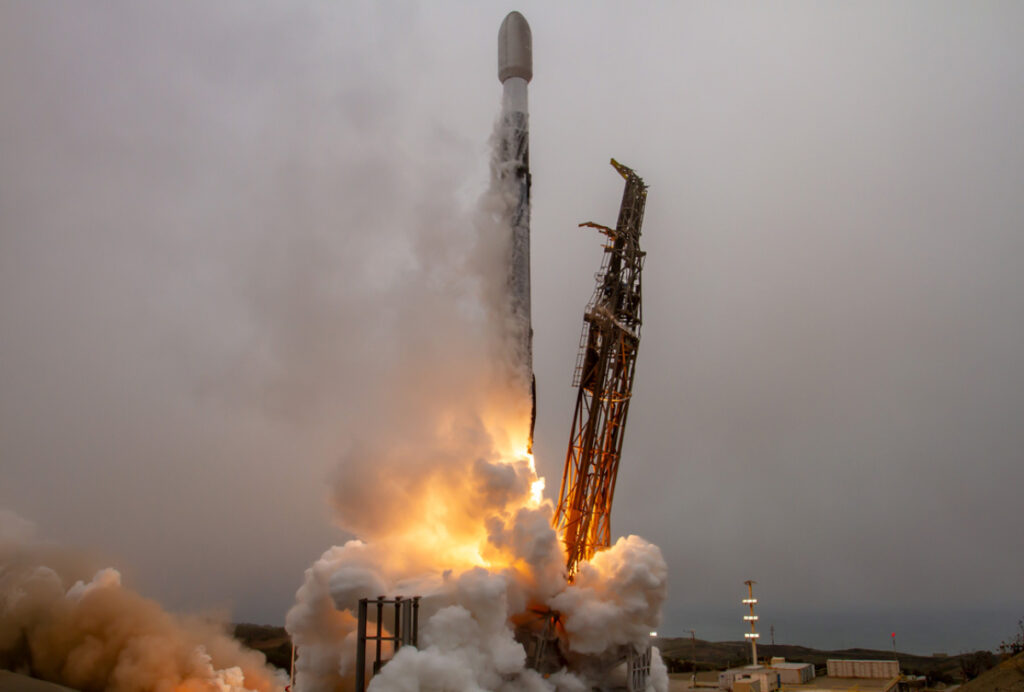
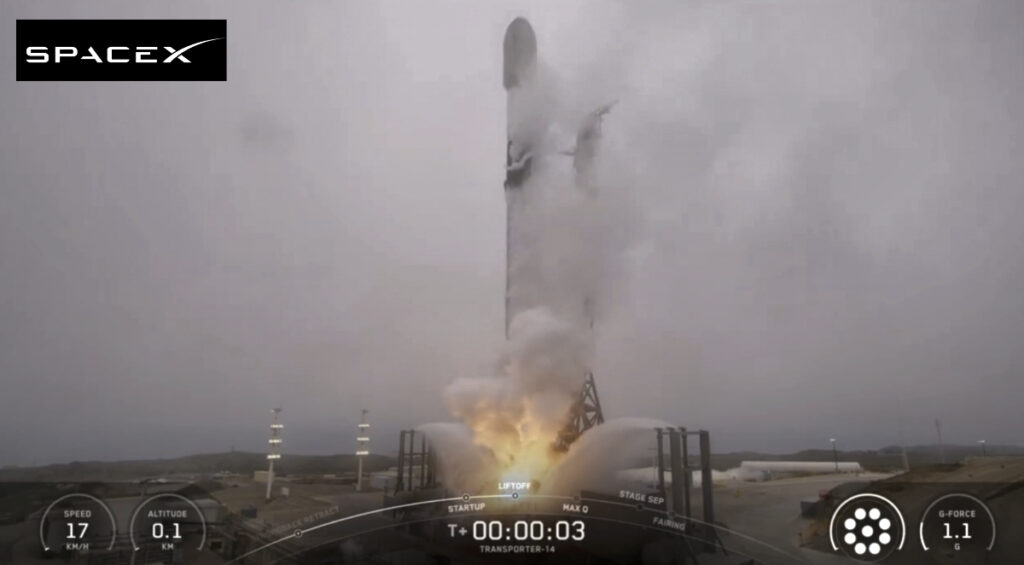
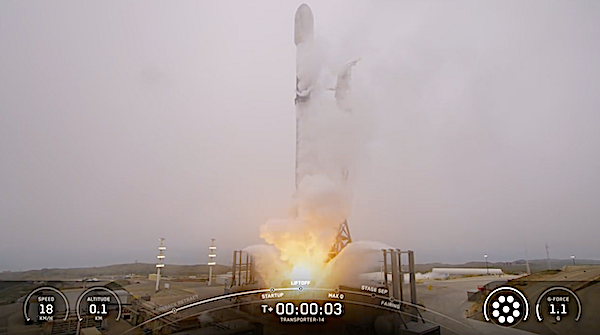
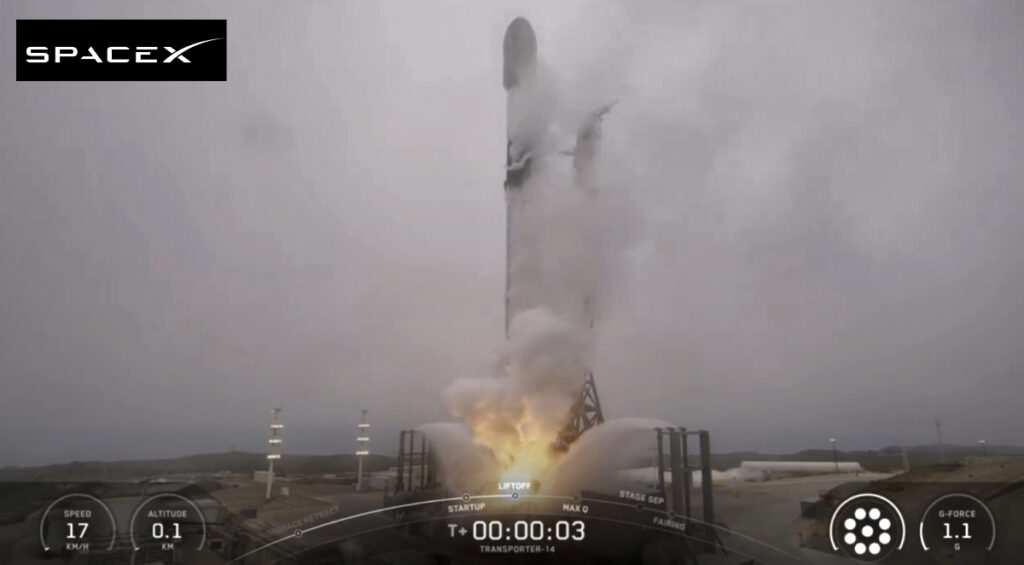
SpaceX Falcon 9 lifts off from Vandenberg Space Force Base with the Transporter-14 rideshare mission

The Transporter-14 mission carried satellites from 25 customers from 15 countries, including the United States, United Kingdom, Germany, France, Finland, Italy, South Korea, Canada, Japan, and Australia. Exolaunch managed the comprehensive launch campaign—from mission manifesting, global satellite logistics and environmental testing support to in-house deployment hardware and on-site satellite integration.

For this campaign, Exolaunch manifested and used the firm’s full suite of flight-proven deployment technologies for the following customers…

Aerospacelab for Xona Space Systems – PULSAR IOV
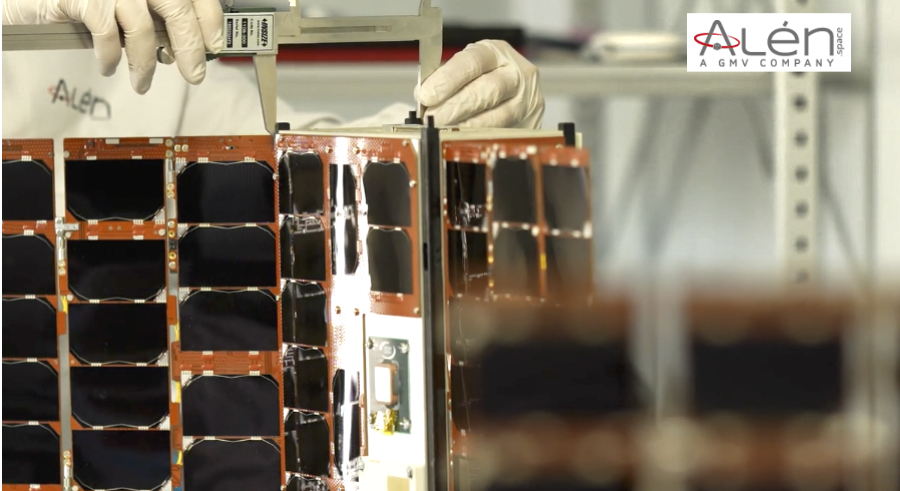
Alén Space – SITMAR
AVS – UND ROADS 1 & UND ROADS 2 launched aboard SpaceX’s Transporter-14 rideshare mission.
constellr – SkyBee 2 – built by NanoAvionics
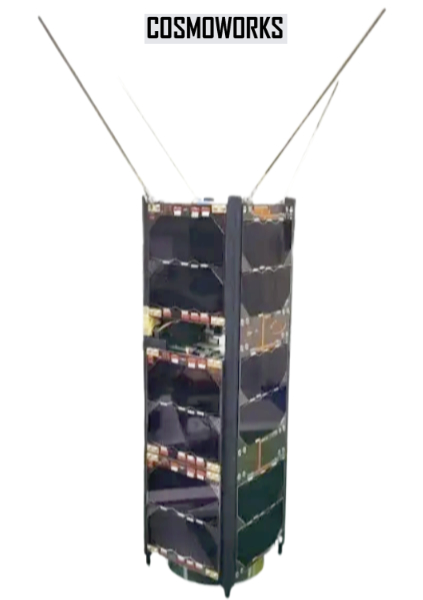
Cosmoworks – JACK-001
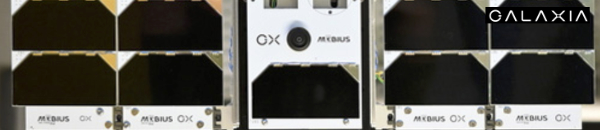
Galaxia Mission Systems – MOBIUS-1
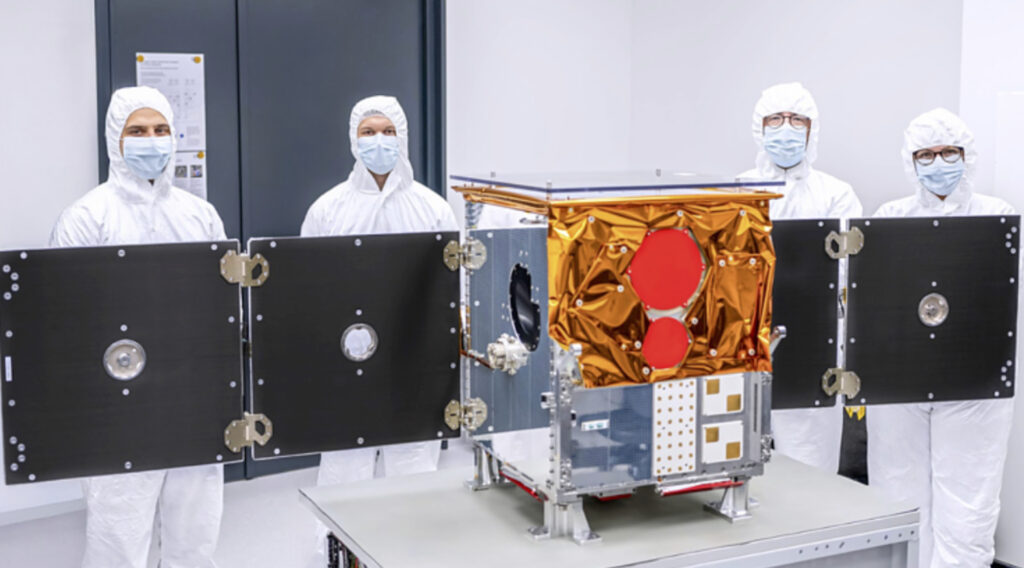
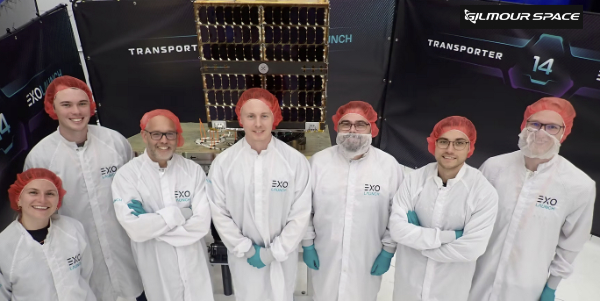
Gilmour Space – MMS-1 – photo courtesy of Exolaunch
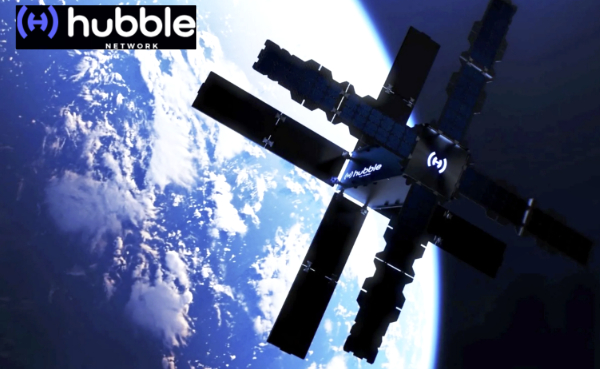
Hubble Network – Lilo, Scooby, Shaggy, Stitch
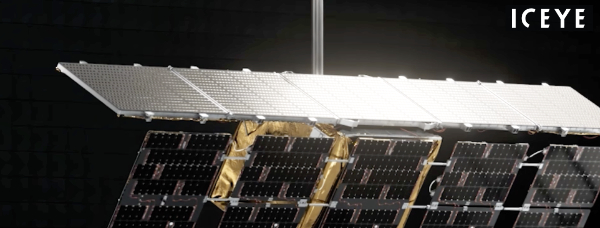
ICEYE – six ICEYE satellites
Kongsberg NanoAvionics – ARVAKER II & ARVAKER III
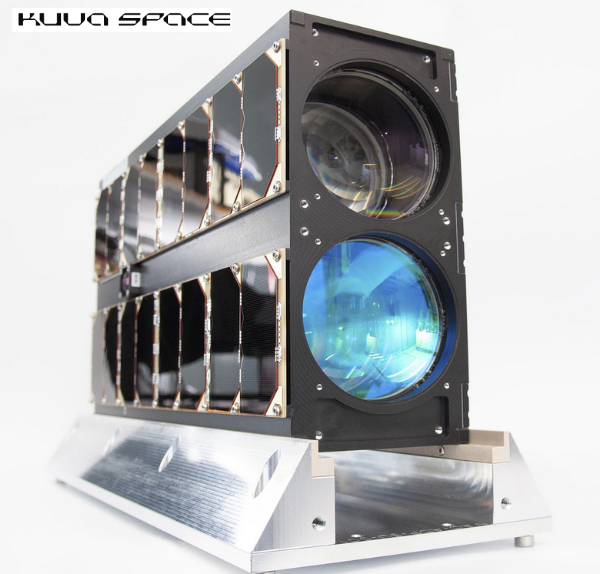
Kuva Space – Hyperfield-1B
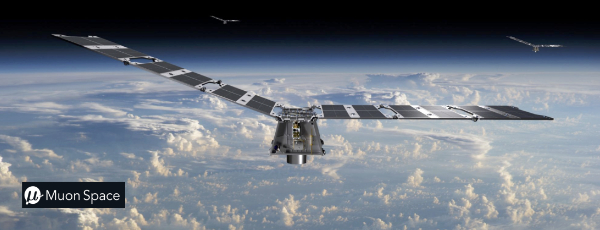
Muon Space – MuSat3
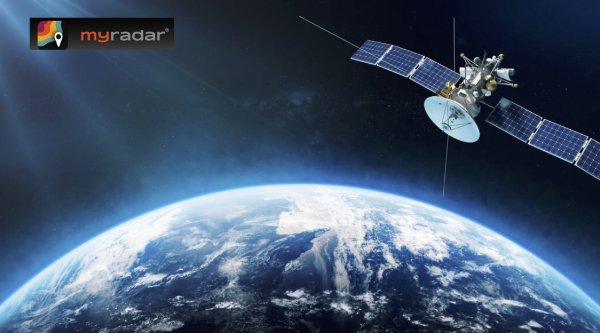
MyRadar – HORIS-1 & HORIS-2
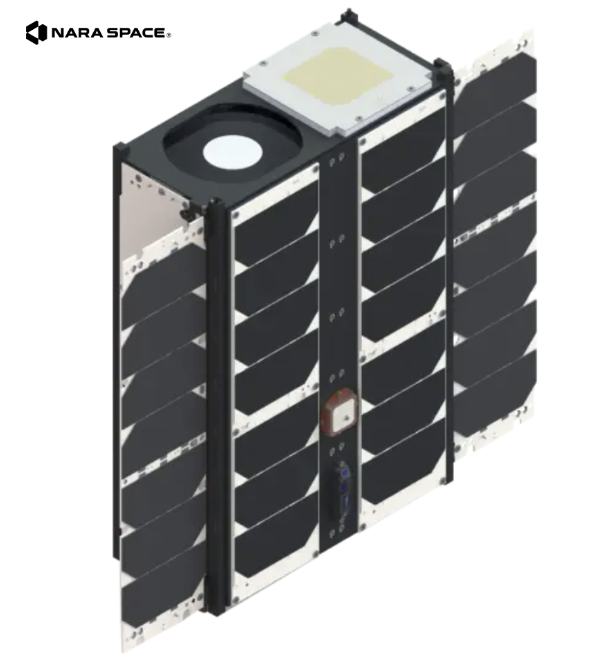
Naraspace – ADDCUBE
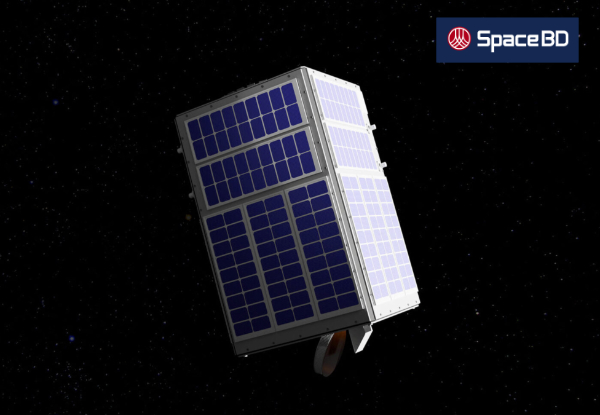
SpaceBD on behalf of its customer – AE2a & AE3Va
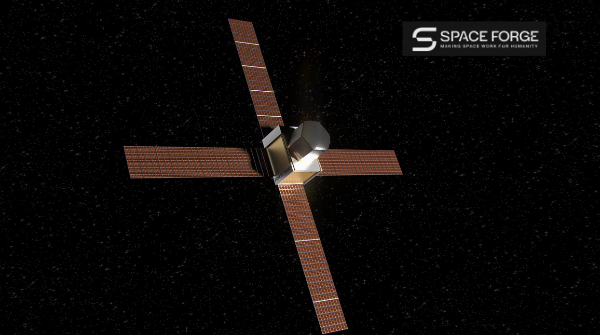
SpaceForge – ForgeStar-1
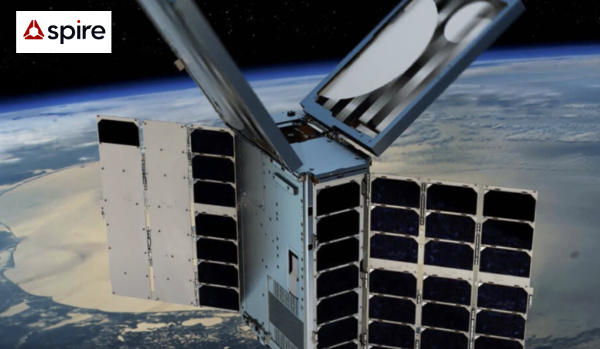
Spire Global – LEMUR-2-SEJONG-2; LEMUR-2-KRISH
Startical – IOD2_STARTICAL
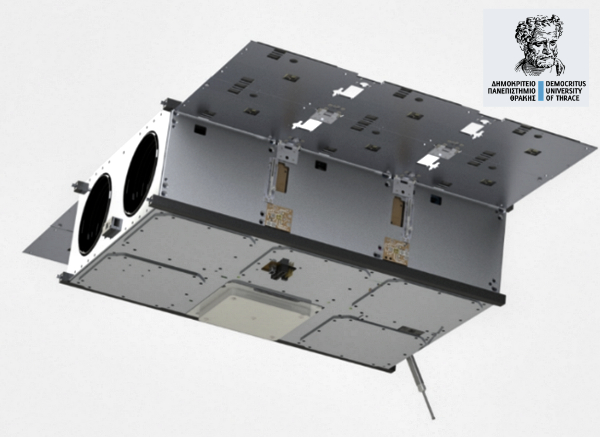
The Democritus University of Thrace – DUTHSat-2
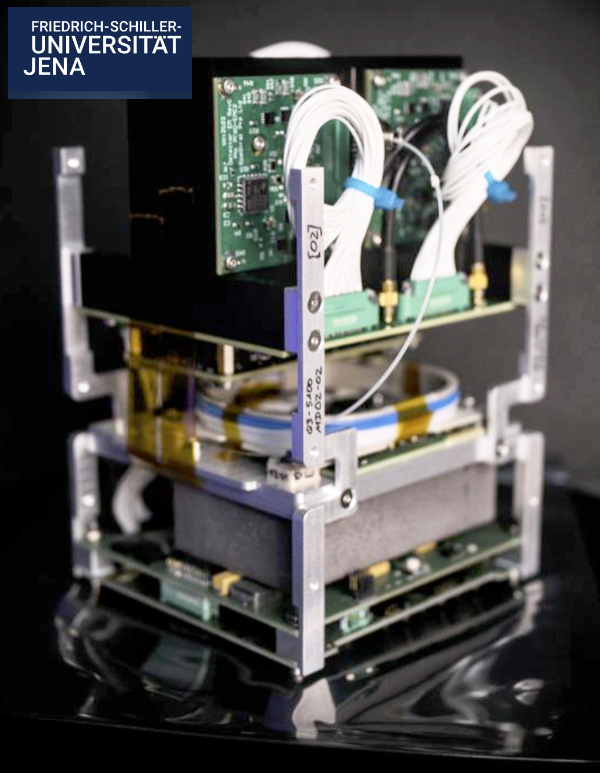
The University of Jena – QUICK3
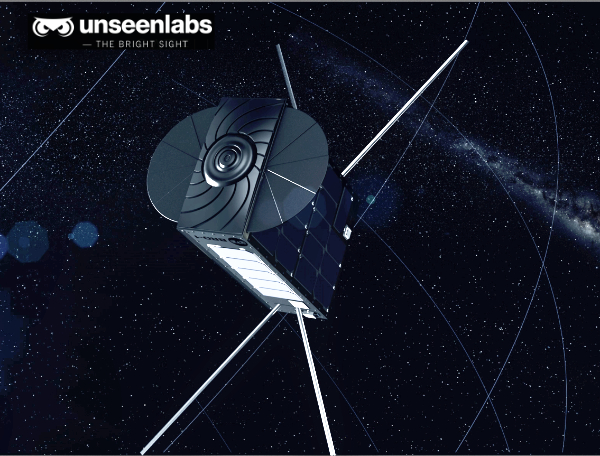
Unseenlabs – BRO-18
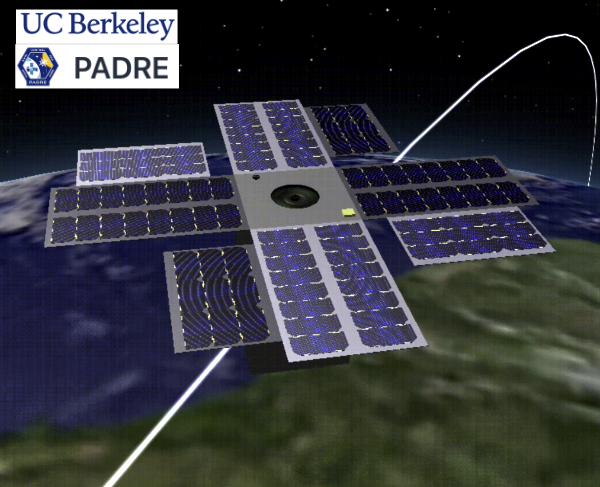
University of California, Berkeley – PADRE

The company also provided its deployment technologies and satellite integration services to the following customers:

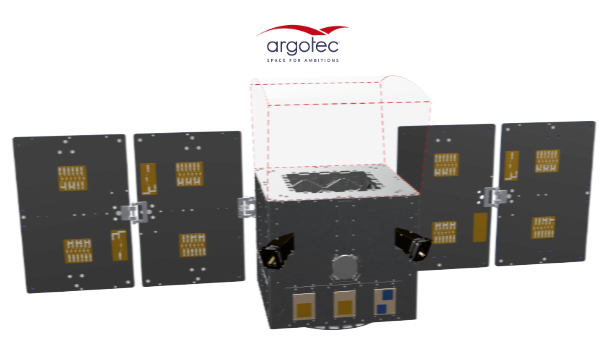
Argotec – seven HEO satellites
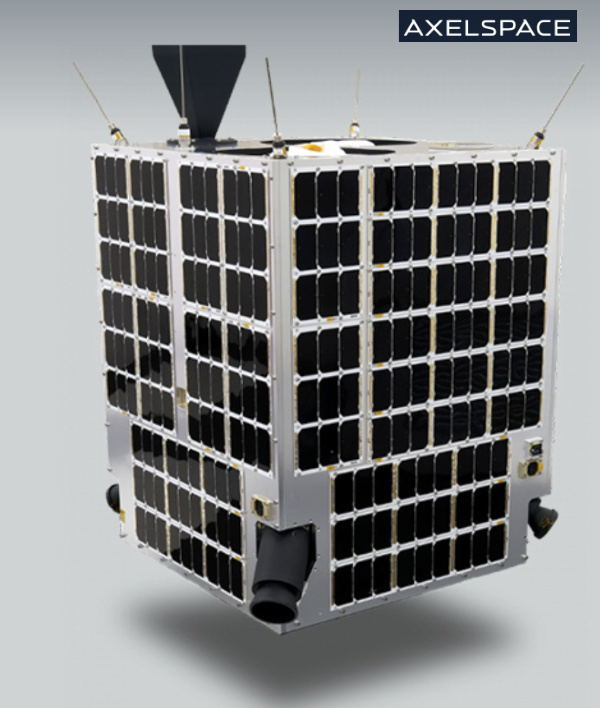
Axelspace – GRUS-3a
Loft Orbital – YAM-10
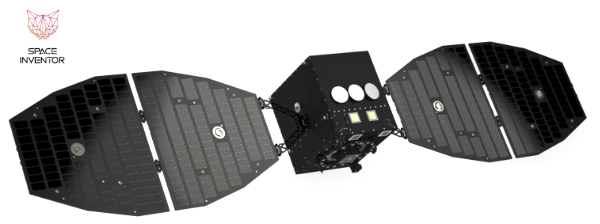
Space Inventor – BIFROST

This is a landmark 37th mission for Exolaunch and an incredible testament to the trust placed in us by our customers and partners,” said Dr. Robert Sproles, Chief Executive Officer at Exolaunch. “Executing a deployment of this scale requires not just precision and reliability, but the kind of deep experience and collaboration that comes from dozens of successful missions.”

We’re incredibly grateful to SpaceX for their trust and strong collaboration, which now extends through 2028,” said Jeanne Allarie, Chief Commercial and Marketing Officer at Exolaunch. “Our new multi-year launch contracts with SpaceX enable us to support many new and existing satellite constellations well into the next decade, giving our customers reliable access to a wider range of orbits — including SSO, near-polar, mid-inclination and dawn-dusk missions. We’re energizing our future pipeline and unlocking new deployment opportunities as the industry scales rapidly.”

Exolaunch has launched with SpaceX since 2020, executing more than 160 contracts to date and successfully deploying over 450 diverse satellites (out of 575 in total) across 21 mission aboard Falcon 9 and Falcon Heavy. Exolaunch has been the only launch integrator to have manifested satellites on every Transporter rideshare mission. The company integrates and deploys the full range of satellites — from cubesats up to 16U to microsatellites ranging from 20 to 800 kilograms and larger payloads constantly delivering the most reliable and convenient launch experience to global satellite operators. This was the 37th mission in the company’s flight heritage, the 6th launch in 2025 out of 15 launch campaigns Exolaunch is set to accomplish this year across different global launch vehicles.

Filed Under: News

GHGSat adds to their constellation with the launch of two new satellites

June 24, 2025 by editorial

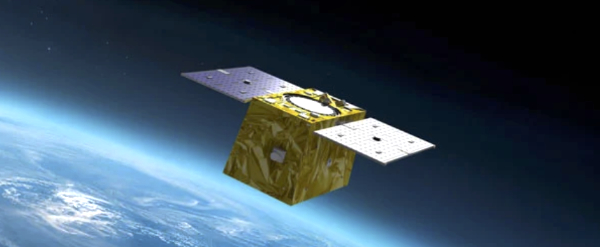
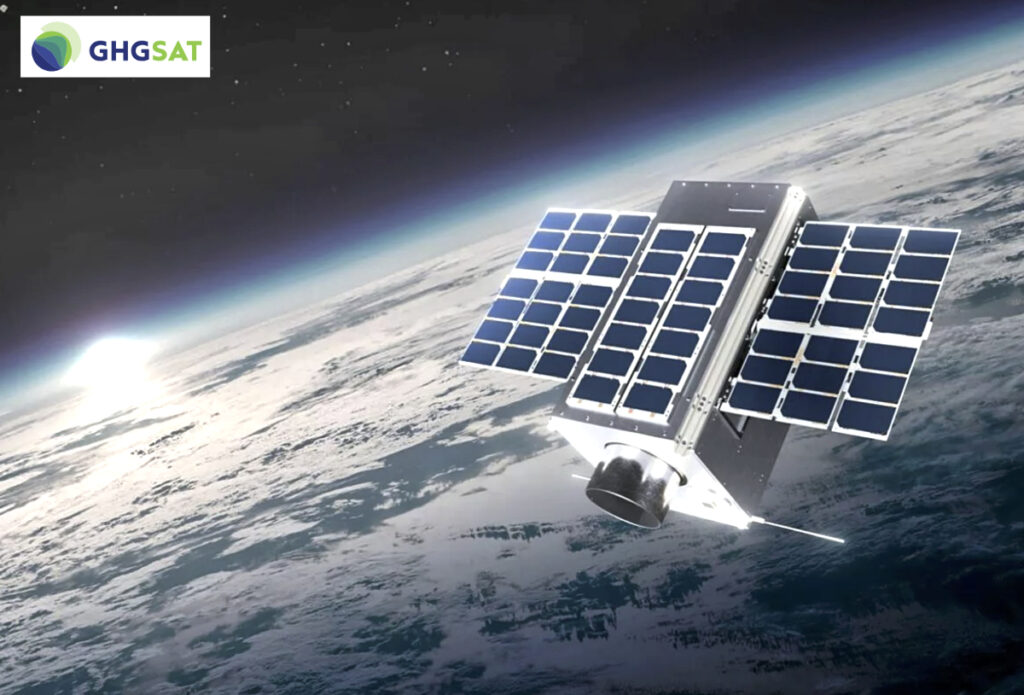
GHGSat has successfully launched two new satellites—Pierre (C-12) and Valmay (C-13), pictured above—aboard SpaceX’s Transporter-14 rideshare mission, with the company now reaching a total of 14 launched satellites.

Falcon 9 launches the SpaceX Transporter-14 mission from Vandenberg Space Force Base

The satellites deployed from the Falcon 9 rocket approximately 55 minutes after liftoff, marking another milestone in GHGSat’s mission of equipping decision-makers with actionable data on methane emissions from around the world.

With this launch, GHGSat now has the unique capability to monitor methane emissions from carbon-intensive industries, such as oil and gas, coal mining, and waste, on a daily basis. This transformative frequency enables near real-time tracking and mitigation, helping companies and governments take faster, better-informed action to reduce emissions.

Operating the world’s largest fleet of satellites dedicated to methane, GHGSat provides comprehensive global coverage of methane emissions, surveying more than 4 million sites annually and tracing the source of leaks down to individual pieces of industrial equipment. In 2024 alone, GHGSat detected more than 20,000 emissions over the “super-emitter” threshold of 100 kg/hr. Drawing on unmatched revisit rates and delivering data within hours of a detected emission, GHGSat serves as a trusted partner to industry, government, and financial institutions around the world.

Speed is critical because, while methane is more than 80 times more potent than CO₂ over a 20-year period, it also breaks down in the atmosphere much faster—within about a decade. This means that cutting methane emissions quickly demonstrates benefits for the environment. As international focus sharpens on reducing short-lived greenhouse gases, access to timely, precise, and independent emissions data that pinpoints and quantifies them is foundational for action.

Reducing methane emissions isn’t just good for the planet-it’s also good for business. For the oil and gas sector, methane emissions represent a financial loss: every ton of methane that escapes from oil & gas infrastructure is lost potential revenue. By identifying and fixing leaks rapidly, operators can retain more gas, improve operational efficiency, and reduce regulatory and reputational risks stemming from methane emissions. Studies from organizations such as the International Energy Association have shown that methane mitigation is one of the most cost-effective sustainability actions the industry can take-and can often be done at no net cost to operators.

Moreover, reducing methane emissions bolsters domestic energy security goals. By minimizing losses across production and distribution systems, countries can get more value from their existing energy infrastructure without expanding output. This makes energy supplies more stable and predictable-critical in an era of geopolitical shifts and rising global energy demand. With satellite data, policymakers and energy producers alike can make better-informed decisions that support secure, resilient energy systems.

Now almost a decade since the launch of its first pioneering satellite, Claire, GHGSat continues to rapidly scale its monitoring and data services to meet the surging demand for facility-level emissions data, supporting informed emissions reduction across the public and private sectors worldwide.

This launch represents a turning point in our ability to combat methane, one of the fastest levers that the world has to make progress on sustainability targets,” said GHGSat CEO, Stéphane Germain. “The addition of Pierre and Valmay allows us to deliver a level of global insight and granularity that was unimaginable just a few years ago. Daily monitoring ensures that operators are swiftly alerted of emissions across their assets, enabling rapid mitigation that ultimately drives methane reduction.”

About GHGSat
GHGSat is a global technology leader with pioneering emissions-monitoring capabilities that drive industrial efficiency with positive impact. Harnessing the power of satellites and aircraft, GHGSat traces emissions directly to their source at an unmatched speed, delivering the data and insights required to take action. A trusted partner for organizations around the world, GHGSat empowers decision-makers to tackle emissions, accelerating progress towards a resilient energy future.

Filed Under: News

BlackSky wins NGA Luno A Facility Operational Monitoring delivery order valued at over $24 million

June 24, 2025 by editorial

BlackSky Technology Inc. (NYSE: BKSY) won a more than $24 million, four-year, National Geospatial-Intelligence Agency (NGA) Luno A Facility Operational Monitoring (FOMO) delivery order for global monitoring of military and economic facilities. As part of the order, BlackSky has received an initial base and surge option award of $2 million.

Under the delivery order, BlackSky will perform AI-enabled object and pattern-of-life change detection to monitor trends and anomalies in vehicle, aircraft, vessel, railcar and ground equipment activity at military and economic facilities worldwide, including ports, airfields, military installations and railways.

BlackSky monitors more than 30 million square kilometers of the Earth’s surface for the NGA. In October, NGA selected BlackSky for the five-year, up to $290 million Luno-A multi-award, indefinite-delivery, indefinite-quantity (IDIQ) contract to monitor global economic and environmental activity and military capability using high-cadence, rapid revisit satellite imagery and AI-driven change-detection analytics.

The Luno A contract also contributes to the creation of new products, data and services that employ innovative uses for artificial intelligence to manage high volumes of data, produce deeper insights and boost predictive analytical capabilities. BlackSky’s scalable and cost-effective AI tools allow for more frequent data-intensive broad area search and discovery queries than traditional solutions.

Securing this Luno A task order continues BlackSky’s long record of success delivering our industry leading commercial real-time, AI-enabled dynamic monitoring capabilities at machine speed and scale in service to U.S. national security,” said Brian O’Toole, BlackSky CEO. “With unmatched speed and economics, BlackSky continues to improve upon our first-of-its-kind space-based intelligence system with the coming addition of our very high-resolution Gen-3 satellites to our high frequency, low latency constellation that will provide even more rapid, detailed and precise insights to support the critical needs of our customers.”

Filed Under: News

ThrustMe celebrates the firm’s 100th propulsion system launched into space

June 24, 2025 by editorial

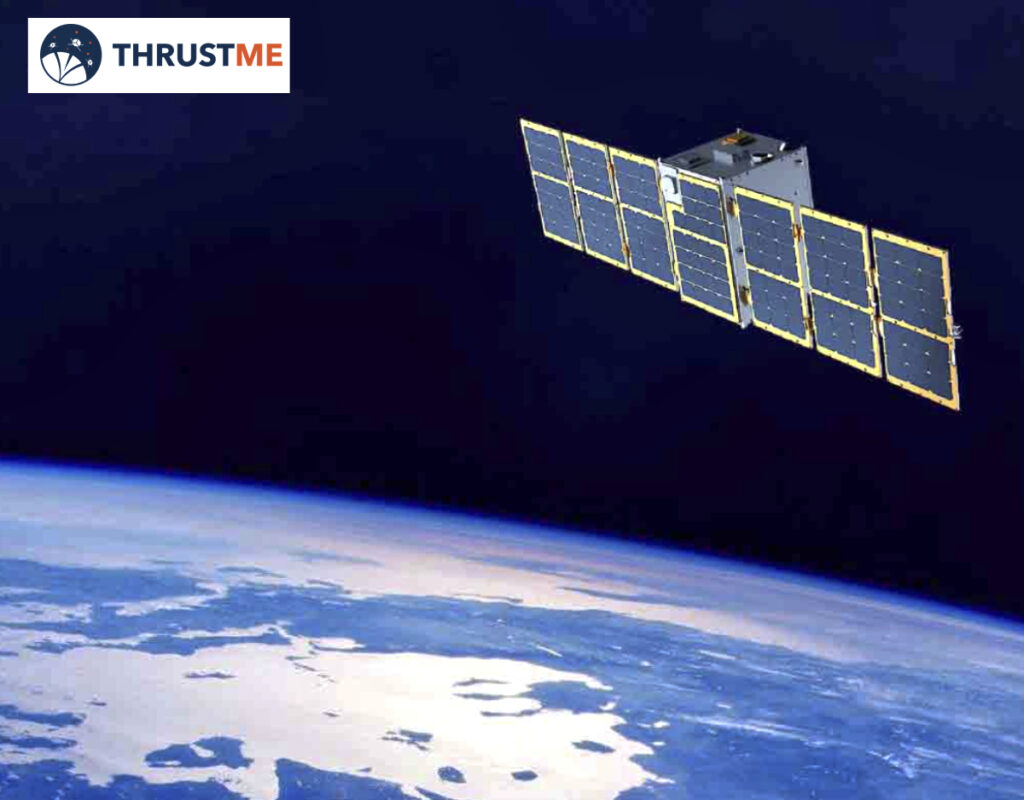
ThrustMe has successfully launched its 100th propulsion system into space—this milestone was achieved aboard the SpaceX Falcon 9 Transporter-14 mission that launched to space on June 23rd. The launcher carried a total of 26 ThrustMe propulsion units across seven satellites.

The electric space propulsion industry has grown rapidly in recent years. Just six years ago, fewer than ten electric propulsion systems were launched globally each year. Today, SpaceX alone deploys more than 1,500 propulsion systems on the Starlink fleet per year, with the rest of the industry contributing modestly with an additional 500. With this exponential growth, market forecasts now predict an annual demand for between 3,000 and 8,000 propulsion units in the coming years.

ThrustMe’s propulsion systems have accumulated more than 12,000 operational hours in orbit. One system has already completed its full mission lifetime after a few years in orbit, while another has achieved a 30 km orbit raise in just 12 days. In this latest launch, one of the satellites will soon attempt the world’s first proximity operation using electric propulsion; a significant step forward in on-orbit servicing and inspection capabilities.

As satellite missions become more complex and automated, and autonomous maneuvers more critical, scalable and reliable in-orbit propulsion has become essential. ThrustMe’s innovative use of solid iodine propellant eliminates the complexity and supply constraints of traditional xenon systems, enabling safer and more cost-effective satellite operations.

ThrustMe is doubling its production capacity annually since 2023, an exceptional pace for such sophisticated space systems. As one of the few companies capable of delivering high- reliability propulsion solutions at industrial scale, ThrustMe is uniquely positioned to meet the accelerating needs of the global space sector.

There is a clear production bottleneck in the propulsion supply chain,” says Dr. Ane Aanesland, co-founder and CEO of ThrustMe, “but increasing production capacity must be done carefully to preserve the product quality and reliability that are vital for both our clients and the global space ecosystem.”

Filed Under: News

SpaceX launches the Transporter-14 on a dedicated smallsat rideshare mission from foggy Vandenberg

June 24, 2025 by editorial

On Monday, June 23 at 2:25 p.m. PT, Falcon 9 launched the Transporter-14 mission to low-Earth orbit from Space Launch Complex 4E (SLC-4E) at Vandenberg Space Force Base in California. Photos by Satnews.

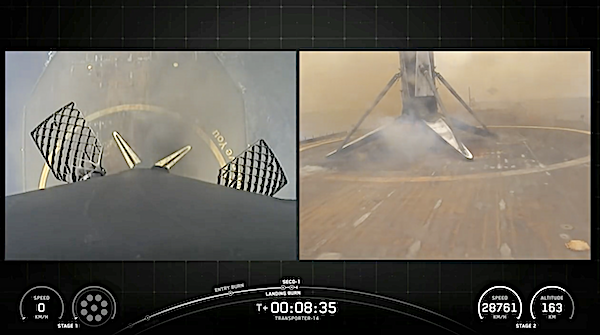
This was the 26th flight for the first stage booster supporting this mission which previously launched NROL-87, NROL-85, SARah-1, SWOT, Transporter-8, Transporter-9, NROL-146, Bandwagon-2, NROL-153, NROL-192, and 15 Starlink missions.

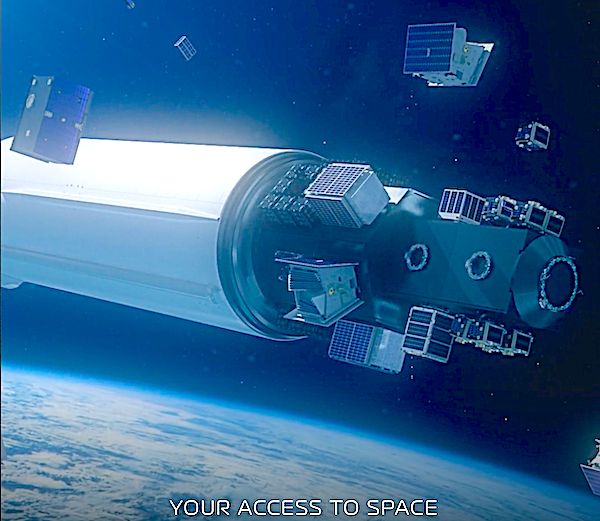
Transporter-14 was a dedicated smallsat rideshare mission. There were 70 payloads on this flight, including cubesats, microsats, re-entry capsules, and orbital transfer vehicles carrying three of those payloads to be deployed at a later time.

SpaceX to launch Transporter-14 mission on Monday from California

SpaceX is targeting Monday, June 23 for a Falcon 9 launch of the Transporter-14 mission to low-Earth orbit from Space Launch Complex 4E (SLC-4E) at Vandenberg Space Force Base in California. The 57-minute launch window opens at 2:18 p.m. PT.

A live webcast of this mission will begin about 15 minutes prior to liftoff, which you can watch on X @SpaceX. You can also watch the webcast on the new X TV app.

This will be the 26th flight for the first stage booster supporting this mission which previously launched NROL-87, NROL-85, SARah-1, SWOT, Transporter-8, Transporter-9, NROL-146, Bandwagon-2, NROL-153, NROL-192, and 15 Starlink missions. Following stage separation, Falcon 9 will land on the Of Course I Still Love You droneship stationed in the Pacific Ocean.

Transporter-14 is a dedicated smallsat rideshare mission. There are 70 payloads on this flight, including cubesats, microsats, re-entry capsules, and orbital transfer vehicles carrying three of those payloads to be deployed at a later time.

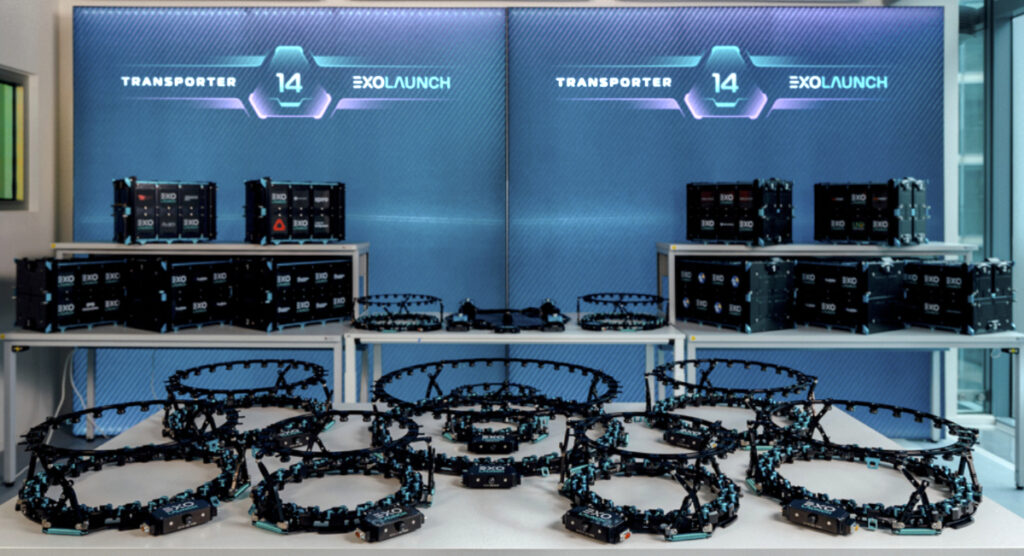
Exolaunch to deploy their largest mission to date — 45 customer satellites on Transporter-14

Exolaunch is set to deploy 45 customer satellites on the upcoming Transporter-14 rideshare mission with SpaceX aboard a Falcon 9 rocket. This mission highlights Exolaunch’s role as a trusted partner for rideshare launches and represents unparalleled expertise and flight heritage

Flight-proven hardware: CarboNIX, Nova, and Quadro deployment systems

The Transporter-14 mission represents a major milestone for Exolaunch as its largest mission to date, building on the company’s track record of providing reliable and precise access to orbit for customers worldwide. Exolaunch’s teams of experts will manage the deployment of numerous microsatellites, up to 250 kilograms, and CubeSats, up to 16U in size, supporting 25 new and returning customers from the USA, UK, Lithuania, Finland, Belgium, Germany, Australia, Canada, South Korea, France, Japan, Spain, Norway, Italy, and Greece.

On this mission, Exolaunch will use its flight-proven deployment systems, including:

  • CarboNIX microsatellite separation rings in 8″, 11″, 15″, and 24″ sizes
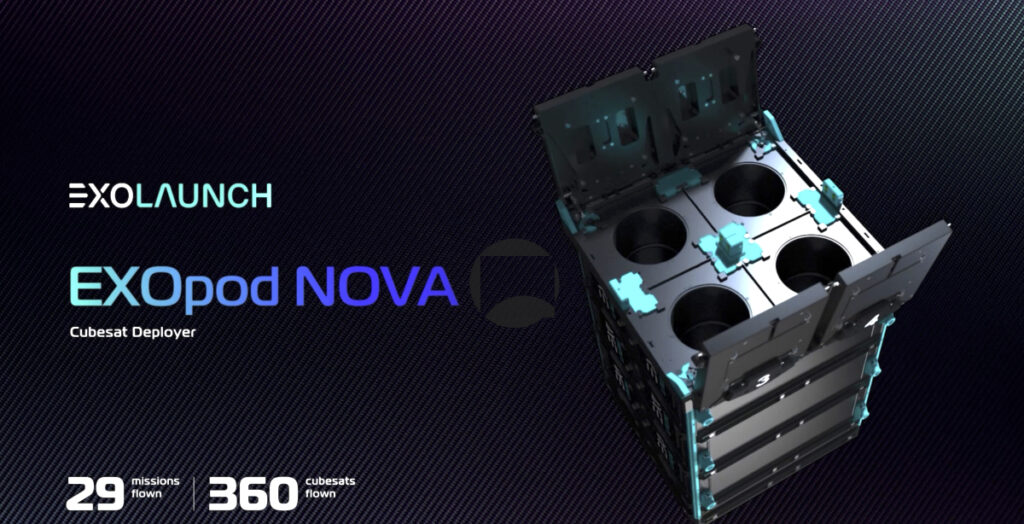
  • EXOpod Nova advanced CubeSat deployers, supporting higher-mass and larger volume satellites with exceptional reliability
  • Quadro four-point separation systems, offering synchronized release and ultra-low tip-off rates for precision microsatellite deployments

Exolaunch’s EXOpod Nova deployers have now supported more than 100 delivered units and hundreds of successful CubeSat deployments, reinforcing Nova’s reputation as a trusted next-generation deployer for CubeSat mission.

Exolaunch continues to be the only launch integrator to have manifested satellites on every Transporter mission since the program’s inception in 2020. With Transporter-14, Exolaunch will celebrate its 37th mission overall, having deployed over 530 satellites across 36 previous missions on different global launch vehicles.

As part of the company’s comprehensive service offering, Exolaunch has managed global logistics, satellite integration, deployment, and testing for its customers aboard the Transporter-14 mission—a turnkey solution trusted by the world’s most ambitious space programs.

Transporter-14 marks a historic achievement for Exolaunch and our customers,” said Robert Sproles, Chief Executive Officer at Exolaunch. “Our flight heritage, reliability, and hardware performance continue to set the standard in the rideshare industry. We are grateful to our customers for their trust and to SpaceX for being an outstanding partner as we continue to open space for all.”

This milestone reflects not just the growth of Exolaunch, but also the expanding demand for global access to space,” said Jeanne Allarie, Chief Commercial and Marketing Officer at Exolaunch. “Our unmatched success across these missions and the growing adoption of our Nova, CarboNIX, Quadro and Neo systems highlight the strength of our technology and services. We deeply appreciate our customers’ and SpaceX’s ongoing confidence in our team.”
Filed Under: Booster, Booster Recovery, Cubesats, Droneship, Droneship Landings, Exolaunch, Falcon 9, LEO Payloads, Low Earth Orbit (LEO), Microsat, Microsatellites, Mission Payloads, Rideshare, Rideshare Mission, Smallsat Launch Vehicles, Space Vehicles, SpaceX, SpaceX Rideshare, Transporter-14, Vandenberg SFB

Filed Under: News

United Launch Alliance + Amazon launch the Kuiper 2 mission

June 23, 2025 by editorial

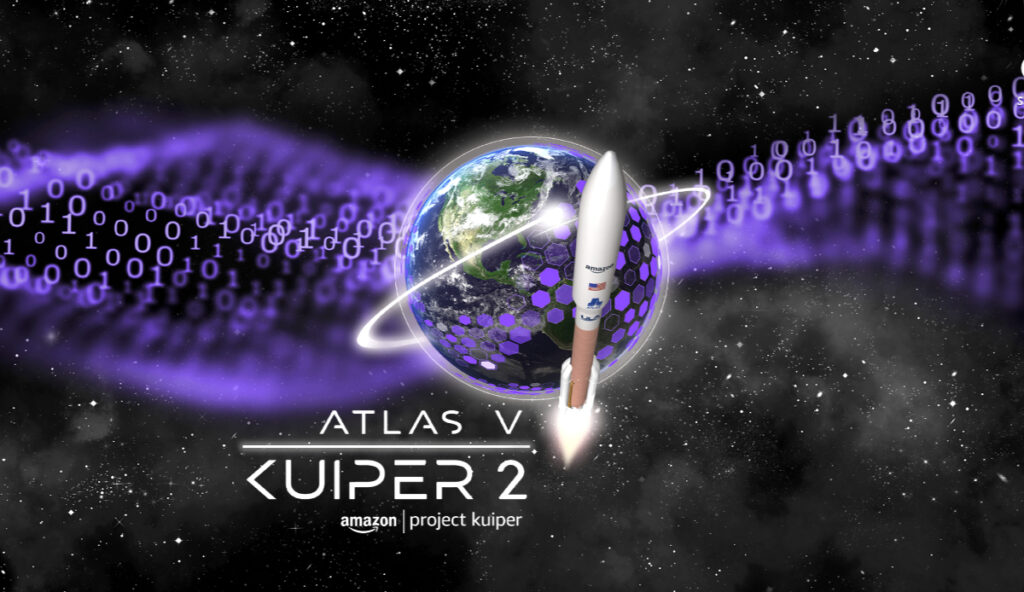
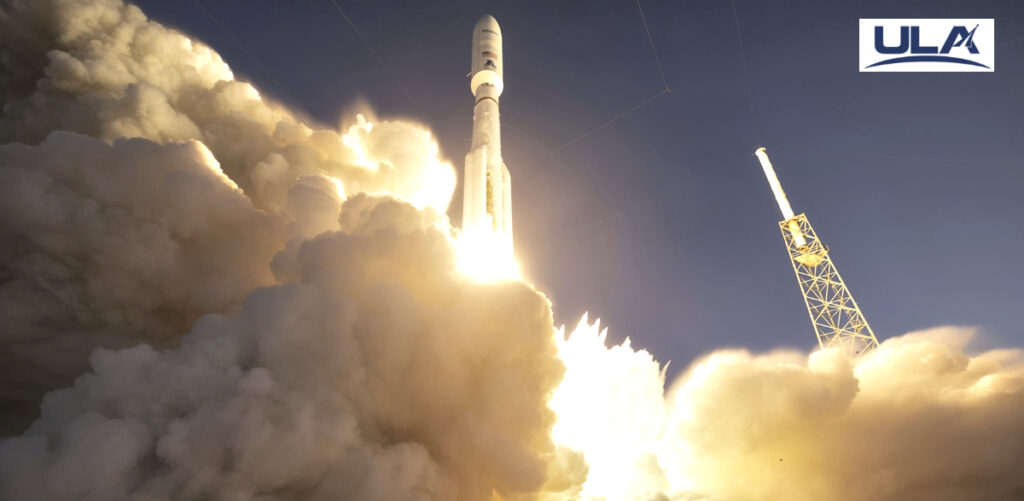
A United Launch Alliance (ULA) Atlas V rocket carrying the Kuiper 2 mission for Amazon’s Project Kuiper lifted off on June 23 at 6:54 a.m. EDT from Space Launch Complex-41 at Cape Canaveral Space Force Station.

This mission marks the next step in Amazon’s initiative to provide fast, reliable internet to customers around the world, including those in unserved and underserved communities.

The Kuiper 2 launch deployed the second batch of operational Project Kuiper satellites into the intended orbit. There are six remaining Kuiper missions on the Atlas V rocket, building up to 38, high-cadence, rapid fire launches on the next-generation Vulcan rocket. ULA will deliver more than half of the Project Kuiper constellation’s 3,200 satellites, through the world’s largest commercial launch agreement. 

We are proud to continue our strong partnership with Amazon and empower their mission to bridge the digital divide through reliable satellite technology,” said Gary Wentz, ULA vice president of Government and Commercial Programs. “ULA, working as a catalyst to global connectivity in collaboration with Amazon, enables delivery of these critical satellites designed to drive innovation and connect the world.” 
TLA’s next launch is the first Vulcan mission for the U.S. Space Force, USSF-106.

Read more at this direct SatNews link…

Filed Under: News

Exolaunch to deploy their largest mission to date — 45 customer satellites on Transporter-14

June 23, 2025 by editorial

Exolaunch is set to deploy 45 customer satellites on the upcoming Transporter-14 rideshare mission with SpaceX aboard a Falcon 9 rocket. This mission highlights Exolaunch’s role as a trusted partner for rideshare launches and represents unparalleled expertise and flight heritage

Flight-proven hardware: CarboNIX, Nova, and Quadro deployment systems

The Transporter-14 mission represents a major milestone for Exolaunch as its largest mission to date, building on the company’s track record of providing reliable and precise access to orbit for customers worldwide. Exolaunch’s teams of experts will manage the deployment of numerous microsatellites, up to 250 kilograms, and CubeSats, up to 16U in size, supporting 25 new and returning customers from the USA, UK, Lithuania, Finland, Belgium, Germany, Australia, Canada, South Korea, France, Japan, Spain, Norway, Italy, and Greece.

On this mission, Exolaunch will use its flight-proven deployment systems, including:

  • CarboNIX microsatellite separation rings in 8″, 11″, 15″, and 24″ sizes
  • EXOpod Nova advanced CubeSat deployers, supporting higher-mass and larger volume satellites with exceptional reliability
  • Quadro four-point separation systems, offering synchronized release and ultra-low tip-off rates for precision microsatellite deployments

Exolaunch’s EXOpod Nova deployers have now supported more than 100 delivered units and hundreds of successful CubeSat deployments, reinforcing Nova’s reputation as a trusted next-generation deployer for CubeSat mission.

Exolaunch continues to be the only launch integrator to have manifested satellites on every Transporter mission since the program’s inception in 2020. With Transporter-14, Exolaunch will celebrate its 37th mission overall, having deployed over 530 satellites across 36 previous missions on different global launch vehicles.

As part of the company’s comprehensive service offering, Exolaunch has managed global logistics, satellite integration, deployment, and testing for its customers aboard the Transporter-14 mission—a turnkey solution trusted by the world’s most ambitious space programs.

Transporter-14 marks a historic achievement for Exolaunch and our customers,” said Robert Sproles, Chief Executive Officer at Exolaunch. “Our flight heritage, reliability, and hardware performance continue to set the standard in the rideshare industry. We are grateful to our customers for their trust and to SpaceX for being an outstanding partner as we continue to open space for all.”

This milestone reflects not just the growth of Exolaunch, but also the expanding demand for global access to space,” said Jeanne Allarie, Chief Commercial and Marketing Officer at Exolaunch. “Our unmatched success across these missions and the growing adoption of our Nova, CarboNIX, Quadro and Neo systems highlight the strength of our technology and services. We deeply appreciate our customers’ and SpaceX’s ongoing confidence in our team.”

Filed Under: Booster, Booster Recovery, Cubesats, Droneship, Droneship Landings, Exolaunch, Falcon 9, LEO Payloads, Low Earth Orbit (LEO), Microsat, Microsatellites, Mission Payloads, Rideshare, Rideshare Mission, Smallsat Launch Vehicles, Space Vehicles, SpaceX, SpaceX Rideshare, Transporter-14, Vandenberg SFB

Filed Under: News

  • « Go to Previous Page
  • Page 1
  • Interim pages omitted …
  • Page 26
  • Page 27
  • Page 28
  • Page 29
  • Page 30
  • Interim pages omitted …
  • Page 339
  • Go to Next Page »

Primary Sidebar

WEEKLY NEWSLETTER

Archives

  • August 2026
  • July 2026
  • June 2026
  • May 2026
  • April 2026
  • March 2026
  • February 2026
  • January 2026
  • December 2025
  • November 2025
  • October 2025
  • September 2025
  • August 2025
  • July 2025
  • June 2025
  • May 2025
  • April 2025
  • March 2025
  • February 2025
  • January 2025
  • December 2024
  • November 2024
  • October 2024
  • September 2024
  • August 2024
  • July 2024
  • June 2024
  • May 2024
  • April 2024
  • March 2024
  • February 2024
  • January 2024
  • December 2023
  • November 2023
  • October 2023
  • September 2023
  • August 2023
  • July 2023
  • June 2023
  • May 2023
  • April 2023
  • March 2023
  • February 2023
  • January 2023
  • December 2022
  • November 2022
  • October 2022
  • September 2022
  • August 2022
  • July 2022
  • June 2022
  • May 2022
  • April 2022
  • March 2022
  • February 2022
  • January 2022
  • December 2021
  • November 2021
  • October 2021
  • September 2021
  • August 2021
  • July 2021
  • June 2021
  • May 2021
  • April 2021
  • March 2021
  • February 2021
  • January 2021
  • December 2020
  • November 2020
  • October 2020
  • September 2020
  • August 2020
  • July 2020
  • June 2020
  • May 2020
  • April 2020
  • March 2020
  • February 2020
  • January 2020
  • December 2019
  • November 2019
  • October 2019

© 2019–2026 SatNews

Insert/edit link

Enter the destination URL

Or link to existing content

    No search term specified. Showing recent items. Search or use up and down arrow keys to select an item.
      x
      Sign Up Now!

      Enjoy a free weekly newsletter with recent headlines from the global SmallSat industry.

      Invalid email address
      We promise not to spam you. You can unsubscribe at any time.
      Thanks for subscribing! You will now receive weekly SmallSat News updates.
      We love our advertisers.
      And you will too!

      Please disable Ad Blocker to continue... We promise to keep it unobtrusive.
      We promise not to spam you. You can unsubscribe at any time.
      Invalid email address
      Thanks for subscribing!