
• Skip to main content
  • Skip to primary sidebar
  • Home
  • News
  • Featured
  • More News ⌄
    • SatNews
    • SatMagazine
    • MilSatMagazine
  • Events ⌄
    • MilSat Symposium
    • SmallSat Symposium
    • Satellite Innovation
  • Contacts
  • SUBSCRIPTION

SmallSat News

You are here: Home / Archives for News

News

Sierra Space Defense initiated

June 12, 2025 by editorial

Sierra Space has chartered a new operation dedicated to supporting national security space as a prime contractor: Sierra Space Defense.

The company also unveiled expansion plans with a new production facility called “Victory Works,” adding 60,000 square feet of manufacturing space and bringing Sierra Space’s total infrastructure to more than one million square feet across seven states.

The launch of Sierra Space Defense and related infrastructure expansion plans are driven by a palpable sense of urgency: the United States is facing new threats and near-peer adversaries at unprecedented levels in the space domain. In response to the evolving threat environment, Sierra Space is retooling its commercial capacity to focus on revitalizing the U.S. defense industrial base through innovative satellite and spacecraft systems technology. Sierra Space will dedicate a new manufacturing facility, called “Victory Works,” to defense technology.

Located in Centennial, Colorado, the 60,000 square-foot space will play a pivotal role in the production of the company’s new Sierra Space Eclipse™ satellite bus line, a key component in Sierra Space’s efforts to enhance the capabilities of the U.S. defense sector. This expansion is on top of 24,000 square feet of existing sites dedicated to national security and defense work.

Since 2023, Sierra Space has secured $1.5 billion in national security and defense contracts, for production on 30 satellites; included in that figure are 18 missile warning and defense satellites awarded by the Space Development Agency (SDA) in January of 2024, as part of a $740 million prime contract to support the SDA’s Tranche 2 Tracking Layer.

In addition, Space Force awarded Sierra Space a “Quick Start” Resilient GPS (R-GPS) agreement in September of 2024. And the company continues to make strides in its spacecraft systems business, boasting more than 20 active contracts for solar arrays and other components.

In the Sierra Space Defense Portfolio:

  • Sierra Space Eclipse: a next generation product line of small, high performance, affordable satellites for on-orbit servicing missions
  • Sierra Space Ghost: a state-of-the-art space delivery system engineered to safely return objects from space – and through space – directly to precise locations on Earth
  • Sierra Space Spectre: a revolutionary satellite designed for precision rendezvous proximity operations (RPO)
  • Sierra Black OS: an advanced AI-enabled operating system athat is able to operate across space, air and ground systems seamlessly

Sierra Space Vice President Erik Daehler will helm the new organization.

We are mission-focused and dedicated to supporting our national security customers and the revitalization of the U.S. defense industrial base. Commercial space companies now have a profound responsibility to help lead an entirely new era for national defense,” Daehler said. “The creation of Sierra Space Defense enables stronger partnerships – such as our steadfast partnership with SNC – to tackle the hardest mission problems like Golden Dome. Our new Sierra Space Defense organization is a testament to our dedication to innovation at speed and excellence in satellite and spacecraft systems production, which will shape the future of defense technology.”

Lt. Gen. John E. Shaw (U.S. Space Force, Ret.) serves on Sierra Space’s National Security Space Strategic Advisor Group, said, “The growing scope and scale of what our adversaries are doing in space is alarming, and the threat environment is evolving rapidly as near-peer challenges accelerate,” Shaw said. “Commercial space companies possess the speed and agility required to outpace our adversaries and effectively respond to our critical national security space needs.”


Filed Under: Featured, News

Synspective selected as data + service provider for Japan’s ALOS-4

June 12, 2025 by editorial

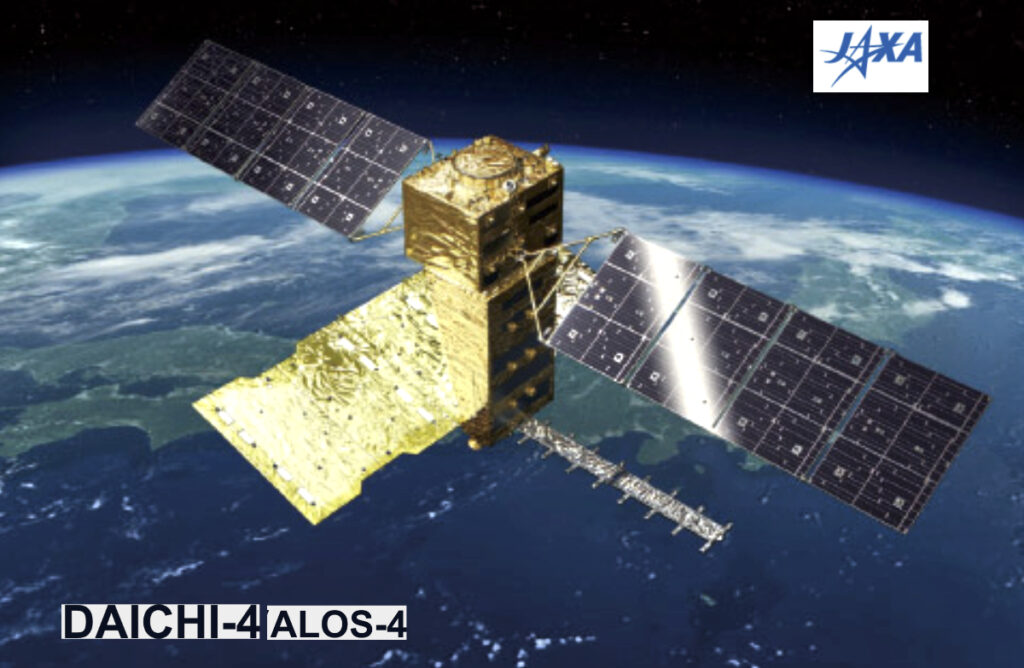
Synspective Inc., a provider of Synthetic Aperture Radar (SAR) satellite data and analytics solutions, is pleased to announce that the Japan Aerospace Exploration Agency (JAXA) has selected the company as the data service provider for the Advanced Radar Satellite, Daichi-4 (ALOS-4).

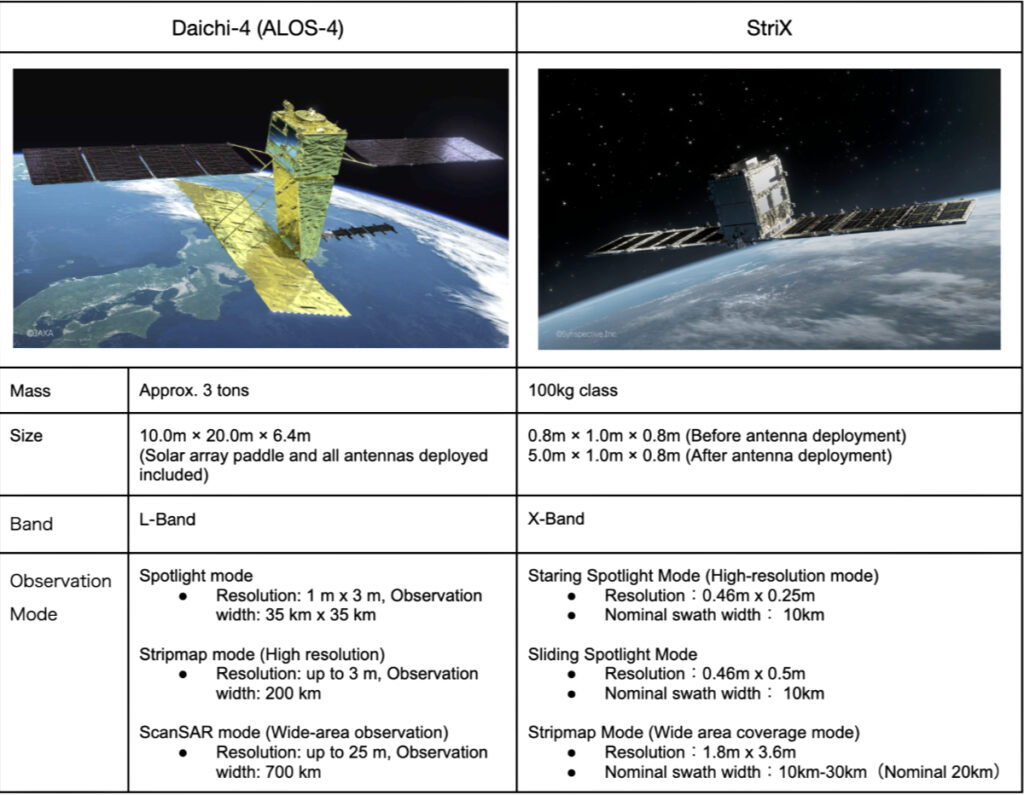
To expand access to SAR data, we are committed to delivering comprehensive analysis and solutions. Building on our experience with Daichi-2 (ALOS-2), we aim to grow satellite data distribution network across Japan and international markets. Together with our SAR satellite, StriX, this initiative will enhance SAR imagery availability for customers and foster new opportunities.

ALOS-4 is JAXA’s satellite launched via the H3 Launch Vehicle No. 3 from the Tanegashima Space Center. Equipped with an advanced L-band synthetic aperture radar, it builds on ALOS-2’s foundation to deliver world-leading resolution and observation coverage.

While both StriX and ALOS-4 employ SAR technology, they offer distinct characteristics. StriX utilizes X-band radar, which provides high-resolution imagery through its short wavelength, interacting with surface features like vegetation. This makes it excellent for detecting structural changes in buildings and roads, delivering detailed ground surface information beneficial for urban infrastructure and rapid disaster assessment.

ALOS-4 operates in the L-band, which has a longer wavelength that performs well even through vegetation. This makes it ideal for forested regions and grasslands. These attributes also make ALOS-4 advantageous for long-term monitoring of ground deformation and embankments.

Filed Under: News

Forrester’s Digest: European Union approves the SES purchase of Intelsat

June 11, 2025 by editorial

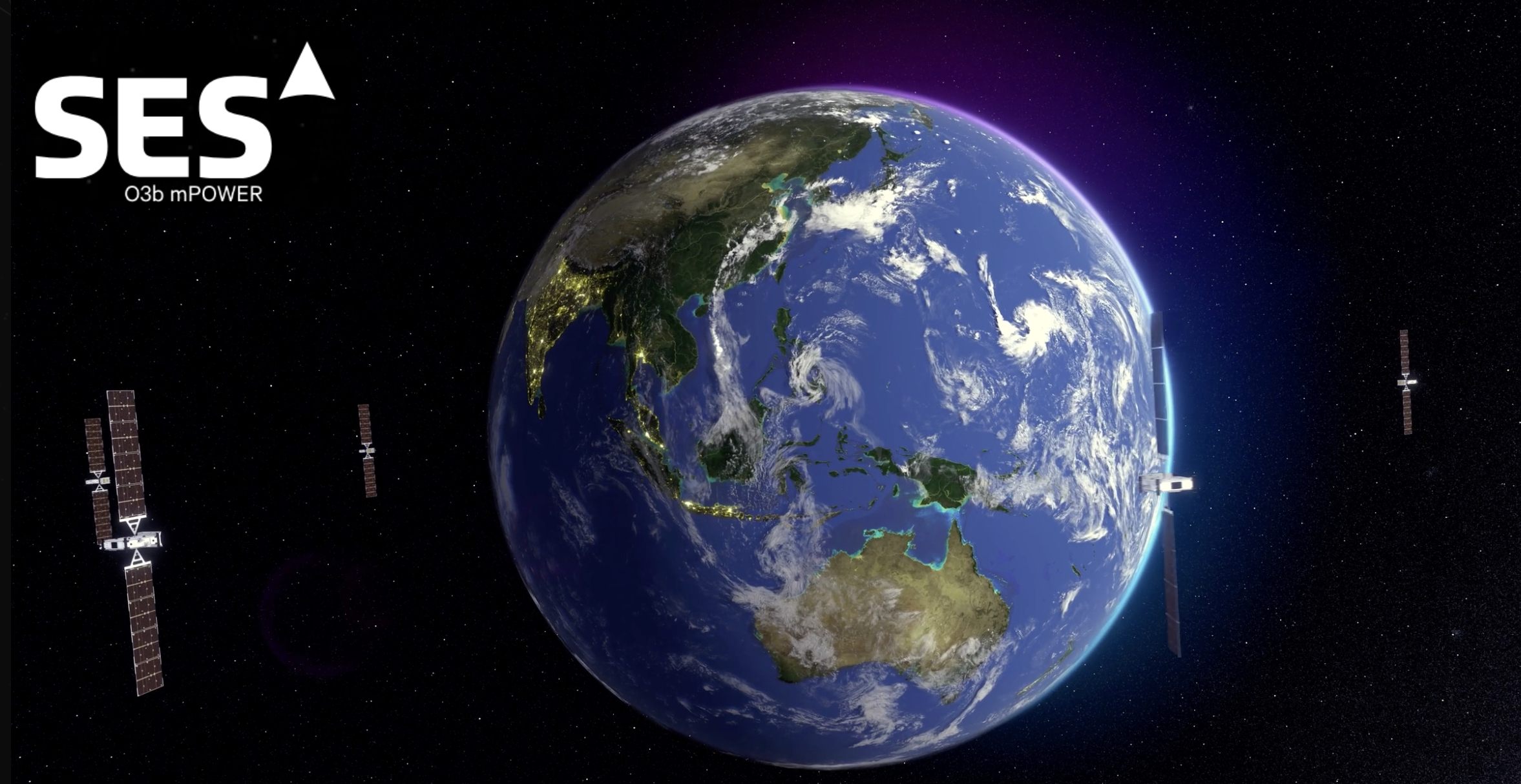
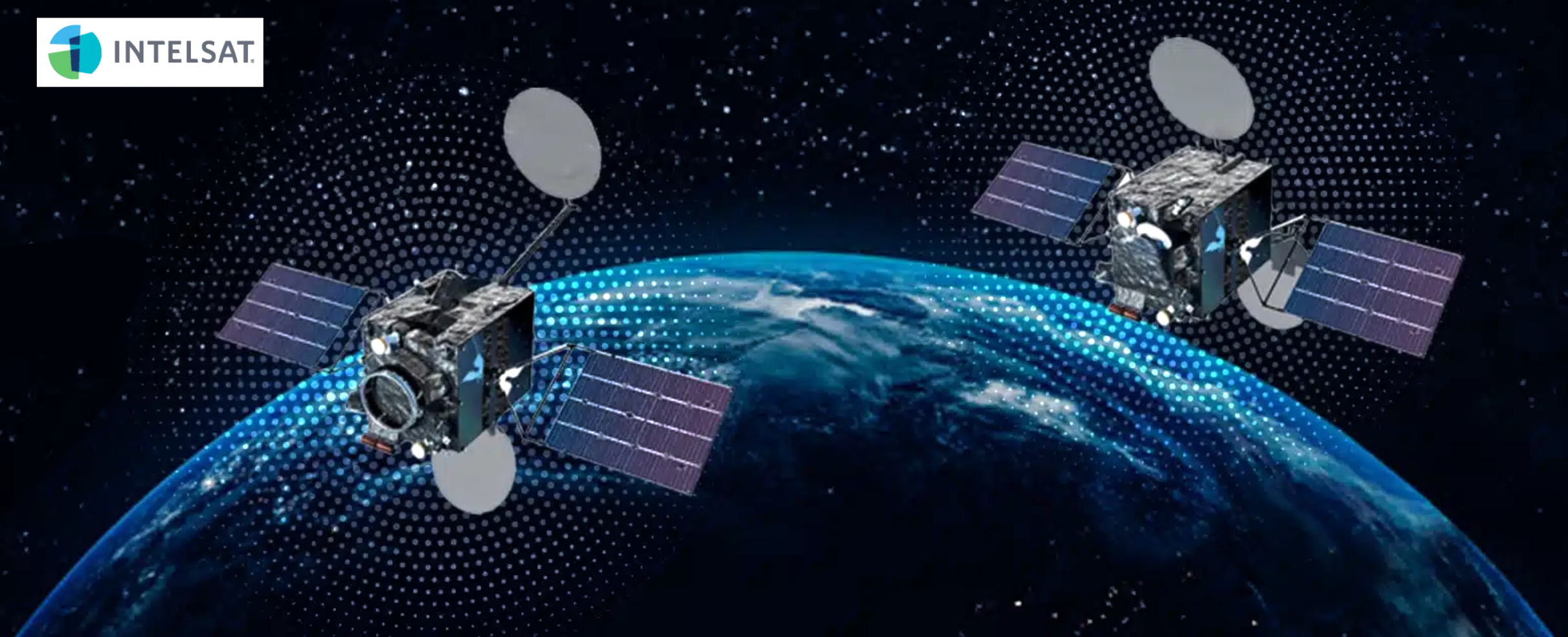
The European Union has “unconditionally” approved the SES purchase of Intelsat (for €3.1 billion plus debt) and joins the UK’s decision to permit the acquisition to go through. Approvals from the U.S., including permissions to reassign Intelsat’s frequency licences to SES, are still outstanding.

“The Commission concluded that the transaction would not raise competition concerns in the European Economic Area,” EU’s executive arm said in a statement.

The combined businesses would be—by far—the world’s most powerful and comprehensive satellite operator, and provide the scale to compete with Starlink and the upcoming Project Kuiper broadband systems.

The UK’s Competition & Markets Authority (CMA) approved the deal in May, emphasizing the in-flight competition, saying: “The CMA found that the Merged Entity would face significant competitive pressure in the supply of broadband IFC services to commercial airlines, including from vertically integrated companies such as Starlink and Viasat Inmarsat,” the British regulator said.

Filed Under: News

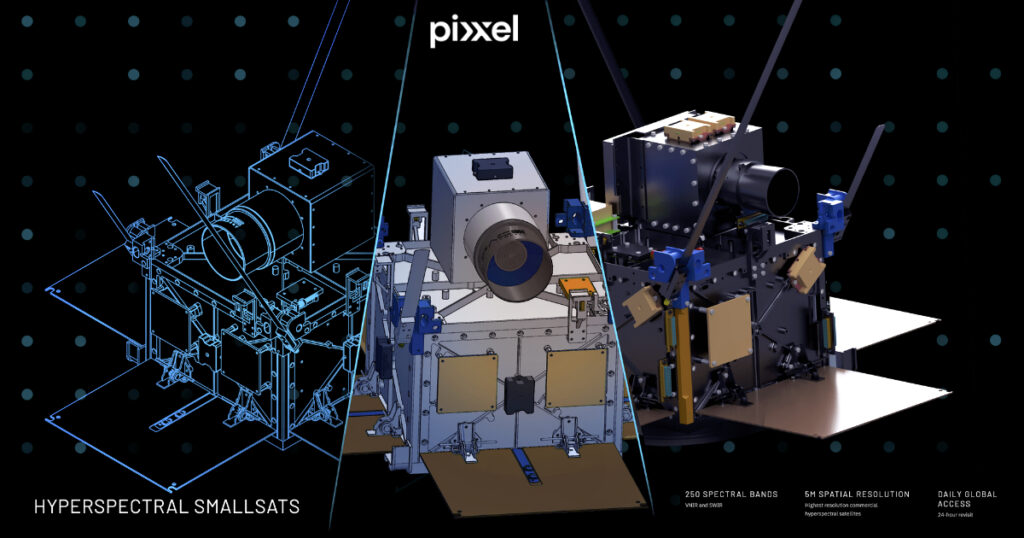
Pixxel signs iDEX SPARK grant agreement to develop hyperspectral + MWIR payloads for the Indian Air Force

June 11, 2025 by editorial

Pixxel has signed a second Agreement with the Innovations for Defence Excellence (iDEX), Ministry of Defence, Government of India. This new SPARK (Support for Prototype and Research Kickstart) Grant, awarded to SpacePixxel Pvt Ltd under iDEX DISC 8 Challenge 6.2, supports the development of advanced hyperspectral and MWIR (Mid-Wave Infrared) payloads, tailored for the Indian Air Force.

The grant further strengthens Pixxel’s collaboration with the Indian ecosystem, following its selection under the Mission DefSpace Challenge of iDEX Prime (Space) in 2023 to manufacture miniaturized, multi-payload satellites.

With this new milestone, Pixxel will leverage its cutting-edge optical engineering and in-house satellite manufacturing capabilities to design and build next-generation Earth Observation (EO) payloads with security-grade performance. The high-resolution hyperspectral and MWIR payloads will enhance India’s airborne and space-based imaging capabilities across various operational and strategic applications.

The grant through the iDEX scheme is designed to accelerate the development of next-generation prototypes and technologies by Indian startups and Micro, Small and Medium Enterprises (MSMEs), fostering a self-reliant and innovation-driven landscape in the country. Pixxel’s continued participation underscores its commitment to supporting strategic goals and reflects the government’s growing confidence in its technology stack.

With three Firefly satellites already on-orbit and more to launch soon, Pixxel has demonstrated its ability to build scalable, affordable, and versatile space solutions from the ground up. This is further enabled by Pixxel Aurora, the company’s Earth Observation Studio, which makes hyperspectral imagery accessible and usable through intuitive visualization, analysis, and insight generation tools. As the company expands its capabilities, it remains focused on building a real-time, high-fidelity health monitor for the planet.

iDEX was established by the DIO under Department of Defence Production and has launched 11 editions of the Defence India Start-up Challenge (DISC) and recently unveiled the Acing Development of Innovative Technologies with iDEX (ADITI) scheme to promote innovations in critical and strategic defence technologies.

Filed Under: News

Vocus + Telesat announce multi-year Telesat Lightspeed terrestrial infrastructure + services contract

June 11, 2025 by editorial

Vocus and Telesat (Nasdaq and TSX: TSAT) have announced that Vocus will build Australia’s first Telesat Lightspeed Low Earth Orbit (LEO) Landing Station.

Vocus will construct and operate the new Landing Station in New South Wales, Australia, and provide fiber connectivity to Telesat’s point of presence (PoP), connecting Telesat’s advanced LEO Lightspeed satellite constellation to terrestrial networks, providing secure, low-latency satellite services across the region.

The long-term agreement also includes Telesat Lightspeed services when the network becomes operational. These services, backed by committed information rates (CIR) and comprehensive service level agreements, will ensure resilient, low-latency connectivity for Vocus’ enterprise and government customers, complementing its already substantial LEO satellite services customer base.

A unique feature of the Telesat Lightspeed service will be its Terminal-to-Terminal direct connectivity capability, which eliminates the need for terrestrial links for customers transmitting especially sensitive information.

As a leading provider of Landing Stations and fibre network solutions, Vocus is an ideal partner to deliver the resilient, scalable terrestrial infrastructure that not only serves as a key interconnect point for customer data, but also further strengthens Australia’s digital infrastructure resilience,” said Asit Tandon, Telesat’s Chief Network and Information Officer. “Telesat will begin launching its LEO satellites in late 2026 and this new Landing Station will play a key role in satellite testing and customer field trials before global service delivery.”

We’re proud to be partnering with Telesat on establishing its network in Australia,” said Ashley Neale, Head of Vocus Space and Wireless Operations. “Vocus already has 30 ground stations currently in operation or contracted to be built, demonstrating that our infrastructure provides the critical reliability needed for LEO networks. “This will enable, for example, a naval vessel to communicate via the Telesat Lightspeed satellites directly with ground deployed soldiers via the optical laser-linked space network, completely bypassing land-based infrastructure or the public internet. This capability will be extremely valuable to customers with mission-critical communications requirements and a desire to preserve data sovereignty even outside of Australia’s geographic borders.”

Glenn Katz, Telesat’s Chief Commercial Officer, said, “In addition to public networking options via Telesat’s global Landing Stations, our flexible architecture includes options for Private Access Stations, special security add-ons, and the ability for Vocus’ customers to maintain complete control over encryption, providing valuable, differentiated capabilities in their LEO portfolio.”

Filed Under: News

New Iridium Chat app enables unlimited global messaging via Iridium GO! exec

June 11, 2025 by editorial

Iridium Communications Inc. (NASDAQ: IRDM) has announced Iridium® Chat, a companion app and messaging platform for the Iridium GO! exec® satellite communication access device, that is available as a free download for Apple (App Store) and Android (Google Play) devices.

Harnessing the truly global Iridium network, the Iridium Chat app optimizes the delivery of app-to-app messages, compressed image sharing and location updates between subscribers and their contacts when connected to an Iridium GO! exec, terrestrial Wi-Fi or cellular network.

In addition to the Iridium Chat app, the new Iridium GO! exec unlimited midband (Iridium Certus 100) data plan is ideal for lower-bandwidth features of many popular IP messaging apps, allowing users to maximize their usage without worrying about data overages.

Since its inception, Iridium GO! exec has been connecting remote workers, NGO personnel, government employees, first responders, lone workers, scientists and researchers, pilots, sailors, and everyday adventurers. The device provides a natural extension of connectivity to users off the grid to send and receive email, make phone calls, share pictures, post to social media, or get help in an emergency.

With Iridium Chat, Iridium GO! exec subscribers can now enjoy unlimited app-to-app messaging with other Iridium Chat app users over the Iridium network across all subscription plans. The app’s location sharing and picture sharing are bundled into each plan.

Unlike standard apps compatible with Iridium GO! exec, Iridium Chat utilizes Iridium Messaging Transport® (IMT®), offering users a real-time messaging experience. Iridium Chat supports group messaging for up to 50 individuals, and users can confidently confirm message delivery with real-time sending, sent and delivered status aided by the Iridium GO! exec terminal’s messaging device firmware and cloud-based messaging platform.

Other key benefits include reliable, global connectivity, lack of bill shock, and the ability for multiple Iridium GO! exec users sharing the device to keep their messages private with individual accounts. Additionally, each Iridium GO! exec can support up to four Iridium Chat users, within Bluetooth range, simultaneously sharing its IMT connection.

Users can find and download the app by visiting the iOS App Store or Google Play. With Iridium Chat, any Iridium GO! exec user, along with their friends, family, and co-workers, have access to reliable, weather-resilient connectivity anywhere in the world.

Iridium GO! exec continues to be a unique device that provides battery-powered portability for off-the-grid connectivity,” said Josh Miner, vice president, Land Mobile, Iridium. “The Iridium Chat app enhances these capabilities and user experience by helping ensure enterprise, government, and off-grid professionals stay connected and productive in the most cost-effective and efficient manner possible – no matter where their work or adventures take them.”

Filed Under: News

Embraer to offer Gogo Galileo connectivity as an aftermarket solution for Phenom 300 jets

June 9, 2025 by editorial

Embraer will offer the Gogo Galileo HDX connectivity solution for its Phenom 300 aftermarket customers through a Supplemental Type Certificate (STC) generated in partnership with Gogo.

Gogo’s fuselage-mounted antenna on top of an aircraft

The installation of the compact, half-duplex antenna and one Line Replaceable Unit will allow Embraer business jet owners to enjoy in-flight connectivity with performance that mirrors the best ground-based solutions.

Passengers using Gogo’s in-flight connectivity can expect performance at the same level they have at home or in the office, with 4K streaming, high-quality video conferencing, online gaming, and large file transfers. Leveraging the Eutelsat OneWeb Low-Earth-Orbit (LEO) satellite network, the Gogo Galileo HDX system offers a unique, reliable, and speedy connectivity solution.

Embraer will provide the solution for the Phenom 300 model aircraft, followed by other configurations. Availability of the new connectivity solution will vary depending on region. FAA certification through Embraer is expected in Q3, 2025; ANAC in Q4, 2025; and EASA in Q1, 2026. The Phenom 300E model will follow suit, and dates will be announced in the future.

The Embraer Owned Service Center Network, and the Embraer Authorized Service Network will be available and prepared to support customers who wish to install the STC.

Filed Under: News

Enpulsion unveils their Nexus electric propulsion system

June 6, 2025 by editorial

Enpulsion has launched Nexus, the company’s most advanced propulsion system to date. Designed for spacecraft up to 500 kilograms, Nexus delivers significantly increased thrust and enhanced orbit-raising capabilities, addressing the growing demand for responsive, high-performance electric propulsion in smallsat missions.

Built on Enpulsion’s heritage Field Emission Electric Propulsion (FEEP) platform, Nexus is a direct evolution of the company’s TRL 9 Micro R3 system that leverages the flight heritage of more than 280 units on-orbit. With a thrust-to-power ratio optimized for early mission phases, Nexus mitigates one of the primary limitations traditionally associated with electric propulsion—initial orbit-raising speed. With this innovation, Enpulsion’s Nexus offers a groundbreaking alternative to Hall Effect Thrusters (HET) in the smallsat class.

Nexus is ideally suited for a range of mission profiles, including orbit-raising and deorbiting for SDA-class buses, constellation maneuvering and maintenance, responsive government and defense missions, and station keeping support for larger platforms. Nexus is also designed for flexible clustering and offers a compact, non-ITAR solution for international customers seeking high-thrust performance in a scalable architecture.

Nexus continues Enpulsion’s commitment to innovative spacecraft maneuverability throughout mission life, supporting sustainable satellite operations and celestial stewardship. Seamlessly integrating with Enpulsion’s Cortex Smart Mobility Interface (SMI), the system features no pressurized tanks or chemical energy storage and uses a solid indium propellant for safe handling.

Nexus development is already underway, with Preliminary Design Review (PDR) scheduled for Q3 2025, Critical Design Review (CDR) in Q1 2026, qualification completion in Q3 2026, and production deliveries starting in Q4 2026.

With Nexus, we’re building on everything we’ve learned from years of flight heritage and direct customer collaboration,” said Alexander Reissner, CEO & Founder of Enpulsion. “This system brings new performance to the table while staying true to what sets our propulsion apart: precision, simplicity, safety, and superior performance for the entire mission life.”

Filed Under: News

Eutelsat + Orange reinforce partnership with new multi-year LEO agreement

June 5, 2025 by editorial

Eutelsat Group and Orange have signed an agreement enabling Orange to reinforce its position in LEO satellite communications, leveraging Eutelsat’s OneWeb constellation.

Through this latest investment, Orange aims to strengthen its satellite solutions portfolio with LEO connectivity solutions providing high throughput, low latency, resilient and sovereign services to its enterprise and government customers wherever they are located and support mobile backhauling globally.

By combining OneWeb’s satellite coverage with its terrestrial networks, Orange will deliver seamless continuity of service and enhanced security as part of a digital inclusion approach for businesses allowing them to access critical services even in the most complex environments and underserved or remote areas of the globe.

  • New multi-year agreement builds on long-standing relationship between the two companies
  • Enhances access to the benefits of LEO satellite communications to Orange’s enterprise and government customers and supports mobile backhauling to meet demand globally
  • Further demonstrates the role of LEO connectivity as a complementary component of the global telecoms offer

Orange and Eutelsat enjoy a long-standing partnership. Orange is the exclusive reseller of KONNECT VHTS capacity for consumer broadband in France under an agreement dating back to 2020, while earlier this year Orange Middle East and Africa inked an agreement for capacity on the EUTELSAT KONNECT satellite to deliver satellite internet over its footprint.

Cyril Dujardin, President of the Connectivity Business Unit at Eutelsat said, “Eutelsat is delighted to further reinforce its relationship with Orange and looks forward to supporting its ambitious project to provide premium, ubiquitous connectivity to its customers. LEO-enabled services are becoming an integral technology for global telco operators. We are delighted to have been selected by Orange to enhance its service to its enterprise customers.”

Jean Louis Le Roux, EVP Orange International Networks, said, “It is of strategic importance for Orange to invest in the unique LEO European solution that provides best in class, resilient, tailored and sovereign digital connectivity services to serve our customers wherever they are located. The partnership with Eutelsat for OneWeb services is of vital importance to support their digital transformation.”

Filed Under: News

Impulse Space secures $300 million Series C

June 4, 2025 by editorial

Impulse Space has raised $300 million in a Series C funding round—one of the largest venture rounds in the history of the space industry—the round, led by Linse Capital, brings Impulse’s total capital raised to $525 million.

The pre-emptive raise is both a positive signal about Impulse’s business trajectory and a direct response to surging customer demand. With more than 30 signed contracts (totaling nearly $200 million in value) and growing interest from every sector, Impulse will use the funding to scale and execute a backlog of missions that require faster, more flexible, and more cost-effective in-space mobility.

This Series C funding will accelerate Impulse’s mission in three key ways:

  • Growing headcount across engineering, manufacturing, and mission operations while continuing to vertically integrate for cost, quality, and schedule control.
  • Accelerating R&D to expand mission profiles—including integrating electric propulsion for long-duration missions—and develop new vehicles for national security and NASA applications.
  • Scaling production on Mira and Helios to meet a growing backlog of demand.

Since the company’s founding in 2021, Impulse has quietly built a track record of technical achievement, successful missions, and commercial momentum. Led by Tom Mueller, a SpaceX founding member and the architect behind the Merlin engine family, Impulse is powered by a veteran team with a proven history of designing, testing, and delivering. This raise is more than capital—it affirms Impulse’s emergence as the front runner for in-space mobility.

In less than four years, Impulse Space has already:

  • Built and flown Mira—a high-thrust, highly maneuverable space vehicle for payload hosting and deployment—on two successful customer missions.
  • Executed what is believed to be the two largest orbital maneuvers ever by a nitrous-based propulsion system.
  • Secured more than 30 commercial and government contracts.
  • Developed Helios—a high-energy kick stage to rapidly deliver payloads to MEO, GEO, and beyond—on track to fly in 2026.
  • Launched a roadmap for a customizable GEO Rideshare Program, debuting in 2027.

Missions across all sectors—commercial, defense, and civil—are requiring unprecedented levels of in-space mobility. Commercial operators need faster, more cost-effective ways to deploy and reposition satellites. Defense agencies require tactically responsive capabilities to stay ahead of evolving threats. Civil missions depend on precise, flexible movement to support Earth Observation (EO) and deep space exploration—often on tight timelines and limited budgets. All of these sectors need mobility on demand.

Impulse’s team and proven track record is answering the call with its fleet of space vehicles designed to deliver reliable, cost-effective, and rapid transportation within, and across, orbits.

This raise comes as demand for Impulse’s vehicles skyrockets across the orbital economy. With Linse Capital leading, the round also includes participation from new investor DFJ Growth, as well as returning investors Valor Equity Partners, Founders Fund, Lux Capital, RTX Ventures, DCVC, Airbus Ventures, Spring Tide, First Principles Group, Balerion Space Ventures, Tamarack Global, and Trousdale Ventures.

We’ve proven that we can build fast and fly successfully. Now, the market is demanding more,” said Mueller, CEO and founder. “This raise helps us scale production and technical capabilities to meet that demand head-on. Achieving a true space age is going to require new levels of in-space mobility to move payloads quickly and precisely, both within and between orbits. That capability is what we’re building at Impulse.”

Impulse is tackling one of the most technically demanding challenges in aerospace with a speed and precision we rarely see,” said Bastiaan Janmaat, Managing Partner at Linse Capital. “Their vertically integrated approach, proven track record, and ability to execute quickly in this market give them a real advantage. We’re excited to support their vision as they build the infrastructure that will power the next generation of space missions.”

Filed Under: News

  • « Go to Previous Page
  • Page 1
  • Interim pages omitted …
  • Page 28
  • Page 29
  • Page 30
  • Page 31
  • Page 32
  • Interim pages omitted …
  • Page 339
  • Go to Next Page »

Primary Sidebar

WEEKLY NEWSLETTER

Archives

  • August 2026
  • July 2026
  • June 2026
  • May 2026
  • April 2026
  • March 2026
  • February 2026
  • January 2026
  • December 2025
  • November 2025
  • October 2025
  • September 2025
  • August 2025
  • July 2025
  • June 2025
  • May 2025
  • April 2025
  • March 2025
  • February 2025
  • January 2025
  • December 2024
  • November 2024
  • October 2024
  • September 2024
  • August 2024
  • July 2024
  • June 2024
  • May 2024
  • April 2024
  • March 2024
  • February 2024
  • January 2024
  • December 2023
  • November 2023
  • October 2023
  • September 2023
  • August 2023
  • July 2023
  • June 2023
  • May 2023
  • April 2023
  • March 2023
  • February 2023
  • January 2023
  • December 2022
  • November 2022
  • October 2022
  • September 2022
  • August 2022
  • July 2022
  • June 2022
  • May 2022
  • April 2022
  • March 2022
  • February 2022
  • January 2022
  • December 2021
  • November 2021
  • October 2021
  • September 2021
  • August 2021
  • July 2021
  • June 2021
  • May 2021
  • April 2021
  • March 2021
  • February 2021
  • January 2021
  • December 2020
  • November 2020
  • October 2020
  • September 2020
  • August 2020
  • July 2020
  • June 2020
  • May 2020
  • April 2020
  • March 2020
  • February 2020
  • January 2020
  • December 2019
  • November 2019
  • October 2019

© 2019–2026 SatNews

Insert/edit link

Enter the destination URL

Or link to existing content

    No search term specified. Showing recent items. Search or use up and down arrow keys to select an item.
      x
      Sign Up Now!

      Enjoy a free weekly newsletter with recent headlines from the global SmallSat industry.

      Invalid email address
      We promise not to spam you. You can unsubscribe at any time.
      Thanks for subscribing! You will now receive weekly SmallSat News updates.
      We love our advertisers.
      And you will too!

      Please disable Ad Blocker to continue... We promise to keep it unobtrusive.
      We promise not to spam you. You can unsubscribe at any time.
      Invalid email address
      Thanks for subscribing!