• Skip to main content
  • Skip to primary sidebar
  • Home
  • News
  • Featured
  • More News ⌄
    • SatNews
    • SatMagazine
    • MilSatMagazine
  • Events ⌄
    • MilSat Symposium
    • SmallSat Symposium
    • Satellite Innovation
  • Contacts
  • SUBSCRIPTION

SmallSat News

You are here: Home / Archives for News

News

Winning orders, raising cash and the Oval Office!

May 29, 2025 by editorial

By Chris Forrester

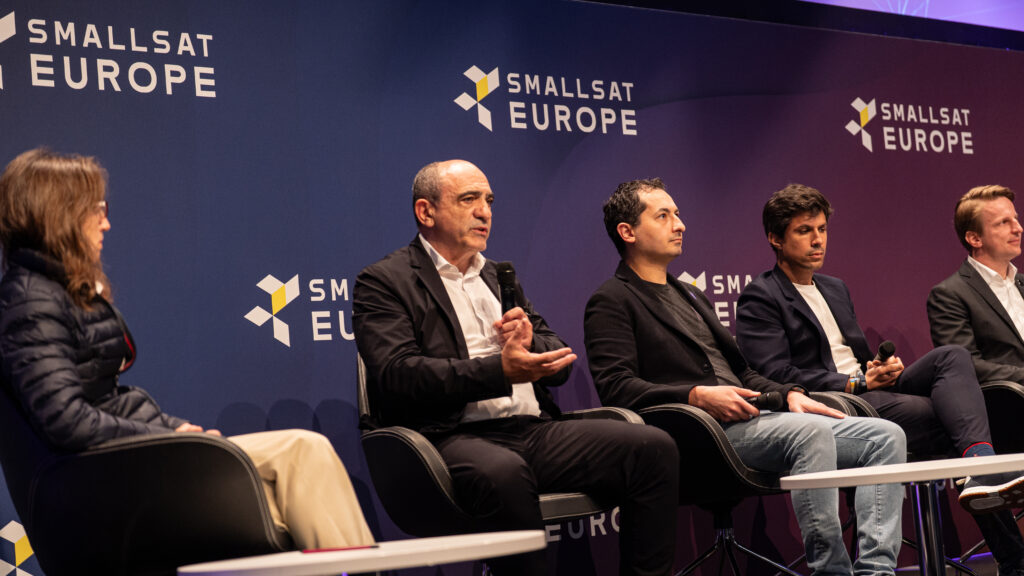
Dr. Jeff Foust, Senior Staff Writer, SpaceNews, moderated the Satellite Manufacturers session at SmallSat Europe, held in Amsterdam on May 28. The session examined satellite production, winning orders, raising cash, IRIS2 and potential geopolitical problems out of the US.

Simon van den Dries (Head of Business Development, Space Services, Endurosat).  Simon leads EnduroSat’s Space Service division, dedicated to enabling affordable access to space infrastructure for low Earth orbit. He said that while funding was generally coming from government, it was important that local offices were maintained in European countries. The company operated legally separate businesses in other countries, notably the US. 

Dr. Thomas Sinn (CEO & Founder, Dcubed). Dcubed is a pioneering company specializing in high-performance deployable space hardware including innovative solutions in release actuators, solar arrays, antennas, and in-space manufacturing (ISM). Dr Sinn said he sensed there was more funding coming from governments. He was extremely worried about Washington’s tariff structure; would it be 10% or 50%? The uncertainty was worrying.

Luis Gomes (CEO, AAC Clyde Space). AAC Clyde Space delivers space-based data services that turn complex challenges into clear, actionable decisions. Its growing portfolio spans Earth Observation, communications and navigation – supporting real-world applications across multiple sectors. Ten satellites already in orbit and with a presence in multiple European countries as well as the US and South Africa.

Gregoire Nemo (Snr. Manager, Aerospacelab Inc.) Belgium-based Aerospacelab’s Versatile Satellite Platform (VSP-300) has recently been selected by JAXA for its SAMRAI project, marking a significant milestone in satellite platform collaboration. Aerospacelab is also focussed on larger projects, and geopolitical challenges has meant work coming in from individual nations seeking independent security and services. 

Dr. Sethu Suvanam (CEO & Founder, ReOrbit). ReOrbit is a Finland-based company with the mission of designing the next generation of small satellites for secure communications. ReOrbit is experiencing broader partnerships amongst the industry. He expected ReOrbit to be making financial announcements soon. This included interest from VC funds and in particular European-based VC funds.

IRIS2 was very much a topic at the session – indeed over the two days of the event. Aerospacelab is building its mega-factory in the south of Belgium where it is targeting production of 200 satellites annually, and is very enthusiastic about IRIS2, for satellites and sub-systems.

Endurosat is mass-producing some 40 satellites a month but said that one of the problems was that Europe tried to give small amounts of cash to very many companies instead of helping fund larger businesses. It raised $43 million of fresh funding on May 27, and needed to ramp up to that production rate of 40 craft per month. Some 50% of the company’s revenues come from the US, and the US remains the biggest market in the industry. 

Dcubed also expressed enthusiasm for IRIS2 but agreed saying Europe’s approach to give a little bit of support to many suppliers was no way to compete with Starlink.

Dr. Sinn told delegates that it had been successful in raising cash from France and Sweden and the US following on from a German fund-raising exercise in 2020.


Filed Under: News

Small satellite builders want a larger slice of the cake

May 29, 2025 by editorial

By Chris Forrester

Maxime Puteaux (Principal, Novaspace) moderated this panel. Novaspace is a major supplier of data and analysis focusing on upstream consulting and market intelligence related to industry issues such as satellite manufacturing, space transportation, and in-orbit operations.

Dennis Moore (CCO, Reflex Aerospace). Reflex is a German-based satellite manufacturer delivering tailor-made platforms for commercial and defence customers. Reflex is working toward challenging Europe’s existing major satellite suppliers. It enjoys the highest security clearances. Reflex was enthusiastic about small satellites. But he cautioned that government procurement was not designed with small companies in mind. For example, no small company was willing to bid in the IRIS2 project. If there isn’t a realistic alternate to the giant players, then how can small satellite providers grow? 

Flavio Giudice (NCIA Space Technology Division Deputy Head, NATO). Mr Giudice has been one of the pioneers of the NATO Space Domain, contributing to the development of NATO’s Space policies and working on the creation of NATO’s Space operational capabilities. Giudice said that small satellites were appealing because they can be replaced very easily in the event of a threat. NATO relies on multiple service providers for additional resilience. He recognised that there was a need for a Space Commercial Strategy and this will be released in the next few months. He also reminded delegates that NATO was going to be buying “more and more stuff”.

Dr. Rajeev Gopal (VP Advanced Programs, EchoStar (Hughes)). He added that big satellites represent juicy targets, and consequently smaller satellites are attractive. They can be more easily updated, for example.  The demand is there. We have wars going on, we have jamming, and it is prudent to be aware of the threats which exist. We are beginning to see progress and awareness coming from some countries, and this is welcome. But we need resiliency, and this can be provided with small satellites. 

Aurelie Bressollette (CEO, Latitude). A launcher company founded in 2019 by a team of engineers and space enthusiasts and based in Reims, France, the company has grown into a driving force in European spaceflight. She said it was time for Europe to accelerate their procurement methods for small satellites and to recognise that small craft are resilient.

Filed Under: News

Space Debris, and the EU’s Space Act

May 29, 2025 by editorial

By Chris Forrester

Brian Weimer (Partner, Sheppard Mullin) moderated a very timely panel which focussed on the EU’s role in space sustainability, and including the worrying aspects of orbital debris and space and traffic management. 

Miguel Ángel Molina (Deputy General Manager, GMV) explained for delegates that the EU’s upcoming ‘Space Act’ will contain rules that have to be followed. “The details are not yet known, but the process is needed to cope with the very real problems and the amount of debris in space, and we hope that the Act requires that everyone follows the same rules.”

It was crucial to have reliable propulsion, and this extended to the end of life for a satellite. You need to be able to dispose of a satellite safely, and many satellites now in orbit do not have this functionality. The new Act must apply everywhere, and with a full agreement including from Russia and China, and the US, Molina added.

Daniel Bock (CTO, Managing Director & Founder, Morpheus Space) said that reliability in space was vital, although saying how electrical propulsion was a slower method of propulsion, usually leading to longer life in space for the satellite but also used for in-orbit manoeuvrability. “We use 40 thrusters in a box, so that if one unit fails then we know that the mission is not threatened.” However, he said that reliability was key.

Francho Garcia (CEO & Co-Founder, Arkadia Space) said that he hoped the new Space Act would address both chemical and electrical propulsion, especially for de-orbiting needs.. 

Araz Feyzi (Co-founder & CTO, Kayhan Space) said that you could imagine have a car which had no brakes or steering. This would be crazy in space, and while the various propulsion systems were important the systems also needed to be reliable. It is complex. A European set of rules is one thing, but what if another nation brought in its own set of rules? “We believe that every satellite operator needs to publish – at least – their trajectory in space.”

Prof. Chiara Manfletti (CEO, Neuraspace) advised that the authorities needed to be very careful with their regulations. The counter argument could be that we do not get universal acceptance, and where there might not be a sharing of every aspect of data. One solution, she suggested, was to match what happens at sea and with aircraft, where they transmit with a transponder beacon as to location, speed, tracking, and so forth.

Filed Under: News

Identifying satellites at LEO for interference

May 29, 2025 by editorial

By Chris Forrester

Moderator: Jorge Ciccorossi, Head, Space Strategy and Sustainability Division, ITU – International Telecommunication Union. He invited his panel to comment on the challenges of handling communications with satellites, antennas, locations and tracking these orbiting objects while at the same time coping with interference, whether deliberate or intentional.

Mr Ciccorossi’s team is team at the ITU is dedicated to monitoring and ensuring the effective and precise deployment of satellites in geostationary and non-geostationary orbits in conformity with the Radio Regulations, as well as the treatment of cases of harmful interference affecting space services.

Dr. Mekhi Dhesi (Account Executive, Slingshot Aerospace) told delegates that as well as more than 11,000 working satellites in orbit, there is also the major problem of tracking debris. She said that mixing ground-based observation and mixing RF and radar is helping, and progress is being made but the debris problem is a worry. She added that Slingshot captured the light from a target satellite and created what she described as a ‘fingerprint’ which helped minimise incorrect identification. Slingshot was gathering more than 1 million observations daily and is now using AI (‘Agatha’) to help ingest and use machine learning with identification and in particular identify a potential ‘wolf in sheep’s clothing’.

Radim Badsi (CEO & Co-founder, Groundspace) said one of the key problems was the number of different satellites that shared the same frequencies. This shared spectrum, especially when one considers humidity and other weather-related problems, needs specific handling. “Think of the problem as if we were all working in a crowded room, but everyone was shouting. Nobody would be understood. One method is to ask everyone to speak softly. This, I believe, is the ITU’s role where frequency sharing is in use. But it is a challenge.”

Badsi also said that it was no longer possible to rely on operators to self-regulate. Some players no longer ‘play nice’. The authorities should ensure compliance. 

Bruno Dupas (VP/Business Development and Sales, Kratos Space) said there is even interference between some Non-GEO constellations themselves. Mr Dupas said there was a huge difference between Geo and LEO, not least the altitude of a LEO craft and its speed passing over a region of country. “But the magnitude of the [identification] problem for LEO is much, much greater than with Geo.”

Filed Under: News

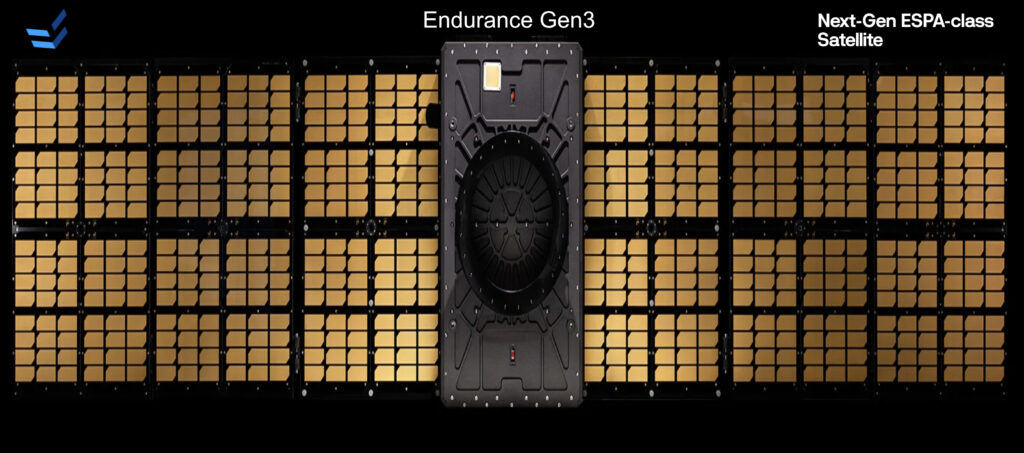
EnduroSat secures €43 million to accelerate the Endurance Gen3 satellite production

May 29, 2025 by editorial

EnduroSat has closed €43 million investment round led by Founders Fund—this significant funding round also included participation from CEECAT Capital, Morphosis Capital and other returning investors, highlighting the strong confidence in EnduroSat’s vision and capabilities.

The new Endurance Gen3 satellite class is the result of over a decade of on-orbit experience and invaluable customer feedback. These satellites boast modular, high-performance avionics with up to 3.5kW of peak power and a 2GBPS data rate, making them highly configurable for a variety of advanced applications. Designed for constellations and responsive space applications, the Gen3 satellites feature a cableless bus design developed entirely in-house, allowing for assembly and functional testing in just a few hours—significantly faster than typical satellite builds today. The Gen3 ESPA-class satellites will complement EnduroSat’s flight-proven lineup of smallsat buses and components.

The substantial investment will be directed towards scaling the production of EnduroSat’s new Endurance ESPA-class satellites, which range between 200 to 500 kg. These software-defined satellites are equipped with advanced avionics and feature a fully modular design, making them ideal for operators seeking rapid deployment of hyperspectral imaging, synthetic aperture radar (SAR), broadband, navigation, and other sophisticated payloads. Additionally, the funding will support the expansion of EnduroSat’s fixed-cost constellations-as-a-service model across its existing European and U.S. locations.

On top of the cutting-edge technology, EnduroSat introduces Space Service which covers the full mission cycle, enabling organizations to concentrate on their core, value-generating activities. This approach eliminates complexity and risk while streamlining costs and timelines for every mission phase, from constellation design to payload integration, launch, and operations.

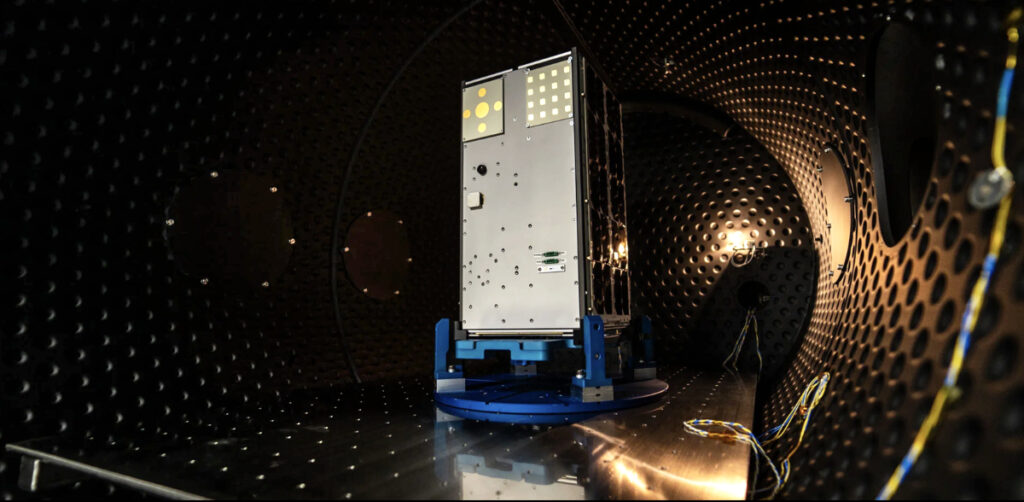
The latest funding will also facilitate the construction of a new 17,500 m² facility in Sofia, Bulgaria, which will become one of the largest space R&D centers in Europe. This state-of-the-art facility will include satellite avionics labs, two assembly lines, significantly expanded clean rooms, and a suite of space qualification equipment, including an anechoic chamber. By the end of 2025, EnduroSat aims to produce up to 60 satellites per month at this new location. Furthermore, the company is enhancing its U.S. operations by building a dedicated cleanroom to better support customers in the commercial and defense sectors worldwide.

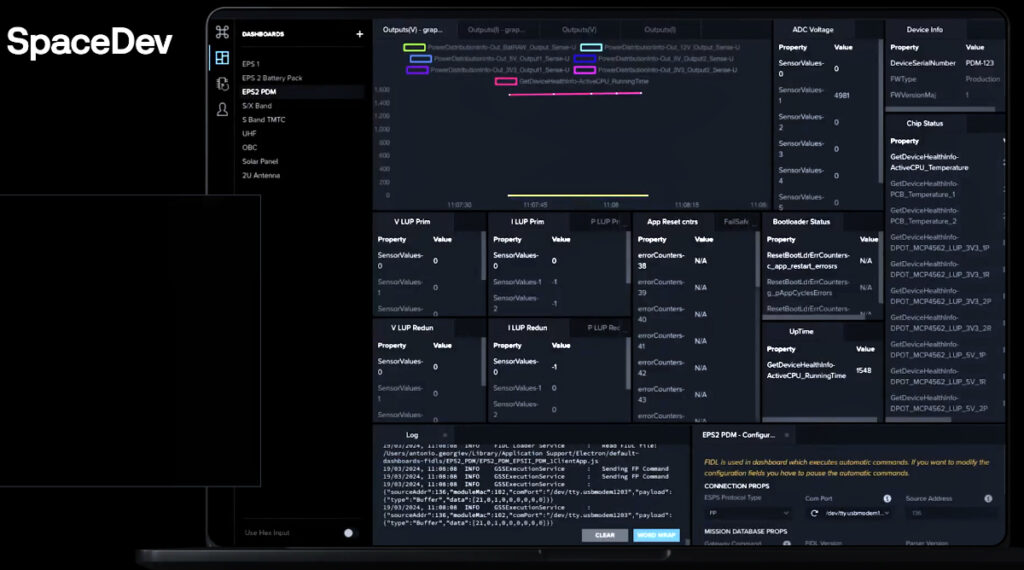
EnduroSat space qualified equipment

With the €43 million investment, EnduroSat is poised to redefine what’s possible in the space industry. From expanding its production capabilities in Sofia to scaling its operations in the United States, EnduroSat is set to provide top-tier satellite solutions to a broader range of commercial and defense customers globally.

Our mission is to make space universally accessible, because this fundamentally improves life on earth. We’re taking the complexity out of space missions by building and operating the space infrastructure our customers need, so they can focus on the next wave of innovation in space applications. I’m excited to work alongside and learn from the team at Founders Fund, which brings decades of expertise in scaling companies and redefining industries. By increasing our production and introducing our new generation of satellites, we’ll unlock access to satellite constellations for even more customers—with reliability and price transparency,” said Raycho Raychev, Founder and CEO of EnduroSat

As the number of satellites in space demanded by a broader set of players grows exponentially, our industry needs to re-think how these satellites are built. Raycho and his team at EnduroSat have taken the massive leap to go from utilizing traditional aerospace supply chains, to consumer electronics and automotive supply chains to build their products. This makes EnduroSat’s cost efficiency and performance above all in the market, and they have a proven flight heritage, with 3,000+ modules in orbit today. Their Gen3 satellites get them into a size class that will allow for almost any space opportunity to be relevant for them,” said Delian Asparouhov, Partner at Founders Fund and Co-Founder and President of Varda Space Industries

Filed Under: News

Speedcast SIGMA™ releases upgraded architecture and software enhancements

May 28, 2025 by editorial

Speedcast has revealed the latest-generation of the company’s SIGMA™ intelligent edge network management solution.
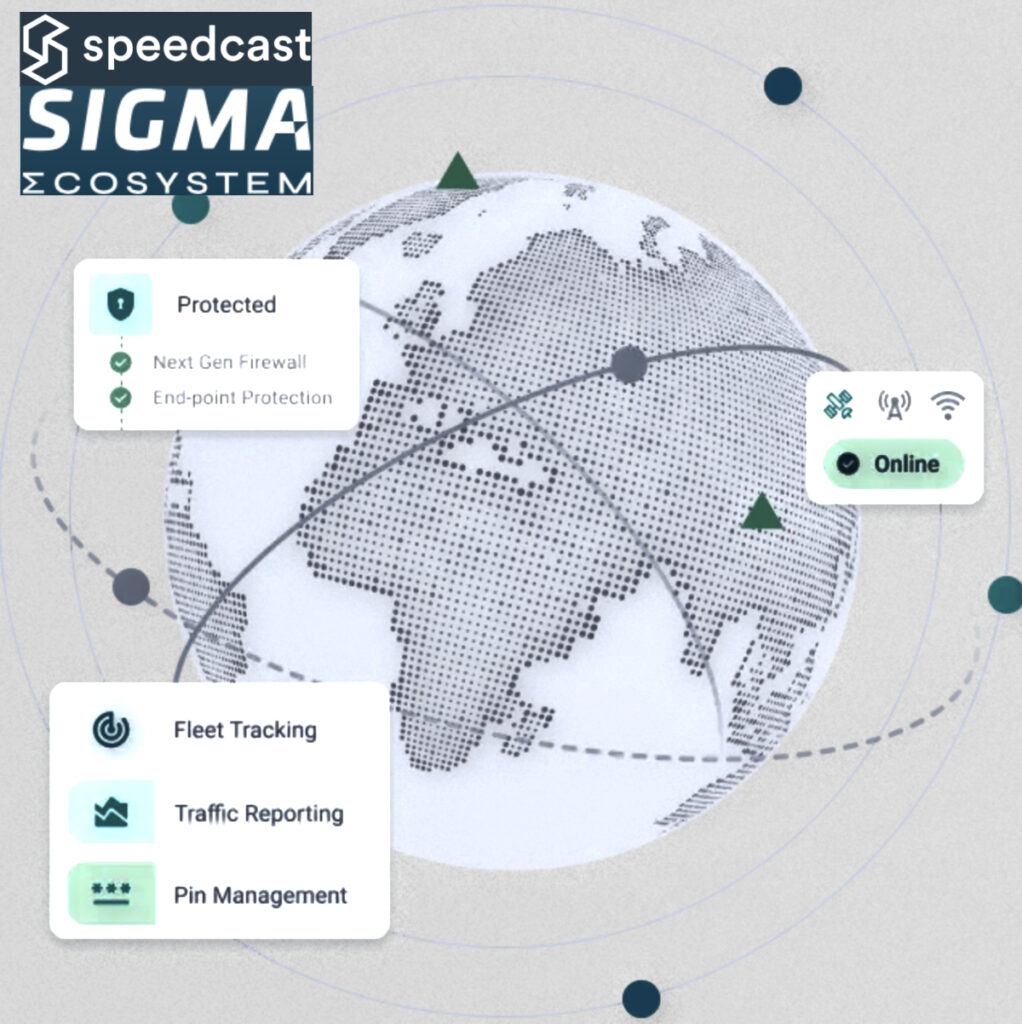
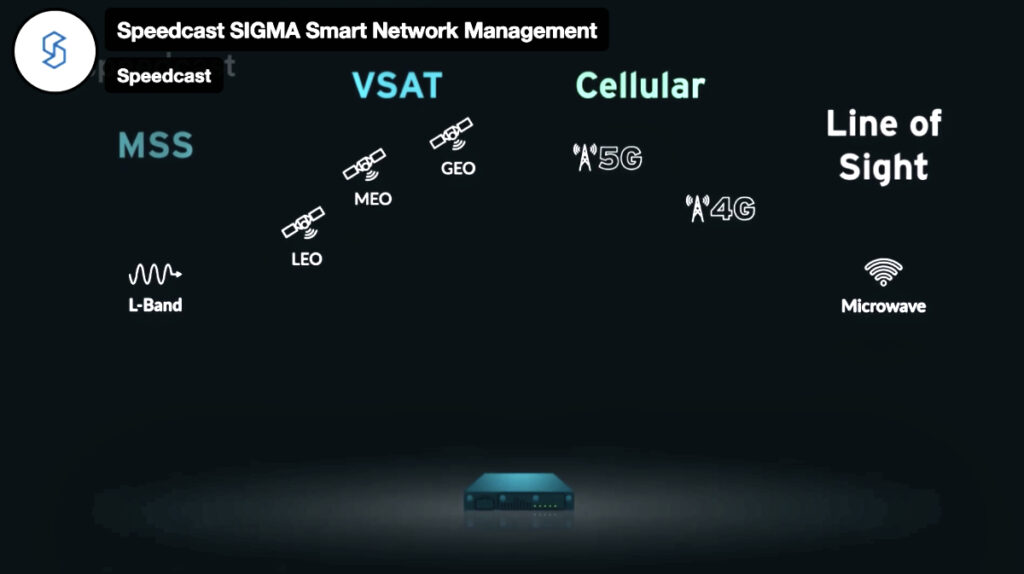
The recent enhancements include a new architecture, evolving the SIGMA platform to address the modern-day challenges of visibility, control, compliance, and security required to manage distributed edge environments. The new base operating system and cloud-native orchestration platform are tailored for virtualized deployments and updates and policy-driven configuration throughout the entire lifecycle, aimed at addressing a critical need to automate at scale and enable streamlined, seamless rollouts to tens of thousands of edge devices.

As the leading, global, tier-one reseller of Starlink, along with being a Eutelsat OneWeb distribution partner, Speedcast sees growing demand to integrate LEO service offerings with its SIGMA platform, providing a fully managed and future-proof solution for remote connectivity. SIGMA supports a wide array of services, including Starlink, OneWeb, and other emerging constellations, alongside traditional connectivity options, and operationalizes multi-vendor enterprise SD-WAN and a range of other industry applications through highly flexible and automated edge deployment and marketplace.

The latest SIGMA release enhances remote site visibility and control with smaller routing functions, expands hardware diversity while reducing costs, and drives greater automation for deployment and updates, which is essential for managing the growth of edge devices. SIGMA brings together secure network connectivity, advanced firewall protection and strong hardware-based security, such as measured boot to ensure systems start safely, Zero Trust role-based access controls to ensure only authorized users can make changes, data encryption, and even disabling unused physical ports on devices, helping to prevent tampering or unauthorized access.

The enhanced SIGMA platform also offers a key building block to addressing the International Association of Classification Societies’ (IACS) latest Unified Requirements intended to ensure that new ships are constructed with cybersecurity considerations from the outset. The new IACS E26 and E27 requirements focus on the entirety of the vessel and the computer based systems onboard in terms of how those systems should be protected. SIGMA’s SASE cloud-native technology provides added network security and ensures the new design, configuration, deployment and lifecycle of applications meets these more challenging new standards for fleet owners and operators.

Earlier this year, Speedcast announced a patent grant by the U.S. Patent and Trademark Office for technologies that the company has developed to overlay on the SIGMA platform. Speedcast’s intellectual property software will enable the company to deliver an intelligent network solution through a combination of proprietary algorithms, machine learning and automated analysis that dramatically improves the connectivity experience for customers.

Speedcast will debut the enhanced, next-generation SIGMA platform at upcoming industry trade show events.

Filed Under: News

Space Forge launches EU Expansion with new Portugal office

May 28, 2025 by editorial

Space Forge has opened of a new office in Portugal, on the island of Santa Maria in the Azores, thereby establishing a satellite return location in mainland Europe and marking the start of the company’s wider European expansion.

This expansion follows the company’s record-breaking £22.6 million ($30 million) Series A round—the largest Series A secured by a UK space tech company—backed by the NATO Innovation Fund, World Fund, NSSIF and the British Business Bank. This also signals Space Forge’s ambitions to scale up European operations in alignment with its vision for a clean industrial revolution powered by in-space manufacturing.

The new location supports the development of a scalable return infrastructure across the continent and will be central to the company’s ambitions to make space a viable platform for industrial-scale manufacturing of advanced materials. Its location in the Azores—whose geographic positioning makes them an ideal return location for LEO missions—creates new opportunities for high-frequency satellite return operations and regional partnerships.

Space Forge will work in partnership with the Azores’ regional government to bring its Portuguese facilities online, the first step in broader plans that include R&D into future platform architectures and the development of one (or multiple) European manufacturing sites for next-generation semiconductors using seed crystals forged in space.

This move builds on Space Forge’s growing global momentum, with the ForgeStar®-1 integration already complete in the U.S. and the next-gen ForgeStar®-2 in active development. The company’s first on-orbit demonstration mission—The Forge Awakens—is slated for launch during 2025.

Filed Under: News

Simon Møkster Shipping boosts fleet efficiency with pooled Starlink bandwidth from Marlink

May 27, 2025 by editorial

Marlink is supporting Simon Møkster Shipping with flexible allocation of Starlink LEO bandwidth across its fleet.

The pooled bandwidth model enables Simon Møkster to deploy LEO internet bandwidth where it is most needed, supporting simplified connectivity for business applications and crew welfare services.

Simon Møkster Shipping completed a fleet-wide upgrade of its hybrid network solution to Sealink NextGen in May of 2024, accelerating the company’s digitization program.

Adopting the pooled model for LEO internet services provides benefits including:

  • Pooling of bandwidth between vessels in the same fleet enables capacity to be allocated to assets depending on deployment
  • Baseline flexibility to use best effort LEO internet for crew welfare services and guaranteed bandwidth VSAT for business applications

Simon Møkster Shipping is a leading provider of modern, high-specification support vessels to the offshore energy sector, operating 15 vessels designed for operations in harsh weather conditions. From its head office in Stavanger, Norway, it mainly operates in the North and the Barents Seas with approximately 500 employees in onshore and offshore roles.

The company was among the first operators to deploy a Marlink hybrid network solution and has progressively upgraded its fleet to ensure high quality and reliability, treating its vessels as floating offices. Reflecting the increased cyber risk that can occur with the use of LEO internet solutions, the Sealink NextGen solution comes with EDR and UTM cyber solutions as default standards.

Filed Under: News

INNOSPACE reschedules 1st commercial launch of HANBIT-Nano to 2nd half of 2025

May 26, 2025 by editorial

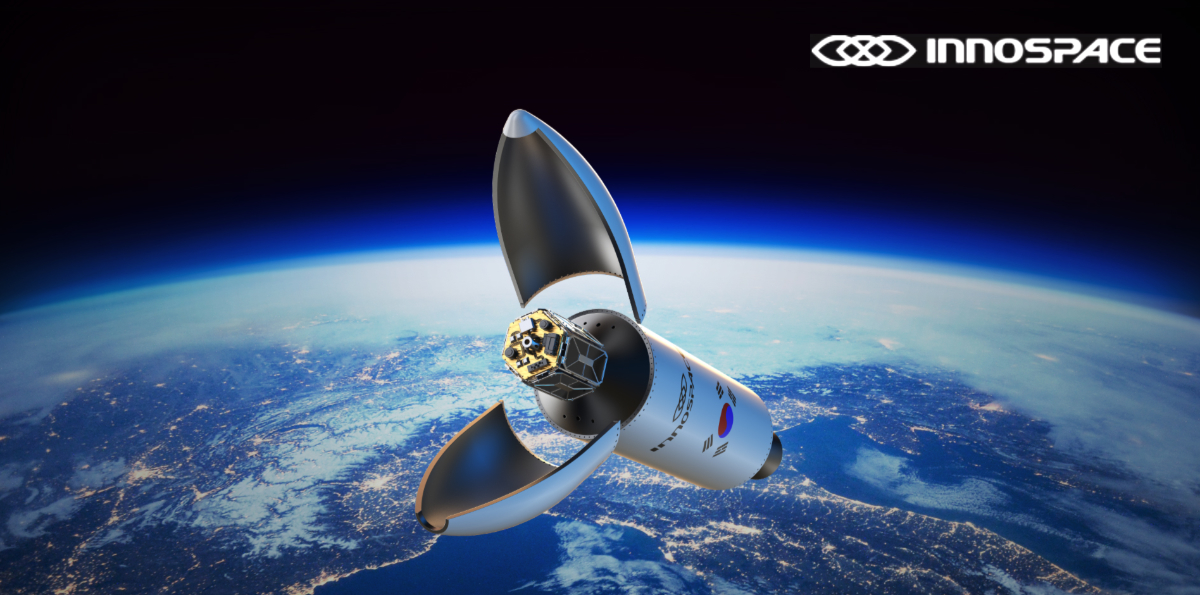
INNOSPACE (KS:462350) has rescheduled the first commercial launch of its small satellite launch vehicle, HANBIT-Nano, from July to the second half of 2025—the schedule adjustment follows the identification of technical inspection issues related to the vehicle’s first-stage electric pump and hybrid propulsion system during preparations for the stage qualification test.

While these issues were not evident during earlier performance tests, they were identified during a propellant supply system test conducted prior to the stage qualification test. Additional time is now required to address the identified risks and complete more detected inspections to ensure a stable launch.

The stage qualification test, a key milestone for verifying the launch vehicle’s safety and mission capability, is a mandatory step for securing launch approval. Testing is scheduled to begin next month, with approval review to commence upon its completion.

The revised launch schedule will be finalized promptly upon the completion of technical inspections and the stage qualification test.

Previously, INNOSPACE rescheduled the HANBIT-Nano launch from March to July 2025 due to delays in the delivery of electric pump components and the construction of the Goheung Integrated Test Facility.

Note: The stage qualification test is the last stage of ground testing before launch. It simulates real launch conditions with the vehicle fixed vertically to a test stand, verifying the full performance of propulsion systems, propellant tanks, supply lines, valves, control electronics, and all operational systems.

Filed Under: News

Anywaves reports the successful deployment of a commercial reflectarray in orbit

May 20, 2025 by editorial

Anywaves has marked a significant milestone by becoming the first commercial equipment provider to deploy a Reflectarray in orbit—this achievement follows the company’ earlier selection by CNES to demonstrate the technological feasibility of this type of antenna that is tailored for nanosatellites.

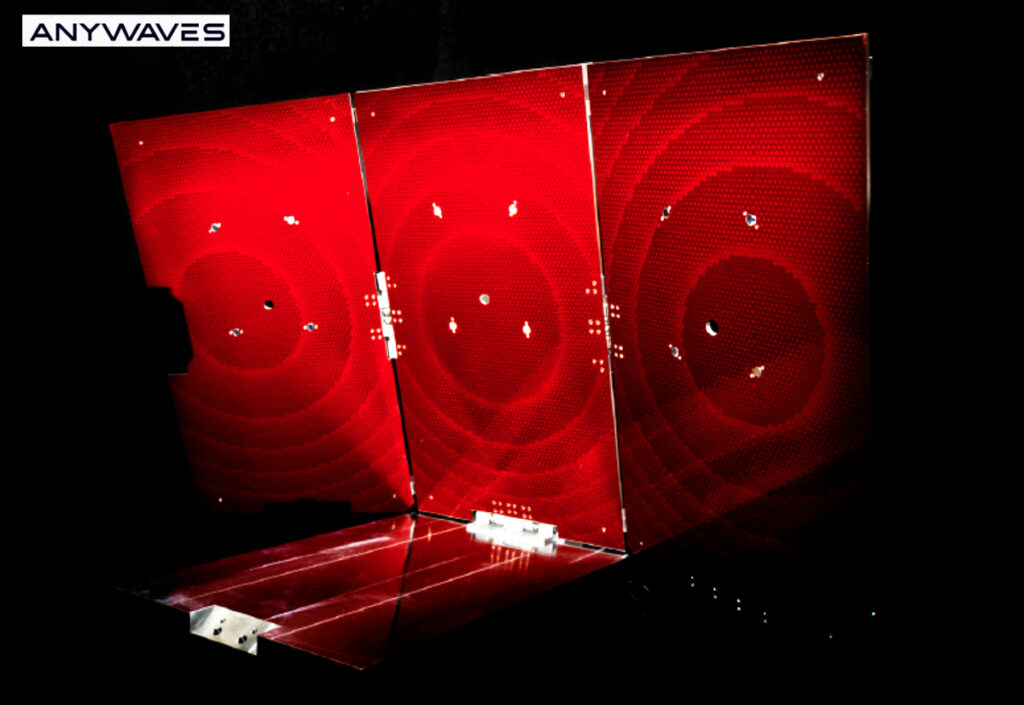
The Reflectarray antenna, featuring a deployable configuration and compact form factor, delivers exceptional gain and enhanced reliability through a simple, robust passive deployment mechanism. First used by NASA on the ISARA, MarCO-A, and MarCO-B missions, this type of antenna is now being deployed in orbit by Anywaves.

This technical breakthrough enables the use of very high-gain antennas while meeting the size constraints of nanosatellite platforms. The use of foldable flat panels allows for easy storage and transport on small spacecraft.

Paving the way for new high-data-rate communication capabilities, the Reflectarray, designed in the Ka-band but adaptable across various frequency bands (from X- to Ku-, including Q-/V-), is ideally suited for deployment in satellite constellations. It targets commercial LEO missions and exploration missions, representing a major competitive advantage.

With higher antenna gain, satellite operators and integrators can now opt for a more efficient system, either significantly reducing onboard power requirements or substantially increasing data rates. Designed for rapid serial production, the development of this new antenna follows a roadmap aligned with evolving market demands.

The successful deployment in orbit of this Reflectarray is the result of a collaborative effort between several space players, including COMAT and Nimésis.

Filed Under: News

  • « Go to Previous Page
  • Page 1
  • Interim pages omitted …
  • Page 30
  • Page 31
  • Page 32
  • Page 33
  • Page 34
  • Interim pages omitted …
  • Page 339
  • Go to Next Page »

Primary Sidebar

WEEKLY NEWSLETTER

Archives

  • August 2026
  • July 2026
  • June 2026
  • May 2026
  • April 2026
  • March 2026
  • February 2026
  • January 2026
  • December 2025
  • November 2025
  • October 2025
  • September 2025
  • August 2025
  • July 2025
  • June 2025
  • May 2025
  • April 2025
  • March 2025
  • February 2025
  • January 2025
  • December 2024
  • November 2024
  • October 2024
  • September 2024
  • August 2024
  • July 2024
  • June 2024
  • May 2024
  • April 2024
  • March 2024
  • February 2024
  • January 2024
  • December 2023
  • November 2023
  • October 2023
  • September 2023
  • August 2023
  • July 2023
  • June 2023
  • May 2023
  • April 2023
  • March 2023
  • February 2023
  • January 2023
  • December 2022
  • November 2022
  • October 2022
  • September 2022
  • August 2022
  • July 2022
  • June 2022
  • May 2022
  • April 2022
  • March 2022
  • February 2022
  • January 2022
  • December 2021
  • November 2021
  • October 2021
  • September 2021
  • August 2021
  • July 2021
  • June 2021
  • May 2021
  • April 2021
  • March 2021
  • February 2021
  • January 2021
  • December 2020
  • November 2020
  • October 2020
  • September 2020
  • August 2020
  • July 2020
  • June 2020
  • May 2020
  • April 2020
  • March 2020
  • February 2020
  • January 2020
  • December 2019
  • November 2019
  • October 2019

© 2019–2026 SatNews

Insert/edit link

Enter the destination URL

Or link to existing content

    No search term specified. Showing recent items. Search or use up and down arrow keys to select an item.
      x
      Sign Up Now!

      Enjoy a free weekly newsletter with recent headlines from the global SmallSat industry.

      Invalid email address
      We promise not to spam you. You can unsubscribe at any time.
      Thanks for subscribing! You will now receive weekly SmallSat News updates.
      We love our advertisers.
      And you will too!

      Please disable Ad Blocker to continue... We promise to keep it unobtrusive.
      We promise not to spam you. You can unsubscribe at any time.
      Invalid email address
      Thanks for subscribing!