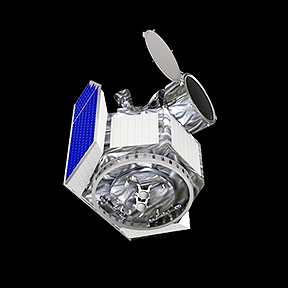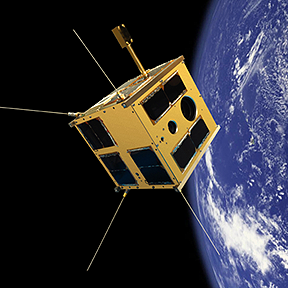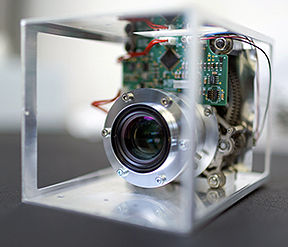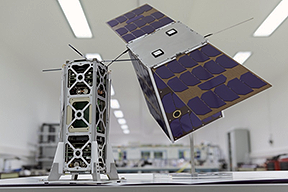
• Skip to main content
  • Skip to primary sidebar
  • Home
  • News
  • Featured
  • More News ⌄
    • SatNews
    • SatMagazine
    • MilSatMagazine
  • Events ⌄
    • MilSat Symposium
    • SmallSat Symposium
    • Satellite Innovation
  • Contacts
  • SUBSCRIPTION

SmallSat News

You are here: Home / Archives for News

News

The ALE Sky Canvas Shooting Star Project Satellite Gets the Spaceflight Treatment for a Rocket Lab Electron Launch

November 5, 2019 by editorial

Spaceflight has arranged for Tokyo-based ALE to launch that firm’s entertainment and science satellite on Rocket Lab’s next Electron launch.

The mission, called “Running Out of Fingers” by Rocket Lab to signify the company’s tenth mission, represents Spaceflight’s third launch with Rocket Lab this year and follows the launch of seven spacecraft on Rocket Lab’s inaugural “Make it Rain” mission in June and three on the “Look Ma No Hands” mission in August. 

Similar to the previous missions, Spaceflight managed the launch capacity procurement, integration, and mission management services for the rideshare spacecraft. The Electron, carrying the ALE satellite, will lift-off from Rocket Lab’s Launch Complex 1 at the southern tip of Mahia Peninsula, on the east coast of New Zealand’s North Island. The launch window opens on November 25, NZDT.


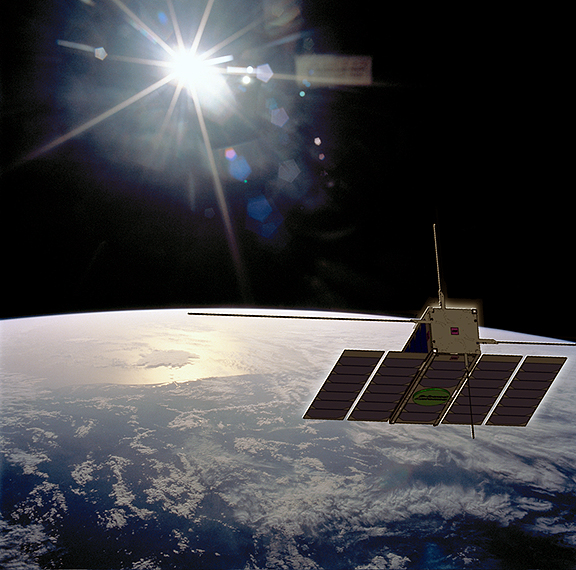
Artistic rendition of the ALE spacecraft.

ALE’s Sky Canvas, the world’s first man-made shooting star project, will deploy to a 400 km. circular Sun Synchronous Orbit (SSO), which is beneath the International Space Station. The company’s satellite will create man-made shooting stars by safely releasing particles, precisely controlling the reentry location, date, and timing. When the particles re-enter the Earth’s atmosphere, they fully burn up, creating the appearance of shooting stars on the ground. 

In addition to the entertainment factor, the Sky Canvas project will also study the path and mechanics of shooting star particles during re-entry from the upper atmosphere. The data collected in the mesosphere will be helpful in the aerospace industry to help predict the path of satellites and artificial objects as well as contributing to scientific understanding in several technology fields including meteorology and the study of climate change.


Photo of Rocket Lab’s Launch Complex 1 at
the southern tip of Mahia Peninsula.

Following this launch, Spaceflight will have launched 11 spacecraft on the Electron and has plans to continue partnering with the launch vehicle provider in 2020. Spaceflight has completed five missions already this year, with another five planned in 2019. Other noteworthy missions from the last year include Spaceflight’s GTO-1, which deployed the first commercial lunar lander aboard a SpaceX Falcon 9, and SSO-A, the company’s historic dedicated rideshare mission, successfully launched 64 unique smallsats, making it the single largest deployment of satellites from a U.S.-based launch vehicle.


Curt Blake

Curt Blake, the CEO and President of Spaceflight, said the company’s experience offering end-to-end launch services across multiple launch vehicles continues to be highly valued by organizations — regardless if they’re a newer customer like ALE, or an experienced constellation developer. The firm’s expertise and long-standing relationships provide reliability, flexibility, and the confidence that we’ll get customers to space as efficiently as possible. Spaceflight is really looking forward to taking ALE on this third Electron launch this year.


Lena Okajima

Lena Okajima, the CEO of ALE, added this launch gets the company much closer to realizing the world’s first man-made shooting star. ALE really appreciates Spaceflight`s support and attention to this mission and the company is honored to take this big step with them.


Filed Under: News

Rocket Lab is “Running Out Of Fingers” for their Upcoming Tenth, Launch of Smallsats

November 5, 2019 by editorial

Rocket Lab‘s next mission will launch multiple smallsats in a rideshare mission representing five different countries.

The launch window for Rocket Lab’s tenth flight, named ‘Running Out Of Fingers,’ will open November 25, NZDT, and take place from Rocket Lab Launch Complex 1 on New Zealand’s Mahia Peninsula.


Rocket Lab’s Electron launch vehicle lifts off from Launch Complex 1 in New Zealand.

Onboard this rideshare mission are six spacecraft comprised of 5 cm. PocketQube microsatellites from satellite manufacturer and mission management provider Alba Orbital. The final payload on board was procured by satellite rideshare and mission management provider Spaceflight for ALE Co., Ltd (ALE), a Tokyo-based company creating microsatellites that simulate meteor particles (see http://www.satnews.com/story.php?number=1131193933). 

Electron’s first stage will not be recovered from this mission; however, the stage includes new hardware and sensors to inform future recovery efforts. As part of a first stage block upgrade, Electron’s booster will include guidance and navigation hardware, including S-band telemetry and onboard flight computer systems, to gather data during the first stage’s atmospheric re-entry. The stage is also equipped with a reaction control system to orient the booster during its re-entry descent.


Peter Beck.

Rocket Lab’s Founder and CEO, Peter Beck, said increasing launch frequency for smallsat operators is the key driver behind Rocket Lab’s reusability program. He noted that reaching this tenth flight within only two years of commercial operations is an incredible achievement. Thanks to the continued dedication and passion of the teams at Rocket Lab, responsive and frequent access to space is the new normal for small satellites. As the company moves beyond once-a-month missions toward the goal of weekly launches, recovering and reusing Electron could play a significant role in increasing launch frequency.”
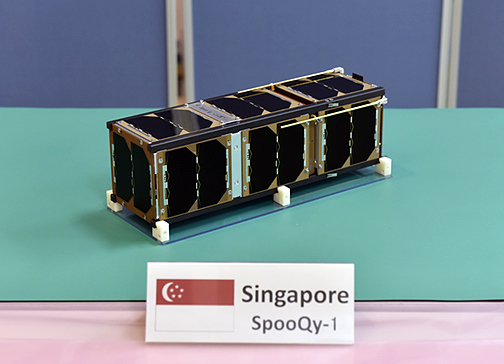
Payloads onboard ‘Running Out Of Fingers’

  • ATL-1: A payload from Advanced Technology of Laser (ATL) from Hungary designed to test a new thermal isolation material in space, conduct a thermal insulator material experiment, and DVB-T band spectrum monitoring.
     
  • Fossasat-1: FossaSat 1 is a picosatellite developed by Spanish non-profit organization Fossa Systems. The spacecraft, which fits in the palm of a hand, is a communications satellite that uses low power RF to provide IOT connectivity.
     
  • NOOR 1A & NOOR 1B: These satellites from Stara Space will demonstrate LEO-to-LEO intersatellite link technology communicating with ground stations on Earth; crucial technologies required to create a real-time global communications constellation in space.
     
  • SMOG-P: A novel spectrum monitoring payload built by students at the Budapest University of Technology and Economics in Hungary. Smog-P features a spectrum analyzer to measure man-made electromagnetic pollution from space.
     
  • TRSI Sat: ACME AtronOmatic is a U.S.-Germany based software application development company that provides flight tracking services to the aviation community and to mobile applications such as MyRadar, a weather radar application for mobile devices.
     
  • ALE-2: Tokyo-based ALE Co., Ltd ‘s ALE-2 satellite aims to create human-made shooting stars by simulating re-entering meteor particles. The satellite includes multiple redundant attitude sensors and controllers, as well as a propulsion system for maneuvers.

Filed Under: News

China Launches Three Chinese Satellites Plus a Sudanese SRSS-1 Smallsat 

November 4, 2019 by editorial

On Sunday November 3, China launched a new Earth Observation (EO) satellite, Gaofen-7, which will play an important role in land surveying and mapping, urban and rural construction and statistical investigation, according to the China National Space Administration (CNSA).

The Gaofen-7, launched on a Long March-4B rocket at 11:22 a.m. (Beijing Time) from the Taiyuan Satellite Launch Center in north China’s Shanxi Province, is China’s first, civil-use, optical transmission, three-dimensional surveying and mapping satellite that reaches the sub-meter level, CNSA said.


Artistic rendition of the Gaofen-7 satellite which, along with the carrier rocket, were developed by the China Academy of Space Technology and the Shanghai Academy of Spaceflight Technology under the China Aerospace Science and Technology Corporation.

The satellite and carrier rocket were developed by the China Academy of Space Technology and the Shanghai Academy of Spaceflight Technology under the China Aerospace Science and Technology Corporation. The users of the Gaofen-7 satellite will be mainly from the Ministry of Natural Resources, the Ministry of Housing and Urban-Rural Development and the National Bureau of Statistics.

Via the same carrier rocket, three other commercial and scientific experiment satellites including one developed for Sudan were also sent into space.

The satellites onboard include Gaofen 7, Xiaoxiang-1 08, Whampoa 1, all belonging to China, plus a remote sensing satellite owned by Sudan. The Sudan Remote Sensing Satellite, SRSS-1, was developed for the Sudanese government by the Shenzhen Aerospace Oriental Red Sea Satellite Co.


A Chinese Long March 4B rocket lifts off. Image is courtesy of Xinhua.

The Sudanese smallsat was designed for both civil and military remote sensing mainly over Sudan, whose objectives are to generate a comprehensive, cost-effective and reliable data base on the topographic mapping, natural resources for developmental planning, exploration of natural resources, environmental monitoring, agricultural monitoring and yield estimation and beside public security (intelligence) and defence applications. The aim of the government is toward the establishment of the space industry in Sudan by owning the first Sudanese satellite and the development of ground facilities in Khartoum North.

The development of the Gaofen-7 has achieved a breakthrough in sub-meter level 3D mapping camera technology, meeting the highest mapping accuracy requirement among the Gaofen series Earth observation satellites, CNSA said. The satellite can obtain high-resolution optical 3D observation data and high-precision laser altimetry data and can realize 1:10,000 scale satellite 3D mapping for civil use in China, according to CNSA.

Article source: Xinhua.net


Filed Under: News

Forrester Reports: Another Billion Being Sought by OneWeb

November 4, 2019 by editorial


Journalist
Chris Forrester.

According to journalist Chris Forrester, filing at the Advanced Television infosite, satellite mega-constellation OneWeb is seeking to raise another $1 billion (€0.9bn) as it starts work on orbiting 30 satellites per month in a few weeks. OneWeb wants to circle the planet with an initial batch of 650 satellites for broadband services.

OneWeb is backed, in part, by Japanese media conglomerate SoftBank, although there are also reports that SoftBank is looking to exit the business.

The report, from the UK’s Sunday Telegraph, stated that OneWeb’s ‘cash call’ will come ahead of SoftBank’s results statement due on November 6th. However, SoftBank has already written down about £380 million of their OneWeb investment. However, the newspaper reports that SoftBank remains committed to OneWeb.

Filed Under: Featured, News

The First Iodine-Propellant Smallsat is Launched

November 4, 2019 by editorial

ThrustMe and Spacety have launched the first iodine-propelled smallsat.

The satellite was sent into space by a Long March 4B (CZ-4B) carrier rocket from Taiyuan Satellite Launch Center in China’s Shanxi Province, on November 3, 2019, at 11:22AM (Beijing time). The 6U smallsat, built by Spacety, includes an iodine propulsion system developed and built by ThrustMe.

Known as the I2T5, this propulsion system uses a first-of-its-kind, non-pressurized, cold gas thruster fueled by solid iodine. Designed with cubesats in mind, the I2T5 will help ensure a sustainable space industry by extending the lifetime of satellite missions, and enabling collision avoidance maneuvers. In the future, ThrustMe’s additional, iodine based, electric propulsion systems, will additionally enable orbital changes, constellation phasing, and orbit maintenance.


A Chinese Long March 4B drives the iodine-propellant SPACETY and ThrustMe smallsat to orbit.

Ane Aanesland, Co-Founder and CEO of ThrustMe, said this is a historic launch in so many ways: for ThrustMe, for Spacety and for the whole space community. Iodine propellant is finally being demonstrated in space. The first time iodine was discussed as a good candidate to replace pressurized gases, such as xenon, was in 2008. Since then, many research institutions, companies and space agencies have worked on developing iodine propulsion systems, including NASA with its IceCube mission. That ThrustMe is the first company to succeed in launching the first propulsion system operating with iodine as a propellant highlights the significant impact startups can have on innovation and technology advancements.

This is ThrustMe’s first launch and the company has developed a wide portfolio of smart propulsion systems for smallsats. This mission puts ThrustMe on the map as one of the few space startups with commercially available and space proven propulsion products.

This launch also demonstrated a notable change in the space industry, where startups from Europe and Asia joined forces to develop a mission with an extremely rapid development time, from idea to launch in less than a year, from contract to launch in eight months. ThrustMe and Spacety, with this first launch together, have demonstrated the importance of open minded international collaborations, according to the firms.

The I2T5 has already generated significant customer traction and will be used to propel an ISIS 6U spacecraft for the Royal Thai Air Force, to be launched in 2020, as well as the ROBUSTA-3A satellite developed by the Université de Montpellier. Several other commercial contracts have also been signed, but these clients and missions remain confidential at this stage.

The development and industrialization of the I2T5 has been supported by the French government via the BPIFrance I-LAB, and the European Unions’ Horizon 2020 research and innovation program under grant agreement No. 823337. The French National Space Agency (CNES) is now supporting future I2T5 enhancements.

Dmytro Rafalskyi, Co- Founder and CTO of ThrustMe, added that the I2T5 is designed for cubesats — it required only six weeks from identifying a real market need, to having a first working prototype. This was achieved by leveraging all of the work already done to develop the iodine propellant storage and feed system for the ion engine.

Weijia REN, Co- Founder and CTO of Spacety Today, noted that when the company spoke with ThrustMe about the impressive achievements they had made in the development of iodine fueled propulsion, the company knew that Spacety would be up to this historic task to make it to space in record time. The firm also saw the potential in a long-term collaboration with ThrustMe to provide the best propulsion solutions to clients in China. The majority of 3U and 6U cubesats do not have any propulsion capability as no viable solutions are offered that are safe, simple, and cost effective. Satellite operators are weary of expensive and paperwork-intensive products that include pressurized systems or flammable propellants.

Filed Under: Featured, News

USAF’s SMC’s Rogue CubeSat Mission is Launched from the Wallops Flight Facility

November 2, 2019 by editorial

The U.S. Air Force’s Space and Missile Systems Center and its mission partners successfully launched the Aerospace Rogue Alpha/Beta Cube Satellites on November 2, 2019.

Lift-off occurred at 9:59 a.m. ET from NASA’s Wallops Flight Facility, Wallops Island, Virginia. The Cygnus capsule will mate with the International Space Station and the satellites will remain there until deployment in early 2020.

The Aerospace CubeSats have officially achieved their priority mission of developing a small LEO constellation in just 18 months. The satellites will now collect data on cloud backgrounds to inform future LEO missions. The USAF will also use this program’s data to investigate potential uses of the capability.


Northrop Grumman’s Cygnus spacecraft. Image is courtesy of NASA.

The Rogue CubeSat Program, a dual smallsat program co-developed by the U.S. Air Force Space and Missile Systems Center and The Aerospace Corporation, finished preparations for launch and was fully integrated onboard Northrop Grumman’s Antares Cygnus launch vehicle at Wallops Island, Virginia, on November 1.

Colonel Dennis Bythewood, Program Executive Officer for Space Development, said the successful launch of the Aerospace CubeSats marks a huge achievement for SMC and its partners. This mission has set a precedent for speed and will also provide us with much needed data for future space development programs.


The Northrop Grumman NG-12 Resupply Launch, with the Cygnus spacecraft aboard, lifts off from the Wallops Flight Facility in Virginia. Image is courtesy of NASA.

The cubesats were designed, built, and tested by The Aerospace Corporation, a national nonprofit corporation that operates as a federally funded research and development center dedicated to advancing the nation’s missions in space. The Rogue Cubesats design emphasizes Commercial-off-the-Shelf (COTS) sensors, non-exotic parts and features a high-speed laser communications system that will enable downlinks of large image files. These dual smallsats will also use novel wavelengths for infrared sensing.

The mission priority is to investigate the feasibility of developing small and low-cost satellites as a means of rapidly reconstituting a proliferated LEO constellation. Rogue has succeeded so far by meeting its targeted 16-month design, build, and test timeline. The satellites will also work on jump starting LEO cloud scene processing and provide test data for new short-wave infrared band satellites.


Filed Under: News

Leaf Space to Handle Ground Support Segment for Pixxel’s First EO Smallsat

November 1, 2019 by editorial

Pixxel, India’s first private Earth imaging company, has announced their agreement with Leaf Space, a company delivering complete ground segment expertise for smallsats.

The announcement was made at the 70th International Astronautical Congress in Washington DC, wherein Leaf Space will provide the ground segment support for the satellite to be launched in July of 2020.

Through this partnership, Leaf Space will provide the support service up to one pass per orbit to the satellite in SSO (Sun-Synchronous Orbit), demonstrating the capabilities of its mid-latitude, distributed, ground station network. Uplink and downlink service for the mission will be provided using VHF, UHF and S-band frequencies. The satellite is set to be launched on a Soyuz rocket in July 2020, thanks to a contract inked in August this year.

The agreement also facilitates future mission support for Pixxel’s planned constellation thanks to the integration of the communication systems and interfaces, nonetheless, familiarizing the satellite operations team with Leaf Space services.

Pixxel is aiming to build a constellation of Earth imaging small satellites that will provide global coverage every 24 hours once fully deployed. The satellites will collect data that will be accurately analyzed using artificial intelligence in order to predict effective solutions for existing environmental problems.

Commenting on the agreement, Awais Ahmed, CEO, Pixxel said the company is excited to partner with Leaf Space for the ground segment support to the firm’s first satellite. Pixxel strongly believes that this combined expertise will result in smooth and timely delivery of highly accurate geospatial imagery to people all across the globe. This partnership will be marked as the first milestone in India’s space technology progression.

Jonata Puglia, CEO of Leaf Space, said the firm is eager to start supporting Pixxel’s ambitious remote sensing mission, as this program has the potential to generate valuable data for the new space market. The company is looking forward to delivering this service to the firm’s customer, laying out the most favorable environment for future mission and constellation support.


Filed Under: News

Kepler’s Early Access Registration for their IoT Developer Kit with Trials Scheduled for the Firm’s Third Smallsat

November 1, 2019 by editorial

Kepler Communications has opened early-access registration for its Internet of Things (IoT) Developer Kit, which will be available for purchase in Q1 2020 — a limited number of early trials will be provided.

The DevKit will provide early access to Kepler’s forthcoming satellite-enabled narrowband connectivity service.  Designed to provide a truly-global and affordable satellite service that will support IoT services such as asset tracking and monitoring sensors anywhere on the planet. The trials will be supported by Kepler’s third satellite and others that will launch throughout 2020. The spacecraft will offer both wideband and narrowband data transfer services globally, from pole to pole, and represents another significant milestone in Kepler’s technology roadmap.

Kepler’s everywhereIOT™ is designed to overcome the hardest connectivity challenges faced by those looking to deploy a global IoT solution. By ensuring low-cost global coverage under a single network, the service is able to satisfy the bandwidth requirements of a wide range of applications, from railcar tracking to monitoring the status of containers or the location of livestock. Currently, many of these use cases are hindered by the lack of low-cost, globally-available satellite and terrestrial infrastructure.

As the constellation grows, Kepler will enable a cellular-quality, standardized connection for IoT that utilizes the purpose-built fleet of CubeSats designed and operated by the team at Kepler. The IoT DevKit has been developed with an integrated Raspberry Pi, facilitating the use of an array of smart, connected products and sensors currently available on the market.  Multiple data requirements, ranging from bytes to MBs per month, will be supported by way of low-cost, flexible airtime plans. In parallel with the DevKit, Kepler is also developing a mobile-phone sized module for asset tracking, the first application-specific IoT hardware to be brought to market.

Wen Cheng Chong, Co-Founder and CTO at Kepler, said various studies and market research reports predict billions of industrial IoT connections coming online in the next five years, and a global solution such as the company’s everywhereIOT service will be key to achieving this. For this reason, Kepler believes this to be exciting news for the market, as much as it marks an important milestone for the firm. A unique set of capabilities for smart connected devices are being added that did not previously exist in a satellite service. Together with the world’s OEMs, device and sensor manufacturers, and solution providers, the company envisions a future where Kepler’s everywhereIOT makes possible higher efficiencies across multiple industries.

To secure a spot on Kepler’s Early Access list, register online at this direct link…

Filed Under: News

MOU Signed Between Swedish Space Corporation and the German Aerospace Center for Micro Launcher Engine Development

October 31, 2019 by editorial

Swedish Space Corporation (SSC) and German Aerospace Center (DLR) have signed an MOU for the development of test facilities for micro launcher engine and stage tests.

The agreement will include exchanging facilities, knowledge and staff, providing Europe with the infrastructure for the entire range of rocket tests, including early stage “higher risk” tests, as well as increasing the capacity to provide for more companies to test their products.


The MOU was signed by Stefan Schlechtriem, Director of the DLR Institute of Space Propulsion (left) and Stefan Gardefjord, CEO of SSC (right), at the recent International Astronautical Congress (IAC).

Photo is courtesy of the companies.

Through this collaboration, the testing capabilities at Lampoldshausen in Germany and Esrange Space Center in Sweden can be optimized.

Stefan Gardefjord, CEO SSC, said there has been a shortage of suitable test sites for early stage and short preparation tests for the next generation of sounding rockets, micro launchers and reusable rockets. By combining the firm’s testing capabilities with DLR, SSC can provide Europe with more testing capability, thus strengthening the development of European space programs.

Professor Stefan Schlechtriem, Director of the DLR-Institute of Space Propulsion, added that the organization has found the correct partner for the joint planning and implementation of a test stand for hybrid and liquid-fuel engines at Esrange Space Center (ESC). DLR Lampoldshausen is contributing its unique expertise as a European testing and development location for all liquid chemical space engines to the development of the next generation of engines. This collaboration will enable us to bring together the expertise of the institutions. With the intensified cooperation between SSC and DLR, the two partners will provide the infrastructure in Europe for the entire range of engine tests, including tests at an early stage of development, thus increasing the portfolio of testing opportunities in Europe.

Filed Under: News

Dedicated to the Dogs … U of Washington’s HuskySat-1 Ready for Launch from Cygnus 

October 31, 2019 by editorial

A University of Washington satellite smaller than a loaf of bread will, if all goes well, launch shortly on its way to LEO — this will be the first student-built satellite from Washington state to go into space.


Team members Paige Northway, Anika Hidayat, John Correy and Eli Reed (back row, left to right) watch in June as Henry Martin of Nanoracks does a “fit test” to ensure that the satellite fits inside the silver box. The digital clock on the wall counts down the days, minutes and seconds until launch. Photo is courtesy of Dennis Wise/University of Washington.

HuskySat-1 is one of seven student-built satellites from around the country scheduled to launch at 9:30 a.m. Eastern time Saturday, November 2, from NASA’s Wallops Flight Facility on the Virginia coast.

HuskySat-1’s last moments on Earth will be broadcast live on NASA TV. The satellites are hitching a ride on the Cygnus cargo spacecraft, whose first stop will be the International Space Station to resupply astronauts and swap out materials. In early 2020, the spacecraft will leave the station and fly up to an altitude of about 310 miles (500 kilometers), where a NASA engineer will eject the student-build satellites.

The UW creation is a type of cubesat, a smallsat that measures exactly 10 centimeters (about 3 inches) along each side. HuskySat-1 is a “three-unit” system, meaning it’s the shape of a stack of three cubesat-sized blocks.


HuskySat-1 sits under protection in the UW satellite lab in June, as it prepared to leave on its journey to Virginia and then to LEO Photo is courtesy of Dennis Wise/University of Washington.

These miniature satellites were first created as a way for engineering students to test software with smaller, cheaper devices they could build from start to finish in a few years. However, the devices are growing in popularity, with Planet and other companies now using smallsats for a variety of commercial ventures.

NASA’s CubeSat Launch Initiative helps students and nonprofit groups launch these instrument systems into space. The Washington State University satellite, CougSat-1, is scheduled to launch in October 2020.

The UW satellite weighs just under 7 pounds (3.14 kilograms) and required five years to design and build. Undergraduate and graduate students from aeronautics and astronautics, mechanical engineering, computer engineering, Earth and space sciences, physics and other departments spent hundreds of hours building the system in the Husky Satellite Lab.


White lines show the satellite’s projected travel path, orbiting at an angle of 51.6 degrees from the equator. The antennas at the UW will be able to communicate with HuskySat-1 when it flies inside the red circle. Image is courtesy of Paige Northway/University of Washington.

Its trip into low-Earth orbit is organized by Nanoracks, a Texas company that, like Spaceflight Industries of Seattle and other businesses, coordinates smaller groups to provide access to launch vehicles. HuskySat-1 will orbit at an angle of 51.6 degrees, traveling between 51.6 degrees north and south, at an altitude of 310 miles (500 kilometers) and at more than 4 miles (7 kilometers) per second. Once the students locate their satellite, they will be able to predict its travel path.

After extensive testing and final checkouts this summer, the satellite was hand-delivered to the Nanoracks facility in Houston, where it was placed into the box that will carry it to space.

Three antennas installed on the roof of Johnson Hall will allow students to get information like position and altitude and send instructions to the satellite as it passes overhead. A camera built in collaboration with students at Raisbeck Aviation High School in Tukwila, Washington, will send back grainy, black-and-white photos of Earth. Students will also be able to control the satellite’s camera and thruster remotely.

Robert Winglee, a professor of Earth and space sciences and the team’s faculty adviser as director of the UW Advanced Propulsion Lab, said these students have gained firsthand experience on what is required to build and launch a satellite and aerospace companies have already snapped up many of them. Meanwhile, the UW is making its first steps to a continuing hardware presence in space. What more could anyone wish for?

Paige Northway, a UW doctoral student in Earth and Space Sciences who has been involved since the project’s inception, added that it will be exciting once it’s in orbit. To her, the completion will be when we data is received from the satellite and are returned to the spacecraft.

Team member Anika Hidayat, a senior in mechanical engineering, noted that a lot of information is taught in classes, but only in a hands-on environment can you experience things like design, integration of subsystems, project management and documentation.

Some of the student-built parts will still be in test mode. A custom-built thruster uses sparks to vaporize small amounts of solid sulfur as a propellant. The thruster will fire about 100 times as the satellite passes over Seattle, only enough thrust to provide a slight nudge. A high-bandwidth communications system built by former graduate student Paul Sturmer, now at Blue Origin, transmits at 24 Gigahertz, allowing the satellite to quickly send reams of data. That system will send down a test packet from space.

The UW group will control HuskySat-1 for three months. In the spring, it will transfer ownership and responsibility to AMSAT, the Radio Amateur Satellite Corporation, which provided the main communication system. The satellite will begin to lose altitude in about three years and will burn up as it re-enters Earth’s atmosphere. (NASA requires that all such objects de-orbit within 25 years.)

HuskySat-1 grew out of a special topics course in the UW Department of Earth & Space Sciences. In 2016 members formed a registered student organization, the Husky Satellite Lab at UW.

As the Husky Satellite Lab wraps up this half-decade-long effort it plans to next tackle a NanoLab project — a partly prebuilt system that can be adapted to conduct experiments in microgravity — for travel aboard a Blue Origin vehicle. Students plan to complete that project by spring of 2020.

HuskySat-1 was supported by a NASA Undergraduate Student Instrument Project award, which funded the satellite’s development and launch with a private space contractor. The team also was supported by NASA, the Washington NASA Space Grant Consortium, the UW and several companies that provided equipment for the satellite and antenna.

Article source: Journalist Hannah Hickey, University of Washington News

Filed Under: News

  • « Go to Previous Page
  • Go to page 1
  • Interim pages omitted …
  • Go to page 327
  • Go to page 328
  • Go to page 329
  • Go to page 330
  • Go to page 331
  • Interim pages omitted …
  • Go to page 333
  • Go to Next Page »

Primary Sidebar

WEEKLY NEWSLETTER

Archives

  • December 2025
  • November 2025
  • October 2025
  • September 2025
  • August 2025
  • July 2025
  • June 2025
  • May 2025
  • April 2025
  • March 2025
  • February 2025
  • January 2025
  • December 2024
  • November 2024
  • October 2024
  • September 2024
  • August 2024
  • July 2024
  • June 2024
  • May 2024
  • April 2024
  • March 2024
  • February 2024
  • January 2024
  • December 2023
  • November 2023
  • October 2023
  • September 2023
  • August 2023
  • July 2023
  • June 2023
  • May 2023
  • April 2023
  • March 2023
  • February 2023
  • January 2023
  • December 2022
  • November 2022
  • October 2022
  • September 2022
  • August 2022
  • July 2022
  • June 2022
  • May 2022
  • April 2022
  • March 2022
  • February 2022
  • January 2022
  • December 2021
  • November 2021
  • October 2021
  • September 2021
  • August 2021
  • July 2021
  • June 2021
  • May 2021
  • April 2021
  • March 2021
  • February 2021
  • January 2021
  • December 2020
  • November 2020
  • October 2020
  • September 2020
  • August 2020
  • July 2020
  • June 2020
  • May 2020
  • April 2020
  • March 2020
  • February 2020
  • January 2020
  • December 2019
  • November 2019
  • October 2019

© 2019–2025 SatNews

Insert/edit link

Enter the destination URL

Or link to existing content

    No search term specified. Showing recent items. Search or use up and down arrow keys to select an item.
      x
      Sign Up Now!

      Enjoy a free weekly newsletter with recent headlines from the global SmallSat industry.

      Invalid email address
      We promise not to spam you. You can unsubscribe at any time.
      Thanks for subscribing! You will now receive weekly SmallSat News updates.
      We love our advertisers.
      And you will too!

      Please disable Ad Blocker to continue... We promise to keep it unobtrusive.
      We promise not to spam you. You can unsubscribe at any time.
      Invalid email address
      Thanks for subscribing! Please check your email for further instructions.