• Skip to main content
  • Skip to primary sidebar
  • Home
  • News
  • Featured
  • More News ⌄
    • SatNews
    • SatMagazine
    • MilSatMagazine
  • Events ⌄
    • MilSat Symposium
    • SmallSat Symposium
    • Satellite Innovation
  • Contacts
  • SUBSCRIPTION

SmallSat News

You are here: Home / Archives for 2020

Archives for 2020

Another Successful SpaceX Starlink Sortie Sling into Space

June 3, 2020 by editorial

A reusability record has now been set by SpaceX for the firm’s Falcon 9 booster with this latest, successful launch of 60 Starlink satellites — quite appropriate, considering that June 4 is the 10th anniversary of the Falcon 9 rocket’s first flight by the company.

There are now 482 Starlinks on-orbit in LEO (that number includes two satellite prototypes that were slotted into space in early 2018).

This bevy of smallsats also contains one satellite that will be testing new tech that will decrease the satellite’s visibility at night on Earth by blocking the sun from reflecting off the spacecraft’s comms antenna surfaces. If this reflectivity mitigation proves to be viable, SpaceX plans to then incorporate this advance into future Starlink satellites.

Still a wonderment, the Falcon 9 rocket’s first stage completed a perfect landing… a new fifth landing record for this first stage aboard the ocean-based barge “Just Read the Instructions.” The company’s “Ms. Tree” and “Ms. Chief” vessels will also attempt to recover the mission’s two payload fairing halves – to date, three have been successfully recycled.

The liftoff occurred at 9:25 p.m., EDT, from Cape Canaveral’s Space Launch Complex 40 and this was the eighth mission in SpaceX’s Starlink project. According to company CEO, Elon Musk, minimal internet coverage will require at least 400 Starlings on-orbit and 800 for moderate coverage. The firm hopes their service could be initiated later this year.

Upcoming plans for SpaceX will find the company scheduling two missions this June that will include additional Starlink satellites as well as a U.S. Space Force GPS satellite.

Filed Under: News

Arianespace Ramps Up for Vega’s Big, Small Spacecraft Mission and the ‘Ride-share’ of 53 Small Satellites

June 1, 2020 by editorial


Arianespace personnel are utilizing smart glasses during certain payload checkout activities for Flight VV16 at the Spaceport in French Guiana, enabling customers to remotely monitor operations performed on satellites that will be orbited this month by the Vega light-lift launcher.


While preparations for the upcoming Vega launch were put on hold due to the Corona virus, Arianespace has now once again resumed activities for the next mission, which will be the proof-of-concept flight with the Vega launcher’s “ride-share” configuration — known as the Small Spacecraft Mission Service (SSMS).

Scheduled for the middle of June from the Spaceport in French Guiana, it will loft 53 micro- and nanosatellites for the benefit of 21 customers, deploying these payloads into Sun-Synchronous orbit.

For the mission, designated Flight VV16 in Arianespace’s launcher family numbering system, Vega will carry seven microsatellites weighing from 15 kg. to 150 kg., along with 46 smaller CubeSats. These spacecraft are to serve various applications, including Earth observation, telecommunications, science, technology and education.

The maiden flight for Europe’s SSMS

Avio, the Italian company that is production prime contractor for Vega launch vehicles, also developed the SSMS ride-share concept. Design authority for the multi-payload dispenser system is SAB Aerospace, an independent Italian SME (small/medium enterprise).

The SSMS program, initiated by the European Space Agency (ESA) with the European Commission’s contribution, will further Arianespace’s ability to offer ride-share solutions tailored for the growing small satellite market.

The SSMS dispenser is composed of modular components that are assembled as needed to serve as the interface with grouped payloads composed of microsatellites and CubeSats. Capable of accepting a full range of payload combinations, the SSMS configuration has been designed to be as responsive as possible in meeting the launch service market’s needs for both institutional and commercial customers.


Avio members of the launch team for Arianespace Flight VV16 were flown from Rome to Cayenne aboard a chartered jetliner.

Launch team members arrive from Europe

Assembly of Flight VV16’s light-lift Vega launcher was performed during February on the Spaceport’s SLV launch pad, but was followed in mid-March by an operations stand-down due to the COVID-19 pandemic and the need to fully implement sanitary protective measures.

With the decision to restart operational activities at the Spaceport, a team of some 70 people — led by engineers and technicians from Avio, and including personnel from other companies — was flown aboard a chartered jetliner from Europe to French Guiana.

After arriving at Félix Eboué Airport near the capital city of Cayenne, the team members underwent a quarantine period before being authorized to work at the launch site.

Thierry Wilmart, who heads the Missions & Customers Department at Arianespace said that they are delighted to have resumed operations. Protective measures relating to COVID-19 have been taken throughout the launch site’s facilities, and mission personnel have received instructions on respecting the sanitary guidelines.

Wilmart noted that among the first activities was an evaluation of using smart glasses during payload preparation activities with several of the spacecraft passengers on Flight VV16. Adding that the results are very positive, and this efficient means of being connected enables customers to remotely monitor operations conducted by Arianespace personnel on their satellites.


The Vega launcher for Arianespace Flight VV16 is shown taking shape during integration activity at the Spaceport in February. This photo sequence shows the solid propellant stages being “stacked” at the Vega Launch Complex (SLV), with the Zefiro 23 second stage’s integration on the P80 first stage (at left), followed by installation of the Zefiro 9 third stage atop them (center). In the photo at right, Vega receives its liquid-propellant Attitude and Vernier Upper Module (AVUM).


Filed Under: Featured, News

Forrester Reports: SES Actions  + Intelsat’s Request to the Bankruptcy Court

June 1, 2020 by editorial


Chris Forrester

SES, as largely expected under the company’s ‘Simplify and Amplify’ cost-savings program, is to restructure their global operations. As part of the scheme, the company will consolidate many of their European offices into its Luxembourg HQ according to journalist Chris Forrester‘s article at the Advanced Television infosite.

SES plans to close its offices in Brussels, central London, the Isle of Man, Warsaw and Zurich – redistributing activities in these locations to other offices in Kiev, Stockholm, Stockley Park in London and The Hague as well as its headquarters in Luxembourg.

An SES statement said, “In addition to consolidating SES’s global footprint and streamlining operating functions, other restructuring and delayering is underway including the removal of numerous open positions. SES has launched a compelling voluntary phased retirement program and is retraining and realigning resources internally towards high-value future market opportunities and to bolster its position in cloud, mobility and other emerging verticals. In aggregate, these changes will impact between 10 and 15 percent of its global employee base. Given that a number of these changes will impact employees in Luxembourg, SES has engaged its personnel representatives to discuss the implementation of a social plan.”


Steve Collar

Steve Collar, the CEO of SES, said, “In this rapidly evolving market, it is important that SES remains an agile business partner for our customers. ‘Simplify & Amplify’ is a transformational undertaking that will streamline our business, drive collaboration, and improve efficiency. We are making these changes thoughtfully, ensuring that, wherever possible, we redeploy our talent within the company and minimize the impact to our global workforce while enhancing our ability to support and serve our global customer base.”

Chris also added the following news that SES currently has two core deployments of satellites: It has a fleet of powerful geostationary satellites that just about serves the whole planet as well as 20, O3b (‘the Other 3 Billion’) satellites in MEO, with seven new ‘super-power’ O3b satellites on order from Boeing, with their deployment to start in 2021.


Artistic rendition of the SES O3b constellation.
Image is courtesy of SES.

The O3b fleet is responsible for much of SES ‘Networks’ division and SES has said that this is likely to be spun off into a new business.

Now, in common with Viasat, Telesat and even OneWeb, SES is looking to expand its O3b division dramatically with extra orbiting assets. SES already has FCC permission to expand beyond the existing (20 existing + seven new) O3b satellites. Back in 2018, the FCC approved a planned framework expansion to triple its O3b mPOWER fleet by giving it US market access for another 22 high-powered satellites, seven of which are already in construction and scheduled for launch beginning in 2021.

An SES spokesperson said, “We have always said the first seven satellites announced for O3b mPOWER is just the beginning, much as it was with O3b where our initial order was eight. The filing reaffirms our belief in MEO as a fantastic orbit from which we deliver high-end customer solutions underscored by the recent O3b mPOWER customer announcements and our proven success with our existing O3b constellation.”

SES is now proposing a fleet of new LEO satellites. The firm’s May 26th formal filing to the FCC asks for some key modifications including:

  • 10 satellites at 8062 kms in equatorial orbits
  • 24 satellites in inclined orbits at 8062 kms
  • 36 satellites in inclined orbits at 507 kms


There are no dates supplied as to when the LEO fleet might happen. Indeed, the FCC filing does not obligate SES/O3b to proceed with the plan, but there are US government funds in the offing and a total of nine businesses have made FCC filings ahead of the May 26th deadline for potential spectrum allocations, including SES, Viasat, OneWeb, Telesat, Kepler, SpaceX and others.

The SES application stated, “The proposed expansion will allow O3b to respond to growing demand from Internet service providers, fixed and mobile network operators, large enterprises and governments for low-latency, high-throughput satellite capacity that enables fast, flexible and affordable broadband connectivity in locations unserved or underserved by terrestrial networks. Grant of this Modification will allow O3b to build on its proven record of meeting customer requirements for high-quality, cost-effective satellite services and will therefore serve the public interest.
     “The new satellites will also be equipped with the ability to perform satellite-to-satellite communications. O3b’s LEO satellites will use the 27.5-29.1 GHz and 29.5-30 GHz FSS spectrum to transmit to O3b’s MEO satellites and to geostationary satellite orbit (GSO) space stations. The O3b MEO satellites will use the 17.8-18.6 GHz and 18.8-20.2 GHz FSS and MSS feeder link spectrum to transmit to O3b’s LEO satellites, and the LEO satellites will receive transmissions in these bands from GSO space stations as well. This functionality will enhance the overall network’s ability to support innovative offerings that use a combination of space station assets to satisfy developing customer needs.”

Also at the Advanced Television infosite is information that, last October, Intelsat made a $50 million “synergistic” loan to BlackSky, owned by Spaceflight Industries. Now the company wants the Court to amend the loan obligations and permit certain sales plans to proceed despite the bankruptcy.

Spaceflight describes itself as a ‘next generation’ space company with launch facilities, and its BlackSky division specializes in images from space, industrial IoT and event monitoring. BlackSky wants a constellation of 60 EO satellites. Four are already orbiting and a further 6 are expected to launch later this year.


Artistic rendition of a BlackSky smallsat on-orbit.
Image is courtesy of the company.

Japan-based conglomerate Mitsui & Co loaned a separate $26 million to Spaceflight on October 31st 2019. Earlier this year Mitsui joined with transport and logistics business Yamasa to buy Spaceflight Industries in a 50/50 joint-venture.

Spaceflight had expected the sale of its “Industries” division to Mitsui to wrap in Q2 this year, and the deal has already been cleared by certain US regulators. Intelsat told the Court that the sale of Spaceflight’s launch business is ready to close subject to the Court’s approval.

Spaceflight owes cash to LeoStella, a joint-venture between Spaceflight and Thales Alenia Space.

Intelsat’s filing to the court said, “The Spaceflight Loan Agreement requires that proceeds from the Launch Business Sale would first be used to repay any outstanding amounts owed on the Mitsui Loan, after which excess proceeds would be used to repay overdue amounts owed to Leostella LCC, a satellite manufacturing joint venture (the “Joint Venture”) in which Industries owns a 50 percent interest.  Thales Alenia Space France owns the remaining 50 percent interest in the Joint Venture.”

Filed Under: News

Video Interview:  Mark Dankburg, CEO, Viasat

May 30, 2020 by editorial

An update from Viasat regarding their recently announced plans for new satellites in LEO.

Filed Under: News

Forrester Reports: Unsecured Creditors Gain Intelsat Bankruptcy Court Access + Telesat Wants More…

May 29, 2020 by editorial


Chris Forrester

Some Intelsat smaller shareholders are appealing to the US Trustee that they gain special representation in the bankruptcy court, saying that they are being ignored in the satellite operator’s reconstruction and that they fear being wiped out in the process, as is being reported by journalist Chris Forrester at the Advanced Television infosite.

There is a planned hearing on June 9th into many matters connected with Intelsat’s Chapter 11 bankruptcy protection.

Their letter to US Trustee John Fitzgerald, as first reported in industry magazines, stated, “[Intelsat] management deliberately defaulted on a debt payment when they had the cash on hand to pay. They also stated that the bankruptcy was only necessary to acquire a bridge loan that would allow the company to move forward on a lucrative 5G FCC contract. After filing for bankruptcy, management revealed that they had sourced the bridge loan internally, but now wished to use this opportunity for a full restructure. Wiping out shareholders would seem to be management’s logical next step – given such a lack of transparency.”

The letter also referred to allegations of insider trading and said that Intelsat’s management had not acted in the best interests of all shareholders.

Fitzgerald on May 27th created a committee of unsecured creditors comprising Boeing, the Pension Benefit Guarantee Corp, Delaware Trust, JSAT International and others to serve.

Also being reported at the Advanced Television infosite: Notwithstanding the financial challenges head – and a string of bankruptcies from those pushing for satellite mega constellations – Ottawa-based Telesat is asking US regulators to approve a significant expansion of its planned 209-craft constellation. Now it wants 1,671 satellites.

Earlier this week, it was reported that OneWeb, despite being in Chapter 11 bankruptcy protection, wants to boost its constellation to a massive 48,000 satellites in orbit from the current planned 648. Just 74 were orbited prior to it entering bankruptcy protection.

Back in November of 2019, LeoSat, a would-be constellation operator, failed and suspended operations, having struggled to put financing in place. LeoSat, which was backed in part by Thales Alenia Space, wanted 108 satellites in orbit. Its initial finance came from Hispasat and SkyPerfect/JSAT of Japan but the two declined to participate in a further funding round.

Telesat already has two test/debut satellites in orbit, but is just one business that, on May 26th, filed applications to the FCC to modify its plans. OneWeb made its similar 48,000 satellite expansion plan on the same day.

Telesat initially wanted just 117 satellites in its LEO plan. Then its plans expanded to 298 craft. Now it wants a 1,671 constellation in two orbits for efficient delivery of broadband connectivity.  However, it has yet to confirm who will build or launch the satellites but has signed provisional contracts with two – unnamed – prime contractors.

Elon Musk’s SpaceX is also extremely active in this space with his ‘Starlink’ system already having launched some 420 satellites. Another 60 were due to launch on May 27th but the planned – and now delayed – launch of two astronauts to the International Space Station interfered with the Starlink launch schedule. The next launch for Starlink is now expected in early June. Musk has firm plans for an initial 12,000 satellites and eventually another 30,000 on top of that.

The ‘Holy Grail’ for these low-orbit satellites is low latency broadband connectivity and then delivering that bandwidth to any location on the planet.


Filed Under: News

Viasat’s LEO Interests…

May 29, 2020 by editorial


Artistic rendition of the ViaSat-3 satellite.

The cause de rigueur for industry actors these days encompasses smallsats due to their efficacy and viability in accomplishing numerous tasks which were once the purview of larger spacecraft.

Now add Viasat to the list of companies planning LEO constellations that are comprised of hundreds of satellites. Gone, apparently, is the company’s plan for a MEO constellation, opting now for the infusion of LEO smallsats into orbit.

One key for the company’s plans revolves around some subsidy funding from the $16 billion RDOF (Rural Digital Opportunity Fund) established by the Federal Communications Commission for direct monetary injections into broadband programs. This potential government payout certainly affords Viasat with an enticing move into the LEO constellation market segment.

This information comes on the heels of Viasat’s announcement of their ninth consecutive quarter of growth, bringing in Q4 2020 revenues to just over $591 million and a y-o-y of $2.3 billion and $212.4 million in revenues derived from the firm’s satellite services… that’s a y-o-y of 10.5 percent.

Now look for Viasat to request the FCC’s prior approval of the firm’s 20 MEO satellites to be transitioned to their LEO constellation. However, nothing is a given, due to the FCC’s rules regarding how the initial $16 billion of the RDOF’s total $20.4 billion initial funding will be allocated to Phase 1 or even if firms, such as Viasat, can meet the agency’s broadband performance tiers. (See the FCC’s “Measuring Fixed Broadband — Eighth Report at this direct infolink — www.fcc.gov/reports-research/reports/measuring-broadband-america/measuring-fixed-broadband-eighth-report“)


Mark Dankberg

Company CEO Mark Dankberg realizes this will be an uphill battle for Viasat and is hopeful that Phase 2 reserved RDOF funding of $4.4 billion in subsidies will encompass eligibility for LEO activities. Phase 2 will kick in after new broadband maps are developed to mark underserved areas.

Still on the Viasat development table are the ViaSat-3 and ViaSat-4 satellites. Dankberg stated that a LEO constellation would find realization sometime around 2026, if all comes to fruition.


Filed Under: Featured, News

Exos Aerospace’s Rocket Engine Test Successful Despite Explosion

May 28, 2020 by editorial

Set upon the Caddo Mills (Texas) Airport Testpad, Exos Aerospace’s new SARGE R2 rocket engine was ready for testing.

The company’s efficient, eight-man Operations Team prepared to conduct a 55-second engine run test. In the briefest moment, as the valves opened and the liquid oxygen mixed with the Ethanol fuel, the ambient noise was sucked into a vapor of silence, then blasted by the roar of a clean-burning engine.

For 15 seconds, the fiery exhaust gave a glimpse into the thrust that will fly the Exos’ SARGE R2 rocket. However, the impressive display of power was cut short by the failure of the LOX tank on the test stand, resulting in the near-instantaneous release of the liquid oxygen and ignition of the residual Ethanol in the supply lines between the tanks and the engine. This created all the pomp & circumstance expected of such an energetic event.

After the level-two Safety event was under control, the Exos team was in good spirits, as they seemed more focused on the new data and slight performance boost of the SARGE engine than with the theatrics that accompanied the test.


John Quinn

Co-Founder and COO, John Quinn, said the company knew the test-stand was nearing its end-of-life, but the failure will feed the firm’s Weibull analysis and will make our space vehicles more reliable as hard data points feed better models, resulting in better hardware understanding. If you can safely Run To Failure, it can provide both valuable data on in-service hardware and also offer financial benefits. Quinn relayed that the SARGE platform continues to serve as a capability demonstrator and risk mitigation program as the company proceeds to develop this reusable orbital rocket.

The Exos team team was well outside the blast zone and the engine survived with minimal damage. The test stand Ethanol and other supply tanks on the truck were unscathed by the blast. Though prognostic event prediction is far preferred, the failure provides valuable data that the team is working to extract from the test sleds memory. While the hope had been to obtain a few more uses out of the test stand, it served the company well, having supported more than 200 tests.

The cost savings of Running To Failure could pay for most of the materials needed to build several test stands, but the real value is understanding the operational Failure Mode.

Co-Founder Phil Eaton added that the company expected some improvements on this second SARGE build, but the engine ran at the high-end of our design range.

“She was hauling,” exclaimed safety officer Neil Milburn who has 20+ years deciphering the physics of many such engines.

The Texas-based rocket manufacturer is proving, once again, that high-performance space flight technologies can be developed on an accelerated timeframe, with a small efficient team, using their ExosWorks program structure. Their last SARGE reusable test flight marked the decommissioning of SARGE I. This was the fourth consecutive flight of the same rocket.

Exos stands with the three companies in the world that have flown the same rocket four times. SpaceX did it with 6,000+ employees, Blue Origin with a team of over 3,000, and Exos Aerospace (on a smaller scale, of course) with fewer than 20 employees.

Significant progress is being made to that end as EXOS has begun work through its first National Charter Enterprise Program in Italy (working with PricewaterhouseCoopers) and is working to replicate the effort in South Australia. The team will be applying their accelerated processes to orbital rocket development in a Special Economic Zone in the Basilicata region of Italy. The National Charter Enterprise model may mark the beginning of a new alternative to VC financing with Exos Aerospace poised to become a cost-effective microgravity provider, making SPACEavailable… to the world.


Filed Under: News

Rocket Lab Resumes Launch Ops for ‘Don’t Stop Me Now’ New Zealand Launch

May 28, 2020 by editorial

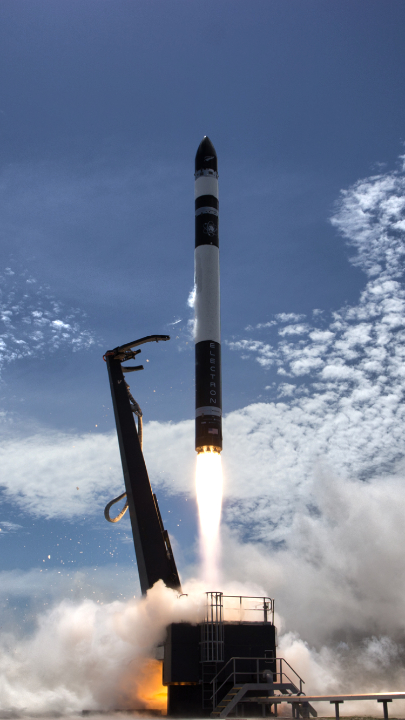
Rocket Lab has resumed launch operations for the firm’s next Electron launch, following the easing of COVID-19 restrictions.

Rocket Lab’s 12th Electron launch was postponed from its original date of March 27th following the implementation of the New Zealand Government’s Alert Level 4 Covid-19 national response, which required most businesses to close, restricted travel and instructed people to stay home.

With COVID-19 restrictions now eased, a new launch window for this mission has been scheduled to commence June 11, 2020, NZT, from Rocket Lab Launch Complex 1 on New Zealand’s Mahia Peninsula. The mission will loft payloads for the National Aeronautics and Space Administration (NASA), the National Reconnaissance Office (NRO) and the University of New South Wales (UNSW) Canberra Space.

The Electron launch vehicle and the Launch Complex 1 ground systems have remained in a state of readiness throughout the Covid-19 lockdown in preparation for a quick return to launch operations. Enhanced health and safety processes will be implemented for this launch in line with government health advice to protect Rocket Lab personnel. These measures include physical distancing, split shifts, maintaining contact tracing registers, limiting interaction between team members, enhanced cleaning, and stringent hygiene standards.

Payloads onboard ‘Don’t Stop Me Now’: NASA’s ANDESITE (Ad-Hoc Network Demonstration for Extended Satellite-Based Inquiry and Other Team Endeavors) satellite will launch as part of the agency’s CubeSat Launch Initiative (CSLI). Created by students and researchers at Boston University, ANDESITE will conduct groundbreaking scientific study into Earth’s magnetic field.

This mission also carries three payloads designed, built and operated by the National Reconnaissance Office. The mission was procured under the agency’s Rapid Acquisition of a Small Rocket (RASR) contract vehicle. RASR allows the NRO to explore new launch opportunities that provide a streamlined, commercial approach for getting small satellites into space, as well as provide those working in the small satellite community with timely and cost-effective access to space.

The final payload onboard is the M2 Pathfinder satellite built in a collaboration between the University of New South Wales Canberra Space and the Australian Government. The M2 Pathfinder will test communications architecture and other technologies that will assist in informing the future space capabilities of Australia. The satellite will demonstrate the ability of an onboard software-based radio to operate and reconfigure while on-orbit.


Filed Under: Featured, News

Kleos Space and Global Spatial Technology Solutions Sign an MOU to Enhance Maritime Domain Awareness

May 28, 2020 by editorial

Kleos Space S.A. (ASX: KSS, Frankfurt: KS1) has partnered with GSTS to provide enhanced Maritime Domain Awareness capability to GSTS’s OCIANA product suite.

GSTS (Global Spatial Technology Solutions) is a wholly-owned Canadian company that provides innovative decision-support solutions for the maritime market through the use of Artificial Intelligence (AI) and Big Data analytics. GSTS predictive technologies empower future-friendly decision-making to help the maritime, security, logistics and service sectors navigate tomorrow… today.

Kleos data will provide a valuable addition to GSTS services and data solutions by supporting vessel detection, classification and identification.

Kleos’ Scouting Mission satellites that are in Chennai, India, awaiting launch on Indian Space Research Organisation (ISRO) PSLV C49, will detect and geolocate maritime radio frequency transmissions to provide global activity-based intelligence, enhancing the intelligence, surveillance and reconnaissance (ISR) capabilities of governments and commercial entities when Automatic Identification System (AIS) is defeated, imagery unclear or targets out of patrol range.

Kleos’ satellites will be in a 37-degree inclination orbit, covering crucial shipping regions for defense and security customers including the Strait of Hormuz, South China Sea, Australian coast, Southern US coast as well as the East and West African coast.

The Memorandum of Agreement signed by Kleos and GSTS allows for investigating opportunities to collaborate and develop marketable solutions; and to implement a scenario and demonstration to validate the technical feasibility and usability of collaborative solutions with the initial data licence procured for demonstration and assessment purposes.

Andy Bowyer, the Kleos CEO, said the company’s satellites and data will enhance GSTS capabilities when fused with other data sets in their innovative OCIANA environment, assisting in the goal to provide greater insights, detecting illegal activities and threats for their customers.

Richard Kolacz, the GSTS CEO, commented that Kleos will add another powerful data set to the OCIANA product suite to further enhance our maritime situational awareness capability and improve the firm’s ability to detect and predict vessel activity to support defence, civil and commercial solutions.

Filed Under: News

Launch Partnership Signed Between University of Edinburgh’s Asteria Student Satellite Group and Responsive Access

May 27, 2020 by editorial

A student-led satellite group from the University of Edinburgh has signed a Memorandum of Understanding (MoU) with Responsive Access, a launch brokerage firm that participates in the European Space Agency Business Incubation program, with a view to procuring a launch opportunity.

Student satellite group Asteria are hosted at Edinburgh’s Bayes Centre innovation hub. Their team is working on the production of a cubesay in order to monitor the likes of vegetative blight and flooding, as well as a new mission entitled “Remote Sensing of Air Pollution: New Insights Into Seasonal Respiratory Diseases,” which started two months ago in light of the COVID19 pandemic.

By partnering with Responsive Access, the project’s chance of finding a swift and suitable launch opportunity will increase, while the group intend to benefit from the various mission management processes provided by the space brokerage company from their base at the Higgs Centre for Innovation, part of the Royal Observatory site in Edinburgh.

Asteria was founded last year to address the motivated interests in data science and space engineering among Edinburgh’s students and academics, with a view to developing solutions around matters of the environment and the United Nation’s Sustainability Development Goals (UNSDGs). They plan to achieve their aims using purpose-built satellites, state-of-the-art sensors, robust system designs and advanced post-processing.

The cubesat project is supported by the University Fellow for Space and Satellite Analysis, as well as academics from the Schools of Geosciences, Informatics and Engineering.

Their base at the Bayes Centre allows them to work alongside cutting-edge robotics and artificial intelligence developments, as part of an innovation hub that was opened in 2018 by Her Royal Highness, The Princess Royal, after receiving funding through the Edinburgh City Deal. Edinburgh is currently home to several space data organizations capturing and analyzing downstream data for a variety of reasons, including the monitoring of environmental change, food and agricultural stock and maritime channels.

The data-driven innovation taking place in the city is part of a wider space ecosystem in the country that has seen more than 100 satellites built in Glasgow, rocket manufacturers developing launch systems and no-less than five developing spaceport sites in areas such as Prestwick and Scotland’s Highlands and Islands.

Responsive Access Chief Executive, Andrew Paliwoda, stated that the company’s team is delighted to have been selected to help move Asteria’s exciting project toward launch. The opportunity to work with leading UK universities provides the firm with a valuable way to fine-tune the Responsive Access offering, which is based around the delivery of low-cost launch via the firm’s launch vehicle partners. It also lets for the testing of the ancillary services that can be offeedr to clients, from environmental testing and certification for satellites, through to assistance with insurance and license paperwork.

The partnership with Asteria marks the further milestone for Responsive Access, following their announcement last month surrounding their support of GU Orbit, based at the University of Glasgow, with their mission preparation.

Ani Vasudevan, Managing Director at Asteria, said the organization is thrilled to be collaborating with Responsive Access for the launch of the team’s first satellite, Oracle 1. Developing a satellite from mission planning to launch is something that very few, if any, students in the UK have exposure to, yet many are enthralled by the potential. This is true in a time where student projects are becoming an increasingly vital aspect of learning at Universities. This partnership with Responsive Access will help Asteria nurture that excitement in space for many years and many satellites to come.


Filed Under: News

  • « Go to Previous Page
  • Page 1
  • Interim pages omitted …
  • Page 34
  • Page 35
  • Page 36
  • Page 37
  • Page 38
  • Interim pages omitted …
  • Page 57
  • Go to Next Page »

Primary Sidebar

WEEKLY NEWSLETTER

Archives

  • November 2026
  • October 2026
  • September 2026
  • August 2026
  • July 2026
  • June 2026
  • May 2026
  • April 2026
  • March 2026
  • February 2026
  • January 2026
  • December 2025
  • November 2025
  • October 2025
  • September 2025
  • August 2025
  • July 2025
  • June 2025
  • May 2025
  • April 2025
  • March 2025
  • February 2025
  • January 2025
  • December 2024
  • November 2024
  • October 2024
  • September 2024
  • August 2024
  • July 2024
  • June 2024
  • May 2024
  • April 2024
  • March 2024
  • February 2024
  • January 2024
  • December 2023
  • November 2023
  • October 2023
  • September 2023
  • August 2023
  • July 2023
  • June 2023
  • May 2023
  • April 2023
  • March 2023
  • February 2023
  • January 2023
  • December 2022
  • November 2022
  • October 2022
  • September 2022
  • August 2022
  • July 2022
  • June 2022
  • May 2022
  • April 2022
  • March 2022
  • February 2022
  • January 2022
  • December 2021
  • November 2021
  • October 2021
  • September 2021
  • August 2021
  • July 2021
  • June 2021
  • May 2021
  • April 2021
  • March 2021
  • February 2021
  • January 2021
  • December 2020
  • November 2020
  • October 2020
  • September 2020
  • August 2020
  • July 2020
  • June 2020
  • May 2020
  • April 2020
  • March 2020
  • February 2020
  • January 2020
  • December 2019
  • November 2019
  • October 2019

© 2019–2026 SatNews

Insert/edit link

Enter the destination URL

Or link to existing content

    No search term specified. Showing recent items. Search or use up and down arrow keys to select an item.
      x
      Sign Up Now!

      Enjoy a free weekly newsletter with recent headlines from the global SmallSat industry.

      Invalid email address
      We promise not to spam you. You can unsubscribe at any time.
      Thanks for subscribing! You will now receive weekly SmallSat News updates.
      We love our advertisers.
      And you will too!

      Please disable Ad Blocker to continue... We promise to keep it unobtrusive.
      We promise not to spam you. You can unsubscribe at any time.
      Invalid email address
      Thanks for subscribing!