• Skip to main content
  • Skip to primary sidebar
  • Home
  • News
  • Featured
  • More News ⌄
    • SatNews
    • SatMagazine
    • MilSatMagazine
  • Events ⌄
    • MilSat Symposium
    • SmallSat Symposium
    • Satellite Innovation
  • Contacts
  • SUBSCRIPTION

SmallSat News

You are here: Home / Archives for 2020

Archives for 2020

Six Additional Planet SkySat Smallsats to Launch During the Summer

May 14, 2020 by editorial

Planet is set to launch six more SkySat satellites (SkySats 16-21) into LEO this summer, rounding out the fleet of 15 SkySats already in operation.

SkySats 1-15 operate in Sun Synchronous Orbits (SSO), a specific type of Low Earth Orbit that results in the Earth’s surface always being illuminated by the Sun at the same angle when the satellite is capturing imagery. About half of the SkySats currently pass overhead in a morning crossing plane, while the other half moves in an afternoon crossing plane, so together they provide twice-daily coverage of select areas on a global scale.

SkySats 16-21 will operate at a “mid-inclination” orbit of 53 degrees, complimenting the SSO fleet, and will offer more targeted coverage and raw image capacity in key geographic regions.

The six SkySats will be evenly split across two launches on SpaceX’s Falcon 9, a two-stage reusable rocket that has successfully flown satellites and cargo over 80 times to orbit. They will do so as rideshare payloads on launches of SpaceX’s Starlink satellites.

SkySats 16-18 will launch on SpaceX’s ninth Starlink mission, targeted for launch in the next month, and SkySats 19-21 will launch later this summer. Both missions will launch from Cape Canaveral Air Force Base in Florida.

The launch of SkySats 16-21, as well as the development of the company’s enhanced 50 cm imagery (to be made available to customers this year)—are just some examples of Planet’s evolving geospatial offerings.


Space Launch Complex 40 at Kennedy Space Center, with a Falcon 9 on the pad. Image is courtesy of Plant.
 

Filed Under: News

Orbital Deployment Contract Awarded by Sen to Momentus

May 13, 2020 by editorial

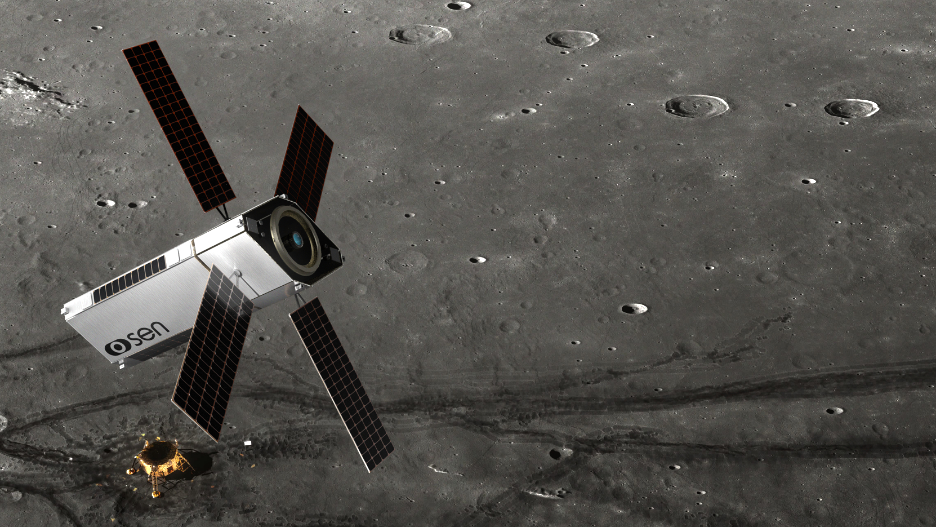
Sen, a British space company establishing a video streaming service to provide real-time and timely Ultra-High Definition (UHD) video of Earth, and Momentus, a provider of in-space transportation services for satellites, today announced a contract for the orbital deployment of Sen’s first satellite, with an option to launch a further four satellites for Sen in 2022.

Under the agreement, Momentus’ Vigoride orbital transfer vehicles will carry Sen’s satellites to sun-synchronous orbit (SSO) riding on SpaceX Falcon 9 rockets, with the first launch booked for summer 2021 and a further four satellites scheduled for late 2022. From their drop-off orbits, the Vigorides will deploy the EarthTV satellites to their final desired altitudes. In the case of the cluster of four, Vigoride will also equally distribute the satellites in their orbital plane.

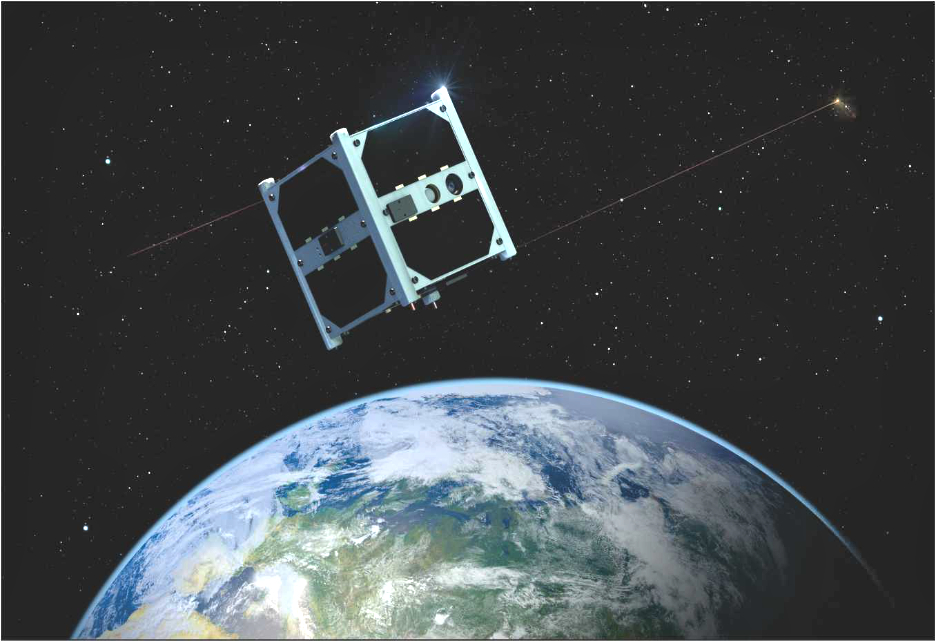
Built by NanoAvionics under a separate contract that was announced in March, the EarthTV satellites are cubesats with a 16U form factor, which makes them the largest payloads contracted to Momentus so far. This is also the first agreement specifically leveraging the orbital maneuvering capabilities of the Vigoride shuttle.

Momentus will test fly the Vigoride transfer vehicle later this year. It is optimized for orbital maneuvers in low Earth orbit such as altitude raising, in plane phasing, change of orbital planes, correction of inclination, and more. Vigoride will commence operations in 2021 with up to three commercial missions by the end of that year. A more capable variant called Ardoride will be introduced in 2022-2023, offering larger capacity as well as the ability to deliver satellites to higher orbits – Geostationary and medium Earth orbits – and even to the Moon.

Founded in 2014, Sen already demonstrated 4K Ultra High Definition video from a satellite with six cameras during its first mission which launched in February 2019, filming both the satellite and wide-angle imagery of Earth with its steerable cameras. Sen’s videos will provide news and information to people who want to explore Earth and follow major events and planetary changes.

The videos will be freely accessible for individuals both online and with a smart phone app. Sen will also provide an open source data platform and premium services for businesses and organizations. Sen’s open source data platform will enable partner organisations to build apps and analytics using the video data with the aim of opening up new markets and uses for space data.

After the launch of Sen’s first five satellites, the company plans to grow its EarthTV constellation in LEO and also place video cameras in other orbits in deep space locations around Earth, the Moon and eventually beyond.

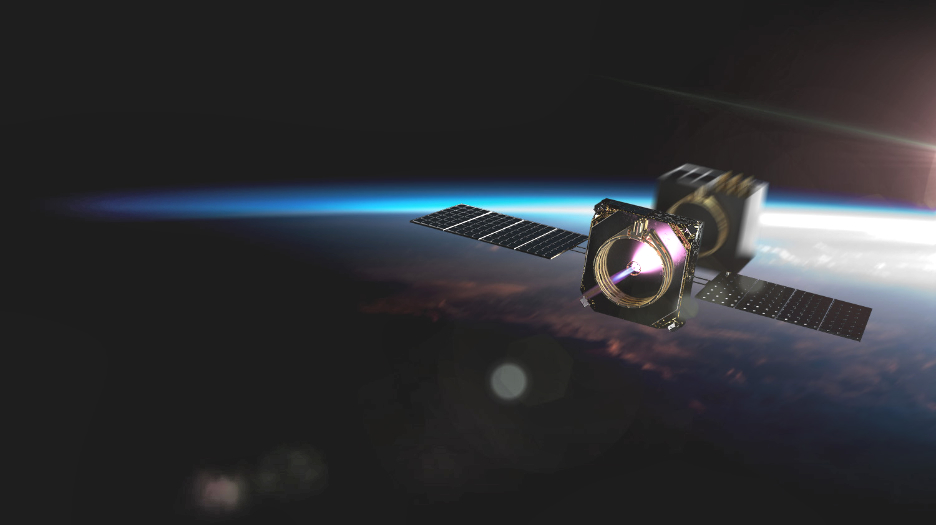
A graduate of the prestigious Y Combinator program and based in Santa Clara, California, Momentus announced a $25.5 million Series A raise last year, bringing total funding to nearly $50 million. Momentus employs new and proprietary technologies, including water plasma propulsion to enable revolutionary low cost orbital shuttle and charter services. The prototype of the Vigoride vehicle, “El Camino Real”, was launched and tested last year. The first Vigoride test mission is planned for December2020 on a SpaceX dedicated rideshare mission to sun-synchronous Orbit (SSO).

Charles Black, Sen Founder and CEO, said the EarthTV constellation of nano-satellites will stream real-time videos from space to smart phones so that everyone can enjoy the unique perspectives of Earth from space. The company is delighted to be working with Momentus for the launch requirements as we share a vision to democratize space for the benefit of humanity. Their launch services are flexible and very attractive for smallsat constellations.

Mikhail Kokorich, CEO of Momentus, added that the firm is elated to partner with Sen and kickstart this ambitious Earth gazing project. Sen and Momentus will be ideally positioned with the firm’s family of transfer vehicles for prospective growth.


Filed Under: News

Arianespace Getting Set for Upcoming Vega and Ariane 5 Missions

May 13, 2020 by editorial

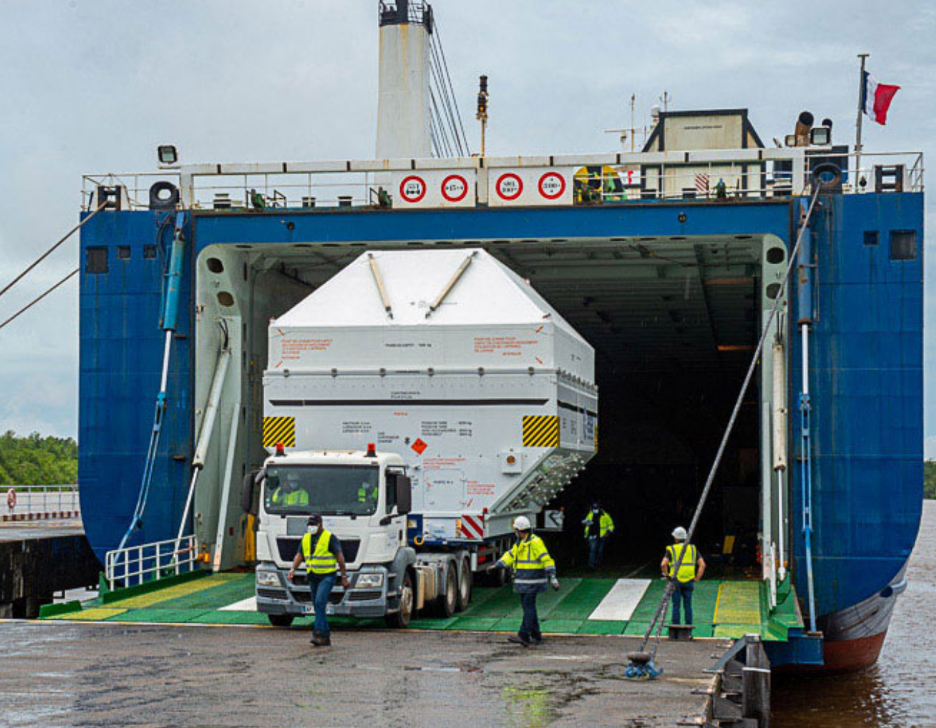
A pair of important arrivals this week – one by air, the other by sea – marked an acceleration of preparations at Europe’s Spaceport for Arianespace’s next two missions, to be performed from French Guiana with its lightweight Vega and heavy-lift Ariane 5 launch vehicles.

These parallel arrivals involved personnel who will conduct the first Vega “rideshare” mission, scheduled for mid-June to orbit 53 small satellite payloads; and Ariane 5 launch vehicle components for a three-passenger flight planned for liftoff this summer.

Team members for the Vega launch campaign were flown in aboard a chartered airliner that touched down at Félix Eboué Airport near the French Guiana capital city of Cayenne. They will be responsible for preparing this mission’s liftoff from the Vega Launch Complex (ZLV), located on the Kourou side of the Spaceport.

As the personnel were settling in, main launcher components for the Ariane 5 flight were being unloaded from the MN Toucan, one of two roll-on/roll-off sea-going ships operated for Arianespace, which docked at Paricabo Port near Kourou. After unloading, the components were to be taken by road to the Ariane 5’s ELA-3 launch complex – also situated on the Spaceport’s Kourou side.

Launch activities in French Guiana had been suspended mid-March because of the COVID-19 pandemic, and were gradually resumed – carried out in strict compliance with health rules published by the Prefect of French Guiana, as well as the French CNES space agency and the Guiana Space Center.

Vega proof-of-concept flight for SSMS
Designated Flight VV16 in Arianespace’s numbering system, Vega’s mission will be the first of the Small Spacecraft Mission Service (SSMS) – a program initiated by the European Space Agency (ESA) in 2016, with the contribution of the European Commission. For all the European partners involved, its purpose is to perfectly address the burgeoning microsatellite market for institutional and commercial customers alike.

The modular SSMS dispenser was designed to be as market-responsive as possible, able to accommodate a wide combination of payloads – from a main large satellite with smaller companions to multiple smaller satellites, or dozens of individual CubeSats.

Flight VV16 will be Arianespace’s fifth launch overall in 2020, and its first this year using the lightweight Vega member of its launch vehicle family – which also includes the heavy-lift Ariane 5 and medium-lift Soyuz.

The satellite passengers on Flight VV16 will be deployed by Vega to Sun-synchronous orbits. They will serve different types of applications, such as Earth observation, telecommunications, science and technology/education.

Readying Ariane 5’s three-satellite payload
For Arianespace’s initial Ariane 5 mission following the resumption of operational activity at the Spaceport, its heavy-lift launcher will carry three payloads to geostationary transfer orbit: the Galaxy 30 and BSAT-4b telecommunications satellites, along with a Mission Extension Vehicle (MEV).

Riding in Ariane 5’s upper payload position will be Galaxy 30, produced by Northrop Grumman Innovation Systems (NGIS). This is the first spacecraft built under Intelsat’s North American satellite fleet replacement program and highlights the operator’s continued focus on C-band communication technologies.

To be deployed as a Galaxy 30 “piggyback” payload is Northrop Grumman’s second Mission Extension Vehicle (MEV-2) – a servicing spacecraft that docks with an existing satellite in orbit to provide life-prolonging propulsion and attitude control. After deployment by Ariane 5, MEV-2 will service the Intelsat 10-02 satellite, which was launched in 2004.

Flight VA253’s other passenger on Ariane 5 – BSAT-4b – was built by Maxar Technologies for Japan’s Broadcasting Satellite System Corporation (B-SAT) as a back-up to BSAT-4a, launched by Arianespace in 2017. BSAT-4b uses Maxar Technologies’ 1300 Class platform and carries Ku-band transponders.


Filed Under: News

Rocket Crafters Prepares for Launch Following Successful Testing of the Comet Rocket Engine

May 13, 2020 by editorial


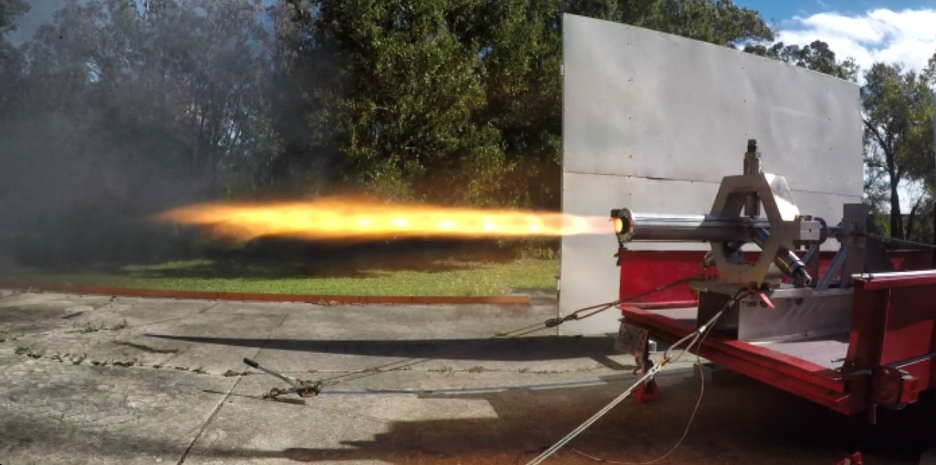
Rocket Crafters is currently developing, testing, and prototyping the STAR-3D™ hybrid engine.

Rocket Crafters, the first space launch company to use additive manufacturing to 3D print rocket fuel, has concluded testing for their Comet engine, a large-scale, proof of concept test model of the company’s STAR-3D™ hybrid rocket engine.

The tests were designed to show that the patent-pending hybrid rocket engines could scale from the laboratory to a size more commercially relevant. With 49 successful laboratory tests under their belt ranging from 250 to 500 pounds of thrust, Rocket Crafters initiated testing of the Comet 5000-pound thrust engine in February of this year.

Comet was tested three times. The first two tests were successful, closely matching the performance models that Rocket Crafters created. While still considered successful in terms of research and development, the third test experienced an overpressure anomaly, resulting in damage to the test stand and test engine.

After the anomaly, the Rocket Crafters engineering team dug deep into the hardware and recorded data to determine what had occurred and how to prevent it in future tests. After extensive analysis, it was concluded that there was an initial failure in an ancillary part of the engine. This led to a larger over-pressurization inside the combustion chamber. The team found no problems within the core STAR-3DTM engine design.

Rocket Crafters President, Robert Fabian, who is a 25 year veteran of military space and missile operations and maintenance,said this is the why of tests. Problems are found and fixed in testing, so they don’t occur on the launch pad.

With the completion of the large-scale proof of concept testing, Rocket Crafters is taking their lessons learned and applying them to their next big project — a test flight powered by a smaller version of the STAR-3DTM hybrid rocket engine. This will be Rocket Crafters’ inaugural launch of a flight engine and the first opportunity to see the performance in motion rather than bolted to a test stand.

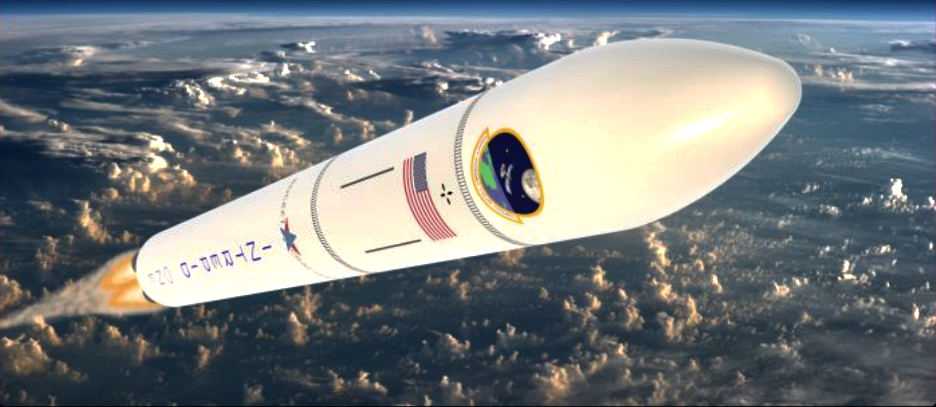
Rocket Crafters has planned two more consecutively larger test flights into space and back to Earth and then into orbit. Not long after that, commercial service to LEO with the Intrepid smallsat launch vehicle will begin.

Rocket Crafters, based in Florida’s Space Coast, is a propulsion and launch services company, focused on producing the safest, more reliable, and affordable rocket engine ever produced. Transitioning from research into commercial relations, Rocket Crafters has developed engine technology that the space industry has long been searching for; a payload-to-orbit transport system that is not only safe and reliable, but also with pricing based upon the market and a rapid launch cadence that is driven by that safety and low cost.


With the inaugural launch of the Intrepid™, the company will be starting their full launch services. Intrepid™ will serve the small to medium satellite market, specializing in companies that require satellites delivered safely, reliably, and in a cost effective manner to LEO.


Filed Under: News

Smallsat Catalog Published by Orbital Transports Offers Total Mission Support

May 13, 2020 by editorial

Orbital Transports, Inc. has debuted their Small Satellite Catalog on its website. By bringing the entire small satellite supply chain online, Orbital Transports is able to offer hardware, software, services, and engineering expertise in a single, searchable, structured catalog.

The first resource of its kind, this catalog offers everything a satellite operator or user needs to plan a successful mission.

The catalog offers a wide variety of small satellite hardware components, small satellite buses specialized for common space missions, ground station services, and mission operations software from more than a dozen partner companies. Orbital Transports has brought together the industry’s most innovative and reliable companies to offer the widest possible set of solutions while meeting clients’ quality requirements. The catalog will also grow in the near future to include launch, legal, and regulatory services.

Following the launch of the catalog, Orbital Transports will also release an online mission builder “wizard” that will allow users to define their goals and then guide them in building a complete spacecraft including selecting their payload, bus, timeframe, orbit, and launch. In combination with the online catalog, this mission builder tool will allow anyone who is interested in obtaining valuable data from space to quickly and easily design and execute their mission.

The catalog is just the beginning, noted the company’s CEO, David Hurst, who added that Orbital Transports offers a complete mission outsourcing, including assembly, testing, and integration. The firm can even book a launch, operate a mission and deliver data. If there is a need to get something to space, Orbital Transports can handle the entire process as the company focuses on making the mission successful. Customers don’t have to do the research to find vendors and build relationships with dozens of individual companies because Orbital Transports has already accomplished that task, creating the trusted source that customers can turn to for all their smallsat mission needs.


Filed Under: News

Satellite IoT Network Development by New Company SatIoTLab

May 13, 2020 by editorial

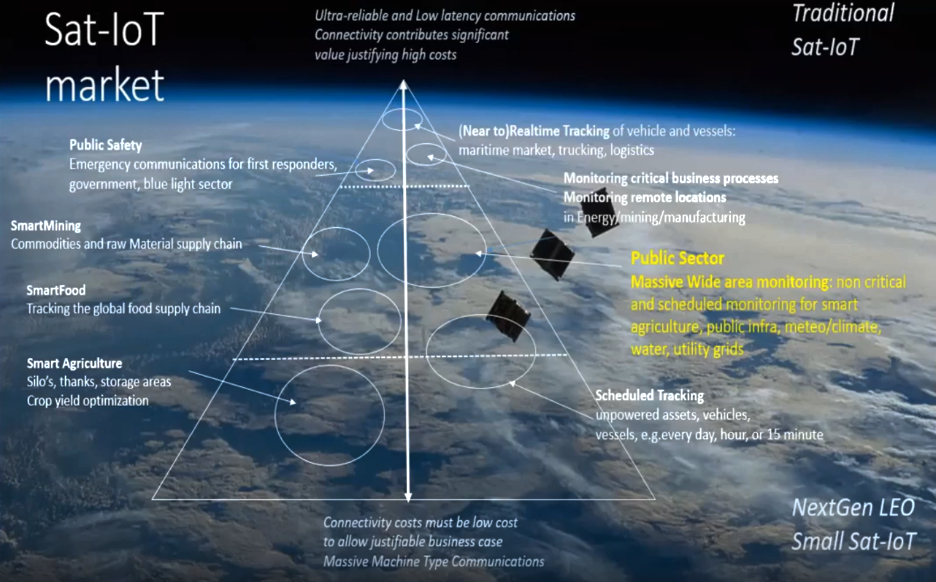
Huge investments are underway in the satellite upstream market, to built and launch a new generation of smallsat IoT networks that will bring the world low costs / low power IoT connectivity.

On the downstream side, satellite IoT application development receives much less attention, although the true value lies there.

SatIoTLab founded the satellite application lab to support the development of global satIoT applications and to form IoT solution value chains. The company believes the largest benefits of satellite IoT will be in the public and government sector, where wide area monitoring applications will serve various UN goals to the benefit of society.

What we do in the SatIoTLab:

1. Educate next gen IoT professionals in the public and government sector on the use of satellite based connectivity for global IoT applications

2. Provide Lab facility for satIoT application development (think: satIoT Makerspace, Workshops and Hackatons)

3. Create a satIoT community to form value chains for the different vertical markets to engage in projects.


To learn more, select the screenshot below to view an introductory video...

Filed Under: News

New Space Electronics Now Being Offered for Constellations by RUAG Space

May 13, 2020 by editorial

RUAG Space is now offering new electronics that are suited to the needs of satellite constellations.

For constellations of hundreds or thousands of smallsats, products in high volumes, lower cost, on-time and on-quality delivery are needed. RUAG Space has developed novel products and processes specifically meeting the needs of satellite constellations. The international space supplier with sites in six different countries and headquartered in Switzerland is offering new electronic and mechanical products for constellations.

Peter Guggenbach, EVP, RUAG Space, stated that the company can offer a unique mix of the firm’s vast experience in hundreds of space missions, combined with the company’s high volume production that fosters lean operations and automated processes, to customers. For constellations, RUAG offers the world leading navigation product, fully embedded on the onboard-computer. RUAG’s constellation Global Navigation Satellite System (GNSS) receiver is offering a high quality and cost-effective solution for applications deployed in larger quantities. The receiver can precisely determine a satellite’s position in orbit and works with both GPS and Galileo signals. In total, more than 20 navigation receivers from RUAG Space are currently in orbit and functioning flawlessly since 2006.

RUAG’s new onboard-computer for constellations (cOBC) is the “brain” of a satellite. The onboard computer controls and monitors the payload of the satellite and many other subsystems. For constellation onboard computing RUAG offers a combination of its cOBC and its constellation Interface Unit products (cIU).

Direct technical interface for U.S. customers For its entire electronics portfolio – from onboard-computers, navigation receivers to antennas and more – RUAG Space offers a direct technical interface in its office in Denver, Colorado – offering a customer service close to U.S. clients.

Mechanisms for constellations RUAG Space also offers new mechanisms to its satellite constellations customers, for example mechanisms that point the small satellite’s engines. The electric propulsion is necessary to bring the satellite exactly into its position and to maintain this position over the lifetime of several years. In January RUAG’s electric propulsion pointing mechanisms have been successfully used for the Eutelsat KONNECT satellite.

Guggenbach added that the company’s pointing mechanisms are carefully designed to minimize mass, manage orbital temperature extremes and deliver exact pointing accuracy over many years of service lifetime.

Established products for constellations are RUAG’s dispensers, structures, thermal insulation and satellite handling equipment. A low cost solar array drive mechanism from RUAG Space is also currently in qualification, with completion expected by the end of 2020.

Additional information is available at this direct infolink…

Filed Under: News

C6 Launch Systems R&D Project for the Canadian Space Agency Completed

May 12, 2020 by editorial

C6 Launch Systems Inc. has successfully completed a Canadian Space Agency (CSA) funded research and development project that paves the way for next-generation, low-cost space communications for smallsat rockets.

Named C6 STARS™ (Space Transmission and Reception System), the system was developed on time with a $71,990 Space Technology Development Program (STDP) contribution from the CSA. As a result, C6 Launch was able to expand the scope of the project to develop a comprehensive test plan for this critical technology, to move even closer to the development and commercialization of their smallsat rocket.

C6 Launch expects to move to the next phases of commercializing C6 STARS with additional system evaluation during a planned engine Static Integration Test (SIT) in the fall of this year and further testing planned to take place at the CSA’s David Florida Laboratory in Ottawa. Subject to those milestones, C6 STARS will provide communications capability with the initial suborbital launch scheduled for late 2021 and the first orbital launch in mid-2022.

Daniel McCammon, Co-founder and VP Technology, C6 Launch, relayed that with C6 STARS, the compabeen able to demonstrate the reality of a low-cost, high-gain, compact space-grade communications systems for small-sat rockets from the launch pad to LEO for payload delivery. The support of the Government of Canada and the Canadian Space Agency was instrumental in achieving this milestone.”

An interim presentation delivered by C6 Launch at the International Aerospace Congress (IAC) 2019 in Washington D.C., received considerable interest from the space community.


Filed Under: News

DARPA’s Smallsat Flights to Start

May 12, 2020 by editorial

In partnership with the U.S. Space Force (USSF) and Space Development Agency (SDA), DARPA’s Blackjack program is targeting flights to LEO later this year and 2021.

Using a series of small, risk reduction satellites, the program aims to demonstrate advanced technology for satellite constellation autonomy and space mesh networks. Blackjack seeks to develop and validate critical elements of global high-speed autonomous networks in LEO, proving a capability that could provide the Department of Defense (DoD) with highly connected, resilient, and persistent overhead coverage.

The upcoming demonstration flights are all planned as rideshares, catching a ride to LEO on a launch with other missions. The first demonstration, Mandrake 1, is a smallsat that will carry supercomputer processing chips. Mandrake 2 is a pair of smallsats that will carry optical inter-satellite links for broadband data. These could form the basis of future optically meshed computer networks in LEO.

The program also is targeting a risk reduction payload called Wildcard, a software-defined radio (SDR) that will experiment with links from LEO to tactical radios. A data fusion experiment with the ability to host advanced third party algorithms, known as massless payloads, is intended for an upcoming Loft Orbital mission.

Blackjack aims to demonstrate sensors that are low in size, weight, and power, and that can be mass produced to fit on many different buses from many different providers, for less than $2 million per payload.

The agency is evaluating buses from Airbus, Blue Canyon Technologies and Telesat, all of which have progressed through preliminary design review. The final selection of buses will happen in 2020. The program recently completed preliminary design review for Pit Boss, selecting SEAKR as the primary performer for the on-orbit autonomy system. The agency also awarded a contract to Lockheed Martin as the satellite integrator.

Several sensor payloads are under consideration for the Blackjack demonstration sub-constellation, including overhead persistent infrared (OPIR) from Collins Aerospace and Raytheon; radio frequency systems from Northrop Grumman Mission Systems, Trident, and Systems & Technology Research; position, navigation, and timing from Northrop Grumman; optical inter-satellite links from SA Photonics; and electro-optical/infrared from L3Harris. The program also recently completed a Small Business Innovation Research contract with Augustus Aerospace to work on an Army Space and Missile Defense Command-related payload.

Over the next few months, the program will run simulations to test payloads in virtual constellations of all types of missions. The goal is to show interoperability between the commoditized buses and the various payloads being considered.

Paul “Rusty” Thomas, the program manager for Blackjack’s , said it is important that the agency gets the design right. DARPA focused first on buses and payloads, then the autonomous mission management system, which is called Pit Boss. Integration of the first two military payloads should start next summer, with launch via rideshare in late 2021, followed by the remainder of the Blackjack demonstration sub-constellation in 2022. The organization needs to show the constellations can move the right amount of data and support the data fusion and command and control wanted from Pit Boss. From there, DARPA will start building the actual hardware. By late next spring, the hardware will be in-hand and then next summer will be spent focused on satellite-level qualification for launch readiness in late 2021.

Filed Under: News

Michigan Tech University’s Next Student-Built Smallsat to Launch in 2021

May 11, 2020 by editorial


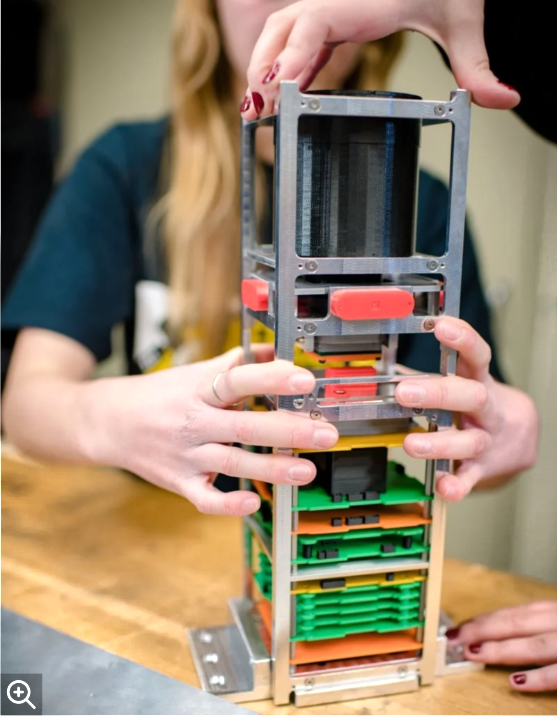
Stratus is a 3U spacecraft, which means the smallsat is composed of three units. This photo was taken in fall 2019 and is courtesy of Michigan Tech University.

NASA has slated Michigan Technological University’s second student-built satellite for a March 2021 deployment from the International Space Station (ISS).

Stratus, named for its cloud-imaging mission, will be carried to the space station, 200 miles above Earth, in a SpaceX Dragon cargo capsule on a Falcon 9 rocket. The Dragon will dock to the ISS.

Brad King, Michigan Tech’s Henes Endowed Professor in Space Systems, who has served as Aerospace Enterprise advisor since students came to him with the idea to form a team nearly two decades ago, said Stratus will be unloaded by the crew and then placed in the Kibo Module’s airlock, where the Japanese Experiment Module Remote Manipulator System robotic arm will move the satellite into the correct position and deploy it into space.

Once successfully deployed, Stratus will be the University’s second orbiting smallsat. The first, Oculus-ASR, was launched from Cape Canaveral in June 2019. Another satellite, Auris, designed to monitor communications emissions from geostationary satellites, has cleared system concept review in the design and development phase of the Air Force Research Lab University Nanosatellite Program (AFRL UNP).

Bill Predebon, J.S. Endowed Chair of the Department of Mechanical Engineering-Engineering Mechanics in the College of Engineering, welcomed the news of a second satellite launch with praise for King and Aerospace Enterprise team members and said it is amazing that Michigan Tech will have a second student-built satellite in space next year. This is a testament to the creativity, ingenuity, and hands-on ability of the students.

Stratus is funded through NASA’s Undergraduate Student Instrument Program and CubeSat Launch Initiative. Michigan Tech’s third satellite, Auris, is funded by the AFRL University Nanosatellite Program.

Stratus will use infrared imagery to gather cloud data that can validate and improve numerical weather models.

Michigan Tech Aerospace Team Program Manager Troy Maust, a fourth-year computer engineering major, has been working on the cubesat project for about a year. He said this mission has been in the works for much longer and, as with Oculus, I estimate more than 200 students and alumni have been part of this mission; it wouldn’t be possible without them.

The 10-by-10-by-30-centimeter, 4.4-kilogram Stratus smallsat is considerably smaller than the 70-kilogram Oculus-ASR, a microsat which measures 50-by-50-by-80 centimeters. But both, as well as Auris, are classed in the broader category of nanosatellites, the craft that represent an important development in space industry trends.

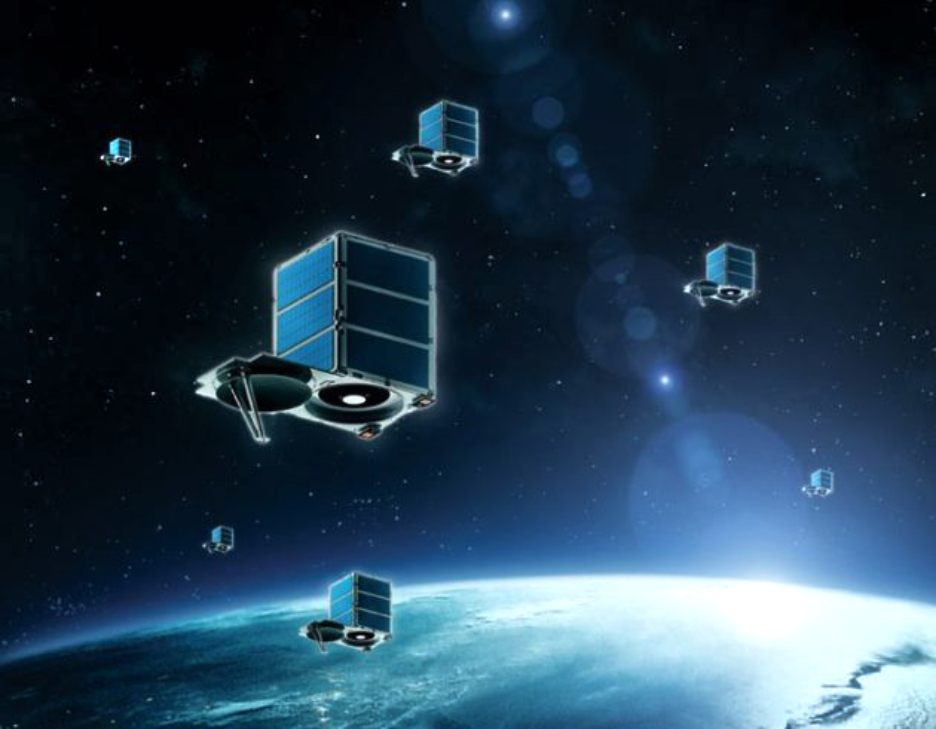
Maust added that, in the past, satellites have been large, multimillion-dollar projects. While large satellites are still being built, there is a shift toward using multiple smaller spacecraft in a constellation. In addition to lowering the overall cost, constellations can provide coverage spread over a larger area. Stratus is an example of using this mindset for weather satellites. All of this will keep everyone busy until the December 2020 handover date.

The COVID-19 global pandemic has affected university access around the world, and Michigan Tech is no exception. Maust said much remains to be done. However, this isn’t the first time the Aerospace Enterprise has contended with unexpectedly condensed timelines. System level testing will take place as soon as campus is able to reopen.

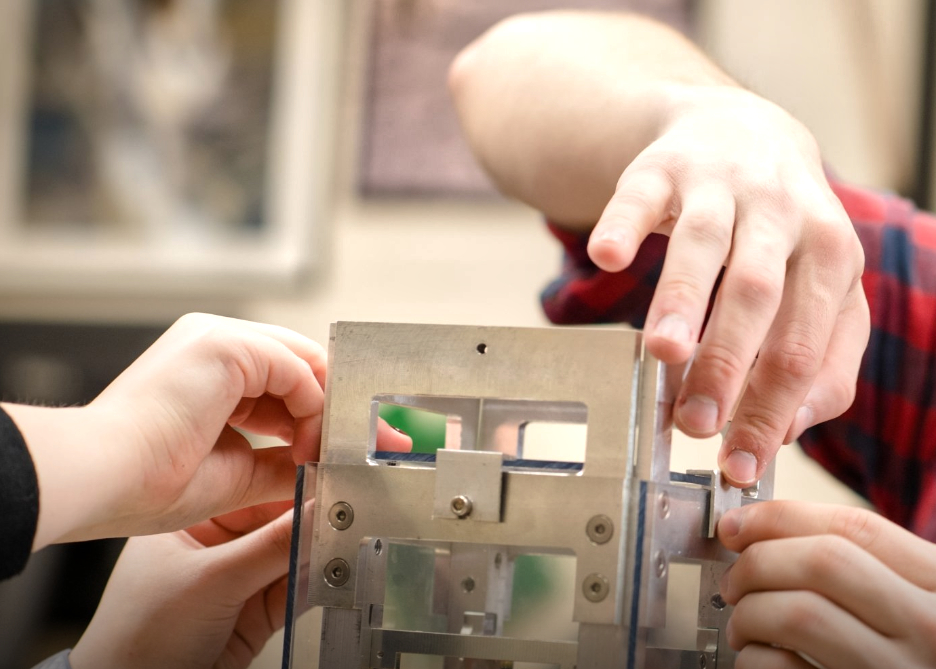
Maust continued that the teams will continue with FlatSat 1 and 2. The names are explanatory and the steps are necessary before the smallsat is entirely assembled. Spacecraft components are laid flat on the workbench and connected to the cubesat’s subsystems to verify that the system works together as a whole.

Maust added that next comes DITL 1 and 2, or Day In The Life. Again, the name is apt, as the tests simulate the actions the assembled spacecraft will perform in a day, with the final test running for a full 24 hours. Vibration and thermal vacuum testing will also be performed to ensure the spacecraft can withstand the harsh conditions of launch and space.

The process of designing, building and flying a spacecraft is multi-faceted, which is why the Aerospace Enterprise, one of the largest at Michigan Tech, welcomes members from disciplines across campus and is organized into numerous subteams. While Stratus system-level testing is taking place, another subteam will be working on procuring any necessary Federal Communications Commission (FCC) and National Oceanic and Atmospheric Administration (NOAA) licensing, which can be a long process and must be started well in advance of launch, as the project will not be allowed to continue without the proper licensing.

In 2016, Michigan Tech was selected to fly Stratus as an auxiliary payload. In early December 2019, a NASA-Goddard Spaceflight Center team conducted a thorough critical design review, or CDR.

Advisor King noted that while a few nicks and dings were suffered from the event, as is common during CDR, the project passed and were able to move on to system integration in preparation for an upcoming launch. Winning the NASA launch was great news, but this celebration was short. Suddenly the ’to-do’ list has gotten a lot longer and the stakes have gotten a lot higher.

Story by Cyndi Perkins, Senior Content Specialist, University Marketing and Communications, Michigan Tech.


Filed Under: News

  • « Go to Previous Page
  • Page 1
  • Interim pages omitted …
  • Page 36
  • Page 37
  • Page 38
  • Page 39
  • Page 40
  • Interim pages omitted …
  • Page 57
  • Go to Next Page »

Primary Sidebar

WEEKLY NEWSLETTER

Archives

  • November 2026
  • October 2026
  • September 2026
  • August 2026
  • July 2026
  • June 2026
  • May 2026
  • April 2026
  • March 2026
  • February 2026
  • January 2026
  • December 2025
  • November 2025
  • October 2025
  • September 2025
  • August 2025
  • July 2025
  • June 2025
  • May 2025
  • April 2025
  • March 2025
  • February 2025
  • January 2025
  • December 2024
  • November 2024
  • October 2024
  • September 2024
  • August 2024
  • July 2024
  • June 2024
  • May 2024
  • April 2024
  • March 2024
  • February 2024
  • January 2024
  • December 2023
  • November 2023
  • October 2023
  • September 2023
  • August 2023
  • July 2023
  • June 2023
  • May 2023
  • April 2023
  • March 2023
  • February 2023
  • January 2023
  • December 2022
  • November 2022
  • October 2022
  • September 2022
  • August 2022
  • July 2022
  • June 2022
  • May 2022
  • April 2022
  • March 2022
  • February 2022
  • January 2022
  • December 2021
  • November 2021
  • October 2021
  • September 2021
  • August 2021
  • July 2021
  • June 2021
  • May 2021
  • April 2021
  • March 2021
  • February 2021
  • January 2021
  • December 2020
  • November 2020
  • October 2020
  • September 2020
  • August 2020
  • July 2020
  • June 2020
  • May 2020
  • April 2020
  • March 2020
  • February 2020
  • January 2020
  • December 2019
  • November 2019
  • October 2019

© 2019–2026 SatNews

Insert/edit link

Enter the destination URL

Or link to existing content

    No search term specified. Showing recent items. Search or use up and down arrow keys to select an item.
      x
      Sign Up Now!

      Enjoy a free weekly newsletter with recent headlines from the global SmallSat industry.

      Invalid email address
      We promise not to spam you. You can unsubscribe at any time.
      Thanks for subscribing! You will now receive weekly SmallSat News updates.
      We love our advertisers.
      And you will too!

      Please disable Ad Blocker to continue... We promise to keep it unobtrusive.
      We promise not to spam you. You can unsubscribe at any time.
      Invalid email address
      Thanks for subscribing!