• Skip to main content
  • Skip to primary sidebar
  • Home
  • News
  • Featured
  • More News ⌄
    • SatNews
    • SatMagazine
    • MilSatMagazine
  • Events ⌄
    • MilSat Symposium
    • SmallSat Symposium
    • Satellite Innovation
  • Contacts
  • SUBSCRIPTION

SmallSat News

You are here: Home / Archives for 2020

Archives for 2020

China Launches Two IoT Satellites

May 11, 2020 by editorial


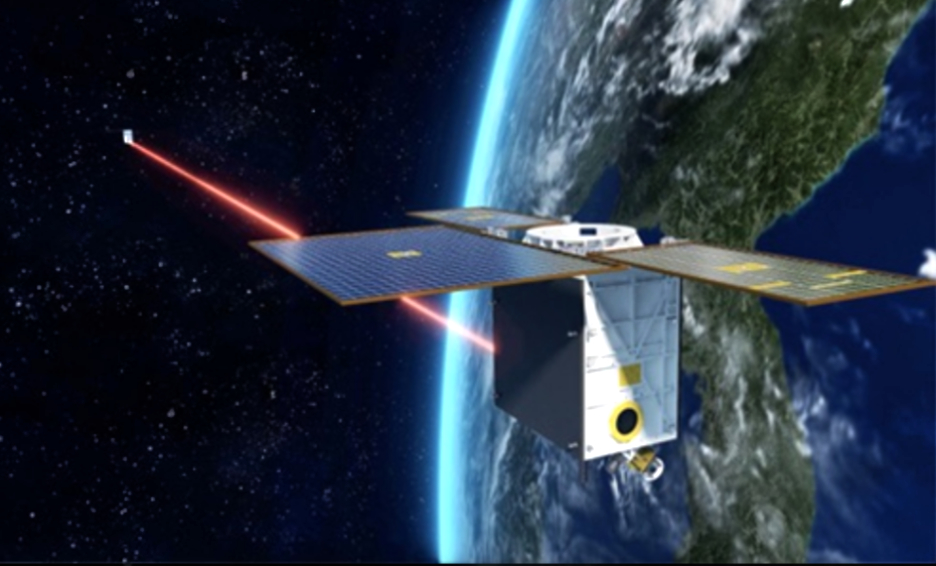
Artistic rendition of China’s Xingyun-2 01 satellite.
Image is courtesy of Global Times.

China sent two satellites into orbit on May 12 to test space-based Internet of Things (IoT) communications technology.

The satellites will conduct tests on technologies including space-based IoT communications, inter-satellite laser communications and a low-cost commercial satellite platform.

The satellites, Xingyun-2 01 and 02, were launched by a Kuaizhou-1A (KZ-1A) carrier rocket at 9:16 a.m. (Beijing Time) from the Jiuquan Satellite Launch Center in northwest China. They have successfully entered their planned orbit.

Developed by the Xingyun Satellite Co., the satellites will conduct tests on technologies including space-based IoT communications, inter-satellite laser communications and a low-cost commercial satellite platform. They will also carry out initial pilot IoT applications, according to the company.

KZ-1A is a low-cost solid-fuel carrier rocket featuring high orbit precision and a short preparation period. The rocket, developed by a company affiliated with Sanjiang Group under the China Aerospace Science and Industry Corporation (CASIC), is mainly used to launch low-orbit smallsats.

This launch was the ninth mission of the Chinese KZ-1A carrier rocket.


China’s Xingyun-2 01 & 02 satellites are launched by a Kuaizhou-1A (KZ-1A) carrier rocket at 9:16 am from the Jiuquan Satellite Launch Center in China, on May 12, 2020. The photo of the launch is courtesy of Wang Jiangbo, Chinanews.com.


 

Filed Under: News

NewSpace Systems to Supply Product for the Kinéis Smallsat IoT Constellation

May 11, 2020 by editorial


An artistic rendition of a HEMERIA constellation smallsat.
Image is courtesy of Kinéis.

NewSpace Systems (NSS), the manufacturer of “lean”, high-quality space components and sub-systems, has been down-selected by the Hemeria team to provide several of the ADCS products for the Kinéis constellation.

This constellation of smallsats will be dedicated to the Internet of Things (IoT).

The South African company design and manufacture a range of components and sub-systems from both its facilities in South Africa and the United Kingdom. Particularly strong in the area of Attitude Control Systems, NewSpace predominantly focuses on the smallsat market.

NSS CEO James Barrington-Brown said the company is excited to announce that with the successful completion of the EQSR last month, the NSS team is now working closely with the Hemeria team on the qualification phase for this program.


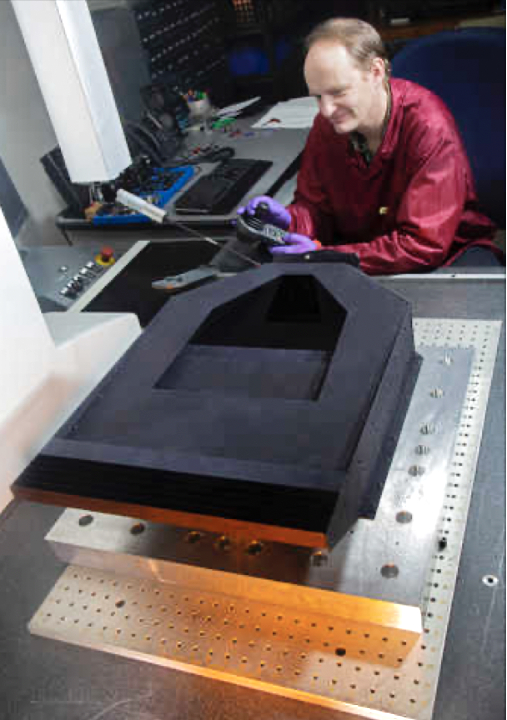
The NewSpace Systems’ Dark Room, which contains an artificial sun for the testing of their Fine Sun Sensors forms part of the NewSpace ISO-7 certified (Class 10,000) Clean Room.
Photo is courtesy of NewSpace Systems.


Filed Under: Featured, News

VOX Space Missions to Now Occur from Andersen AFB in Guam

May 8, 2020 by editorial

VOX Space, the Virgin Orbit subsidiary, has signed a new agreement with the Department of the Air Force, allowing the company’s LauncherOne system to conduct missions to space from Andersen Air Force Base in Guam.

VOX Space President Mandy Vaughn and U.S. Air Force 36thWing Commander Brig. Gen. Gentry Boswell, signed the Commercial Space Operations Support Agreement (COSOSA) Annex in early April, setting the stage for the STP-27VP mission, VOX Space’s first launch from Andersen Air Force Base.

Virgin Orbit and VOX Space first expressed interest in launching from the Pacific island of Guam in mid-2019. Due to Guam’s low latitude and clear launch trajectories in almost all directions, the company’s uniquely mobile LauncherOne system can effectively serve all orbital inclinations, such as delivering up to 450 kg to a 500 km equatorial orbit. 

The U.S. Department of Defense (DoD) Space Test Program (STP) procured the STP-27VP launch with VOX Space under the Rapid Agile Launch Initiative (RALI), leveraging the Defense Innovation Unit’s (DIU) Other Transaction Agreement. One of the first missions to fly on LauncherOne, the STP-27VP manifest consists of several CubeSats from various government agencies performing experiments and technology demonstrations for the DoD. 

As the system is not tied to a traditional ground-based launch site, LauncherOne will leverage key locations around the world including Guam to provide responsive and affordable flights to space for a broad variety of customers. Even now, VOX Space and Virgin Orbit are working closely with multiple allied governments and international organizations interested in establishing launch capabilities closer to home. 

After successfully demonstrating all major vehicle assemblies and completing an extensive flight test program, the Virgin Orbit team is in the midst of final preparations for an orbital launch demonstration expected soon. 

Ms. Vaughn said the company is grateful to Brig. Gen. Deanna Burt and her team at HQ USSF/S3, as well as Wing Commander Brig. Gen. Boswell, Vice Commander Col. Matthew Nicholson, and all of the excellent airmen and women of the 36thWing and Pacific Air Forces for their support,” said VOX Space President Mandy Vaughn.  “Lt. Gen. John Thompson and his team at the Space and Missile Systems Center have also provided visionary leadership throughout this process. We’re very excited to demonstrate the flexibility and mobility that only LauncherOne can offer.” 

Filed Under: Featured, News

Amateur Radio Linear Transponder on Russian Satellite DOSAAF-85 (RS-44) Now Active

May 7, 2020 by editorial


Artist impression of DOSAAF-85/RS-44 flying free but seems to be still attached to Breeze K/M rocket body

The amateur radio linear transponder (SSB/CW) payload on the Russian satellite DOSAAF-85 (RS-44) has been activated.

Dmitry Pashkov R4UAB reports:

DOSAAF-85 is a small scientific satellite created by specialists of the company Information Satellite Systems (ISS) Reshetnev and students of the Siberian State Aerospace University (SibSAU) Krasnoyarsk.


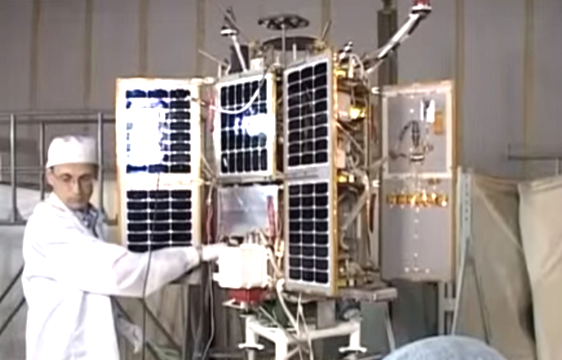
DOSAAF-85 / RS-44 under construction

The satellite is named after the 85th anniversary of the Voluntary Society for the Assistance to the Army, Aviation and Navy, the organization responsible for the military training of Soviet youth.

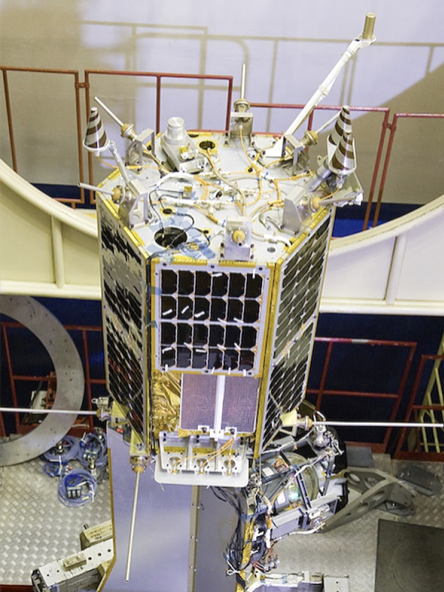
The DOSAAF-85 satellite is designed to provide amateur radio communications, as well as to develop promising technologies. This is the third satellite that was created by specialists of ISS-Reshetnev and is based on the Yubileyniy platform, which features a hexagonal prism structure with body mounted solar cells.


DOSAAF-95 / RS-44 Antennas, 435 MHz top 145 MHz bottom

The satellite was launched into orbit on December 26, 2019 from the Plesetsk Cosmodrome and is in an elliptical orbit with a perigee of 1175 km, an apogee of 1511 km and an inclination of 82.5 degrees.

Transmitter power: 5 watts
Beacon: 435.605 MHz – transmits CW call sign RS44

Inverting transponder:
Earth-to-Space: 145.965 MHz +/- 30 kHz
Space-to-Earth: 435.640 MHz +/- 30 kHz

Source Dmitry Pashkov R4UAB whose page also contains the satellite’s TLE, see
https://tinyurl.com/RussiaR4UAB

Peter 2M0SQL has added RS-44 to the AMSAT Live OSCAR Satellite Status Page at
https://www.amsat.org/status/

Linear Satellite Frequency Summary https://www.amsat.org/linear-satellite-frequency-summary/

RS-44 Pass Prediction http://amsat.org.ar/pass?satx=rs-44

By Dimitry Pashkov,  AmSatUK


Filed Under: News

Launch Ops Resumed by Rocket Lab

May 7, 2020 by editorial


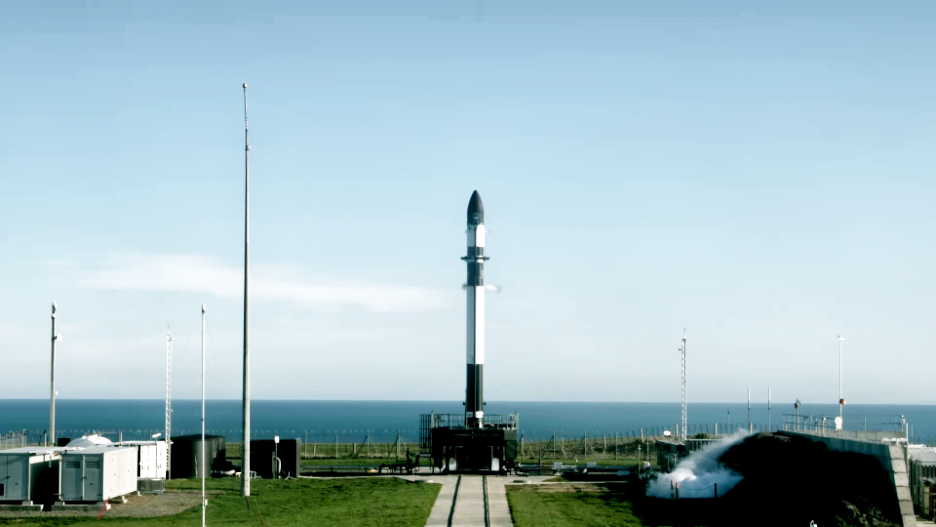
Rocket Lab’s 12th Electron launch dress rehearsal.
Photo is courtesy of the company.

Rocket Lab has resumed launch operations for the firm’s next Electron launch, following the easing of Covid-19 restrictions at Launch Complex 1. The mission will launch payloads for the National Reconnaissance Office (NRO), National Aeronautics and Space Administration (NASA), and the University of New South Wales (UNSW) Canberra Space.

Rocket Lab’s 12th Electron launch was originally scheduled for March 27th, however, the launch was postponed in response to ‘Stay At Home’ orders that required most businesses to close in response to COVID-19. With restrictions now easing and some businesses able to re-open with safety measures in place, launch operations have resumed safely and crews at Launch Complex 1 completed a successful wet dress rehearsal on May 7, NZT.

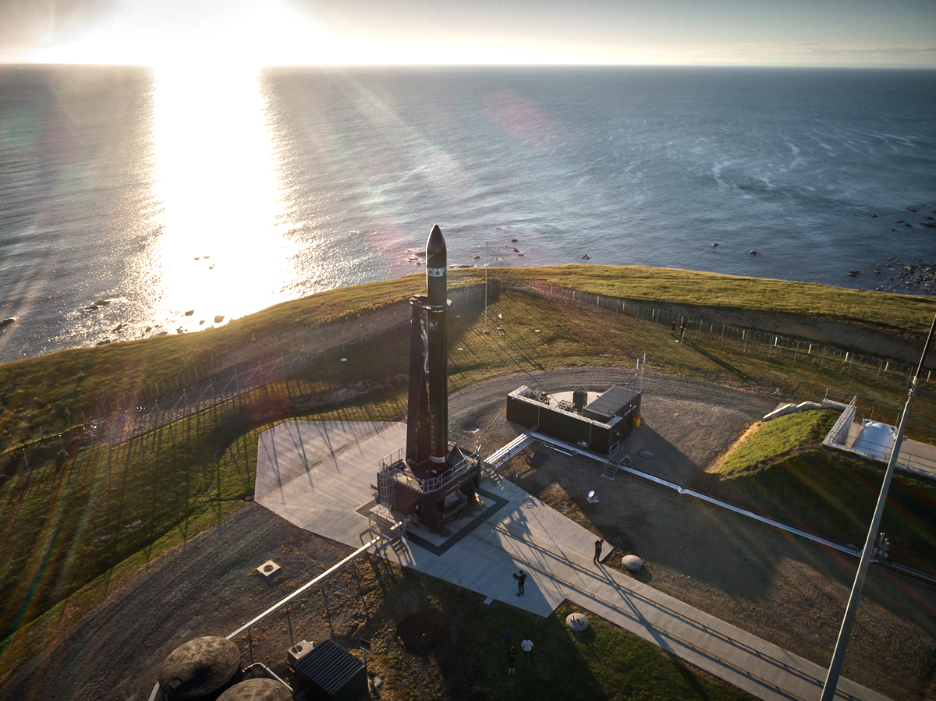
The launch is scheduled to take place from Rocket Lab Launch Complex 1 on New Zealand’s Mahia Peninsula. A new 14-day launch window for the mission will be confirmed soon.

The Electron launch vehicle and the Launch Complex 1 ground systems have remained in a state of readiness throughout the Covid-19 lockdown in preparation for a quick return to launch operations. Enhanced health and safety processes will be implemented for this launch in line with government health advice to protect Rocket Lab personnel. These measures include physical distancing, split shifts, maintaining contact tracing registers, and enhanced cleaning procedures.

This week, Rocket Lab was also able to return to full production for Electron launch vehicles and Photon satellites. Accelerated manufacturing processes are in place to deliver a launch vehicle off the production line every 18 days to meet a busy launch manifest for the remainder of the year and into 2021. Through the brief pause in launch operations, Rocket Lab has maintained its entire workforce and continued placing orders with its suppliers, many of whom operate small businesses across the U.S. and New Zealand. 


Peter Beck

Peter Beck, Rocket Lab founder and CEO, stated the early and decisive lockdown action has enabled the company to resume launch operations safely, providing commercial and government small satellite operators with access to space when they need it most. He said the company’s focus in recent years has been to structure Rocket Lab’s teams and operations in a way that enables rapid production and launch capability in order to respond quickly to our customers’ needs and spool up launch operations within days. The company built the team and facilities with a focus on flexibility and responsiveness, and while Rocket Lab didn’t think a global pandemic would be the reason for demonstrating rapid launch capability, the firm is able to put it into practice now. Beck stated that the firm counts themselves incredibly fortunate to be working with such dedicated teams at NASA, the NRO and UNSW Canberra Space who have been steadfast in their support and look forward to delivering their payloads to orbit and keeping access to space open for them through these times.


Rocket Lab’s Launch Complex 1 in New Zealand. Photo is courtesy of the company.


Filed Under: News

Two Smallsats for MIT to be Built by NanoAvionics

May 7, 2020 by editorial


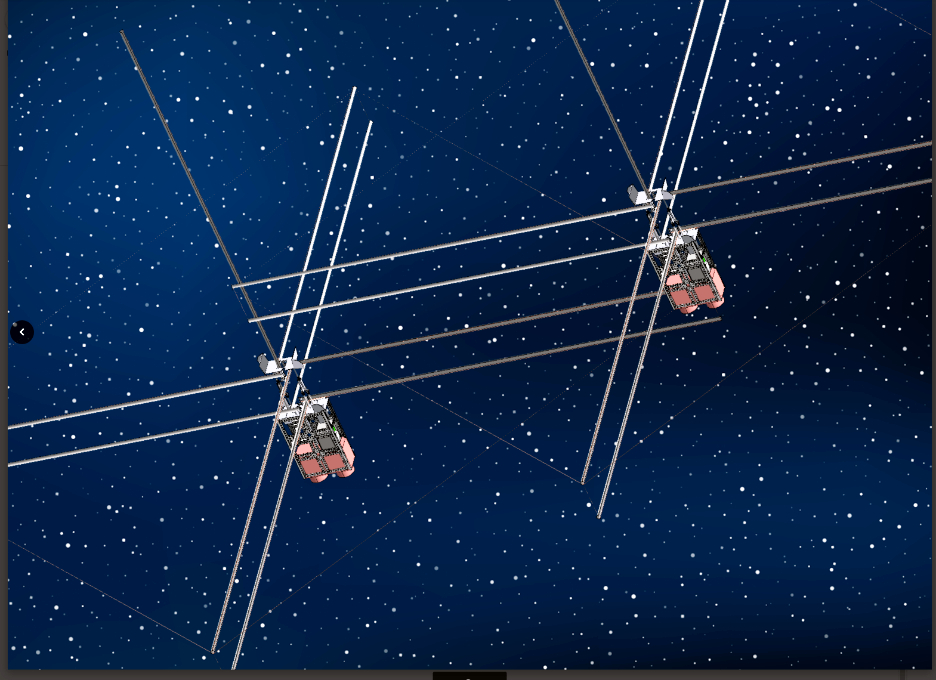
Artistic rendition of the AERO and VISTA smallsats.

NanoAvionics has received a contract to build two nanosatellites for the Massachusetts Institute of Technology (MIT) AERO-VISTA mission team at the recently opened NanoAvionics manufacturing facility in Columbia, Illinois, USA.

Funded by NASA’s H-TIDeS (Heliophysics Technology and Instrument Development for Science program), the mission is led by MIT and includes several partners: MIT Haystack Observatory, MIT Lincoln Laboratory, Merrimack College, Dartmouth College, and Morehead State University. Morehead State is responsible for bus contracting and ground operations services.

The two identical spacecraft: AERO (Auroral Emissions Radio Observer) and VISTA (Vector Interferometry Space Technology with AERO) will be based on NanoAvionics’ standardized pre-integrated and pre-qualified 6U nanosatellite bus M6P. Both will house a novel electromagnetic vector sensor antenna developed by MIT’s Lincoln Laboratory.

The aim of this first in-space demonstration is to study from an LEO unexplained features about the nature and sources of radio emission from the Earth’s aurora. With a targeted launch in 2022, the AERO-VISTA mission is expected to last three months.

To accomplish the AERO-VISTA mission, the vector sensor onboard the two smallsats will measure amplitude and phase of radio emission in the Earth’s aurora zone – the geographic area above the Arctic Circle where the Northern Lights appear. Using a sun-synchronous polar orbit will allow sensing of radiation not visible from Earth.

In addition to their respective mission, coordinated observations by the pair will demonstrate interferometry, merging or superimposing waves to create an interference pattern from which information about the source can be extracted. Interference measures how two or more waves interact, akin to throwing stones into a calm pool. If successful and validated in flight, the expected result will produce higher-resolution data providing deeper insight into phenomena investigated by space-based radio telescopes.

According to Dr. Philip Erickson, principal investigator (PI) of AERO, the aim of the NASA-funded mission is to greatly improve knowledge of Earth’s aurora by studying its fascinating radio emissions from orbit. This is an ambitious task and takes a talented set of dedicated professionals to solve the many technical and science challenges of small satellite platforms. The resulting understanding of the near-Earth space environment benefits all who seek to learn about the natural world.

Dr. Frank Lind, VISTA PI, stated that, ultimately space science missions are about people exploring our world. It takes a great team of people to make that happen. NanoAvionics is now a key part of the team and all are looking forward to designing and building these satellites with them.

Dr. Benjamin K. Malphrus, professor of Space Science at Morehead State University and co-PI on the mission , added that the room for discovery in this area is wide open and there are many aspects of the aurora that are not well understood. The vector sensor antenna is unlike anything that has previously flown. It has the potential to produce significant science returns. He continued that after a long and competitive search process, the team selected NanoAvionics to provide the two satellite buses. NanoAvionics is an innovative company with a highly capable bus and was an excellent fit for this potentially significant science mission.

F. Brent Abbott, CEO of NanoAvionics US, stated that being part of this first-of-its-kind MIT research mission and working with such an august team is very exciting and the selection of NanoAvionics as the mission integrator shows the confidence in the company’s technology and strong performance of the firm’s nanosatellite buses.


NanoAvionics thermal vacuum testing of the company’s smallsats.


Filed Under: Featured, News

U.S.Air Force Academy’s FalconSAT-8 Smallsat to be Launched via the U.S.A.F’s X-37B Spaceplane

May 6, 2020 by editorial


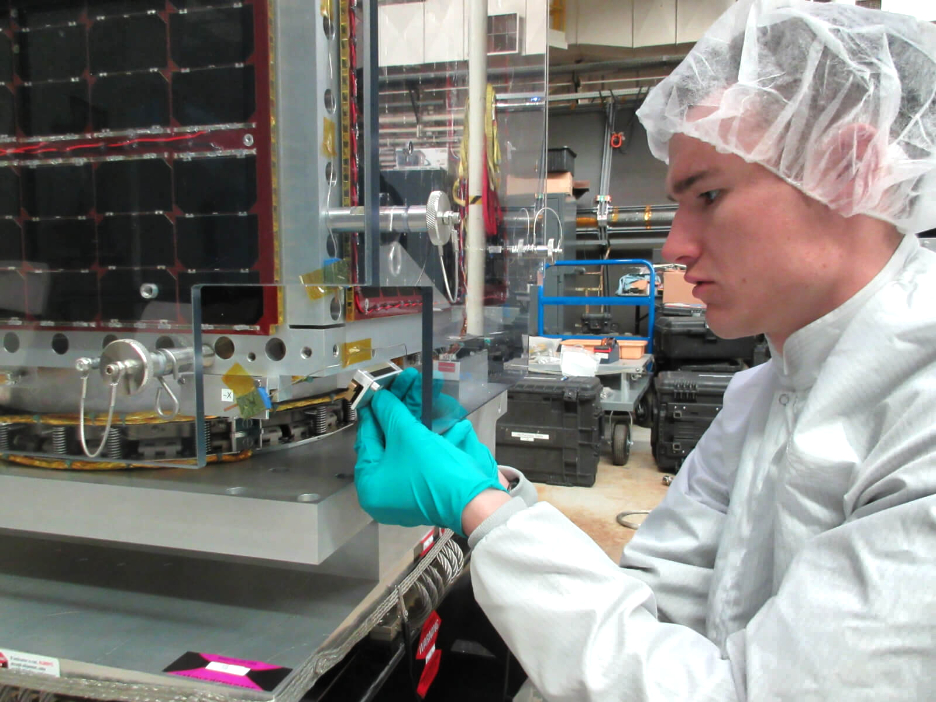
Work on the FalconSAT-8.
Photo is courtesy of the U.S. Air Force Academy.

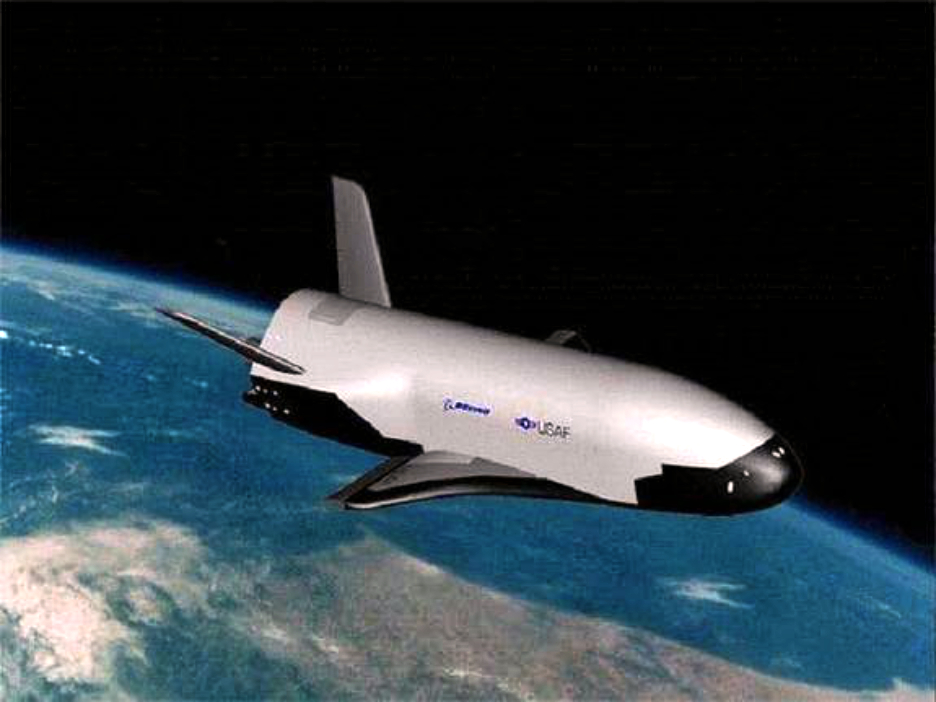
A satellite built by U.S. Air Force Academy cadets will launch into space on May 16 aboard the X-37B, Orbital Test Vehicle sponsored by the Department of the Air Force Rapid Capabilities Office and built by Boeing — this is the first time a satellite built and designed by cadets will catch a ride into space aboard the X-37B.


The U.S.A.F.’s X-37B Spaceplane.

FalconSAT-8 will carry five experimental payloads, and members of the Cadet Space Operations Squadron will operate FalconSAT-8.

There’s little doubt that the work by cadets will have an effect on the new Space Force, which opened for business in December and is designed to maintain and enhance the competitive edge of the Defense Department in space. Eighty-six cadets in this year’s graduating class commission into the Space Force.

Good noted that few undergraduate programs allow their students to work on flight hardware and design and build their own flight components. Cadets are given hands-on work that allows them to get a feel for real engineering on real projects.

Lt. Col. Dan Showalter, assistant astronautics professor at the Academy, said  that as novel as this mode of transportation might be, the purpose for cadets in the school’s space program is the same as it was when the school’s space program began in the 80s. FalconSAT-8 is an educational platform for cadets. He added that several cadets, including Cadets 1st Class Reagan Good and Claudio Yambao, traveled to Cape Canaveral, Florida to deliver, test, and integrate FalconSAT-8 with the X-37B. This is  like an engineering internship – experimental technologies for the Air Force are flown to evaluate their performance on-orbit,

The Academy’s space program consists of aerospace experts, mechanics and engineers. The FalconSAT program serves as an academic platform for an array of aerospace industry and DOD experiments. Cadets design spacecraft and integrate payloads in the Space Systems Research Center with faculty support.

FalconSAT-8 is the Academy’s capstone undergraduate systems engineering course managed by the school’s Astronautics department.

Cadet Yambao said the space program’s motto, “Learning Space by Doing Space,” means cadets get to experience the postgraduate engineering world on campus and entails building and testing components of a spacecraft and understanding how it plays a role in the entire space engineering community.


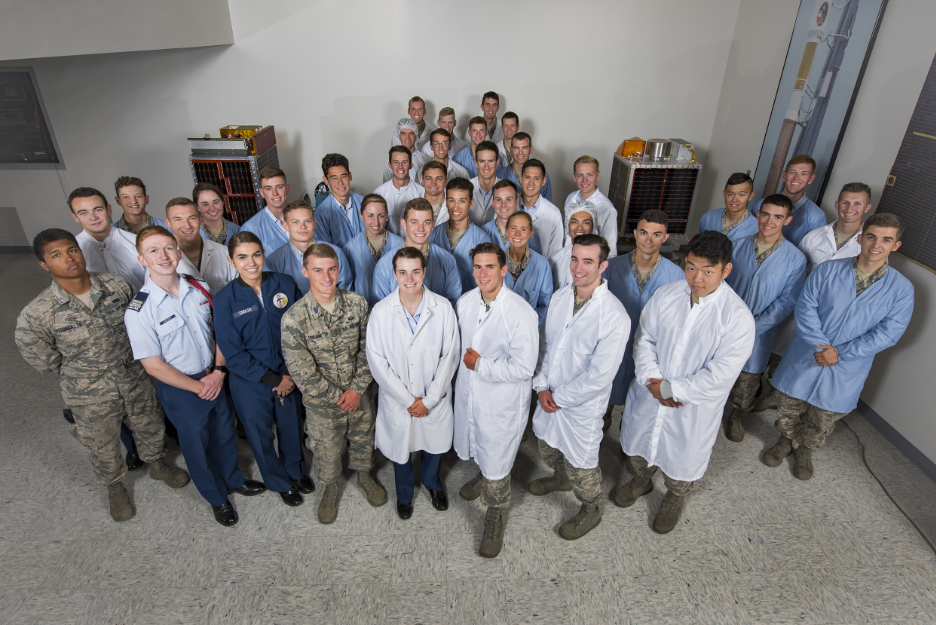
Cadets and instructors in the U.S. Air Force Academy’s FalconSAT program pose for a group photograph at the Academy. They were directly involved in building a salivate scheduled to launch into space May 16 aboard the X-37B Orbital Test Vehicle, sponsored by the Department of the Air Force Rapid Capabilities Office and built by Boeing. This is the first time a satellite built and designed by cadets will catch a ride into space aboard the X-37B. Photo is courtesy of the U.S. Air Force Academy.


Filed Under: News

AMERGINT Holdings Tethers Tethers Unlimited with Acquisition Transaction

May 6, 2020 by editorial

AMERGINT Technology Holdings (AMERGINT) has acquired Tethers Unlimited, Inc. (TUI) — this transaction will bring together AMERGINT Technologies, Inc. and TUI to provide integrated end-to-end solutions for satellite communications and in-space services to the space market. Terms of the transaction were not disclosed.

Founded in 1994 by technologist Dr. Hoyt and the renowned science fiction author Dr. Robert L. Forward, for more than 25 years TUI has pioneered an array of innovative space technologies, including software defined radios for satellite communications and mesh networks, robotic systems for in-space servicing, manufacturing, and assembly, and advanced propulsion solutions for orbital maneuvering and orbital debris mitigation.

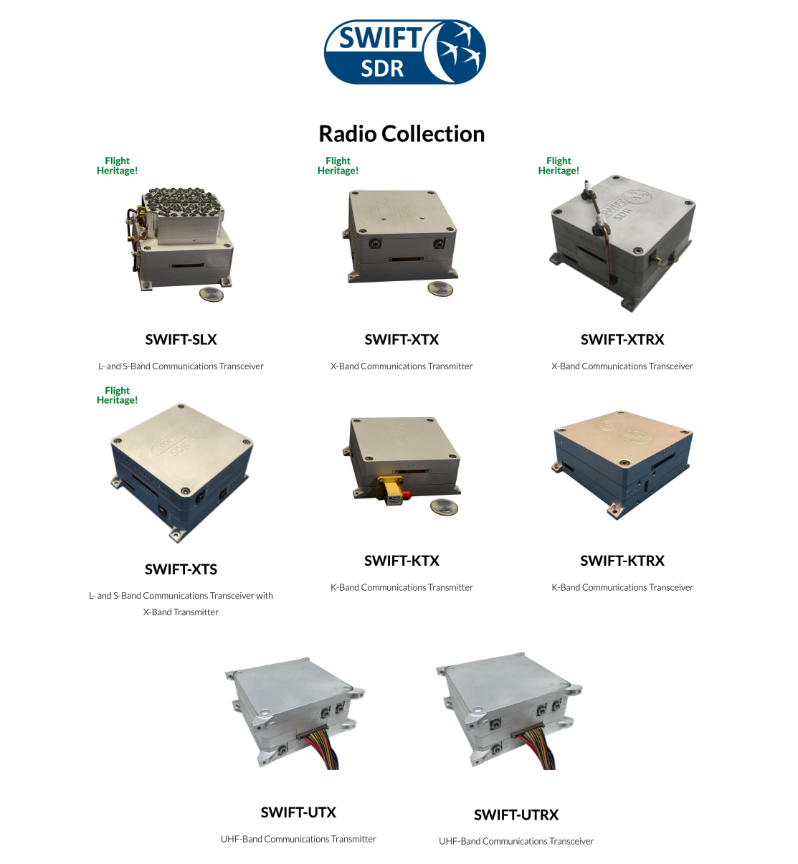
TUI supplies the space industry with high-performance satellite components that include the SWIFT® software defined radio (SDR), the Terminator Tape™ Deorbit Module, the HYDROS™ water-electrolysis thruster and the COBRA™ gimbal as well as research and development into robotics and in-space manufacturing systems.

Moving forward, AMERGINT and TUI will increasingly offer integrated satellite communications offerings combining software-defined satellite radios with software-defined ground stations. The two companies will also build upon the full suite of technologies and products at both companies around space servicing and test systems to offer a wide range of solutions for government and commercial customers.

Dr. Rob Hoyt, TUI’s CEO, stated that joining forces with AMERGINT makes tremendous sense for Tethers Unlimited. Combining AMERGINT’s ground-based processors and modems with TUI’s software-defined satellite radios and mesh network solution enables us to provide flexible, affordable, secure and resilient end-to-end communications services that scale to meet the needs of the hybrid space architectures under development by the Space Force, the Space Development Agency, DARPA, USAF and the Intelligence Community.

Larry Hill, CEO of AMERGINT Technology Holdings, said the company is thrilled to welcome Rob and the team at TUI into the family and to bring together two engineering-driven, technology organizations that are focused on solving our customers’ toughest challenges across the space ecosystem. At a time when AMERGINT customers are increasingly focused on integrated communications and data networks, the firm is excited to close the link between software-defined solutions from the ground architecture to the spacecraft.

Rob Andzik, president of AMERGINT, noted, that bringing the expertise of TUI and AMERGINT together enables the firm to provide the space and defense sectors with the next generation of solutions to manage the capture, processing, transport and exploitation of vital mission data for communication and data links.


Filed Under: News

NASA’s Critical Mission Review Packs a PUNCH for Southwest Research Institute

May 5, 2020 by editorial


PUNCH smallsats on-orbit. Image is courtesy of SwRI.

On April 8, 2020, the Polarimeter to UNify the Corona and Heliosphere (PUNCH) mission achieved an important milestone, passing NASA’s critical System Requirements Review/Mission Definition Review (SRR/MDR).

Southwest Research Institute is leading PUNCH, a NASA Small Explorer (SMEX) mission that will integrate understanding of the Sun’s corona, the outer atmosphere visible during eclipses, with the tenuous “solar wind” filling the solar system.

The solar wind, a supersonic stream of charged particles emitted by the Sun, fills the heliosphere, the bubble-like region of space encompassing our solar system. Its boundary, where the interstellar medium and solar wind pressures balance, ends the sphere of the Sun’s influence.

PUNCH is a constellation of four separate smallsats scheduled to launch in 2023 into a polar orbit formation. One satellite carries a coronagraph, the Narrow Field Imager, that images the Sun’s corona continuously. The other three each carry SwRI-developed wide-angle cameras, Wide Field Imagers (WFI), optimized to image the solar wind. These four instruments work together to form a single field of view spanning 90 degrees of the sky, centered on the Sun.

SRR/MDR is a major milestone of mission development. It checks the flow of engineering and mission definition as activities segue into the design phase.

The SMEX program provides frequent flight opportunities for world-class scientific investigations from space using innovative, efficient approaches within the heliophysics and astrophysics science areas. In addition to leading the PUNCH science mission, SwRI will operate the mission and build the four spacecraft and three WFIs. The PUNCH team includes the U.S. Naval Research Laboratory, which is building the Narrow Field Imager, and the Rutherford Appleton Laboratory in Oxfordshire, England.

PUNCH Principal Investigator Dr. Craig DeForest of SwRI’s Space Science and Engineering Division said that for more than 50 years, SwRI has studied the solar corona by remote imaging and the solar wind by direct sampling. PUNCH will bridge that gap by imaging the solar wind itself as it leaves the outermost reaches of the Sun’s corona. Preparing for the SRR/MDR review was an unexpected challenge. Team members have been working at home for over three weeks, yet they met the challenge and presented their design in written and oral presentations culminating in the positive decision from the company’s review board.


The wide field imager. Photo is courtesy of SwRI.

Filed Under: News

Forrester Reports: Amazon Activity Around OneWeb

May 4, 2020 by editorial


Chris Forrester

Jeff Bezos’s Amazon is studying UK-headquartered satellite business OneWeb which is in Chapter 11 bankruptcy protection in the US, as is being reported by journalists Chris Forrester at the Advanced Television infosite.

The Sunday Telegraph reported that Bezos, who has his own Project Kuiper mega-constellation of satellites in the planning and development stage, had his lawyers inspecting OneWeb’s assets. Other due-diligence examinations of OneWeb’s financials include Elon Musk’s SpaceX and Paris-based satellite operator Eutelsat.

The UK government has also examined OneWeb’s books and assets and this is understood to be connected to a request from OneWeb for a cash injection to help keep it afloat.

The deadline for interested parties to express an interest in making a formal bid will expire at 5:00 p.m., New York-time, on May 4th. The actual auction process will take place on July 2nd if more than one interested party expresses interest.

The formal press advertising confirming the bankruptcy of OneWeb appeared in various newspapers on May 1st.

The logic for Bezos in entering a bid for all or part of the OneWeb business is that it would give Amazon a ‘fast track’ to launching Project Kuiper, although some aspects of the Kuiper plan would need adjustment.

However, Bezos has his own rockets in development which would easily launch the remaining satellites in the OneWeb plan. Moreover, unlike SpaceX and Eutelsat, Amazon has millions of registered users around the globe who might become subscribers of an Amazon-backed, broadband-by-satellite system.

The logic for Eutelsat is that they are the only ‘Big Four’ satellite operator without an LEO satellite plan.

Intelsat had an agreement with OneWeb, which might be re-instated with a successful bidder for OneWeb’s assets. SES has its existing O3b MEO system and expansion with mPower satellites. Telesat has a scheme for almost 300 LEO satellites.

Up for grabs are OneWeb’s spectrum and frequency allocations, as well as 74 satellites already on-orbit.

Filed Under: News

  • « Go to Previous Page
  • Page 1
  • Interim pages omitted …
  • Page 37
  • Page 38
  • Page 39
  • Page 40
  • Page 41
  • Interim pages omitted …
  • Page 57
  • Go to Next Page »

Primary Sidebar

WEEKLY NEWSLETTER

Archives

  • November 2026
  • October 2026
  • September 2026
  • August 2026
  • July 2026
  • June 2026
  • May 2026
  • April 2026
  • March 2026
  • February 2026
  • January 2026
  • December 2025
  • November 2025
  • October 2025
  • September 2025
  • August 2025
  • July 2025
  • June 2025
  • May 2025
  • April 2025
  • March 2025
  • February 2025
  • January 2025
  • December 2024
  • November 2024
  • October 2024
  • September 2024
  • August 2024
  • July 2024
  • June 2024
  • May 2024
  • April 2024
  • March 2024
  • February 2024
  • January 2024
  • December 2023
  • November 2023
  • October 2023
  • September 2023
  • August 2023
  • July 2023
  • June 2023
  • May 2023
  • April 2023
  • March 2023
  • February 2023
  • January 2023
  • December 2022
  • November 2022
  • October 2022
  • September 2022
  • August 2022
  • July 2022
  • June 2022
  • May 2022
  • April 2022
  • March 2022
  • February 2022
  • January 2022
  • December 2021
  • November 2021
  • October 2021
  • September 2021
  • August 2021
  • July 2021
  • June 2021
  • May 2021
  • April 2021
  • March 2021
  • February 2021
  • January 2021
  • December 2020
  • November 2020
  • October 2020
  • September 2020
  • August 2020
  • July 2020
  • June 2020
  • May 2020
  • April 2020
  • March 2020
  • February 2020
  • January 2020
  • December 2019
  • November 2019
  • October 2019

© 2019–2026 SatNews

Insert/edit link

Enter the destination URL

Or link to existing content

    No search term specified. Showing recent items. Search or use up and down arrow keys to select an item.
      x
      Sign Up Now!

      Enjoy a free weekly newsletter with recent headlines from the global SmallSat industry.

      Invalid email address
      We promise not to spam you. You can unsubscribe at any time.
      Thanks for subscribing! You will now receive weekly SmallSat News updates.
      We love our advertisers.
      And you will too!

      Please disable Ad Blocker to continue... We promise to keep it unobtrusive.
      We promise not to spam you. You can unsubscribe at any time.
      Invalid email address
      Thanks for subscribing!