• Skip to main content
  • Skip to primary sidebar
  • Home
  • News
  • Featured
  • More News ⌄
    • SatNews
    • SatMagazine
    • MilSatMagazine
  • Events ⌄
    • MilSat Symposium
    • SmallSat Symposium
    • Satellite Innovation
  • Contacts
  • SUBSCRIPTION

SmallSat News

You are here: Home / Archives for 2020

Archives for 2020

Forrester Reports: Interest in OneWeb’s Assets While in Chapter 11 Protection

April 28, 2020 by editorial

Journalist Chris Forrester is reporting at the Advanced Television infosite that Elon Musk’s SpaceX, as well as Paris-based Eutelsat, have looked at OneWeb Global’s assets.


Chris Forrester

OneWeb is in Chapter 11 protection. Trade news publication Space Intel Report suggests that Eutelsat’s interest is undertaken on behalf of the French government. The UK government has also taken a look at the company’s assets and accounts.

More detail is likely to emerge on April 29th when a hearing is scheduled before the bankruptcy court. What is already known is that a Bidding process has been agreed with the court including a “stalking horse” process. The actual auction (if the business is not sold) is scheduled to start on July 2nd at the offices of Milbank LLP, lawyers for the action, and finalized a week later on July 10th.

If the bidding goes to several rounds, then each potential bidder must participate in each round of the bidding.

Eutelsat’s interest is fascinating given that it has only extremely limited plans for its own LEO plans. Eutelsat is planning a fleet of smallsats for IoT access. Acquiring the OneWeb fleet might be seen as a ‘bargain basement’ option, although winning an auction would also force Eutelsat to fund the building of the rest of OneWeb’s fleet.

SpaceX is also an interesting aspect, given that the company already has 400+ satellites already on-orbit — perhaps it is interested in the Airbus joint-venture which OneWeb has to build satellites in Florida.

 

Filed Under: News

NASA’s CubeSat Will Shine a Laser “FlashLight” on the Moon’s Darkest Craters

April 28, 2020 by editorial


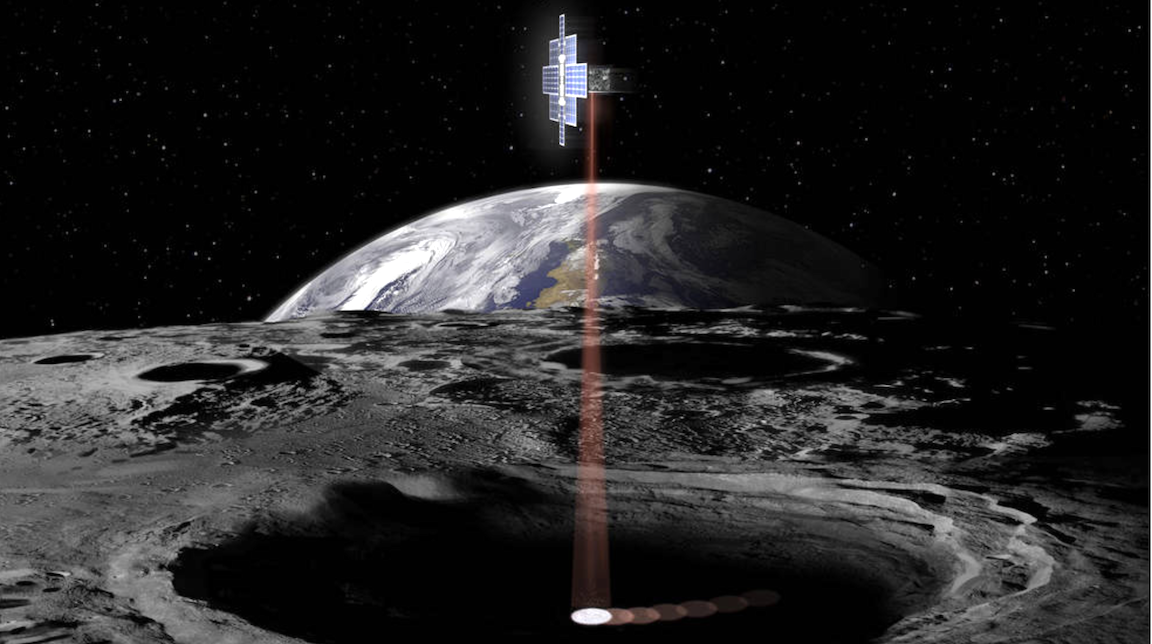
This artist’s concept shows the Lunar Flashlight spacecraft, a six-unit CubeSat designed to search for ice on the Moon’s surface using special lasers. The spacecraft will use its near-infrared lasers to shine light into shaded polar regions on the Moon, while an onboard reflectometer will measure surface reflection and composition. Credits: NASA/JPL-Caltech


As astronauts explore the Moon during the Artemis program, they may need to make use of the resources that already exist on the lunar surface. Take water, for instance: Because it’s a heavy and therefore expensive resource to launch from Earth, our future explorers might have to seek out ice to mine. Once excavated, it can be melted and purified for drinking and used for rocket fuel. But how much water is there on the Moon, and where might we find it?

This is where NASA’s Lunar Flashlight comes in. About the size of a briefcase, the small satellite — also known as a CubeSat — aims to detect naturally occurring surface ice believed to be at the bottom of craters on the Moon that have never seen sunlight.

“Although we have a pretty good idea there’s ice inside the coldest and darkest craters on the Moon, previous measurements have been a little bit ambiguous,” said Barbara Cohen, principal investigator of the mission at NASA’s Goddard Space Flight Center in Greenbelt, Maryland. “Scientifically, that’s fine, but if we’re planning on sending astronauts there to dig up the ice and drink it, we have to be sure it exists.”

Managed by NASA’s Jet Propulsion Laboratory in Southern California, the spacecraft is a technology demonstration: It will seek to achieve several technological firsts, including being the first mission to look for water ice using lasers. It will also be the first planetary spacecraft to use a “green” propellant, a new kind of fuel that is safer to transport and store than the commonly used spacecraft propellant hydrazine.

“A technology demonstration mission like Lunar Flashlight, which is lower cost and fills a specific gap in our knowledge, can help us better prepare for an extended NASA presence on the Moon as well as test key technologies that may be used in future missions,” said John Baker, Lunar Flashlight project manager at JPL.

Peering Into the Shadows

Over the course of two months, Lunar Flashlight will swoop low over the Moon’s South Pole to shine its lasers into permanently shadowed regions and probe for surface ice. Found near the North and South Poles, these dark craters are thought to be “cold traps” that accumulate molecules of different ices, including water ice. The molecules may have come from comet and asteroid material impacting the lunar surface and from solar wind interactions with the lunar soil.

“The Sun moves around the crater horizon but never actually shines into the crater,” said Cohen, whose team includes scientists at the University of California, Los Angeles, John Hopkins Applied Physics Laboratory and the University of Colorado. “Because these craters are so cold, these molecules never receive enough energy to escape, so they become trapped and accumulate over billions of years.”

Lunar Flashlight’s four-laser reflectometer will use near-infrared wavelengths that are readily absorbed by water to identify any accumulations of ice on the surface. Should the lasers hit bare rock as they shine into the South Pole’s permanently shadowed regions, their light will reflect back to the spacecraft, signaling a lack of ice. But if the light is absorbed, it would mean these dark pockets do indeed contain ice. The greater the absorption, the more widespread ice may be at the surface.

While the CubeSat can provide information only about the presence of ice on the surface, and not below it, Lunar Flashlight seeks to fill a critical gap in our understanding of how much water ice these regions possess. “We will also be able to compare the Lunar Flashlight data with the great data that we already have from other Moon-orbiting missions to see if there are correlations in signatures of water ice, thereby giving us a global view of surface ice distribution,” added Cohen.

The mission is detailed in a new paper published in the April 2020 issue of IEEE Aerospace and Electronic Systems Magazine.

Lunar Flashlight is funded by the Small Spacecraft Technology program within NASA’s Space Technology Mission Directorate. The program is based at NASA’s Ames Research Center in California’s Silicon Valley. It will be one of 13 secondary payloads aboard the Artemis I mission, the first integrated flight test of NASA’s Deep Space Exploration Systems, including the Orion spacecraft and Space Launch System (SLS) rocket launching from the newly upgraded Exploration Ground Systems at Kennedy Space Center in Florida.

Under the Artemis program, astronauts and robots will explore more of the Moon than ever before. Robotic missions begin with commercial lunar deliveries in 2021, humans return in 2024, and the agency will establish sustainable lunar exploration by the end of the decade. We will use what we learn on the Moon to prepare to send astronauts to Mars. 

To learn more about Lunar Flashlight


Filed Under: News

Bryce Infographic Presents “Are Smallsat Launch Delays Inevitable?”

April 24, 2020 by editorial

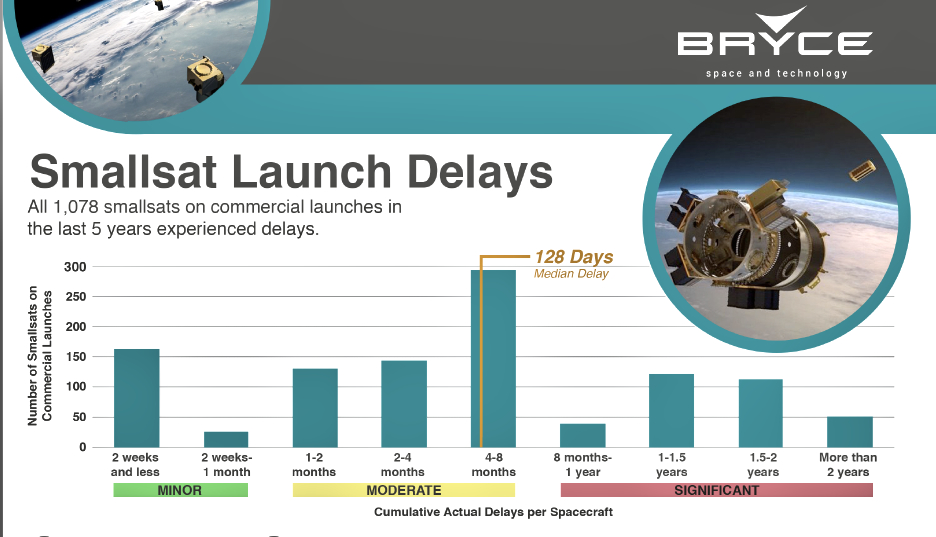
A new, independent study found that all 1,078 smallsats on commercial launches in the last five years experienced delays, with a median delay of 128 days.

What caused these delays? Bryce found that 40% of all smallsat delay days were attributed to delays in the primary payload and 34% were launch vehicle-related. Less than 1% of all smallsat delay days were caused by weather.

Learn more about mitigating smallsat launch delays in Bryce’s latest report, commissioned by Spaceflight, Inc., by downloading the company’s infographic at this direct link…

Bryce has also been selected as one of five companies to support NASA’s efforts to enable a LEO economy. Bryce will develop an integrated action plan to address barriers to the growth of the LEO economy, while other selected companies will seek to raise the technological readiness level of their products and move them to market.


Filed Under: Featured, News

BlackSky Offering Remote Access to Global Monitoring and Satellite Imaging Services

April 23, 2020 by editorial

Geospatial intelligence provider BlackSky is now offering remote access to the company’s global monitoring services and satellite imaging.

The company said its telework tools are cyber secure and allow analysts to develop intelligence reports and share unclassified information. Users of the BlackSky service draw intelligence from a combination of remote sensing satellite images, environmental sensors, asset tracking sensors, IoT systems, local foreign news, social media, industry publications and financial reports. The information is analyzed with machine learning and artificial intelligence techniques.

BlackSky’s telework package, called Spectra On-Demand Secure Bundle, was designed for intelligence analysts who handle unclassified but still sensitive information and can be accessed online from any computer.

BlackSky CEO, Brian O’Toole, noted that, given the coronavirus pandemic, intelligence analysts, financial analysts and researchers are seeking solutions that allow teams to continue critical security and intelligence projects while working remotely.

Scott Herman, BlackSky’s CTO, stated that a significant portion of our workforce works from home. We’ve been longtime adopters of a lot of these collaborative tools. Many of the company’s customers across U.S. national security and intelligence agencies are used to working in secure facilities. After the pandemic hit, suddenly they found themselves having to telework and realized they didn’t have remote access to data or tools needed to do their jobs, and they had security concerns, he said, adding that the company is providing access to the firm’s satellites for tasking as well as providing access to other satellites for tasking and archiving data plus a wide range of sensors used for global monitoring.The services also include training on the methodology involved in capturing data. Analysts still have to go to secure facilities to work with classified information but much of their unclassified work can be done from home.

BlackSky has four satellites in operation and plans to launch eight more satellites later this year.


Filed Under: Featured, News

Millennium Space Systems Completes Work on U.S. Space Force’s TETRA-1 Smallsat

April 22, 2020 by editorial

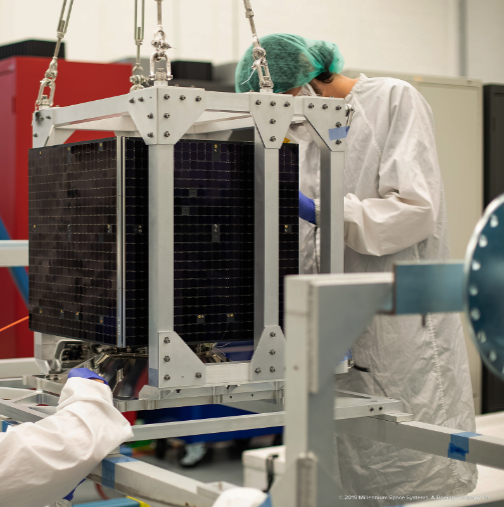
Less than 15 months after contract award, Millennium Space Systems has designed, manufactured, assembled and integrated the U.S. Space Force TETRA-1 satellite. The work was completed 60 percent faster than previous missions, improving the U.S. Space Force’s ability to advance the TETRA-1 technologies more quickly.

TETRA-1 is a microsatellite created for various prototype missions in and around geosynchronous earth orbit. TETRA-1 was the first prototype award under the U.S. Space Force’s Space and Missile Systems Center’s Space Enterprise Consortium Other Transaction Authority (OTA) charter.


Photo of the U.S. Space Force TETRA-1 satellite during the build process. Image is courtesy of Millennium Space Systems.

Most of the TETRA-1 components were completed by leveraging Millennium’s in-house capabilities, demonstrating that organically developed capabilities are a key enabler for executing programs on a tight schedule. After system integration, the satellite successfully completed its environmental and full functional tests.

TETRA-1 is based on Millennium’s proven ALTAIR-class smallsat product line. It is the first of Millennium’s ALTAIR satellites to qualify for operations in the geosynchronous orbit space environment, 22,236 miles (35,786 kilometers) from the Earth’s surface. TETRA-1 is manifested on a SpaceX Falcon Heavy rocket currently scheduled for launch in late 2020.

Col. Tim Sejba, Director, Innovation and Prototyping, Development Corps, Space and Missile Systems Center, Detachment 1, at Kirtland Air Force Base, New Mexico, said that one of the primary goals is to be more agile in the development and deployment of innovative space assets. By leveraging OTA contracts with programs such as TETRA-1, the organization is expediting the execution of new space development missions. The partnership developed with Millennium Space Systems allows for the creation and fielding of a dynamic pathfinder capability to meet the future space warfighter’s needs.

Mark Cherry, VP and GM, Boeing Phantom Works, stated that the pace set on TETRA-1 from contract award through readiness to launch represents what Boeing does best for national security customers. The lean Millennium team was up to the task, building and delivering a fully tested and verified satellite in record time.

Millennium Space Systems is a Boeing [NYSE: BA] subsidiary, headquartered in El Segundo, California. Founded in November 2001, Millennium provides credible alternatives for relevant and affordable solutions to today’s space industry challenges. The company designs flight systems and develops AS 9100-certified mission and system solutions for the Intelligence Community, Department of Defense, NASA and civil space customers. With Millennium’s ALTAIR™ and AQUILA™ products, Boeing is now positioned to offer customers the full range of tailored space capabilities and missions today.

More Information about Millennium Space Systems: .


Filed Under: Featured, News

Major Launch Services Agreement Signed Between Firefly Aerospace and Spaceflight Inc.

April 22, 2020 by editorial

Firefly Aerospace, Inc. and Spaceflight Inc. have signed a Launch Services Agreement (LSA).

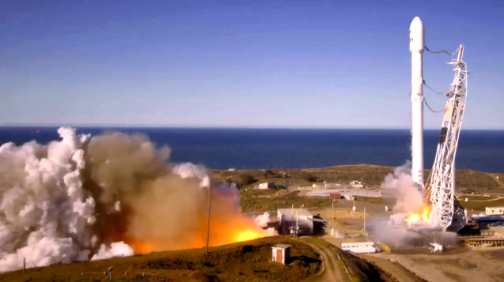
The agreement confirms that Spaceflight will secure the majority of the payload mass aboard a Firefly Alpha launch, scheduled for lift off from Vandenberg Air Force Base in 2021.

In addition to being the anchor customer, Spaceflight will sign, manage, integrate, and deploy multiple payloads on the flight, enabling Firefly to maximize its full 630 kilogram launch capacity on the commercial Alpha mission to Sun Synchronous Orbit (SSO).


Firefly Aerospace’s Alpha smallsat launch vehicle.
Image is courtesy of the company.

Also, according to the LSA, Spaceflight will help maximize payload capacity aboard future Firefly Alpha launches.

The Alpha launch vehicle is designed to address the needs and demands of the burgeoning smallsat market, combining the highest payload performance with the lowest cost per kilogram to orbit in its vehicle class. Alpha will provide launch options for both full vehicle and rideshare missions. Spaceflight has launched a record-setting 271 satellites via 29 rideshare missions, establishing itself as a leading rideshare service provider, offering comprehensive launch and integration services across a global portfolio of vehicles.

Spaceflight successfully executed nine missions in 2019, the most rideshare launches the company has performed in one year. The company also completed the first-ever rideshare mission to Geosynchronous Transfer Orbit (GTO) in 2019, launching the first privately funded lunar lander.


Spaceflight enables commercial, non-profit organizations and government entities to get launched, achieving their mission goals – on time and on budget.

Leading up to the maiden flight of the Alpha launch vehicle later this year, final acceptance of the first and second stage will take place over the next several months at Firefly’s test facilities at Briggs, Texas, with hardware deployments to Vandenberg planned for early summer. Firefly teams are also integrating new composite technologies into its overall manufacturing capabilities, with the goal of significantly boosting production of its launch vehicles to align with demand growth over the next few years.


Curt Blake

Curt Blake, President of Spaceflight, said the company has long been committed to providing reliable, cost-effective access to space and the firm is eager to partner with Firefly, as both companies share this exciting vision. In fact, the company has many customers in mind, including some specifically in APAC, which we believe will benefit from this additional capacity and flexibility. Spaceflight is honored to secure the primary payload aboard an Alpha flight in 2021 and looks forward to working closely with the Firefly team to accelerate more small satellite rideshare launches for the industry. ”


Dr. Tom Markusic

Dr. Tom Markusic, Firefly CEO, added that Alpha launches in 2021 will play a key role in establishing the company’s  manifest and production capability, and having Spaceflight’s deep payload integration expertise in the firm’s corner is an important part of the overall launch strategy. Firefly’s Alpha launch vehicle will quickly fill a major market gap with the capability to deliver 1 metric ton to LEO and 630 kilograms to the highly desirable 500 kilogram SSO, about four times the current payload capability of other small satellite launch vehicles.


Filed Under: News

Hong Kong Aerospace Technology Group Ready to Launch First of 165 Golden Bauhinia Satellites 

April 21, 2020 by editorial

The first of 165 satellites is being built by Hong Kong Aerospace Technology Group (HKATG) and getting ready to launch the low-orbit high frequency satellite, the “Golden Bauhinia No.1”,  in June from China. The planned launch marks an important milestone in the company’s “Golden Bauhinia” space remote sensing project.

According to the U.S. Satellite Industry Association (SIA), commercial aerospace revenue was US$277.4 billion in 2018 and is expected to increase 10 percent per year. Reinforcing the fact that the rapid development of international commercial aerospace makes it one of the most dynamic industries after the internet, AI and 5G. The strategic value of the aerospace industry has driven investment into commercial aerospace organizations in Europe and America, with the market value of commercial aerospace enterprises listed in the U.S. continually reaching new heights.

Humanity is shifting from needing an aerospace industry to dependency; with the strategic and commercial value of space infrastructure becoming ever more apparent. As the modern aerospace industry takes shape, the value of orbit and spectrum base resources will become highly sought-after “space real estate”.

HKATG is the first International Astronautical Federation’s member in Hong Kong. Mr. SUN FENGQUAN, Chairman of the Board of Directors of HKATG, said that the Greater Bay Area aerospace industry generates tens of billions of dollars in demand each year. The new development direction of HKATG is centred on regional urban agglomeration, and launching the “Golden Bauhinia Constellation”.

Using mobile target monitoring, space AI and dynamic change monitoring, the “Golden Bauhinia Constellation” aims to achieve commercial application and development of communications, navigation, and remote sensing systems with global 24-hour online tracking and the ability to re-visit key areas in under 30 minutes.

The “Golden Bauhinia” project aims to launch 165 low-orbit, high-frequency satellites in 2020 covering the Guangdong-Hong Kong-Macao Greater Bay Area and serve the world’s fastest-growing urban centres. The satellite to relaunched in June was designed, manufactured and patented by HKATG.

Filed Under: News

A New VP and a New Director for Astroscale U.S.

April 21, 2020 by editorial

Astroscale U.S. Inc., (“Astroscale U.S.”), the U.S. unit of Astroscale Holdings Inc., has announced that Dave Fischer and David Hebert, two experienced space industry professionals, will join the Astroscale U.S. management team.

Fischer joins the company as VP of Business Development and Advanced Systems, and Hebert joins as Director of Communications, with both of these appointments effective as of March 2020.

Fischer joins Astroscale with more than 30 years of experience in business and technology management. Most recently, he was Director of Business Development for RUAG Space USA. Prior to that, Fischer held several management roles in business development and strategic development with Ball Aerospace.

Hebert comes to Astroscale from The Aerospace Corporation where he most recently served as Senior Communications Strategist for policy, and civil and commercial systems. His nearly 20 years of experience includes strategic communications, public engagement and content development. He also held management roles at The MITRE Corporation and the U.S. Geological Survey.

Fischer and Hebert will play leading roles in expanding Astroscale U.S.’ collaboration and engagement with partners, potential clients and other groups in the commercial and government space and technology communities. Fischer will help lead the company’s exploration of new opportunities to fulfill its mission of making space sustainability a reality. Hebert will drive positioning, perception and brand strategy for the company.

Ron Lopez, President and Managing Director of Astroscale U.S., said that during the next few years, space sustainability will become common practice as the company’s talented team fosters greater awareness about the need for safety in space and drives growth in this market. Dave and David bring strength to Astroscale as the firm expands its presence in the U.S. market — these two key appointments represent the momentum Astroscale U.S. is gaining in the development and sutainability of the orbital highways.

Filed Under: News

A New Mission for NanoAvionics Smallsats

April 20, 2020 by editorial

A consortium of Norwegian and Dutch research centers have selected satellite integrator NanoAvionics to build two smallsats, ‘Birkeland’ and ‘Huygens.’


Artistic rendition of the Birkeland and Huygens smallsats on-orbit. Image is courtesy of NanoAvionics.

The purchase order is part of a military use of space (MilSpace) project under a bilateral strategic mutual assistance in research and technology (SMART) memorandum of understanding (MoU). The two nanosatellites are intended to demonstrate the concept of a space based spectrum monitoring system to geolocate radar signals. This is the first time for Norway and the Netherlands to launch a formation of satellites.

The BROS (binational radiofrequency observing satellites) mission is the first known two-satellite system to detect, classify, and accurately geolocate Radio Frequency signals, including navigation radars used on ships, by combining the measurement angle of arrival (AoA) and time difference of arrival (TDOA). Simultaneous detection of pulsed radio signals by both satellites flying in tandem enables accurate geolocation during all weather conditions.

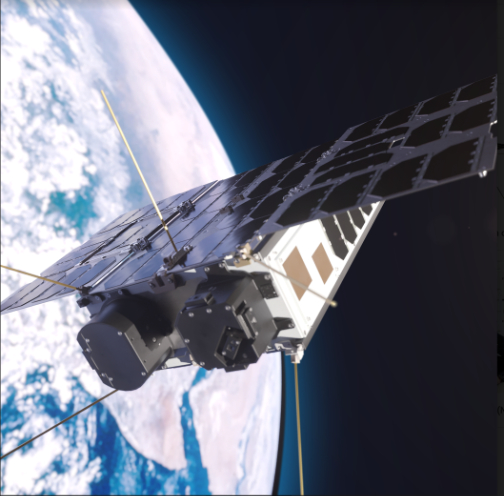
“Birkeland” and “Huygens” will both be based on NanoAvioncs’ pre-configured M6P smallsat bus with a deployable solar panel configuration, high precision attitude determination and control system (ADCS) and a propulsion system. The mass of each 6U nanosatellite will be up to 10 kilograms.


Artistic rendition of a NanoAvionics M6P smallsat on-orbit. Image is courtesy of the company.

The launch of the two smallsats is scheduled for the second quarter of 2022 when they will be placed into a polar LEO with an altitude range of 450 to 600 km. Both smallsats will be positioned in the same orbital plane with a separation of 15 ro 25 km, allowing them to simultaneously detect emissions from radar systems. For a polar LEO orbit of 600 km altitude, the payload antenna will be able to cover any point on the Earth’s surface at least four times per day.

Drawing from experience from the Norwegian NorSat-3 and the Dutch BRIK-II missions, the consortium for this strategic and bilateral mission also expects to gain valuable insights into formation flying. The project team consists of the Norwegian Defence Research Establishment (FFI), the Royal Netherlands Aerospace Centre (NLR) and Netherlands Organisation for Applied Scientific Research (TNO).


Vytenis Buzas

Vytenis J. Buzas, Co-Founder and CEO of NanoAvionics, said that exchanging science, research and technology experience in this MilSpace mission is a great start for flourishing partnerships with the participating organizations. The agreement is also an example of the new cross over between commercial and military space missions. This was made possible by standardizing NanoAvionics’ bus design, which allows the firm’s nanosatellites to host a wide variety of payloads for diverse applications.


Filed Under: News

Letter of Intent Signed Between Equatorial Space and Responsive Access Regarding Smallsat Launches

April 17, 2020 by editorial

Equatorial Space has signed a letter of intent to work with Scottish launch aggregator, Responsive Access, on finding customers for launches of the firm’s smallsat launch vehicle.

The company’s fully hybrid launch vehicle, Volans, is being designed to carry up to 200 kg. of payload into near-equatorial LEO – a rare capability for the many smallsat launch companies active in this burgeoning sector and heavily regulated by technology export restrictions by their domiciles.

Equatorial Space is a Singapore-based space tech startup developing innovative technologies for space launch and exploration activities. With its proprietary hybrid propulsion, its technology allows for cheaper, safer and greener alternatives to existing solutions in both orbital launch systems, as well planetary landing missions.

Aiming for the first orbital launch by 2021, ESI has previously been crowned the winner of MBRSC Innovation Cup 2018 in Dubai, a Top 500 Deep Tech Startup by Hello Tomorrow 2018, as well as the Most Promising Startup at the NAMIC Innovation Day 2019.

Responsive Access is a participant in the European Space Agency’s Business Incubation Centre and aims to simplify access to space through the use of innovative software and key partner relationships that provide a one-stop-shop for the launch of cubesats into orbit.


Simon Gwozda

Simon Gwozdz, the CEO and Founder of Equatorial Space, said the company has reached a point along the development roadmap when the firm can confidently discuss launch contracts, as this technology matures and the team grows. Despite the delays in the inaugural prototype mission, the Low Altitude Demonstrator, due to the COVID-19 crisis and resulting travel restrictions, Equatorial Space is pushing forward with all work being completed remotely.

CEO of Responsive Access, Andrew Paliwoda, added that the company is delighted to have formalized  initial discussions with this letter of intent and look forward to strengthening this partnership with Equatorial Space in the coming months by bringing them satellite payload opportunities to fit their timelines.

Filed Under: News

  • « Go to Previous Page
  • Page 1
  • Interim pages omitted …
  • Page 39
  • Page 40
  • Page 41
  • Page 42
  • Page 43
  • Interim pages omitted …
  • Page 57
  • Go to Next Page »

Primary Sidebar

WEEKLY NEWSLETTER

Archives

  • November 2026
  • October 2026
  • September 2026
  • August 2026
  • July 2026
  • June 2026
  • May 2026
  • April 2026
  • March 2026
  • February 2026
  • January 2026
  • December 2025
  • November 2025
  • October 2025
  • September 2025
  • August 2025
  • July 2025
  • June 2025
  • May 2025
  • April 2025
  • March 2025
  • February 2025
  • January 2025
  • December 2024
  • November 2024
  • October 2024
  • September 2024
  • August 2024
  • July 2024
  • June 2024
  • May 2024
  • April 2024
  • March 2024
  • February 2024
  • January 2024
  • December 2023
  • November 2023
  • October 2023
  • September 2023
  • August 2023
  • July 2023
  • June 2023
  • May 2023
  • April 2023
  • March 2023
  • February 2023
  • January 2023
  • December 2022
  • November 2022
  • October 2022
  • September 2022
  • August 2022
  • July 2022
  • June 2022
  • May 2022
  • April 2022
  • March 2022
  • February 2022
  • January 2022
  • December 2021
  • November 2021
  • October 2021
  • September 2021
  • August 2021
  • July 2021
  • June 2021
  • May 2021
  • April 2021
  • March 2021
  • February 2021
  • January 2021
  • December 2020
  • November 2020
  • October 2020
  • September 2020
  • August 2020
  • July 2020
  • June 2020
  • May 2020
  • April 2020
  • March 2020
  • February 2020
  • January 2020
  • December 2019
  • November 2019
  • October 2019

© 2019–2026 SatNews

Insert/edit link

Enter the destination URL

Or link to existing content

    No search term specified. Showing recent items. Search or use up and down arrow keys to select an item.
      x
      Sign Up Now!

      Enjoy a free weekly newsletter with recent headlines from the global SmallSat industry.

      Invalid email address
      We promise not to spam you. You can unsubscribe at any time.
      Thanks for subscribing! You will now receive weekly SmallSat News updates.
      We love our advertisers.
      And you will too!

      Please disable Ad Blocker to continue... We promise to keep it unobtrusive.
      We promise not to spam you. You can unsubscribe at any time.
      Invalid email address
      Thanks for subscribing!