• Skip to main content
  • Skip to primary sidebar
  • Home
  • News
  • Featured
  • More News ⌄
    • SatNews
    • SatMagazine
    • MilSatMagazine
  • Events ⌄
    • MilSat Symposium
    • SmallSat Symposium
    • Satellite Innovation
  • Contacts
  • SUBSCRIPTION

SmallSat News

You are here: Home / Archives for 2020

Archives for 2020

NASA’s Got the Solar Sail and NanoAvionics Has the Satellite Bus that will be Tested Together 

May 4, 2020 by editorial


NASA has NanoAvionics lined up to build a 12U nanosatellite bus for an in-orbit demonstration of NASA’s Advanced Composite Solar Sail System (ACS3). It will be an approximately 800 square foot (74 square meter) composite boom and solar sail system.  

This is a result of a contract between NASA Ames Research Center and AST for a 12U bus to carry NASA’s payload into low Earth orbit (LEO) including an approximately 800 square foot (74 square meter) composite boom and solar sail system.  

The aim of the ACS3 mission is to replace conventional rocket propellants by developing and testing solar sails using sunlight beams to thrust the nanosatellite. These solar sail propulsion systems are designed for future small interplanetary spacecrafts destined for low-cost deep-space and science missions requiring long-duration, low-thrust propulsion.  

NanoAvionics has conducted more than 75 successful satellite missions and satellite-related commercial projects. The company will assemble the 12U bus at its new Columbia facility in Illinois, while the final integration of the payload will be carried out at NASA Ames facilities. Matching NASA Ames’ mission requirements, the 12U bus shares the same flight-proven subsystems as NanoAvionics’ flagship M6P bus but with up to 10U payload volume. The larger volume will be necessary to provide enough room for the 4.6 kg payload that includes the composite boom and solar sail system as well as cameras to monitor the solar sail during and after deployment. 
F. Brent Abbott, CEO of NanoAvionics North America said that he’s tremendously proud and excited that NanoAvionics will be part of NASA’s effort to validate a new beam-powered propulsion system, eventually leading to more marvelous deep-space missions following the first inter-planetary CubeSats MarCO-A and B (Mars Cube One). The technology demonstration using NanoAvionics’ 12U bus will be the first ever in-orbit trial of NASA’s composite booms as well as sail packing and deployment systems for a solar sail. It will guide the development of a next generation nanosatellites with solar sail propulsion system for small inter-planetary spacecraft.

As part of this agreement the company will also supply a mechanical testbed model and a FlatSat model. In addition, a team of NanoAvionics engineers will provide the support required for testing, integration and operations of the nanosatellite.  

The FlaSat model has identical software functionality as the final 12U bus hardware, hosting the actual payload. It allows NASA Ames to run tests via remote network connectivity without having to ship equipment back and forth. The mechanical testbed model can be used for testing payload integration and other mechanical tests, such as the deployment of solar sails.  

In 2018 AST acquired a controlling interest in NanoAvionics as part of its strategy to establish manufacturing capabilities in Europe and North America. Abel Avellan, CEO and chairman of AST serves as chairman of NanoAvionics’ Board of Directors. 
Filed Under: News

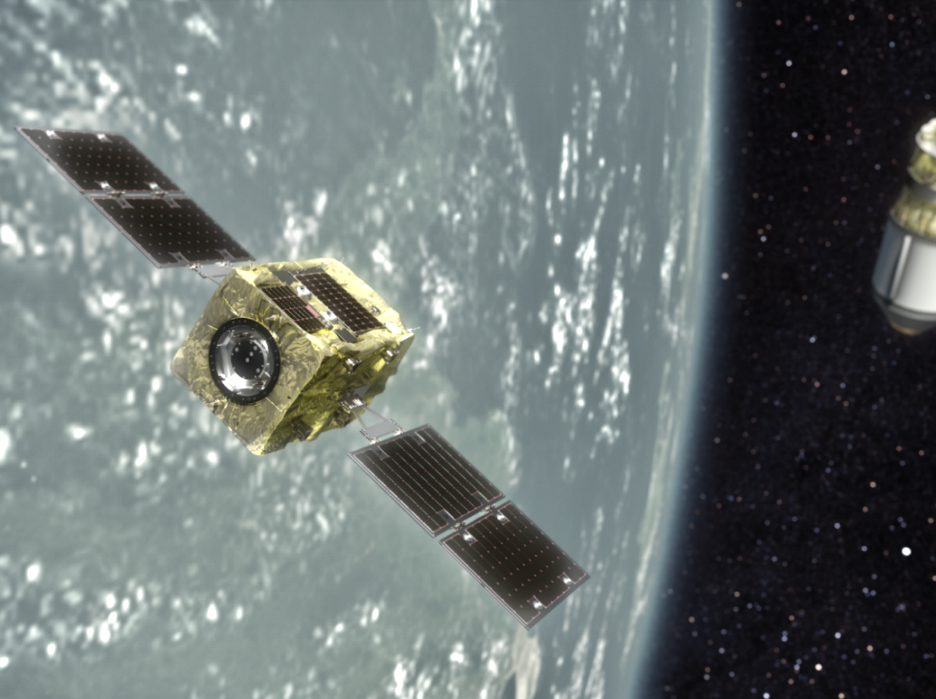
Astroscale to Advance Standardization of End-of-Life Practices in the Satellite Industry

May 4, 2020 by editorial

Astroscale Holdings Inc. (“Astroscale”) has signed a Memorandum of Understanding with Professor Chris Newman, Professor of Space Law and Policy at Northumbria University, Newcastle, to collaborate on investigating end-of-life standards and practices from various industries, such as oil and nuclear energy.

The project will highlight the need for shared knowledge from such decommissioning initiatives which can be applied to the satellite industry, encouraging responsible behavior in space and improving space environmental protection. The oil and nuclear industries demonstrate a commitment to environmental responsibility through various decommissioning policies and strategies. With the health and safety of people and the environment the primary concern, decommissioning strategies focus on returning the environment to its natural state.

Legal and regulatory frameworks have been enacted in many countries, creating decommissioning funds and ensuring that the provision of end-of-life capabilities are integral in licensing processes. While no regulations or standardization for end-of-life practices currently exist in the satellite industry, there are lessons which can be learned and applied from these industries.

Harriet Brettle, Head of Business Analysis at Astroscale, noted that this project is a call to action for collaboration across sectors and is a natural fit for Astroscale to represent the satellite industry. As the firm is leading the market in the development of the innovative technology necessary for end-of-life solutions, the company also wants to lead the development of the other aspects required for a sustainable space ecosystem

Professor Chris Newman added that through this collaboration, those involved seek to identify innovative legal frameworks, policies and business models that can move the satellite industry toward a more sustainable future. The pioneering research and teaching in Space Law and Policy which is occurring at Northumbria University makes this an ideal institution to work with the world-leading team at Astroscale. This is an opportunity to change the way in which space is managed and to further embed sustainable practices in outer space activity.

The first working paper with Northumbria University is scheduled to be published later this year.

Filed Under: News

New Satellite Link Products Introduced by TS2 Space

May 4, 2020 by editorial

TS2 SPACE company is introducing new satellite link products to the international markets.

These types of telecommunication products are mainly used by the companies that execute contracts in the Near East and Asia, as well as by the soldiers that are stationed in Iraq and Afghanistan. Purchased bands give the company unlimited possibilities of configuration and setting any telecommunication connections from the Near East region and South-Western Asia.

TS2 SPACE offers satellite broadband internet access and corporate networks support. The operator’s broadband services enable bidirectional data transfer within the network and simultaneous internet access. The company provides all dedicated VSAT services for customers.

TS2 SPACE is mainly investing in the new technology of ST Engineering iDirect — Evolution X3 is the next-generation satellite systems featuring iDirect’s highly efficient implementation of the DVB-S2 standard. The Evolution X3 Satellite Router is ideally suited for broadband requirements such as Internet and VPN access to enterprise networks, as well as real-time VoIP and video conferencing.

The TS2 staff is monitoring the performance of satellite network 24 hours a day, in order to enable the immediate help in case of breakdown or receipt of alert. Due to technical conditions and favorable weather, the Teleport is located in Jeddah, Saudi Arabia. Therefore the signal from the headend aerial is not disturbed by the weather conditions and all connection users of TS2 receive services of the highest availability. The Teleport configuration is fully redundant and the services are also available on the national market.

TS2 satellite services are used by: U.S. Department of State, United States Marine Corps (USMC), U.S. Army Corps of Engineers, Australian Defence Force (ADF), Command of Polish Navy, Air Force Institute of Technology, Lockheed Martin Information Technology, Halliburton Energy Services, KBR, General Dynamics Information Technology, General Atomics Aeronautical Systems Inc., L-3 Communications Vertex Aerospace and US Naval Research Laboratory, among others.

Filed Under: News

Scottish Space Firm Skyrora Producing 3D Printed Face Visors for the UK’s National Health Service

May 1, 2020 by editorial

Skyrora has teamed with the National Physical Laboratory and Makerspace Paisley to 3D print face visors for various health services including the NHS at the company’s production facility in Edinburgh, Scotland.

The Edinburgh space firm concluded that the firm was well positioned to do its bit to help ease the burden on the National Health Service (NHS) and became quickly aware of the potential shortage of available safety equipment.

Skyrora dedicated resources to manufacture personal protection equipment, (PPE) and decided not to go it alone, as a collaborative effort would yield much faster and higher volume of supplies. Skyrora decided to reach out to the wider community and bring in expertise, more equipment and personnel to make the project happening rapidly. As a result, both the National Physical Laboratory and youth charity project Makerspace Paisley joined Skyrora to support its latest mission.

Joining the wider business community’s effort in dealing with the Covid-19 crisis and producing urgently required additional PPE, Skyrora staff are working evenings and weekends to increase the maximum production of 3D printed face visors while still adhering to the government’s social distancing measures.

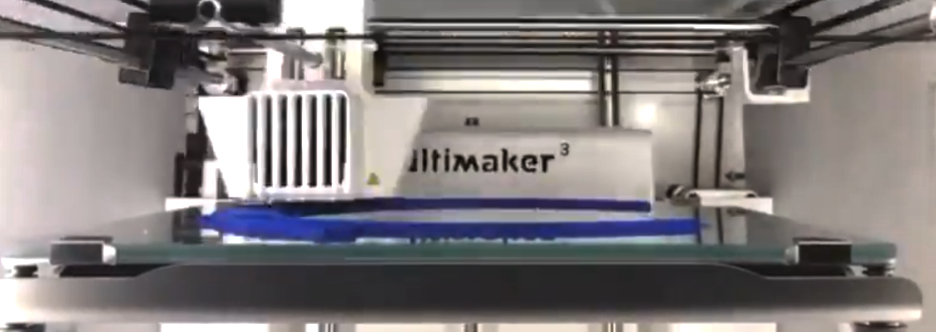
Together they initially produced 50 face visors per week, all 3D printed on Skyrora’s two Ultimaker S3s and one Ultimaker S5 printers. With the support of the National Physical Laboratory, lending Skyrora two further Ultimaker S3s, the team can now 3D print 70 to 100 face visors per week.

The Ultimaker units work by depositing layers of 3D printed PLA (polylactic acid) plastic based on the 3D model design. The whole process of 3D printing requires approximately two hours for each band frame and only five minutes to assemble the band frame, clear plastic visor and foam strips into a face visor.

Without the help of Makerspace Paisley, visor production would not have been possible. Makerspace Paisley kindly lent their laser cutting facilities to Skyrora. The laser cutter uses a high-powered carbon dioxide laser to etch the safety markings and logos onto the 100% recyclable PETG (polyethylene terephthalate glycol) plastic visors, before cutting them out for production-quality precision.

Skyrora has received certification for their face visors to the CE EN 166:200 standard, as required by the NHS, and everything is ready for distribution.

Skyrora have also received recognition from the Scottish Government. The Deputy Presiding Officer, Christine Graham said that Parliament welcomes the efforts of the Midlothian-based space tech firm, Skyrora, to tackle the COVID-19 outbreak by reallocating a proportion of its staff to manufacture various forms of personal protective equipment, while still adhering to social distancing measures. It is the Parliament’s understanding that this includes hand sanitizers and 3D printed face visors, which will be distributed to the NHS during the coming weeks. Parliament believes that this demonstrates a commendable attitude of corporate responsibility and thanks Skyrora and companies undertaking similar efforts for their contributions.


Filed Under: News

Benchmark Space Systems Thruster Now Integrated into the BSS1 Demo Smallsat

April 30, 2020 by editorial


Benchmark’s DFAST warm-gas thruster.

Benchmark Space Systems DFAST warm-gas thruster (scalable for 1U-12U spacecraft) has completed the subsystem qualification test campaign and has been integrated into the company’s on-orbit demonstration smallsat, BSS1.

Range safety was smooth sailing for our ‘unpressurized, inert’ launch mode. In the same week the FCC regulatory policy vote took place, the Benchmark Space Systems team was notified that an experimental license was granted and the company is ready for launch.

Benchmark’s latest update from Firefly following their test anomaly and accelerated re-group is that the inaugural Alpha launch is scheduled to deliver BSS1 to orbit in the summer of 2020. With the launch quickly approaching, and regulatory activity increasing, the firm wants to make certain all prospective customers receive one last prompt to take advantage of the Launch Countdown Promotion. This promotion is running until the launch of the BSS1 satellite and includes special DFAST pricing, as well as a free (flatsat) integration evaluation kit on all pre-orders that are received prior to launch.

In the past few months, the company has crossed crucial checkpoints for the B125 Green Bi-Propellant system (scalable for 6U through ESPA satellites). Benchmark successfully tested the firm’s signature On Demand Pressurization System (ODPS), the key differentiator in offering safe and unpressurized launches as well as the remainder of subsystem tests.

System integration of the firm’s 4-thruster B125 was another major milestone hit, as part of Benchmark’s AFWERX Phase II contract and demonstrates the team’s ability to collaborate and execute development tasks despite a broadly challenging distributed work environment during our current global pandemic. The 4-thruster system is currently being prepared for qualification testing at Edwards AFB (now planned for Q3), being administered by the USAF Small Sat Portfolio organization. Benchmark Space plans to send the company’s first liquid propellant system into space in Q4 2020.

The Benchmark team is excited to be earning heritage after only three years after being founded and delivering propulsion and mobility solutions to customers that improve ease of integration,  mission capability and revenue models.


Benchmark’s B125 Green Bi-Propellant system.


Filed Under: News

HawkEye 360 Reveals Coronavirus Effect on Italy’s Maritime Sector

April 30, 2020 by editorial


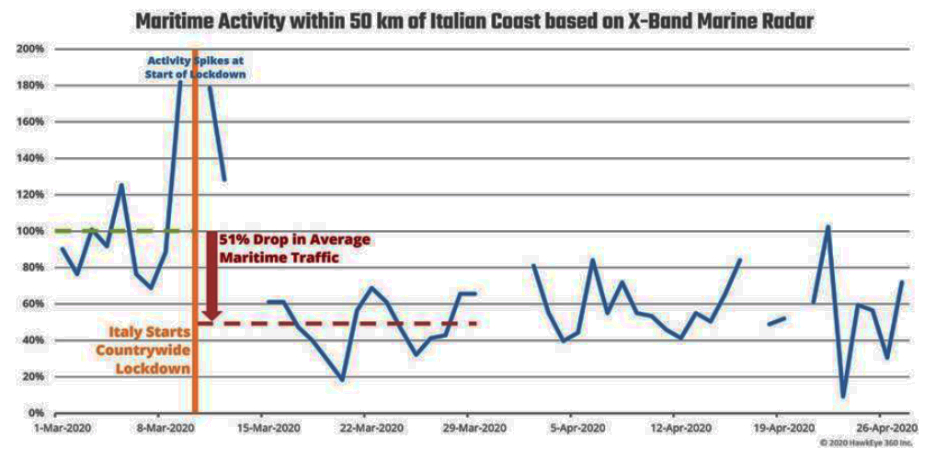
This image visualizes the dramatic change in vessel traffic using heatmaps of the data. This is a comparison in X-band navigation radar for eleven days in early March before the countrywide lockdown and eleven days in the middle of March, when the lockdown was in force. Image is courtesy of HawkEye 360.

New data from HawkEye 360 reveals that Italy’s maritime activity in its ports dropped by half (51%) after the country-wide lockdown on March 10th and has remained subdued ever since, as the country prepares for a phased re-opening on Monday.

This data provides insight into the impact of the coronavirus on Italy’s trade and tourism industries – months before national statistics provide a formal assessment.

Since the March 10th lockdown, marine activity has largely come to a standstill in tourist destinations Venice and Florence while Genoa, Gioia Tauro and Trieste, some of the biggest cargo ports in Italy and all of Europe, have experienced significant decline.The data, collected by HawkEye 360’s satellite constellation, measures changes in patterns of vessels from Italian ports.


This chart visualizes port activity in Italy, which saw a sharp 51% drop in marine activity during the countrywide lockdown. Interestingly, vessel activity spiked right around the start of the lockdown, perhaps hinting at people fleeing the country for better tourism opportunities. Traffic remains subdued through April.
Image is courtesy of HawkEye 360.

HawkEye 360 is a new source of global knowledge based on radio frequency (RF) geo-analytics.The company operates the first-of-its-kind commercial satellite constellation to identify and geolocate a broad range of RF signals and extracts value from this unique data through proprietary algorithms, fusing the result with other sources to create powerful analytical ​products that offer increasing levels of clarity for our global customers. The company’s products include maritime domain awareness and spectrum mapping and monitoring, serving a wide range of commercial, government and international organizations. HawkEye 360 is headquartered in Herndon, Virginia.

Filed Under: News

Rocket Lab Completes Sinclair Interplanetary Acquisition

April 30, 2020 by editorial


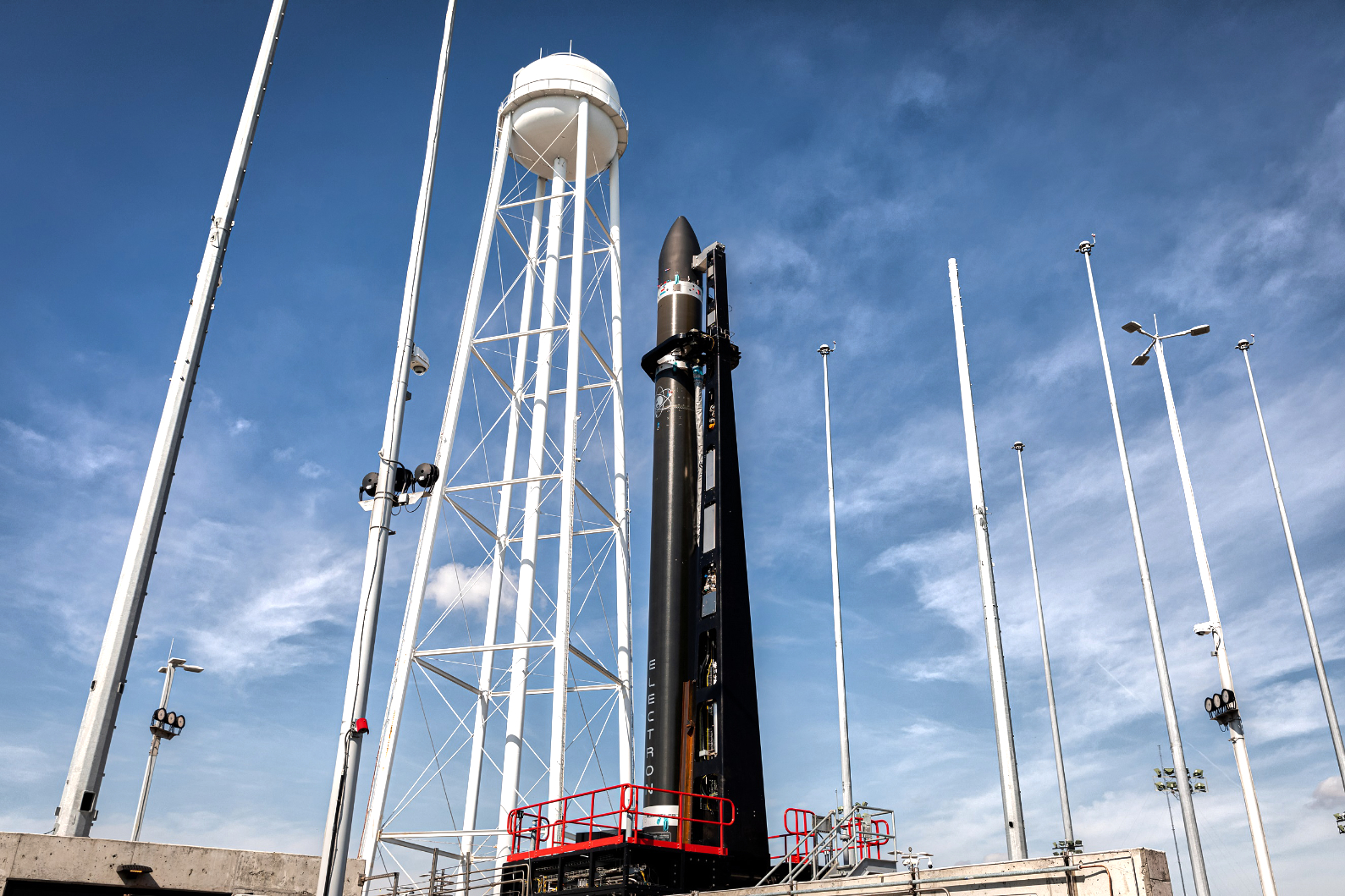
Rocket Lab’s Electron launch vehicle roll-Out at Launch Complex 2.

Rocket Lab has closed the transaction to acquire Sinclair Interplanetary, a leading provider of high-quality, flight-proven satellite hardware.

Rocket Lab announced the execution of the agreement to acquire Sinclair Interplanetary on March 16, 2020, pending customary closing conditions and satisfying The Investment Canada Act review process. Terms of the approved deal were not disclosed.

The acquisition strengthens the satellite division of Rocket Lab, which produces the Photon spacecraft line. Sinclair Interplanetary products will become key features of Rocket Lab’s Photon satellite platforms designed for LEO, lunar, and interplanetary smallsat missions. Rocket Lab will also dedicate resources to grow Sinclair’s already strong merchant spacecraft components business. The acquisition enables Sinclair Interplanetary to tap into Rocket Lab’s resources, scale, manufacturing capability, and innovative technologies to make world-leading satellite hardware accessible to more customers.

Both companies have built leading space businesses with consistent strong revenue growth and together, Rocket Lab and Sinclair Interplanetary will provide the small satellite industry with optimized spacecraft solutions and cohesive launch services to make space easy.


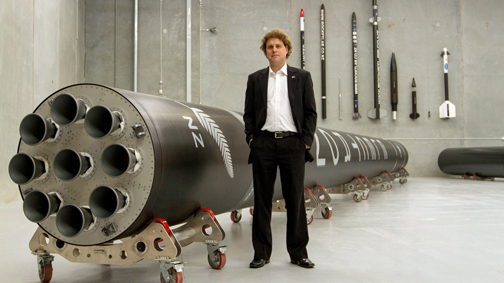
Peter Beck

Peter Beck, Rocket Lab founder and CEO, said when we talk to small satellite operators across the board their challenges are clear: They need to get on orbit faster; they need proven and reliable hardware; and they need the ability to focus on their core business, rather than spending years tied up in hardware development. Rocket Lab and Sinclair Interplanetary are uniquely suited to solve these challenges and make space easy for our customers.

Doug Sinclair, Founder of Sinclair Interplanetary, noted that at Sinclair Interplanetary, the company has had the privilege of serving the small satellite community for almost 20 years across diverse and innovative missions. The firm is excited to build on Sinclair’s strong heritage by combining the capabilities of Rocket Lab and Sinclair Interplanetary to scale manufacturing, make the hardware available to more customers globally and be able to supply larger constellations than ever before.

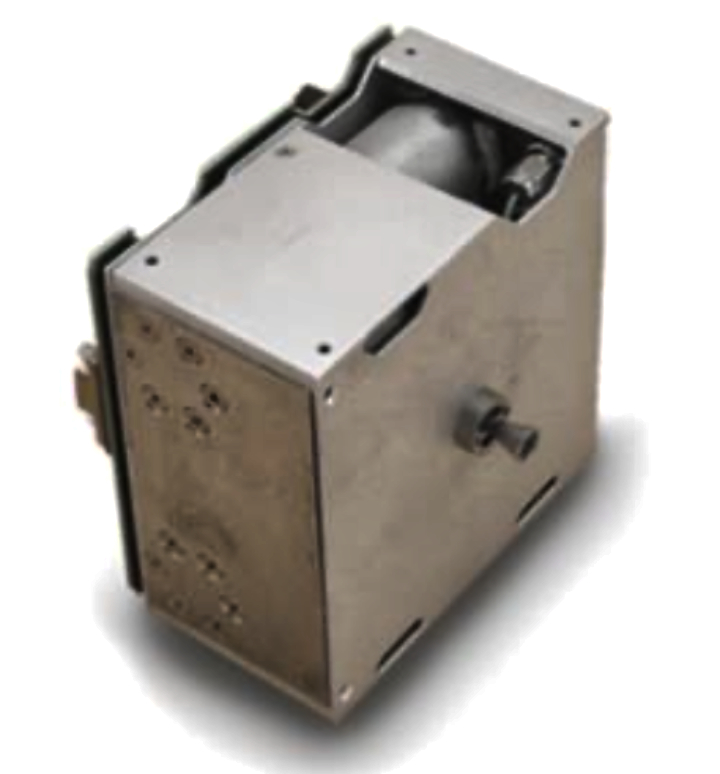
Founded in 2001 by Doug Sinclair, Toronto-based Sinclair Interplanetary develops reliable, best-in-class spacecraft hardware, including reaction wheels and star trackers that support rapid-schedule small satellite programs. More than 90 satellites incorporating Sinclair hardware have been launched to orbit, including Rocket Lab-launched satellites from AstroDigital, ALE, and BlackSky. The Sinclair team has been entrusted with developing hardware for world-first missions including BRITE, the world’s smallest space telescope, and The Planetary Society’s LightSail 2, the first satellite in Earth orbit to be propelled solely by sunlight. Satellite communications company, Kepler Communications, has also selected Sinclair reaction wheels for its constellation of 140 Internet of Things satellites currently in development.

Sinclair Interplanetary will continue to be led by Doug Sinclair and the company will maintain its team and facilities in Toronto, Canada. In addition to being incorporated into Rocket Lab’s Photon satellite line, Sinclair Interplanetary hardware will remain available to satellite operators building their own spacecraft.


Founded in 2001 by Doug Sinclair, Sinclair Interplanetary is a supplier of hardware, software, training and expertise to the spacecraft community. The primary focus is on low-cost, rapid-schedule programs to produce smallsats.


Filed Under: News

SpaceX to Test Sunshade for Starlink Satellites

April 30, 2020 by editorial

SpaceX is preparing to test a new sunshade for its Starlink satellites. Assuming all goes it planned, the new sunshade will make the satellites less visible. While that may sound problematic, it’s actually a good thing because it allows astronomers to peer into space with greater clarity.

Starlink, of course, is a project that involves launching thousands of small satellites into a Very-Low Earth Orbit (VLEO) constellation. SpaceX is hoping to use the network of satellites to provide internet access to businesses and consumers. There are other satellite-based internet services available, but if you’ve ever used one, you may recall their slow speeds and unreliable connections. SpaceX’s Starlink satellites are designed to overcome these problems thanks to their VLEO placement. Since they are closer to Earth, they can receive and transmit data more quickly than satellites used by other internet service providers.

Ever since SpaceX began launching the Starlink satellites into Earth’s orbit, however, professional and recreational astronomers alike have complained about their adverse impact on visibility. While the Starlink satellites are small — when compared to other satellites, at least — there are already over 100 of them in Earth’s orbit. And because of their VLEO placement, they often obstruct astronomers from viewing distant planets. This has prompted SpaceX to develop a new sunshade, which it plans to test in the near future.

SpaceX ultimately wants to make its Starlink satellites invisible. “Our objectives, generally, are to make the satellites invisible to the naked eye within a week, and to minimize the impact on astronomy, especially so that we do not saturate observatory detectors and inhibit discoveries,” explained SpaceX founder and CEO Elon Musk when describing the new sunshade. While the private aerospace manufacturing company has already created a website where astronomers can track its Starlink satellites, it’s now going one step further by developing a sunshade.

Known as the VisorSat, the new sunshade is designed to prevent sunlight from reflecting off the Starlink satellites’ antennas. The VisorSat essentially works like the sun visors found inside cars, trucks and other automobiles. When raised, it will create a barrier between the Starlink satellite on which it’s used and the sun.

SpaceX has previously tested different coatings in an effort to reduce the glare created by its Starlink satellites. One such project was DarkSat, which unfortunately didn’t perform as intended. Hopefully, SpaceX will experience better results with its VisorSat, however.

MonroeAerospace


Filed Under: News

Rocket Lab Rolls Out Electron Rocket for First Launch from Wallops

April 29, 2020 by editorial

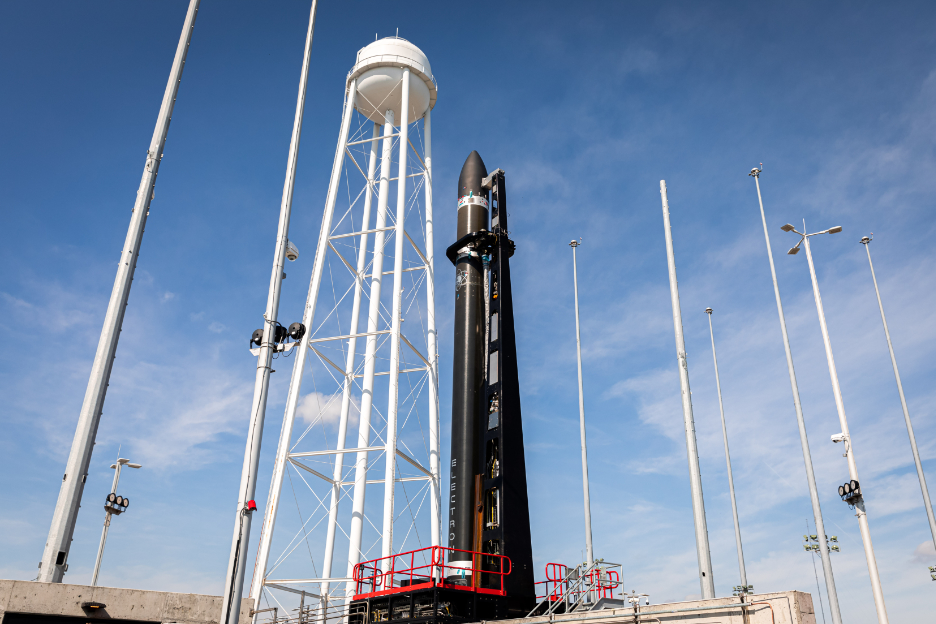
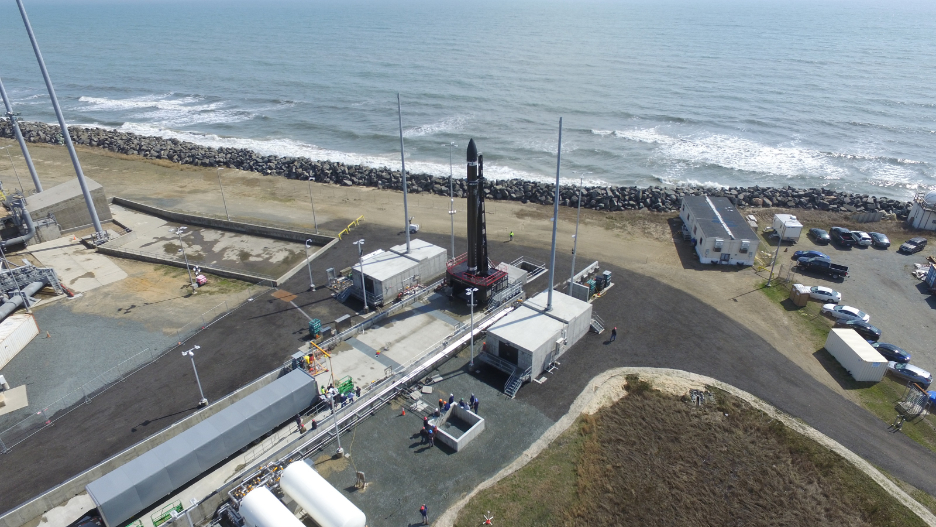
Rocket Lab has rolled an Electron launch vehicle out to the Launch Complex 2 pad at the Mid-Atlantic Regional Spaceport in Wallops, Virginia for the first time.

The milestone is one of the final steps ahead of Rocket Lab’s first launch from Launch Complex 2 – a dedicated mission in partnership with the Department of Defense’s Space Test Program and the Space and Missile Systems Center’s Small Launch and Targets Division.

Rocket Lab engineers and technicians carried out a range of successful integrated systems tests to verify launch systems on Electron and on the ground systems at Launch Complex 2. The critical checks included raising Electron vertical on the Launch Complex 2 pad for the first time, activating and tuning pad fluid systems, power and communication checkouts, as well as RF testing with the range. The test campaign concluded with a hot ignition test of the nine Rutherford engines on Electron’s first stage.

The STP-27RM mission will launch a single smallsat from the Air Force Research Laboratory’s Monolith program, which is designed to determine the ability of small satellites to support large aperture payloads to monitor space weather. The mission is being coordinated by the U.S. Space Force’s Space and Missile Systems Center and is scheduled to launch no earlier than the third quarter of 2020.

One of the final remaining steps before lift-off from Launch Complex 2 is completion of NASA certification for Rocket Lab’s Autonomous Flight Termination System (AFTS), a system that has already been successfully flown on several missions from Rocket Lab Launch Complex 1 in New Zealand. NASA expects to complete the certification in time for the Q3 launch window. The STP-27RM mission will mark the first time an AFTS system has flown from the Mid-Atlantic Regional Spaceport and represents a valuable new capability for the spaceport.

AFTS is a GPS-aided, computer-controlled system designed to terminate an off-nominal flight, replacing traditional human-in-the-loop monitoring systems. AFTS is crucial to increasing launch frequency and providing responsive launch capability, while maintaining the highest industry safety standards. It reduces the turnaround time between missions and provides greater schedule control by eliminating reliance on ground-assets and human flight termination operators.

With Launch Complex 2 complete and entering an operational phase, work continues on the construction of a Rocket Lab Integration and Control Facility nearby, which will house a launch control center, payload integration facilities, offices, and a pre-launch integration area for multiple Electron vehicles.

Future missions scheduled for lift-off from Launch Complex 2 include a pathfinding mission for NASA to the Moon called CAPSTONE (Cislunar Autonomous Positioning System Technology Operations and Navigation Experiment). The mission will see a NASA satellite launched to a unique near rectilinear halo orbit around the Moon to determine navigational capabilities for future missions. Data gathered by this mission will inform NASA’s plans for Gateway – a space station planned for lunar orbit that will act as an outpost for astronauts before they descend to the lunar surface. The CAPSTONE mission is currently scheduled to launch in early 2021.

David Pierce, Wallops Flight Facility Director, said that for almost 20 years, NASA and the DoD have been working to develop an AFTS system that is available for use by all Range Users within ITAR (International Traffic in Arms Regulations) that can greatly reduce the cost of access to space. Through the organization’s partnership with Rocket Lab on previous Electron launches and on this historic U.S. Air Force mission, Wallops is able to further the efforts to commercialize AFTS and increase launch responsiveness at U.S. ranges.

Peter Beck, Rocket Lab founder and Chief Executive, stated the upcoming mission from Launch Complex 2 marks the beginning of rapid, responsive smallsat launch capability for U.S. government missions from U.S. soil. He noted the company s proud to be partnering with the U.S. Space Force for the first mission from Launch Complex 2 and honored to be working with them again following previous STP missions out of Launch Complex 1. For more than two years, Rocket Lab has been providing responsive, dedicated and reliable access to space for government missions, and now we’re proud to be building on that strong heritage with our first mission from the United States. Combined, the two launch sites can support more than 130 launch opportunities every year, enabling unmatched schedule control for smallsat operators to respond to unfolding opportunities in LEO and beyond.


Rocket Lab and the Electron Launch Vehicle at Launch Complex 2.


Filed Under: News

New Unicorn ICD/PUG for Unicorn-2 Smallsat Developed by Alba Orbital

April 28, 2020 by editorial

Alba Orbital has unveiled the firm’s first, publicly available Payload Interface / Payload User Guide for Unicorn-2.

The company’s goal is to have an open interface that payload developers can use as a reference for the development of their payload’s missions, opening up space for business.

Unicorn-2 is a flight proven smallsat platform and the first operational 3P PocketQube to be launched into orbit.

Alba Orbital has also released their first Unicorn Interface Control Document / Payload User Guide as a reference to help those who are looking to develop their own payloads for a mission with Unicorn-2. This document guides users through:

  • Mechanical interface Electrical
  • Software interface Qualification Testing
  • Flight Acceptance
  • and more


Download this guide at this direct link…


Filed Under: News

  • « Go to Previous Page
  • Page 1
  • Interim pages omitted …
  • Page 38
  • Page 39
  • Page 40
  • Page 41
  • Page 42
  • Interim pages omitted …
  • Page 57
  • Go to Next Page »

Primary Sidebar

WEEKLY NEWSLETTER

Archives

  • November 2026
  • October 2026
  • September 2026
  • August 2026
  • July 2026
  • June 2026
  • May 2026
  • April 2026
  • March 2026
  • February 2026
  • January 2026
  • December 2025
  • November 2025
  • October 2025
  • September 2025
  • August 2025
  • July 2025
  • June 2025
  • May 2025
  • April 2025
  • March 2025
  • February 2025
  • January 2025
  • December 2024
  • November 2024
  • October 2024
  • September 2024
  • August 2024
  • July 2024
  • June 2024
  • May 2024
  • April 2024
  • March 2024
  • February 2024
  • January 2024
  • December 2023
  • November 2023
  • October 2023
  • September 2023
  • August 2023
  • July 2023
  • June 2023
  • May 2023
  • April 2023
  • March 2023
  • February 2023
  • January 2023
  • December 2022
  • November 2022
  • October 2022
  • September 2022
  • August 2022
  • July 2022
  • June 2022
  • May 2022
  • April 2022
  • March 2022
  • February 2022
  • January 2022
  • December 2021
  • November 2021
  • October 2021
  • September 2021
  • August 2021
  • July 2021
  • June 2021
  • May 2021
  • April 2021
  • March 2021
  • February 2021
  • January 2021
  • December 2020
  • November 2020
  • October 2020
  • September 2020
  • August 2020
  • July 2020
  • June 2020
  • May 2020
  • April 2020
  • March 2020
  • February 2020
  • January 2020
  • December 2019
  • November 2019
  • October 2019

© 2019–2026 SatNews

Insert/edit link

Enter the destination URL

Or link to existing content

    No search term specified. Showing recent items. Search or use up and down arrow keys to select an item.
      x
      Sign Up Now!

      Enjoy a free weekly newsletter with recent headlines from the global SmallSat industry.

      Invalid email address
      We promise not to spam you. You can unsubscribe at any time.
      Thanks for subscribing! You will now receive weekly SmallSat News updates.
      We love our advertisers.
      And you will too!

      Please disable Ad Blocker to continue... We promise to keep it unobtrusive.
      We promise not to spam you. You can unsubscribe at any time.
      Invalid email address
      Thanks for subscribing!