• Skip to main content
  • Skip to primary sidebar
  • Home
  • News
  • Featured
  • More News ⌄
    • SatNews
    • SatMagazine
    • MilSatMagazine
  • Events ⌄
    • MilSat Symposium
    • SmallSat Symposium
    • Satellite Innovation
  • Contacts
  • SUBSCRIPTION

SmallSat News

You are here: Home / Archives for 2020

Archives for 2020

Rocket Lab Acquires Sinclair Interplanetary

March 17, 2020 by editorial

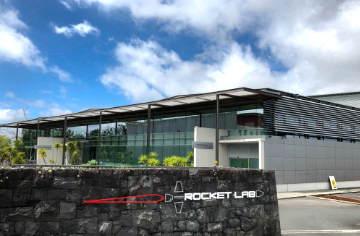
Rocket Lab has reached an agreement to acquire Sinclair Interplanetary, a provider of high-quality, flight-proven satellite hardware — the financial terms of the acquisition have not been disclosed.

The acquisition strengthens the satellite division of Rocket Lab, which produces the Photon spacecraft line and will enable Sinclair to tap into Rocket Lab’s resources, scale, manufacturing capability and innovative technology.

Founded in 2001 by Doug Sinclair, Toronto-based Sinclair Interplanetary develops reliable, best-in-class spacecraft hardware, including reaction wheels and star trackers that support rapid-schedule small satellite programs. More than 90 satellites incorporating Sinclair hardware have been launched to orbit, including Rocket Lab-launched satellites from AstroDigital, ALE, and BlackSky.

The Sinclair team has been entrusted with developing hardware for world-first missions: BRITE, the world’s smallest space telescope; and The Planetary Society’s LightSail 2, the first satellite in Earth orbit to be propelled solely by sunlight. Satellite communications company, Kepler Communications, has also selected Sinclair reaction wheels for its constellation of 140 Internet of Things (IoT) satellites currently in development.

Rocket Lab will look to leverage Sinclair Interplanetary’s strong brand and equally impressive heritage of innovation, quality, and execution. Sinclair products will be key features of Rocket Lab’s in-house designed and built Photon satellite platforms, and Rocket Lab will bring additional resources to grow Sinclair’s already strong merchant spacecraft components business.

Rocket Lab Founder and Chief Executive, Peter Beck, said that by combining the experience and capabilities of both companies, Rocket Lab will deliver reliable and flexible satellite and launch solutions that enable customers to do more, spend less and reach orbit faster. Doug Sinclair and his team at Sinclair Interplanetary are recognized as industry leaders and, like Rocket Lab, they produce best-in-class solutions that satellite operators know they can count on. Sinclair’s dedication to quality and reliability aligns perfectly with Rocket Lab’s commitment to mission success. The company is thrilled to welcome Doug and the entire Sinclair team to the Rocket Lab family.

Doug Sinclair added that Rocket Lab has played a pivotal role in making it easy for small satellites to access space. By operating as one company, there is now the opportunity to do the same for satellite manufacturing and make Sinclair hardware available to more customers globally. The firm will be able to supply larger constellations than before and take our hardware out to the Moon and beyond.


Filed Under: News

LAUNCH UPDATE: ULA Sets Date for U.S. Space Force’s AEHF-6 Satellite

March 16, 2020 by editorial


A new date has been established for United Launch Alliance’s (ULA) launch of AEHF-6 for the U.S. Space Force’s Space and Missile Systems Center. The launch to be postponed due to a mechanical malfunction.

ULA attributed the technical problem to a faulty booster valve.  The new sendoff date is Thursday, March 26. The team needed additional time to complete the booster valve replacement and retest. The two-hour launch window starts at 2:57 p.m. ET.          

United Launch Alliance will use an Atlas V 551 rocket to launch the sixth and final spacecraft in the Lockheed Martin-built Advanced Extremely High Frequency (AEHF) series for the U.S. Space Force Space and Missile Systems Center. AEHF satellites provide global, survivable, protected communications capabilities for strategic command and tactical warfighters operating on ground, sea and air platforms. Atlas V rockets successfully launched the first five AEHF satellites between 2010 and 2019.

Also onboard will be TDO-2, the multi-manifest smallsat vehicle flying with the AEHF-6 mission, that is carrying multiple U.S. Government payloads that will provide optical calibration capabilities that will support space domain awareness through optical calibration and satellite laser ranging. TDO-2 was manufactured by Georgia Institute of Technology and sponsored by Air Force Research Laboratory (AFRL).

EZ-2 is integrated on the aft-end of the Centaur on the Atlas V 551 launch vehicle where it will deploy the TDO-2 multi-manifest satellite vehicle approximately 31 minutes after launch.

TDO-2 will deploy after Main Engine Cut Off (MECO) 2 and prior to the anchor AEHF satellite, which is only the second time this event has occurred during a National Security Space Launch mission. Previously, a hosted payload was deployed prior to AEHF-5 successfully separating.

The AEHF-6 launch will mark the 83rd Atlas V mission since the inaugural launch in 2002 and the 11th in the 551 configuration.

Filed Under: News

Kleos to Finalize Launch Preparations Heading to India

March 13, 2020 by editorial

Kleos Space S.A (ASX:KSS, Frankfurt:KS1), a space-powered Radio Frequency Reconnaissance data-as-a-service (DaaS) company, announced that the mission team will be traveling to the Satish Dhawan Space Centre in Chennai, India on March 18, to carry out the final preparation steps prior to launch approximately six days prior to handing Kleos’ nanosatellites over to New Space India (NSIL) for integration with the launch vehicle. Kleos awaits the Indian Space Research Organisation (ISRO), the launch provider, to announce the upcoming launch date. 

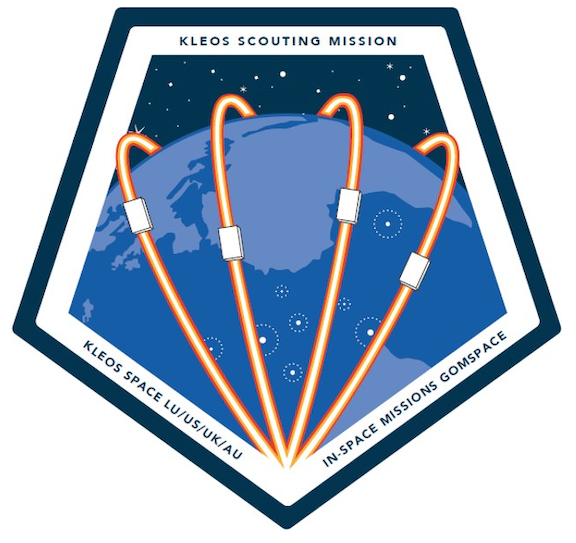
Kleos’ Scouting Mission satellites will detect and geolocate maritime radio frequency transmissions to provide global activity-based intelligence irrespective of the presence of positioning systems, in spite of unclear imagery and if targets are out of patrol range. These initial satellites form the foundation of a larger constellation that will deliver near real-time intelligence over key regions of maritime interest.

The preparation activities include carrying out spacecraft checkout, battery charging, fueling, setting the final spacecraft flight configuration and overseeing the dispenser integration.

Kleos’ Scouting Mission satellites will launch from the Satish Dhawan Space Centre aboard PSLV C49, a rideshare mission conducted by the Indian Space Research Organisation (ISRO) and featuring satellites from other organizations including Spire Global.

Kleos’ satellites will launch into a 37-degree inclination orbit, providing unprecedented situational awareness over crucial shipping regions including the Strait of Hormuz, South China Sea and East and West African coasts.

CEO of Kleos Space, Andy Bowyer said that the launch of their Scouting Mission satellites from Chennai is imminent. Their combined team is undertaking final preparations for their satellites to be integrated with the PSLV launch vehicle. Following launch, spacecraft operation engineers will guide the satellites from launch vehicle separation until they are established in their final orbit. This is an important milestone for Kleos as it will enable us to commence data delivery and revenue generation from early adopter contracts.

Bowyer continued saying they are seeing increasing demand for their global maritime geolocation intelligence data, which will enhance the ISR capabilities of governments and commercial entities. Their independent intelligence will complement existing datasets to enable the detection of hidden maritime activity such as drug and people smuggling, piracy, pollution and illegal fishing.

Kleos Space S.A. (ASX: KSS) is a space enabled, activity-based intelligence, data as a service company based in Luxembourg. Kleos Space aims to guard borders, protect assets and save lives by delivering global activity-based intelligence and geolocation as a service. The first Kleos Space satellite system, known as Kleos Scouting Mission (KSM), will deliver commercially available data and perform as a technology demonstration. KSM will be the keystone for a later global high capacity constellation. The Scouting Mission will deliver targeted daily services with the full constellation delivering near-real time global observation.

Filed Under: News

HawkEye 360’s New Executive VP … He has ‘Molded Legal Strategy’ 

March 12, 2020 by editorial

HawkEye 360 Inc. has named Dennis Burnett as the firm’s Executive Vice President (EVP) and General Counsel.

Burnett joins HawkEye 360 with several decades of experience advising high-growth domestic and international space and technology companies in transactional, regulatory and national security matters.


Dennis Burnett

Previously, Burnett served as Consulting Principal at LMI Advisors; Chief Counsel of Regulatory and Government Affairs at Kymeta Corporation and as Vice President of Trade Policy and Export Control for EADS North America. Burnett also currently serves as the Director and Treasurer of the International Institute of Space Law and as the Chair of the Space, Cyber and Telecommunications Advisory Board for the University of Nebraska College of Law. He is a graduate of Nebraska Wesleyan University, the University of Nebraska College of Law and the Georgetown University College of Law.

Burnett said he is extremely pleased to contribute to the HawkEye 360 team as the company forges a new commercial frontier in space. The wave of new smallsat technology is revolutionizing commercial, scientific and defense applications in the space domain.

John Serafini, CEWO, HawkEye 360, added Dennis has molded legal strategy for many complex technologies and space-based solutions. His insight will prove invaluable, as HawkEye 360 continues to break new ground providing commercial RF signal data and data analytics from space.

Filed Under: News

ANDESITE Mission Integration Completed by TriSept

March 12, 2020 by editorial

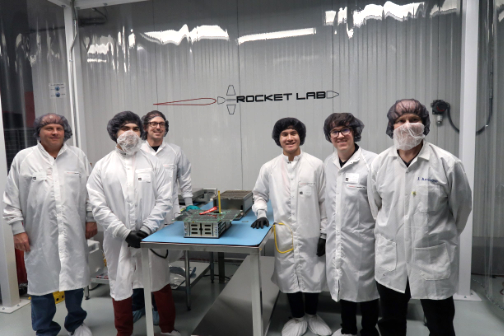
TriSept Corporation has completed the integration activity for NASA’s ELaNa 32 ANDESITE mission, a rideshare set to launch Boston University’s groundbreaking scientific study of the Earth’s magnetic field on a Rocket Lab Electron from New Zealand later this month.

The culmination of an eight-year collaborative research program among BU’s talented electrical and mechanical engineering students and professors, NASA’s CubeSat Launch Initiative (CSLI) will lift the university’s 6U cubesat into LEO. Once in space, this smallsat will initiate measurements of the magnetosphere with onboard sensors, later releasing eight smallsats carrying small magnetometer sensors to track electric currents flowing in and out of the atmosphere.

Josh Semeter, an electrical engineering professor with Boston University’s Center for Space Physics who first conceptualized the ANDESITE mission, said this mission with NASA will demonstrate how cubesats can play a vital role in providing an unprecedented view into the variations of electrical activity racing through space and its impact on lives here on Earth.


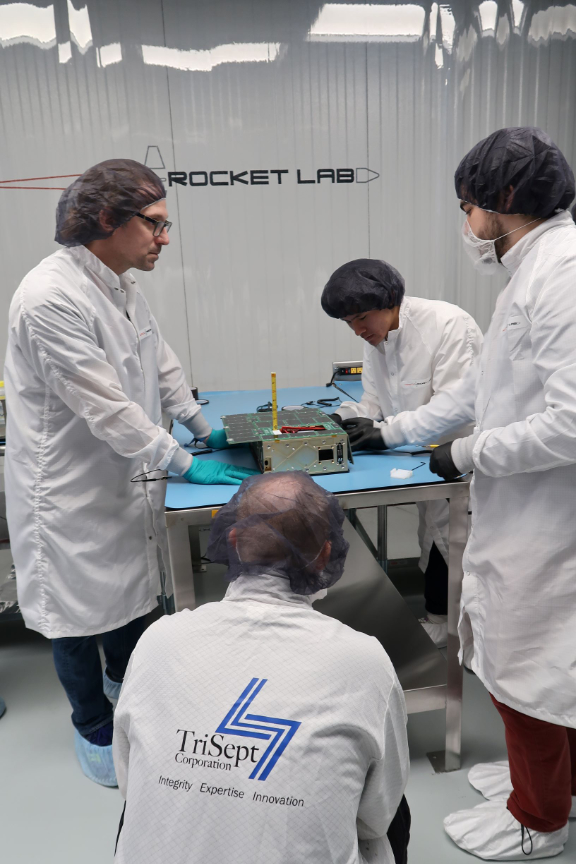
TriSept’s Jason Armstrong, center, and the Boston University integration team perform the final procedures during the integration of the ANDESITE payload with the mission dispenser device.

GPS services, for example, can be directly affected. If all goes as planned, the cubesat will release eight smallsat sensors into space to form a first-of-its-kind, free-flying, mesh network capable of delivering uniquely comprehensive data mapping of magnetic fields and space weather to smart phones here on campus.

Like many scientific missions, Boston University’s ANDESITE mission spacecraft and hardware will feature standard electronics components. The mission team estimates the network of satellite sensors, which will drift further apart in space during the experiment, will communicate and deliver data maps of the magnetic field and electric currents in the area for at least two to three weeks and possibly much longer.

When it comes to the name of their mission, students and faculty jokingly claim ANDESITE is one of the longest acronyms they know – Adhoc Network Demonstration for Extended Satellite Inquiries and other Team Endeavors.

Jason Armstrong, TriSept’s Director of Launch Integration Services, added that the company, the University spacecraft team and NASA have completed the initial integration of the ANDESITE mission by installing the cubesat into the dispenser device and preparing the spacecraft for shipment to Rocket Lab in New Zealand. This is an especially gratifying mission that demonstrates what NASA’s ELaNa missions are all about – opening up space access to academia and other scientific groups that otherwise might not be able to fulfill their vision and allow their students to put their experiments to the ultimate test.”

Brian Walsh, a mechanical engineering professor at Boston University who spearheaded the effort to secure the NASA rideshare, remarked that this incredible research and educational opportunity wouldn’t exist without NASA’s CubeSat Launch Initiative (CSLI), and students and programs would be left to speculate how their missions would perform in space. Long before this upcoming milestone mission launch, ANDESITE has helped to launch the careers of Boston University students who contributed countless hours to this breakthrough experiment. Many have gone on to head and support smallsat programs for some of the biggest government agencies and corporations leading the space industry today.

Scott Higginbotham, NASA LSP ELaNa Mission Lead, noted that the agency recently celebrated the monumental deployment of the 100th CSLI selected cubesat mission into space – and that’s amazing. Hundreds of students have benefited from the real-world hands-on experience that designing, building and launching a cubesat provides. This initiative is a critical part of NASA’s efforts to engage with and prepare the next generation of space explorers, and the success and longevity of this program underscores that commitment.”

Filed Under: News

University of Glasgow GU Orbit Team Signs Smallsat Mission Agreement with Responsive Access

March 11, 2020 by editorial

Scotland’s first student-led cubesat project made a critical step toward reaching space this week, when the University of Glasgow’s GU Orbit team signed an agreement with launch brokerage firm Responsive Access to finalize their ground-breaking mission plans.

GU Orbit is a multi-disciplinary, student-led society with the objective of developing their own satellite technology to encourage students into the world of space systems and to enable researchers to play an active role in the growing UK space industry. Glasgow already produces more satellites than any other city in Europe, with companies such as Spire and Clyde Space placing the city at the forefront of the European sector.

With Minister Ivan McKee last year announcing that the Scottish space sector could be worth as much as £4 billion by 2030, the work being done around space technology and data by Universities such as Glasgow, Strathclyde and Edinburgh, will play an important part in equipping students with the transferable skills to provide the nation with the next generation of aerospace engineers and rocket scientists.

Responsive Access, based at Edinburgh’s Royal Observatory building, is a participant in the ESA BIC UK, a prestigious business incubation program funded by the European Space Agency and the UK Science and Technology Facilities Council. The company aims to simplify access to space for cubesats and to play a critical role in supporting the vibrant satellite production industry by handling their customers’ mission management planning, essentially acting as a “one stop shop” to alleviate challenges around logistics, testing, insurance, and selecting the most suitable rocket to carry each payload into orbit.

Responsive Access’ Chief Executive, Andrew Paliwoda, stated that the organization is pleased to have signed an agreement with GU Orbit and the team has already started the process of identifying a suitable launch opportunity for their cubesat through one of the many available launch vehicle partners.
     He added, “It’s been an exciting few months for us, with financial backing for our project coming from the European Space Agency, Heathrow Airport, and the Department for International Trade, while our team has also had the opportunity to visit the facilities of potential rocket partners, such as Virgin Orbit and Relativity Space in California, as well as launch vehicle developers here in Scotland. For us, the key to success is to match our satellite customers with launch opportunities that best align with their needs.”

Responsive Access Ltd. aims to simplify access to space through the use of innovative software and key partner relationships that provide a one-stop-shop for the launch of CubeSats and other small payloads into orbit.

While the search for a suitable rocket gets underway, GU Orbit are focusing on the technical development of their satellite, which is set to become the first ever to be fully built by a Scottish university. The University of Glasgow’s satellite could be set for launch by as early as next year, creating the possibility for it to be one of the first payloads to reach space from a developing UK spaceport.

GU Orbit’s President, Philip Voudouris, explained that thanks to the tremendous effort from the team members, significant progress on the cubesat, Astraeus-01, has been made, finally bringing ideas and ambitions to life as prototypes are manufactured and tested. The University of Glasgow has a strong reputation regarding its involvement in space technology and having opened its first space lab just last year, it has shown that it is prepared to push the boundaries of human presence in space. With Responsive Access helping to plan the mission ahead and selecting a suitable launch vehicle for Astraeus-01, the company is now one large step closer to seeing this satellite reach orbit and subsequently opening an exciting new frontier for students and researchers with a passion in space.


Filed Under: News

SMC Delivers the TDO-2 Smallsat for Integration into the first U.S. Space Force Launch — the AEHF-6 Mission

March 11, 2020 by editorial

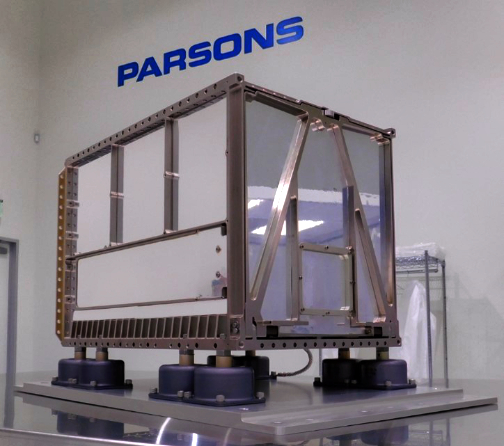
On March 6, the Space and Missile Systems Center’s (SMC) Launch Enterprise Mission Manifest Office (MMO) delivered a fully tested and integrated multi-manifest smallsat vehicle (TDO-2) to Cape Canaveral Air Force Station (CCAFS) for integration on the AEHF-6 mission, which is the first U.S. Space Force Launch.


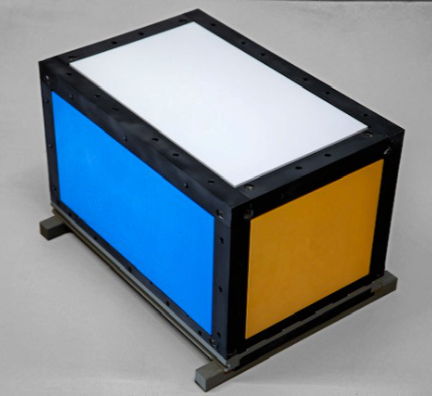
TDO-2 is the multi-manifest small satellite vehicle flying with the AEHF-6 mission. TDO-2 supports space domain awareness through optical calibration and satellite laser ranging.

Photo is courtesy of SMC.

TDO-2, the multi-manifest smallsat vehicle flying with the AEHF-6 mission, is carrying multiple U.S. Government payloads that will provide optical calibration capabilities that will support space domain awareness.

The Mission of TDO-2 is to support space domain awareness through optical calibration and satellite laser ranging. This capability will assist the nation’s warfighters in performing their critical missions. TDO-2 was manufactured by Georgia Institute of Technology and sponsored by Air Force Research Laboratory (AFRL).

EZ-2 is integrated on the aft-end of the Centaur on the Atlas V 551 launch vehicle where it will deploy the TDO-2 multi-manifest satellite vehicle approximately 31 minutes after launch.

TDO-2 will deploy after Main Engine Cut Off (MECO) 2 and prior to the anchor AEHF satellite, which is only the second time this event has occurred during a National Security Space Launch mission. Previously, a hosted payload was deployed prior to AEHF-5 successfully separating.


EZ-2 is integrated on the aft-end of the Centaur on the Atlas V 551 launch vehicle where it will deploy the TDO-2 Multi-manifest satellite vehicle approximately 31 minutes after AEHF-6 launches.

Photo is courtesy of SMC.

The MMO is increasing space warfighting domain flexibility by enabling the “swap-out” capability of multi-manifest satellites late in the integration process.

The AEHF-6 mission will demonstrate this “swap-out” capability by having two qualified and compatible multi-manifest satellites vehicles ready to be substituted, if needed, as late as one month prior to launch.

Considering the historical integration timeline for traditional satellites is approximately 24 months, this is just another example of how SMC is driving integration flexibility and responsiveness into the National Security Space planning process and rapidly delivering capability to the warfighter.

Part of SMC’s Launch Enterprise, the MMO is blazing the way for innovation in the space warfighting domain and continuing the SMC tradition of innovation in space.

Filed Under: News

NanoAvionics Secures Smallsat Mission Contract and Opens New US Support Office

March 11, 2020 by editorial

NanoAvionics has received a full mission contract for two, 6U smallsats and the opening of a new sales and engineering support office in Columbia (IL), USA.

The mission contract includes payload integration, launch and operation services for the two nanosatellites, both of which are based on NanoAvionics’ pre-configured M6P bus. The launch of both satellites is planned for the end of this year.


The NanoAvionics Columbia,
Illinois, office.

While NanoAvionics’ US Columbia Facility is the company’s second office in the United States, it is set to be the primary NanoAvionics hub in the Unites States. It is also the first satellite factory in Illinois and the Midwest. The Columbia Facility allows NanoAvionics’ to take advantage of a great talent pool from multiple local universities and their graduates and staff equipped with nanosatellite experience. The low cost of operations and living will also allow NanoAvionics to maintain its competitive status in a tough market.

Following the opening of NanoAvionics’ US facility at the Midland Air and Space Port last year, the company will keep it as a scalable resource for high quantity smallsat bus production, for both single missions and constellations.

The advantages and benefits of NanoAvionics’ industrial approach include reducing cost by standardizing the bus design while increasing the range and capabilities of the payload. NanoAvionics estimates that more than 80% of the smallsat bus can remain the same, even when the mission and payload varies. That in return means replicability, increased reliability, lower costs and much shorter production times which lead to greater speed to market and faster revenues.


Artistic rendition of NanoAvionics smallsats on-orbit. Image is courtesy of the company.

Having been the first company to develop a pre-configured nanosatellite bus, NanoAvionics has already scaled their flagship M6P bus to achieve 12U and 16U form factors, giving customers such as video streaming media company Sen more possibilities for their missions and payloads.

F. Brent Abbott, CEO of NanoAvionics North America, said the constantly increasing demand for the company’s standardized satellite buses, and this latest mission contract from a US commercial data services company, represents a significant milestone of NanoAvionics penetration in the US market for New Space as well as in the US Civil space sector. Completing the Columbia office will support NanoAvionnics’ efforts to provide US customers with the most cost-efficient satellite buses and hosted payload flights in LEO. These reductions in cost and the much shorter production times while increasing the options for mission payload and keeping the same high standards, will enable businesses to generate real downstream revenues.
     Abbot continued by noting building hundreds of satellites for the planned constellations in a short time frame of 12-15 months requires a universal bus design and an industrial approach for the mass production of smallsat buses. This is the next step in the company’s mission to become the go-to company for manufacturing and launching smallsat constellations for businesses worldwide. Smallsat buses are becoming a commodity and the firm has been applying the same standardization and principles that have been used in the automotive industry for more than a century to create a universal smallsat vehicle, capable of hosting a broad range of payloads and to be used for diverse applications.

Filed Under: News

Hiber Appoints Industry Leaders to Advisory Board as well as Receives EU Funding

March 11, 2020 by editorial

Hiber is celebrating a successful start to 2020 — in addition to receiving EU funding and achieving Dutch National Icon status, Hiber is also excited to announce the appointment of three eminent industry leaders to its advisory board: George Coelho, Co-Founder of Balderton Capital and advisor to European and South East Asian firm Finch Capital; Drew Caplan, a senior telecommunications executive and Lt. General Lawrence Farrell, a US military veteran and previous President and CEO of the National Defense Industrial Association.

These strategic hires come after a successful 2019 that witnessed Hiber launch their IoT network, Hiberband, that already has a portfolio of 50 global customers from a diverse range of sectors, including agriculture, oil, gas and logistics.

Identified as an innovative startup by the EU last year, in 2020 Hiber is also set to receive part of the European Innovation Council Accelerator’s grant of €278 million and direct equity investment.

Additionally, Hiber has been selected as a Dutch National Icon, a prestigious Dutch government backed initiative, whereby dutch companies with major social and economic potential are selected to receive government support. As part of its National Icon status, Hiber will receive support and expert counsel from the Dutch cabinet member, State Secretary Keijzer, for three consecutive years.

Hiber (formerly Magnitude Space) is a ‘NewSpace’ startup, founded and led by a dream team of satellite experts and tech entrepreneurs. These ‘Hibernauts’ are working on a moonshoot goal: to launch and run a smallsat constellation in space — 50 employees work on the patented technology behind Hiber and Hiberband at the firm’s offices in Amsterdam and Delft.

Filed Under: News

An MoU Between Kymeta and Kepler Communications Announced @ DC Show

March 11, 2020 by editorial

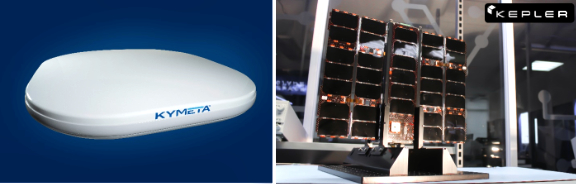
Kymeta has entered into a Memorandum of Understanding (MoU) with Kepler Communications to integrate Kepler’s Global Data Service into the just-announced Kymeta™ u8 Terminal and Kymeta Connect™ offering, this occurring during the DC satellite show.

This product collaboration envisions Kymeta combining the value proposition of Kepler’s LEO satellite service with the best aspects of traditional (GEO) SATCOM and 4G/LTE communications networks. The relationship builds upon the successful integration work announced by Kepler in mid-2019, when Kepler demonstrated compatibility between its LEO satellites and the Kymeta™ u7 electronically steered antenna (ESA), becoming the first LEO operator to do so.

Kepler’s Global Data Services offers high-capacity data backhaul to areas beyond traditional satellite and communication network coverage at a more favorable rate than traditional providers globally due to the economics of Kepler’s LEO satellite network.

Kepler’s Global Data Service (GDS) covers every part of the globe, from pole to pole, and allows the movement of gigabytes of data to and from the user’s location at economic rates. Currently enabled with Kepler’s first two satellites on orbit, the capabilities of GDS will expand significantly over the course of 2020 with Kepler’s previously announced vertical integration and launch procurements.

Commercial availability of GDS within the Kymeta Connect™ offering is targeted to align with market availability of the Kymeta™ u8 Terminal (pictured above) as well as Kepler’s expanded constellation later this year, with key customer trials supporting the development effort. To express an interest in participating, connect with your Kymeta or Kepler representative.

David Harrower, SVP of Global Sales at Kymeta, said the company is xcited about the collaboration with Kepler as it finally brings to market the promise of LEO capacity to deliver connectivity to the mobility markets. By adopting the latest and best technical capabilities, Kymeta delivers what the market has demanded in terms of mobile connectivity and have done so by bringing flexible and commercially viable service offerings made possible by each party’s technical advancements.

Mina Mitry, Chief Executive Officer at Kepler, remarked that by expanding the capabilities of their Kymeta Connect™ product with the firm’s high-capacity, data backhaul service, Kymeta is delivering on an ask the firm often hears from users – ‘How do I access all available communications technologies to serve my requirements?. Customers want solutions that are ready to go and easy to deploy. Kymeta Connect™, with the Kymeta u8 Terminal, tick both those boxes. By deploying Kepler’s Global Data Service with Kymeta Connect™, the offering becomes much more powerful and able to address the requirements of a greater range of users that traditional providers are unable to accommodate.


Filed Under: News

  • « Go to Previous Page
  • Page 1
  • Interim pages omitted …
  • Page 44
  • Page 45
  • Page 46
  • Page 47
  • Page 48
  • Interim pages omitted …
  • Page 57
  • Go to Next Page »

Primary Sidebar

WEEKLY NEWSLETTER

Archives

  • May 2026
  • April 2026
  • March 2026
  • February 2026
  • January 2026
  • December 2025
  • November 2025
  • October 2025
  • September 2025
  • August 2025
  • July 2025
  • June 2025
  • May 2025
  • April 2025
  • March 2025
  • February 2025
  • January 2025
  • December 2024
  • November 2024
  • October 2024
  • September 2024
  • August 2024
  • July 2024
  • June 2024
  • May 2024
  • April 2024
  • March 2024
  • February 2024
  • January 2024
  • December 2023
  • November 2023
  • October 2023
  • September 2023
  • August 2023
  • July 2023
  • June 2023
  • May 2023
  • April 2023
  • March 2023
  • February 2023
  • January 2023
  • December 2022
  • November 2022
  • October 2022
  • September 2022
  • August 2022
  • July 2022
  • June 2022
  • May 2022
  • April 2022
  • March 2022
  • February 2022
  • January 2022
  • December 2021
  • November 2021
  • October 2021
  • September 2021
  • August 2021
  • July 2021
  • June 2021
  • May 2021
  • April 2021
  • March 2021
  • February 2021
  • January 2021
  • December 2020
  • November 2020
  • October 2020
  • September 2020
  • August 2020
  • July 2020
  • June 2020
  • May 2020
  • April 2020
  • March 2020
  • February 2020
  • January 2020
  • December 2019
  • November 2019
  • October 2019

© 2019–2026 SatNews

Insert/edit link

Enter the destination URL

Or link to existing content

    No search term specified. Showing recent items. Search or use up and down arrow keys to select an item.
      x
      Sign Up Now!

      Enjoy a free weekly newsletter with recent headlines from the global SmallSat industry.

      Invalid email address
      We promise not to spam you. You can unsubscribe at any time.
      Thanks for subscribing! You will now receive weekly SmallSat News updates.
      We love our advertisers.
      And you will too!

      Please disable Ad Blocker to continue... We promise to keep it unobtrusive.
      We promise not to spam you. You can unsubscribe at any time.
      Invalid email address
      Thanks for subscribing!