• Skip to main content
  • Skip to primary sidebar
  • Home
  • News
  • Featured
  • More News ⌄
    • SatNews
    • SatMagazine
    • MilSatMagazine
  • Events ⌄
    • MilSat Symposium
    • SmallSat Symposium
    • Satellite Innovation
  • Contacts
  • SUBSCRIPTION

SmallSat News

You are here: Home / Archives for 2020

Archives for 2020

A Fresh Grounding for Smallsats via Australia’s Nova IGS Network

March 23, 2020 by editorial

Global defence company Nova Group is maintaining its projections of more than $200 million revenue this financial year with longer-term goals to continue expanding the company’s global reach.

A newer focus on space is continuing to diversify the portfolio of the South Australian headquartered company that has invested more than $20 million on eight acquisitions across the globe to cement its footprint.
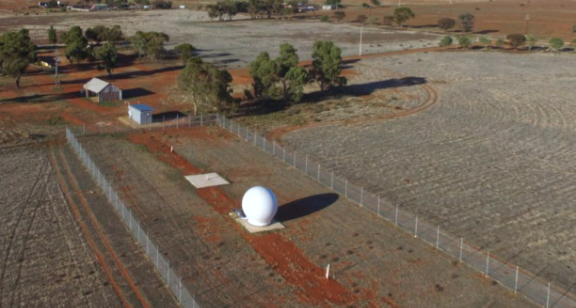

The Nova IGS Network is based on a 21 hectare site in Peterborough, South Australia.

In South Australia, the company’s new Nova IGS Network is providing space ground connectivity for smallsat operators, with the site now being used by international clients including Tyvak USA and RBC USA. Nova is also in talks with an Italian-based space company wanting to expand its presence in Australia.

Based on a 21 hectare site in Peterborough in South Australia’s mid-north, the site is used to track LEO satellites through customer’s own terminals and Nova has plans to attract further European companies over upcoming years.

A spokesperson for Nova said the company is also planning to use the site as a ground station test bed for emerging Space 2.0 technologies and to support future defence projects. Peterborough provides the vital ground segment element in order to allow satellite operators to downlink/download their data.

Nova Group is marking 20 years in business, with Nova Systems founded by Jim Whalley and Peter Nikoloff and originally offering flight-testing services in South Australia’s capital city of Adelaide. The company has since grown to having 600 employees working on projects around the world including with the Australian Defence Force, United Kingdom Ministry of Defence, Royal Norwegian Air Force and the Republic of Singapore Air Force.

Nova was recently awarded one of four industry leads in the Major Service Provider consortium providing integrated support contracts to the Australia Defence Force over the next 10 years.

The company has taken early steps globally to adopt new practices around COVID-19 in relation to infection control and is proactively undertaking business modelling to assess its potential financial impact.

At this stage, the company still expects to grow in the upcoming financial year, with work continuing on the offshore patrol vessels in Australia and Nova Systems recently winning a $25.9 million Norwegian defence contract to support a maritime helicopter program.

The Adelaide headquartered company first opened an office in the United Kingdom during 2012 before winning its first work within Norway the following year. Its latest contract marks a significant expansion for Nova Norway and a doubling in the size of it Norwegian operations with work already underway.

Nova has also cemented co-founder partnerships this year with the SmartSat Co-operative Research Centre in South Australia and Western Australian based Remote operations for Space and Earth. Plans to establish the now operating SmartSat CRC were led by The University of South Australia and Nova Systems.

Based next to the Australian Space Agency at Lot Fourteen in Adelaide, the SmartSat CRC now has 74 participants contributing $167 million adding to the federal government’s $55 million spend with a focus on advanced SATCOM, connectivity and Earth Observation.

Article by author Belinda Willis, The Lead

Filed Under: News

OneWeb’s Third Launch of 34 Satellites to Occur Today from Baikonur via Arianespace

March 21, 2020 by editorial

OneWeb’s next launch is scheduled to occur today, Saturday, March 21, at 17:06 (GMT) / 1:06 PM (EDT) / 22:06 (local time) from the Baikonur Cosmodrome in Kazakhstan.

This will be the second launch for OneWeb in 2020 and these additional 34 satellites will bring the constellation total to 74. The satellites are built by OneWeb Satellites, a joint venture between OneWeb and Airbus who are engaged in a new, high-volume, manufacturing process that can build two satellites per day.

Arianespace will launch OneWeb’s satellites into a near polar orbit of 450 kilometers, after which they will be raised to their final orbit of 1,200 kilometers.

OneWeb’s first customer demos are scheduled for the end of 2020 and availability of commercial services, for sectors such as maritime, aviation, government and enterprise, are scheduled for the end of 2021.

The theme for this launch commemorates the late Russian cosmonaut Alexei Leonov, who made history 55 years ago when he became the first person to exit a spacecraft and walk in Space. The OneWeb mission patch bears his name and celebrates his achievement.

OneWeb will be streaming the launch on Facebook and you can follow the launch on OneWeb social media channels: YouTube, Instagram, Twitter, Facebook.

For live transmission of the launch (with English commentary) go to: OneWeb on Facebook

Filed Under: News

GEOINT 2020 Symposium and CubeSat Developers Workshop Postponed

March 20, 2020 by editorial

With deep regret , the USGIF and its Board of Directors have reported that the GEOINT 2020 Symposium will not take occur in Tampa, Florida, on April 26-29.

As reported, USGIF has been closely monitoring developing reports from the Federal Government, the Florida Government, Centers for Disease Control and Prevention, and World Health Organization concerning the COVID-19 outbreak.
     On March 9, the Governor of Florida issued Executive Order 20-52 declaring a state of emergency, and on March 13 the President of the United States declared a national emergency.
     On March 14, the Department of Defense imposed a 60-day travel restriction on military and defense civilian personnel.
     On the same date, the Office of Management and Budget also prohibited travel for other federal employees, unless it is mission critical.
     On March 15, the Centers for Disease Control and Prevention directed the cancellation or postponement of in-person events consisting of 50 or more for the next eight weeks.
     On March 17, Hillsborough County, which includes Tampa, issued an order limiting all public and private events and gatherings to 50 people or less.

USGIF regrets having to cancel GEOINT 2020, as the GEOINT Symposium annually brings networking, thought leadership, student interaction, business and educational opportunities to the entire geospatial intelligence, trade and academic community. The organization looks forward to the next time the event can be conducted. Until then, USGIF is dedicated to continuing to be a resource to the geospatial intelligence community and will explore virtual options to do so.

USGIF is working out processes for appropriate refunds and patience is requested as this is a huge undertaking with the organization’s registration and housing company and updates with details will be published when the procedures are set in place.

USGIF requests all pray for continued health and safety as well as an end to COVID-19. Please continue to stay engaged and involved in the geospatial intelligence community. Follow USGIF on Facebook, LinkedIn, and Twitter; Trajectory Magazine on Facebook, LinkedIn, and Twitter; and GEOINT Symposium on Facebook and Twitter.


With a heavy heart, the 2020 CubeSat Developers Workshop that was to occur in San Luis Obispo, California, is being postponed.

With the current unfolding of COVID-19, the organization wishes to ensure the safety of the cubesat community and the world at large. Patience is requested as the best way to move forward is determined.

As circumstances change, additional information regarding Workshop will be offered via email and on the website. Please contact the Workshop Team with any questions you may have. Stay safe, wash your hands, practice social distancing, and take care of one another.

Filed Under: News

OneWeb Considering Bankruptcy

March 20, 2020 by editorial

In a news story filed at the Bloomberg infosite written by Eliza Ronalds-Hannon, Gillian Tan and Lauren Coleman-Lochner, OneWeb, the satellite operator backed by SoftBank Group Corp., is mulling a possible bankruptcy filing to address a cash crunch as the firm grapples with high costs and stiff competition, according to people with knowledge of the preparations.

The company is considering seeking court protection even as it continues to review possible out-of-court alternatives, said the sources who asked not to be named discussing private company plans.

OneWeb would be among the first SoftBank-backed companies to file for bankruptcy. A spokeswoman for SoftBank, which is OneWeb’s largest investor, declined to comment.

A spokesperson for OneWeb declined to comment. To read the entire article, please access this direct infolink to the Bloomberg news site…

Filed Under: News

What’s in the Philippines’ New Planned Satellite Launches in 2020?

March 19, 2020 by editorial

Last month, the Philippines signaled plans to launch additional cube satellites later this year. While the development was expected and part of ongoing efforts, it nonetheless highlighted part of the Southeast Asian state’s outlook towards an aspect of its overall approach to space.


Credit: Presidential Communications Office of the Philippines

As I have observed before in these pages, the Philippines’ development of its space capabilities has been in the headlines in recent years, including collaboration with other countries as well as the setting up of the new space agency last year under President Rodrigo Duterte.

One aspect of this is the launching of smaller Philippine satellites. These include microsatellites such as Diwata-1 and Diwata-2 that can be used for capturing images for remote sensing, research, and data-gathering, as well as smaller cube satellites usually sent to low earth orbit and meant to provide initial hands-on experience in developing satellites, with a case in point being Maya 1 which was developed by Filipino students at the Kyushu Institute of Technology (Kyutech) in Japan and launched in 2018.

Last month, this aspect of the Philippines’ capabilities was in the spotlight again with an announcement of the launching of additional cube satellites. The Department of Science and Technology (DOST) said in February that it was looking to launch a few additional cube satellites in 2020.

The announcement of the expected launching of three cube satellites – Maya 2, Maya 3, Maya 4 – was disclosed in a media presentation on February 20 by DOST Secretary Fortunato dela Peña, per the Philippines News Agency (PNA) in a media report released March 11. Mara Mendoza, a member of the Space Science Proliferation through University Partnerships (Step-UP) project under which Maya cube satellites in question were developed, told PNA that the additional cube satellites, which weigh about one kilogram and measure 10 centimeters on each side, would help the Philippines achieve more “continuous coverage” of the country, with the satellites being able to last between six months to more than a year in orbit and  passing through to capture the Philippines for roughly twice a day for six to ten minutes.

To be sure, as noted above, the cube satellites have limited capabilities, with microsatellites such as the Diwata-1 and Diwata-2 having better cameras and more payloads. And some specifics remain undisclosed, including the exact launch date of the cube satellites which depends on various factors including coordination with partners as well as regulatory bodies. Nonetheless, the plans in the works nonetheless spotlighted one aspect of the Philippines’ capabilities in this regard.

By Prashanth Parameswaran, The Diplomat 

Filed Under: News

Phase Four Receives USAF AFWERX Contract for Maxwell Propulsion System Adaptation

March 18, 2020 by editorial

Phase Four has been awarded an SBIR Phase I contract by U.S. Air Force (USAF) tech accelerator AFWERX, in partnership with the Air Force Research Laboratory (AFRL) and the National Security Innovation Network.

As part of this partnership, beginning in March 2020, Phase Four will work with the USAF to adapt their Maxwell in-space propulsion system to meet the needs of defense users.

Affordable and reliable in-space propulsion is an essential requirement for both commercial and defense next-generation satellite constellations. The Phase Four radio-frequency thruster (RFT) is the first solution to address the cost, manufacturing, and performance needs of high volume satellite constellations. RFT’s simple architecture allows manufacturing to scale up easily and accommodates a wide range of solid, liquid, and gas propellants. In turn, these features potentially open an even wider range of mission possibilities, including missions in deep space and very low Earth orbit.


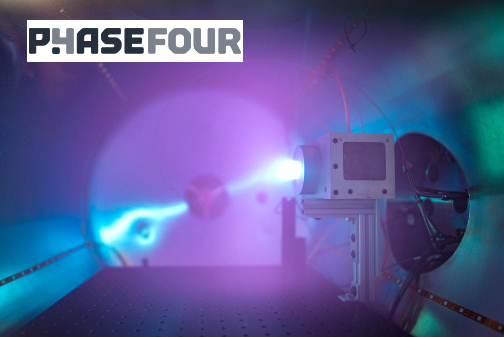
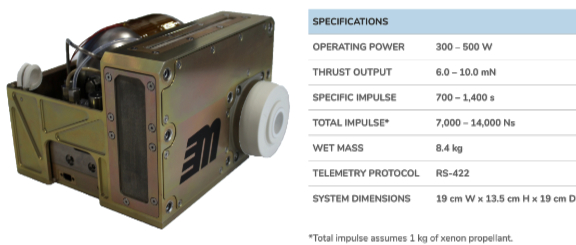
Phase Four’s Maxwell is a turn-key electric propulsion solution for next generation smallsats and includes the company’s proprietary RF thruster, power electronics, 1 kg. xenon propellant tank (and control system), and flight software.

Maxwell is a complete in-space propulsion system built on Phase Four’s RFT. The system includes power electronics, software, and a pressurized storage vessel for 1 kg. of xenon, providing more than 10,000 Ns of impulse. Maxwell is delivered in an enclosure smaller than 19x19x 14 cm. Customer deliveries began earlier this month.

CEO Beau Jarvis said the firm is proud to have been selected by the U.S. Air Force as one of their potential technology partners. This is a great example of how Phase Four’s commercial success with Maxwell in the private sector can translate to defense needs.

Jason Wallace, VP of Advanced Development for the company, stated that with space now a contested domain, the firm looks forward to collaborating with the U.S. Air Force to provide United States space assets with the superior maneuverability and resiliency required to ensure mission success.

Filed Under: News

Direct Satellite Connectivity to Mobile Phones on Earth Accomplished by Lynk

March 18, 2020 by editorial

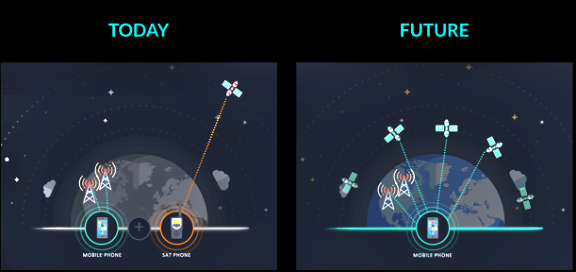
Lynk (Lynk Global, Inc.) has successfully connected a satellite in LEO to an ordinary mobile phone on Earth.

The technical breakthrough enabled Lynk to send the world’s first ever text message from space to a mobile phone. This milestone, witnessed by independent third-party observers, represents the critical, industry-first next step for Lynk’s vision to use satellites to provide broadband services directly to more than five billion mobile phones on the planet, everywhere.

Lynk’s historic test took place on February 24, 2020, using the firm’s patented “cell tower in space” technology — LEO smallsats that connect directly to unmodified mobile phones. Lynk has successfully repeated the test multiple times with independent observers.

A video recording of this history-making event can be found at this direct link…

This milestone is the culmination of over a year of satellite-to-phone-on-the-ground testing involving multiple payloads in space.

Tyghe Speidel, Co-founder and VP of Technology of Lynk and the inventor of the core breakthrough technology, stated,  that this is a critical verification of the company’s revolutionary radio access network technology’s ability to compensate for the effects of placing the cell tower in orbit, which mobile standards were not designed to accommodate.

This breakthrough represents a key step in advancing Lynk’s vision to provide universal broadband connectivity to the over five billion people who have mobile phones but cannot access wireless signals everywhere. Lynk has solved what was widely considered an impossible problem in a one trillion-dollar-a-year global industry — how to provide connectivity to mobile phones across the planet, when it is cost-prohibitive to build and operate cell towers everywhere, especially in less populated areas. Lynk’s technology solves this problem of providing mobile broadband coverage everywhere on Earth, a $300-400 billion a year opportunity.

Charles Miller, Co-Founder and CEO of Lynk, noted that in collaboration with nearly 30 mobile network operator partners, Lynk is actively working to deploy the first commercial product. With the permission of regulators, Lynk is confident that the company can bring a world-first solution to the market to tens-of-millions of people by the end of 2020. This is a game changer for the billions of people who own a mobile phone, for the billions who do not have affordable connectivity, and for the entire mobile communications industry. Lynk makes the impossible possible. In the near future, you will stay connected everywhere — all the time.

The successful tests also prove that Lynk’s Everyone Everywhere Emergency alerts are feasible using Lynk’s orbiting satellites. The startup’s now proven technology will enable people everywhere to get potentially life-saving alerts — from the farthest parts of the ocean, to rural areas, and to the most remote islands — of impending natural disasters, such as hurricanes, wildfires, and tsunamis. Lynk’s breakthrough will provide emergency responders with assured mission-critical communications during natural disasters when traditional ground-based cellular networks are down.

Steve Case, the Co-Founder of AOL and Chairman and CEO of the DC-based investment firm Revolution (an investor in Lynk via Revolution’s Rise of the Rest Seed Fund), added that connectivity changes lives and saves lives. Lynk’s successful test brings the company one step closer to providing the 2+ billion people around the world who live and work in rural communities with affordable connectivity and the immeasurable social and economic benefits that come with it.

Mark Foster, the inventor of cell phone number portability and a Founding Partner at Blazar Ventures, an investor in Lynk, added that the company is proud of Lynk’s revolutionary and industry-transformative accomplishment. Lynk will touch the lives of billions – by connecting directly to their standard mobile phones from satellites in orbit – and provide a desperately needed alternative to conventional terrestrial towers for mobile network operators to extend coverage everywhere. Lynk’s rapid prototyping and innovative space access strategies are a key part of their success, and Blazar Ventures looks forward to Lynk’s introduction of the world’s-first satellite-to-standard mobile phone service to tens-of-millions of people by the end of 2020.

Lynk has already launched its fourth “cell tower in space” spacecraft on the SpaceX’s CRS-20 mission on March 6th. This spacecraft, which is named Lynk The World, will allow the company to expand testing in the Summer of 2020 to additional countries and partners.

Filed Under: Featured, News

SpaceX Launches 60 Starlink Satellites

March 18, 2020 by editorial

At 8:16 a.m. EDT, or 12:16 UTC, on Wednesday, March 18, SpaceX launched their sixth Starlink mission.

The company’s Falcon 9 launch vehicle lifted off from Launch Complex 39A (LC-39A) at NASA’s Kennedy Space Center in Florida.

Falcon 9’s first stage previously supported the Iridium-7 NEXT mission in July of 2018, the SAOCOM 1A mission in October of 2018, the Nusantara Satu mission in February of 2019, and the second launch of Starlink in November of 2019. Falcon 9’s fairing previously supported the first launch of Starlink in May 2019.


The 6th SpaceX Falcon launch of 60 Starlink satellites from NASA’s Kennedy Space Center in Florida.

The Starlink satellites deployed in an elliptical orbit approximately 15 minutes after liftoff. Prior to orbit raise, SpaceX engineers conducted data reviews to ensure all Starlink satellites are operating as intended. Once the checkouts are complete, the satellites will then use their onboard ion thrusters to move into their intended orbits and an operational altitude of 550 km.

Watch a video replay of this launch’s webcast at this direct link…

The recovery attempt of the launch vehicle’s first stage was not successful.

Filed Under: Featured, News

Space Debris to be Tackled with Machine Learning

March 17, 2020 by editorial

An Australian team is using machine learning to tackle the threat of space junk wrecking new satellites.

Research to tackle the growing need to find, capture and remove junk from space is advancing at the Australian Institute for Machine Learning in Adelaide, South Australia.

Machine Learning for Space director Tat-Jun Chin and his Adelaide-based team have won a $600,000 grant from Australia’s SmartSat CRC to continue their work in detecting, tracking and cataloging space junk.

SmartSat CRC was established last year to work with the Australian Space Agency based in Adelaide, contributing to the Australian government’s goal of tripling the size of the space sector to $12 billion and creating as many as 20,000 jobs by 2030. The space junk project is based on developing a space-based surveillance network and tackling the growing challenge of crowding in space.

Associate Professor Chin said his team was one of the first to apply an effective machine learning approach to the problem of estimating the pose of space objects from an input image so it can be removed. He said that inn order to remove a piece of debris from another spacecraft, such as by casting a net, harpooning or grabbing with a robotic arm, it is vital to estimate the position and orientation of the debris relative to the approaching spacecraft.

The project involves University of Adelaide academics and researchers partnering with Inovor Technologies and a leading Australian space firm specializing in space situational awareness. It also includes scientists from the University of Queensland and the Australian National University.

Associate Professor Chin said the center was also waiting on the results of an application to partner with the giant European Space Agency (ESA) to find novel ways to approach and remove junk from space. He said the center, based in the city’s Lot Fourteen innovation neighborhood that also houses the Australian Space Agency, had capability in its lab to further the research more broadly with robotic manipulation.He hoped to work more closely with international agencies with the research, “for a fledgling space industry and a fledgling space economy, having that international connection is vital. Space presents novel problems for artificial intelligence, for example, a lot of AI algorithms require a lot of data.”

There are a growing number of satellites being launched into space with an exponential rise expected as private companies like American entrepreneur Elon Musk’s SpaceX one of several companies that intend to launch vast constellations of small satellites into Low Earth Orbit (LEO).

Space junk is created by satellites continuing to orbit once they run out of fuel, run out of propulsion or their technology becomes obsolete and they are no longer required but remain in space.

Chin added that “If you have an autonomous car, relatively speaking, it’s not so hard to get that data, by capturing it from cars being driven. You can’t do that easily for a problem in space, as the cost of developing, launching and maintaining a satellite is much more significant. This presents fundamental challenges that motivate my team to look forward to work every day.”

South Australia has been a significant player in the nation’s space industry and is home to major Tier 1 defence companies, the SmartSat CRC and several emerging space start-ups, including Fleet Space Technologies, Inovor Technologies, Myriota and Southern Launch.

The Australian Space Agency officially opened its headquarters in Adelaide this year and will build a $6 million Mission Control Center for smallsat missions and an educational Discovery Centre at their Lot Fourteen site.

Article written by Belinda Willis, Contributing Author, The Lead

Filed Under: Featured, News

Exolaunch to Launch UAE’s MeznSat to Orbit via Soyuz-2 Rocket

March 17, 2020 by editorial

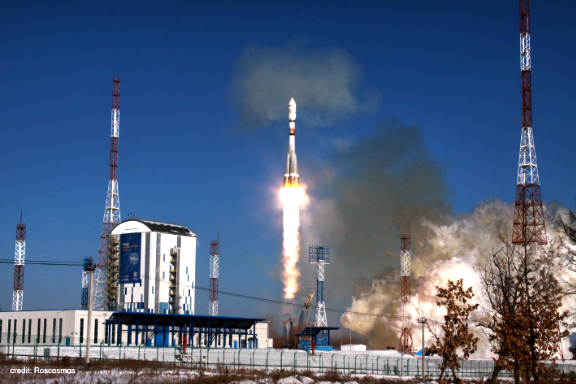
Exolaunch has announced that the launch of a 3U cubesat, MeznSat, for the UAE Space Agency, will be performed aboard a Soyuz-2 rocket — the purpose of the satellite is to study and monitor greenhouse gases, specifically CO2 and Methane, over the UAE.

MeznSat is a smallsat for climate observation, manufactured by Khalifa University of Science and Technology (KUST) in partnership with the American University of Ras Al-Khaimah (AURAK) and funded by the UAE Space Agency. The satellite’s primary payload will be a shortwave infrared (SWIR) spectrometer that makes observations in the 1000-1650 nm wavelength range to derive atmospheric greenhouse gas concentrations.

The secondary payload on MeznSat will consist of a VGA camera for post-processing that brings increased precision and accuracy to the SWIR spectrometer data. The combination of visible and SWIR bands will make MeznSat a unique CubeSat mission, specifically designed to generate a rich dataset for exploring atmospheric correction algorithms.

MeznSat is scheduled for launch in mid-2020. It is accommodated on one of the upcoming Soyuz-2 federal launches as part of the small satellite cluster launch contract between Exolaunch and Glavkosmos, the operator of international commercial activities for the Russian State Space Corporation Roscosmos. Glavkosmos has been a reliable partner for Exolaunch, and it is pleased that the partners from the UAE have chosen a Soyuz launch vehicle for delivering MeznSat into orbit.


Photo of a Soyuz-2 launch is courtesy of Roscosmos.

Exolaunch’s experience in cubesat launches, which includes the deployment of 89 smallsats into orbit to date, will ensure the success of this important launch and initiative.

Moreover, UAE Space Agency’s goal of developing student competencies makes this a particularly exciting collaboration, as Exolaunch will be able to use its educational background to lead students through the entire process of a launch arrangement. This Soyuz-2 mission serves as a milestone for both smallsat engineering and space education.

Jeanne Medvedeva, Commercial Director at Exolaunch, said the company is proud to apply the firm’s best-in-class launch services expertise and use the EXOpod deployer for this Soyuz-2 mission. The UAE Space Agency is nurturing some of the world’s brightest young minds who apply space-based solutions to tackle global issues. It is extremely rewarding for Exolaunch to support their vision.

Khalid Al Awadi, Director of Space Mission Management at the UAE Space Agency, added that the MeznSat project broadens the horizons of UAE’s satellite capabilities, which include remote sensing, Earth observation and communications. The key objective of the project is education, in keeping with our vision to contribute to the international space sector, strengthen scientific research methodologies and develop capabilities in the UAE. Seamless launch integration and deployment are crucial for the agency’s success, and Exolaunch has the flight heritage and proven successes that can be trusted. The UAE Space Agency is also excited to confirm the launch aboard a Soyuz-2 and continue this successful collaboration after sending the first UAE astronaut to space on the rocket last year.

Filed Under: Featured, News

  • « Go to Previous Page
  • Page 1
  • Interim pages omitted …
  • Page 43
  • Page 44
  • Page 45
  • Page 46
  • Page 47
  • Interim pages omitted …
  • Page 57
  • Go to Next Page »

Primary Sidebar

WEEKLY NEWSLETTER

Archives

  • May 2026
  • April 2026
  • March 2026
  • February 2026
  • January 2026
  • December 2025
  • November 2025
  • October 2025
  • September 2025
  • August 2025
  • July 2025
  • June 2025
  • May 2025
  • April 2025
  • March 2025
  • February 2025
  • January 2025
  • December 2024
  • November 2024
  • October 2024
  • September 2024
  • August 2024
  • July 2024
  • June 2024
  • May 2024
  • April 2024
  • March 2024
  • February 2024
  • January 2024
  • December 2023
  • November 2023
  • October 2023
  • September 2023
  • August 2023
  • July 2023
  • June 2023
  • May 2023
  • April 2023
  • March 2023
  • February 2023
  • January 2023
  • December 2022
  • November 2022
  • October 2022
  • September 2022
  • August 2022
  • July 2022
  • June 2022
  • May 2022
  • April 2022
  • March 2022
  • February 2022
  • January 2022
  • December 2021
  • November 2021
  • October 2021
  • September 2021
  • August 2021
  • July 2021
  • June 2021
  • May 2021
  • April 2021
  • March 2021
  • February 2021
  • January 2021
  • December 2020
  • November 2020
  • October 2020
  • September 2020
  • August 2020
  • July 2020
  • June 2020
  • May 2020
  • April 2020
  • March 2020
  • February 2020
  • January 2020
  • December 2019
  • November 2019
  • October 2019

© 2019–2026 SatNews

Insert/edit link

Enter the destination URL

Or link to existing content

    No search term specified. Showing recent items. Search or use up and down arrow keys to select an item.
      x
      Sign Up Now!

      Enjoy a free weekly newsletter with recent headlines from the global SmallSat industry.

      Invalid email address
      We promise not to spam you. You can unsubscribe at any time.
      Thanks for subscribing! You will now receive weekly SmallSat News updates.
      We love our advertisers.
      And you will too!

      Please disable Ad Blocker to continue... We promise to keep it unobtrusive.
      We promise not to spam you. You can unsubscribe at any time.
      Invalid email address
      Thanks for subscribing!