• Skip to main content
  • Skip to primary sidebar
  • Home
  • News
  • Featured
  • More News ⌄
    • SatNews
    • SatMagazine
    • MilSatMagazine
  • Events ⌄
    • MilSat Symposium
    • SmallSat Symposium
    • Satellite Innovation
  • Contacts
  • SUBSCRIPTION

SmallSat News

You are here: Home / Archives for 2022

Archives for 2022

Orbex to lead construction + operational management of Sutherland Spaceport

November 3, 2022 by editorial

A Scottish rocket manufacturer and orbital launch services provider is to build and operate the first vertical launch site for satellites on the UK mainland.

Orbex, based in Forres, Moray, Scotland, has signed a lease with development agency Highlands and Islands Enterprise (HIE) for the spaceport location on community-owned land on the A’ Mhoine peninsula in north-west Sutherland.
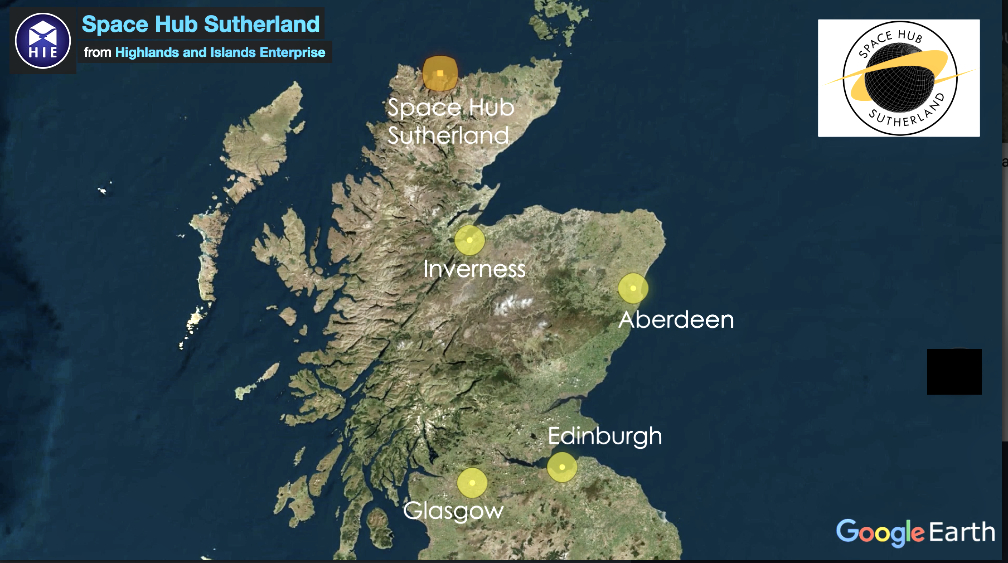
HIE has been developing launch plans for several years and leases the site from Melness Crofters’ Estate. The sub-lease with Orbex will run for 50 years, with an option to extend for a further 25 years.

Orbex will oversee the construction and assume full operational management of the new facility. The 10-acre launch site will become the long-term ‘home’ spaceport of Orbex and will see the launch of as many as 12 orbital rockets per year, carrying satellites into LEO.

Orbex’s role in the spaceport will stimulate significant private investment that will benefit the local community through job creation, supply chain opportunities and other associated economic benefits. Total private investment over the initial three-year period is expected to reach £20 million.

In addition to increased opportunities for local businesses and contractors as part of the spaceport’s construction, Orbex expects to create up to 40 technical and non-technical FTE jobs to support the operation and maintenance of the site. The roles will span a number of areas including facilities and operational management, security, general administration and finance, marketing, stakeholder engagement and launch campaign-related roles. Employment opportunities will be advertised locally when recruitment commences.

HIE identified the potential for the Highlands and Islands to play a significant role in the UK’s growing space sector several years ago, recognizing that rural locations that are close to coasts and have a northern latitude can make ideal satellite launch sites.

With the backing of the UK Space Agency, HIE set to work developing plans for the Sutherland spaceport in 2018, with specialist input from architects NORR and construction consultants Gardiner and Theobald. At the same time, HIE commissioned detailed environmental studies to inform a broad range of protection measures around the site.

Planning permission was granted by the Highland Council in August of 2020. A separate development application to the Scottish Land Court – which was required as the launch site is on crofting land – was also successful.

Following its recent participation in Orbex’s Series C funding round, it has been confirmed that global technology-forward solutions company, Jacobs, will assume the role of prime construction contractor on behalf of Orbex. Jacobs will collaborate with Orbex to provide spaceport operations support, operations consultancy, and engineering services, drawing on its experience of managing and operating complex, highly regulated sites such as Cape Canaveral in the United States. Jacobs is NASA’s largest services provider, delivering mission-tailored solutions and full lifecycle aerospace capabilities including the Mars Perseverance Rover and the Artemis deep space human exploration program.

Overseeing the construction and operational management of the new spaceport will allow Orbex to streamline the development of the state-of-the-art facility, drafting in industry experts such as Jacobs to help meet its objectives. Sutherland Spaceport is intended to become the world’s greenest spaceport, both in terms of its construction and its operation. One illustration of this is how peat lifted during the construction will be re-used to repair large areas of peatland that have degraded over centuries.

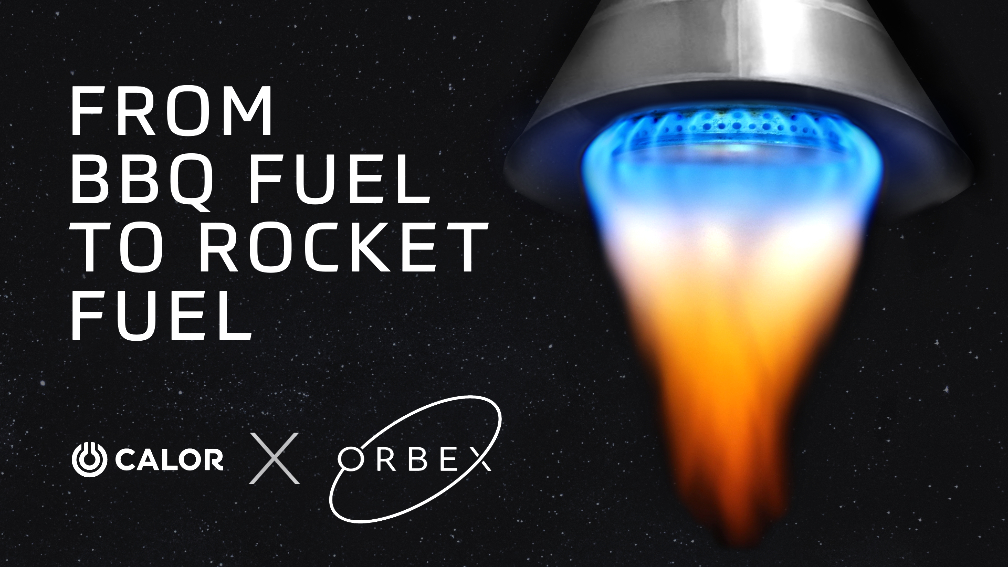
Uniquely, the new Orbex Prime rocket is powered by a renewable biofuel, Futuria Liquid Gas, supplied by Calor. This fuel allows the rocket to reduce carbon emissions significantly compared to other similarly sized rockets being developed elsewhere around the world.
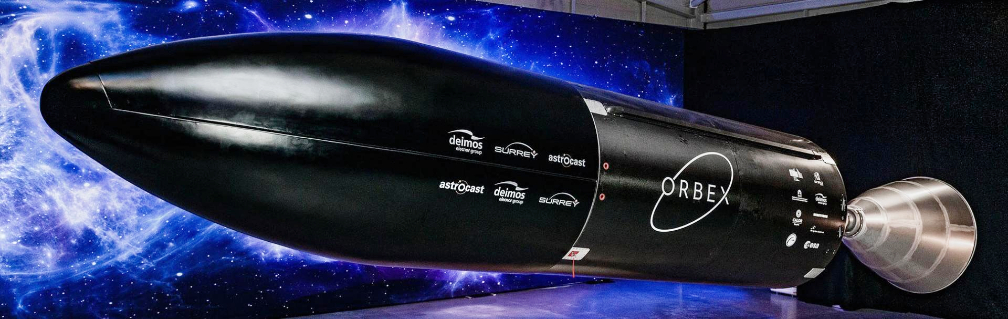
A study by the University of Exeter showed that a single launch of the Orbex Prime rocket will produce 96 percent lower carbon emissions than comparable space launch systems using fossil fuels. Prime is also a re-usable rocket which has been engineered to leave zero debris on Earth and on-orbit. Orbex has already received a great deal of interest from commercial satellite manufacturers and has signed launch contracts with a number of customers.
Chris Larmour, the CEO of Orbex, said, “We are very grateful for the work that HIE and the Melness Crofters Estate have done, in getting us to the point where we can take the baton and start construction. We have collaborated closely with them over the past few years, and we are completely aligned in our vision of delivering a sustainable spaceport that will bring jobs and prosperity to the region. Orbex is the first European launcher company to also manage a dedicated spaceport. It is an important competitive advantage to the company, which will make it really easy for us to work with customers as we scale up our operations.”

David Oxley, Director of Strategic Projects, Highlands and Islands Enterprise, said, “The space industry represents a huge economic opportunity for the Highlands and Islands and for Scotland. The steps we’ve taken to establish launch capability in Sutherland have already delivered a significant economic impact as a key factor in attracting Orbex to establish their manufacturing facility and test site in Moray, creating dozens of skilled jobs, with many more in the pipeline. We believe the spaceport has the capacity to generate around 250 jobs in our region, including 40 on site, plus opportunities in manufacturing, supply chain, research and service provision. With Orbex now set to build and operate the spaceport, we’ve reached a key stage in our partnership that will not only see launches happening from Sutherland but a whole range of wider economic benefits delivered for the Highlands and Islands.”


Filed Under: News

Rocket Lab to attempt their next mid-air Electron rocket catch by helicopter with their next launch mission

November 3, 2022 by editorial

Rocket Lab USA, Inc. will attempt to catch an Electron rocket with a helicopter as it returns to Earth from space during the firm’s next launch.

Lift-off of a Rocket Lab Electron rocket.

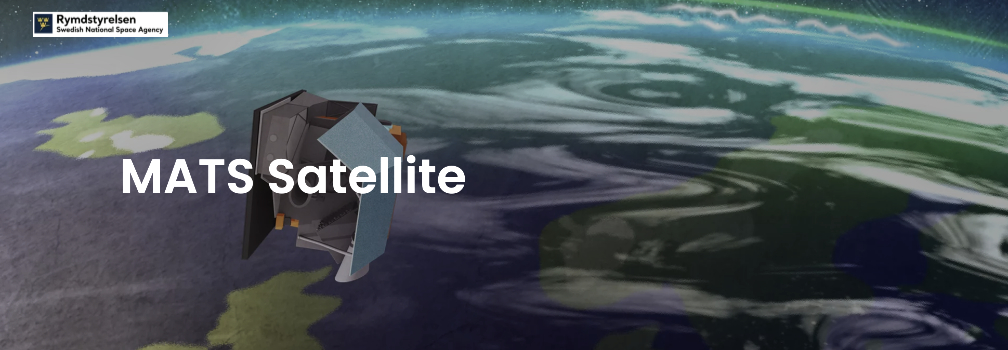
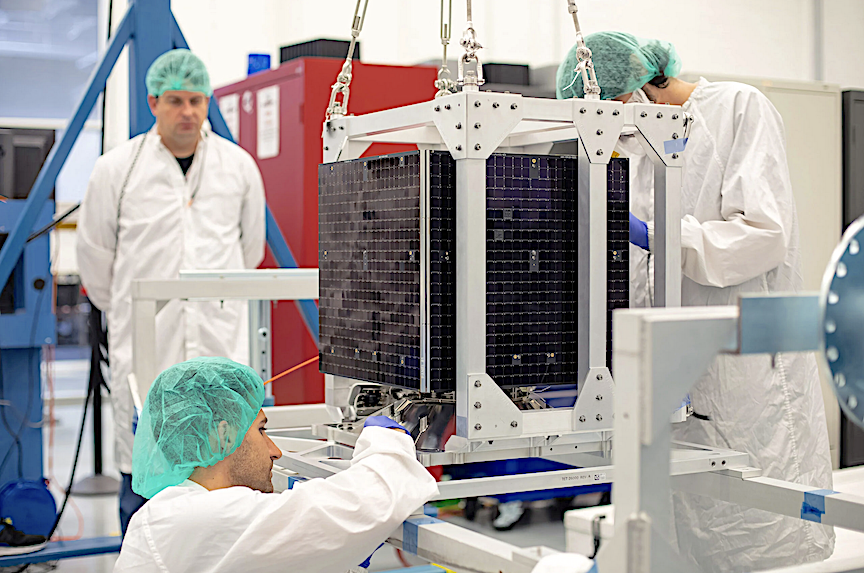
Rocket Lab’s 32nd Electron launch, the “Catch Me If You Can” mission, is scheduled to launch from Pad B at Rocket Lab Launch Complex 1 during a launch window opening on November 04, UTC. Electron will carry a science research satellite by space systems provider OHB Sweden for the Swedish National Space Agency (SNSA). The Mesospheric Airglow/Aerosol Tomography and Spectroscopy (MATS) satellite is the basis for the SNSA’s science mission to investigate atmospheric waves and better understand how the upper layer of Earth’s atmosphere interacts with wind and weather patterns closer to the ground. MATS was originally due to fly on a Russian launch service before the mission was manifested on Rocket Lab’s Electron.

“Catch Me If You Can” will see Rocket Lab attempt to capture the rocket’s first stage mid-air with a helicopter as it returns from space. Using a modified Sikorsky S-92 helicopter to catch and secure the rocket by its parachute line, Rocket Lab will bring the captured stage back to its Auckland Production Complex to be processed and assessed by engineers and technicians for possible re-use.

This Electron recovery effort follows the catch of an Electron first stage during Rocket Lab’s first helicopter recovery attempt on the “There And Back Again” launch in May, and the recovery attempt for this mission will follow the same concept of operations as the previous launch.

Rocket Lab CEO and founder, Peter Beck, said, “Our first helicopter catch only a few months ago proved we can do what we set out to do with Electron, and we’re eager to get the helicopter back out there and advance our rocket reusability even further by bringing back a dry stage for the first time.”

Shortly before lift-off, the customized Sikorsky S-92 recovery helicopter will deploy to the capture zone at sea, approximately 160 nautical miles off New Zealand’s Banks Peninsula. Once launched, Electron’s first and second stages will separate at approximately T+2:32 minutes into the mission. The MATS payload will continue to orbit onboard the rocket’s second stage while Electron’s first stage descends back to Earth.

At this point in the mission, Electron’s return is expected to reach speeds of up to 8,300 km. (5,150 mph) and temperatures of up to 2,400 degrees C (4,352 F). At approximately T+7:20 minutes after lift-off, Electron’s first parachute will deploy followed shortly after by the rocket’s main parachute. The double deployment of parachutes helps to slow the returning first stage to 0.4% of its top speed during descent: from 8,300 km. per hour to just 36 km. per hour.

As Electron enters the capture zone, Rocket Lab’s recovery helicopter will match the rocket’s speed and descent from above, attempt to secure the trailing parachute engagement line to the helicopter via a hook at the end of a long line. Once captured and secured, Electron will be transported back to Rocket Lab’s Auckland Production Complex. There, technicians will receive and prepare the stage for inspection to assess its suitability for re-use.

Filed Under: Featured, News

U.S. Space Force Space Systems Command launches experimental satellite Tetra-1

November 2, 2022 by editorial

Tetra-1 is an experimental satellite designed for a variety of prototype missions in and around geostationary orbit, or GEO Photo Courtesy of Millennium Space System.

Delivered in less than 15 months by prime contractor Millennium Space Systems, a Boeing company, Tetra-1 is an experimental satellite designed for a variety of prototype missions in and around geostationary orbit, or GEO. The launch marks a new era for the Space Force, as it focuses on building and fielding new capabilities faster than in the past.

“The threat to our space systems is real. Speed is critical in developing advanced capabilities to stay ahead and, if necessary, defeat the threat.” said Col Joseph J. Roth, Innovation and Prototyping senior materiel leader for the U.S. Space Force Space Systems Command. “Tetra-1 is a great example of how a small company, and an innovative contracting approach, authorized by Congress, came together, and delivered an advanced satellite in record time.”

The small sat, about the size of a large dorm-room refrigerator, will help Space Force operators develop tactics, techniques, and procedures for Department of Defense missions.

Tetra-1 was the pacesetting first prototype awarded under Space Systems Command’s other transaction authority, or OTA, called the Space Enterprise Consortium (SpEC), that seeks to speed up procurements and diversify industry partnerships.

Building Smarter

To move fast on development and production of Tetra-1, Millennium Space Systems pulled its expertise from a variety of programs, including the GEO ALTAIR Pathfinder satellite that launched in 2017.

“It is important for SSC to deliver capabilities on time and within budget,” said Roth. “It is also important for the commercial space sector to continue to innovate and help drive down costs.”

“We’re known for delivering systems fast,” said Jason Kim, chief executive officer of Millennium Space Systems. “Our innovation is enabled by the fact that we build 80 percent of our components in-house. That lets us design, build and deliver a completely new satellite in a very short timeline.”

Such is the kind of innovation that Space Systems Command is looking for in procuring new capabilities, like Tetra-1 – working with partners that can take advantage of commercial best practices and existing satellite production. Photo Courtesy of Millennium Space Systems.

Small Sats, Layered Architecture

The Defense Department’s embrace of Tetra and other small satellites is being driven by the need to introduce resilient satellite systems and architectures to counter the Great Power competition. That’s because large, costly, exquisite satellite systems such as the Space Based Infrared System (SBIRS) — the fifth one was launched in mid-2021 and cost about $1 billion — are increasingly vulnerable to outright attack, which is a capability Russia demonstrated in November when it destroyed one of its own satellites with an anti-satellite missile.

“What we’re seeing is that some of the high-value asset missions that we’ve traditionally done in the past are being envisioned for large constellations of small satellites instead,” said Kim. “There are some benefits to the large constellations of small satellites in that the unit price point of each small satellite has gone down over the years. That lends itself to more affordability. And we’re now building these small satellites much faster and more efficiently, providing schedule savings.”

Use of small sats in a layered architecture spread across low-Earth orbit, medium-Earth orbit, and GEO will let the DoD quickly reconstitute capabilities should certain satellites become inoperative. For instance, loss of one SBIRS satellite in its five-satellite constellation could leave a major gap in missile-warning coverage. Conversely, loss of a few satellites in a larger constellation of dozens of satellites will only incrementally degrade capabilities and can be replaced in a faster fashion.

“Distributing the space architecture will help us build resiliency over time so that there’s not a single point of failure anywhere,” explained Roth. “We’re focused on making our systems and architectures more resilient and robust so if something happens, the Space Force can still perform the mission without fail.”

Filed Under: Featured, News

Sidus Space notches an agreement with Dawn Aerospace for smallsat propulsion tech

November 2, 2022 by editorial

Sidus Space, Inc. (NASDAQ:SIDU) has signed an agreement with Dawn Aerospace (“Dawn”) to implement the latter’s green, chemical propulsion technology into the company’s LizzieSat™ smallsat.

Among the novel characteristics of Sidus Space’s proprietary LizzieSat™ is that its size allows Sidus to include propulsion and provide precision pointing and maneuvering otherwise not available to smaller cubesats. Additionally, propulsion provides a longer life on-orbit and that means continued data transfer and revenue opportunity. Each LizzieSat™ is 100 kg. with approximately 20 kg. dedicated to payloads including remote sensing instruments. The larger mass also allows design for redundancy and reliability into the spacecraft.

Dawn is a space transportation company, specializing in non-toxic chemical satellite propulsion and sustainable space launch. Dawn has provided in-space propulsion products – used to propel satellites – to customers globally since 2019.

“We are excited to partner with Dawn Aerospace on this important feature for our LizzieSat™ constellation. We believe Dawn’s turnkey propulsion technology will allow us to extend our time in orbit and deliver on our future value proposition of providing space-based data to a multitude of industries,” said Carol Craig, Sidus Space Founder and CEO.

“We look forward to partnering with Sidus Space to enable propulsion for their missions,” said Jeroen Wink, Dawn Co-founder. “Sidus is one of many customers we are providing propulsion to as demand for space products and services continues to grow.”

Sidus Space (NASDAQ: SIDU), located in Cape Canaveral, Florida, operates from a 35,000-square-foot manufacturing, assembly, integration, and testing facility focused on commercial satellite design, manufacture, launch, and data collection. The company’s rich heritage includes the design and manufacture of many flight and ground component parts and systems for various space-related customers and programs. Sidus Space has a broad range of Space-As-a-Service offerings including space-rated hardware manufacturing, design engineering, satellite manufacturing and platform development, launch and support services, data analytics services and satellite constellation management.

Dawn Aerospace’s mission is to enable the next generation of space users by providing dramatically more scalable and sustainable ways to access and move around in space. It is now a leading supplier of turnkey green propulsion systems for NanoSat, MicroSat, ESPA, and ESPA Grande-class satellites. Dawn is also active in reusable launch vehicle development, with an active test flight program of the Mk-II Aurora spaceplane demonstrator, with 30+ flights completed.

Filed Under: News

Spire Global receives DARPA contract to design a VLEO smallsat for in-situ ionosphere data capture

November 2, 2022 by editorial

Spire Global, Inc. has been awarded a contract by the Defense Advanced Research Projects Agency (DARPA) to deliver a preliminary design for a satellite that would carry an array of sensors to Very Low Earth orbit (VLEO) for in-situ ionosphere measurements.

The award is part of DARPA’s Ouija program, which aims to use sensors on satellites to provide new insights into high-frequency (HF) radio wave propagation in the ionosphere, the area spanning the upper edges of the Earth’s atmosphere to the lower regions of space. The program seeks to quantify the space HF noise environment and improve characterization of the ionosphere to support novel HF capabilities.

DARPA’s award uses Spire’s Space Services model, which offers organizations fast and scalable access to space through a subscription model that eliminates the high upfront cost of building and maintaining infrastructure in space. Organizations can leverage Spire’s established space, ground, and web infrastructure to deploy and operate a constellation of satellites, a hosted payload, or a software application in space. Spire handles the end-to-end management, from manufacturing to launch to satellite operations, and the customer operates the system through a web API.

Recently, the company was also awarded a National Oceanic and Atmospheric Administration (NOAA) contract for its Space Services to develop a sensor with hyperspectral microwave sensing technology on a 16U satellite to collect near real-time weather observations and improve measurements.

“Spire is proud to be supporting DARPA’s efforts to advance our understanding of the ionosphere. Spire has built and launched over 150 satellites in the decade since the company was founded, and we’re excited to bring that heritage and experience in ionospheric data collection to this project,” said Kamal Arafeh, Senior Vice President of Sales, Spire. “For innovative programs like Ouija, the Space Services model provides a fast and cost-effective platform to build and scale new technology in space.”

Spire (NYSE: SPIR) is a leading global provider of space-based data, analytics and space services, offering access to unique datasets and powerful insights about Earth from the ultimate vantage point so that organizations can make decisions with confidence, accuracy, and speed. Spire uses one of the world’s largest multipurpose satellite constellations to source hard to acquire, valuable data and enriches it with predictive solutions. Spire then provides this data as a subscription to organizations around the world so they can improve business operations, decrease their environmental footprint, deploy resources for growth and competitive advantage, and mitigate risk. Spire gives commercial and government organizations the competitive advantage they seek to innovate and solve some of the world’s toughest problems with insights from space. Spire has offices in San Francisco, Boulder, Washington DC, Ontario, Glasgow, Oxfordshire, Luxembourg, and Singapore.

Filed Under: News

NorthStar’s SSA smallsats to be launched by Virgin Orbit via Spire Global in 2023

November 2, 2022 by editorial

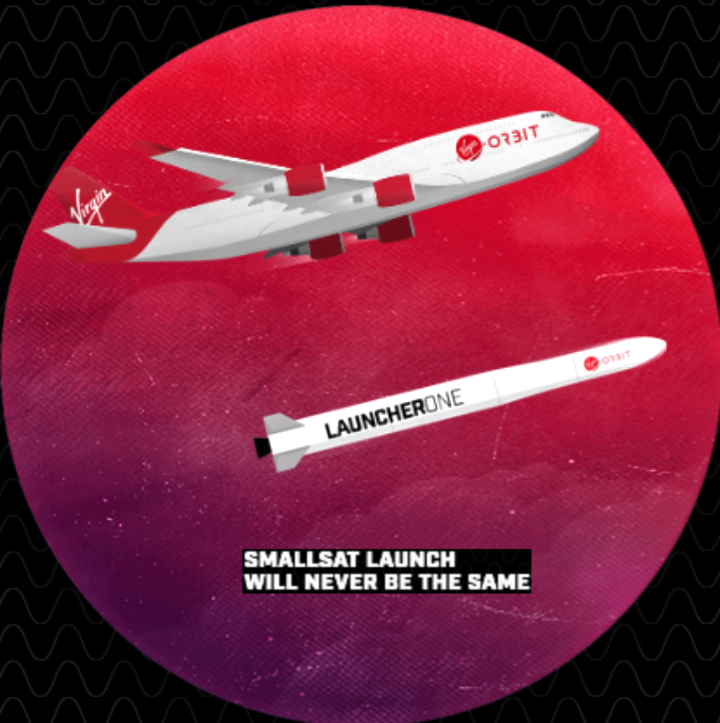
NorthStar Earth & Space‘s first three of the firm’s constellation of 24 satellites dedicated to commercial Space Situational Awareness (SSA) will be among the payloads carried by Spire Global’s satellites to be launched by Virgin Orbit — the launch is scheduled for mid-2023.

NorthStar will be the first to monitor all near-Earth orbits from space, delivering an enhanced level of SSA services to the global satellite community, with timely and precise information for resident space object detection, tracking, orbit determination, collision avoidance, navigation and proximity alerts.

“NorthStar is proud to join forces with both Spire Global and Virgin Orbit for this historic first launch, as part of a vibrant community committed to advancing innovation in the service of space sustainability and the secure growth of the space economy,” said Stewart Bain, CEO and Founder of NorthStar Earth & Space. “NorthStar is committed to making a meaningful contribution to the peaceful and sustainable use of space. We deliver valuable information that enhances the detection and precision tracking of space objects across all near-Earth orbits to support sustainability, greater safety, and confidence in space operations.”

“Virgin Orbit is delighted to play a role in this ground-breaking mission,” said Virgin Orbit CEO, Dan Hart. “The proliferation of space debris and emerging threats in orbit necessitate responsive space domain awareness via space-based platforms. By working with NorthStar and Spire to deploy this innovative technology to a precise, targeted orbit via our proven LauncherOne system, we are fulfilling Virgin Orbit’s role as an affordable responsive space provider.“

“We’re proud that NorthStar is leveraging our Space Services model and established space, ground, and web infrastructure to rapidly deploy its constellation, which is critical to tackling the pressing issue of space debris and delivering fundamental information for satellite operators,” added Joel Spark, Co-Founder and General Manager, Space Services, Spire.

NorthStar seeks to empower humanity to preserve our planet through a unique Space and Earth information & intelligence platform using space-based satellite systems. NorthStar strives to help transform the way governments, industry, and institutions assess risk, enforce regulations and make decisions to foster the sustainable development of our Earth and Space environment. NorthStar’s transformational space-based commercial Space Situational Awareness services address many of the critical and immediate challenges facing all satellite operators. Striving to improve the prospect of space sustainability, NorthStar will deliver more frequent and precise observations of resident space objects than any current system. NorthStar generates its Space Information & Intelligence services through a suite of high-speed, decision-quality information services derived from its unparalleled coverage, object custody, and enhanced predictive analytics.

Filed Under: News

Advanced Space offers a CAPSTONE mission update

November 1, 2022 by editorial

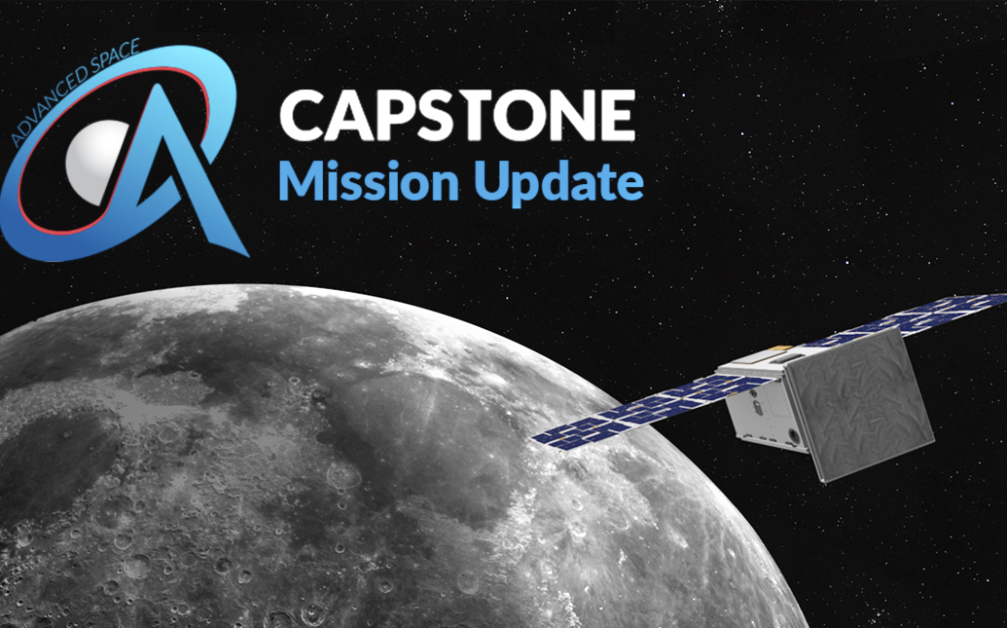
Advanced Space LLC. has completed its fourth trajectory correction maneuver (TCM) for CAPSTONE — TCM-4 was the fourth of six planned maneuvers en route to the Moon, targeting the precise orbit for the CAPSTONE demonstration. This follows the restoration of the spacecraft’s capabilities as it has recovered from the anomaly that occurred after TCM-3. CAPSTONE is just two weeks away as of this writing from arrival at the Moon.

The Cislunar Autonomous Positioning System Technology Operations and Navigation Experiment, CAPSTONE, spacecraft mission will test the lunar Near Rectilinear Halo Orbit (NRHO) that is the intended orbit for Gateway, a lunar space station that will support NASA’s Artemis program, making CAPSTONE the first milestone launch of the Artemis program.

The primary mission is planned for at least six months of operations orbiting the Moon, with enhanced mission opportunities in the following 12 months. CAPSTONE has already contributed insights with shared navigation and operational data to the Artemis I rideshare payloads that will assist them in their mission operations.

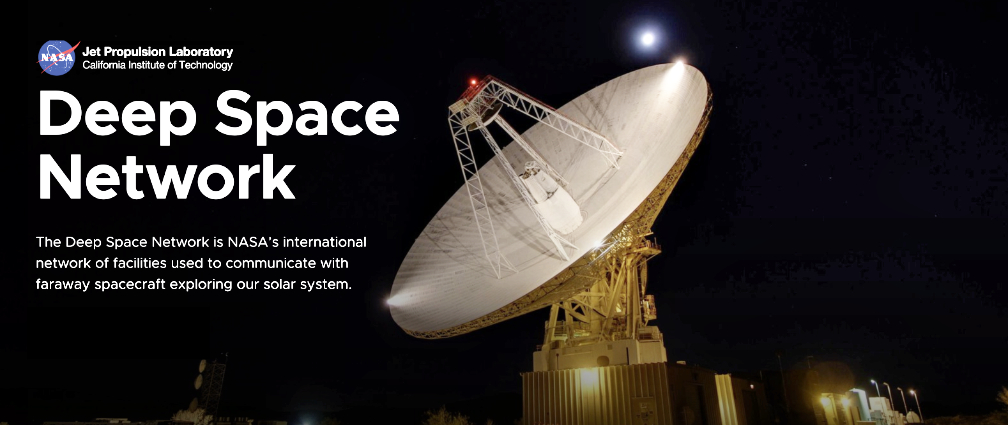
Recently, the Deep Space Network (DSN) performed a test with NASA’s Lunar Reconnaissance Orbiter (LRO) to confirm that LRO could receive and return the signal CAPSTONE will be using to interact with the spacecraft as part of the CAPS software demonstrations once it arrives at the Moon.

CAPSTONE launched on June 28th and is a 12U, 55-pound cubesat built by Terran Orbital. Using a fuel-efficient, Ballistic Lunar Transfer (BLT) method, CAPSTONE’s journey from launch to lunar orbit is a total of four months. A key feature of the BLT is that the mission operations and commissioning have the time during transit to evaluate performance and complete thorough check-out of systems before arriving at the Moon. As expected, the cruise thus far has focused on preparing the spacecraft for its mission at the Moon.

“The CAPSTONE team at Advanced Space, Terran Orbital, and their partners has shown great resilience over the past several weeks. Now, as CAPSTONE approaches lunar orbit, we are looking forward to getting into more of the technology demonstrations that are part of this mission and gathering operational data with the spacecraft in orbit at the Moon,” said Christopher Baker, program executive for the Small Spacecraft Technology program in NASA’s Space Technology Mission Directorate. “CAPSTONE is a great example of the work we can do with our commercial partners, small businesses, and small spacecraft.“

“This TCM confirms the preparation, extensive analysis, teams working together and continued hard work to allow this mission to remain successful, especially following the recent anomaly,” said Alec Forsman, Systems Engineering Lead and Mission Operations Manager for CAPSTONE at Advanced Space. “Every activity provides many lessons learned before our arrival at the Moon. These experiences better prepare the team for lunar operations.”

Some numbers from the TCM include:

• Maneuver telemetry shows that the spacecraft propulsion system fired for the nominal duration of approximately 220 seconds.

• At the time of maneuver execution, the spacecraft was approximately 308,076 miles or 495,800 km from the Earth (~14 times further than the GEO belt and ~69,200 miles or 111,400 km further than the Moon).

• CAPSTONE has been flying solo in space for more than 100 days (125 days since launch, 119 days since separation).

A primary mission objective is to demonstrate autonomous spacecraft-to-spacecraft navigation services that will allow future spacecraft to determine their location in space without relying exclusively on tracking from Earth. This technology was developed by Advanced Space and is called CAPS™, the Cislunar Autonomous Positioning System.


“What is amazing about this team at Advanced Space is how they execute. CAPSTONE is one of the many important projects that we have delivered successfully to our customers,” said Tom Gardner, Director of Engineering and Program Manager for CAPSTONE. “We have the great fortune of working with interplanetary projects to Mars and other planets, on AI in space, XGEO Awareness, and other novel space technologies. Each team member ensures success with them all and the interdependencies become a benefit to our customers and our industry as a whole.”

Filed Under: News

SatixFy finalizes their business combo with Endurance Acquisition Corp

October 31, 2022 by editorial

SatixFy Communications Ltd. (“SatixFy”) has completed its previously-announced business combination with Endurance Acquisition Corp. (“Endurance”) following the approval of the business combination by Endurance’s stockholders on October 25, 2022, and satisfaction of customary closing conditions.

In addition, on October 24, 2022, Endurance and SatixFy entered into a previously disclosed OTC Prepaid Forward Purchase Agreement that calls for purchase and resale of up to 10 million class A shares, subject to the terms and conditions therein. SatixFy has agreed to register the offer and resale of such shares.

Following the business combination, David Ripstein will continue in his role as SatixFy’s CEO, Yoav Leibovitch will serve as Executive Chairman, and Endurance’s CEO Richard Davis will join SatixFy’s Board of Directors.

The combined company’s shares and warrants are expected to begin trading on the NYSE American under the symbols “SATX” and “SATX WSA,” respectively, starting tomorrow, Friday, October 28, 2022.

“This is an exciting time for the satellite communications industry, with the emergence of LEO mega-constellations creating a massive opportunity for SatixFy’s next-generation technologies,” said David Ripstein, CEO of SatixFy. “Our unique chips, antennas and satellite payloads are critical for scaling the performance of the new satellites while reducing their operational costs, making ‘everywhere, all-the-time’ communications practical for diverse types of customers and application. We are confident that this will drive growth for SatixFy, and create significant value and transparency for our existing and new customers.”

“Antarctica Capital and the Endurance team are looking forward to continuing our work with SatixFy as they begin this exciting new chapter,” said Richard Davis, Managing Director of Antarctica Capital, CEO of Endurance and now a member of SatixFy’s Board of Directors. “SatixFy’s unique technology is a key enabler for next generation satellite communications, and its new platform as a publicly-traded company gives it the financial strength needed to close business with the industry’s largest players.”

SatixFy develops end-to-end next-generation satellite communications systems, including satellite payloads, user terminals and modems, based on powerful chipsets that it develops in house. SatixFy’s products include modems that feature Software Defined Radio (SDR) and Fully Electronically Steered Multi Beam Antennas (ESMA) that support the advanced communications standard DVB-S2X. SatixFy’s innovative ASICs improve the overall performance of satellite communications systems, reduce the weight and power requirements of terminals and payloads, and save real estate for gateway equipment. SatixFy’s advanced VSATs and multi-beam fully electronically steered antenna arrays are optimized for a variety of mobile applications and services, using LEO, MEO and GEO satellite communications systems, for aero/in-flight connectivity systems, communications-on-the-move applications, satellite-enabled Internet-of-Things, and consumer user terminals. SatixFy is headquartered in Rehovot, Israel with additional offices in the US, UK and Bulgaria.

Filed Under: Featured, News

Starlink service available for RV’ers

October 28, 2022 by editorial

Reliable comms access for RV’ers on-the-road has been a constant hassle over the past several years… and also quite expensive. Now, however, a possible solution is presenting itself to those who travel to and fro in their mobile, home-like conveyances — Starlink service for RVs.

This product is now available for order and use — a coverage map of where Starlink may be accessed and the available capacity available at a selected location is viewable at this direct link…

According the company, access to high-speed, low-latency internet on an as-needed basis using the Starlink hardware and access plans is now shipping — through the in-motion, Flat High Performance Starlink product — or portable use with the Standard Starlink product.

The Standard Starlink product is not designed for in-motion use and is for portable hardware set-up and use at an RV’ers selected destination (again, where there is active coverage) and can be packed up quickly, within minutes, when the time has come to moving to a new destination, where the unit can, once again, be set-up for use.

Regarding the Flat High Performance Starlink, a company statement offers, “The new Flat High Performance Starlink allows users to enjoy high-speed, low-latency internet while in-motion. With a wide field of view and enhanced GPS capabilities, the Flat High Performance Starlink can connect to more satellites, allowing for consistent connectivity on the go.” Note — this Flat High Performance Product is only available in select markets — see the coverage map.

For RV’ers that move to locations that are remote and where connectivity is unavailable or unreliable, users will be able to access high-speed and low-latency internet access via the Flat High Performance Starlink at areas that are designated “High Capacity.” Notably lower speeds will be experienced during peak usage hours in areas that are marked “Low Capacity.”

The Flat High Performance Starlink hardware is designed for permanent installation on an RV unit and is able to withstand harsh environments, an especially appreciated feature when traveling across the highways and byways of a country where weather can change rather quickly.

Billing is of the ‘Pay as You Go‘ variety. RV’ers can pause and unpause their service at any time, with billing in increments of one month. If an RV’er is not traveling and not using the service, no billing will occur, a refreshing change from other online service charges from other firms.

For further Starlink RV use details, select this direct link…

Filed Under: News

UPDATE 1: SpaceX dispatches 53 Starlinks from Vandenberg SFB

October 28, 2022 by editorial

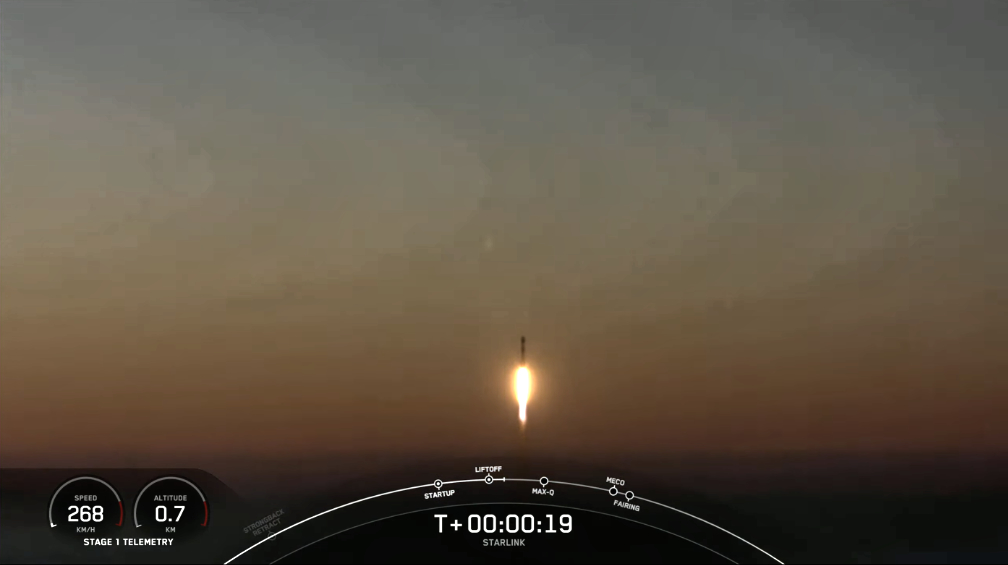
The SpaceX Falcon 9 launch of Starlinks from Vandenberg SFB.

SpaceX successfully lifted off from Vandenberg SFB with 53 Starlink satellites aboard a Falcon 9 launch vehicle en route to their orbital slots. This 49th launch of 2022 added these smallsats to the Starlink constellation and was initiated at approximately 6:14 p.m., PST.

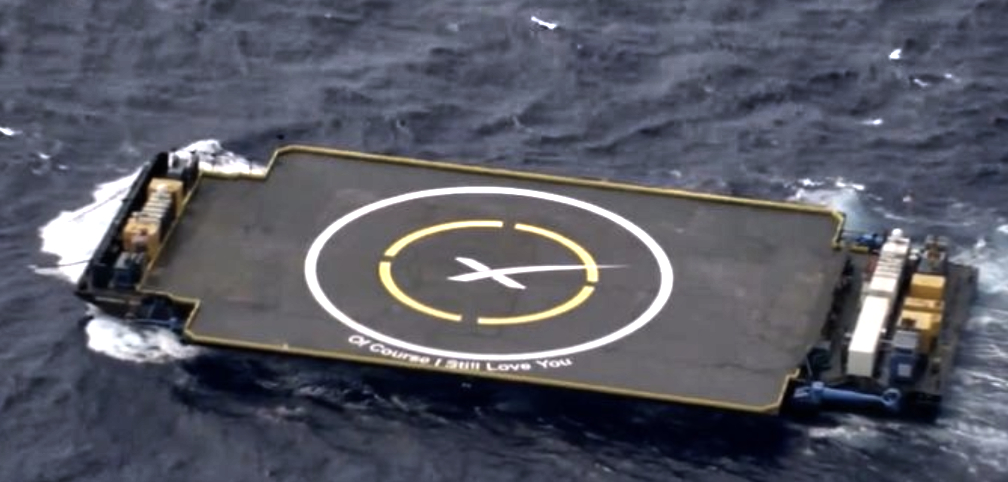
The first stage booster supporting this mission previously launched Sentinel-6 Michael Freilich, DART, and five Starlink missions, and the first stage successfully landed on the Of Course I Still Love You droneship that is stationed in the Pacific Ocean.

First stage droneship landing.

Original posting…

SpaceX is targeting Thursday, October 27, for a Falcon 9 launch of 53 Starlink satellites to LEO from Space Launch Complex 4E (SLC-4E) at Vandenberg Space Force Base in California.

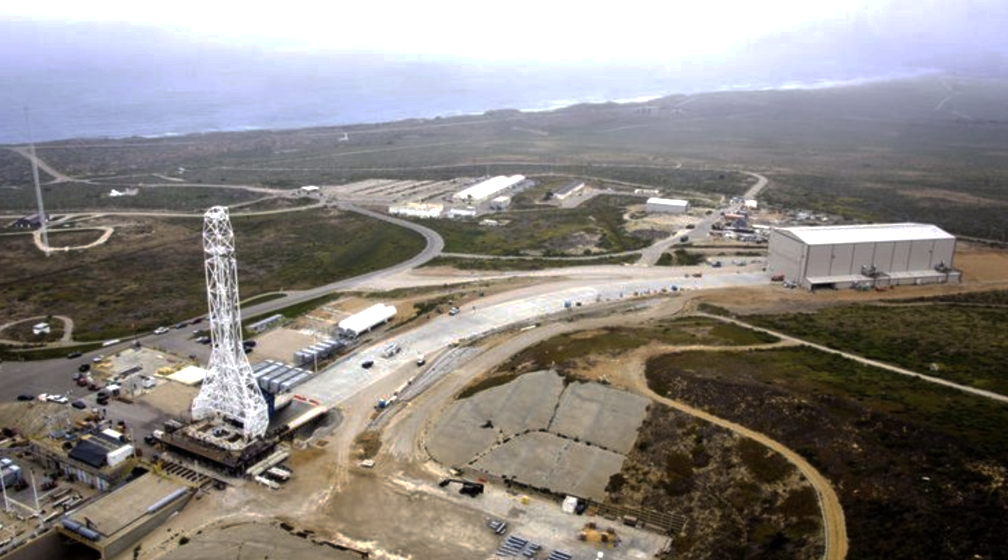
Aerial photo of SLC-4 East at Vandenberg SFB.

The instantaneous launch window is at 6:14 p.m. PT (01:14 UTC on Friday, October 28), and a backup opportunity is available on Friday, October 28 at 5:52 p.m. PT (00:52 UTC on Saturday, October 29).

Following stage separation, the first stage will land on the Of Course I Still Love You droneship, which will be stationed in the Pacific Ocean.

Watch the live launch webcast starting about 5 minutes before liftoff at this direct link…

Filed Under: News

  • « Go to Previous Page
  • Page 1
  • Interim pages omitted …
  • Page 8
  • Page 9
  • Page 10
  • Page 11
  • Page 12
  • Interim pages omitted …
  • Page 58
  • Go to Next Page »

Primary Sidebar

WEEKLY NEWSLETTER

Archives

  • September 2026
  • August 2026
  • July 2026
  • June 2026
  • May 2026
  • April 2026
  • March 2026
  • February 2026
  • January 2026
  • December 2025
  • November 2025
  • October 2025
  • September 2025
  • August 2025
  • July 2025
  • June 2025
  • May 2025
  • April 2025
  • March 2025
  • February 2025
  • January 2025
  • December 2024
  • November 2024
  • October 2024
  • September 2024
  • August 2024
  • July 2024
  • June 2024
  • May 2024
  • April 2024
  • March 2024
  • February 2024
  • January 2024
  • December 2023
  • November 2023
  • October 2023
  • September 2023
  • August 2023
  • July 2023
  • June 2023
  • May 2023
  • April 2023
  • March 2023
  • February 2023
  • January 2023
  • December 2022
  • November 2022
  • October 2022
  • September 2022
  • August 2022
  • July 2022
  • June 2022
  • May 2022
  • April 2022
  • March 2022
  • February 2022
  • January 2022
  • December 2021
  • November 2021
  • October 2021
  • September 2021
  • August 2021
  • July 2021
  • June 2021
  • May 2021
  • April 2021
  • March 2021
  • February 2021
  • January 2021
  • December 2020
  • November 2020
  • October 2020
  • September 2020
  • August 2020
  • July 2020
  • June 2020
  • May 2020
  • April 2020
  • March 2020
  • February 2020
  • January 2020
  • December 2019
  • November 2019
  • October 2019

© 2019–2026 SatNews

Insert/edit link

Enter the destination URL

Or link to existing content

    No search term specified. Showing recent items. Search or use up and down arrow keys to select an item.
      x
      Sign Up Now!

      Enjoy a free weekly newsletter with recent headlines from the global SmallSat industry.

      Invalid email address
      We promise not to spam you. You can unsubscribe at any time.
      Thanks for subscribing! You will now receive weekly SmallSat News updates.
      We love our advertisers.
      And you will too!

      Please disable Ad Blocker to continue... We promise to keep it unobtrusive.
      We promise not to spam you. You can unsubscribe at any time.
      Invalid email address
      Thanks for subscribing!