• Skip to main content
  • Skip to primary sidebar
  • Home
  • News
  • Featured
  • More News ⌄
    • SatNews
    • SatMagazine
    • MilSatMagazine
  • Events ⌄
    • MilSat Symposium
    • SmallSat Symposium
    • Satellite Innovation
  • Contacts
  • SUBSCRIPTION

SmallSat News

You are here: Home / Archives for 2022

Archives for 2022

Astrocast and CEA’s low-cost, bidirectional communication module includes areas not covered by terrestrial networks

October 28, 2022 by editorial

CEA, a technology-research organization, and Astrocast, a leading global satellite Internet of Things network operator, have announced their successful collaboration on a low-cost, bidirectional communication module that enables corporations to communicate with their remote assets in areas not covered by terrestrial networks.

The module’s L-band chip, based on a new architecture developed by CEA-Leti, is a key hardware component that enables Astrocast customers benefit from cost-efficient communication with their assets in the field through its network. It was completed earlier this year in an expedited project between the research institute and Astrocast, and is embedded in Astrocast’s RF module, called Astronode S.
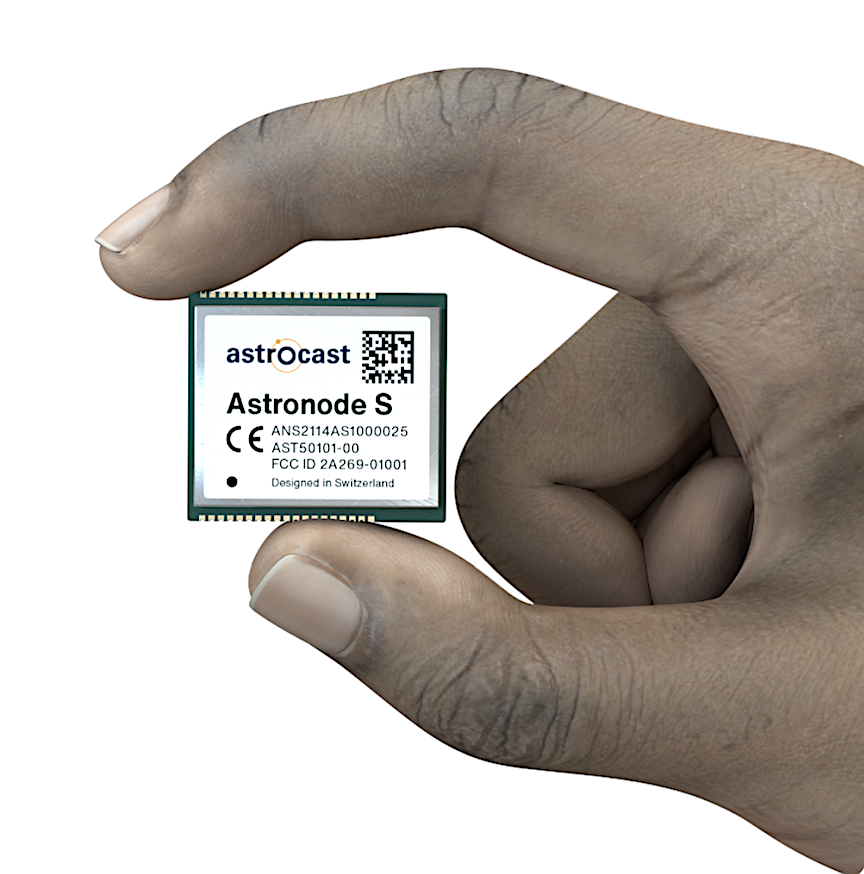
The chip’s architecture is split over the RF core and digital processing and control units. It is fully optimized to support Astrocast’s dedicated bidirectional ground-to-satellite protocol and provides an optimal trade-off between link budget and low-power and low-cost constraints. The chip also embeds all Low Earth Orbit (LEO), satellite-specific features such as satellite detection and robustness to Doppler shift. The low-power, compact, surface-mount Astronode S module for highly integrated, battery-powered IoT systems offers a total cost of ownership up to three times lower than traditional satellite IoT alternatives.

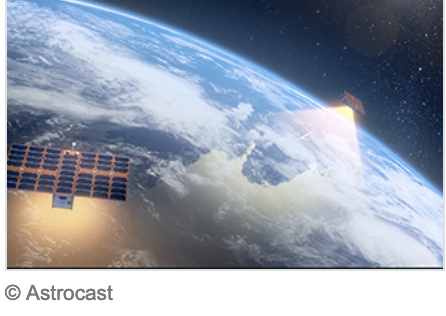
The miniaturized, surface-mount module communicates with terrestrial devices via Astrocast’s constellation of LEO satellites. Using the L-band spectrum, the network primarily targets maritime, oil & gas, agriculture, land transport and environmental applications in which ubiquitous coverage is required.
Laurent Vieira de Mello, COO Astrocast said, “Terrestrial IoT networks cover only about 15 percent of the planet, which leaves vast remote and rural areas where our global satellite network provides coverage that is crucial for our target markets. Leveraging its expertise embedded in a preliminary version of the RF chip, CEA-Leti developed its chip and delivered the final prototype to meet our requirements and time-to-market goals. They managed the chip technology transfer to our industrialization, qualification and production partner.”

The project’s critical time-to-market window was managed through a flexible collaboration model covering both prototype and industrialization phases.

Michel Durr, business development manager at CEA-Leti commented,“An accelerated time-to-market goal drove this project from the outset. We pioneered this RF technology in 2019, and our team customized it for Astrocast up to production in only three years.”

CEA-Leti’s industrial tester used for characterization was key to accelerating from prototype to production, which enabled prototype characterization in parallel on the tester and in the lab, Durr explained.

Michel Durr added,“This process provided a short-loop debug capability with all skills available at CEA-Leti, and enabled us to deliver fully validated inputs to Astrocast’s industrialization partner for an easier industrial test-program development.”


Filed Under: News

Beyond Gravity awarded a ULA contract in support of upcoming Amazon Project Kuiper launches

October 27, 2022 by editorial

In mid-March this year, Beyond Gravity (formerly RUAG Space) was awarded a contract by United Launch Alliance (ULA)to develop and deliver the dispenser system for Amazon’s planned satellite constellation, Project Kuiper.

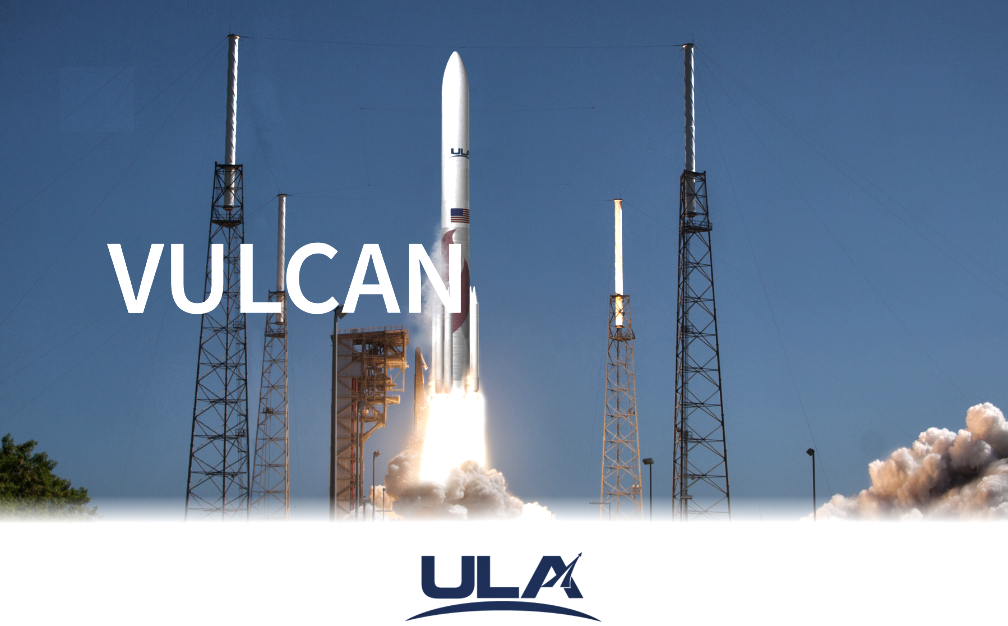
Project Kuiper aims to provide affordable, high-speed broadband connections around the world. Now, ULA has also awarded Beyond Gravity the contract to supply 38 payload fairings for the Vulcan rockets. These will protect the Amazon satellites from launch to deployment. To handle the volume, Beyond Gravity is doubling its production capacity in the U.S. and is working with ULA to build a new manufacturing facility at its site in Decatur, Alabama, by early 2024, creating 200 additional jobs, The 38 payload fairings for ULA will be manufactured at Beyond Gravity’s site in Decatur, Alabama. The new building measures more than 250,000 square feet of space, including 30,000 square feet of warehouse along with 20,000 square feet for offices and will initiate operations in early 2024.

Fast, affordable internet worldwide — this is the promise of Amazon’s planned Kuiper satellite constellation, which aims to put 3,236 satellites into LEO. Back in March, Beyond Gravity secured a major contract directly from Amazon to develop and manufacture the customized, scalable dispenser systems. Beyond Gravity was also awarded the contract for the delivery of 38 shipsets to U.S. rocket builder United Launch Alliance (ULA) for its Vulcan rockets that will take Amazon’s Kuiper constellation into space. A shipset is comprise of three composite structures, which include a payload fairing (the top of the launch vehicle protecting the satellites on their way into orbit), the heat shield that protects the launch vehicle from the heat generated by the engine during launch, plus an interstage adapter that interfaces to the launcher’s upper stage.

Since 2015, ULA and Beyond Gravity have had a strategic partnership for the production of composite structures for the Atlas V rocket as well as the Vulcan Centaur launch vehicle.

André Wall, CEO of Beyond Gravity, said, “I am very proud that the Vulcan launch vehicles that will carry the Kuiper constellation into space rely on our leading-edge and proven technology in the field of composite structures. This contract with ULA marks the next chapter in our long-standing partnership and further strengthens and expands our presence in the U.S.”

Paul Horstink, who heads the Launchers Division as Executive Vice President, said, “Beyond Gravity has fantastic people with a high level of commitment and a clear focus on the needs of our customers. With this new facility, Beyond Gravity will move to the next level: from producing a total of 10 payload fairings in Decatur per year to a target of 25. Also, Beyond Gravity’s workforce in the U.S. will grow from just over 200 today to an expected 400 employees.”

“We have a long history of a strong partnership with Beyond Gravity and look forward to continuing the great work as we increase our launch rate for our Vulcan launch vehicle,” said Tory Bruno, CEO of ULA.

Filed Under: Featured, News

Kongsberg NanoAvionics’ growth plans as prime supplier for small satellite constellations

October 26, 2022 by editorial

Kongsberg NanoAvionics (“NanoAvionics”) has announced a multi-million investment plan to support and accelerate its goal of becoming the prime supplier for small satellite constellations, globally. As a result of the recent acquisition by Kongsberg and part of its growth plan, the company seeks to significantly grow its production capacity over the next two years as well as ramping up its research and development (R&D) program. Having finalized its acquisition by Kongsberg in September, NanoAvionics also announced its name change to Kongsberg NanoAvionics but will continue trading as NanoAvionics.

The increase of its R&D activities will include a focus on defense-grade reliability of satellite buses and further cater to NanoAvionics’ modular architecture for sophisticated remote sensing applications. To make sure the data of its customers continues to be fully protected, NanoAvionics will continue to enhance the cybersecurity of its satellite buses. 

To grow its production capacity, the company will expand its Lithuanian facilities in Vilnius and Kaunas, focusing on serial manufacturing of satellite buses, and hiring more people in the coming year. 

In addition, customers, in particular those looking to build a constellation, partners, prospects and other stakeholders will benefit from an expanded supply chain through Kongsberg and its industrial technology expertise. Combined with NanoAvionics capabilities in the smallsat industry, the investment plan and enhanced end-to-end infrastructure will allow for new and improved products and enhance the worldwide availability of NanoAvionics satellites respectively.

Kongsberg, an international high-technology group headquartered in Norway, acquired a 77 percent controlling interest in NanoAvionics at an enterprise value of 65 million euros on September 8, 2022. The management and leadership structure of the Lithuanian smallsat mission integrator and bus manufacturer remains unchanged.

“The investment by Kongsberg and their expertise together with our research, manufacturing and mission expertise, enables us to seriously scale our growth and expansion plans, and even develop new products,” said Vytenis J. Buzas, CEO of Kongsberg NanoAvionics. “We are now well on course to become the prime supplier for small satellite constellations, globally. To reach our goals, it is vital that we maintain our customer-centric agility, fast-pace innovation, and the cost-efficiency of our satellite systems.” 

Eirik Lie, president for Kongsberg Defence & Aerospace and chairman of NanoAvionics said, “NanoAvionics has made impressive strides to already become one of the leading small satellite mission integrators in this industry and being well trusted by its customers and partners. As part of the Kongsberg family, they are now even better positioned and able to make new and further high-quality and cost-efficient propositions across the entire value chain for smallsat constellations.”

Filed Under: News

Kongsberg NanoAvionics’ growth plans as prime supplier for small satellite constellations

October 26, 2022 by editorial

Kongsberg NanoAvionics (“NanoAvionics”) has announced a multi-million investment plan to support and accelerate its goal of becoming the prime supplier for small satellite constellations, globally. As a result of the recent acquisition by Kongsberg and part of its growth plan, the company seeks to significantly grow its production capacity over the next two years as well as ramping up its research and development (R&D) program. Having finalized its acquisition by Kongsberg in September, NanoAvionics also announced its name change to Kongsberg NanoAvionics but will continue trading as NanoAvionics.

The increase of its R&D activities will include a focus on defense-grade reliability of satellite buses and further cater to NanoAvionics’ modular architecture for sophisticated remote sensing applications. To make sure the data of its customers continues to be fully protected, NanoAvionics will continue to enhance the cybersecurity of its satellite buses. 

To grow its production capacity, the company will expand its Lithuanian facilities in Vilnius and Kaunas, focusing on serial manufacturing of satellite buses, and hiring more people in the coming year. 

In addition, customers, in particular those looking to build a constellation, partners, prospects and other stakeholders will benefit from an expanded supply chain through Kongsberg and its industrial technology expertise. Combined with NanoAvionics capabilities in the smallsat industry, the investment plan and enhanced end-to-end infrastructure will allow for new and improved products and enhance the worldwide availability of NanoAvionics satellites respectively.

“The investment by Kongsberg and their expertise together with our research, manufacturing and mission expertise, enables us to seriously scale our growth and expansion plans, and even develop new products,” said Vytenis J. Buzas, CEO of Kongsberg NanoAvionics. “We are now well on course to become the prime supplier for small satellite constellations, globally. To reach our goals, it is vital that we maintain our customer-centric agility, fast-pace innovation, and the cost-efficiency of our satellite systems.” 

Eirik Lie, president for Kongsberg Defence & Aerospace and chairman of NanoAvionics said, “NanoAvionics has made impressive strides to already become one of the leading small satellite mission integrators in this industry and being well trusted by its customers and partners. As part of the Kongsberg family, they are now even better positioned and able to make new and further high-quality and cost-efficient propositions across the entire value chain for smallsat constellations.”

Kongsberg, an international high-technology group headquartered in Norway, acquired a 77 percent controlling interest in NanoAvionics at an enterprise value of EUR 65 million on September 8, 2022. The management and leadership structure of the Lithuanian smallsat mission integrator and bus manufacturer remains unchanged.

Filed Under: News

Phase Four unveils iodine-based propellant for LEO constellations

October 25, 2022 by editorial

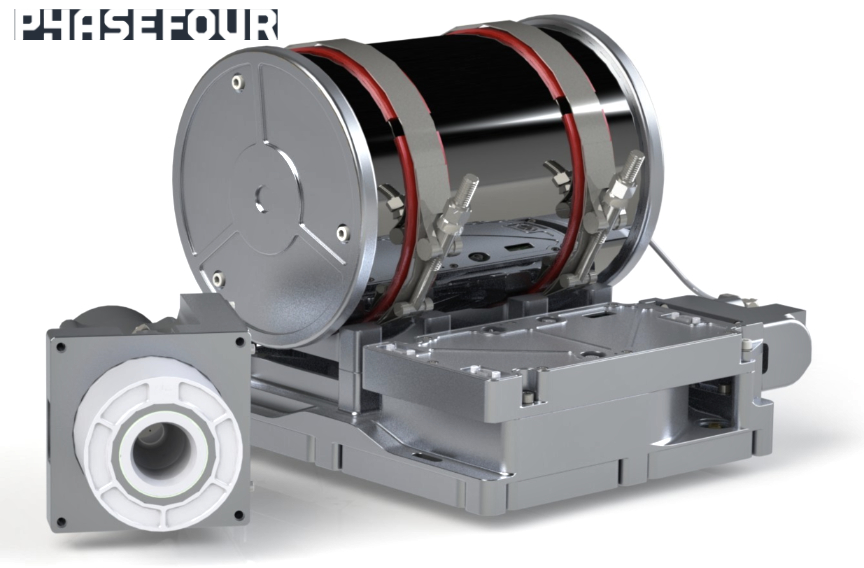
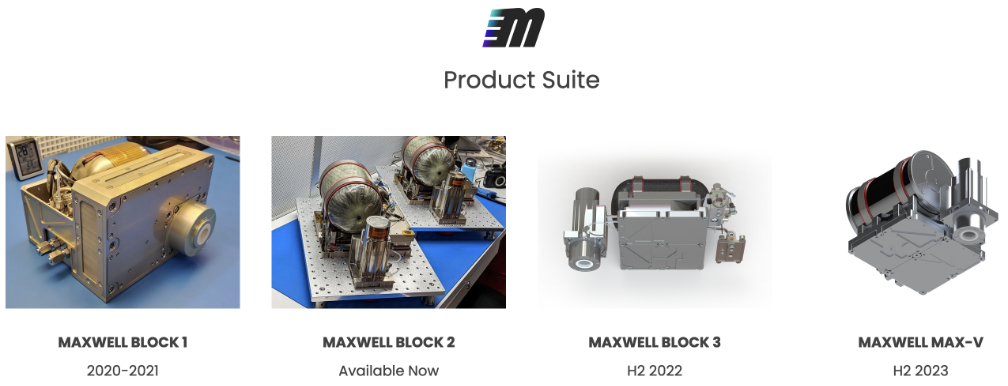
A view of Max-V highlighting the engine’s propellant storage and feed systems. Image is courtesy of the company.

Phase Four, the creator of the radio-frequency thruster for satellite propulsion, will expand its Maxwell turn-key, plasma propulsion line and offer satellite manufacturers a high performance engine using an inexpensive, domestically sourced iodine-based propellant — Max-V leverages the Maxwell Block 2 engine’s architecture and builds on the radio-frequency thruster’s propellant agnostic capabilities.

Max-V leverages Phase Four’s new Maxwell engine architecture. Image is courtesy of the company.

Phase Four’s Maxwell Block 1 engine gained flight heritage in early 2021.

Maxwell Block 2 engine deliveries began earlier this year.

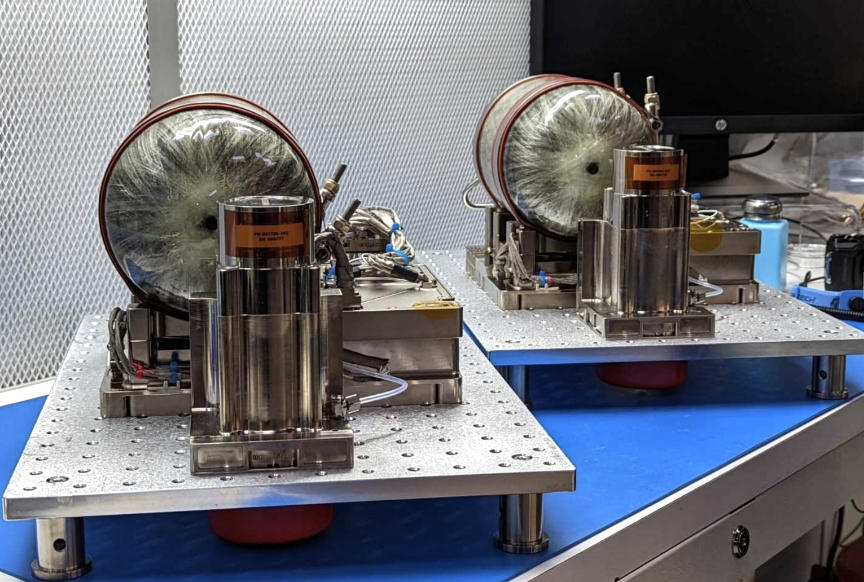
Two Maxwell Block 2 flight units prior to customer delivery. Image is courtesy of the company.

With double digit commercial flight units delivered, the company is now focusing on its Max-V development effort. Maxwell’s new chassis-style design enables rapid on-ramping of improvements in the core areas of the thruster, power electronics and propellant subsystems. This architecture is streamlining the Max-V development process as is the company’s significant experience with iodine-based propellants through its recent U.S. Air Force AFWERX award.

Max-V is anticipated to be available for order in the second half of 2023. The system is designed to operate from 200 Watts to 1.5 kiloWatts and achieve 50 mN thrust, over 1,200 s Isp and deliver more than 100 kNs total impulse. Max-V’s iodine-based propellant will cost under $400 per kilogram and be incorporated in the purchase price. Max-V’s form factor is similar to Phase Four’s current Maxwell Block 2 engine. The system will ship fully fueled, ready for installation and will require no ground fueling operations prior to launch.

Phase Four’s RF Thruster firing using Max-V’s new iodine-based propellant. Image is courtesy of the company.

“Maxwell’s new modular chassis architecture enables us to introduce improved capabilities within the same form factor,” said Phase Four CTO, Umair Siddiqui. “Using an iodine-based propellant instead of a noble gas propellant stored at very high pressure provides a number of benefits to our customers. Iodine stores as a solid without high pressure valves or vessels, which means we can deliver fully fueled engines directly to our customers.” Siddiqui continued, “Iodine also stores about three times more densely than xenon, which means our propulsion systems will offer much higher total impulse in the same unit volume as legacy electric propulsion systems.”

“We’ve always said that Phase Four delivers game changing propulsion systems, and Max-V will do just that,” said Phase Four CEO, Beau Jarvis. “We are building a product that will dramatically lower costs and extend operational lifetimes of small satellites in Low Earth Orbit and provide significantly higher total impulse for missions beyond LEO.”

Phase Four is a disruptive provider of next generation electric propulsion (EP) solutions for small satellites. The company was founded in 2015 to address the demands of the rapid proliferation of satellite constellations and to accelerate the advancement of its radio-frequency thruster (RFT). The Phase Four RFT represents a revolutionary new architecture that realizes lower cost, mass-manufacturability, miniaturized power electronics, and propellant agnosticism over incumbent technologies, without compromising performance. In 2021 Phase Four’s Maxwell turn-key propulsion system achieved flight heritage and is now being regularly utilized by small satellite operators. Learn more at www.phasefour.io.

Filed Under: News

Beyond Gravity to supply power electronics for Loft Orbital’s satellites

October 25, 2022 by editorial

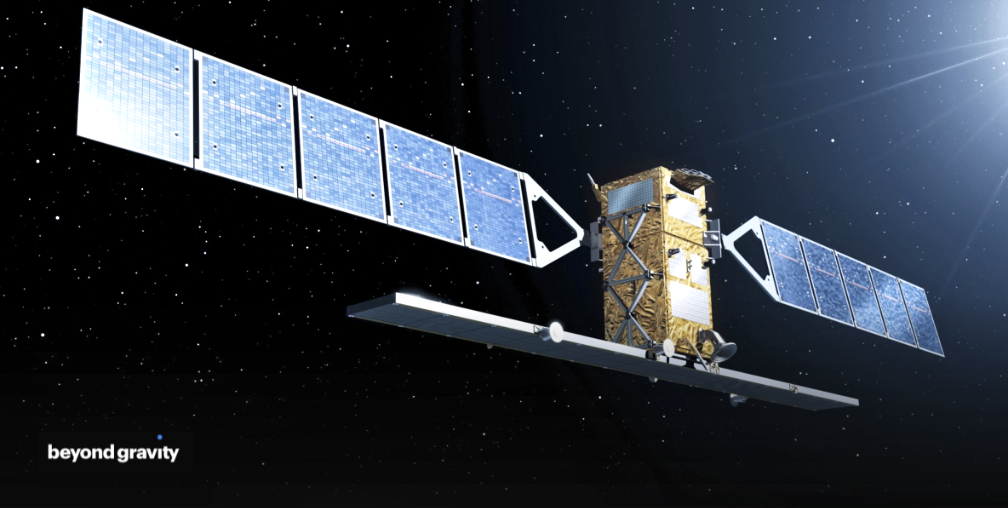
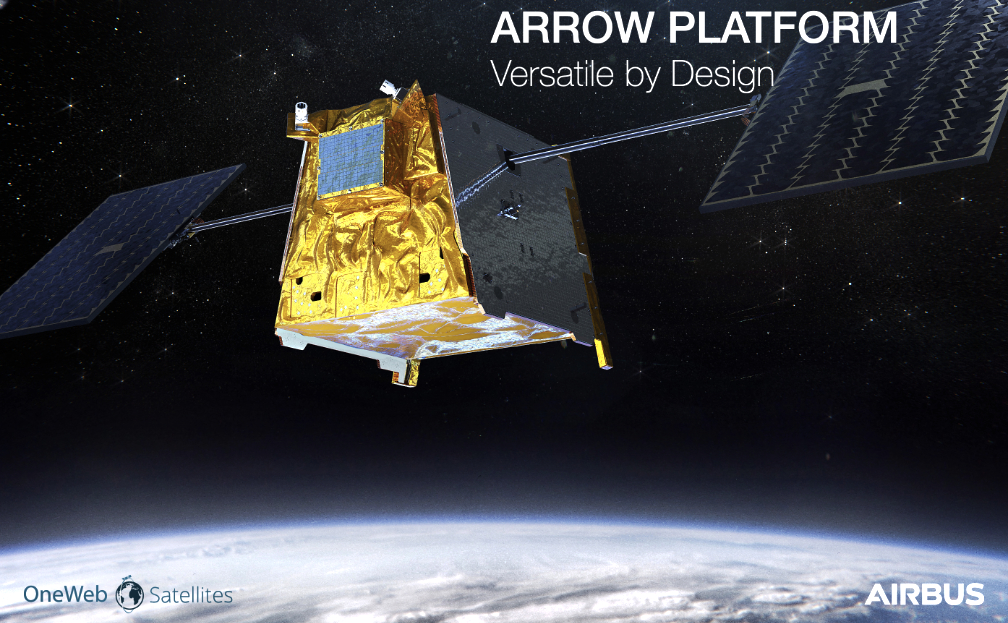
Beyond Gravity has been selected to supply equipment for Loft Orbital’s Longbow spacecraft based on the Airbus Arrow platform — the physical equipment is referred to as the Power Control & Distribution Unit (PCDU).

The PCDU provides mission critical power supply capabilities and on-orbit configurability for “The Hub” that carries all payloads of a Loft Orbital’s satellite and provides an independent electrical, computing and communication environment. Beyond Gravity will deliver PCDU flight units for more than 15 Loft Orbital satellites.

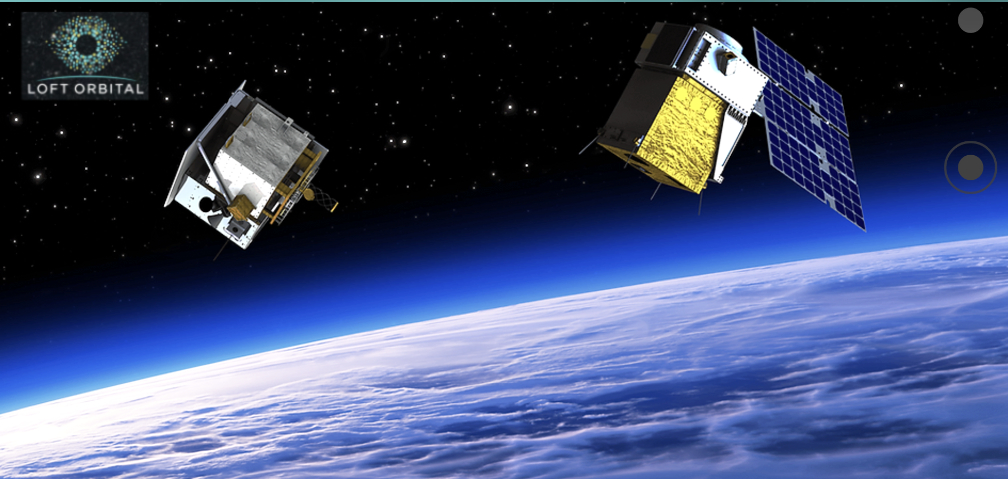
Artistic rendition of the Longbow smallsat, courtesy of Airbus.

“Our partnership with Loft Orbital and this order is underlining Beyond Gravity’s strong standing in the global commercial New Space market. The PCDU enables Loft Orbital to be fully product-based, leading to standardization, shorter lead times and high cost-efficiency,” said Anders Linder, head of the Satellites Division at Beyond Gravity. “I am grateful to our partners at Loft Orbital for selecting Beyond Gravity and excited to be working with them to support their future missions.”

“When looking for partners to fulfill our technical, quality and price-performance needs, Beyond Gravity allowed us to put in a high degree of customization, meeting our stringent system-level requirements, whilst still leveraging their existing experience and translating that to a balanced New Space solution. Of equal importance is the right way to communicate and collaborate, which has been another positive experience for both teams,” said Pieter van Duijn, Loft Orbital’s CTO.

“Our collaboration with Beyond Gravity demonstrates Loft Orbital’s strategy to rely on the strong and competitive European ecosystem of space systems suppliers,” said Emmanuelle Meric, General Manager France of Loft Orbital. “We look forward to strengthening our partnerships with leading space companies such as Beyond Gravity.”

Beyond Gravity Beyond Gravity, headquartered in Zurich, Switzerland, combines agility, speed, and innovation with decades of experience and proven quality. Approximately 1700 employees at 12 locations in six countries (Switzerland, Sweden, Austria, Germany, USA and Finland) design and manufacture products for satellites and launch vehicles with the goal of advancing humanity and enabling exploration of the world and beyond. Beyond Gravity is the preferred supplier of structures for all types of launch vehicles and a leader in selected satellite products and constellations in the New Space sector. In 2021, the company generated revenues of approximately CHF 319 million.

Loft Orbital Loft Orbital is the pioneer in providing space infrastructure as a service. Loft mission is to be the fastest, simplest, and most reliable path to orbit for any payload. The company flies customer payloads onboard quarterly scheduled satellite missions, and handles the entire mission as a service. Loft customers can thus focus on what matters most to them: their payload and the data it collects. To make it possible, Loft Orbital has developed the software and hardware products that make Loft satellite missions truly plug and play, eliminating years of complex design and engineering. With qualified, commodity satellite buses procured in advance and available off-the-shelf, Loft delivers payloads to orbit in months not years. Loft Orbital will add a third satellite to orbit in November and has contracted more than 20 satellites to be flown by 2025.

Filed Under: News

Beyond Gravity launches key products for OneWeb’s first launch from India

October 25, 2022 by editorial

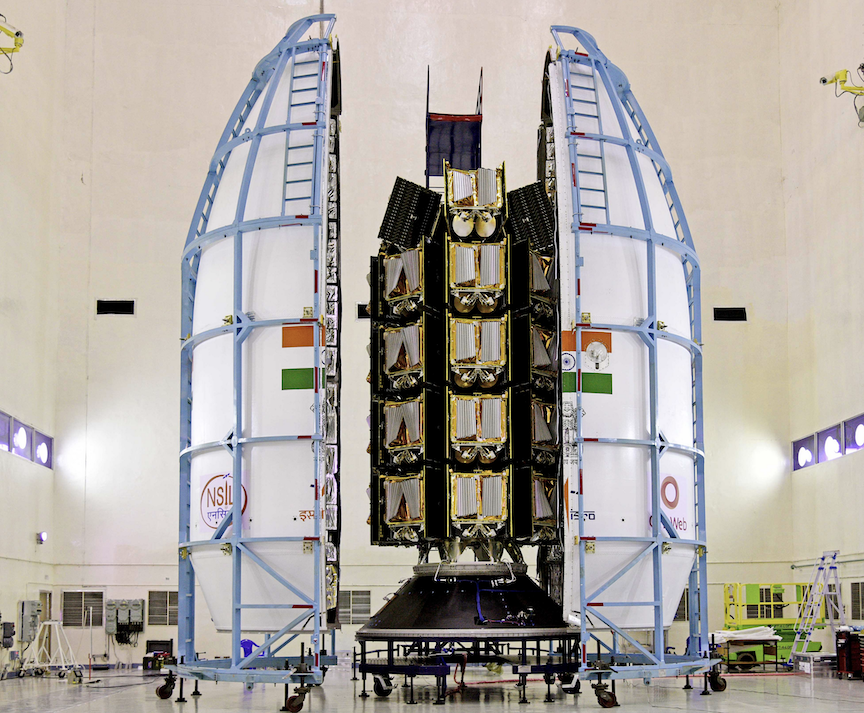
The dispenser from Beyond Gravity deposited all OneWeb satellites. Copyright: ISRO, OneWeb

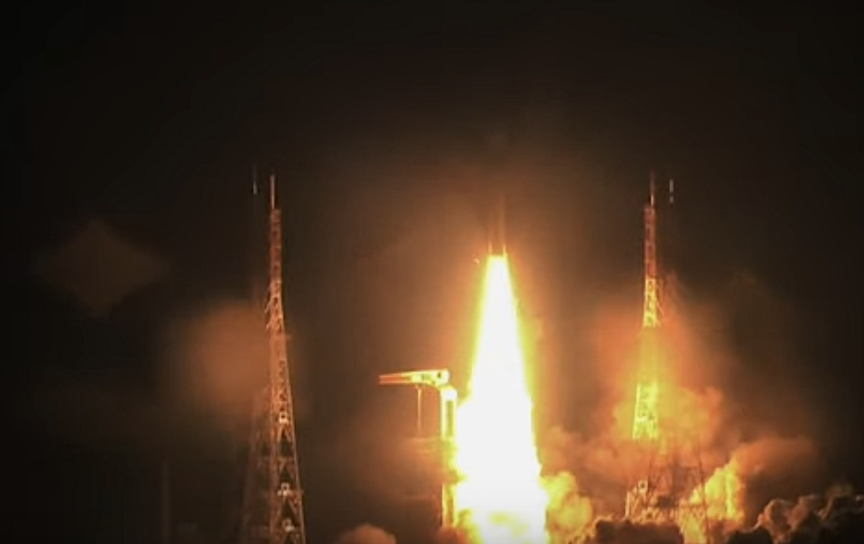
OneWeb launched 36 additional broadband internet satellites aboard a GSLV Mark 3 launch vehicle from the Satish Dhawan Space Centre in India. The rocket is dubbed as one of the heaviest for its ability to carry satellites up to 8,000 kgs. OneWeb is building a communications network with a constellation of low-Earth-orbit satellites that will deliver internet access around the world.

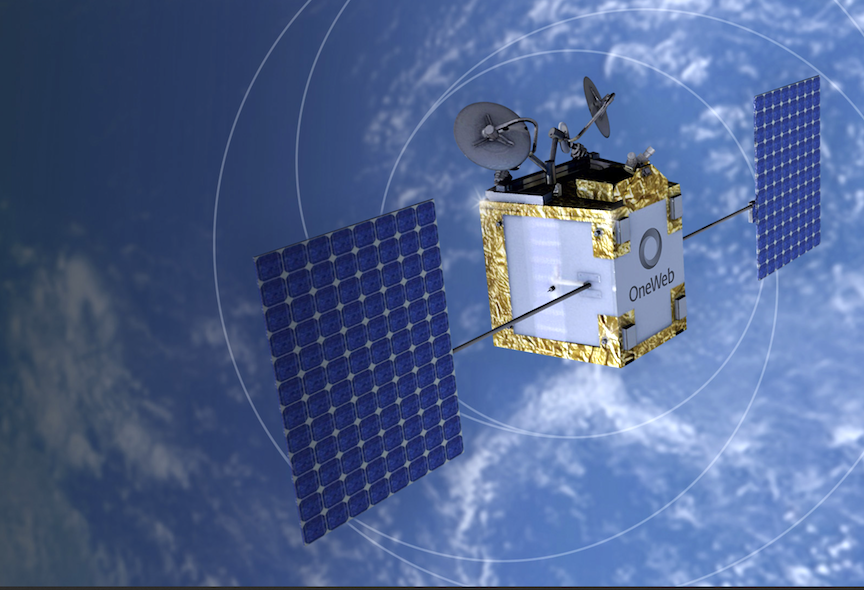
The OneWeb satellites are protected from heat and cold in orbit by thermal insulation from Beyond Gravity. Copyright: Airbus OneWeb Satellites.

This launch brought OneWeb’s total in-orbit constellation to 462 satellites, which represents more than 70% of its planned 648 low Earth orbit satellite fleet that will deliver high-speed, low-latency connectivity worldwide. OneWeb will connect towns, villages, and local and regional municipalities in the hardest-to-reach areas, thus playing a critical role in bridging the digital divide.

As a key supplier to OneWeb’s manufacturing factory, Airbus OneWeb Satellites, Beyond Gravity built the satellite dispenser, which placed all OneWeb satellites into orbit. The dispenser functions as an interface between the Indian rocket and 36 OneWeb satellites. “Our dispenser is super-light and includes state-of-the-art technology to safely place the satellites in orbit,” says Paul Horstink, Executive Vice President Division Launchers at Beyond Gravity. “Thanks to Beyond Gravity’s flexible dispenser design only a minor adaptation has been required to make this compatible to fly on the Indian rocket.” OneWeb used the Indian rocket for the first time, previously, OneWeb used Arianespace and Sojuz rockets.

ISRO’s launch

Airbus OneWeb Satellites — a joint venture between OneWeb and Airbus — is OneWeb’s industrial partner and leads the design and manufacturing of OneWeb’s fleet of satellites. The Beyond Gravity dispensers for OneWeb are built in Linköping, Sweden. Each dispenser has a 1.7 meter central cylinder structure and a height of 5.5 meters.

Beyond Gravity also manufactured the OneWeb satellite back-bone (structure) in Titusville, Florida. The structures are manufactured using the Automated Potting Process, a production method that uses a pick and place machine to rapidly position special inserts filled with adhesive into the satellite structure’s sandwich panels.

In Austria, Beyond Gravity produced the multi-layer thermal insulation which protects the OneWeb satellites against the cold and heat in space from approx. minus 150°C to plus 150°C (-238 degrees F to 302 degrees F). The insulation consists of several layers of metal-evaporated polyimide film. Beyond Gravity in Austria also built handle equipment and transport containers. “Our high-tech, custom satellite containers are used to transport the assembled OneWeb satellites from Florida to the launch sites,” explains Anders Linder, Executive Vice President Division Satellites at Beyond Gravity. The containers are equipped with a specifically designed damping system and climate-control.

Filed Under: News

SIIS signs SkyFi as a partner enabling broader access to KOMPSAT satellite Imagery

October 24, 2022 by editorial

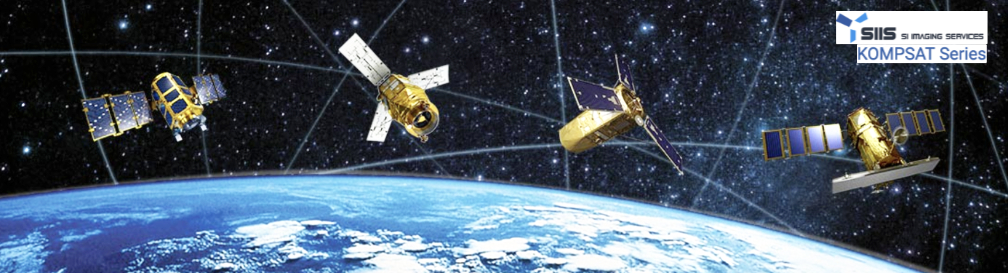
Recently, SI Imaging Services (SIIS) expanded their SAR imagery smallsats offerings via a new partnership agreement with SkyFi, giving that company access to SIIS’s VHR Korean Multi-Purpose Satellite (KOMPSAT) images.

SIIS is the sales representative of KOMPSAT series 2, 3, 3A, and 5. It contributes to the remote sensing and Earth Observation (EO) industries by supplying VHR optical and SAR satellite imagery through 160 partners worldwide.

KOMPSAT was developed under the Korean National Space Program by Korea Aerospace Research Institute (KARI). Customers from industries and governments use KOMPSAT imagery for their missions and research, such as defense, disaster monitoring, mapping, urban planning, agriculture, and so on.

The current marketplace for satellite imagery is convoluted and expensive. Typically, purchasers unable to spend six figures for images are shut out of the market. Those who can muster the minimum budget must negotiate with sales representatives and often find it difficult to nail down a firm price. SkyFi provides a special platform which empowers individuals and organizations to browse images, self-select the ones they want, pay a reasonable, transparent fee, and receive their photos in a few days.

Incorporating SIIS’s KOMPSAT data into its in-network constellation gives SkyFi additional, LEO image sources as well as access to their partner’s archive of existing photos. More images in a larger library translates to more choices and more precision for end-users. The ability to market the existing imagery is instrumental in their mission to democratize EO and simplify the way businesses and individuals purchase satellite photos by making them available through a user-friendly marketplace accessible by desktop computer and mobile device.

“SkyFi is extremely excited to partner with SIIS, a leader in the industry with earth observation solutions,” said SkyFi Chief Executive Officer, Luke Fischer. “With SIIS’s very high-resolution satellite imagery, SkyFi will be able to provide consumers of all types with a superior product. SIIS and SkyFi share a vision of establishing transparency to the earth observation industry and are excited to bring this vision to consumers.”

“Through the partnership with SkyFi, SIIS expects more visibility and accessibility of our very high-resolution KOMPSAT imagery for a broader customer base across various sectors,” said Moongyu Kim, CEO of SIIS. “SkyFi’s platform gives innovative and intuitive user experiences to customers in acquiring satellite images from various providers without forcing them to wade through any (space) jargon.”

Filed Under: Featured, News

Gilmour Space is offering a tech demo satellite mission from Australia in 2024

October 24, 2022 by editorial

Australian rocket and satellite builder, Gilmour Space Technologies, is offering a new rideshare mission into LEO — this time, on one of the company’s G-class satellite buses (or G-Sat) scheduled to be launched in late 2024.

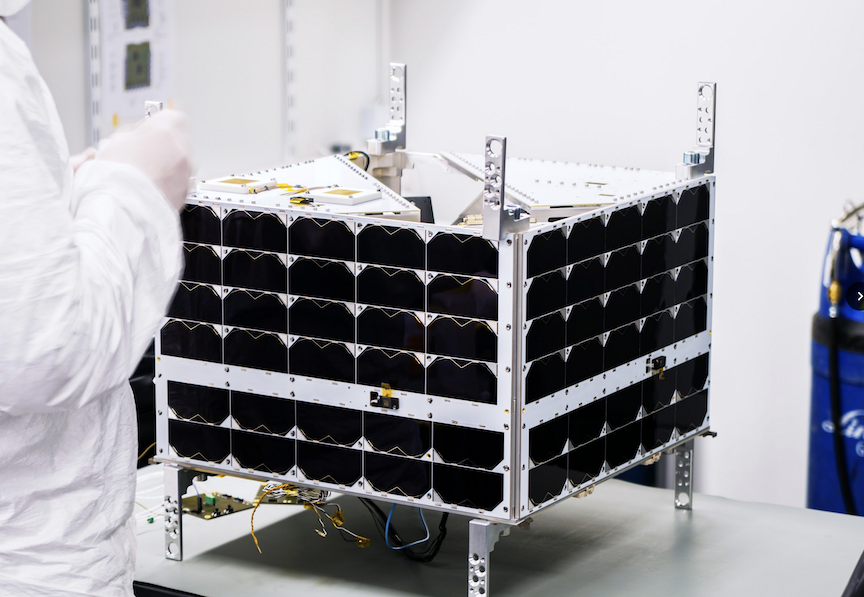
The G-Sat is a modular 100 kg. satellite bus or platform being developed by Gilmour Space in collaboration with Griffith University that can host multiple payloads, such as scientific instruments, thrusters, sensors, processors and other new space technologies.

Last month, Gilmour Space announced its first ‘Caravan’ to space, a dedicated rideshare mission on an Eris rocket that will launch from Australia in late 2024. “With this new mission, we can now say that we’ll have a ‘Kangaroo’ on board.”

“We’re calling this our Kangaroo-1 mission, and it will be capable of carrying 125U (or 125 units) of payload volume into a mid-inclination orbit. That is a lot of new space technologies that can be launched and tested in a single mission,” said Shaun Kenyon, Program Manager for Satellites at Gilmour Space — 125U is roughly equivalent to the size, weight and volume of a large microwave oven.

“Our Kangaroo-1 mission is aimed at customers with individual or specific payloads (say, an IoT receiver or hyperspectral camera) who want to ‘leap ahead’ in rapidly proving their tech without the risks and costs of a full satellite mission,” added Mr. Kenyon. “It will allow multiple organisations to gain flight experience, validate a business model, and develop their technology faster at a competitive price. Sharing a common G-Sat architecture also means that customers will be less restricted by a CubeSat volume (typically 1U to 12U), have access to more power, and that mission-level efforts and costs can be shared over many payloads.“”

Filed Under: News

Sidus Space’s agreement of four launches with Vaya Space also enables LizzieSat™ satellites to have additional launch capacity

October 21, 2022 by editorial

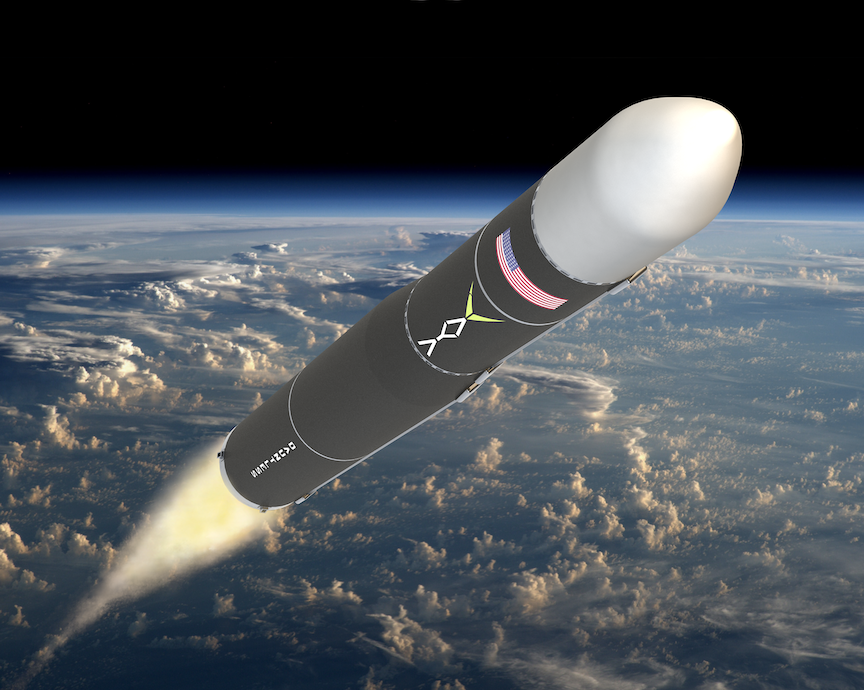
Sidus Space, Inc. has signed a launch agreement with Vaya Space for four launches over multiple years. Sidus Space is a Space-as-a-Service company, focused on mission critical hardware manufacturing combined with commercial satellite design, manufacture, launch, and data collection. Vaya Space is an emerging leader in sustainable space access and this agreement expands Sidus Space’s ability to deliver satellite services.

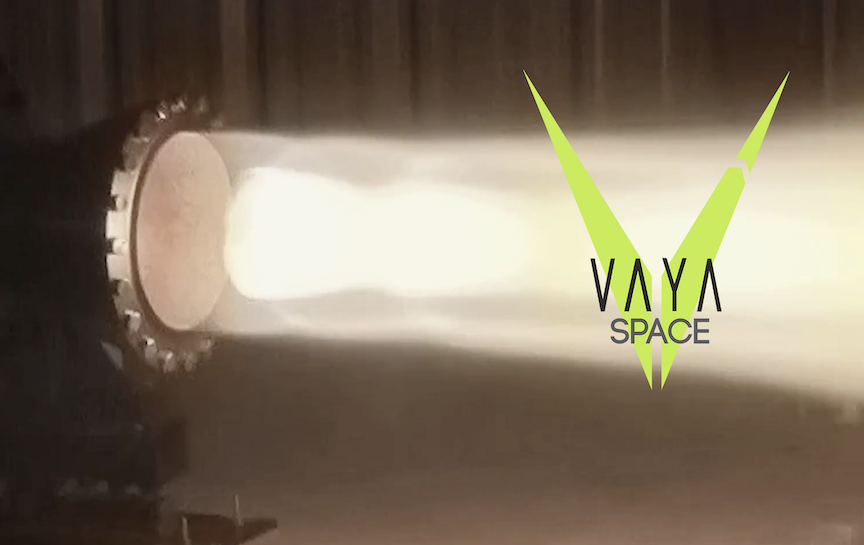
Our engines are easily scalable and can be rapidly produced, typically within only 1-2 days, enabling us to target a recurring build, integrate, and launch-ready cycle in less than 30 days

Sidus Space recently announced a launch agreement with SpaceX for a total of 5 expected launches in the next 13-15 months. In addition, as an ISS implementation partner, Sidus also has the ability to launch from the ISS which creates multiple paths to orbit for LizzieSat™ with the signing of this launch agreement with Vaya Space.
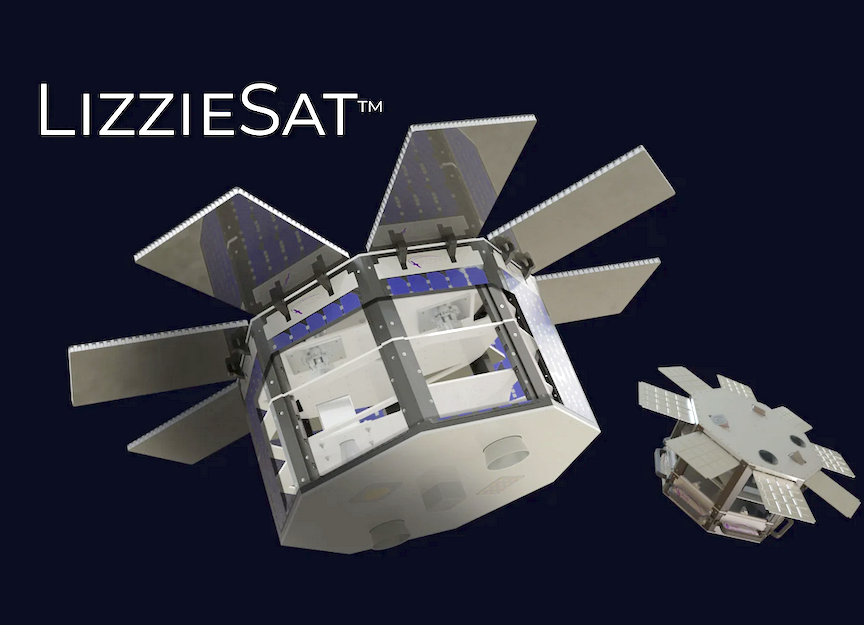
LizzieSat™ is Sidus’ 100kg, partially 3D printed, small satellite for its planned multi-mission LEO satellite constellation. Sidus Space has an approved International Telecommunication Union (ITU) Spectrum license for multiple altitudes and inclinations. LizzieSat™ satellites will fly custom payloads tailored to maximize customer return on investment.

Our engines are easily scalable and can be rapidly produced, typically within only 1-2 days, enabling us to target a recurring build, integrate, and launch-ready cycle in less than 30 days
 

“As we progress toward launching LizzieSat™, we are pleased to expand our launch options that will enable us to meet the robust demand for our satellite services, one of the many Space-as-a-Service solutions we deliver to the growing space ecosystem,” said Carol Craig, Sidus Founder and CEO. “As part of our mission of ‘Bringing Space Down to Earth™’, securing multiple paths to orbit ensures the flexibility to meet our customer’s mission schedules.”

“We are excited to work with Sidus Space to provide sustainable space access and reliable delivery of their innovative satellite constellation,” said Brent Willis, Chief Executive Officer of Vaya Space.

Filed Under: News

  • « Go to Previous Page
  • Page 1
  • Interim pages omitted …
  • Page 9
  • Page 10
  • Page 11
  • Page 12
  • Page 13
  • Interim pages omitted …
  • Page 58
  • Go to Next Page »

Primary Sidebar

WEEKLY NEWSLETTER

Archives

  • August 2026
  • July 2026
  • June 2026
  • May 2026
  • April 2026
  • March 2026
  • February 2026
  • January 2026
  • December 2025
  • November 2025
  • October 2025
  • September 2025
  • August 2025
  • July 2025
  • June 2025
  • May 2025
  • April 2025
  • March 2025
  • February 2025
  • January 2025
  • December 2024
  • November 2024
  • October 2024
  • September 2024
  • August 2024
  • July 2024
  • June 2024
  • May 2024
  • April 2024
  • March 2024
  • February 2024
  • January 2024
  • December 2023
  • November 2023
  • October 2023
  • September 2023
  • August 2023
  • July 2023
  • June 2023
  • May 2023
  • April 2023
  • March 2023
  • February 2023
  • January 2023
  • December 2022
  • November 2022
  • October 2022
  • September 2022
  • August 2022
  • July 2022
  • June 2022
  • May 2022
  • April 2022
  • March 2022
  • February 2022
  • January 2022
  • December 2021
  • November 2021
  • October 2021
  • September 2021
  • August 2021
  • July 2021
  • June 2021
  • May 2021
  • April 2021
  • March 2021
  • February 2021
  • January 2021
  • December 2020
  • November 2020
  • October 2020
  • September 2020
  • August 2020
  • July 2020
  • June 2020
  • May 2020
  • April 2020
  • March 2020
  • February 2020
  • January 2020
  • December 2019
  • November 2019
  • October 2019

© 2019–2026 SatNews

Insert/edit link

Enter the destination URL

Or link to existing content

    No search term specified. Showing recent items. Search or use up and down arrow keys to select an item.
      x
      Sign Up Now!

      Enjoy a free weekly newsletter with recent headlines from the global SmallSat industry.

      Invalid email address
      We promise not to spam you. You can unsubscribe at any time.
      Thanks for subscribing! You will now receive weekly SmallSat News updates.
      We love our advertisers.
      And you will too!

      Please disable Ad Blocker to continue... We promise to keep it unobtrusive.
      We promise not to spam you. You can unsubscribe at any time.
      Invalid email address
      Thanks for subscribing!