• Skip to main content
  • Skip to primary sidebar
  • Home
  • News
  • Featured
  • More News ⌄
    • SatNews
    • SatMagazine
    • MilSatMagazine
  • Events ⌄
    • MilSat Symposium
    • SmallSat Symposium
    • Satellite Innovation
  • Contacts
  • SUBSCRIPTION

SmallSat News

You are here: Home / Archives for editorial

editorial

WISeKey announces developments in secure IoT connectivity + upcoming smallsats launch

June 26, 2024 by editorial

WISeKey International Holding Ltd. (“WISeKey”) (SIX: WIHN, NASDAQ: WKEY) has announced that its subsidiary, WISeSat.Space, is engaging in new developments that include the launch of a new generation of satellites, installation of a satellite antenna in Switzerland, development of a neutral satellite constellation from Europe, and collaboration with the Swiss Army.

Artistic rendition of WISeSat’s WISeSat-1 and WISeSat-2 smallsats on-orbit.

In Q4 2024, WISeSat.Space is set to launch a new generation of satellites from California. This launch will mark a significant milestone in the Company’s efforts to expand its satellite constellation, further enhancing its ability to provide global IoT connectivity and environmental monitoring. The new generation of satellites are expected to offer improved performance and capabilities, supporting a wide range of applications from climate change monitoring to disaster management and smart agriculture.

In the same quarter, WISeSat.Space plans to install a satellite antenna in Switzerland. This installation will enable the monitoring and management of its satellite constellation, ensuring optimal performance and reliability of its IoT connectivity solutions. This development underscores WISeSat.Space’s commitment to maintaining robust and secure satellite operations.

The Company is also currently developing a constellation of 88 additional low-orbit satellites to optimize global coverage for IoT devices and an enhanced WISeSat satellite, planned for launch in Q3 2024. This upgraded satellite will incorporate SEALSQ Corp. (“SEALSQ”) (NASDAQ: LAES) semiconductor technology and WISeKey cryptographic keys, designed to boost performance in space and communication capabilities.

To date, the Company has successfully launched 17 low-orbit satellites in cooperation with FOSSA Systems, primarily aboard SpaceX Transporter Rideshare missions.

An important aspect of WISeSat.Space’s initiative is the development of a dependent and neutral satellite constellation from Europe. Having a European-based satellite constellation is crucial for several reasons. First, it ensures data sovereignty and reduces reliance on non-European entities for critical data and services. This autonomy is essential for maintaining control over data security and privacy.

Second, a neutral European constellation can facilitate international cooperation and trust, as it is perceived as unbiased and not tied to any geopolitical agendas.

Lastly, it promotes technological independence and innovation within Europe, driving economic growth and creating high-tech jobs. This European-centric approach aligns with broader strategic goals of enhancing the region’s competitiveness and resilience in the global space sector.

WISeSat.Space has also established a partnership with the Swiss Army, which underscores the strategic importance of its satellite initiatives. This collaboration involves leveraging WISeSat.Space’s secure IoT connectivity solutions to enhance the Swiss Army’s operational capabilities.

By integrating satellite-based communication systems, the Swiss Army can improve its situational awareness, logistics, and disaster response efforts. This partnership not only strengthens national security but also exemplifies the critical role of space technology in modern defense strategies.

WISeSat.Space employs picosatellites and low-power sensors to create a cost-effective and secure IoT connectivity solution. These smallsats are smaller and less expensive to launch than traditional satellites, making IoT connectivity more accessible. The constellation of picosatellites ensures global coverage, providing a reliable network for data collection and transmission.

The low-power sensors are designed to operate with minimal power consumption, making them ideal for environmental monitoring in remote and off-grid locations. WISeKey’s expertise in cybersecurity ensures that data transmitted through its network is secure and protected from unauthorized access.

WISeSat.Space’s play a significant role in disaster management by offering early warning systems for extreme weather events, such as hurricanes and floods. Enhanced forecasting capabilities assist in planning and mitigating the impacts of climate change on vulnerable communities and ecosystems. Additionally, high-quality data generated from the satellite constellation supports informed decision-making and policy formulation aimed at addressing climate change.

WISeSat.Space’s initiatives leverage space technology for global IoT connectivity and environmental monitoring, addressing key challenges in climate change and disaster management, thus contributing to a more resilient and sustainable future. By developing a neutral satellite constellation from Europe, launching a new generation of satellites from California, and collaborating with the Swiss Army, along with the installation of a satellite antenna in Switzerland by November, WISeSat.Space further strengthens its commitment to data security, international cooperation, and technological advancement.

WISeSat AG is pioneering a transformative approach to IoT connectivity and climate change monitoring through its innovative satellite constellation. By providing cost-effective, secure, and global IoT connectivity, WISeSat is enabling a wide range of applications that support environmental monitoring, disaster management, and sustainable practices. The integration of satellite data with advanced climate models holds great promise for enhancing our understanding of climate change and developing effective strategies to combat its impacts. As the world continues to grapple with the challenges of climate change, initiatives like WISeSat’s IoT satellite constellation are essential for creating a more resilient and sustainable future.

WISeKey International Holding Ltd (“WISeKey”, SIX: WIHN; Nasdaq: WKEY) is a global leader in cybersecurity, digital identity, and IoT solutions platform. It operates as a Swiss-based holding company through several operational subsidiaries, each dedicated to specific aspects of its technology portfolio. The subsidiaries include (i) SEALSQ Corp (Nasdaq: LAES), which focuses on semiconductors, PKI, and post-quantum technology products, (ii) WISeKey SA which specializes in RoT and PKI solutions for secure authentication and identification in IoT, Blockchain, and AI, (iii) WISeSat AG which focuses on space technology for secure satellite communication, specifically for IoT applications, and (iv) WISe.ART Corp which focuses on trusted blockchain NFTs and operates the WISe.ART marketplace for secure NFT transactions. 
Filed Under: News

Firefly Aerospace adds Alpha Launch capability on Wallops Island, Virginia

June 26, 2024 by editorial

Launch Pad-0A will be configured to support Alpha rocket in addition to Antares 330 and
new Medium Launch Vehicle

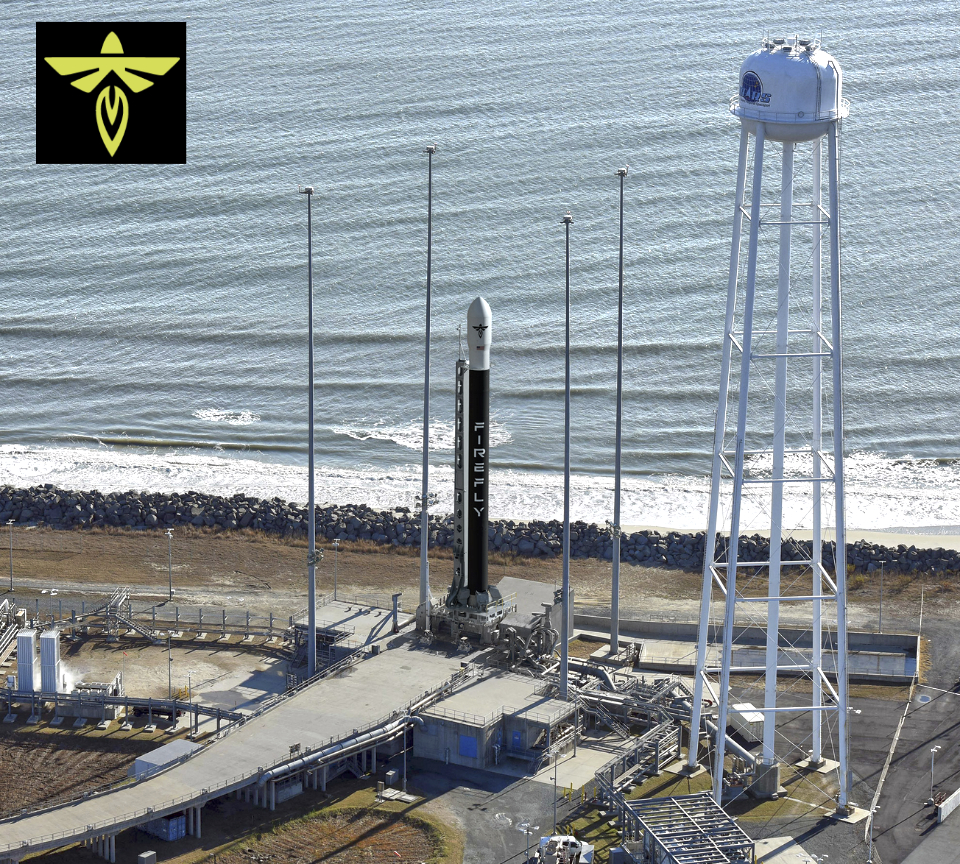
Firefly Aerospace, Inc., an end-to-end space transportation company, is adding an Alpha launch capability at the Mid-Atlantic Regional Spaceport (MARS) on Wallops Island, Virginia.

In support of Firefly’s responsive space missions, Pad-0A will be configured to launch Alpha as early as 2025 in addition to Antares 330 and the Medium Launch Vehicle (MLV) that Firefly is co-developing with Northrop Grumman.

The new launch capability on Wallops Island will supplement Firefly’s existing Alpha launch facilities and further enable Firefly to support rapid, on-demand missions for government and commercial customers. In addition to the launch pad, Firefly plans to operate a launch control center, horizontal integration facility, and administrative office space on Virginia’s Eastern Shore. Firefly will also use existing infrastructure in the area, such as vehicle and payload processing facilities, to eliminate bottlenecks and retain Firefly’s rapid launch capabilities, recently demonstrated for the VICTUS NOX mission that was executed with a 24-hour launch notice.

Capable of lifting more than 1,000 kg to LEO, Firefly’s flight-proven Alpha rocket uses patented propulsion technology and carbon composite structures built with automated machinery to provide a reliable, low cost, responsive solution for the domestic and international launch market. With East and West Coast launch capabilities, Firefly will further increase Alpha’s launch cadence to a monthly basis by 2026 after launching up to four times in 2024 and six times in 2025.

“Firefly is committed to establishing a regular on-demand launch service and serving our customers’ growing responsive space needs, and that requires operating a diverse set of launch sites,” said Bill Weber, CEO of Firefly Aerospace. “Virginia Spaceport Authority further sets us up for success by enabling a streamlined approach to launching both Alpha and MLV from one location at MARS with minimal congestion from the broader launch market.”

Firefly is an end-to-end space transportation company with launch, lunar, and in-space services. As an all-American company headquartered in central Texas, Firefly is focused on delivering responsive, reliable, and affordable space access for government and commercial customers. Firefly’s small- to medium-lift launch vehicles, lunar landers, and orbital vehicles provide the space industry with a single source for missions from low Earth orbit to the surface of the Moon and beyond.

Filed Under: News

Skynopy raises million$ for LEO satellite connectivity

June 24, 2024 by editorial

Skynopy has closed a fundraising of $3.1 million which closed in only three weeks — this funding round was supported by a pool of investors, including the pan-European fund Heartcore Capital, Kima Ventures, Better Angle, and BPI France, alongside well-known entrepreneurs such as Thibaud Elziere (e-founders, Hexa) and Yohann Leroy (CEO of Maia Space).

This initial funding will enable Skynopy to develop its turnkey connectivity service for LEO satellite operators, addressing the growing needs of the rapidly expanding space industry.

When sending a video with your phone, imagine having to locate the nearest antenna, orient your smartphone toward the antenna, proceed to define and adjust the radio settings, including modulations and protocols, and then being charged per minute of antenna use for this service. This is the technical and commercial complexity that all satellite operators currently face when downloading a picture or video taken by a satellite. Skynopy aims to solve this complexity.

Founded in October 2023 by Pierre Bertrand and Antonin Hirsch, former directors of Loft Orbital, Skynopy has an ambition: to bring the simplicity of mobile phone connectivity to low-orbit satellites and constellation sector, thanks to a unique business model and key interface technologies.

Skynopy offers a seamless, simplified and worldwide service for satellite operators to connect their satellites (send commands and receive data) using its hybrid network of ground antennas. This “as-a-service” approach allows operators to focus on their missions without worrying about the technical details of connectivity or the costly internal infrastructure of ground antennas, providing smooth communication with their satellites, similar to a mobile phone experience.

Skynopy is developing universal connectors capable of interfacing with existing ground station networks allowing Skynopy to scale much faster than a more traditional approach. This strategy allows Skynopy to offer high-bandwidth connectivity while limiting its CAPEX needs, thus positioning itself as the Airbnb of ground antennas.

By managing the entire value chain of satellite mission connectivity, Skynopy aims to become a leader in the rapidly expanding ground segment market. This unique positioning has already enabled Skynopy to sign and deliver several contracts with key players in the French space ecosystem, including HEMERIA and CNES, just six months after its incorporation.

The funds raised will enable Skynopy to accelerate the commercial deployment of its “as-a-service” ground station offering. The start-up has already signed industrial partnerships to integrate initial ground station networks and implement its vision of turnkey connectivity. Finally, this funding will allow Skynopy to structure its teams through new recruitment.

Pierre Bertrand, CEO of Skynopy, said, “The ground segment, and specifically ground stations, is the third pillar of any space infrastructure, alongside the launch vehicle and the satellites. Today, industrial players and public policies have tended to underestimate this essential pillar, which is crucial for data creation and retrieval, representing up to 20% of a mission’s cost. Skynopy aims to solve this deadlock and offer a true innovation in the business model. In this context, this funding round marks a major milestone for Skynopy and the development of the first seamless satellite connectivity service, meeting the growing needs of the space industry.”

Yohan Pereira, Representative of Heartcore Capita, said, “Skynopy offers an innovative solution to a major challenge in the space industry. Pierre and Antonin’s profound market knowledge, coupled with their ambitious international vision— made obvious through their significant contributions to Loft’s success in Europe —strengthens our belief in their ability to revolutionize the satellite connectivity sector. We are fully convinced of their transformative potential and are thrilled to be part of the Skynopy journey.”

Lionel Suchet, Director of Innovation, Applications, and Science at CNES, said, “Skynopy’s ground station service addresses a well-identified commercial need within the satellite ecosystem, thus filling a commercial and industrial gap. Such a player, with sufficient commercial traction, can leverage major advantages, whether geographical, industrial, or institutional.”

Founded in October 2023 by Pierre Bertrand, CEO, and Antonin Hirsch, CTO—both former directors at Loft Orbital, a U.S./French startup that develops shared satellites and sells them as a service, having raised a total of $200 million — Skynopy aims to bring the economic model of infrastructure service (as-a-service) to the ground segment, specifically through a network of hybrid ground stations (antennas) necessary for downloading data from satellites in orbit. Skynopy offers a turnkey service, enabling satellite operators to enjoy seamless and accessible communication and control with their satellites as easily as a mobile phone. Through its established partnerships, Skynopy already has a global network of antennas and currently offers its connectivity optimization services to initial clients such as Hemeria. Its ambition is to meet the growing needs of the low Earth orbit space industry with an innovative and efficient solution that brings the simplicity of mobile connectivity to the satellite sector.

Filed Under: News

Hiltron experiences growing demand for ground antenna refurbishment + debuts motorization kit

June 24, 2024 by editorial

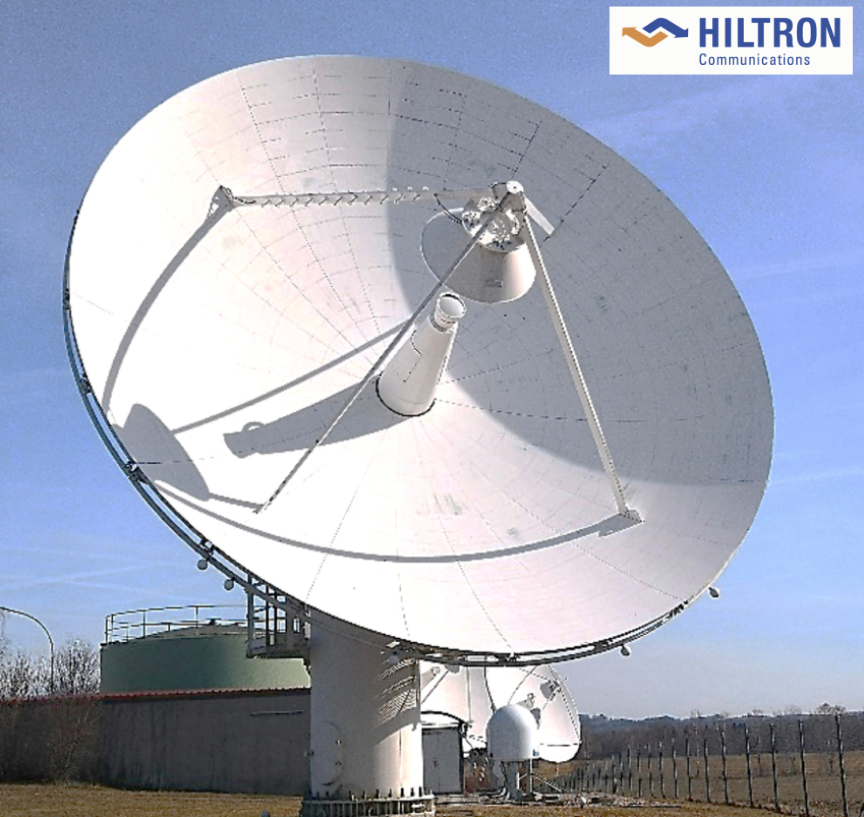
Hiltron Communications reports increasing demand for the company’s refurbishment capabilities across the entire SATCOM sector, from high accuracy teleport antenna performance evaluation through to latest-generation motorized antenna mounts and control systems.

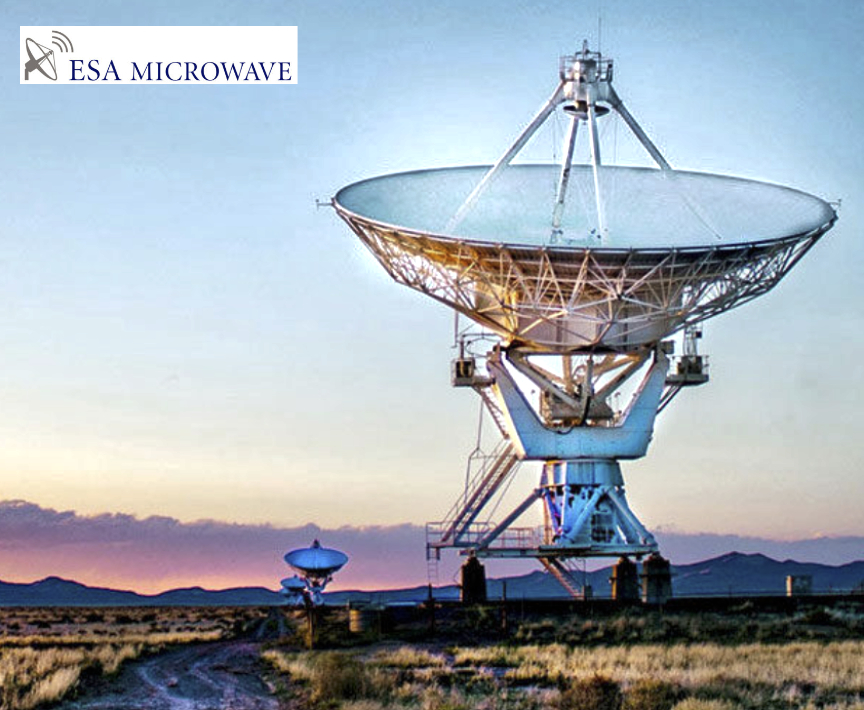
A core element of Hiltron’s SATCOM system refurbishment service is the ability to perform high-accuracy 3D laser scanning and evaluation of teleport antennas. Based on technology developed by ESA Microwave GmbH, a Hiltron subsidiary partner, this resource is far more accurate than the commonly used photogrammetry technique and can be conducted while the antenna is actually in operation.

Photogrammetry requires a large number of adhesive targets, typically several hundred, to be applied by hand on to the reflector. The cost is quite high and the measurement resolution relatively low. The Hiltron/ESA system allows a million surface reference points per second to be captured with a geometric accuracy of less than 1 millimeter..

3D laser scanning measurement can be performed quickly and safely by a single technician using easily transported equipment which in many instances can be operated on a single tripod located at ground level. The resultant information is integrated into approximately 60 million points and used to create a computer-aided design model.

Measured specifications and related performance parameters are delivered to the antenna operator or owner together with recommendations clarifying whether the antenna would benefit from upgrading, conversion or fitting with a multiband feed system.

“Hiltron Communications has 45 years of experience in satellite systems design, preconstruction, onsite installation and testing,” said Managing Director, Jochen Ermel. “We also have distribution agreements with many of the world’s leading manufacturers of SATCOM equipment plus the detailed knowledge required to combine third-party equipment into complete solutions that are reliable and easy to operate. One of the main options for teleport managers is to upgrade existing antennas to higher frequencies, typically from C-band to Ku-band or Ka-band. This saves the need to buy new equipment and allows services in the lower bands to be maintained. Hiltron is fortunate in having a highly accomplished technical team with two decades or more of experience in SATCOM systems engineering combined with proven software authoring skill.”

Ermel continued, “When refurbishing third-party systems, we are often able to achieve better-than-new performance by replacing legacy control devices with Hiltron-developed products that allow satcom systems to be controlled with maximum safety, efficiency and versatility. Examples are our HACU antenna control unit, the HSACU4 compact variant for flyaway antennas, HMCS monitoring and control system, HDCU and compact HDCU2 de-icing control units, plus the HRMU redundancy and monitoring switch. Perhaps the best known of all Hiltron product developments is the HMAM motorized antenna mount. A recent addition to this range, HMAM LEO is a complete system combining the strength, precision, smoothness of operation and internal computing resources necessary to monitor Low Earth Orbit satellites. Capable of accommodating parabolic antennas of up to 3 meters diameter, HMAM LEO can lock quickly and securely onto the selected LEO satellite.”

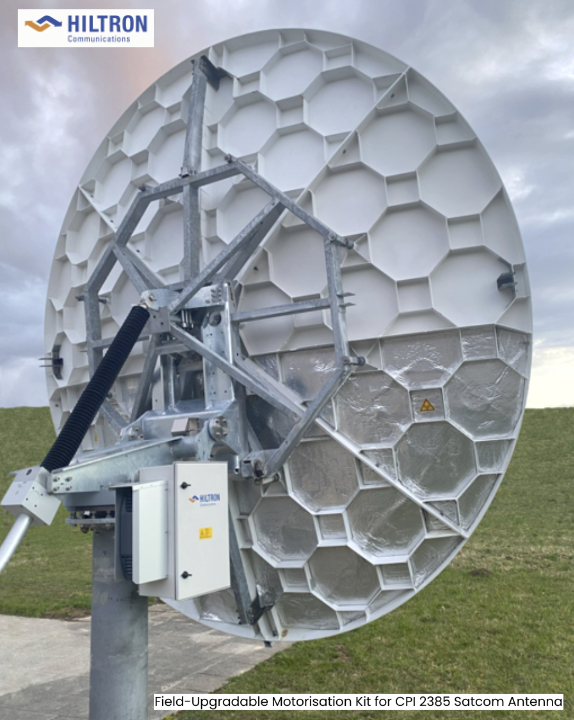
Additionally, Hiltron has announced an addition to the firm’s range of SATCOM and systems: a field-upgradable, motorization kit specifically designed for existing fixed installations of CPI 2385 Series 3.8 meter Rx/Tx antennas in current deployment for tracking applications, or for new installations requiring tracking functionality.

A new addition to Hiltron’s HMAM product family, the motorization kit enables significant cost savings compared to new installations. It offers a wide range of tracking capabilities including manual positioning to known satellites, automatic positioning and active step tracking. Norad TLE, inclined orbit tracking and Intelsat 11 tracking are also supported.

The first three systems recently completed successful factory acceptance tests and are now being installed at various locations around the world. Hiltron has the design and development capability to provide motorization kits for any type of reflector on customer request.

Developed and produced by Hiltron, HMAM is a high-precision motorized satellite antenna mount designed for broadcast applications, two-way satellite telecommunication links or receive-only downlinks. An optional motorized feed changer allows the HMAM head to be moved quickly to a new position for switching between frequency bands.

HMAM comes complete with professional-grade drives for azimuth and elevation plus a high-accuracy polarization drive. The combined head and drive form a three-axis motorized mount with 180 degrees of azimuth adjustment, 90 degrees of elevation adjustment range and fully adjustable polarization.

Hiltron Communications is a globally active system integrator, manufacturer and distributor in the field of satellite and wireless communication. It has decades of experience in the development and production of tracking systems for fixed and mobile antennas and hundreds of installed base around the world, for tracking LEO, GEO, MEO and inclined orbit satellites. Hiltron offers a comprehensive portfolio of services, from initial planning to the implementation of customized antenna systems, including factory acceptance tests, installation and commissioning, operator training and post-sale support. Antenna refurbishment is also offered, including service level agreements. Hiltron operates from modern purpose-built headquarters at Backnang near Stuttgart. On-site facilities include a large technical operations area with high access doors and ceiling, capable of accommodating satellite-link vehicles and their roof-mounted antennas.

Filed Under: News

Simera Sense opening an optical payload development hub in Toulouse France

June 22, 2024 by editorial

Screenshot

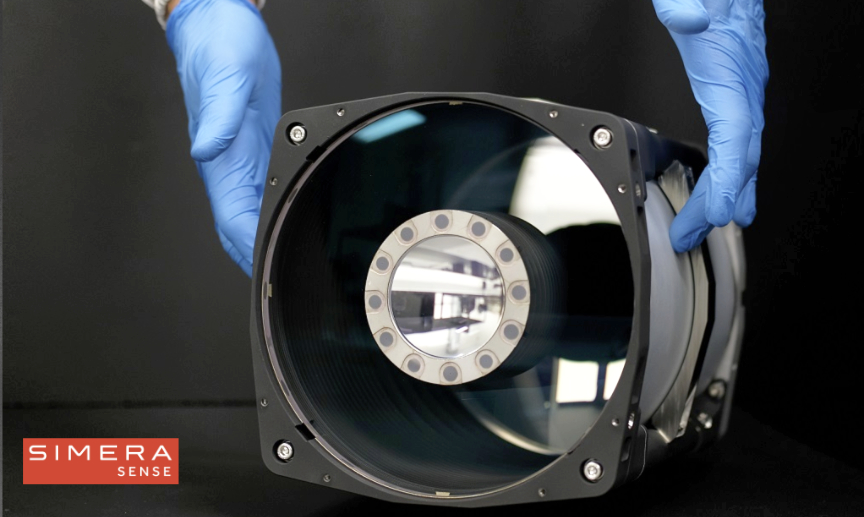
Simera Sense is strengthening the firm’s global presence by opening an office in Toulouse, France. This move is a testament to its growth strategy, bolstered by the 13.5 euros million funding secured in an investment round earlier this year.

The company already has 19 optical payloads in space and another 43 delivered and ready for launch to customers worldwide. Many of these clients are European-based, including Loft Orbital, Prométhée Earth Intelligence, AAC Clyde Space, Open Cosmos, OHB Systems AG, and many others. This rapid growth and demand for Simera Sense’s optical payloads necessitate expanding its development and production capacity.

Toulouse, strategically selected for its position within the aerospace ecosystem, will be the home of the new facility. This facility, an R&D engineering and production hub, will service the existing client pool in France as well as the rest of Europe and will also contribute to developing High- to Very High-resolution optical payloads for Earth Observation (EO).

“Simera Sense is recruiting for several positions at its Toulouse office, including senior and junior roles. Join us to be part of a dynamic team in the NewSpace ecosystem.” said Kammy Brun, Managing Director of Simera Sense, France. “We look forward to building a solid team with expertise and experience in optics, thermal systems engineering, embedded software engineering and AIT (Assembly, Integration and Testing). Our core team will comprise 4 to 6 members by Q4 this year, and we have multiple job openings, including senior project manager, senior systems engineers, public relations& bid managers, and several PhD vacancies. The team is expected to double in size by 2025 and triple by the following year.”

Charlotte Voisin, Business Development Manager for Aeronautics & Space at Invest in Toulouse, said, “We are delighted that Simera Sense is opening a subsidiary in Toulouse, the European Capital of Space. Since 2019, I have supported the Simera team by facilitating connections with our ecosystem, potential customers, and key institutions. This nearly five-year effort has been fruitful, as Simera Sense has successfully developed commercial products and grown from a start-up to a scale-up with the opening of their French subsidiary. This new R&D and engineering centre will serve both European and global customers, thanks to the collaborative efforts of Aerospace Valley, ADOCC, Business France, and Toulouse’s economic development agency.“

Founded in 2018, Simera Sense is a leading provider of end-to-end earth observation camera solutions for the global small satellite market. Its high-resolution, ‘off-the-shelf’ cameras are used by diverse clients across a wide range of industries. Our core team’s passion for space and satellite engineering fuels our mission, along with a firm belief in the transformative power of small, cost-effective satellites. We have meticulously engineered a suite of cameras that are not only optimally sized but also configurable for diverse missions. These cameras comply with the leading standardised satellite bus interfaces and data formats.

Filed Under: Featured, News

Exolaunch integrates 42 satellites for SpaceX’s Transporter-11 rideshare mission

June 20, 2024 by editorial

Exolaunch has successfully integrated the firm’s customer satellites for the upcoming Transporter-11 Rideshare mission with SpaceX — the mission is expected to be Exolaunch’s largest mission of 2024 thus far, servicing 42 smallsats for 23 global customers.

Exolaunch has successfully deployed satellites on all ten previous Transporter rideshare missions, including the most recent Transporter-10 launch in March 2024, pictured above. Image is courtesy of SpaceX.

Scheduled to lift off later this summer, the Transporter-11 Rideshare mission will launch on a SpaceX Falcon 9 from Vandenberg Space Force Base in California. This mission signifies Exolaunch’s ongoing commitment to advancing global access to space and marks the company’s participation in all 11 Transporter missions to date since the program’s inception.

Exolaunch’s customers on the Transporter-11 mission represent a diverse array of government space agencies, commercial companies, and academic research institutions, from the following nations: Argentina, Denmark, Finland, France, Germany, Lithuania, Poland, Spain, Taiwan, Turkey, United Kingdom, and the United States.

Exolaunch clients onboard this mission will receive the company’s decade of expertise in enabling successful deployments for nearly 400 satellites to date, and a comprehensive service package designed to effectively navigate complex technical, logistical, and legal processes. This package includes launch capacity and mission planning, end-to-end testing, integration, global shipping, and the deployment of their satellites using Exolaunch’s flight-proven hardware.

More than 30 EXOpod Nova containerized deployers and CarboNIX ring-based separation systems will be utilized to support the deployment of customer satellites on this mission. These proprietary systems are part of Exolaunch’s renowned suite of satellite separation technologies and known for their reliability and effectiveness in space missions.

Integrations with the deployment systems have been successfully completed at Exolaunch’s headquarters in Berlin and globally for its cubesat customers, and the final integration campaign is currently underway at Vandenberg Space Force Base.

“We are honored to enable this launch campaign for 42 customer satellites on our largest mission of the year. We extend our gratitude to our customers for their continued loyalty and trust in Exolaunch’s services, and thank SpaceX for their excellent launch preparations,” said Robert Sproles, chief technology officer at Exolaunch.

“Our long-standing collaboration with SpaceX has been integral to Exolaunch’s own growth, and we are proud to have been a part of all Transporter launches since the inception of the highly successful Rideshare program,” said Jeanne Allarie, chief commercial officer at Exolaunch. “We look forward to launch and deployment of these satellites, further contributing to crucial developments in rideshare missions and access to space for all.”

Filed Under: Featured, News

SpaceX’s launch from California of 20 Starlink satellites including 13 Direct to Cell

June 19, 2024 by editorial

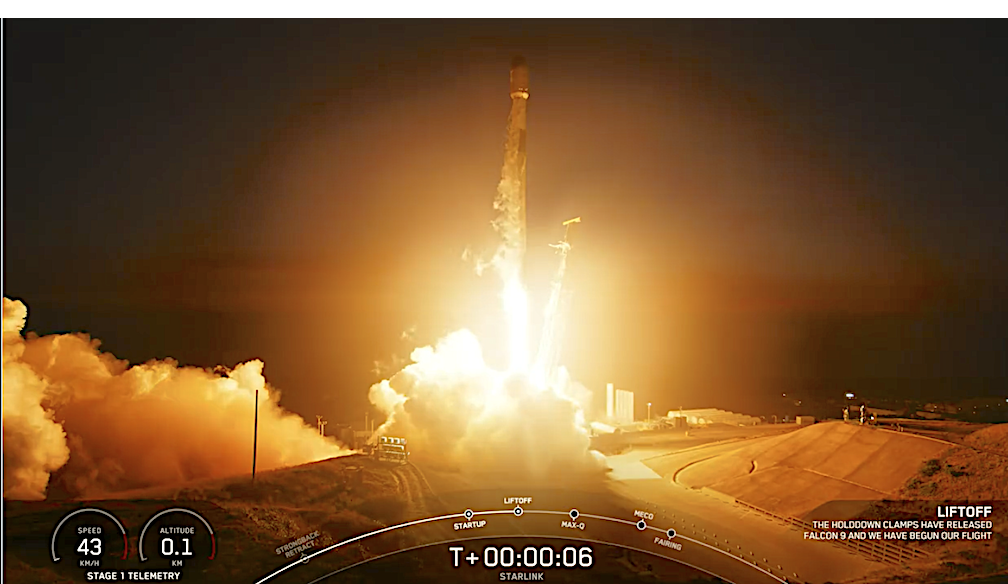
Photo captured on Tuesday, June 18, by Satnews from SpaceX’s video stream.

On Tuesday, June 18 at 8:40 p.m. PT, Falcon 9 launched 20 Starlink satellites, including 13 with Direct to Cell capabilities, to low-Earth orbit from from Space Launch Complex 4 East (SLC-4E) at Vandenberg Space Force Station in California.

Photo captured on Tuesday, June 18, by Satnews from SpaceX’s video stream.

This was the fifth flight for the first stage booster supporting this mission, which previously launched USSF-62 and now four Starlink missions.

This California launch went smoothly while the Florida launch of the SES Astra 1P has been delayed twice due to inclemate weather.

SpaceX to launch two on Tuesday with 20 Starlink satellites including 13 Direct to Cell

This image has an empty alt attribute; its file name is Screen-Shot-2024-06-17-at-8.43.47-PM.png

SpaceX is targeting Tuesday, June 18 for a Falcon 9 launch of 20 Starlink satellites, including 13 with Direct to Cell capabilities, to low-Earth orbit from Space Launch Complex 4 East (SLC-4E) at Vandenberg Space Force Station in California. Liftoff is targeted for 8:00 p.m. PT, with backup opportunities available until 12:00 a.m. PT on Wednesday, June 19. If needed, additional opportunities are also available on Thursday, June 19 starting at 8:00 p.m. ET.

A live webcast of this mission will begin on X @SpaceX about five minutes prior to liftoff. Watch live.

This is the fifth flight for the first stage booster supporting this mission, which previously launched USSF-62, and three Starlink missions. Following stage separation, the first stage will land on the Of Course I Still Love You droneship, which will be stationed in the Pacific Ocean.

Filed Under: News

Juniper Research’s new Future Leaders Index reveals VLEO satellite vendors to watch

June 19, 2024 by editorial

A new study from Juniper Research found global investment into VLEO (Very Low Earth Orbit) satellites will reach $220 billion by 2027, growing substantially from $17 billion this year. VLEO satellites operate at an altitude of approximately 300km; enabling reduced communication latency and higher-resolution imaging.

An extract from the new report, Global VLEO Satellites Market 2024-2030, is available as a free download.

As part of the study, Juniper Research is excited to announce the launch of the new Future Leaders Index which scores companies that are either challenging dominant players in established markets, or positioned to become leaders in emerging markets. In assessing these future leaders, the model enables businesses to benefit from critical insights into market shifts and emerging threats, and thus make informed strategic decisions.

The model uses a range of criteria, such as funding and investment, market coverage and the extent of innovation in the leaders’ solutions. The vendors primed for future VLEO success include…

  1. Thales Alenia Space
  2. LeoLabs
  3. Redwire
  4. Blue Canyon Technologies
  5. Albedo

These future leaders must leverage their significant funding and investment to develop software-based VLEO satellite services. The report recommended satellite management software remain adaptable to evolving use cases to capitalize on a market with an anticipated cumulative investment reaching $1 trillion by 2029.

Report author Ben Clark said, “Future leaders must focus on industries including telecommunications, navigation and environment monitoring, as these are the best long-term monetization opportunities; owing to the requirement for global connectivity that terrestrial technologies will be unable to provide.”

Filed Under: News

Ubotica achieves breakthrough in Live Earth Intelligence with CogniSAT-6

June 17, 2024 by editorial

Ubotica has announced a significant milestone in the CogniSAT-6 mission, that being the successful processing and instant AI-powered detection of the first raw image from the newly launched satellite.

Today’s Earth Observation (EO) satellites are fundamentally data collectors; they simply gather data and downlink that information when passing over a ground station. However, what if they could understand what they’re seeing? With Ubotica’s SPACE:AI, they can, as this technology unlocks the full potential of EO satellites by empowering them with real-time vision processing. Ubotica’s flight-proven, end-to-end, AI platform transforms these satellites into intelligent, efficient and always connected observers.

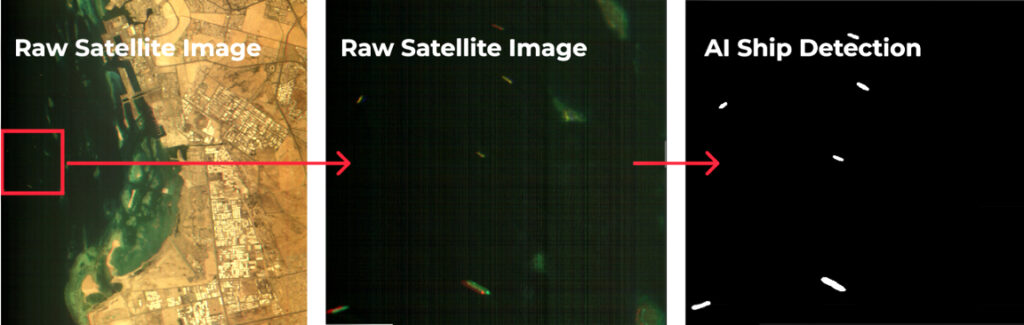
SPACE:AI at Work: Ship Detection at Jeddah Port — Consider this first raw satellite image (above) taken by CogniSAT-6 of the port and ocean near Jeddah, Saudi Arabia. The challenge was to quickly identify all ships in the area. For the first time, an EO satellite, powered by SPACE:AI, understands what is being observed. Within 90 seconds, SPACE:AI detected every vessel within a 20 x 40-kilometer zone. This achievement demonstrates the model’s exceptional accuracy, even without prior training on CogniSAT-6 data.

CogniSAT-6 is designed to share these insights instantly. Through persistent, inter-satellite communication, ship detection data can be relayed to users on Earth in real-time. This enables users to interact directly with the satellite, requesting more information or adjusting its focus.

SPACE:AI’s ship detection capabilities represent a significant advancement in the field. Unlike traditional methods requiring extensive training on thousands of processed images, SPACE:AI can perform real-time, on-board identification of ships from a single, raw, unprocessed image without prior training specific to the imager or sensor.

This breakthrough technology dramatically simplifies and accelerates the process of extracting valuable information from Earth Observation data.

“This successful demonstration proves the advanced capabilities of CogniSAT-6 and our commitment to unlocking the true potential Earth Observation,” said Fintan Buckley, CEO of Ubotica. “Near real-time analysis of satellite data unlocks new possibilities for timely and effective decision-making across numerous sectors.” Sean Mitchell, Chief Commercial Officer at Ubotica, added, “The performance of our ship detection model, combined with our rapid processing pipeline, showcases SPACE:AI’s transformative potential. We’re excited to see this technology in action and anticipate the significant impact CogniSAT-6 will have across industries.”

Filed Under: News

Ovzon 3 satellite reaches GEO + successfully concludes initial tests

June 17, 2024 by editorial

Ovzon’s proprietary satellite, Ovzon 3, has recently, after a five-month journey in space, reached its orbital position in the geostationary arc.

Initial tests have been conducted by the manufacturing partner, Maxar, and the satellite, including the Ovzon On-Board-Processor, will soon be handed over to Ovzon for further on-orbit testing. The satellite is expected to enter commercial service mid-year 2024; all according to plan.

Earlier in the second quarter 2024, Ovzon announced two new SATCOM-as-a-Service offerings for the Ovzon 3 satellite, tailored to meet customers’ needs for performance, mobility, and resiliency. The new services, Ovzon Pegasus and Ovzon Orion, are based on the unique technology and capabilities of the Ovzon 3 satellite and the Ovzon On-Board-Processor.

“We are excited to announce that Ovzon 3 has now reached its orbital position in space. The initial tests show that the satellite is in excellent condition, and our timeline remains intact. We expect the satellite to enter service within a few short weeks. We continue to experience a rising interest from a broadening customer base in the unique features found only in the Ovzon Pegasus and Ovzon Orion services offered with Ovzon 3. Ovzon 3 based SATCOM-as-a-Service will bring unmatched performance, mobility and resiliency to the market when the world needs it the most”, said Per Norén, CEO of Ovzon.

Filed Under: News

  • « Go to Previous Page
  • Page 1
  • Interim pages omitted …
  • Page 65
  • Page 66
  • Page 67
  • Page 68
  • Page 69
  • Interim pages omitted …
  • Page 338
  • Go to Next Page »

Primary Sidebar

WEEKLY NEWSLETTER

Archives

  • July 2026
  • June 2026
  • May 2026
  • April 2026
  • March 2026
  • February 2026
  • January 2026
  • December 2025
  • November 2025
  • October 2025
  • September 2025
  • August 2025
  • July 2025
  • June 2025
  • May 2025
  • April 2025
  • March 2025
  • February 2025
  • January 2025
  • December 2024
  • November 2024
  • October 2024
  • September 2024
  • August 2024
  • July 2024
  • June 2024
  • May 2024
  • April 2024
  • March 2024
  • February 2024
  • January 2024
  • December 2023
  • November 2023
  • October 2023
  • September 2023
  • August 2023
  • July 2023
  • June 2023
  • May 2023
  • April 2023
  • March 2023
  • February 2023
  • January 2023
  • December 2022
  • November 2022
  • October 2022
  • September 2022
  • August 2022
  • July 2022
  • June 2022
  • May 2022
  • April 2022
  • March 2022
  • February 2022
  • January 2022
  • December 2021
  • November 2021
  • October 2021
  • September 2021
  • August 2021
  • July 2021
  • June 2021
  • May 2021
  • April 2021
  • March 2021
  • February 2021
  • January 2021
  • December 2020
  • November 2020
  • October 2020
  • September 2020
  • August 2020
  • July 2020
  • June 2020
  • May 2020
  • April 2020
  • March 2020
  • February 2020
  • January 2020
  • December 2019
  • November 2019
  • October 2019

© 2019–2026 SatNews

Insert/edit link

Enter the destination URL

Or link to existing content

    No search term specified. Showing recent items. Search or use up and down arrow keys to select an item.
      x
      Sign Up Now!

      Enjoy a free weekly newsletter with recent headlines from the global SmallSat industry.

      Invalid email address
      We promise not to spam you. You can unsubscribe at any time.
      Thanks for subscribing! You will now receive weekly SmallSat News updates.
      We love our advertisers.
      And you will too!

      Please disable Ad Blocker to continue... We promise to keep it unobtrusive.
      We promise not to spam you. You can unsubscribe at any time.
      Invalid email address
      Thanks for subscribing!