• Skip to main content
  • Skip to primary sidebar
  • Home
  • News
  • Featured
  • More News ⌄
    • SatNews
    • SatMagazine
    • MilSatMagazine
  • Events ⌄
    • MilSat Symposium
    • SmallSat Symposium
    • Satellite Innovation
  • Contacts
  • SUBSCRIPTION

SmallSat News

You are here: Home / Archives for editorial

editorial

Kepler Communications has validated the firm’s OISLs between two data relay satellites in LEO  

June 16, 2024 by editorial

Kepler Communications recently successfully validated optical inter-satellite links (OISLs) between two data relay satellites in LEO.  

Graphic illustration of The Kepler Network’s infrastructure designed for space-to-space data relay. Illustration is courtesy of Kepler Communications

During a commissioning and early operations phase, Kepler established optical inter-satellite links between two Pathfinder satellites equipped with Space Development Agency (SDA) compatible Tesat SCOT80 optical terminals.

The first file transferred over the optical connection was a recent picture of Kepler’s global team gathered near its headquarters in Toronto, Canada (photo below). In the first week of testing, the company successfully sent diagnostic data between the two spacecraft, and the full link performance was demonstrated according to the SDA standard. In addition, multiple acquisition scenarios were tested, and both terminal and spacecraft performed optimally. 

In addition to initial optical link commissioning, the company has demonstrated Internet Protocol (IP) mesh networking on-orbit by communicating with multiple satellites in real time over a single ground link, using standard protocols including Secure Shell (SSH), Transmission Control Protocol (TCP), and User Datagram Protocol (UDP). 

Kepler is scaling operations to deploy the first Tranche of its next-generation constellation and expects to offer initial optical services in 2025. The hybrid optical data relay network builds on flight heritage from Kepler’s existing constellation of 21 RF satellites. The Kepler Network provides customers with always-available coverage in LEO, streamlining on-orbit communications with sub-second end-to-end latency, gigabit throughputs, and onboard processing to enable access to space-generated data in near-real time. 

Established in 2015, Kepler has quickly grown into a global space company and provides secure optical data relay services to government and commercial missions as a partner in modern space communications. The company’s investors include IA Ventures, Costanoa Ventures, Canaan Partners, Tribe Capital, BDC Capital’s Industrial Innovation Venture Fund, and other leading investors. The Canadian Space Agency (CSA) also contributed a grant toward the completion of the Pathfinder technology.   

“Kepler is proud to make significant progress in creating the critical Internet infrastructure needed to solve compounding data needs in space. This OISL achievement is a testament to the hard work, determination, and brilliance of our Kepler team,” said Mina Mitry, chief executive officer and co-founder of Kepler. “The Kepler Network will act as a data transport layer, bringing modern Internet capabilities to space through an interoperable architecture that will revolutionize space communications as we know it.”  

Kepler Communications, Inc. is a satellite telecommunications provider on a mission to build the Internet for space. Incorporated in 2015, Kepler provides real-time, continuous connectivity for space communications, abolishing barriers to make space-generated data universally available. The company is vertically integrated, with an in-house production facility allowing satellites to be designed and built on-site. The Kepler Network will initially service low Earth orbit (LEO) and plans to provide connectivity services to space missions in LEO, MEO, GEO, and beyond. Headquartered in Toronto, Canada, Kepler is building a global company to enable communications for the future space economy.


Filed Under: Featured, News

Vrio to offer Project Kuiper satellite broadband in 7 South American countries

June 16, 2024 by editorial

Vrio Corporation, parent company of DIRECTV Latin America and Sky Brasil, and Project Kuiper, Amazon’s LEO satellite broadband network, recently announced a distribution agreement to offer internet connectivity in seven countries in South America.

Vrio plans to use Project Kuiper’s network to provide connectivity services to residential customers in Argentina, Brazil, Chile, Uruguay, Peru, Ecuador, and Colombia through DIRECTV Latin America and Sky Brasil, in accordance with local regulations. This agreement will bring new affordable, high-speed internet connectivity options to an area with a total population of approximately 383 million people, including approximately 200 million people the World Bank estimates are still not connected to the internet.

DIRECTV and Sky will use Project Kuiper’s low-latency, high-bandwidth satellite network to bring the benefits of fast and reliable internet to areas that would otherwise be both challenging and prohibitively expensive to serve. With Project Kuiper, the companies will offer nationwide coverage in each country—something that is not practical with traditional connectivity options like fiber optics or fixed wireless that require extensive infrastructure.

Project Kuiper recently tested two prototype satellites as part of its successful Protoflight mission. It expects to begin deploying its satellite constellation in the coming months, and to start service demonstrations with Vrio and other select customers later this year.

Darío Werthein, president of Vrio Corp., said, “This collaboration with Project Kuiper is in line with our strategy of extending our services throughout South America and continues to define us as a regional leader in information, digital entertainment, connectivity and innovation promotion. We are concerned with bridging the technology gap and even more so the digital divide for our future generations. And the time is now. Our commitment translates into action. Providing internet access across the region ensures the development of communities; and that is a commitment for our company. We look forward to bringing the benefits of affordable internet access and connectivity to more communities to reach further with a service that will revolutionize the way people connect.”

“Project Kuiper is a powerful opportunity to make a difference in people’s lives,” said Panos Panay, Amazon’s senior vice president for devices and services. “There are hundreds of millions of households around the world that don’t have access to reliable broadband internet, which means they can’t take part in things that we can take for granted, like being able to learn online, run a business online, shop, or enjoy streaming entertainment. Working with Vrio to bring affordable access to broadband means we can enable so many more people to create, connect, and learn in new ways.”

“Project Kuiper’s mission is to deliver fast, affordable broadband to areas that have traditionally been difficult to reach,” said Rajeev Badyal, vice president of technology and head of Project Kuiper at Amazon. “Our network has the capacity and flexibility to serve tens of millions of customers around the world, and this distribution agreement with Vrio is part of our commitment to working with regional providers who share that vision. We look forward to working with Vrio to serve customers across South America.”

Photo from left to right: From left to right: Rajeev Badyal, vice president of Project Kuiper; Darío Werthein, president of Vrio Corp.; and Panos Panay, senior vice president of Amazon Devices & Services. Photo is courtesy of Business Wire.

Vrio Corp. is a leading American media and technology company in Latin America and the Caribbean in digital entertainment services, content production, information and connectivity with more than 40 million viewers in 11 countries. It offers high-quality content live and on demand through DIRECTV Latin America, SKY Brasil, DGO and SKY+, with sporting events, international events and exclusive programming in Brazil through the SKY brand and in Argentina, Barbados, Chile, Colombia, Curacao, Ecuador, Peru, Trinidad and Tobago and Uruguay through the DIRECTV brand. DGO is its subscription service (OTT) via internet that provides access to a variety of live and on-demand programming in Argentina, Brazil, Chile, Colombia, Ecuador, Mexico, Peru and Uruguay. The company also offers fiber optic internet through DFIBRA in Argentina, Chile, Colombia, Ecuador and Peru and SKY Fibra in Brazil; and has state-of-the-art satellites and transmission centers, thanks to which it is possible to deliver a wide variety of content to homes in 4K format. Likewise, the firm controls the sports network Torneos y Competencias (TyC) in Argentina and Colombia.

Filed Under: News

Thales, Spire Global + ESSP to develop a space-based air traffic surveillance service

June 13, 2024 by editorial

Thales, Spire Global and ESSP logos with a constellation of satellites

Thales (Euronext Paris: HO), Spire Global (NYSE: SPIR), and European Satellite Services Provider (ESSP) have signed a Memorandum of Cooperation (MoC) with the goal of introducing a range of global satellite-based surveillance services to the air traffic management (ATM) industry and broader aviation market.

These services will be powered by a specialized constellation of more than 100 satellites collecting Automatic Dependent Surveillance-Broadcast (ADS-B) messages broadcast from aircraft and transmitting the data back to Earth in real time.

Spire will develop the space segment, including system design, building the satellites and payloads, ground control and data collection.

Thales will provision the ground air traffic management system and the service supervision infrastructure.

ESSP will manage the certification and the delivery of the service for air traffic surveillance purposes and perform H24 operation and supervision, ensuring the compliance with real-time, safety-critical requirements imposed to ATC.

The partners will also rely on the Space Alliance* formed by Thales Alenia Space and Telespazio, to identify and implement possible synergies bringing further added value in terms of key-enabling technologies, secured network optimization and sustainable operations and services.

The partners plan to certify, commercialize and start the operation of the service by 2027.

The aviation industry faces critical challenges, with safety, security and achieving climate impact neutrality emerging as top priorities. These challenges have placed significant strain on ATM, particularly due to the absence of a surveillance solution that is high performing, scalable, and economically viable.

The initiative will rely on Thales’s global stature in ATM, built upon more than 50 years of terrestrial surveillance experience and the longstanding space technological background of Thales Alenia Space as a world space leader in telecommunications, earth observation, exploration and navigation.

With more than 175 satellites launched into orbit and nearly a decade of expertise in developing and operating ADS-B payloads, Spire holds a unique position within the New Space technology landscape. The approach is bolstered by ESSP’s credentials as a certified space-based Navigation and Communication service provider, the consortium possesses the ideal resources to tackle these ambitious objectives

The new end-to-end system will meet the rigorous requirements, including latency, coverage and revisit standards, set by the International Civil Aviation Organization (ICAO) and aviation authorities to be certified for air traffic surveillance.

The constellation’s satellites are designed to be replenished every five years, ensuring the system offers the latest and most advanced technology. This evolutionary roadmap approach ensures that end users’ operational needs are consistently met with the latest advancements.

In parallel to building the initial constellation, the companies will design and demonstrate a system that goes beyond ADS-B to geolocate the position of aircraft in real time, without relying on GNSS/GPS satellites. This novel system will provide a resilient solution for tracking aircraft that cannot be impacted by vulnerabilities with GNSS/GPS such as interference or outages. The expected follow-on of a successful demonstration will be the commercialization of a second generation, highly resilient service — opening the door to holistic infrastructure optimization strategies for ANSPs by the end of the coming decade.

“The birth of a satellite constellation fully dedicated to serving the demanding needs of air traffic management, air domain awareness and national security is a groundbreaking development for the aviation industry,” said Philip Plantholt, general manager of Aviation at Spire. “Through our strategic partnership with Thales and ESSP, we are poised to offer the first real alternative to the aging systems that exist today and embark on a journey towards even more advanced space-based solutions for aviation in the years to come.”

“This innovative satellite-based surveillance service will accelerate the implementation of our new ‘Air Traffic Control as a service’ offering,” said Christian Rivierre, vice president, Airspace Mobility Solutions, Thales. “It will play a crucial role in shaping the future of the skies, serving as a vital facilitator for trajectory-based operations and laying the foundation for a safer, more environmentally friendly, and cost-efficient ATM system. Additionally, this new solution will also draw on the competences of Thales Alenia Space satellite-based surveillance systems.”

Charlotte Neyret, chief executive officer of ESSP, said, “Taking the best of three worlds: Space Systems, ATC Systems and ATC Service Provision, is a game-changer for the aviation industry, providing the most valuable solution based on advanced new technologies. Our service is developed driven by users’ needs and expectations to face new service-levels, the challenge of ATC digitization and to support greener and more sustainable air travel. We will provide the full range of ESSP’s Space-based CNS expertise to implement and to operate mission-critical services to ensure the highest quality of service to all aviation stakeholders.”

The Space Alliance is a strategic partnership between two major industrial groups, Leonardo and Thales. With more than 10 thousand employees in 12 countries, the Space Alliance combines the capabilities of two joint ventures, Telespazio (Leonardo 67%, Thales 33%) and Thales Alenia Space (Thales 67%, Leonardo 33%). Leveraging Telespazio’s and Thales Alenia Space’s combined expertise, the Space Alliance offers a unique range of end-to-end solutions to operators, governments, institutions and space agencies, from satellite manufacturing to services. The Space Alliance addresses numerous space applications, including telecommunications, navigation, Earth observation, exploration, robotics, transportation systems and orbital infrastructures. It relies on this unique joint legacy to shape the future of the space sector, a future where innovation goes hand in hand with sustainability.

Filed Under: News

Kongsberg NanoAvionics appoints new CEO

June 12, 2024 by editorial

Atle Wøllo

Kongsberg NanoAvionics has appointed Atle Wøllo as its new CEO, replacing Žilvinas Kvedaravičius who became interim CEO last year following the departure of co-founder and former CEO Vytenis J. Buzas in 2023.

Wøllo, with educational background in business administration and electronic engineering, comes from Kongsberg Defence & Aerospace where most recently, and prior to this latest appointment, he held the position as senior vice president special programs, and was president of Kongsberg Aviation Maintenance Services division.

During his time as president of Kongsberg Aviation Maintenance Services, he led a turnaround and business transformation into a healthy margin company with significant revenue growth.

With 30 years of experience and as a long-time employee of Kongsberg, he is very familiar with both the defence and wider aerospace industry.

“This is a fantastic time to join NanoAvionics, one of the prime smallsat manufacturers and mission operators in Europe,” Atle Wøllo said. “Their track record of successful and sophisticated missions as well as their outstanding customer list speaks for themselves. As we are entering the next evolution of the space industry with Space 3.0 and a strategic focus on mission longevity, performance, reliability, and interoperability, we intend to capture more of the global market share. Already having a fantastic and mission experienced team and the industry’s largest standard satellite platform portfolio puts us in a great position. It will allow us to cater for both commercial constellations on standardised buses as well as governments with sophisticated and customized missions.”

NanoAvionics standardized buses

Harald Aarø, a Chairman of the NanoAvionics board and Executive Vice President Business Development and Strategy at Kongsberg Defence & Aerospace, said, ” Wøllo’s strong leadership skills and experiences together with his capability to foster excellent teams, and further strengthen operations is a new steppingstone for the company. He also has a fantastic track record working on business development and partnership side with both governments and primes. This vast experience will be very beneficial, in particular to strengthening NanoAvionics’s position in large space programs.”

Filed Under: News

Viasat Energy Services intros enhanced hybrid network service for the Energy industry

June 12, 2024 by editorial

Viasat, Inc. (NASDAQ: VSAT) has launched a purpose-built managed communications service for remote oil and gas customers via the firm’s Energy Services division that significantly expands the capacity and capabilities of its industry leading enterprise-grade connectivity service.

The new solution, part of Viasat Energy Services’ range of offerings for the Energy sector, has been expanded to seamlessly incorporate LEO satellite capacity alongside Viasat Energy Services’ existing multi-orbit and terrestrial capacity designed to deliver highly flexible capabilities that can address energy customer needs through a single, integrated and fully managed service. The enhanced service is expected to be available early in the third quarter of calendar year 2024.

The integrated service offering, as part of the Viasat network, enhances performance through capacity augmentation to support additional capabilities for Energy Services customers – oil and gas operators, drilling contractors, and service companies – by powering a range of applications, including enterprise-grade solutions for customers’ cloud-based computing services, applications to drive operational efficiency and safety, and enhanced crew welfare offerings. The service is also designed to incorporate Viasat’s cybersecurity expertise and its operational artificial intelligence software and machine learning platform, IntelieTM. These capabilities are all delivered alongside Viasat’s existing robust service commitments.

Screenshot

Lee Ahlstrom, President, Viasat Energy Services, said, “Serving customers exceptionally well is our North Star – no matter the underlying technology to get there. Our energy customers are looking to solve complex challenges and operate more safely, efficiently, and sustainably. Our services are designed to make that happen. This enhanced hybrid network service offering will allow customers to improve operational efficiency and support their most advanced digital transformation efforts in the future.”

Filed Under: News

TESAT selected by MDA Space for optical inter-satellite links

June 11, 2024 by editorial

TESAT was recently selected by MDA Space Ltd. (TSX:MDA) to deliver 792 Optical Communication Terminals (OCT) as part of the supply chain for MDA AURORATM.

The 792 SCOT80 OCTs will be manufactured on a specific line in TESAT’s new high-volume production facility in Backnang, Germany. The facility has been built to meet the requirements of next space satellite constellations. The MDA AURORATM supply chain will help support product deliveries for anchor customer Telesat LEO satellite constellation Telesat Lightspeed, an innovative, advanced global network that will bring enterprise-class connectivity to customers worldwide.

TESAT began its collaboration with MDA Space more than 20 years ago and the company’s have been working closely together on several successful space programs since that time.

“We feel honored that we have been selected once again working in close cooperation with MDA Space for Telesat Lightspeed. This program will result in the next level of advanced broadband networks. We have been preparing for this kind of constellation orders by investing continuously in R&D to keep our pole position in optical communications technology, already proven by in-orbit applications with more than 86,000 successful links, and by investing in our new production facility in Backnang for serial production of OCTs. The trust that MDA Space puts again in us now proves that we are well on track,” said Thomas Reinartz, CEO of TESAT.

Filed Under: Featured, News

INNOSPACE signs agreements to launch Brazilian satellites + inertial system

June 11, 2024 by editorial

INNOSPACE recently signed a launch service agreement with the Federal University of Maranhão (UFMA) and Castro Leite Consultoria LTDA (CLC) for a rideshare launch mission on the company’s ‘HANBIT-Nano’ launch vehicle from the Alcântara Space Center in Brazil, now scheduled for the first half of 2025.

The mission will deploy smallsats developed by DARTilab and BAITES, both Brazilian research institutes participating in the project through a contract signed with UFMA, which is leading the Alcântara Scientists Project in the state of Maranhão, Brazil.

Under this agreement, INNOSPACE’s HANBIT-Nano will carry onboard the payload, an inertial system being developed by CLC, an engineering consulting service provider specialized in aerospace, defense, and inertial systems with a decade of experience in Brazil.

“The partnership with INNOSPACE for the launch of the picosatellite is a historic milestone, which will provide the residents of Alcântara with the unique opportunity to actively participate in the advancement of science and space exploration. We are excited because with this undertaking we highlight the importance of inclusion and respect for local communities in large-scale projects that drive technological progress, as well as encourage community unity and pride. We hope that this initiative will motivate the young people of Alcântara and contribute to the emergence of new opportunities for knowledge in the region,” said UFMA.

“It’s an excellent opportunity to qualify our products for a space flight. This will add value to both our equipment and the means of testing,” said CLC.

“It’s very meaningful to be selected by Brazilian customers, as this mission will be INNOSPACE’s first commercial launch and the maiden flight of its HANBIT-Nano rocket after successfully launching our first test launch vehicle, HANBIT-TLV, from the Alcântara Space Center in Brazil on March 19, 2023 (BRT),” said Soojong Kim, founder and CEO of INNOSPACE. “INNOSPACE’s priority for HANBIT is to support customers who share an innovative vision for space, and we are proud to offer them with the launch services required to achieve their objectives.”

Filed Under: News

Scout Space signs LSA for SDA satellite with ABL Space Systems

June 10, 2024 by editorial

Scout Space Inc. has signed a Launch Services Agreement (LSA) with ABL Space Systems, an aerospace and launch service provider based in El Segundo, California.

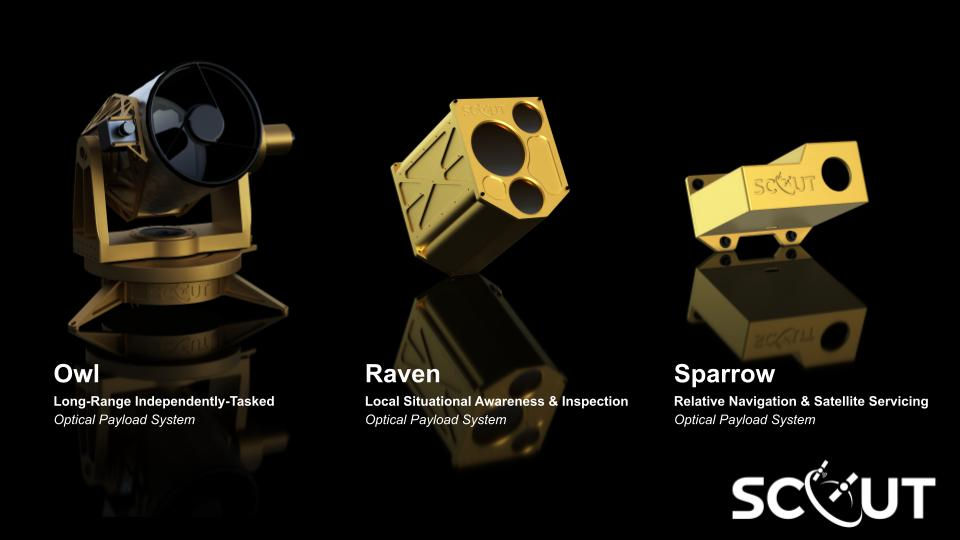
This agreement secures the launch of Scout’s “Owlet-01,” a dedicated 16U Space Domain Awareness (SDA) satellite, as the primary customer payload on ABL’s third flight of its RS1 launch vehicle scheduled for later this year.

The Owlet-01 launch represents a significant milestone for Scout Space, as this is the first standalone operational SDA satellite to be launched by the company, featuring the firm’s Owl, long-range, optical telescope and payload system. The mission aims to substantially de-risk critical elements of the Owl family of payloads, including its core optical design, while also demonstrating fundamental segments of Scout’s software stack, including on orbit demonstration of key algorithms and autonomy functionality. 

The partnership between Scout Space and ABL Space Systems signifies a notable advancement in space security and domain awareness. With this launch, both companies are set to make substantial contributions to the evolving landscape of space operations and safety.

The Owl is a long-range space domain awareness optical sensor designed to enhance missions with advanced space domain awareness capabilities. It provides on-board object detection and orbit determination.

“We are thrilled to partner with ABL Space Systems for this pivotal launch,” said Philip Hover-Smoot, CEO of Scout Space. “This mission will not only validate our Owl product line of optical payload systems but also demonstrate the advanced capabilities of our data exploitation and autonomy solutions. Moreover, the team’s ability to execute this mission on such a tight schedule is remarkable—we are taking this mission from concept to launch in less than six months. This includes not just the primary payload build within the next 90 days, but also the full integration and test of the bus within a few short weeks that follow.”

Dan Piemont, President and CFO of ABL Space Systems, said, “We’re excited that Scout Space has chosen RS1 to deliver their critical technology demonstrator to orbit and look forward to strengthening our partnership through this mission and into the future.”

Scout Space was founded in 2019 with the mission to enable a new era of space safety and transparency. Scout’s in-space products and services, first launched in 2021, allow spacecraft to see and understand things around them. The orbital distributed sensor network developed by Scout will significantly improve Space Domain Awareness (SDA) and ensure responsible use of the space environment. The company is a Techstars, MassChallenge, and venture-backed startup with ongoing government and commercial contracts. Scout holds the Established® 2021 Startup of the Year® title.

ABL Space Systems builds rockets to launch small satellites. ABL’s RS1 launch vehicle deploys over 1 ton of payload into orbit. The GS0 launch system enables RS1 to be operated from any flat pad globally. ABL is based in El Segundo, California.

Filed Under: News

RTX provides Blue Canyon satellites for NASA Polar climate mission

June 10, 2024 by editorial

Successful contact has been accomplished by Blue Canyon Technologies with NASA’s PREFIRE smallsats.

RTX‘s (NYSE: RTX) Blue Canyon Technologies has established communication with both CubeSats for the NASA PREFIRE (Polar Radiant Energy in the Far InfraRed Experiment) mission — the PREFIRE mission will measure the amount of heat Earth emits into space from the Arctic and Antarctica.

Close-up photo of one of Blue Canyon Technologies’ smallsats.

Blue Canyon provided two heritage 6U CubeSats for the mission, which is managed by NASA’s Jet Propulsion Laboratory for the agency’s Science Mission Directorate. Analysis of PREFIRE’s measurements will inform climate and ice models, helping to improve projections of how a warming world will affect sea ice loss, ice sheet melt and sea level rise.

The PREFIRE project was jointly developed by NASA and the University of Wisconsin-Madison. JPL provided the thermal infrared spectrometer payload, and the University of Wisconsin-Madison will process the data collected by the instruments.

“Improving climate models can provide more accurate projections on the impacts of storm severity and frequency, as well as coastal erosion and flooding,” said Chris Winslett, general manager for Blue Canyon Technologies.

Filed Under: News

The first 5 Kinéis smallsats to be launched to orbit via Rocket Lab’s Electron launcher

June 9, 2024 by editorial

Screenshot

Kinéis is scheduled to deploy the 1st European constellation comprised of 25 nanosatellites and dedicated to IoT for June 18, 2024, engaging the first of five launches via Rocket Lab‘s Electron launcher — this launch phase comes four years after the company raised a historic 100 million euros in funding.

This first launch for Kinéis corresponds to the 50th launch of the Electron launch vehicle. Electron has strong flight heritage after seven years of launches and meets the constraints of the Kinéis constellation, which is positioned on 5 precisely defined orbital planes. With 5 satellites placed in orbit per launch, Kinéis is the sole passenger on each of the five launches, enabling it to control its launch schedule and improve the operability of satellite positioning.

The 5 launches required to deploy the Kinéis constellation are scheduled to occur between June 2024 and early 2025, a first for the new French space sector. The launches will take place from Rocket Lab Launch Complex 1 on the Māhia Peninsula on the east coast of New Zealand’s North Island. The Rocket Lab mission Control Center is located in Auckland, the country’s economic capital, around 500 km from the launch base.

Thanks to the constellation of 25 nanosatellites, Kinéis’ mission is to connect an object anywhere in the world (including black points) and transmit useful data to users, in near real time, from any point on the globe.

Kinéis operates for a global market (with subsidiaries in the United States, Brazil and Singapore) in fields that represent major challenges for mankind, its activities and its environment today: prevention of natural risks (detection of forest fires, floods, drought, pollution, etc.), agriculture, traceability of wild and farmed animals, monitoring of infrastructures and energy networks, monitoring of transport and logistics, monitoring of commercial and scientific maritime activities. The applications are infinite and the benefits considerable: risk reduction, anticipation of breakdowns, optimization of activities, etc.

With a reference to the Pink City where Kinéis is based and where the 25 nanosatellites in the constellation are produced, the mission for this 1st launch is called ‘No Time Toulouse’. Rocket Lab designed the patch for this mission.

Alexandre Tisserant, Chairman of Kinéis, said,
”Kinéis is proud and confident to entrust the deployment of its IoT constellation to Rocket Lab. The Electron launcher meets our technical requirements for positioning the 5 nanosatellites for each of our 5 launches. Kinéis is leading the IoT revolution thanks to its space connectivity, which will enable any object to be connected anywhere in the world.”

Peter Beck, Rocket Lab founder and CEO, said, “We’re excited to launch Kinéis on the first of five dedicated Electron launches. Electron is perfectly suited to deploying constellations as we can deliver spacecraft to multiple orbital planes across multiple missions, and we’re proud to make this possible for the team at Kinéis.”

Follow the Kinéis live show from Toulouse with the live broadcast of the launch
from New-Zealand at this direct link…

Filed Under: News

  • « Go to Previous Page
  • Page 1
  • Interim pages omitted …
  • Page 66
  • Page 67
  • Page 68
  • Page 69
  • Page 70
  • Interim pages omitted …
  • Page 338
  • Go to Next Page »

Primary Sidebar

WEEKLY NEWSLETTER

Archives

  • July 2026
  • June 2026
  • May 2026
  • April 2026
  • March 2026
  • February 2026
  • January 2026
  • December 2025
  • November 2025
  • October 2025
  • September 2025
  • August 2025
  • July 2025
  • June 2025
  • May 2025
  • April 2025
  • March 2025
  • February 2025
  • January 2025
  • December 2024
  • November 2024
  • October 2024
  • September 2024
  • August 2024
  • July 2024
  • June 2024
  • May 2024
  • April 2024
  • March 2024
  • February 2024
  • January 2024
  • December 2023
  • November 2023
  • October 2023
  • September 2023
  • August 2023
  • July 2023
  • June 2023
  • May 2023
  • April 2023
  • March 2023
  • February 2023
  • January 2023
  • December 2022
  • November 2022
  • October 2022
  • September 2022
  • August 2022
  • July 2022
  • June 2022
  • May 2022
  • April 2022
  • March 2022
  • February 2022
  • January 2022
  • December 2021
  • November 2021
  • October 2021
  • September 2021
  • August 2021
  • July 2021
  • June 2021
  • May 2021
  • April 2021
  • March 2021
  • February 2021
  • January 2021
  • December 2020
  • November 2020
  • October 2020
  • September 2020
  • August 2020
  • July 2020
  • June 2020
  • May 2020
  • April 2020
  • March 2020
  • February 2020
  • January 2020
  • December 2019
  • November 2019
  • October 2019

© 2019–2026 SatNews

Insert/edit link

Enter the destination URL

Or link to existing content

    No search term specified. Showing recent items. Search or use up and down arrow keys to select an item.
      x
      Sign Up Now!

      Enjoy a free weekly newsletter with recent headlines from the global SmallSat industry.

      Invalid email address
      We promise not to spam you. You can unsubscribe at any time.
      Thanks for subscribing! You will now receive weekly SmallSat News updates.
      We love our advertisers.
      And you will too!

      Please disable Ad Blocker to continue... We promise to keep it unobtrusive.
      We promise not to spam you. You can unsubscribe at any time.
      Invalid email address
      Thanks for subscribing!