• Skip to main content
  • Skip to primary sidebar
  • Home
  • News
  • Featured
  • More News ⌄
    • SatNews
    • SatMagazine
    • MilSatMagazine
  • Events ⌄
    • MilSat Symposium
    • SmallSat Symposium
    • Satellite Innovation
  • Contacts
  • SUBSCRIPTION

SmallSat News

You are here: Home / Archives for editorial

editorial

Pale Blue awarded up to million$$ for MEXT’s SBIR-3 for propulsion systems

February 8, 2024 by editorial

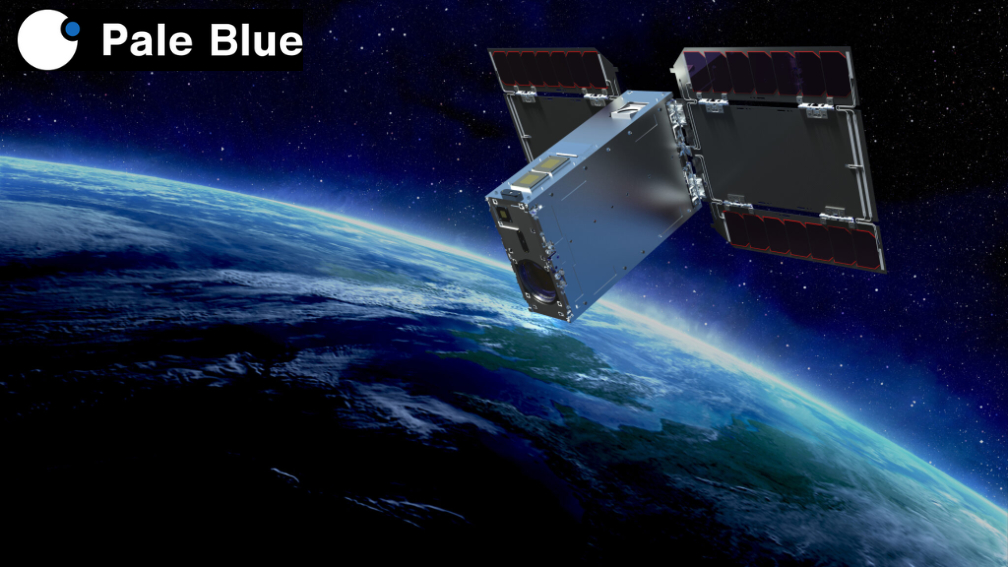
Pale Blue Inc. (Pale Blue) has been awarded a grant by Japan’s Ministry of Education, Culture, Sports, Science and Technology (MEXT) under the Small and Business Innovation Research 3 (SBIR-3) program to develop and demonstrate key technology for space debris mitigation.

The grant is worth up to $27 million (JPY 4 billion) and will enable the development and demonstration of a miniaturized, water-based, ion thruster and a water-based, hall-effect thruster by fiscal 2027.

Most space debris consists of fragments generated by collision with other space debris and satellites that have ceased operation. In order to reduce space debris, it is imperative to ensure that future satellites will be equipped with the ability to avoid collision and perform deorbit maneuvers upon completing operation. As propulsion systems enable satellites to both avoid collision and deorbit, they are one of the most effective tools available today to mitigate space debris.

While more and more smallsats are expected to be launched going forward, especially in the 10 kg to 500 kg mass range, the need for propulsion systems that are both small enough to fit on small satellites and integration friendly will only continue to grow. Pale Blue will tackle this challenge by developing a propulsion system that uses water as propellant, which is not only safe and procurement-friendly but which can also be miniaturized.

Under this program, Pale Blue will develop two types of propulsion systems; a water-based miniaturized ion thruster targeting 10 to 100 kg class satellites and a water-based, hall-effect thruster targeting 100 to 500 kg class satellites, both of which will be demonstrated in orbit.

The SBIR-3 program supports startup companies that are ready for large scale technology demonstration and is designed under the Small Business Innovation Research program in Japan to promote innovation by facilitating the research and development executed by startup companies. The program aims to promote the social application of state of the art technologies by subsidizing grant projects. The SBIR-3 program awarded to Pale Blue is divided into three phases and will grant up to $27 million (JPY 4 billion). The grant amount is determined separately at each phase and with the first phase amount totaling $8.7 million (JPY 1.3 billion).

“We are truly honored to have been selected for the SBIR-3 program,” said Jun Asakawa, CEO of Pale Blue. “We will contribute to space debris mitigation through agile development of the miniaturized water ion thrusters and the water hall-effect thrusters. This program will enable the product to rapidly enter the market after in-orbit demonstration, and will allow for quick adoption by satellite constellation operators. We are confident that this will lead to our vision of creating mobility that is core to the space industry.”

Pale Blue is a space tech company spun out from the University of Tokyo in 2020. The company is dedicated to providing a propulsion solution for spacecraft and it produces a range of systems that use water as a propellant. Through its innovative propulsion technology, Pale Blue aims to create mobility that is core to the space industry.

Filed Under: News

ThrustMe closes contract order with CNES for several off-the-shelf propulsion systems

February 7, 2024 by editorial

ThrustMe has received a direct order for the firm’s off-the-shelf propulsion products from the French Centre National d’Études Spatiales (CNES).

This contract from CNES illustrates the agency’s procurement policy now embraces agile and commercially focused strategies to meet the dynamic needs of modern space missions.

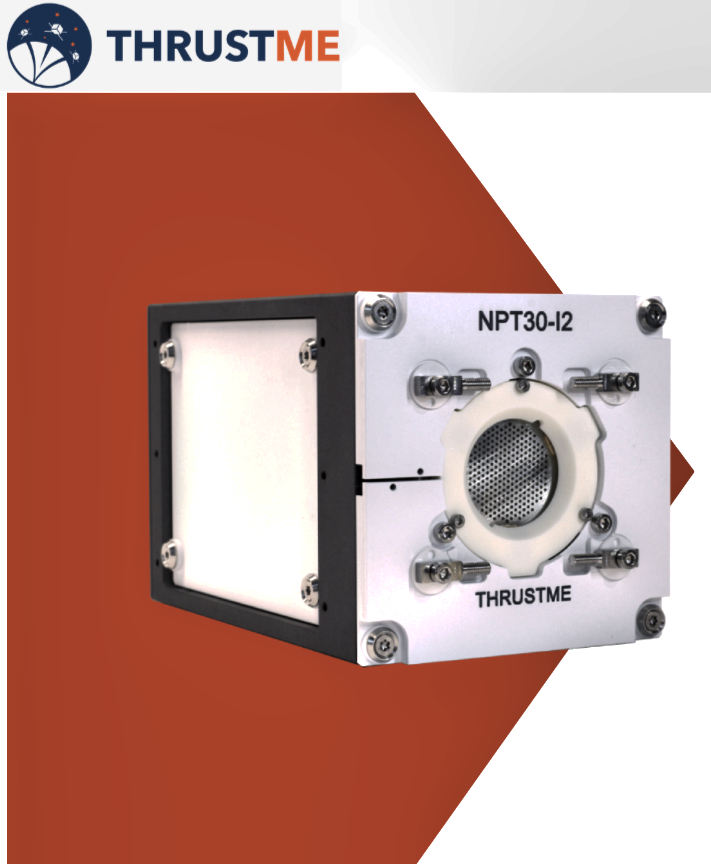
The NPT30-I2, ThrustMe’s miniaturized iodine electric propulsion system, is at the heart of this contract. Offering unparalleled procurement efficiency with remarkably short lead times and impressive performance levels, this system ensures swift adaptability to the dynamic demands of CNES projects. This system symbolizes ThrustMe’s engagement in providing reliable and innovative solutions that are ready to launch, facilitating rapid progress in space exploration and satellite deployment.

“ThrustMe was able to design, develop and produce a very innovative product that meets the needs of the market. All this in record time! CNES is a proud customer of ThrustMe, their Iodine electric propulsion systems are key to the future of European satellites”, said Philippe Baptiste, CNES Chairman and CEO.

Ane Aanesland, CEO and co-founder of ThrustMe, said, “We are honored to be chosen by CNES to provide propulsion systems for their upcoming missions. Today, with dozens of systems in orbit and delivering to clients worldwide, ThrustMe celebrates the agency’s confirmation of our reliability and innovation in this future oriented contract.”

Filed Under: Featured, News

COTS systems support nexgen satellites— SmallSat Symposium panel of experts upcoming…

February 7, 2024 by editorial

A live panel discussion will occur at the currently running SmallSat Symposium in Silicon Valley, California, entitled “The Use of Microelectronics that Enable SmallSats.”

This panel discussion will start at 8:30 a.m., PT, on Thursday, February 8th, and will feature speakers Ralph Grundler, Aitech‘s Director of Space Business Development, as well as additional industry experts. At the center of the discussion will be how the next generation of space technologies are contributing to the ongoing growth of SmallSats.

Forward think application developments and the proven reliability of COTS-based systems in space are definitely leading the efforts toward next generation SmallSat solutions. Aitech’s space digital backbone (DBB), supported by COTS products, harnesses the power to provide scalable, open comms with space data tech for any orbit level.

Register today and discover how Aitech and other industry leaders are contributing to the evolution of SmallSats at the SmallSat Symposium.

Filed Under: News

GEOST to provide missile warning sensor for Sierra Space satellites in the SDA Tracking Layer

February 6, 2024 by editorial

GEOST, LLC (GEOST), a LightRidge Solutions company, will provide the mission payloads as a subcontractor under prime awardee Sierra Space for the Space Development Agency’s (SDA) Tracking Layer Tranche 2 missile warning and tracking satellites.

The Tracking Layer Tranche 2 satellites are a critical component in SDA’s proliferated warfighting space architecture to counter hypersonic and advanced missile threats.

GEOST will provide Sierra Space with 16 of the company’s Mercury missile warning and missile tracking payloads and two of its Phoenix fire control payloads for multi-domain missile defense. The company will also be delivering mission processing solutions integrated with its payloads.

GEOST’s design leverages company internal research and development investments in leading-edge sensor designs and advanced algorithms, as well as investments to significantly expand its production capacity. It builds on existing GEOST expertise developing and building high-performance, multi-orbit payloads for classified and unclassified missions that are affordable, low weight and low power, with integrated on-orbit processing and ground-based infrastructure.

“The SDA Tracking Layer Tranche 2 award opens new avenues for GEOST including applicability to other space-based persistent infrared missions in low- and medium-Earth orbits (LEO / MEO). The contract represents a strategic win for Sierra Space and GEOST as we continue to scale and expand into new mission areas,” said Bill Gattle, CEO of LightRidge Solutions. “LightRidge is proud to be part of SDA’s transformational architecture that will provide critical capability to the warfighting infrastructure. This award continues LightRidge’s dedication to delivering impactful and differentiated capabilities for integral U.S. National Security Space missions.”

“The SDA Tracking Layer Tranche 2 award opens new avenues for GEOST,” said Rich Gray, President of GEOST, “including applicability to other space-based persistent infrared missions in low- and medium-earth orbits.”

GEOST, LLC, a LightRidge Solutions Company, designs and produces affordable, high-performance optical sensor systems for critical National Security Space missions. The company has served its core DoD, Intelligence Community, and industry customer base since its founding with a team of around 200 high performing professionals based in Arizona and Northern Virginia.

LightRidge Solutions brings leading capabilities that address demanding national security space and defense needs, including advanced space payloads and on-orbit processing technologies, multi-orbit space domain awareness and protection systems, laser communications and airborne survivability systems, as well as mission autonomy software. LightRidge’s innovative and highly reliable concept-to-production systems provide high performance at lower costs and shorter delivery schedules than traditional systems. These include world-class optical and laser sensors, surveillance systems, and data-processing electronics, which are enabling the transition to more resilient and affordable space architectures for the U.S. military and intelligence communities, as well as select commercial and international customers.

Filed Under: News

SSTL engages in Lunar Pathfinder antenna tests

February 6, 2024 by editorial

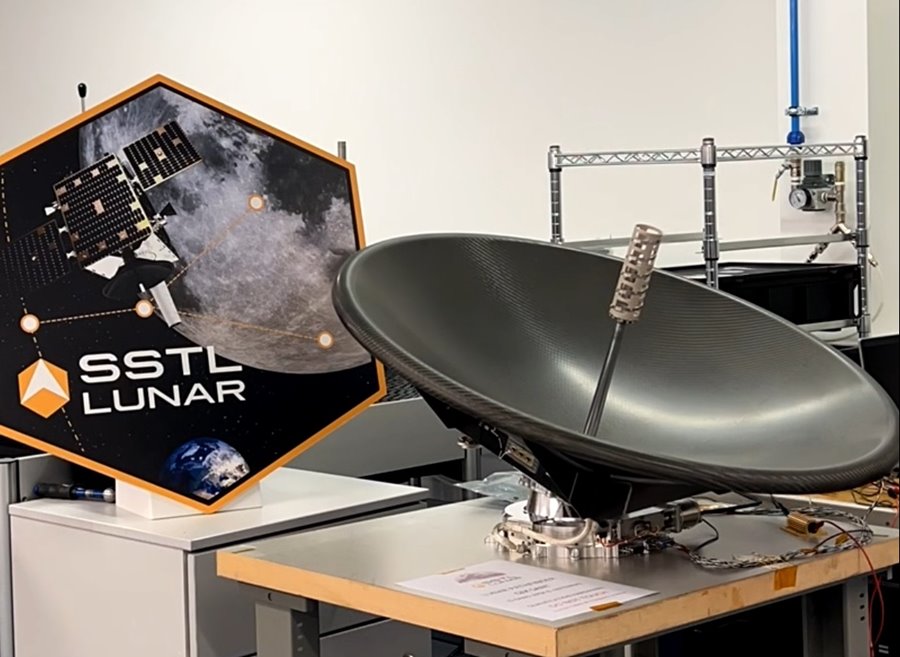
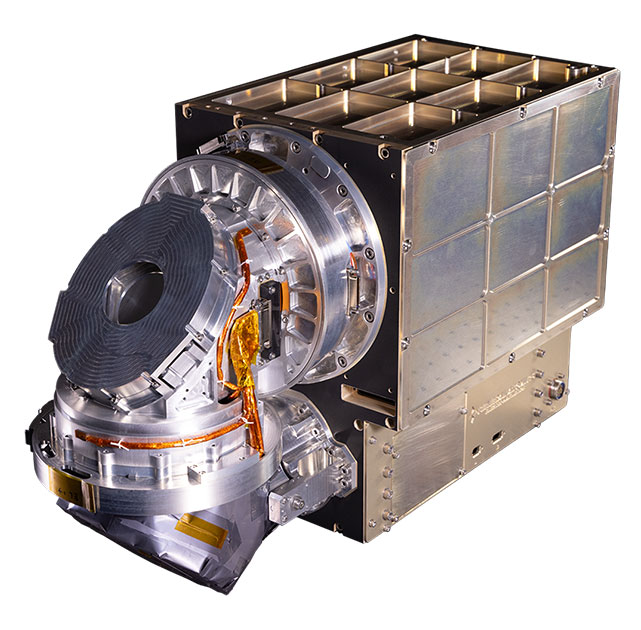
Lunar Antenna in Functional Test

One of Surrey Satellite Technologies Limited (SSTL) key missions in build is the Lunar Pathfinder, and all of the elements are coming together in anticipation of a launch toward the end of 2025. Check out the Lunar Pathfinder SANT (photo above), which is an S-band antenna and Antenna Pointing Mechanism (APM).

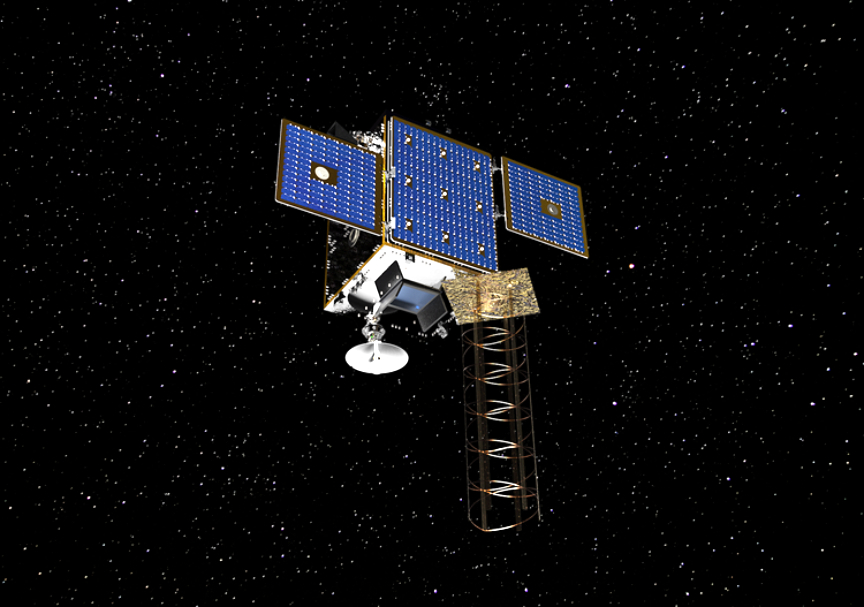
Artistic rendition of the Lunar Pathfinder, image courtesy of SSTL.

The antenna is a 0.86 meter Parabolic CFRP Reflector fed by a Backfire Helix, capable of transmitting and receiving in S-band (2.0 – 2.3 GHz) with gain >20dB.

The APM is a novel design which rotates two swashplates to achieve a pointing range up to 25 degrees off-center. The flight mass of the APM 9.3 kg, or 11.3 kg with the antenna installed.

The Lunar Pathfinder SANT has been developed in-house at SSTL to communicate with assets on the surface of the moon and in lunar orbit as part of the primary payload of the Lunar Pathfinder spacecraft.

Filed Under: News

Terran Orbital wins 2024 BIG Innovation award

February 6, 2024 by editorial

Terran Orbital Corporation (NYSE: LLAP) has announced that CAPSTONE™, a satellite manufactured by Terran Orbital for Advanced Space’s NASA lunar mission, has been named a winner in the 2024 BIG Innovation Awards presented by the Business Intelligence Group.
Organizations from across the globe submitted their recent innovations for consideration in the BIG Innovation Awards. Nominations were then judged by a select group of business leaders and executives who volunteer their time and expertise to score submissions.

“At Terran Orbital, we aim to keep innovation at the forefront of our company’s mission. Receiving recognition for this is an honor, and we will continue our commitment to being a leader in the space,” said Marc Bell, Co-Founder, Chairman, and Chief Executive Officer at Terran Orbital.

“Innovation is driving our society,” said Maria Jimenez, Chief Nominations Officer of the Business Intelligence Group. “We are thrilled to be honoring Terran Orbital as they are leading by example and improving the lives of so many.”

Filed Under: News

NGA IDIQ R&D million$$$ contract to Solis Applied Science team that includes Sidus Space

February 5, 2024 by editorial

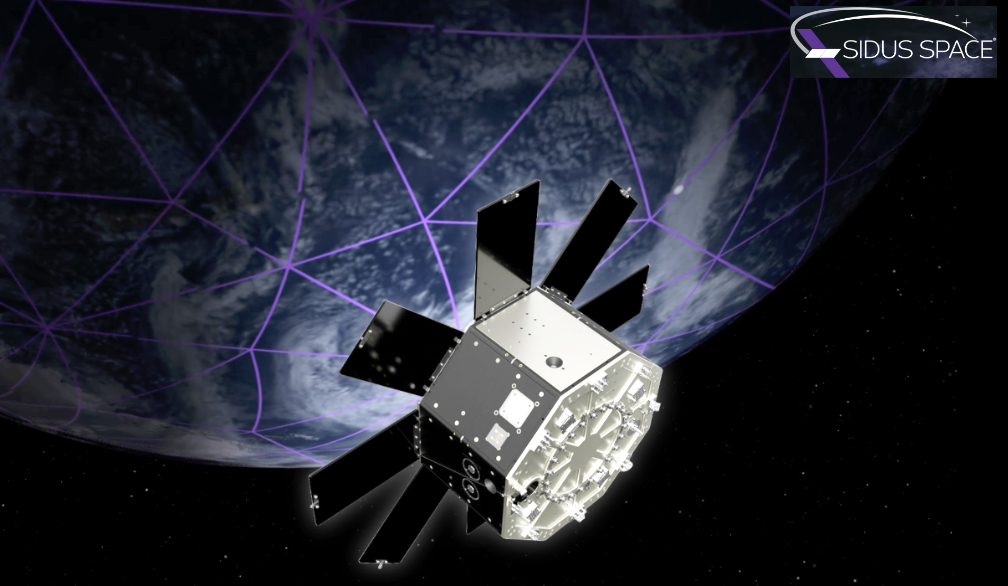
Sidus Space (NASDAQ: SIDU) has reported the firm is a member of the Solis Applied Science, LLC team that was selected by the National Geospatial-Intelligence Agency‘s (NGA) to provide R&D services to NGA’s Research and Development directorate.

The NGA awarded the Research and Development Contract (RDC) indefinite-delivery, indefinite-quantity (IDIQ) contract on January 25, 2024, to Solis Applied Science, LLC, one of four IDIQ awardees. Task orders will be completed among the IDIQ awardees, with the first task order scheduled for February of 2024.

Sidus Space expects to actively contribute to RDC activities, focusing on the development, maturation, testing, and integration of R&D concepts into functional prototypes as a member of the Solis team. The scope of RDC projects encompasses groundbreaking research in foundational geospatial-intelligence, advanced phenomenologies, and analytic technologies.

For more information on the NGA’s $794 million Research and Development Contract, view NGA’s official announcement here.

“The opportunity to contribute to NGA’s Research and Development Contract aligns seamlessly with Sidus Space’s commitment to pushing the boundaries of space technology and data services,” said Carol Craig, CEO of Sidus Space. “As part of the Solis team, we are excited to leverage our expertise in driving innovation, testing prototypes, and advancing capabilities that will shape the future of geospatial intelligence.”

Sidus Space (NASDAQ: SIDU) is a Space and Data-as-a-Service satellite company focused on mission-critical hardware manufacturing; multi-disciplinary engineering services; satellite design, production, launch planning, mission operations; and in-orbit support. The Company is in Cape Canaveral, Florida, where it operates from a 35,000-square-foot manufacturing, assembly, integration, and testing facility focused on vertically integrated Space-as-a-Service solutions including end-to-end satellite support.

Sidus Space has a mission of Bringing Space Down to Earth™ and a vision of enabling space flight heritage status for new technologies while delivering data and predictive analytics to domestic and global customers. Any corporation, industry, or vertical can start their journey off-planet with Sidus Space’s rapidly scalable, low-cost satellite services, space-based solutions, and testing alternatives. More than just a “Satellite-as-a-Service” provider, Sidus Space is a trusted Mission Partner–from concept to Low Earth Orbit and beyond. Sidus Space is ISO 9001:2015, AS9100 Rev. D certified, and ITAR registered.

Filed Under: News

General Atomics awarded SDA contract to demo optical comms terminals hosted on GA-75

February 5, 2024 by editorial

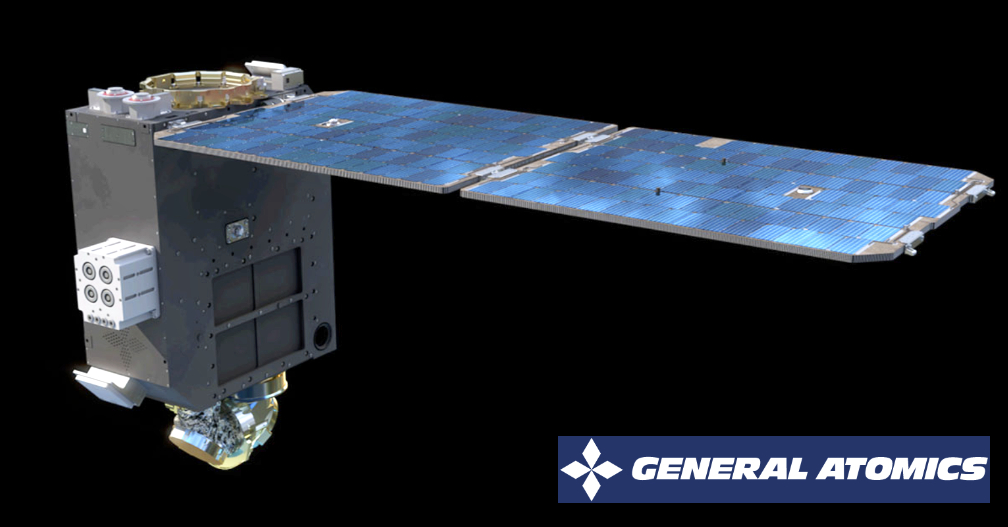
General Atomics Electromagnetic Systems (GA-EMS) was recently awarded a contract from the Space Development Agency (SDA) to demonstrate the capabilities of the company’s Optical Communication Terminals (OCTs) hosted on GA-EMS’ GA-75 (75 kilogram class) spacecraft while in LEO.

GA-EMS is designing and building two OCTs to provide robust space-to-space communication in a degraded environment and establish and maintain links to meet SDA standards and requirements. The OCTs can support a vast network of satellites, data and information sharing, and collective on-orbit computing resources to support customer and mission requirements. 

GA-EMS Optical Communication Terminal, compliant with SDA v3.1 OCT Standard

The OCTs will be integrated on two GA-EMS GA-75 spacecraft.  The GA-75 is a resilient, modular, and configurable half-ESPA bus design with capabilities to support a variety of communications and Intelligence, Surveillance, and Reconnaissance (ISR) payloads and missions.  The GA-75 is a commercially available platform that utilizes standard payload interfaces to enable seamless integration and mission-ready delivery times. It is also compatible with multiple launch vehicles and can package two spacecraft per ESPA port or fill a single ESPA port depending on mission payload size.

“We’re excited to continue working with SDA and look forward to demonstrating our OCT capability developed, built, and tested by GA-EMS, and integrated on GA-EMS-designed and built spacecraft,” said Scott Forney, president of GA-EMS. “This contract supports the deployment of next generation optical communication technologies that will provide faster, more secure, higher fidelity transmissions, and greater resiliency to ensure 24/7 connectivity from the Earth to space.”

General Atomics Electromagnetic Systems (GA-EMS) Group is a global leader in the research, design, and manufacture of first-of-a-kind electromagnetic and power generation systems. GA-EMS’ history of research, development, and technology innovation has led to an expanding portfolio of specialized products and integrated system solutions supporting aviation, space systems and satellites, missile defense, power and energy, and processing and monitoring applications for defense, industrial, and commercial customers worldwide.

Filed Under: Featured, News

Orbital Lasers company formed by SKY Perfect JSAT Corporation to tackle space debris

February 2, 2024 by editorial

SKY Perfect JSAT Corporation has established Orbital Lasers Co., Ltd. — this milestone follows the announcement in June of 2020 to design and develop the payload of the world’s first (based on SKY Perfect JSAT research) satellite for space debris removal using laser technology, in collaboration with the Institute of Physical and Chemical Research (RIKEN – Satellite Orbital State Control Laser Laboratory (Japanese Web page).

Orbital Lasers will engage in space debris removal as well as further use and develop its laser technologies. By incorporating space-based LiDAR (Light Detection and Ranging) is a remote sensing technology that measures the distance to and shape of a target object by emitting laser light and using information obtained from the reflected light) technology into satellites. The new company aspires to become the world’s first commercial provider of high-precision ground surface information through the use of satellite LiDAR.

In connection with this Satellite LiDAR business, SKY Perfect JSAT and JAXA entered into a contract regarding the conceptual study of EO LiDAR satellites system and their future commercialization, this occurring on January 12, 2024. Orbital Lasers is scheduled to undertake this conceptual study under contract from SKY Perfect JSAT.

Orbital Lasers will engage in the following businesses…

  • Space Debris Removal — Detumbling (DTB): Development and sales of payload capable of detumbling space debris *Planned in FY2025, and, Active Debris Removal (ADR): Service to remove space debris *Planned in FY2029
  • Satellite LiDAR — Earth Observation (EO): Provision of ground surface information using Satellite LiDAR *Planned

The issue of space debris is now regarded as an environmental problem as significant as global warming and marine plastic pollution. SKY Perfect JSAT and Orbital Lasers are earnestly addressing this concern and aiming to contribute to the improvement of a sustainable space environment.

Tadanori Fukushima, President and CEO, Orbital Lasers, said, ” In my 14 years of experience in satellite operations, I have always been highly concerned about the impact of space debris on the space environment. Consequently, I applied for an internal startup program and engaged in research and development of space debris removal with universities, research institutions, government agencies, companies, and experts to advance its business development. I would like to express my sincere gratitude to all the people involved in the establishment of Orbital Lasers. Furthermore, during this progress, we were able to discover new possibilities using space-based lasers, leading to the Satellite LiDAR Business. Through Orbital Lasers’ initiatives, we aim to contribute to society by further enhancing the usability of space.”

Eiichi Yonekura, Representative Director, President and CEO, SKY Perfect JSAT, said, “I am deeply honored that we have finally been able to establish this new company through the startup program—an employee-initiated new business proposal system—that we launched in 2018. As a leader in the space industry, SKY Perfect JSAT will continue to aim for further business expansion and embrace challenges, seeking not only to create the next new businesses but also to generate new business models and values, including through partnerships with other companies.”

Setsuko Aoki, Outside Director, SKY Perfect JSAT Holdings Inc., said, “The Orbital Lasers Co., Ltd. has started two world’s first businesses through state-of-the art lasers technology: aiming to provide high-quality Earth information; and protect orbits as ‘limited natural resources’ by active debris removal. This is not just a new venture. This also qualifies as a part of Japan’s contribution to the global society whose urgent needs include the safe and sustainable use of outer space. As an outside director, I am most proud of the innovative enterprise on which both companies have embarked.”

View the Orbital Lasers Concept Movie at this direct link…

Filed Under: Featured, News

Rocket Lab successfully launches 1st Electron mission of busy 2024 launch

February 2, 2024 by editorial

Rocket Lab USA, Inc. (Nasdaq: RKLB) launched the company’s first Electron mission for 2024, a space-junk focused mission for Spire Global, Inc. (“Spire”) and NorthStar Earth & Space (“NorthStar”).

The ‘Four Of A Kind’ mission for Spire’s customer NorthStar successfully launched from Rocket Lab Launch Complex 1 in New Zealand at 19:34 NZDT / 06:34 UTC. Rocket Lab’s Electron rocket deployed four Space Situational Awareness (SSA) satellites to a 530km circular Earth orbit where the satellites, built and operated by Spire, will monitor near-Earth objects from space to provide timely and precise information for space object detection, tracking, orbit determination, collision avoidance, navigation, and proximity alerts.

This mission was Rocket Lab’s 43rd Electron launch overall, bringing the Company’s record of successfully deployed satellites to 176. The mission was the first of a busy launch year for Rocket Lab, with the Company scheduled to launch more in 2024 than any previous year since the Company began missions in 2017.

The mission also resulted in the successful return of the rocket’s first stage after launch as part of Rocket Lab’s plan to evolve Electron into a reusable rocket. After launch and stage separation, Electron’s booster made its way back to Earth under a parachute and splashed down in the Pacific Ocean at approximately 17 minutes post lift-off.

‘Four Of A Kind’ is Rocket Lab’s first Electron launch in a sold-out 2024 mission manifest that includes multiple upcoming launches for NASA; hypersonic technology tests on suborbital HASTE missions from Rocket Lab Launch Complex 2 in Virginia; the beginning or continuation of block launches for satellite operators BlackSky, Synspective, and Kinéis; and several other launches for commercial and defense sector mission partners.

Rocket Lab founder and CEO, Peter Beck, said, “The success of today’s mission to deliver Spire & NorthStar to orbit, and the completion of our secondary mission to return Electron to Earth after launch, has been a fantastic start of what is set to be Rocket Lab’s busiest year ever. We have more missions booked in 2024 than we’ve ever scheduled before, and it is a real privilege to continue to deliver small launch reliability for our satellite customers on advanced missions like these and for all the missions to come in 2024.”

Filed Under: News

  • « Go to Previous Page
  • Page 1
  • Interim pages omitted …
  • Page 82
  • Page 83
  • Page 84
  • Page 85
  • Page 86
  • Interim pages omitted …
  • Page 338
  • Go to Next Page »

Primary Sidebar

WEEKLY NEWSLETTER

Archives

  • October 2026
  • September 2026
  • August 2026
  • July 2026
  • June 2026
  • May 2026
  • April 2026
  • March 2026
  • February 2026
  • January 2026
  • December 2025
  • November 2025
  • October 2025
  • September 2025
  • August 2025
  • July 2025
  • June 2025
  • May 2025
  • April 2025
  • March 2025
  • February 2025
  • January 2025
  • December 2024
  • November 2024
  • October 2024
  • September 2024
  • August 2024
  • July 2024
  • June 2024
  • May 2024
  • April 2024
  • March 2024
  • February 2024
  • January 2024
  • December 2023
  • November 2023
  • October 2023
  • September 2023
  • August 2023
  • July 2023
  • June 2023
  • May 2023
  • April 2023
  • March 2023
  • February 2023
  • January 2023
  • December 2022
  • November 2022
  • October 2022
  • September 2022
  • August 2022
  • July 2022
  • June 2022
  • May 2022
  • April 2022
  • March 2022
  • February 2022
  • January 2022
  • December 2021
  • November 2021
  • October 2021
  • September 2021
  • August 2021
  • July 2021
  • June 2021
  • May 2021
  • April 2021
  • March 2021
  • February 2021
  • January 2021
  • December 2020
  • November 2020
  • October 2020
  • September 2020
  • August 2020
  • July 2020
  • June 2020
  • May 2020
  • April 2020
  • March 2020
  • February 2020
  • January 2020
  • December 2019
  • November 2019
  • October 2019

© 2019–2026 SatNews

Insert/edit link

Enter the destination URL

Or link to existing content

    No search term specified. Showing recent items. Search or use up and down arrow keys to select an item.
      x
      Sign Up Now!

      Enjoy a free weekly newsletter with recent headlines from the global SmallSat industry.

      Invalid email address
      We promise not to spam you. You can unsubscribe at any time.
      Thanks for subscribing! You will now receive weekly SmallSat News updates.
      We love our advertisers.
      And you will too!

      Please disable Ad Blocker to continue... We promise to keep it unobtrusive.
      We promise not to spam you. You can unsubscribe at any time.
      Invalid email address
      Thanks for subscribing!