• Skip to main content
  • Skip to primary sidebar
  • Home
  • News
  • Featured
  • More News ⌄
    • SatNews
    • SatMagazine
    • MilSatMagazine
  • Events ⌄
    • MilSat Symposium
    • SmallSat Symposium
    • Satellite Innovation
  • Contacts
  • SUBSCRIPTION

SmallSat News

You are here: Home / Archives for editorial

editorial

General Atomics awarded SDA contract to demo optical comms terminals

January 24, 2024 by editorial

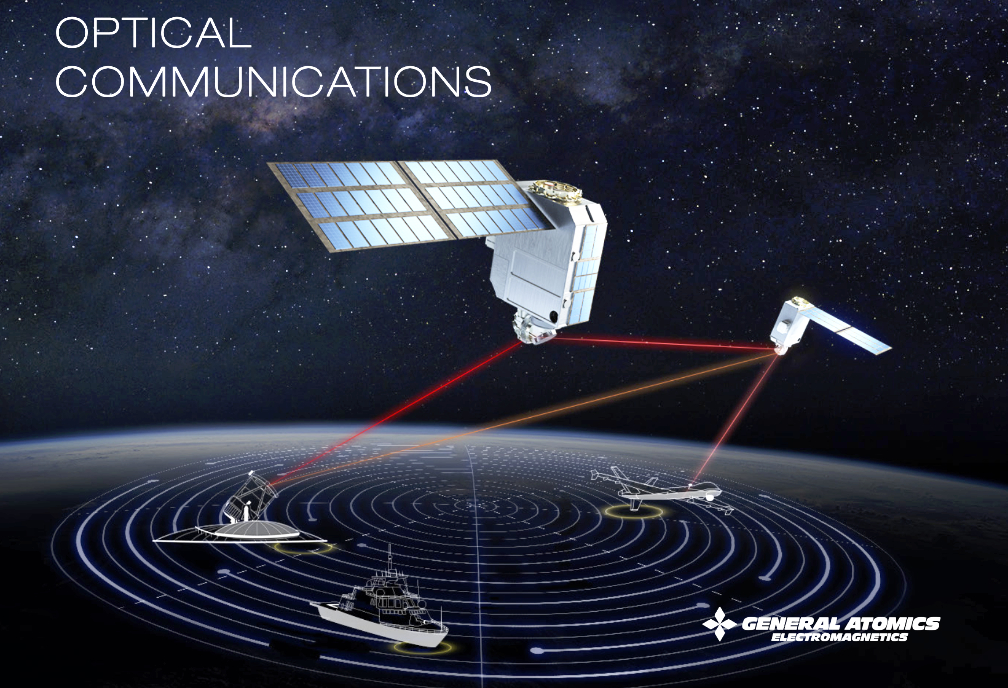
General Atomics Electromagnetic Systems (GA-EMS) has been awarded a contract from the Space Development Agency (SDA) to demonstrate the capabilities of the company’s Optical Communication Terminals (OCTs) hosted on GA-EMS’ GA-75 (75 kilogram class) spacecraft while in LEO.

“We’re excited to continue working with SDA and look forward to demonstrating our OCT capability developed, built, and tested by GA-EMS, and integrated on GA-EMS-designed and built spacecraft,” said Scott Forney, president of GA-EMS. “This contract supports the deployment of next generation optical communication technologies that will provide faster, more secure, higher fidelity transmissions, and greater resiliency to ensure 24/7 connectivity from the Earth to space.”

GA-EMS is designing and building two OCTs to provide robust space-to-space communication in a degraded environment and establish and maintain links to meet SDA standards and requirements. The OCTs can support a vast network of satellites, data and information sharing, and collective on-orbit computing resources to support customer and mission requirements. 
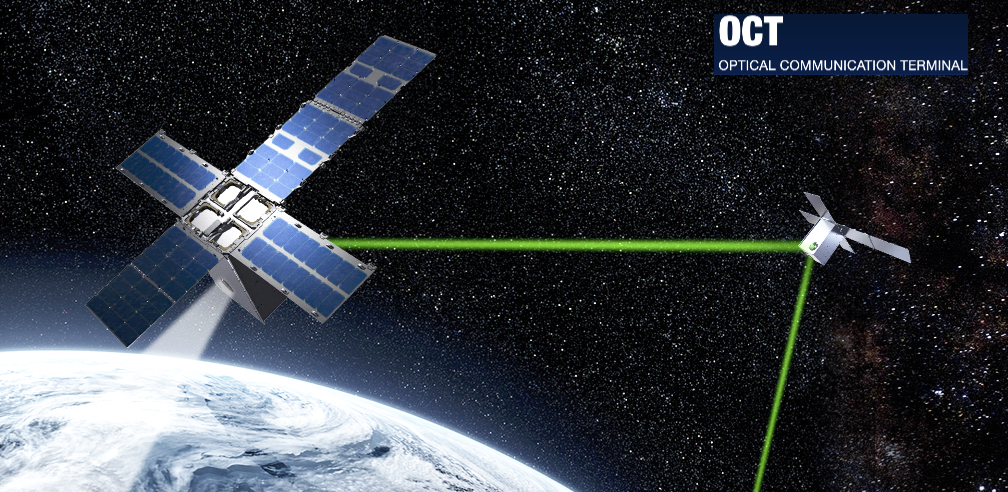
The OCTs will be integrated on two, GA-EMS GA-75 spacecraft.  The GA-75 is a resilient, modular, and configurable half-ESPA bus design with capabilities to support a variety of communications and Intelligence, Surveillance, and Reconnaissance (ISR) payloads and missions.  The GA-75 is a commercially available platform that utilizes standard payload interfaces to enable seamless integration and mission-ready delivery times. It is also compatible with multiple launch vehicles and can package two spacecraft per ESPA port or fill a single ESPA port depending on mission payload size.

General Atomics Electromagnetic Systems (GA-EMS) Group is a global leader in the research, design, and manufacture of first-of-a-kind electromagnetic and power generation systems. GA-EMS’ history of research, development, and technology innovation has led to an expanding portfolio of specialized products and integrated system solutions supporting aviation, space systems and satellites, missile defense, power and energy, and processing and monitoring applications for defense, industrial, and commercial customers worldwide. For further information, visit www.ga.com/ems

Filed Under: News

Dutch satellite instrument achieves milestone in laser data transfer to Earth

January 24, 2024 by editorial

Researchers from TNO have successfully connected a satellite to a ground station on Earth via self-developed laser communication technology — this is the first time this has been achieved with a Dutch laser satellite instrument. The technology enables much faster and safer data transfer than the radio frequencies currently used for communication.

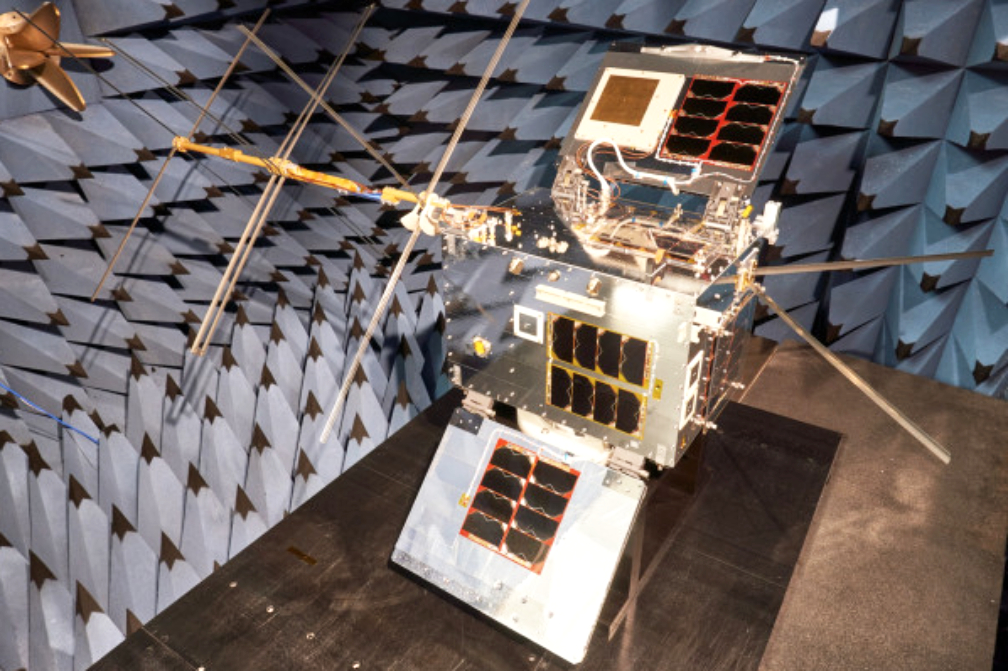
Norwegian satellite with on-board laser communication system SmallCAT. Photo is courtesy of the University of Toronto Institute for Aerospace Studies Space Flight Laboratory.

Almost all connections in daily life, such as Wi-Fi, Bluetooth or 5G, are based on radio frequency waves. Partly due to the increase in data consumption, this radio frequency spectrum is slowly filling up, creating scarcity and interference.

Laser satellite communication offers a solution as it can send data faster and more securely via invisible laser signals. Radio frequencies achieve speeds of hundreds of megabits, in some cases several gigabits per second (Gbps). Laser communication achieves speeds of 100 to 1000 times faster. Laser communication links are interesting even at lower speeds because systems are much smaller, lighter and more energy efficient, which is important for space applications. It is also more secure because very narrow optical laser beams are used instead of wide radio signals. This makes eavesdropping more difficult, and interference is quickly detected.

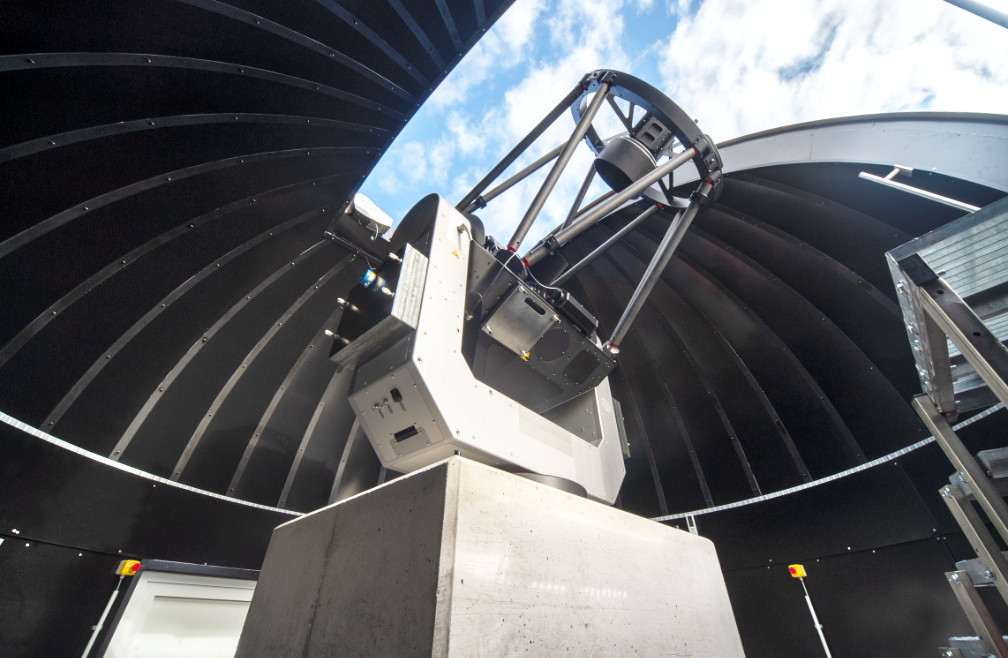
The optical ground station at TNO in The Hague.

The laser communication system, SmallCAT (Small Communication Active Terminal), was launched in April of 2023 by SpaceX aboard a satellite that is operated by the Norwegian Space Agency.

Since then, TNO has been preparing to establish a connection between the satellite, which flies in LEO, and optical ground stations in The Hague (TNO) and Tenerife (ESA ESOC’s IZN-1).

The optical ground station at TNO in The Hague.

During such an experiment, the ground station first sends a signal to the satellite, where it has to be found by the laser communication system on board through its overpass and then sends its laser back to Earth where the ground station needs to capture the signal.

This is incredibly challenging as the satellite is flying at an altitude of 500 kilometers at a speed of 28,000 kilometers per hour. During several experiments TNO succeeded in finding both ground stations from space and sending back and recapturing the laser beams with extreme precision. Once a link was established, data was transferred from the satellite instrument and received by the optical ground station in The Hague at a maximum data rate of one gigabit per second.

The ground station at TNO in The Hague was developed by TNO together with Airbus Netherlands and is the first time this has been achieved with such a compact satellite instrument of Dutch manufacture. It demonstrates that the terminal on the satellite and the ground station work and can also find each other under real conditions.

This success is an important step in the development of laser terminals (AAC Clyde Space) and Ground Stations (Airbus Netherlands) for the emerging laser communications market and, thus, in the creation of an European ecosystem for fast and secure laser satellite communications. Eventually, the laser communication system is intended to communicate with other European optical ground stations that are part of the ‘Optical Nucleus Network,’ operated by Norway’s KSAT (Kongsberg Satellite Services).

Laser satellite communication works best if a network of multiple satellites is built for that purpose. Ultimately a constellation of satellites is needed for a reliable network.

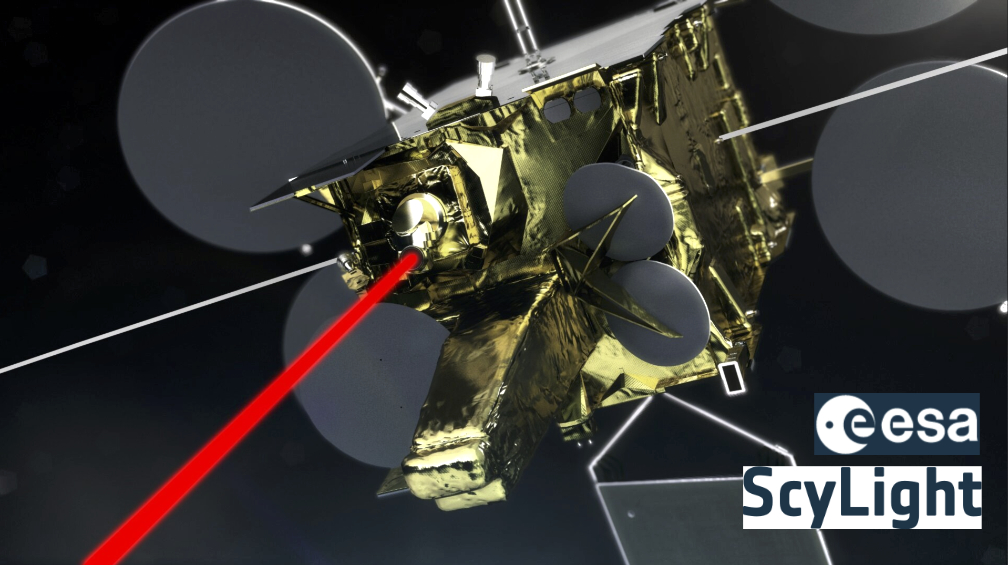
The satellite instrument is developed by a TNO-led consortium that includes AAC Hyperion (part of AAC Clyde Space) for the onboard electronics, drivers as well as software, and Gooch & Housego (laser transmitter). The development was financed with Netherlands Space Office (NSO) funds through the ESA ARTES ScyLight program and the Dutch Ministry of Defense’s innovation budget.

TNO also contributed in co-funding this program. The optical ground station in The Hague is developed by TNO in collaboration with Airbus Netherlands B.V., ASA, and Digos.

Kees Buijsrogge, director TNO Space, said, “This pivotal milestone marks a significant achievement in advancing technological sovereignty for both the Netherlands and Europe in a strong NATO, as it will enable faster and more secure broadband connectivity. It’s a provisional outcome of collaborative endeavors within a nascent Dutch industry specializing in optical satellite communication.”

Filed Under: Featured, News

ELA’s value offering to launch vehicle providers and payload customers — spaceport of the future

January 24, 2024 by editorial

Artistic rendition of the ELA ASC Advance Launch Pad (ASCALP) design.

Equatorial Launch Australia (ELA) has revealed completed designs for the company’s Horizontal Integration Facility (HIF) buildings —state-of-the-art assembly, integration and testing facilities for each of up to seven rocket launch companies to be based at the Arnhem Space Centre (ASC).

The purpose-built buildings offer a 40m (L) x 26m (W) x 12m (H) in standard configuration and incorporates advanced space mission specific features to provide launch vehicle companies and satellite payload manufacturers with cutting edge facilities to ensure their mission success.

This announcement comes on the back of the release of ELA’s ‘game changer’ ASCALP launch pad designs in December of 2023. The delivery of the HIF designs completes the company’s designs for its ‘Space Launch Complex’ (SLC) — a designated area of the spaceport at which each resident launcher will locate for all preparatory work prior to and including lift off — and is comprised of up to two launch pads and one HIF building for each launch company.

“The public release of our completed HIF designs at the Arnhem Space Centre is another major milestone for ELA and we are incredibly excited to be able to share these designs with our current and future customers and with the wider space industry,” said Michael Jones, Executive Chairman and Group CEO, Equatorial Launch Australia. “We are confident that our facilities and services are, and will be, truly world leading, and we are very much looking forward to offering our customers a best-in-class experience from the moment they sign with ELA.”

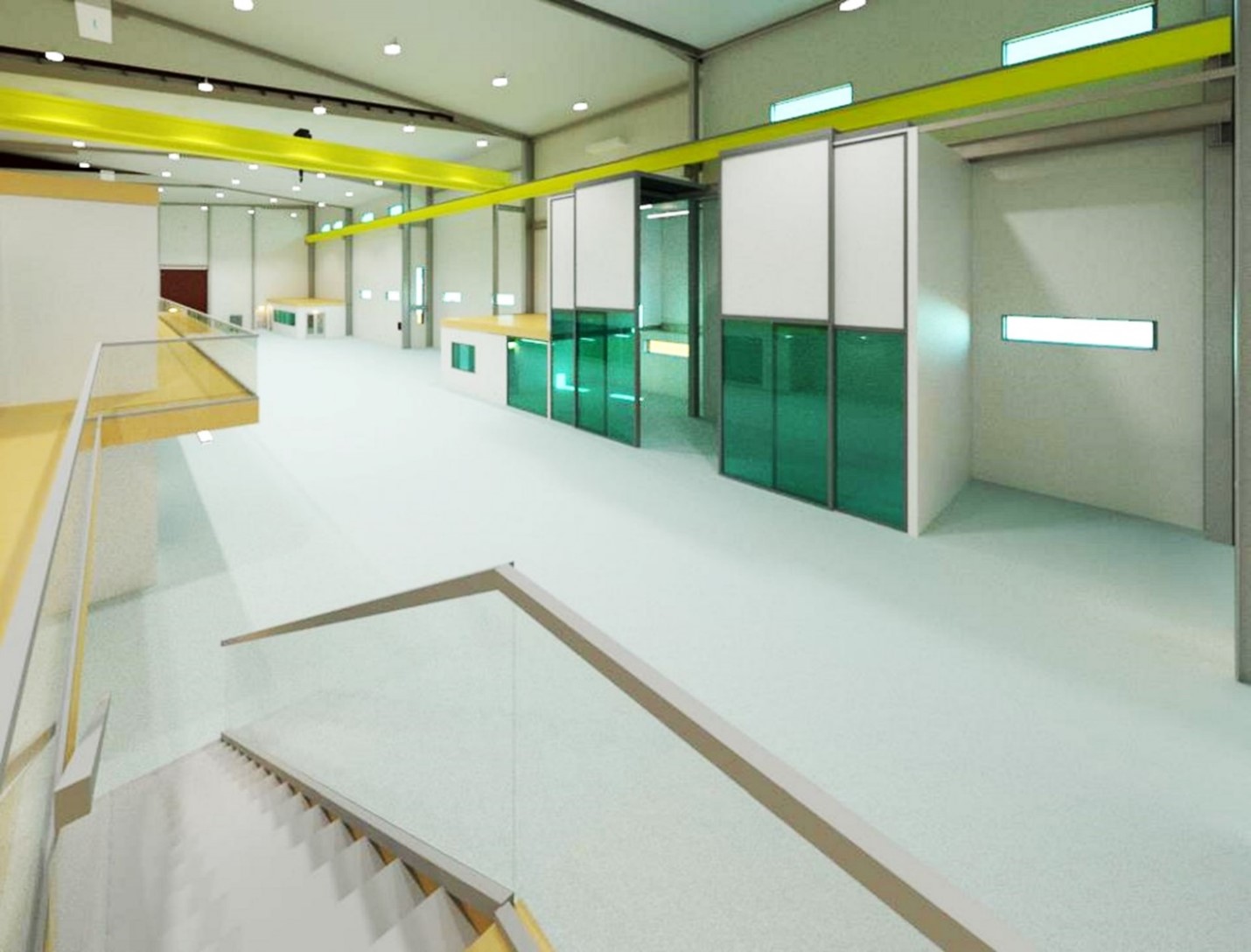
Internal concept image for Horizontal Integration Facility at the Arnhem Space Centre featuring 8m high sliding doors and ceilings in the ISO 8 cleanroom allowing vertical payload integration.
External render image of the Horizontal Integration Facility buildings at the Arnhem Space Centre showing high clearance roll up doors and airlock entries.
External render image of the Horizontal Integration Facility buildings at the Arnhem Space Centre.

“Our approach from day one was to stand in the shoes of our clients and look at everything they need to have a successful launch campaign from the ASC. The SLC concept and the HIF design is far more detailed and complex than first meets the eye and will set the standard for launch operations. The innovative designs were born from extensive and comprehensive international research on current and past spaceport service offerings and deep discussions with customers on their current and future launch needs, while also considering the needs of regulators, commercial partners and us as the spaceport operator,” said Mr. Jones. “An example of this is our high clearance ISO 8 cleanroom which has 8m high ceiling and 8m high sliding doors for vertical payload integration. We wanted to guarantee we were building a Spaceport of the Future for our customers and so we invested a significant amount of time and resources analyzing and planning to ensure we could be as adaptable and as supportive as our customers required, while also aiming to set the bar for best practice in spaceport service and design.”

Designed for modularity and flexibility, the high-specification standard HIF is designed to meet and exceed the requirements of most launch vehicle providers to give them with the extra-mile service they require.

Key features of each HIF include:

  • A large 20mx 40m rocket assembly area with static discharge points, in floor pneumatic, and electrical power for assembly, integration and testing of the launch vehicles.
  • A high clearance ISO 8 cleanroom with 8m high ceiling and sliding door/ceiling for vertical payload integration. The cleanroom doubles as payload workshop and is fully fitted for multiple payload preparation and integration.
  • A 20,000 kg full-space overhead gantry crane with a height clearance under the hook of 9m and a second 2 tonne capacity hook for payload movement.
  • An indoor and enclosed workshop space to undertake minor repair/prototyping and fabrication work.
  • A multi-port wall membrane for direct access to and use of launch pad equipment like container mounted power, umbilical and other support systems.
  • An administrative and personnel area that offers office space, amenities and utility/storerooms.
  • Large 6m (W) x 8m (H) clearance roller doors at each end of the building accommodating rockets mounted on the ASC Rocket Trolley with strongback/rail attached. The buildings also have “air lock” dust prevention entrances at each end.
  • The buildings incorporate substantive insulation and HVAC climate control for the harsh NT environment. Similarly, the building is fully cyclone rated and environmentally friendly.
  • Each SLC and HIF will have advanced security measures including day/night camera, movement sensors and digital access control/recording.

“ELA went to extreme lengths to understand each of our clients’ individual needs and those learnings have been incorporated into this project. ELA management also visited a wide range of key spaceports globally to view and discuss facility needs. This was all aimed at ensuring ELA provides each customer with the most appropriate and capable ‘home away from home’ for their launch operations. “It’s our aim to be the spaceport partner of choice where we can work with our customers to give them the absolute best chance of repeated successful missions,” said Mr. Jones. “While functionality and cost effectiveness are critical in these designs, ELA wanted to make a statement in terms of finishes, aesthetics and functionality. “We wanted more than a ‘Colorbond box’ or a just hangar, so we ensured our architects went a little ‘edgy’ and used plenty of angles and a mix of finishes and materials. Each of the seven buildings will also be a different colour and be sympathetic to the land in orientation. We are putting a lot of effort into the landscaping and vegetation to harmonize with the NT environment.”

ABOVE: CAD render of the view from HIF mezzanine level showing ISO 8 clean room, workshop and overhead 20T gantry crane.

Above two images: CAD renders of the HIF internal view showing overhead gantry and office spaces.

Filed Under: News

Ovzon’s CFO is departing the company

January 24, 2024 by editorial

Ovzon’s CFO Noora Jayasekara has decided to leave the company — a process to recruit a new CFO has been initiated.

Noora Jayasekara has been Ovzon’s CFO since November 2022 and will continue in her current role until June 2024 or until a new CFO is in place.

“Noora has been instrumental in a very hectic and critical period for Ovzon, including securing the additional financing for Ovzon 3 among other things. We wish Noora all the best in her next assignment and thank her for her invaluable contribution to our company”, said Per Norén, CEO of Ovzon.

“It has been an eventful time at Ovzon, and I am grateful for having been part of this fantastic company. Now that Ovzon 3 has been successfully launched I know that the full potential of Ovzon’s unique SATCOM-as-a-Service will be unleashed. I wish Ovzon and the team all the best going forward”, said Noora Jayasekara.

Filed Under: News

Filtronic strengthens position within the E-band LEO market

January 23, 2024 by editorial

Filtronic has recently acquired a new contract win with global provider of LEO satellite communications equipment — this contract is for the volume supply of the company’s newly developed, second-generation, Cerus 32 SSPA module.

The contract is worth $6.0 million and is for the delivery of the second generation of the Cerus 32 solid-state power amplifier module. These SSPA modules will be installed in selected ground station locations as part of the customer’s Earth station antenna deployment, which provides complete E-band connectivity to the growing number of E-band enabled LEO satellites.

The Cerus 32 offers up to +43dBm of transmit power. Each Cerus 32 module benefits from Filtronic’s in-house, MMIC (Monolithic microwave integrated circuit) chip design and power-combining techniques, delivering maximum linear power. The high-power SSPA can be applied in a range of applications and is specifically suitable for commercial, military and SATCOM applications.

“We are delighted to continue our partnership with a leading global provider of LEO satellites and pleased with the opportunity to provide them with production volumes of the Cerus32 SSPA module for the deployment of their E-band ground station antenna network,” said Richard Gibbs, Chief Executive Officer.

Filed Under: News

Innoflight delivers initial engineering development units to L3Harris for SDA Tranche T1TL

January 23, 2024 by editorial

The Space Development Agency (SDA) awarded a prototype agreement to L3Harris Technologies last year to provide initial missile warning/missile tracking warfighting capability of the Proliferated Warfighter Space Architecture (PWSA).

Innoflight is on contract with L3Harris for the delivery of key avionics, including mesh network encryption/decryption, networking, processing and precision timing for the SDA T1 Tracking Layer program.

Innoflight’s deliverables to L3Harris include “mesh network” End Cryptographic Units (ECUs), network IP routers with Multi-Protocol Label Switching (MPLS), network Ethernet switches, Secure Independent Processors, and Mission Timing Electronics.

Innoflight recently delivered mesh network encryption/decryption, networking and precision timing EDUs and precision timing Flight Units to L3Harris. The EDUs are being used for software development and integration testing.

“Innoflight is pleased to continue our PWSA journey with L3Harris on the T1 Tracking Layer program after the successful delivery of T0 Tracking Layer hardware,” said Jeff Janicik, Innoflight President & CEO. “Innoflight and L3Harris have developed a synergy and strong business relationship that will make us even more successful moving forward.”

Filed Under: Featured, News

Lynk + Telecom launch initial Sat2Phone service for Telikom subscribers

January 22, 2024 by editorial

Lynk Global, Inc. (Lynk) and Telikom Limited (Telikom) have commenced initial Sat2Phone services for subscribers using Lynk’s “cell-towers-in-space.” This collaboration is anticipated to significantly enhance mobile coverage in Papua New Guinea, benefiting both the local population and visitors.

Telikom Limited, a leading telecommunication company in the South Pacific, is nationally owned and provides a range of telecommunication services in Papua New Guinea, including local, national, and international fixed-line and mobile services. Telikom engages in both retail and wholesale business, offering voice and data broadband services.

The initial Sat2Phone service will begin with SMS and is expected to expand in the future to include voice and mobile broadband, ultimately delivering an urban-like mobile experience anywhere, no matter how remote. When achieved, ubiquitous connectivity will have the potential to offer life-saving emergency alerts and SMS warnings in areas vulnerable to natural disasters.

Amos Tepi, CEO of Telikom, said, “Today’s announcement will, over time, be instrumental in improving the lives of Papuans right across our nation. Lynk’s network deployment will enable continuous mobile coverage, surpassing the limitations of traditional terrestrial mobile towers. The initial service, starting in Hela Province, will extend in 2024 and beyond, allowing Telikom to better serve new and existing subscribers.”

James Alderdice, Lynk’s VP, Asia-Pacific, highlighted Lynk’s commitment to expanding services across Oceania, stating, “Our partnership with Telikom will enable mobile connectivity to be extended to the people of Papua New Guinea. Offering initial commercial service reflects Telikom’s innovative approach to bringing disparate communities together.”

Filed Under: News

Scout Space names a new CEO

January 22, 2024 by editorial

Scout Space Inc. has announced that long-time aerospace and defense executive, Philip Hover-Smoot, has been named the company’s Chief Executive Officer (CEO), as of January 12, 2024.

Philip Hover-Smoot

Hover-Smoot succeeds Co-founder and CEO, Eric Ingram, who will now be taking on the roles of Chairman of the Board and Chief Strategy Officer. As the Chief Executive Officer, Hover-Smoot will uphold Scout’s mission of ensuring security in space operations with cost-effective plug-and-play vision systems that enhance customer missions and enable satellite autonomy. He plans to continue to cultivate collaboration between government and commercial customers and expedite both technical progress and technical hiring in the near term.

Previous to Scout, Hover-Smoot served as the General Counsel at Spaceflight Inc., a group company of Mitsui & Co. Ltd., best known for pioneering orbital transfer vehicles and commercial rideshare missions. Prior to that, he held the roles of Deputy General Counsel and Chief Ethics and Compliance Officer at Momentus Inc. (NASDAQ: MNTS), an in-space services provider.

Hover-Smoot has also held a series of roles at Raytheon Technologies, primarily in the Office of General Counsel at Raytheon Technologies’ Intelligence & Space business, where he held key advisory roles in compliance and contracting with a focus on remote sensing and electronic warfare systems. Earlier in his legal career, he specialized in the implementation of technology security and foreign disclosure controls and counseled both aerospace and technology organizations.

Mr. Hover-Smoot holds a JD/MBA from Drake University and has completed postdoctoral work at Stanford’s Spogli Institute for International Security Studies, with an emphasis on national security and intelligence.

CEO Eric Ingram said, “We’re pleased to have someone of Philip’s caliber at Scout as our CEO. We’ve experienced unprecedented growth over the last year, assembled an incredible team, and demonstrated our ability to capture meaningful business within our core national security customer base. We’re now well-positioned with Philip’s leadership to accelerate growth and transition Scout from an R&D business into a business with real deliverables for both government and commercial customers.”

Hover-Smoot said, “I am thrilled to be joining Scout at such a dynamic time. For all the right reasons, we need to refocus on developing the business and refining our execution plans. With Scout’s proven flight heritage, secure sensor solutions, and advanced autonomy capabilities, we have the potential to revolutionize the SDA segment.” Hover-Smoot added, “Not only has the team managed extraordinary growth over the last few years, but Scout also built an amazing corporate culture, which has been key to its ongoing success. I’m looking forward to supporting that culture and collaborating with the team at this critical juncture to lead the company through a much anticipated and accelerated growth period.”

Filed Under: News

SDA’s draft solicitation for Tranche 2 Transport Layer- Gamma variant space vehicles

January 22, 2024 by editorial

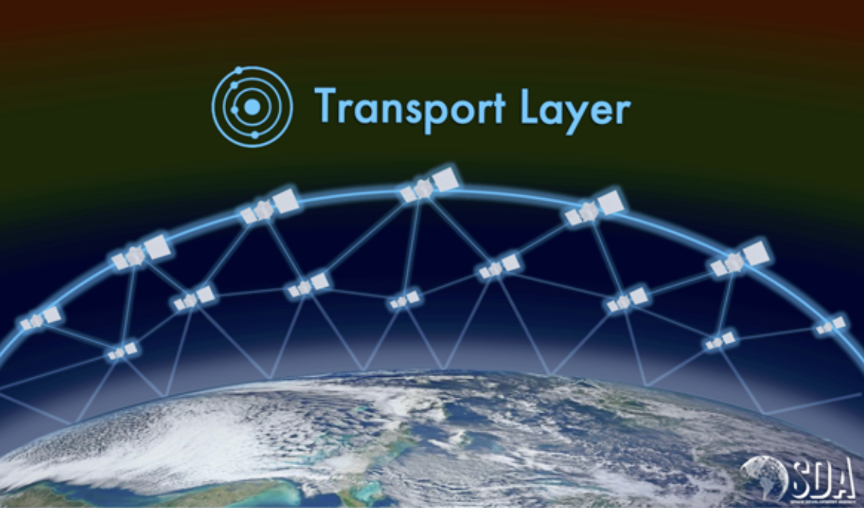
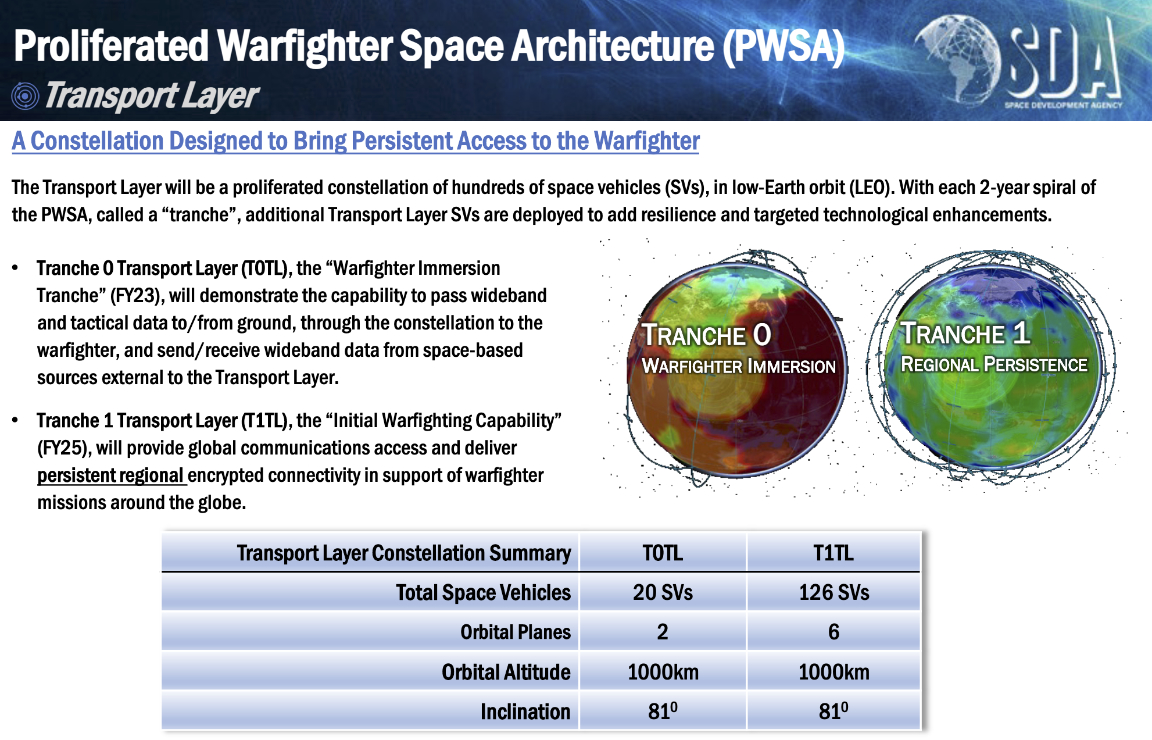
Early last month, the Space Development Agency (SDA) sought industry feedback for the final of three types of Tranche 2 Transport Layer (T2TL) space vehicles—T2TL Gamma.

This draft solicitation expanded upon the foundation for Tranche 2 of the Proliferated Warfighter Space Architecture (PWSA) that was previously described in the T2TL Alpha and Beta solicitations.

SDA expects to procure approximately 20, T2TL Gamma space vehicles with a payload specifically designed to close future kill chains via the PWSA. The Gamma variant will share certain baseline characteristics with the other T2TL variants (Alpha and Beta) outlined in the solicitation.

T2TL features multiple space vehicle and mission configuration variants procured through a multi-solicitation and multi-vendor acquisition approach. The initial launch capability is scheduled for September of 2026.

The T2 Gamma draft solicitation is comprised of unclassified solicitation documents as well as classified material on technical details of payload development.

For information on how to request the classified solicitation documents and for proposal submission instructions, please visit this URL… Responses are due by 5:00 pm ET on January 19, 2024.

The Space Development Agency will deliver a Top Secret Sensitive Compartmented Information (TS/SCI) – level industry presentation ahead of the anticipated Tranche 2 Transport Layer (T2TL) Gamma solicitation. The engagement will occur on Wednesday, February 7, and Thursday, February 8, starting at 9:00 a.m. ET at SDA’s Tech Center in Chantilly, Virginia.

The presentations will focus on the anticipated T2TL Gamma Other Transaction (OT) solicitation for payload development for space systems to provide fire control solutions. Those interested in attending can get more information and registration instructions at this direct infolink… Registration closes on January 30, 2024.

Filed Under: News

SpaceX Sunday Starlink launch

January 21, 2024 by editorial

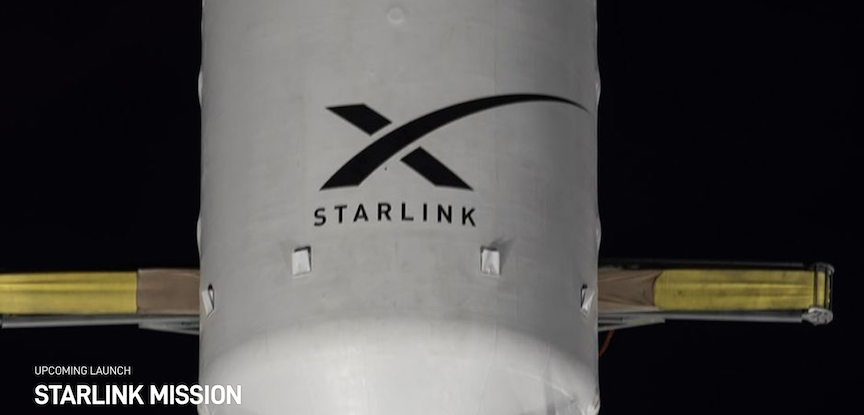
SpaceX is targeting Sunday, January 21 for a Falcon 9 launch of 22 Starlink satellites to low-Earth orbit from Space Launch Complex 4 East (SLC-4E) at Vandenberg Space Force Base in California. Liftoff is targeted for 6:00 p.m. PT, with backup opportunities available until 9:58 p.m. PT. If needed, additional opportunities are available starting Monday, January 22 at 6:01 p.m. PT.

A live webcast of this mission will begin on X @SpaceX about five minutes prior to liftoff. Watch live.

This is the 16th flight for the first stage booster supporting this mission, which previously launched Sentinel-6 Michael Freilich, DART, Transporter-7, Iridium OneWeb, SDA-0B, and 10 Starlink missions. Following stage separation, the first stage will land on the Of Course I Still Love You droneship, which will be stationed in the Pacific Ocean.

Filed Under: News

  • « Go to Previous Page
  • Page 1
  • Interim pages omitted …
  • Page 84
  • Page 85
  • Page 86
  • Page 87
  • Page 88
  • Interim pages omitted …
  • Page 338
  • Go to Next Page »

Primary Sidebar

WEEKLY NEWSLETTER

Archives

  • October 2026
  • September 2026
  • August 2026
  • July 2026
  • June 2026
  • May 2026
  • April 2026
  • March 2026
  • February 2026
  • January 2026
  • December 2025
  • November 2025
  • October 2025
  • September 2025
  • August 2025
  • July 2025
  • June 2025
  • May 2025
  • April 2025
  • March 2025
  • February 2025
  • January 2025
  • December 2024
  • November 2024
  • October 2024
  • September 2024
  • August 2024
  • July 2024
  • June 2024
  • May 2024
  • April 2024
  • March 2024
  • February 2024
  • January 2024
  • December 2023
  • November 2023
  • October 2023
  • September 2023
  • August 2023
  • July 2023
  • June 2023
  • May 2023
  • April 2023
  • March 2023
  • February 2023
  • January 2023
  • December 2022
  • November 2022
  • October 2022
  • September 2022
  • August 2022
  • July 2022
  • June 2022
  • May 2022
  • April 2022
  • March 2022
  • February 2022
  • January 2022
  • December 2021
  • November 2021
  • October 2021
  • September 2021
  • August 2021
  • July 2021
  • June 2021
  • May 2021
  • April 2021
  • March 2021
  • February 2021
  • January 2021
  • December 2020
  • November 2020
  • October 2020
  • September 2020
  • August 2020
  • July 2020
  • June 2020
  • May 2020
  • April 2020
  • March 2020
  • February 2020
  • January 2020
  • December 2019
  • November 2019
  • October 2019

© 2019–2026 SatNews

Insert/edit link

Enter the destination URL

Or link to existing content

    No search term specified. Showing recent items. Search or use up and down arrow keys to select an item.
      x
      Sign Up Now!

      Enjoy a free weekly newsletter with recent headlines from the global SmallSat industry.

      Invalid email address
      We promise not to spam you. You can unsubscribe at any time.
      Thanks for subscribing! You will now receive weekly SmallSat News updates.
      We love our advertisers.
      And you will too!

      Please disable Ad Blocker to continue... We promise to keep it unobtrusive.
      We promise not to spam you. You can unsubscribe at any time.
      Invalid email address
      Thanks for subscribing!