• Skip to main content
  • Skip to primary sidebar
  • Home
  • News
  • Featured
  • More News ⌄
    • SatNews
    • SatMagazine
    • MilSatMagazine
  • Events ⌄
    • MilSat Symposium
    • SmallSat Symposium
    • Satellite Innovation
  • Contacts
  • SUBSCRIPTION

SmallSat News

You are here: Home / Archives for News

News

Spire achieves 2-way laser comms between satellites in space

March 3, 2025 by editorial

First-ever achievement for Spire enhances data transmission security and efficiency, setting a new standard for global satellite communications. The Company will launch additional satellites with optical inter-satellite link technology on the
SpaceX Transporter-13 Rideshare Mission

Spire Global, Inc. (NYSE: SPIR) has successfully established a two-way optical link between two satellites in orbit. This achievement marks a major step toward enhancing the speed, reliability, and security of data transmissions for future missions.

Illustration of Spire satellites establish a two-way optical inter-satellite link (OISL) in orbit

The satellites, which launched in June of 2023, are equipped with optical inter-satellite link (OISL) payloads. The payloads create lasers that send information back and forth between satellites, securely and almost instantaneously, while up to 5,000 kilometers apart.
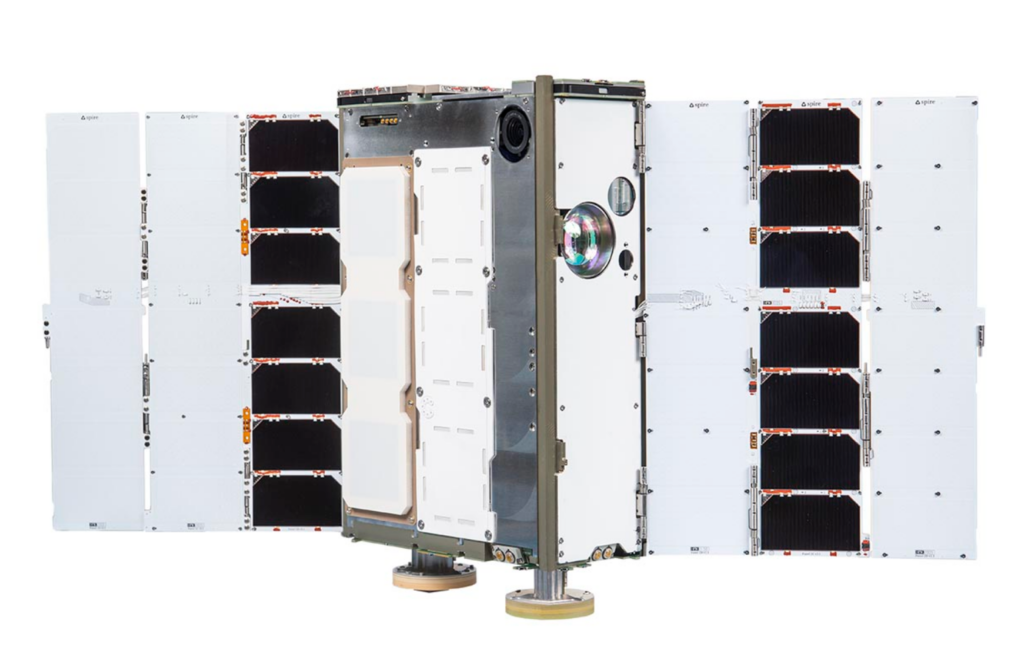
Front view of Spire Global 6U satellite with optical inter-satellite link (OISL) payload

This technology has the ability to enhance applications such as weather forecasting, global communications and remote sensing for navigation and environmental monitoring by increasing data speeds, enhancing security and reducing data latency.

The development of the OISL technology was supported by a European Space Agency (ESA) Advanced Research in Telecommunications Services (ARTES) Pioneer Partnership Project, within ESA’s Connectivity and Secure Communications directorate, with funding from the UK Space Agency (UKSA).

Following the successful demonstration, Spire will launch three additional LEMUR satellites with OISL technology in 2025, two of which are set to launch via Exolaunch on the Transporter 13 rideshare mission with SpaceX.

During the mission, Spire will also launch four additional LEMUR satellites to replenish its fully deployed constellation and enable missions for its Space Services customers. The launch is scheduled for no earlier than March of 2025.

“Precisely pointing two satellites, across distances equivalent of New York to London, and establishing an inter-satellite optical link is a significant milestone for Spire,” said John E. Ward, Senior Director of Research & Development at Spire Global. “This achievement places us among a select group of organizations capable of developing and deploying this advanced technology and overcoming the complexities of aligning satellites separated by thousands of kilometers in Low Earth Orbit. Integrating this technology into our future fleet will enhance resilience, improve security, and reduce latency for critical applications.”

“We have shrunk what is typically a large optical system—the size of a microwave—down to the size of a tissue box,” said Thomas Carroll, Team Lead – Applied Optics Team, Spire. “Our OISL payload is the smallest on the market, allowing us to deploy this technology on our small satellites while delivering performance previously achievable only with much larger systems. This breakthrough has the potential to enhance our data and Space Services solutions, especially for applications that require continuous coverage with fast and secure data relay.”

“Through our ARTES Pioneer Partnership Project, we have supported Spire in the development of a new OISL capability for their space data service network,” said Clive Edwards, ESA Pioneer Implementation Manager. “This OISL system is set to transform satellite communications, offering enhanced security and efficiency for space-based data transmission.”

About Spire Global, Inc.
Spire (NYSE: SPIR) is a global provider of space-based data, analytics and space services, offering unique datasets and powerful insights about Earth so that organizations can make decisions with confidence in a rapidly changing world. Spire builds, owns, and operates a fully deployed satellite constellation that observes the Earth in real time using radio frequency technology. The data acquired by Spire’s satellites provides global weather intelligence, ship and plane movements, and spoofing and jamming detection to better predict how their patterns impact economies, global security, business operations and the environment. Spire also offers Space as a Service solutions that empower customers to leverage its established infrastructure to put their business in space. Spire has nine offices across the U.S., Canada, UK, Luxembourg, Germany and Singapore.


Filed Under: Featured, News

Myriota adds 4 additional satellites to global IoT constellation + upgrades network features

March 3, 2025 by editorial

Myriota recently onboarded an additional four, new, LEO nanosatellites, working in partnership with Spire, a global provider of space-based data, analytics, and space services.

These smallsats were launched on SpaceX’s Transporter 12 mission on January 14th, bringing additional coverage and capacity to existing global services, while also unlocking new markets that include Mexico, Brazil, Chile, Argentina and the Middle East.

Myriota will use Spire’s existing satellite platform and continue to scale the Myriota Network over the next 12 months as part of its investment strategy to deliver a robust, low cost, low power, IoT network. By leveraging Spire’s proven constellation in combination with that firm’s global operations platform and Myriota’s own satellite assets, the company expects to quickly and cost-effectively scale its IoT services to meet rising global demand.

The Myriota Network enables customers in industries, such as logistics, utilities, and agriculture, to securely monitor and collect data globally using its long-lasting and low-cost IoT sensors. Its customers are already tracking, locating, and monitoring assets including water tanks, vehicles, wind turbines, shipping containers, and equipment and tools.

In late December 2024, Myriota announced a $32 million funding round led by the National Reconstruction Fund Corporation (NRFC) and venture capital partners Main Sequence with support from other investors that included Inter Valley Ventures. 

The new funding will be used to accelerate the digitization of field-based industries globally to enhance IoT capabilities in regions such as the Middle East, where Myriota has recently completed the Kingdom of Saudi Arabia’s Communications, Space and Technology Commission (CST) Sandbox program. In close collaboration with CST, the Saudi Telecom Company (STC) and system integrator Giza Systems, Myriota successfully deployed a communications network for water metering in remote locations on behalf of the Saudi Ministry of Environment, Water and Agriculture.

“The global market for satellite-based communications networks is seeing an explosion in technical breakthroughs and network expansions,” said Ben Cade, CEO of Myriota. “We are excited to be at the forefront of that, with an ultra low power and highly secure IoT connectivity service that is already in widespread commercial use.

Myriota is delivering high-value services to a range of vertical markets and use cases today, and our continued investment in growing our constellation and expanding the capability of our technology will see us serving even more customers and partners globally.”

About Myriota
Myriota is a leader in low-cost, low-power, secure, direct-to-orbit satellite connectivity for the Internet of Things (IoT) and small power-constrained devices. Founded in 2015, Myriota’s space-based network delivers scalable, affordable IoT data services and energy-efficient hardware that is essential for sectors such as agriculture, logistics, water management and environmental conservation. 

Filed Under: News

Rocket Lab signs 2nd multi-launch deal—eight Electron missions with iQPS

March 3, 2025 by editorial

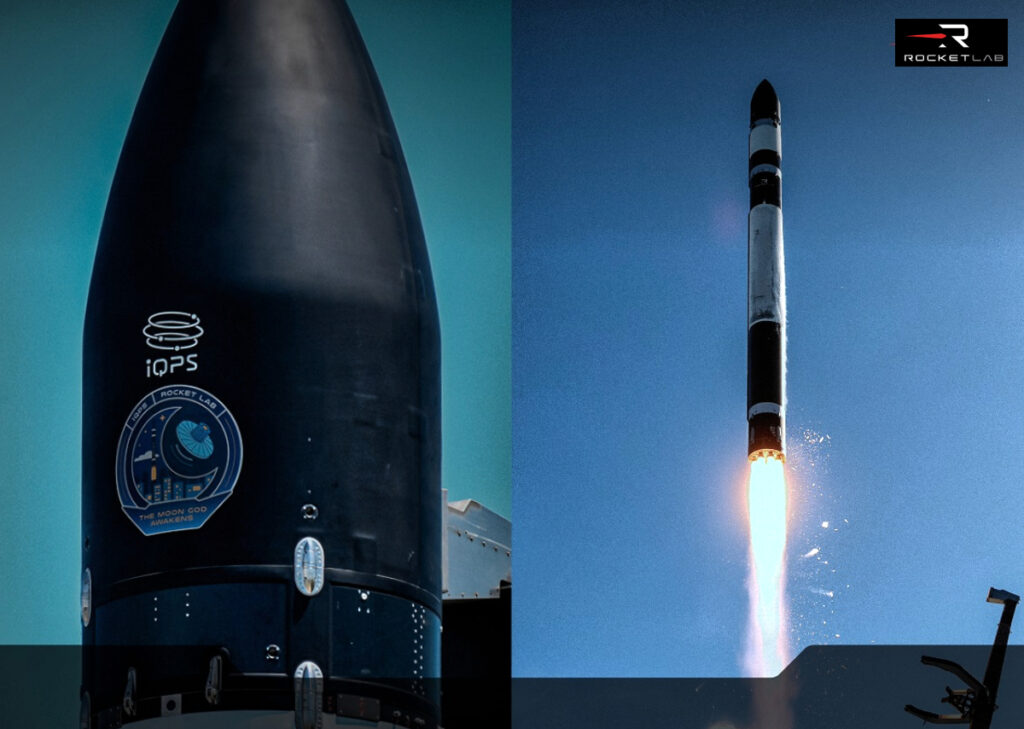
Rocket Lab USA, Inc. (Nasdaq: RKLB) has signed one of its largest Electron launch agreements to date in a second, multi-launch deal with Institute for Q-shu Pioneers of Space, Inc. (iQPS), a Japan-based, Earth imaging company.

This newly-signed deal follows an earlier multi-launch contract signed with iQPS in 2024 and brings the total number of booked dedicated Electron launches for iQPS to eight. Across both bulk orders, six missions are scheduled for launch in 2025 and two in 2026. These follow on from Rocket Lab’s first launch for iQPS in December 2023 which successfully deployed the QPS-SAR-5 satellite “TSUKUYOMI-I” to orbit. The new deal is one of the largest Electron launch agreements to date, second only to Rocket Lab’s ten launch deal with another Japanese constellation operator, Synspective, signed last year.

Artistic rendition of the iQPS SAR-5 satellite on-orbit.

Each Electron launch supports the build out of iQPS’ planned constellation of 36 synthetic aperture radar (SAR) satellites capable of imaging the Earth, day and night and through any weather, to provide near real-time observation data for almost any location in the world.  By launching as the sole customer on each Electron mission, iQPS has greater control over launch schedule, orbit, and other mission parameters compared with rideshare launch options, enabling iQPS to maximize the full capacity of iQPS’ constellation through tailored and precise orbits.

The next Electron mission for iQPS is scheduled to launch as soon as this month. Full details about the launch will be made available closer to launch day.  

Rocket Lab founder and CEO, Sir Peter Beck, said, “Precise constellation build out on a tailored timeline is Electron’s strength. We know precise orbital positioning is critical to every Earth imaging mission, making it highly sought after by constellation operators. This demand is reflected in the many multi-launch contracts that we continue to sign with return constellation operators like iQPS. We are honored to be partnering with iQPS once again to deliver this capability.”

iQPS CEO Dr. Shunsuke Onishi, said, “We are delighted and grateful to announce an additional launch contract for four more satellite on Electron, following our previous announcement. Electron’s high launch frequency and reliability make it an ideal choice for our mission, and securing this opportunity at such an early stage is truly exciting. This contract brings us one step closer to building our satellite constellation over the next two years, and we remain fully committed to making this vision a reality.”

Filed Under: News

Hiltron’s latest-generation satellite communications products and services at GovSatCom 2025

February 26, 2025 by editorial

Field-Upgradable Motorization Kit for the CPI 2385 Satcom Antenna.

Hiltron Communications will promote the latest additions to its range of satellite communication products, systems and  supporting services at GovSatCom 2025. The event will be held at its usual location, the European Convention Center in Luxembourg, from Thursday February 27th through Friday 28th.

“A highlight of our GovSatCom 2025 presence will be the latest addition to our HMAM series of motorized antenna mounts,” says Antonio Monteverde, Sales Director at Hiltron Communications. “The new HMAM-XY is an advanced model designed to perform high precision tracking of LEO and MEO satellites, smallsat constellations and flying objects such as drones. It combines fast high tracking speed and fast acceleration with precise pointing and tracking accuracy, including low backlash and full hemispheric coverage with no zenith keyhole. Tracking velocity is up to 10 degrees per second with 6 degrees per second squared maximum acceleration and within 0.05% accuracy. TLE/NORAD tracking capabilities are included and Steptrack is available as an option.”

“Operation and supervision of the HMAM-XY are via Hiltron’s established HACU antenna control unit,” adds Thomas Wurst, Pre-Sales Engineering Manager. “Browser-based control and monitoring can be performed from any desired location via an Ethernet link connection. The control unit can be mounted on the HMAM-XY support column with local operation additionally possible via a directly connected handheld unit.”

Also new to GovSatCom delegates will be Hiltron’s Field-Upgradable Motorization Kit for the CPI 2385 Satcom Antenna. The kit is designed for broadcast applications, two-way satellite telecommunication links or receive-only downlinks. Based on the established HMAM, it offers an economical alternative to new installations. Tracking capabilities include manual positioning to known satellites, automatic positioning and active step tracking. TLE/NORAD, inclined orbit tracking and Intelsat 11 tracking are also supported. An optional motorized feed changer allows the head to be moved quickly to a new position for switching between frequency bands.

“GovSatCom continues to be a useful venue for the creation of new partnerships and a catalyst for product development in line with the evolving requirements of the satellite communications market,” summarizes Jochen Ermel, Hiltron Communications’ Managing Director. “We look forward to meeting with existing and potential new customers.”

Filed Under: News

Marlink delivers secure digital enablement for Alpha Adriatic with upgrade to Sealink NextGen

February 20, 2025 by editorial

Marlink will upgrade the hybrid network onboard the fleet of Alpha Adriatic, including cutting edge cyber security tools.

Alpha Adriatic will benefit from Sealink NextGen’s combination of VSAT and LEO internet, together with robust back-up and Marlink’s Advanced Threat Detection, Unified Threat Management and Endpoint Detection cyber tools.

Marlink will once again leverage its experience as a managed services provider to upgrade the hybrid network solution onboard, integrating Starlink to enhance options available for business applications and improving connectivity available to crews.

The solution provides Alpha Adriatic with several benefits, including:

  • High bandwidth, low latency communications via Sealink NextGen to support smarter, digitalised fleet operations
  • Enhanced cyber security to provide compliance with industry certification standards and reflect tighter regulation for vessel operators
  • Hybrid solution offers improved uptime and reliability with secure communications and data transfer

Headquartered in Pula, Croatia, and listed on the Zagreb Stock Exchange, Alpha Adriatic operates in the dry bulk and tanker sectors, offering full ship management services to third parties. The Group holds ownership interests in one oil/chemical tanker and three bulk carriers, while also providing third-party ship management services for an additional bulk carrier and three oil/chemical tankers.

Alpha Adriatic is committed to being a modern and innovative company, focused on the high-quality growth of its fleet and the enhancement of services provided to our partners and clients. We rely on the extensive knowledge, experience, and adaptability of our teams both onboard and ashore to ensure safe, efficient, and sustainable operations.Vojko Braut, Technical Director at Alpha Adriatic. 

Marlink added to its cyber capabilities in 2024 with the acquisition of Croatia’s Diverto and then Port-IT, to enhance the breadth of cyber solutions available to remote maritime users. By combining this expertise with a hybrid network solution we can deliver smarter vessel operations to Alpha Adriatic.Tore Morten Olsen, President, Maritime, Marlink.

About Marlink
For companies operating in the world’s most challenging environments – from merchant vessels to offshore and onshore energy operations, from humanitarian organisations to cruise ships and superyachts – Marlink creates and delivers possibilities, anywhere. Marlink is a managed service provider and global leader in remote ICT solutions with annual revenues surpassing $800 million and 1,500 employees operating in more than 30 countries. Wherever our customers are in the world, we deliver them possibilities to work smarter and to operate more effectively, more safely, more sustainably – without the limitations of technology. With our possibility platform, we enable a comprehensive suite of end-to-end managed solutions (Connectivity, Network, Cyber Security, Cloud & IT, IoT & Apps), supported by professional services, unmatched global operations and delivery capabilities and local support teams.

Filed Under: Featured, News

The INFLECION project to address maritime safety and sustainability from space

February 20, 2025 by editorial

The European Space Agency (ESA) and AAC Clyde Space have jointly signed a contract for the first phase of satellite constellation project INFLECION—this initiative will transform Maritime Domain Awareness by enhancing safety, efficiency, compliance, and environmental sustainability in maritime operations.

With approximately 90% of international trade traveling by sea, maritime routes are becoming increasingly congested due to supply chain disruptions, changing trade patterns, and geopolitical tensions. INFLECION will be specifically designed to monitor and support maritime operations, while also contributing to the International Maritime Organization’s e-Navigation strategy to make navigation safer and more efficient.

The proposed €30 million project will be co-funded by the UK Space Agency through ESA’s Advanced Research in Telecommunication Systems (ARTES) Partnership Project programme within the agency’s Connectivity and Secure Communications directorate. The project will deliver three crucial services:

  • Improve operational efficiency by helping vessels optimize routes and achieve just-in-time arrivals
  • Enhance maritime security through AI-powered satellite surveillance to combat smuggling and illegal fishing
  • Support environmental sustainability by protecting marine ecosystems and ensuring compliance with regulations

The system combines three key technologies: VHF Data Exchange System (VDES), enabling reliable two-way data exchange between ships, satellites, and shore stations; Signal Intelligence (SIGINT), which detects and analyses electronic signals to identify vessels engaged in illegal activities; and Synthetic Aperture Radar (SAR), providing continuous surveillance of shipping lanes and coastal areas in all weather conditions.

Following this first phase, which will define the project’s requirements by the end of 2025, the project will see two more phases: a 15 month development phase to build prototypes and systems, followed by a demonstration phase to test and prepare the system for commercial use. Full operational capability is expected by 2028.

AAC Clyde Space leads a consortium of UK organizations, including AST Marine, Bright Ascension, Craft Prospect, Heriot Watt University, Horizon Technologies, ICEYE UK, Omanos Analytics, Nash Maritime, Plymouth Marine Laboratory, Saab UK, and University of Strathclyde.

“The maritime industry faces unprecedented challenges from supply chain disruptions and shifting trade patterns. INFLECION will provide the space-based tools needed to navigate these challenges while protecting our marine environment,” said Laurent Jaffart, ESA Director of Connectivity and Secure Communications.

“INFLECION is a key step in AAC Clyde Space’s strategy to grow Space Data as a Service. With this project, we are using space technology to tackle real challenges in the maritime industry. Together with our partners, we are setting a new standard for safety, efficiency, and sustainability at sea,” said Luis Gomes, CEO of AAC Clyde Space.

Filed Under: News

SuperSharp + NanoAvionics to partner on a disruptive Thermal InfraRed (TIR) imaging satellite

February 18, 2025 by editorial

NanoAvionics will also supply an additional two MP42 microsatellite platforms for Satlantis’s new generation
sub-meter resolution Earth Observation satellites.

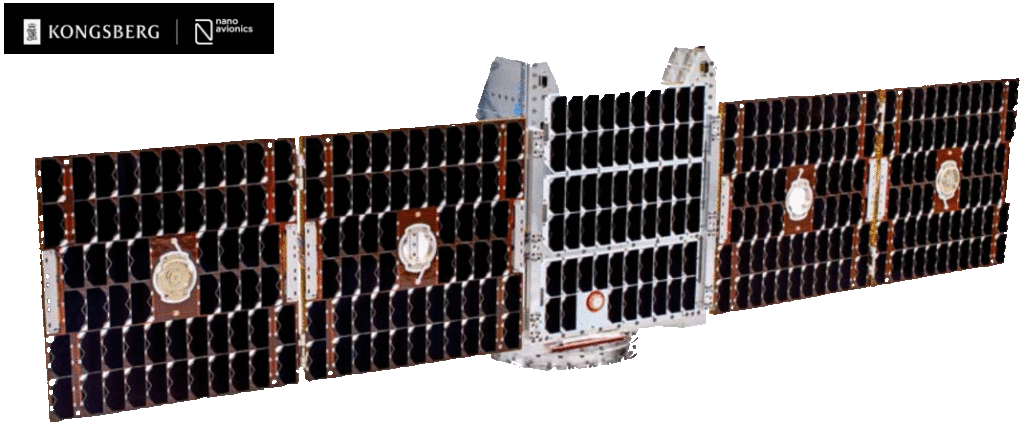
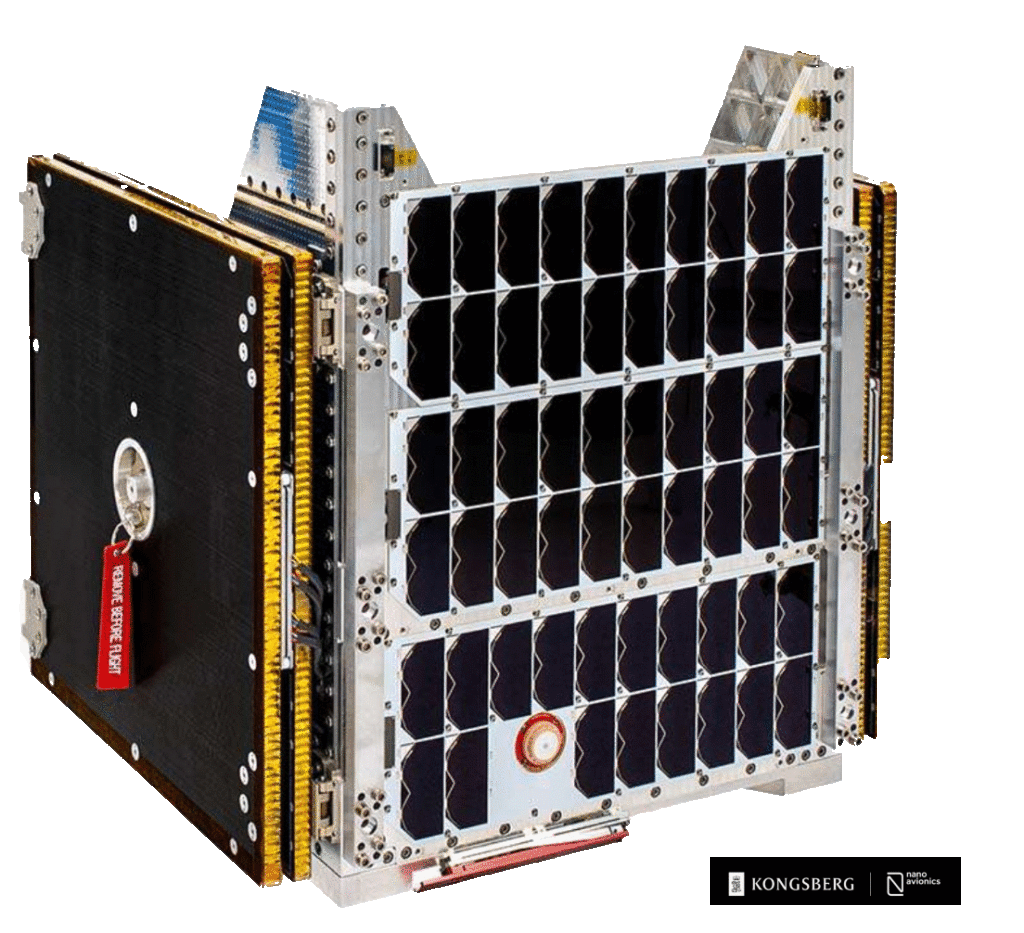
SuperSharp, part of the Satlantis group, has selected Kongsberg NanoAvionics’s (NanoAvionics) MP42 microsatellite platform for a first-of-its-kind, Thermal InfraRed (TIR) mission called Blue Moon.

The mission will embark SuperSharp’s flagship instrument HIBISCUS, an 80 kg payload, onboard NanoAvionics’ flight-proven MP42 satellite bus. The launch is scheduled for the second half of 2026 onboard a SpaceX’s Transporter rideshare service.

The capabilities of Blue Moon will extend beyond that of conventional EO satellites as the instrument is designed to acquire images day and night.

The disruption of SuperSharps‘ innovation, however, lies in its proprietary unfolding payload technology, capable of delivering 4x higher resolution per unit cost. 

HIBISCUS can capture Long-Wave InfraRed (LWIR) imagery at a spatial resolution of three meters. The data generated by this category-defining satellite will support applications in the field of climate resilience, such as urban heat monitoring, as well as those in the domain of national security. It aims also to enable new applications in these fields. 

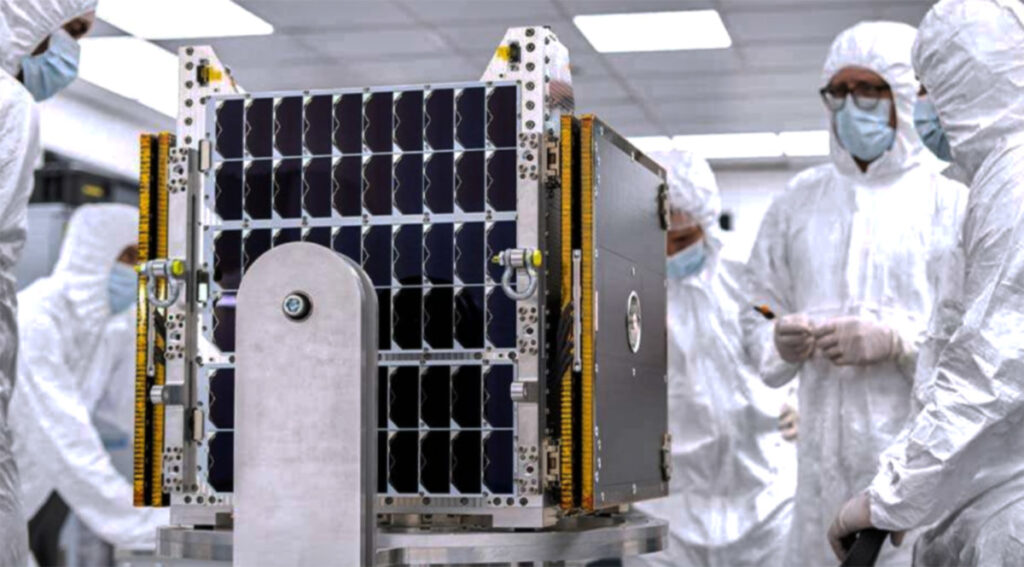
Engineers at Kongsberg NanoAvionics engaged in satellite assembly, photo courtesy of the company.

In parallel to this agreement, NanoAvionics will also supply an additional two MP42 microsatellite platforms to Satlantis for its new generation of sub-meter resolution Earth Observation satellites.

Powered by a team of more than 30 engineers SuperSharp is a University of Cambridge spin-out founded in 2017 and part of the Satlantis group since 2023. The company specializes in the design and manufacture of very high-resolution Thermal InfraRed (TIR) imaging satellites. 

The company’s first satellite mission will be carried out in partnership with small satellite manufacturer NanoAvionics, subsidiary of the Kongsberg group.

Marco Gomez-Jenkins, co-founder and CEO of SuperSharp, said, “We are delighted to partner with NanoAvionics on this mission to unlock the value of ultra-high resolution thermal imaging from space. The combination of our HIBISCUS telescope and their MP42 satellite platform will enable new applications in this domain, from climate change mitigation to security and defence. This mission would not be possible without the ongoing support of institutional actors, in particular the UK Space Agency.”

Atle Wøllo, CEO of Kongsberg NanoAvionics, said, “Satlantis has been one of our earliest commercial Earth observation customers, and we’re excited to build on the legacy of the first three nanosatellites we launched with them. These three new missions highlight how NanoAvionics evolves alongside our customers and their growing needs. By helping SuperSharp and Satlantis deliver industry-leading 3-meter thermal imaging and submeter visible to near-infrared capabilities, we’re setting a new benchmark for our standard MP42 microsatellite platform, supporting larger, more advanced payloads than ever before.” 

Juan Tomas Hernani, co-founder and CEO of Satlantis, said, “The race to space is more and more about partnerships. The breakthrough offered by SuperSharp with its 3 m resolution in TIR in a joint mission with NanoAvionics makes us very proud to lead the global strategy for this. It also gives us an opportunity to fuse TIR as an extended channel into our next missions.”

Filed Under: Featured, News

Starlink solutions for next-generation disaster response

February 18, 2025 by editorial

As the frequency of natural disasters continues to rise, IEC Telecom has launched RDK 2.0, a next-generation, Rapid Deployment Kit designed to provide uninterrupted, high-speed connectivity to first responders and humanitarian teams.

With Starlink Mini at the core, this intelligent solution comes with an advanced network management toolkit and off-grid power supply, expanding possibilities of aid operations.

Starlink Mini roof mount, photo courtesy of the company

The increasing prevalence of climate-related disasters underscores the urgent need for robust communication solutions.

Photo of IEC Telecom’s RDK

According to the United Nations Office for Disaster Risk Reduction (UNDRR), the frequency of natural disasters has surged by 83% over the past two decades. From floods to fires, hurricanes to landslides, these events require immediate and coordinated action.

The International Telecommunications Union (ITU) reports that more than 75% of first responders identify dependable connectivity as the single most critical factor for operational efficiency.

Reflecting this demand, the market for mobile satellite services in disaster management is projected to grow at a compound annual growth rate (CAGR) of 8.5% through 2030. IEC Telecom, with more than 30 years of experience supporting the humanitarian sector, is uniquely positioned to address these challenges. As an authorized reseller of Starlink, IEC Telecom integrates advanced satellite technology with proprietary network management tools, delivering tailored solutions that empower emergency response teams to operate effectively in high-stakes scenarios.

RDK 2.0, powered by the innovative Starlink Mini, sets a new benchmark for reliable high-speed low-latency satellite connectivity and in the field. Featuring a compact terminal equipped with WIFI 5 technology, the smart case can seamlessly support up to 128 devices. Designed for ultimate autonomy, RDK 2.0 is fitted with batteries, enabling uninterrupted operation without dependence on external power sources. It can also be fitted with a car-mount kit for the Mini, enabling users to stay connected on the move.Seamless integration with IEC Telecom’s OptiView dashboard offers real-time monitoring giving teams full visibility and control over their network, ensuring entire teams stay connected during critical missions.

“RDK 2.0 was designed to redefine the end-user experience with Starlink, taking it to an entirely new level. Our solution enables autonomous, off-grid operation of the terminal. Integrated with OptiView, our advanced network management ecosystem, each kit can be remotely accessed for troubleshooting, ensuring seamless support in the field. In critical situations where every minute counts, RDK 2.0 delivers a comprehensive connectivity solution tailored to the specific needs of aid operations,” said Alf Stian Mauritz, Chief Strategy Officer of IEC Telecom Group.

“We believe that RDK 2.0 represents a significant leap forward in disaster response capabilities,” added Alf Stian Mauritz. “By combining Starlink’s state-of-the-art satellite technology with our expertise in network engineering, we’re equipping first responders with a reliable, portable tool that enhances their agility and effectiveness in the field, ultimately saving lives.”

IEC Telecom Group is a leading international provider of satellite voice and data services, with over three decades of expertise in network management solutions. The company plays a pivotal role in driving digitization at sea and across remote regions where GSM coverage is limited or unavailable. For urban enterprises, IEC Telecom ensures business continuity with resilient satellite backup solutions. With a comprehensive portfolio covering the entire communications lifecycle—from POC development to installation and maintenance—IEC Telecom also provides a wide range of value-added services, including cybersecurity, welfare communications, tracking, and more. IEC Telecom maintains a strong regional presence across eight countries, supported by a vast distribution network and global stock availability, ensuring seamless worldwide delivery.

Filed Under: News

2024 NASA Small Spacecraft Technology Report released

February 18, 2025 by editorial

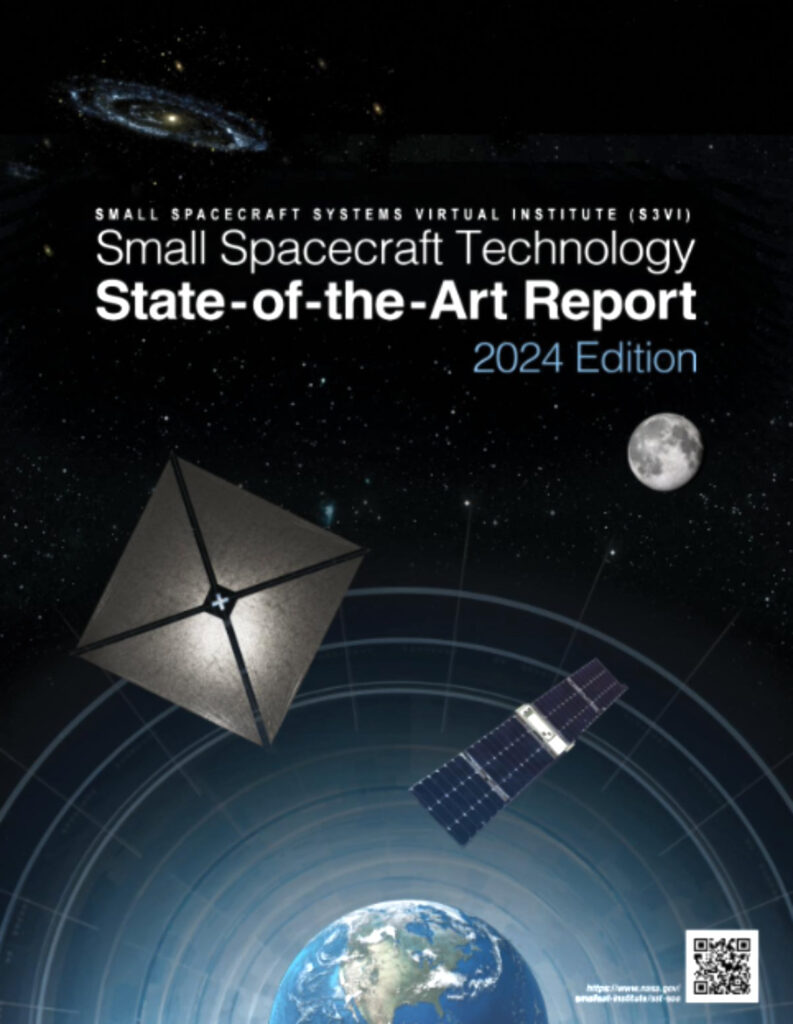
NASA’s Small Spacecraft Systems Virtual Institute (S3VI) has released their 2024 State-of-the-Art Small Spacecraft Technology report.

This accomplishment was made possible by the contributions of numerous dedicated people across NASA who graciously supported the preparation of the document as authors and reviewers. We also want to extend Our gratitude is also extended to all the companies, universities and organizations that provided content for this report.

The report is also available in PDF format as a single document containing all report content as well as individual chapters available on their respective chapter webpages. This 2024 edition reflects updates in several chapters to include: the Formation Flying and Rendezvous and Proximity Operations section within the “Guidance, Navigation, and Control” chapter; the Additive Manufacturing section within the “Structures, Materials, and Mechanisms” chapter; the Free Space Optical Communications section within the “Communications” chapter; and the Hosted Orbital Services section within the “Complete Spacecraft Platforms” chapter.

As in previous editions, the report contains a general overview of current state-of-the-art SmallSat technologies and their development status as discussed in open literature. The report is not intended to be an exhaustive representation of all technologies currently available to the small spacecraft community, nor does the inclusion of technologies in the report serve as an endorsement by NASA. Sources of publicly available data commonly used as sources in the development of the report include manufacturer datasheets, press releases, conference papers, journal papers, public filings with government agencies, and news articles.

Readers are highly encouraged to reach out to companies for further information regarding the performance and maturity of described technologies of interest. During the report’s development, companies were encouraged to release test information and flight data when possible so it may be appropriately captured. It should be noted that technology maturity designations may vary with change to payload, mission requirements, reliability considerations, and the associated test/flight environment in which performance was demonstrated.

Suggestions or corrections to the 2024 report toward a subsequent edition, should be submitted to the NASA Small Spacecraft Systems Virtual Institute for consideration prior to the publication of the future edition. When submitting suggestions or corrections, please cite appropriate publicly accessible references. Private correspondence is not considered an adequate reference. Efforts are underway for the 2025 report and organizations are invited to submit technologies for consideration for inclusion by August 1, 2025.

NASA’s Small Spacecraft Technology program within the Space Technology Mission Directorate funds the Small Spacecraft Systems Virtual Institute.

Filed Under: News

Trans Lunar Injection completed by Firefly Aerospace’s Blue Ghost + imagery captures

February 13, 2025 by editorial

Firefly Aerospace is now four weeks into their first mission to the Moon—Blue Ghost recently completed its Trans Lunar Injection (TLI) to escape Earth’s orbit and is now in transit to the Moon.

Shortly after TLI, Blue Ghost captured two new incredible shots—one of Earth with the Moon in the distance and one of Earth reflecting off the Blue Ghost’s solar panel with the Moon on the horizon. These images can be found on Firefly’s Live Blog and follow along for regular mission updates.   

Shortly after Trans Lunar Injection, Firefly’s Blue Ghost lunar lander captured image of Earth with the Moon below in the distance. Credit: Firefly Aerospace

Next Steps…

  • Transit: Within the next two days, Blue Ghost will perform a Lunar Orbit Insertion, a 4-minute burn to enter the Moon’s orbit and will then spend 16 days in lunar orbit before descent. This gives us plenty of time to calibrate our navigation system and continue payload science operations for NASA.
  • Descent: Blue Ghost’s final autonomous descent will take approximately an hour, starting with a Descent Orbit Insertion burn that will place Blue Ghost on its descent trajectory on March 2. 
  • Surface Operations: Upon touchdown, Blue Ghost will operate 10 NASA instruments for a complete lunar day (about 14 Earth days).
  • Total Eclipse: On March 14, Blue Ghost will capture HD imagery of a total eclipse from the Moon where the Earth blocks the sun.
  • Lunar Night: Blue Ghost will then capture the lunar sunset on March 16 before operating several hours into the lunar night.
Firefly’s Blue Ghost lander captures image of Earth reflecting off the solar panel with the Moon on the horizon above Earth. Firefly’s X-band antenna and NASA’s LEXI payload are also shown on the top deck of the lander. Credit: Firefly Aerospace

Filed Under: Featured, News

  • « Go to Previous Page
  • Page 1
  • Interim pages omitted …
  • Page 41
  • Page 42
  • Page 43
  • Page 44
  • Page 45
  • Interim pages omitted …
  • Page 339
  • Go to Next Page »

Primary Sidebar

WEEKLY NEWSLETTER

Archives

  • August 2026
  • July 2026
  • June 2026
  • May 2026
  • April 2026
  • March 2026
  • February 2026
  • January 2026
  • December 2025
  • November 2025
  • October 2025
  • September 2025
  • August 2025
  • July 2025
  • June 2025
  • May 2025
  • April 2025
  • March 2025
  • February 2025
  • January 2025
  • December 2024
  • November 2024
  • October 2024
  • September 2024
  • August 2024
  • July 2024
  • June 2024
  • May 2024
  • April 2024
  • March 2024
  • February 2024
  • January 2024
  • December 2023
  • November 2023
  • October 2023
  • September 2023
  • August 2023
  • July 2023
  • June 2023
  • May 2023
  • April 2023
  • March 2023
  • February 2023
  • January 2023
  • December 2022
  • November 2022
  • October 2022
  • September 2022
  • August 2022
  • July 2022
  • June 2022
  • May 2022
  • April 2022
  • March 2022
  • February 2022
  • January 2022
  • December 2021
  • November 2021
  • October 2021
  • September 2021
  • August 2021
  • July 2021
  • June 2021
  • May 2021
  • April 2021
  • March 2021
  • February 2021
  • January 2021
  • December 2020
  • November 2020
  • October 2020
  • September 2020
  • August 2020
  • July 2020
  • June 2020
  • May 2020
  • April 2020
  • March 2020
  • February 2020
  • January 2020
  • December 2019
  • November 2019
  • October 2019

© 2019–2026 SatNews

Insert/edit link

Enter the destination URL

Or link to existing content

    No search term specified. Showing recent items. Search or use up and down arrow keys to select an item.
      x
      Sign Up Now!

      Enjoy a free weekly newsletter with recent headlines from the global SmallSat industry.

      Invalid email address
      We promise not to spam you. You can unsubscribe at any time.
      Thanks for subscribing! You will now receive weekly SmallSat News updates.
      We love our advertisers.
      And you will too!

      Please disable Ad Blocker to continue... We promise to keep it unobtrusive.
      We promise not to spam you. You can unsubscribe at any time.
      Invalid email address
      Thanks for subscribing!