• Skip to main content
  • Skip to primary sidebar
  • Home
  • News
  • Featured
  • More News ⌄
    • SatNews
    • SatMagazine
    • MilSatMagazine
  • Events ⌄
    • MilSat Symposium
    • SmallSat Symposium
    • Satellite Innovation
  • Contacts
  • SUBSCRIPTION

SmallSat News

You are here: Home / Archives for 2020

Archives for 2020

Launch Agreement Signed Between Momentus + ProXopS

September 30, 2020 by editorial

Momentus Inc. and ProXopS, LLC have executed a launch agreement for several slots in Vigoride rideshare missions from Q4 2021 to 2023.

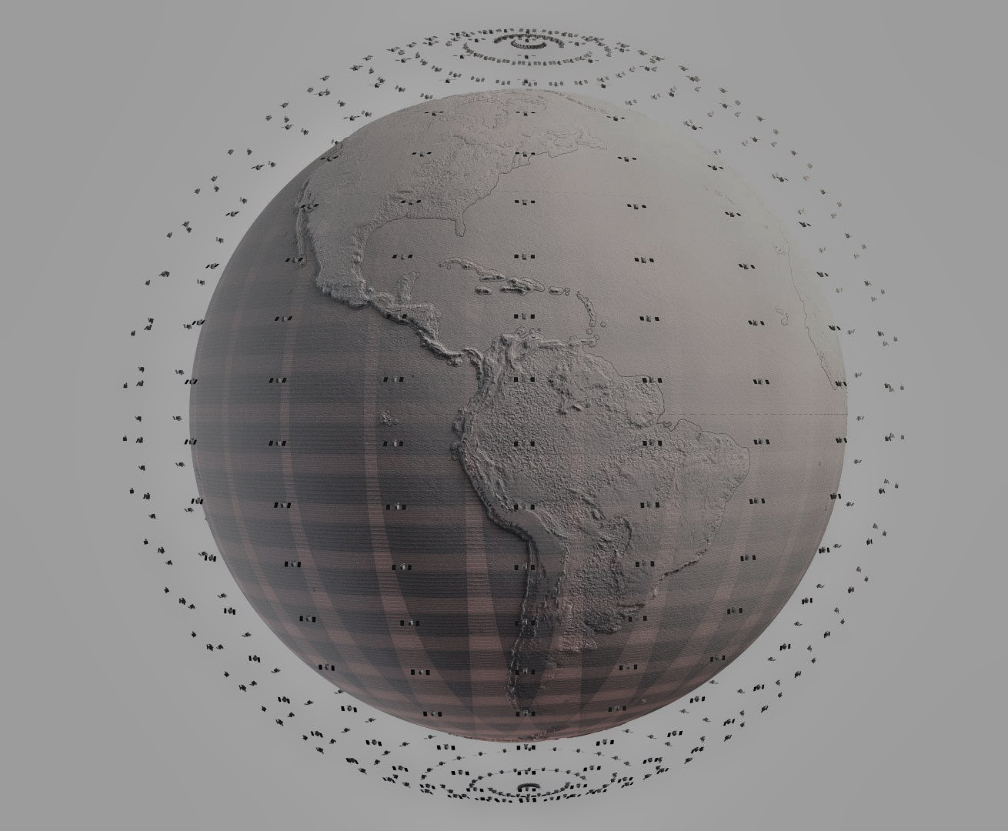
The agreement includes the deployment of multiple satellites for the VariSat constellation. ProXopS has partnered with Momentus to deploy as many as 24 VariSat satellites in Sun Synchronous Orbit (SSO) starting in Q4 2021. VariSat will enable new and extremely robust data communications protocols to worldwide users and provide a hybrid network capable of surviving nuclear attacks on current DoD satellite assets.

VariSat takes advantage of the diffractive/reflective properties of some part of the radio frequency (RF) spectrum (1.7 MHz to 30 MHz) in the ionosphere. The Earth’s ionosphere provides an “umbrella-like” ionospheric reflector that gives each satellite unprecedented over the horizon ground coverage.

Executive Comments

Mikhail Kokorich

“We are very enthusiastic to partner with ProXopS on this exciting project. Humanity’s first satellite – Sputnik 1, utilized the same technique of ionospheric refraction to receive signals on the opposite side of the Earth!” said Mikhail Kokorich, CEO of Momentus. “We are glad that our hub-and-spoke transport model will be used to deploy a constellation critical for national defense.”

Chad Brinkley

“Through this partnership, with the orbit transfer and precise insertion offered by Momentus, we will be able to deploy our constellation multiple times faster while still enjoying the benefit of low-cost rideshare launches,” said Chad Brinkley, Managing Partner at ProXopS. “Momentus’ unique service will be enabled by water plasma propulsion technology, which combines both efficiencies of electrical propulsion and the simplicity and robustness of chemical thrusters.”
Filed Under: News

NanoAvionics-Built Smallsat For Lacuna Space Successfully Launched

September 29, 2020 by editorial

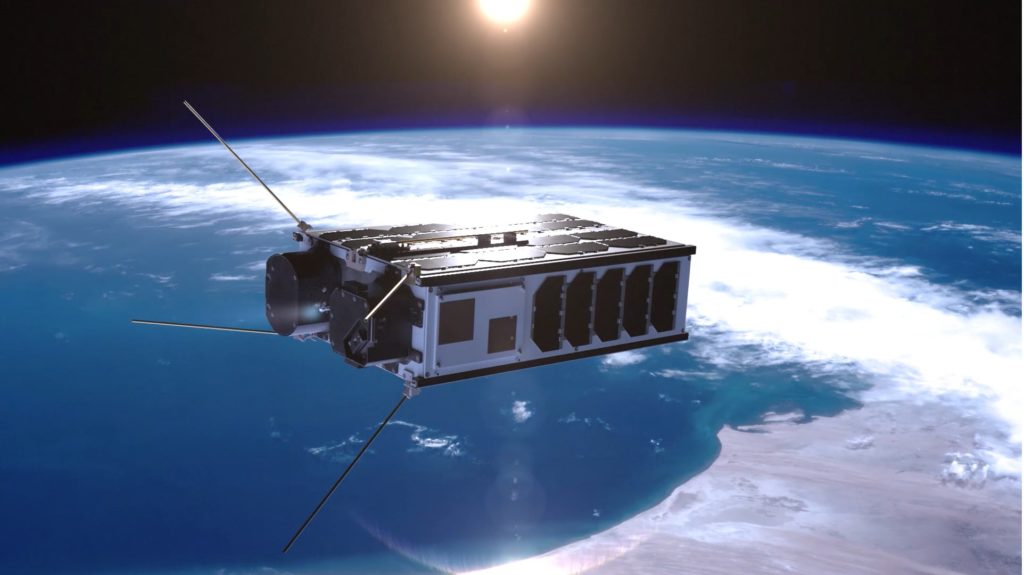
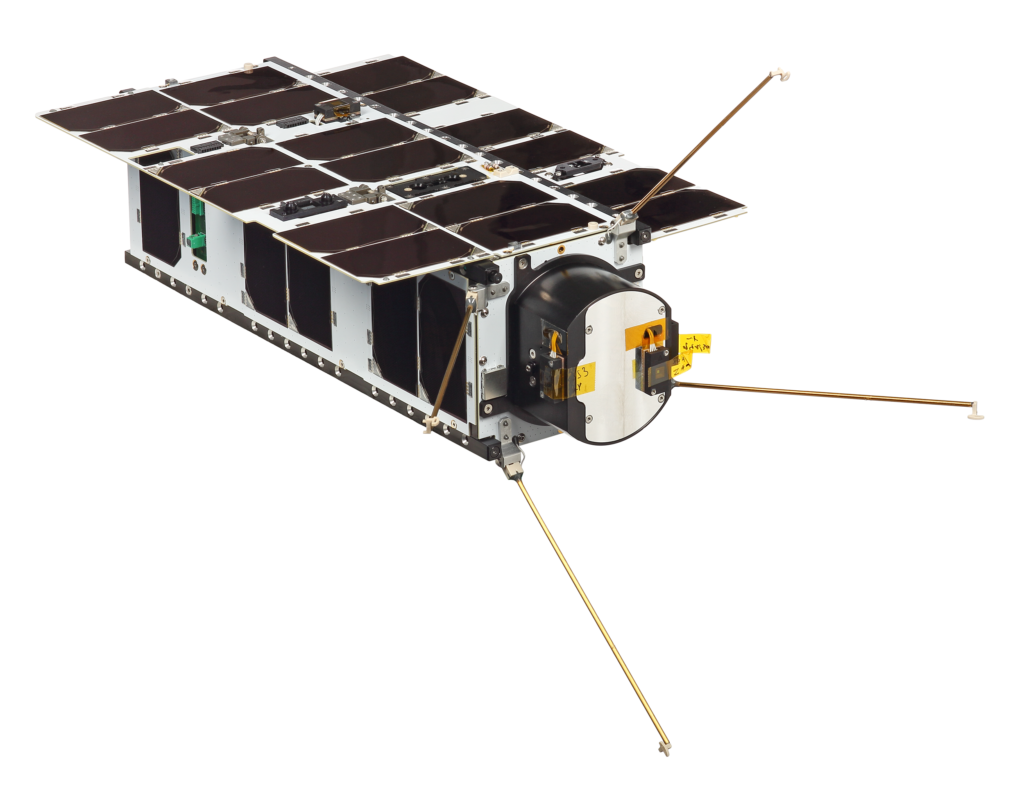
Artistic rendition of a NanoAvionics 6U smallsat on-orbit.

NanoAvionics is celebrating the successful launch of another Lacuna Space IoT satellite — a third satellite is being ready for launch at a later date.

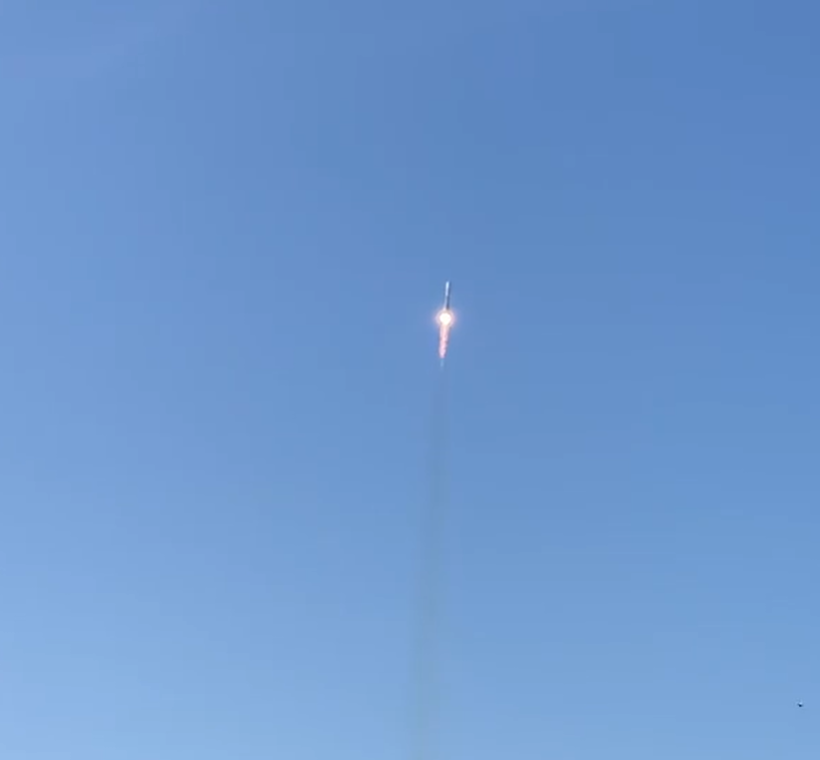
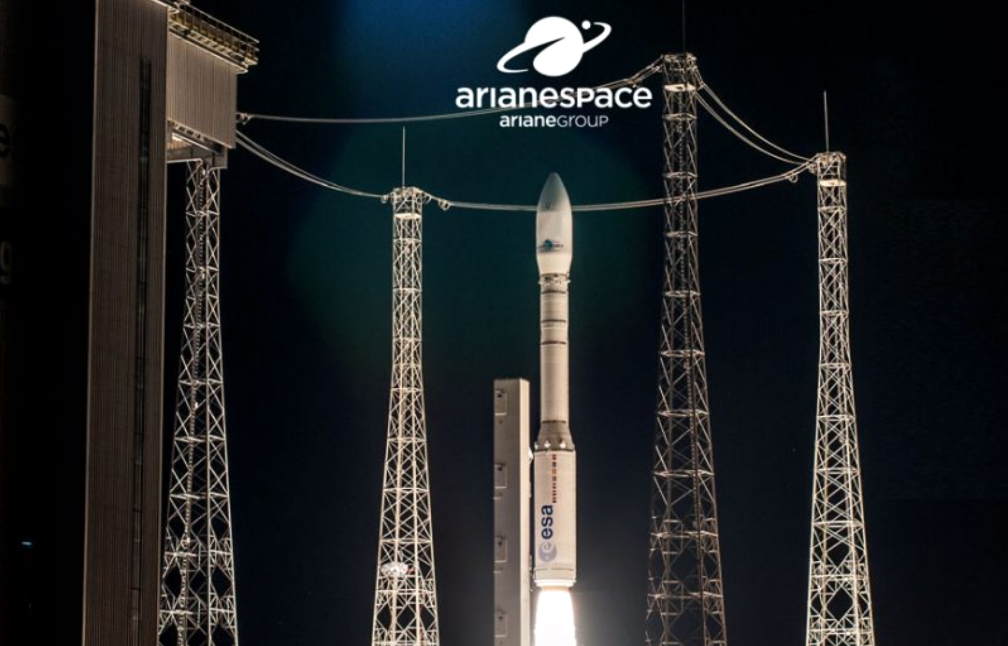
Operational communications with the smallsat in LEO were established shortly after the launch. For this latest mission, NanoAvionics partnered with Germany-based EXOlaunch, which provided the deployer and launch services onboard a Soyuz-2 rocket.

EXOlaunch LS-3 mission launch.

Despite the ongoing pandemic, NanoAvionics and Lacuna Space, both based at the UK’s Harwell space cluster, managed to complete all the steps prior to launch, from contract signing to testing and integrating the payload into NanoAvionics’ M3P nanosatellite bus, within eight months.

The payload, developed and built by Lacuna Space, consists of an IoT (internet of things) Space Gateway, able to receive and share data from small, battery powered sensors even in remote areas on the ground or at sea with little or no connectivity. The mission has been part-funded and supported by the UK Space Agency and ESA.

This latest smallsat will join the Lacuna Network, which will provide a global internet-of-things service via a nanosatellite constellation in low Earth orbit (LEO) and autonomous sensors everywhere on Earth. Using LoRa (long range) technology, the de-facto standard for low power connectivity, to communicate with the Space Gateway and batteries similar to those in wrist watches, make the Lacuna sensors low cost, extremely power efficient and able to last for years.

The LoRaWAN protocol allows for the latest security features to be included in devices and across the Lacuna Network. Applications for IoT services via the Lacuna Network stretch from agriculture, environmental, wildlife and marine monitoring to asset tracking and mobility.

Executive Comments

Vytenis J.Buzas

Vytenis J. Buzas, CEO of NanoAvionics, said, “Having previously worked together to build and launch the first nanosatellite for Lacuna Space’s satellite system, I’m excited about this latest successful launch. Lacuna’s IoT sensor and gateway technology has the potential to open a whole new world of smart applications and collaborating on this has been fantastic, and allowed us to optimize our technology for integrating IoT payloads, too. In return, by employing a series of quality assurance tests and using our flight proven and standardized bus, we are able to combine high-quality performance with low cost and short integration cycles – a very attractive combination for our customers as shown by our continued business and revenue growth.”

Rob Spurrett

Rob Spurrett, CEO Lacuna Space, said, “The speed with which Nano Avionics has managed to get this mission integrated and launched is very impressive, especially given all the current virus-related constraints. Thankfully, the back-log of commercial launches is now moving and our next launch after this will be another NanoAvionics platform. On behalf of Lacuna, I’d like to thank everybody at NanoAvionics for their support and professionalism.”

Filed Under: News

Exolaunch’s Successful Soyuz Small Satellite Launch

September 28, 2020 by editorial

Exolaunch had a successful launch of 15 commercial, governmental and scientific satellites for its customers that ranged from locations in Europe, Canada, the UAE and the U.S. The Mission dubbed “Wanderlust,” Desire to Travel, lifted off on September 28 at 11:20 UTC on a Soyuz-2 rocket, marking over 100 satellites deployed by the company. 

On this mission, Exolaunch provided comprehensive launch, deployment, mission management and integration services to Kepler Communications, Spire Global, the UAE Space Agency, Technische Universität Berlin, Würzburg Center for Telematics and two unnamed commercial customers. 

The company confirmed successful separation of three microsatellites weighing within 100 kg and 12 nanosatellites into a sun-synchronous orbit of 575 km. These smallsats have various missions, including IoT, Earth observation, airplane and ship tracking, radio occultation measurements, greenhouse gas monitoring, scientific experiments and new technology demonstration.

Wanderlust is Exolaunch’s eleventh rideshare mission in total and seventh mission with Soyuz. Exolaunch successfully utilized its proprietary flight-proven separation systems – CarboNIX the next generation shock-free separation system for microsatellites, upgraded modifications of EXOpod cubesat deployers, as well as its EXObox sequencers to flawlessly deploy its customers’ satellites into the target orbit. With this launch, Exolaunch has flown 110 smallsats on multiple launch vehicles. 

Jeanne Medvedeva

“This was an ambitious mission and it has been a privilege launching satellites for so many talented teams. With this launch, we have deployed over 100 satellites into orbit, hitting a major milestone in the launch industry,” says Exolaunch’s VP of Launch Services, Jeanne Medvedeva. “As a self-funded and profitable New Space company – still quite an anomaly for this industry – Exolaunch is proud to be playing a key role in advancing Germany’s position in the New Space field and providing end-to-end launch and deployment solutions for the industry’s leaders.”

Exolaunch continues to make space more accessible through regular and cost-efficient rideshare missions for small satellites. Its flight heritage includes successful satellite deployments from SpaceX’s Falcon 9, Arianespace’s Soyuz-ST, RocketLab’s Electron, Roscosmos’ Soyuz-2 and a scheduled mission with ISRO’s PSLV next year.

The next major milestone for the company will be a launch campaign for 30 small satellites on a Falcon 9 launch vehicle, the first smallsat dedicated rideshare mission of SpaceX targeted for launch as soon as December 2020.

Exolaunch’s manifest on the Wanderlust mission includes the following satellites:

2 x 6U XL next generation nanosatellites from Kepler Communications: Kepler, a developer of next-generation satellite communications technologies. These satellites, both of which carry a high-capacity Ku-band communications system and a prototype IoT payload, are important instalments of Kepler’s development and demonstration platforms. The satellites will deliver additional capacity for Kepler’s Global Data Service and also be a technology demonstration platform for Kepler’s narrowband connectivity solution for IoT devices.

4 x Lemur-class 3U nanosatellites from Spire Global: Spire Global runs the world’s largest private constellation of nanosatellites making radio occultation measurements, alongside other whole-earth observations that serve the maritime, weather, and aviation industries. To date, Spire has launched more than 100 satellites that operate across a broad range of orbits. Exolaunch has helped deploy approximately one-third of Spire’s satellite constellation, which now also includes four of its Lemur-class 3U satellites on today’s mission.

MeznSat 3U nanosatellite from the UAE Space Agency: The UAE Space Agency is pushing technological developments in the local New Space industry through MeznSat. The purpose of the satellite is to study and monitor greenhouse gases, specifically CO2 and Methane, over the UAE. MeznSat is a nanosatellite for climate observation, manufactured by Khalifa University of Science and Technology (KUST) in partnership with the American University of Ras Al-Khaimah (AURAK) and funded by the UAE Space Agency. The satellite’s primary payload will be a shortwave infrared (SWIR) spectrometer that makes observations in the 1000-1650 nm wavelength range to derive atmospheric greenhouse gas concentrations. This is a prominent project for the UAE Space Agency, launching immediately after its recent HOPE mission to Mars.

SALSAT microsatellite from the Technische Universität Berlin: With SALSAT, the Technische Universität Berlin aims to analyze the global spectrum use of S-band and VHF, UHF amateur radio bands. This analysis is required due to the increasing number of users and the intensification of radio communication, which is leading to an escalating probability of interference between radio signals. It will analyze the global spectrum usage with SALSA, a spectrum analyzer payload based on a Software Defined Radio and also features a variety of unique secondary payloads.

4 x 3U NetSat nanosatellites from the Würzburg Center for Telematics: NetSat is composed of four 3U satellites that will pioneer research in formation control. It is set to demonstrate the self-organization of several satellites in three-dimensional space to jointly optimize the configuration for given tasks. This will then open innovative perspectives for future sensor networks in space, including systems for three-dimensional imaging of the Earth’s surface and computer tomography methods for looking inside clouds. 

2 microsatellites within 100 kg for Earth Observation and one 3U nanosatellite for IoT applications for Exolaunch’s unnamed European-based commercial customers. 

Filed Under: News

Chief Financial Officer Appointed By Momentus Space

September 28, 2020 by editorial

Momentus Inc. (the “Company”) has appointed Jikun Kim as Chief Financial Officer (CFO), effective September 28, 2020.

Mr. Kim’s appointment comes as Momentus prepares for the first commercial launch of Vigoride, the Company’s orbital transfer vehicle designed for last mile, in-space satellite transportation services. Vigoride is scheduled to launch on a SpaceX Falcon 9 rocket in December 2020.

The launch marks the first time Momentus’ vehicles will carry customers, following a successful in-space test of Momentus’ groundbreaking water propulsion technology.

Jikun Kim

Mr. Kim brings with him an extensive background in corporate finance, treasury, financial planning and analysis, tax, strategic planning and risk management along with experience in leading the finance function of businesses transforming and leading industries.

Mr. Kim most recently served as Chief Financial Officer of Formlabs, a leading designer and manufacturer of 3D printing systems. Prior to that, he served as Chief Financial Officer of EMCORE Corporation (Nasdaq: EMKR), a publicly traded advanced fiber optic company focused on the aerospace and defense industries. Mr. Kim has also held senior leadership roles at a variety of aerospace and defense companies.

Executive Comments

“We are very pleased to have Jikun join our team at this exciting time in Momentus’ growth trajectory,” said Mikhail Kokorich, Founder and CEO of Momentus. “He has proven to be a highly capable financial leader in his 20 years of strategic management experience, including serving as the chief financial officer of public and private technology companies. His expertise and counsel will be valuable as we continue to execute on our growth strategy and advance our goal of becoming the premier in-space satellite services company at the forefront of the new space economy.”

Mr. Kim commented, “I am thrilled to join Momentus as the Company prepares for its inaugural commercial launch. Momentus’ target market represents a massive and underappreciated opportunity in a newly emerging industry, and I look forward to being a part of the team that will help enable the future of space transportation and infrastructure services.”

Filed Under: News

SpaceX’s Starlink Satellites Set to Soar

September 28, 2020 by editorial

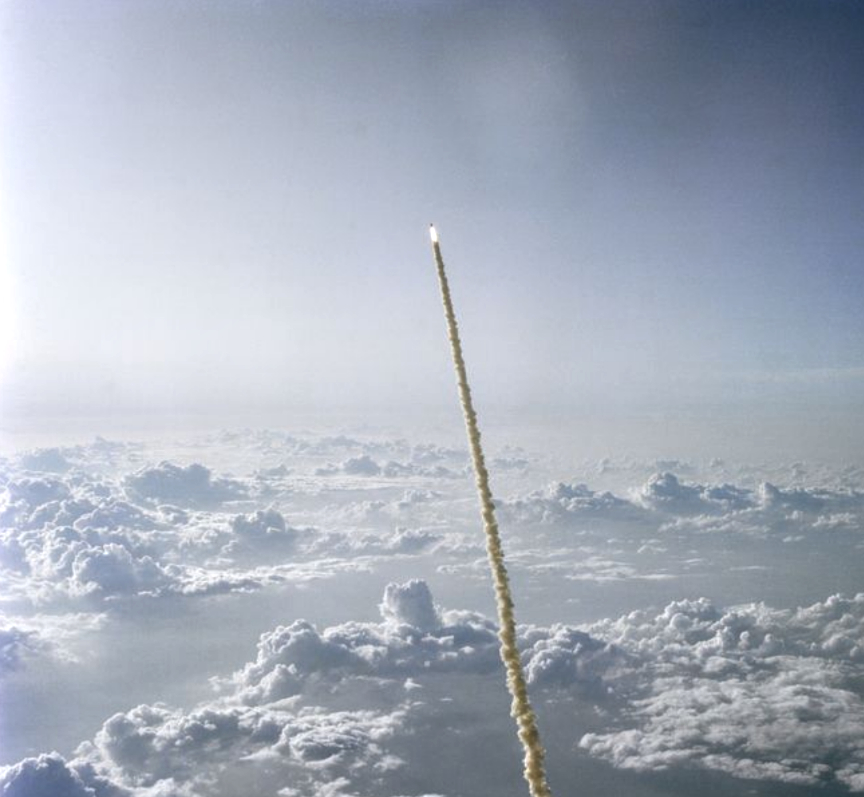
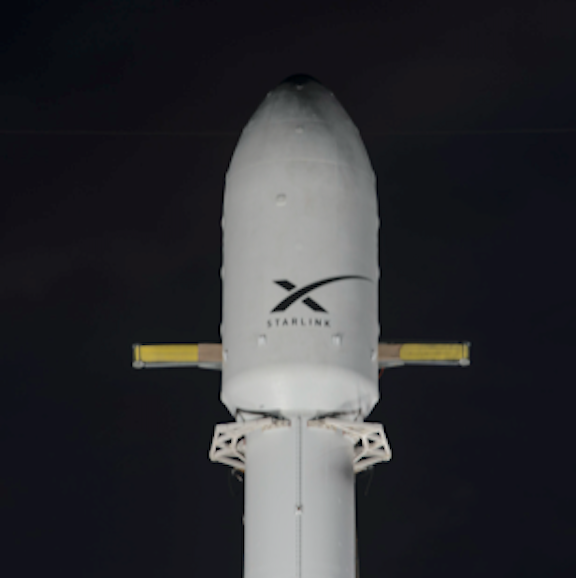
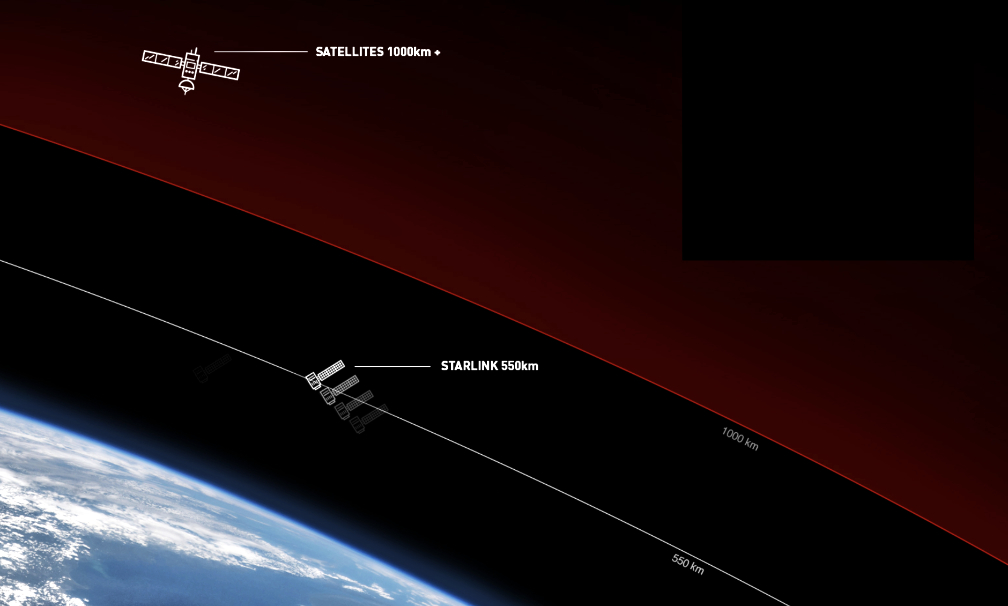
Assuming all goes well, SpaceX is targeting Monday, September 28 at 10:22 a.m. EDT, 14:22 UTC, for launch of its thirteenth Starlink mission, which will launch 60 Starlink satellites to orbit. Falcon 9 will lift off from Launch Complex 39A (LC-39A) at Kennedy Space Center in Florida.

Last week SpaceX stood down from the launch attempt of its thirteenth Starlink mission due to severe weather in the recovery area, which persisted for several days.

Falcon 9’s first stage previously supported launch of Crew Dragon’s first flight to the International Space Station with NASA astronauts onboard and the ANASIS-II mission. Following stage separation, SpaceX will land Falcon 9’s first stage on the “Of Course I Still Love You” droneship, which will be stationed in the Atlantic Ocean. One of Falcon 9’s fairing halves supported two previous Starlink launches.

The Starlink satellites will deploy approximately 1 hour and 1 minute after liftoff.  You can watch the launch webcast here, starting about 15 minutes before liftoff.

Filed Under: News

ANYWAVES To Deliver Payload User Antennas To Thales Alenia Space For Omnispace Smallsats

September 27, 2020 by editorial

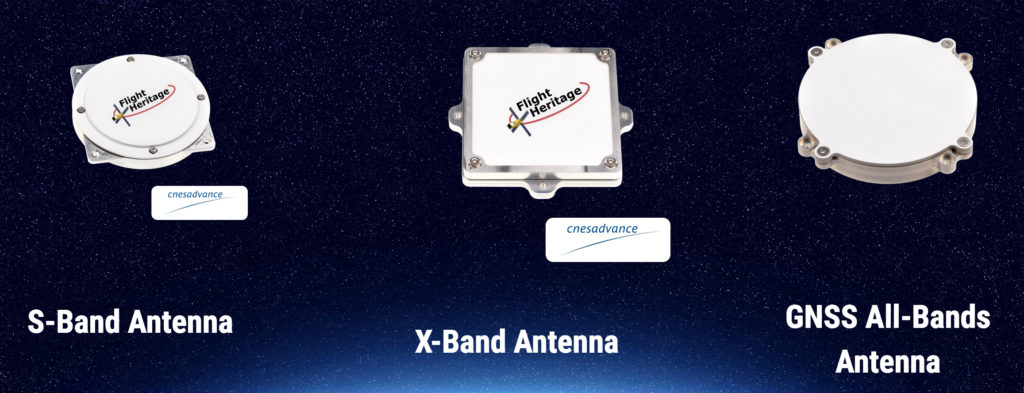
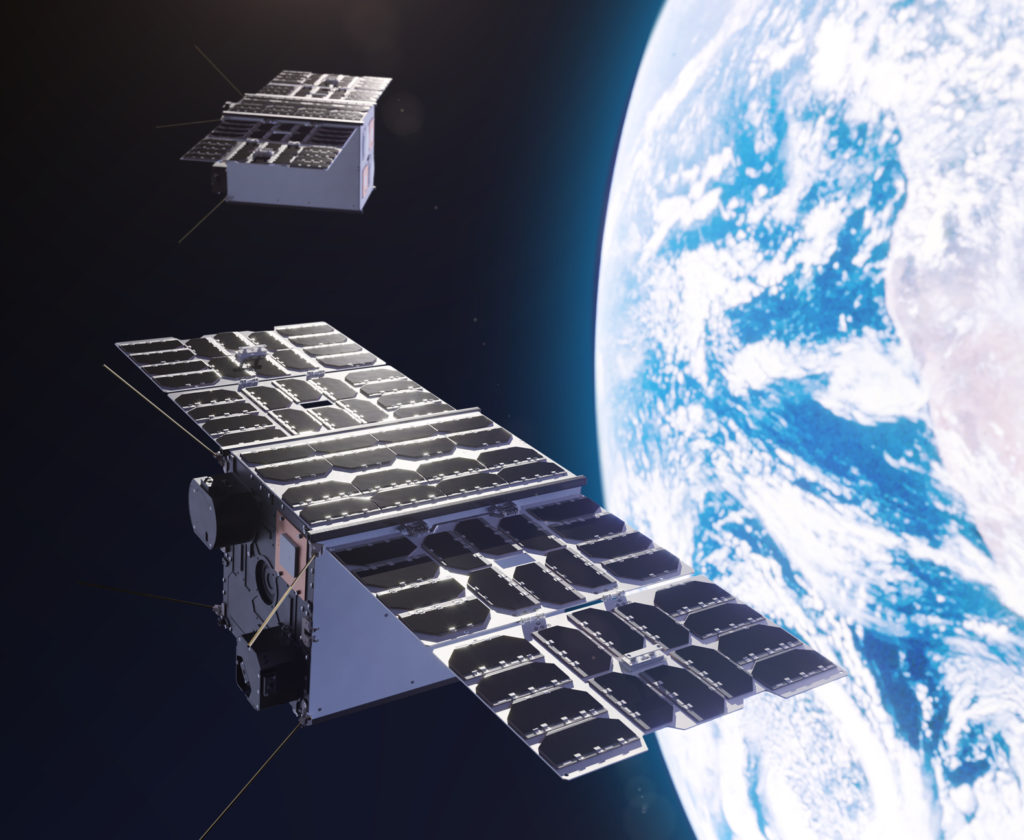
ANYWAVES has been selected to develop and deliver payload user antennas that will be embedded into the first set of two satellites for Omnispace’s IoT smallsats that Thales Alenia Space will be building for the company.

The satellites will serve to advance the development and implementation of the first global hybrid communications network, which Omnispace will operate in Non-Geostationary Orbit (NGSO).

The ANYWAVES antenna solution for the Omnispace project was selected by Thales based upon that company’s expertise in deploying commercially available antennas (S-, X-band and GNSS allbands antennas), as well as its industrial expertise in payload antenna design. The Omnispace satellite constellation will support 3GPP-defined standards and operate in the S-band.

Executive Comments

According to Pascal Dagras, ANYWAVES CPO, “This contract highlights our capacity to develop tailored antennas to meet the market’s needs. Being selected by an industrial player such as Thales Alenia Space is a great recognition of our know-how. ”

Julie Ruhlmann, Omnispace Program Manager at Thales Alenia Space, added, “ANYWAVES’ capacity to design customized antennas perfectly suited to our needs is the reason why we selected them to work alongside with us on this project.”

Filed Under: News

Starlink Could Drive Down Broadband Prices For Consumers

September 24, 2020 by editorial

A study into global broadband retail prices from BroadbandNow finds that Elon Musk’s Starlink highly-disruptive broadband-by-satellite system could see significantly lower broadband prices for consumers.

The US-focused report suggests that Musk’s prices could undercut many rivals by as much as 20 per cent where the satellite system is competing with three or more rival suppliers, and by around 40 per cent when there are 9 or 10 rival players.

Tyler Cooper

“Today’s internet industry poses a problem – lack of access – for more than 40 million Americans,” said Tyler Cooper, Editor-in-Chief of BroadbandNow. “LEO (Low Earth Orbit) internet, from the likes of Starlink and others, represents the first tangible alternative for broadband nationwide, spurring competition.”

Cooper and BroadbandNow’s research found that – if successful – Starlink (and LEO internet as an entirety) represents the first tangible alternative for broadband for millions of Americans.

Competition from Starlink is likely to reduce prices for Americans. Average broadband pricing is around 15 per cent lower for those living in an area with at least three providers to choose from compared to those with only one. And, 40 per cent less in cities with the most competition.

Customers with access to at least one broadband provider could expect the addition of an entirely new competitor to drop the average lowest price in their zip code by around $2.41 per month – a conservative estimate. Introducing a new category of broadband would have more dramatic effects on the wider industry – to the tune of $3.7 billion yearly in household savings based on 2019 typical rates for US homes.

The study says that even if consumers do not sign up to Starlink, its mere presence as a viable competitor in markets with only one or two options at current, the service could have the knock-on effect of spurring incumbent providers to improve their offerings to keep their advantage. This would be a positive move for consumers everywhere.

However, there’s a caveat: Cooper said, “Even if Starlink brings broadband to every single American home, the digital divide won’t be closed. Though no pricing information has been announced for the nascent platform, it is inevitable that it will not be affordable for a segment of the population. How we respond to that issue will be the next evolution of America’s digital divide.

Chris Forrester

News stories authored by journalist Chris Forrester,
who posts for the Advanced Television infosite and is also a
Senior Contributor for Satnews Publishers.

Filed Under: News

Gen-3 Smallsat Platform Unveiled By BlackSky

September 24, 2020 by editorial

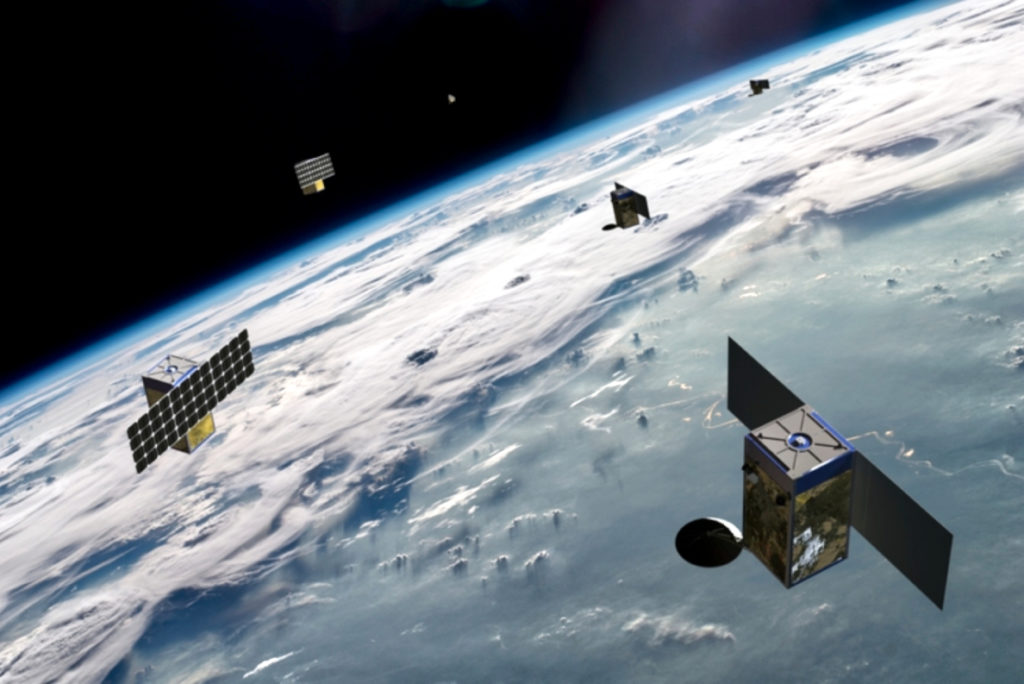
Artistic rendition of BlackSky’s constellation on-orbit.
Image is courtesy of Spaceflight Industries.

BlackSky is engaging in the next phase of expansion of the company’s high-revisit commercial satellite constellation with the unveiling of their next generation, Gen-3, satellite architecture.

In addition, the company also announced it has conducted the preliminary design review of its Gen-3 satellite design for the U.S. Army Tactical GEOINT (TACGEO) prototype program as part of a multi-year contract with the Defense Innovation Unit (DIU).

The commercial constellation expansion features Gen-3 satellites capable of producing images with 50-centimeter resolution and of hosting multiple sensors including short-wave infrared (SWIR). The improved resolution and enhanced spectral diversity of the Gen-3 satellites will extend BlackSky’s ability to provide real-time insights to its customers in a broad set of conditions, including nighttime, low light, and challenging weather.

The TACGEO program is designed to support the Department of Defense’s (DoD) needs for responsive, space-based intelligence, surveillance, and reconnaissance (ISR) for tactical applications. The TACGEO program is a science and technology program to demonstrate the tactical utility of a single satellite of Gen-3’s capabilities.

BlackSky’s Gen-3 satellites will enable rapid distribution of highly responsive insights to warfighters to support concurrent war games, exercises, and combat training center events and help measure technology readiness.

The TACGEO project leverages BlackSky’s high-revisit, low-latency constellation architecture to address a growing need for responsive intelligence, surveillance and reconnaissance for the tactical ISR missions. BlackSky accelerates the DoD’s ability to leverage low-cost, high-performance, small imaging satellites to develop Critical Concept Of Operations (CONOPS) including tactics, techniques and procedures, and to inform future operational systems.

The contract was awarded to BlackSky in January 2020 after a competitive bid process. The TACGEO satellite program is now well into the design and development phase and is on track to launch and demonstrate operational capabilities in 2022.

Executive Comment

Brian O’Toole

“BlackSky is committed to ensuring the success of our customers’ missions. Our strategy of combining rapid evolution and deployment of space-based remote sensing capabilities with an industry leading AI-driven analytics and delivery platform will ensure that our customers are always the first to know,” said Brian O’Toole, CEO of BlackSky. “We are very proud to have reached this performance milestone. It demonstrates our ability to leverage a next generation space and analytics architecture to deliver new insights at a pace and economics unprecedented in the industry.”

Filed Under: News

Exolaunch Managing The Launch Of Four Spire Lemur-Class Smallsats

September 24, 2020 by editorial

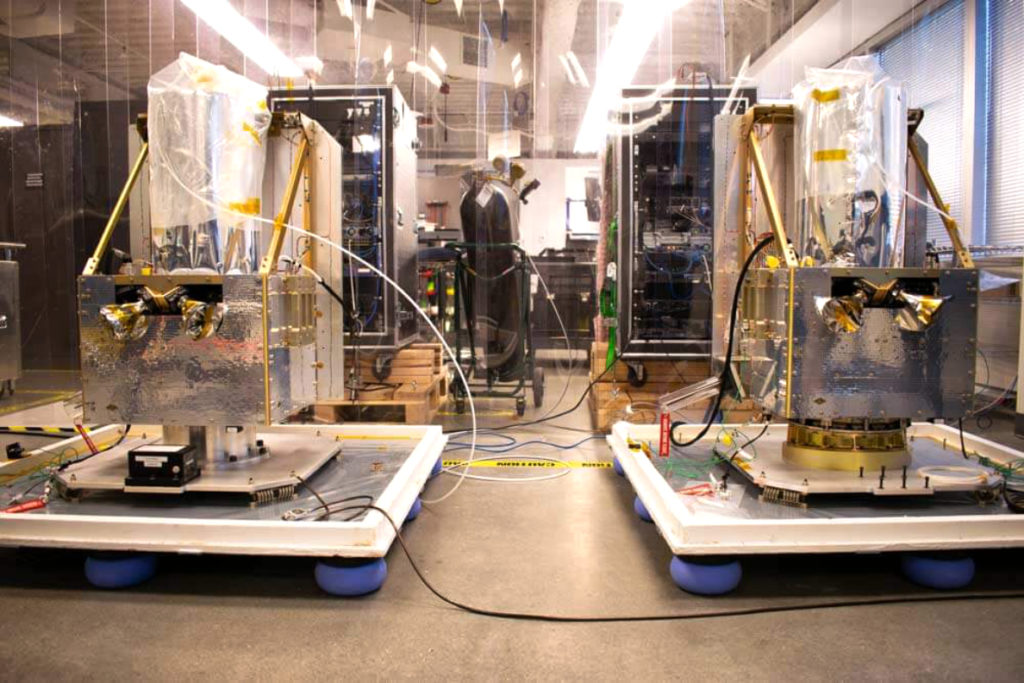
Spire’s smallsats integrated into Exolaunch’s EXOpod dispenser.

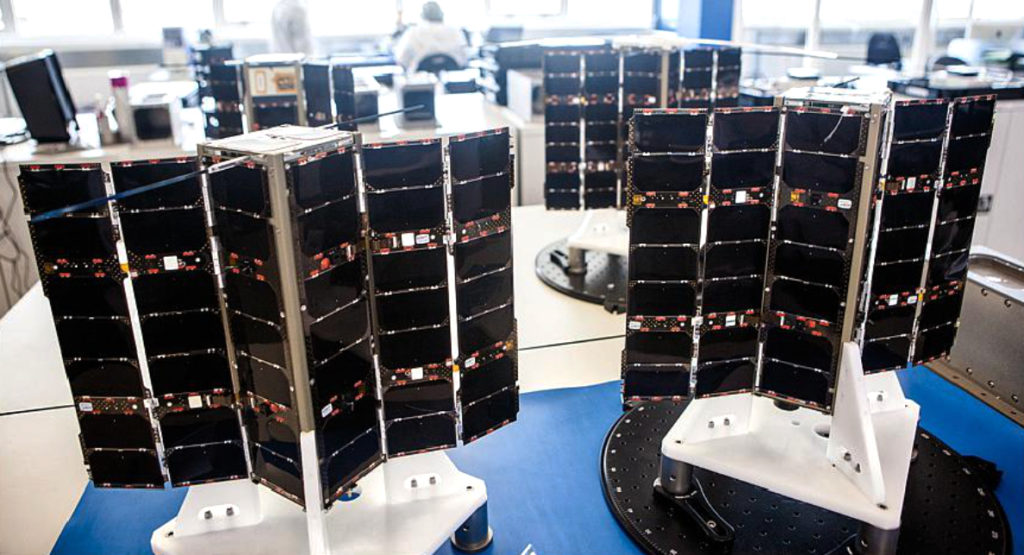
Exolaunch is arranging the launch and providing technical mission management for four of Spire Global’s Lemur-class 3U cubesats aboard a Soyuz rocket mission scheduled for September 28.

Spire Global operates the world’s largest commercial constellation of smallsats making radio occultation measurements, alongside other Earth Observations (EO) that serve the maritime, weather and aviation industries.

Spire Lemur-class smallsats.

To date, Spire has launched more than 100 satellites that operate across a broad range of orbits. Exolaunch has helped deploy approximately one-third of Spire’s satellite constellation since 2016 when the launch service partnership started between the companies. The ongoing cooperation between Exolaunch and Spire has become a cornerstone for pioneering the latest advancements in small satellite launch systems and services.

As it has done on previous rideshares, Exolaunch will arrange launch services and mission technical support for Spire using its advanced cubesat deployment system, the 12U EXOpod. It will also utilize the EXObox deployment sequencer to control the safe and precise separation of Spire’s satellites.

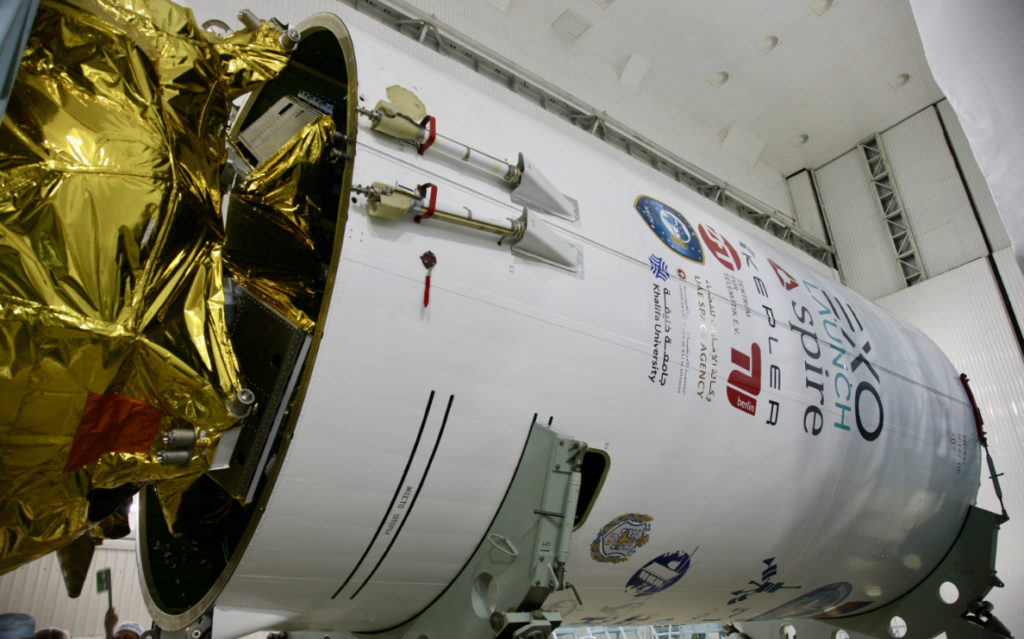
Exolaunch payload fairing encapsulation.

The Spire satellite launch is part of a September Soyuz rideshare mission that is manifested by Exolaunch to realize the launch plans of its international small satellite customers. The mission is named Wanderlust, Desire to Travel, which symbolizes both the ever-increasing importance of sustainable access to space for smallsats and longing for travel that was recently restricted. 

Executive Comments

Jeanne Medvedeva

“Our long-time partnership with Spire has been extraordinarily valuable not only in driving Exolaunch to continually refine its solutions, but also in helping to propel the smallsat and space industry to new heights,” said Jeanne Medvedeva, Exolaunch VP of Launch Services. “We look forward to supporting Spire on this latest rideshare launch and stand ready to facilitate the ongoing expansion of their satellite constellation.”

Robert Sproles

“The experience and comfort we have working with the Exolaunch team has enabled Spire to continue with this launch campaign despite the challenges of a global pandemic. The combination of Exolaunch’s trusted deployment hardware, launch expertise, and customer focus has made them one of our more trusted launch partners,” said Robert Sproles, Senior Director, Constellation Planning and Operations at Spire. “Exolaunch has been instrumental in enabling Spire to set the industry-standard in the commercial aerospace sector as we work with our customers to tackle ever more frequent and extreme weather events in this era of Climate Change.”

Exolaunch has excellent heritage flying international customers on Soyuz, having launched more than 85 smallsats on Soyuz missions to date. This mission marks Exolaunch’s 7th with Soyuz. On this mission, Exolaunch will deploy a cluster of 15 smallsats into a sun-synchronous orbit for its customers Kepler Communications, the UAE Space Agency, the Würzburg Center for Telematics, the Technische Universität Berlin and several European commercial companies. The company is set to provide its market-leading separation systems – EXOpod for cubesats and CarboNIX for microsats – as well as its EXObox sequencers, to ensure timely deployment of smallsats into their target orbit. 

Filed Under: News

OneWeb Contract Revised By Arianespace + Bankruptcy Contracts For Review

September 24, 2020 by editorial

Arianespace’s multi-million euros contract from OneWeb (currently in Chapter 11 bankruptcy reconstruction) has been heavily revised.

OneWeb wants 3 less rocket launches. Each will carry 34 to 36 OneWeb satellites and the full OneWeb constellation should be in orbit by the end of 2022.

The new launch manifest will see Arianespace carry out 16 launches on its Europeanized Soyuz rockets. This means that two Soyuz launches have been cancelled and also that OneWeb is no longer the debut customer on the new Ariane 6 rocket.

Arianespace’s Soyuz vehicle has already successfully placed 3 batches of OneWeb satellites into orbit; however, the bankruptcy brought all plans to a halt. The original scheme expected one Soyuz rocket launch to happen every month throughout 2021 and building up to a fleet of some 650 satellites.

Just 74 craft are currently in orbit and Arianespace has said the launch manifest will kick back in during December of this year, with 36 satellites on board.

The current plan will see two Soyuz launches managed at Arianespace’s usual Kourou, French Guiana launch site. Other Soyuz launches will happen from either Baikonur or Russia’s new launch facility at Vostochny in Russia’s Far East.

Prior the bankruptcy, OneWeb had contracts in place with Virgin Orbit but they have been cancelled and are the subject of a legal action between Virgin and OneWeb.

A Chapter 11 bankruptcy reconstruction allows the affected business to accept or reject some of the contracts and leases that were in place prior to the bankruptcy.

OneWeb has delivered to its bankruptcy court a long list of contracts, some it will be happy to respect or amend but others it wants to be rejected. The court will decide and those affected by a ‘rejection’ have until September 28th to lodge their protests. The bankruptcy court will hear arguments on October 2nd.

The list of the proposed rejected contracts is long, and includes Airbus Defence & Space, EchoStar as well as Hughes Network Systems, a Will-i-Am business (I.am.equity), Intelsat, Kymeta Corp, Qualcomm, Coca-Cola, Virgin Atlantic and Virgin Orbit, Deloitte, KPMG, Qualcomm and many others, including SoftBank.

Some OneWeb staffers and former employees are also affected. Greg Wyler via his Nevada-based 1110 Ventures LLC company and who founded the company, as well as Brian Holz, who worked for a time at OneWeb and who will lose a share purchase agreement signed in 2017.

There are also some major legal actions against OneWeb including claims by Intelsat and Virgin Orbit. The bankruptcy court’s judge will decide what happens to these later this year.

Chris Forrester

News stories authored by journalist Chris Forrester,
who posts for the Advanced Television infosite and is also a
Senior Contributor for Satnews Publishers.

Filed Under: News

  • « Go to Previous Page
  • Page 1
  • Interim pages omitted …
  • Page 12
  • Page 13
  • Page 14
  • Page 15
  • Page 16
  • Interim pages omitted …
  • Page 57
  • Go to Next Page »

Primary Sidebar

WEEKLY NEWSLETTER

Archives

  • June 2026
  • May 2026
  • April 2026
  • March 2026
  • February 2026
  • January 2026
  • December 2025
  • November 2025
  • October 2025
  • September 2025
  • August 2025
  • July 2025
  • June 2025
  • May 2025
  • April 2025
  • March 2025
  • February 2025
  • January 2025
  • December 2024
  • November 2024
  • October 2024
  • September 2024
  • August 2024
  • July 2024
  • June 2024
  • May 2024
  • April 2024
  • March 2024
  • February 2024
  • January 2024
  • December 2023
  • November 2023
  • October 2023
  • September 2023
  • August 2023
  • July 2023
  • June 2023
  • May 2023
  • April 2023
  • March 2023
  • February 2023
  • January 2023
  • December 2022
  • November 2022
  • October 2022
  • September 2022
  • August 2022
  • July 2022
  • June 2022
  • May 2022
  • April 2022
  • March 2022
  • February 2022
  • January 2022
  • December 2021
  • November 2021
  • October 2021
  • September 2021
  • August 2021
  • July 2021
  • June 2021
  • May 2021
  • April 2021
  • March 2021
  • February 2021
  • January 2021
  • December 2020
  • November 2020
  • October 2020
  • September 2020
  • August 2020
  • July 2020
  • June 2020
  • May 2020
  • April 2020
  • March 2020
  • February 2020
  • January 2020
  • December 2019
  • November 2019
  • October 2019

© 2019–2026 SatNews

Insert/edit link

Enter the destination URL

Or link to existing content

    No search term specified. Showing recent items. Search or use up and down arrow keys to select an item.
      x
      Sign Up Now!

      Enjoy a free weekly newsletter with recent headlines from the global SmallSat industry.

      Invalid email address
      We promise not to spam you. You can unsubscribe at any time.
      Thanks for subscribing! You will now receive weekly SmallSat News updates.
      We love our advertisers.
      And you will too!

      Please disable Ad Blocker to continue... We promise to keep it unobtrusive.
      We promise not to spam you. You can unsubscribe at any time.
      Invalid email address
      Thanks for subscribing!