• Skip to main content
  • Skip to primary sidebar
  • Home
  • News
  • Featured
  • More News ⌄
    • SatNews
    • SatMagazine
    • MilSatMagazine
  • Events ⌄
    • MilSat Symposium
    • SmallSat Symposium
    • Satellite Innovation
  • Contacts
  • SUBSCRIPTION

SmallSat News

You are here: Home / Archives for 2020

Archives for 2020

Astroscale Closes Series E Round With $51M Boost

October 13, 2020 by editorial

Astroscale Holdings Inc. (“Astroscale”) has closed their Series E round with additional funding of $51 million from a group of investors led by aSTART Co., Ltd. (“aSTART”) — this latest round brings the total investment raised to $191 million and makes Astroscale the most funded, on-orbit services and logistics company globally as well as the most funded space venture in Japan.

The significant investment raised since its founding in 2013 has allowed Astroscale to establish a global footprint across five countries and grow to over 140 team members. Each of the five global offices are working in concert to achieve the Astroscale mission of safe and sustainable development of space for future generations.

Astroscale Japan is on schedule to ship the pioneering End-of-Life Services by Astroscale-demonstration (ELSA-d) mission, the world’s first demonstration of commercial orbital debris removal. Astroscale U.K. is leading the development of the In-Orbit Servicing Control Centre – National Facility, which will form the basis for satellite servicing mission operations.

Astroscale U.S., and its newly established subsidiary, Astroscale Israel, are focused on satellite servicing research and developing a mission for life extension of geostationary satellites. With the addition of an administrative office in Singapore, Astroscale is uniquely positioned to meet the global challenges of securing orbital sustainability.

Senior officials from government and industry have been increasingly expressing concerns over the growing dangers of space debris to assets in orbit. Recently, near misses of space debris with the International Space Station and multiple conjunction warnings for both active and defunct satellites have spurred more concerted international action to overcome the issue.
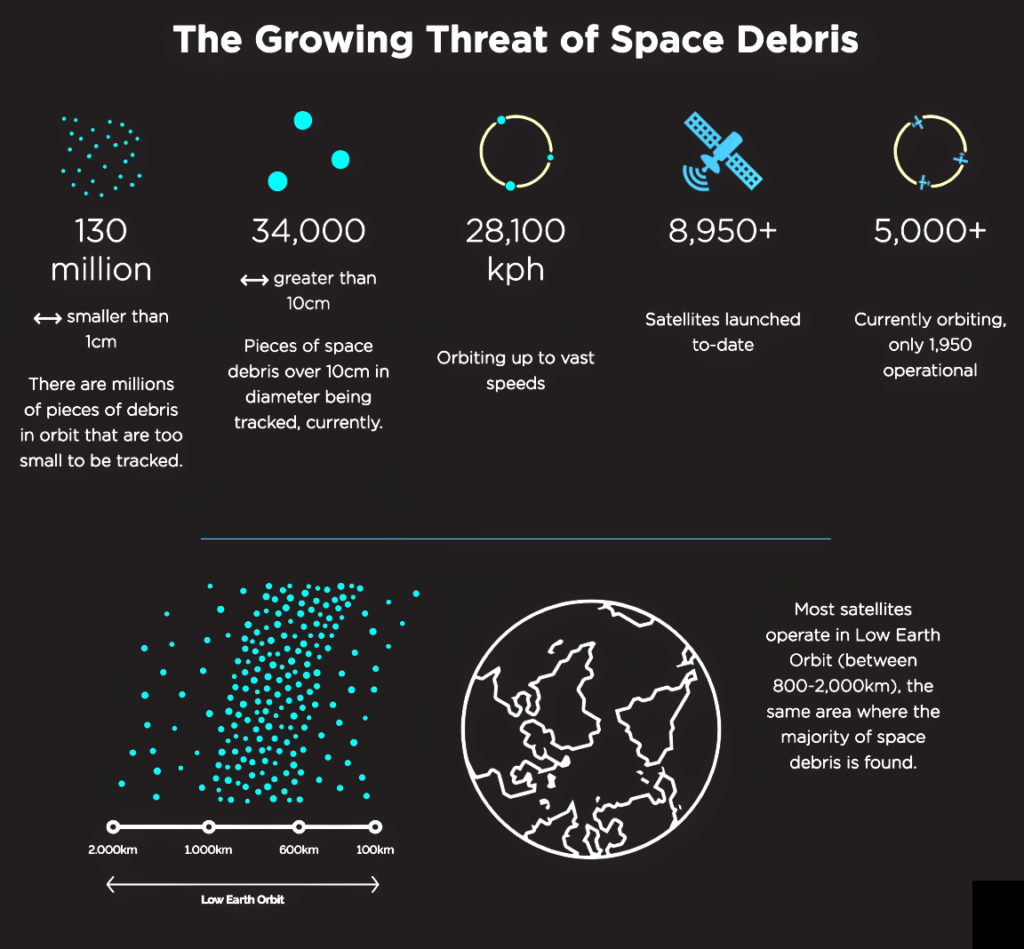
At the same time, independent valuations have estimated that life extension and other on-orbit satellite services will provide significant value to commercial and government operators by repairing or upgrading assets rather than just replacing them.

This latest funding round will allow Astroscale to continue developing technologies, defining business cases and working with policymakers to ensure debris issues are addressed and servicing opportunities for sustainability are realized.

Executive Comments

“In Astroscale’s seven-and-a-half-year history, we have seen a growing awareness of the debris issue and the recognition that protecting space technologies is essential for improving our daily lives and helping to ensure sustainability on Earth,” said Nobu Okada, Founder and CEO. “Our multiple funding rounds are a testament to the power of Astroscale’s vision of space sustainability, and this latest series will allow us to continue developing the technologies that will lead the debris removal and on-orbit servicing market.”

“Space debris is a serious issue that has the potential to affect our daily lives, the global economy and environmental sustainability,” said Kazumasa Watanabe, CEO of aSTART. “Astroscale is not only leading the market with its unrivaled technology, but is also making a global impact by contributing to the United Nations Sustainable Development Goals (SDGs). This combination of technology advancement and societal benefit is why aSTART has invested in Astroscale since Series C. We will continue to support Astroscale in developing new on-orbit servicing capabilities which will benefit humankind.”

Investors in Astroscale Series E Round…

  • AS aSTART 1 Limited Partnership (aSTART Co., Ltd.)
  • Hulic Co., Ltd.
  • I-NET CORP.
  • SHIMIZU CORPORATION
  • SPARX Space Frontier Fund (SPARX Innovation for Future Co.,Ltd.)

Filed Under: News

ICEYE’s Public Archive Delivering 18K+ Images From SAR Satellites

October 13, 2020 by editorial

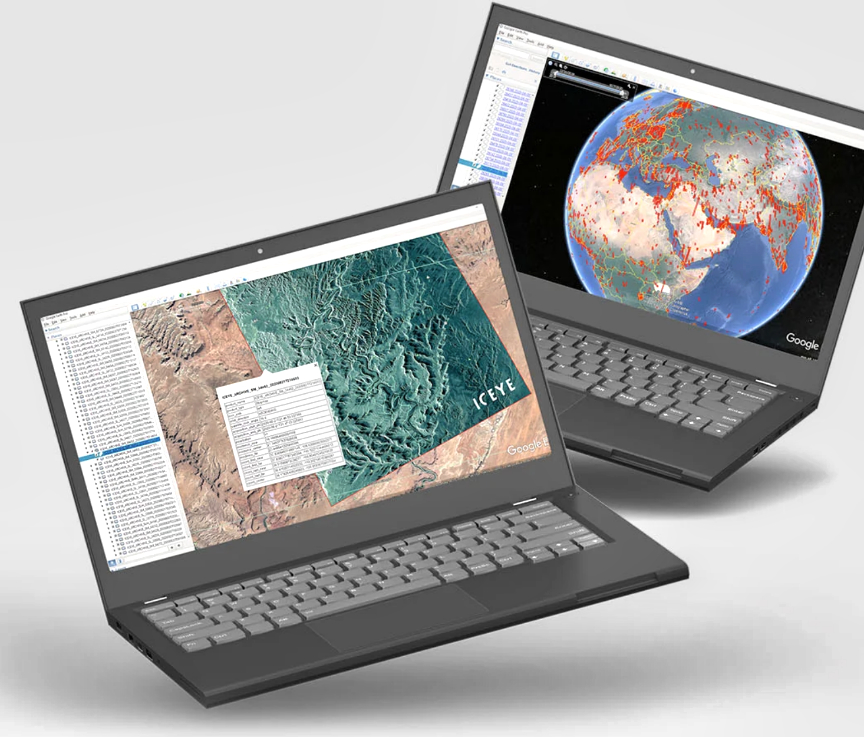
Access to ICEYE‘s Public Archive has been announced by the firm — this archive contains nearly 18,000 images from ICEYE satellites.

The ICEYE Public Archive includes radar imagery in various imaging modes taken with ICEYE’s SAR satellite constellation between mid-2019 and now. The ICEYE Public Archive consists of preview images from around the world, which are released under CC BY-NC 4.0 license, allowing for non-commercial use.

The ICEYE Public Archive is provided as a downloadable file through the ICEYE website, showing the locations and time of imaging for each thumbnail in the Archive. After downloading the file, users can open it with their Geographic Information System (GIS) program of choice, such as Google Earth Pro or QGIS, making exploring the world of radar satellite imaging accessible for all.

The Public Archive does not contain the full catalog of ICEYE imagery, as customer exclusivity applies in many cases. The ICEYE SAR data associated with the preview images presented in the Public Archive can be ordered in the ICEYE standard image formats by following the order process described in the ICEYE Product Guide. ICEYE sales will assist new customers to set up an account for image orders.

Executive Comments

Rafal Modrzewski

“The ICEYE SAR satellite constellation is here for the global community of decision makers, data users, and more, to improve our shared world around us all,” said Rafal Modrzewski, CEO and Co-founder of ICEYE. “The ICEYE Public Archive opens up a unique view of the world, which we invite you to explore together with us.”

Steve Young

“Every day, ICEYE provides unique access to data and information for our customers that hasn’t been available before,” said Steve Young, VP, Business Development and Sales, ICEYE. “Our customers and the global community of Earth Observation data explorers now have access to some of the imagery that has been collected in the prior years by ICEYE’s SAR satellite constellation. The ICEYE Public Archive provides additional inspiration for what can be achieved in the future.”

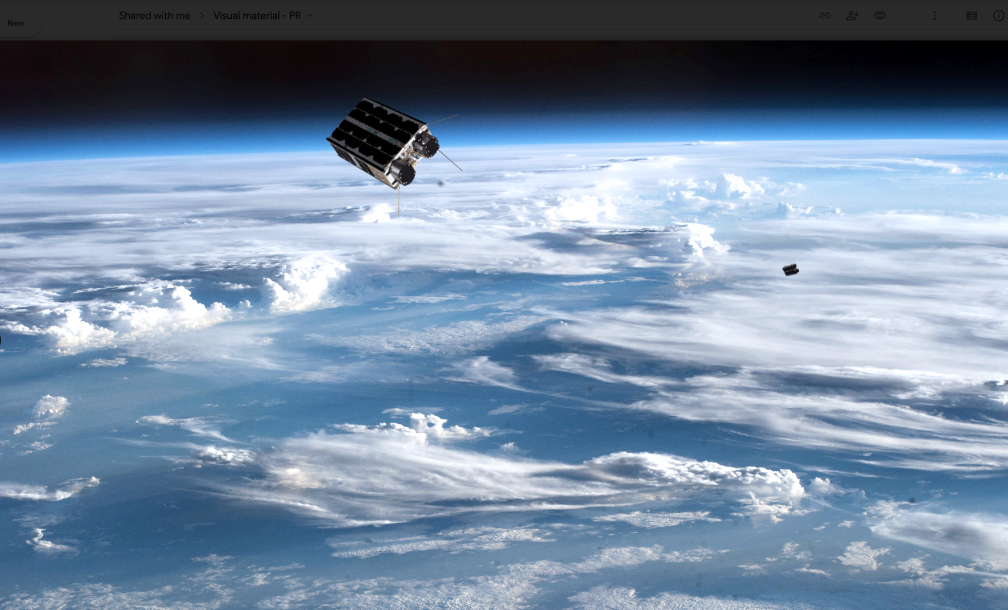
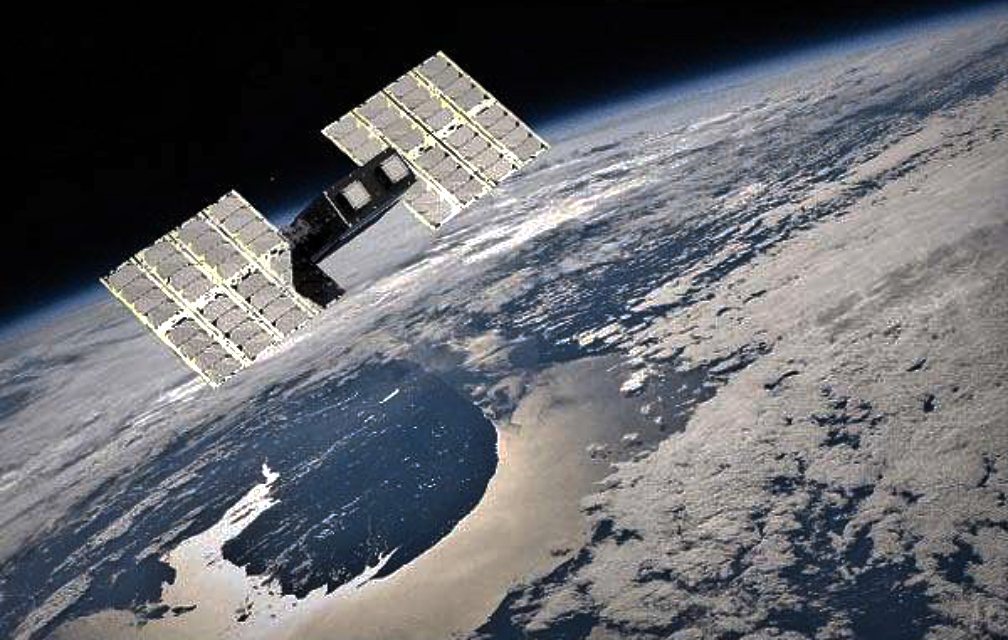
Artistic rendition of an ICEYE SAR satellite on-orbit.

Filed Under: News

Spaceport America + C6 Launch Systems Sign Activities Agreement

October 12, 2020 by editorial

Spaceport America has signed an agreement with C6 Launch Systems to provide services, resources and access to the vertical launch sites facilities for testing operations and activities.

C6 Launch Systems plans to begin work at Spaceport America in January 2021. Over a six-week period, the Canadian rocket company will install a new vertical test stand and conduct system integration tests including several engine firings at Spaceport America. These tests will validate the avionics, engine control, ground control and communications subsystems.

C6 builds rockets designed to launch small satellites. Its launch vehicle is purpose-built for a high-cadence, low-cost orbital launch program. Elementary tank architecture, pressurization, and propellant management systems simplify manufacturing and launch operations. Its time-tested engine provides a path to reliable flight performance.

Executive Comments

Scott McLaughlin

“C6 Launch is a young, innovative company, part of the new frontier of commercial space developments, and a perfect fit for our site,” Scott McLaughlin, Spaceport America’s Interim Executive Director said, “We are glad to play an important role in their growth, and hope to be a partner for many years to come.”

Richard McCammon

“Spaceport America has been great to work with over the past few months,” said Richard McCammon, President of C6 Launch Systems. “I am truly excited about our new partnership. This integration test is a major milestone for us as we continue to develop our launch vehicle.”

Filed Under: News

NanoAvionics Contracts Accion Systems For the TILE-3 Smallsat Propulsion System For Upcoming Rideshare Mission

October 12, 2020 by editorial

Artistic rendition of NanoAvionics smallsats in space.

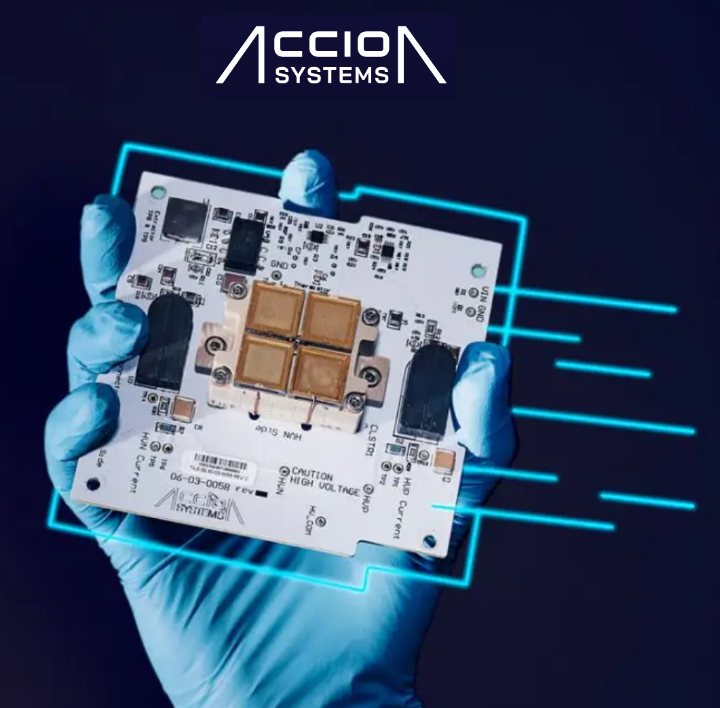
NanoAvionics has signed a contract with Accion Systems to host their propulsion system, TILE 3, on-board the firm’s new rideshare mission for a demonstration flight in 2021.

Accion Systems procured this flight as the culmination of an ongoing US government sponsored propulsion program. The smallsat for the rideshare mission is based on NanoAvionics flight-proven M6P bus and will include several customer payloads that can fit the 4U payload volume. The rideshare mission is the fourth in a series of NanoAvionics rideshare missions and will be arranged by NanoAvionics US. The expected launch will be during the last half of 2021.

As part of the rideshare mission, NanoAvionics will take care of all aspects related to the satellite mission from payload integration, performance testing and spacecraft registration to launch and logistics, frequencies allocation, spacecraft commissioning and payload on-orbit operations. Previous rideshare missions included payloads by Lacuna Space, Blink-Astro (SpaceWorks Orbital subsidiary) and others.

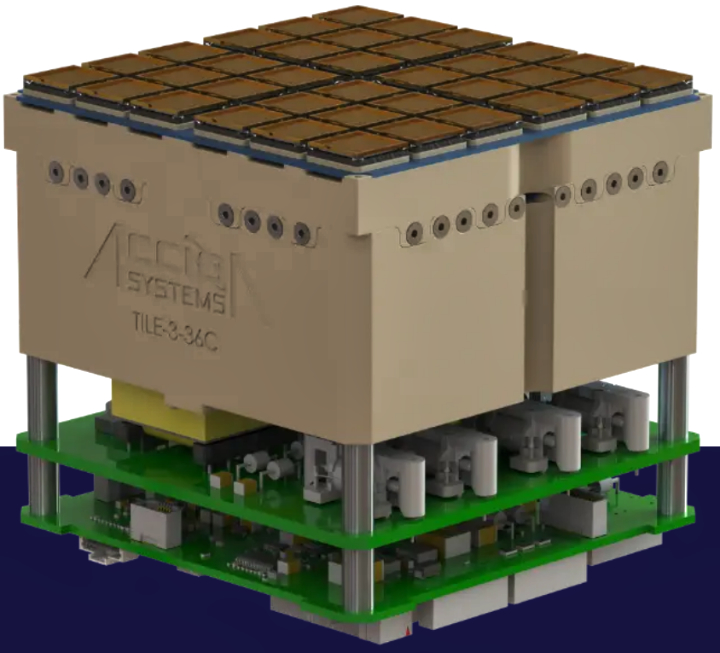
The TILE propulsion system is uniquely superior to conventional electric propulsion, pioneering ionic liquid electrospray for commercial propulsion activities. TILE combines the use of a safe, inert liquid propellant with a simple mechanical design with few moving parts to create a propulsion system that is low-cost, compact, low pressure, and has less than 50% of the power draw of other propulsion technologies. The compact design and low power draw of the TILE system allows satellite bus manufacturers to allocate more satellite volume and power to revenue generating payloads.

Due to the simple system design, TILE propulsion systems have shorter lead times and are very cost competitive – ideal for smaller constellations through mass manufacturing. TILE’s modular design can be flexibly configured to meet various mission needs, mounting on almost any surface of the spacecraft, and easily and seamlessly integrated with existing mission control software.

Accion Systems’ TILE 3 propulsion.

Executive Comments

F. Brent Abbott

“Accion Systems’ TILE 3 is a revolutionary propulsion technology and NanoAvionics is looking forward to putting it through its paces in orbit,” said F. Brent Abbott, CEO of NanoAvionics US. “When flight proven, the TILE 3 system will make a great additional propulsion option to the NanoAvionics line of satellite buses. Rideshare missions drastically reduce mission cost, making them ideal for technology validation in space. Accion’s TILE 3 will be flying on our flagship M6P satellite bus, which NanoAvionics offers to the market along with a full range of nanosatellite buses up to 16U in size.”

Peter Kant

“NanoAvionics is the perfect partner for the TILE 3 launch as a space proven product,” said Peter Kant, CEO of Accion Systems. “We selected a demonstration partner that would fully represent the commercial potential of TILE 3. While this initial flight will provide propulsion to the 6U M6P, TILE 3 is designed to offer full propulsion capabilities to a wide variety of small satellites and we are excited to provide that capability to NanoAvionics’ line of satellite bus products.”

Artistic rendition of a NanoAvionics rideshare smallsat.

Filed Under: Featured, News

Space Flight Laboratory’s Sept. 28th Kepler Smallsats Launch Via Soyuz Revealed

October 12, 2020 by editorial

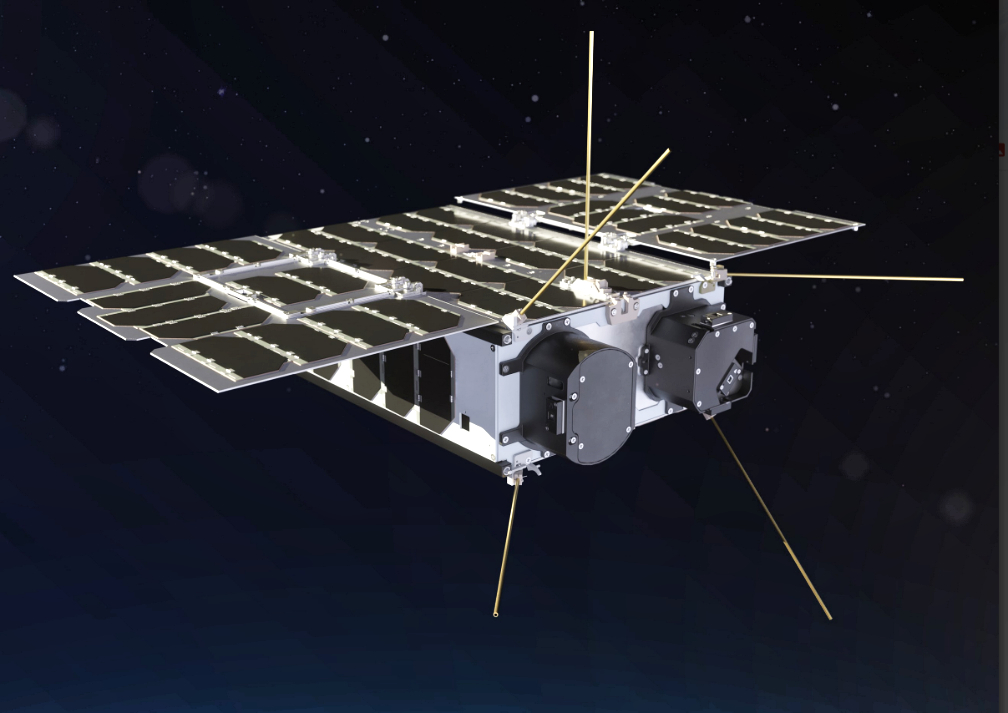
Artistic rendition of Space Flight Laboratory’s SPARTAN 6U cubesat.

Space Flight Laboratory (SFL) has announced the successful launch of the Kepler-4 and Kepler-5 cubesats — and the company played an instrumental role in the development of the production workflow at Kepler that will enable that firm to produce additional satellites to deliver the GEN1 constellation.

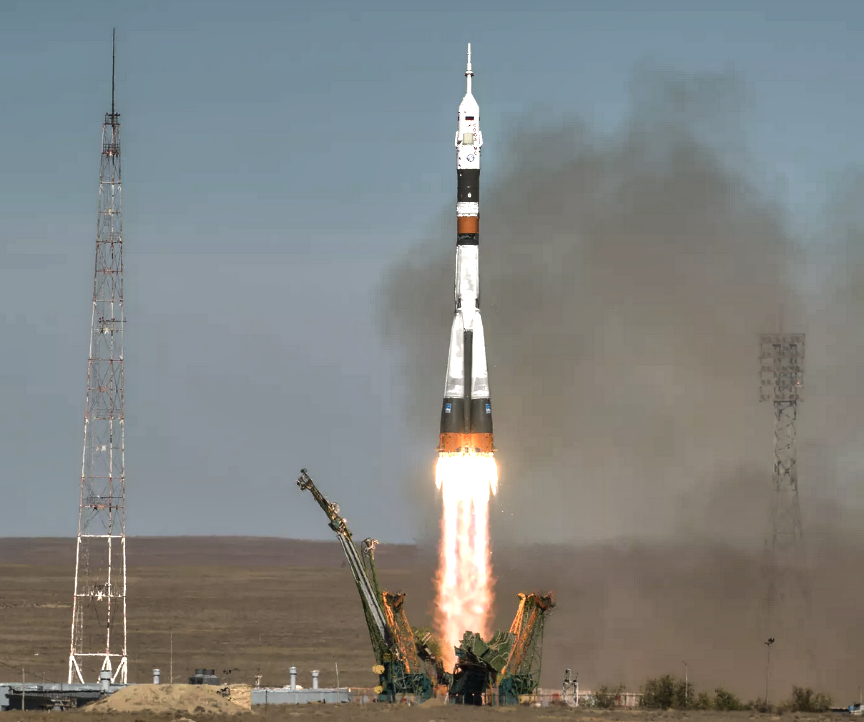
A Russian Soyuz rocket liftoff (file photo).

The two 6U-XL cubesats were launched September 28, 2020, aboard a Soyuz-Fregat launch vehicle from the Plesetsk Cosmodrome in Russia. Within hours of launch, both satellites were in communication with Kepler ground control and were functioning as planned.

Kepler-4 and -5 are the first service-focused cubesats in Kepler Communications’ constellation that will ultimately include 140 satellites. SFL developed Kepler-4 in concert with Kepler, which is based on SFL’s new SPARTAN 6U-XL CubeSat design, with mass production in mind.

As Kepler-4 was in production, SFL personnel provided training and technical support to Kepler in creating the manufacturing workflow capable of assembling and integrating the additional satellites at a 5,000-square-foot facility adjacent to Kepler headquarters in Toronto.

Executive Comments

Jared Bottoms

“Leveraging SFL’s experience we have a high degree of confidence in the performance of these satellites. This will pave the way towards our GEN1 constellation and future spacecraft in our network,” said Director of Space Systems, Jared Bottoms.

Dr. Robert Zee

“We designed our SPARTAN 6U-XL bus – along with two other new CubeSat platforms – to cost effectively meet the reliability, performance and capability demands of fully commercial operations,” said SFL’s CEO, Dr. Robert Zee.

Established in 1998, SFL has designed and built 52 distinct nano- and microsatellites with 24 under construction and nearing launch and another 28 launched (23 of which are still operational), totaling over 128 cumulative years of successful operation in orbit.
Many of these microspace missions have included SFL’s trusted attitude control and formation-flying technologies.

Filed Under: Featured, News

Starlink To Start Soon + DirecTV Seeking Buyer

October 9, 2020 by editorial

Elon Musk, in a tweet after the latest Starlink launch, said that once this batch of 60 satellites are in their correct orbital positions then a test broadband service will start.

“We will be able to roll out a fairly wide public beta [service] in northern US and hopefully southern Canada,” Musk said. “Other countries to follow as soon as we receive regulatory approval.”

Normally it would take about 2-3 weeks following launch to place a flight of satellites into their designated positions.

Musk’s SpaceX rockets have launched around 775 satellites into orbit and is expected to place another 60 into orbit before the end of October. However, a batch of satellites launched in May 2019 have been deliberately de-orbited. SpaceX has yet to give a reason for the de-orbiting.

Spaceflight analyst Jonathan McDowell says that 39 satellites were de-orbited from that May 2019 launch.

ViaSat of California, an existing supplier of broadband services by satellite and a rival to Musk’s system, told the FCC in a filing in September that SpaceX was suffering in-orbit failures running at about 7 percent.

Viasat said, “An actual failure rate this high, manifesting after such a small fraction of a Starlink satellite’s design life has passed, optimistically implies a staggering 22 percent failure rate over the duration of the Starlink mission.”

However, SpaceX followed up these claims with its own September 29th statement to the FCC arguing that it had reported no failures in the last 233 Starlink satellites launched, and accusing ViaSat of refusing to allow facts to get in the way of the story it wishes to be true.

“SpaceX continues to work to improve the performance and reliability of its vehicles,” said the statement.

The October 6th launch was the 13th batch of Starlink craft to be launched. SpaceX has frequently said that its service will beam broadband connectivity at speeds of up to 100 Mb/s that conventional land-based services cannot reach economically.

Recent reports say that payTV giant DirecTV, owned by telco AT&T, is definitely up for sale and that some bids are already being submitted.

The New York Post said that “lowball bids” were actively being made and coming mostly from private equity interests. Goldman Sachs is handling the process. The newspaper says that Charlie Ergen’s Dish Network has not made a bid, although he has long described consolidation between the two US DTH payTV players as inevitable.

The first-round bids have taken place and nobody exceeded offering $20 billion for the business which is suffering declining subscribers. AT&T paid $49 billion (including debt) for the business back in July 2015.

It could be that the final bid – if accepted – would allow AT&T to retain a minority stake in DirecTV.

Chris Forrester

News stories were authored by journalist Chris Forrester, who posts for the Advanced Television infosite and is also a Senior Contributor for Satnews Publishers.

Filed Under: News

Exolaunch Signs Long-Term Launch Agreement With SpaceX

October 9, 2020 by editorial

Exolaunch has signed a long-term launch agreement with SpaceX to secure Falcon 9 capacity for launching smallsats as part of SpaceX’s SmallSat Rideshare Program.

Under the agreement, Exolaunch manifests multiple microsatellites and cubesats on Falcon 9 rideshare missions to a sun-synchronous orbit throughout 2020 – 2021.

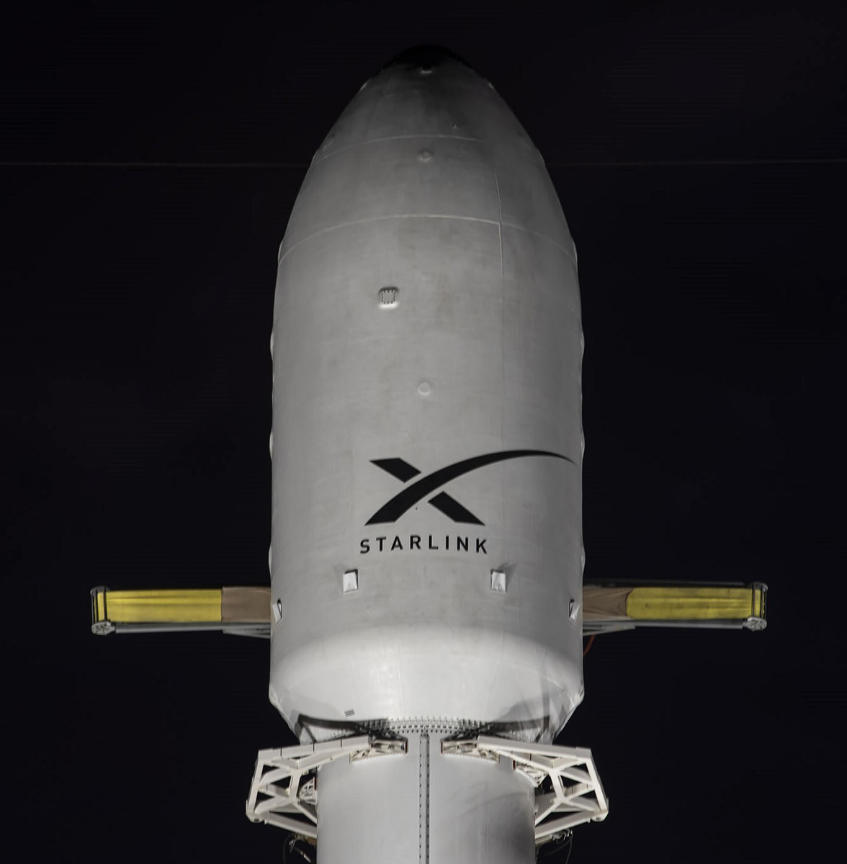
Photo of a SpaceX Falcon 9 lift off.

Exolaunch is accommodating 30 smallsats on the first SpaceX dedicated rideshare mission scheduled for launch this December and is gearing up for its launch campaign next month at the SpaceX launch facility at Cape Canaveral, Florida. Additionally, Exolaunch is planning to open an office in the U.S. to provide more flexible launch and deployment services to its growing list of stateside customers.

For the December mission, Exolaunch will provide comprehensive rideshare mission management, deployment and integration services for 30 satellites for its U.S. and European customers. Some of the core customers who signed up for launches through Exolaunch’s services include Loft Orbital, Swarm Technologies, NanoAvionics, German Aerospace Center (DLR), German universities and other commercial constellation customers.

On each Falcon 9 mission, Exolaunch will use their brand-new product, the EXOport, which is a flexible, multi-port adapter designed to enable optimal accommodation of microsats and cubesats. The company will also use their proprietary, flight-proven, separation systems – CarboNIX — the next generation shock-free separation system for smallsats, with upgraded modifications of the firm’s EXOpod cubesat deployers and EXObox sequencers to deploy customers’ satellites into their target orbit.

The Exolaunch EXOport.

To date, Exolaunch has successfully arranged launch campaigns for more than 100 smallsats. This summer, Exolaunch also delivered its CarboNIX separation systems to deploy six SkySat microsatellites for Planet, successfully launched on two SpaceX’s Starlink missions onboard Falcon 9.

Executive Comments

Jeanne Medvedeva

“The SpaceX program is a game-changer for the rideshare launch industry giving new impetus for numerous constellations of small satellites. Teaming up with SpaceX, we are able to offer our customers seamless, reliable, and cost-effective launch solutions and expand access to space,” said Jeanne Medvedeva, VP of Launch Services at Exolaunch. “Our first mission with Falcon 9 later this year will set the precedent for our rideshares going forward, and we are delighted to extend partnership with SpaceX.”

Connor Jonas

Exolaunch’s Program Manager, Connor Jonas, added, “As we continue to sign on more U.S.-based customers, it makes sense strategically for Exolaunch to establish an additional office in the U.S. At this new location, we will set up a team of rideshare launch and deployment service experts who will be perfectly equipped to serve our customers and prospects in the states now and downstream.”     

Filed Under: News

KSAT’s Smallsat Network Doubles The Number Of Supports Per Month

October 9, 2020 by editorial

KSAT has delivered more than 20,000 passes on the KSATLITE network in September — this is all-time-high for LITE, doubling the number of supports per month since January of this year and the growth seems to be continuing.

KSATLITE is KSAT´s ground network solution offering optimized support for smallsats and big constellations. The offered solution has gained popularity in the Smallsat marketplace and is currently experiencing high demand.

At the start of the year, the KSATLITE network accounted for 10,000 contacts out of the 50,000 monthly contacts on the KSAT global network. By the end of September, that number was more than 20,000.

The strong growth is caused by several factors but clearly indicates a vibrant and growing commercial space industry despite Covid -19. The total volume is growing due to the number of customers, the number of satellites launched, as well as the number of contacts required by both new and existing customers.

The sky is not the limit KSATLITE is set up with a software-optimized scheduling system. Leveraging up-to-date Application Programming Interfaces (API´s) enables efficient support for even the big LEO broadband and IoT constellations and the team is experienced in handling Launch vehicle, LEOP, and in-orbit support ensuring mission success throughout spacecraft lifecycle.

Since August, the LITE-team has provided LEOP support for close to thirty satellites on 6 launchers, 3 of them within the same week, thus demonstrating an unmatched ability to tackle high volumes across the network as well as simultaneous support capacity.

Executive Comment

Kristian Jenseen

“The growth we see now confirms that the way we operate matches perfectly the specific needs of customers in this market segment, both on solutions and price point,” said Kristian Jenssen, Director of KSATLITE. “It makes me extremely proud to see that the automated systems we have developed are scaling up seamlessly, and that we are able to handle both LEOP and big constellation support with just a small team. We have good reason to believe that this growth will continue. The sky is not the limit as they say. Easy integration of new missions means new satellites can easily be added. It’s a scalable system that allows satellite operators to scale their ground communications support as the constellation grows- and technically our systems are ready for another doubling.”

Filed Under: News

Payloads Mfg’d By ABB For GHGSat’s Next Three Methane Detecting Smallsats

October 8, 2020 by editorial

GHGSat has signed an agreement with ABB to deliver the payloads for GHGSat’s next three methane detecting satellites – a significant milestone in the firm’s plan to have a constellation of 10 spacecraft on-orbit by the end of 2022.

GHGSat is unique in operating satellites able to detect greenhouse gases (GHG) in high-resolution, a technology the company has demonstrated in space since 2016. While government GHG sensors in orbit provide regional scale measurements and global trends, GHGSat’s satellites are specifically designed to detect and quantify methane emissions from individual facilities. GHGSat’s sensor technology enables unprecedented leak monitoring capability as detection of sources 100 times smaller is possible with a resolution that is 100 times higher.

Accurate, cost-effective monitoring is vital as methane has a global warming potential c.84 times greater than that of carbon dioxide over 20 years. GHGSat’s space-based data and analytics enable regulators and operators in sectors such as oil and gas, waste management, mining, energy, and agriculture to properly assess and track methane emissions, and take prompt action to address leaks.

This capability will be further enhanced as GHGSat’s fleet expands in the coming years. “Iris” (GHGSat-C1), the company’s second satellite, launched successfully on 2nd September 2020, joining technology demonstrator “Claire”, in orbit since 2016. ABB delivered the payload for “Hugo” (GHGSat-C2), GHGSat’s third satellite, which is scheduled to launch by the end of the year.

Executive Comments

Stephane Germain

Announcing the new agreement, Stephane Germain, CEO, GHGSat said, “With GHGSat-C2, ABB has proven that they have the technical expertise and manufacturing capacity to support GHGSat’s growth. We are looking forward to this next phase of our partnership with ABB to rapidly expand our constellation.”

Marc Corriveau, General Manager, ABB Measurement & Analytics, Canada, commented, “We are currently seeing extensive innovation brought about by private initiatives in the space industry. At ABB we have built up a unique heritage in this sector over the decades helping scientists better understand the composition and evolution of our atmosphere. Our expertise in space optics and sensor development for industrial applications means that we are exceptionally well positioned to play a key role in GHGSat-C2. We are looking forward to collaborating on this exciting new project.”

Filed Under: News

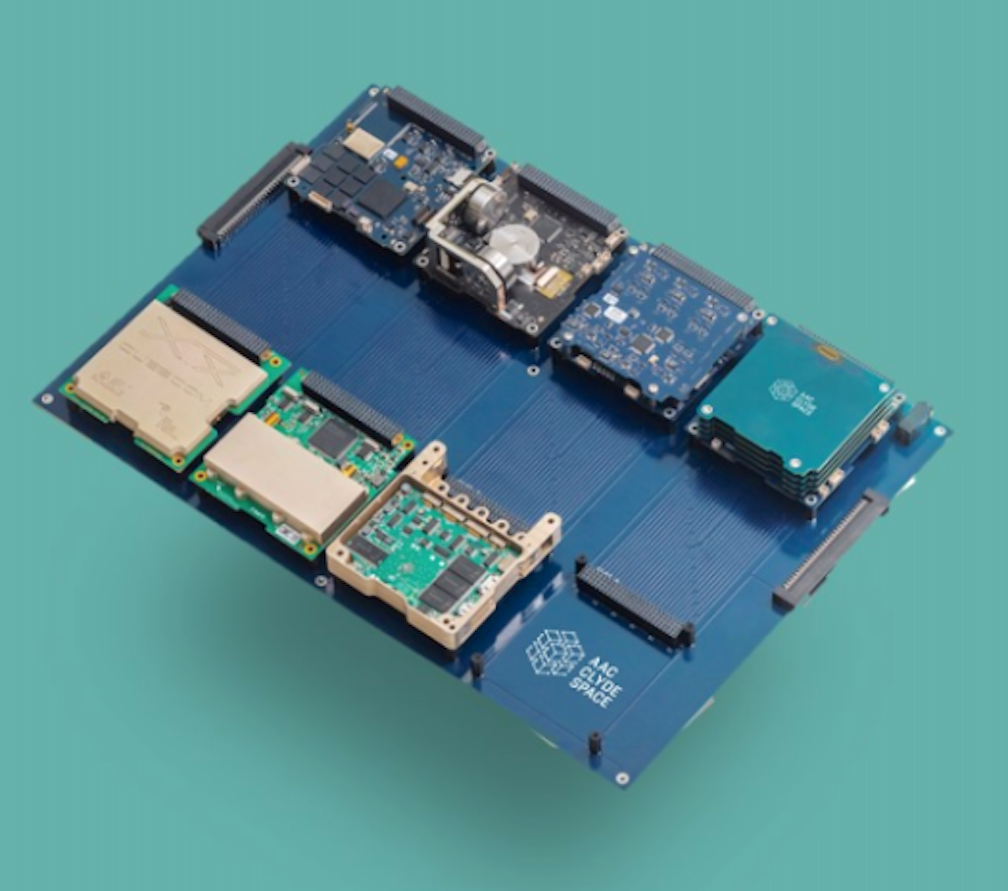
AAC Clyde Space Adds a New Member to Their Family … Hyperion Technologies

October 8, 2020 by editorial

There’s a Dutch company that will be joining the Swedish-Scottish Group at AAC Clyde Space, subject to approval by an AAC Clyde Space Extraordinary General Meeting.

Based on a cash and shares deal, Hyperion Technologies has agreed to be acquired by AAC Clyde Space. The acquisition is subject to approval by  an AAC Clyde Space Extraordinary General Meeting.

The Dutch space company will join the Swedish-Scottish Group to strengthen the offering to the global space market. The CEO of Hyperion Technologies is enthusiastic about this step, “We have always strived to grow and to expand. Our success in the market has shown that we need to up our game in order to respond appropriately to our clients. As part of AAC Clyde, we can address these needs by offering a more integrated one-stop-shop, increased service levels and more robustness as a business.

The smallsat market is a fast-paced and competitive industry. New business models and actors make it necessary to adapt. Many of them shake up the way we deliver satellites or components, the speed in which they are delivered, and the ease of purchase. For Hyperion, it was a logical step to seek an internationally renowned partner with a similar mindset and complimentary product portfolio to achieve just that. As a larger group, we will be able to respond better to procurement needs, small series production for constellations and integrated service offerings.” 

Steven Engelen, CTO of Hyperion, ensures, “We will continue supporting our clients in their mission. Our technical team is available as usual. It is in our joint interest with AAC Clyde to maintain clients’ satisfaction. We are also looking forward to joining forces with teams from the group, sharing our knowledge and providing a new generation of integrated solutions.”

Current contracts and agreements will continue to be executed normally. 

Hyperion continues to be open for inquiries and orders for Hyperion products. Alexandra Sokolowski, Business Development Manager stated, “We would like to invite our current clients to explore the AAC Clyde offering. Together, we will create a new integrated offering. Our clients’ feedback is going to play a key role in shaping it.”

Hyprion Technologies is an independent Dutch space company located in Delft, Netherlands. Active since 2013, it specializes in the development of miniaturized, high-performance and smart components for small satellites as well as satellite platforms for complete missions including both hardware and software.

The company was founded by CEO Bert Monna, CTO Steven Engelen and Cor in ‘t Veld.

Filed Under: Featured, News

  • « Go to Previous Page
  • Page 1
  • Interim pages omitted …
  • Page 10
  • Page 11
  • Page 12
  • Page 13
  • Page 14
  • Interim pages omitted …
  • Page 57
  • Go to Next Page »

Primary Sidebar

WEEKLY NEWSLETTER

Archives

  • November 2026
  • October 2026
  • September 2026
  • August 2026
  • July 2026
  • June 2026
  • May 2026
  • April 2026
  • March 2026
  • February 2026
  • January 2026
  • December 2025
  • November 2025
  • October 2025
  • September 2025
  • August 2025
  • July 2025
  • June 2025
  • May 2025
  • April 2025
  • March 2025
  • February 2025
  • January 2025
  • December 2024
  • November 2024
  • October 2024
  • September 2024
  • August 2024
  • July 2024
  • June 2024
  • May 2024
  • April 2024
  • March 2024
  • February 2024
  • January 2024
  • December 2023
  • November 2023
  • October 2023
  • September 2023
  • August 2023
  • July 2023
  • June 2023
  • May 2023
  • April 2023
  • March 2023
  • February 2023
  • January 2023
  • December 2022
  • November 2022
  • October 2022
  • September 2022
  • August 2022
  • July 2022
  • June 2022
  • May 2022
  • April 2022
  • March 2022
  • February 2022
  • January 2022
  • December 2021
  • November 2021
  • October 2021
  • September 2021
  • August 2021
  • July 2021
  • June 2021
  • May 2021
  • April 2021
  • March 2021
  • February 2021
  • January 2021
  • December 2020
  • November 2020
  • October 2020
  • September 2020
  • August 2020
  • July 2020
  • June 2020
  • May 2020
  • April 2020
  • March 2020
  • February 2020
  • January 2020
  • December 2019
  • November 2019
  • October 2019

© 2019–2026 SatNews

Insert/edit link

Enter the destination URL

Or link to existing content

    No search term specified. Showing recent items. Search or use up and down arrow keys to select an item.
      x
      Sign Up Now!

      Enjoy a free weekly newsletter with recent headlines from the global SmallSat industry.

      Invalid email address
      We promise not to spam you. You can unsubscribe at any time.
      Thanks for subscribing! You will now receive weekly SmallSat News updates.
      We love our advertisers.
      And you will too!

      Please disable Ad Blocker to continue... We promise to keep it unobtrusive.
      We promise not to spam you. You can unsubscribe at any time.
      Invalid email address
      Thanks for subscribing!