• Skip to main content
  • Skip to primary sidebar
  • Home
  • News
  • Featured
  • More News ⌄
    • SatNews
    • SatMagazine
    • MilSatMagazine
  • Events ⌄
    • MilSat Symposium
    • SmallSat Symposium
    • Satellite Innovation
  • Contacts
  • SUBSCRIPTION

SmallSat News

You are here: Home / 2025 / Archives for July 2025

Archives for July 2025

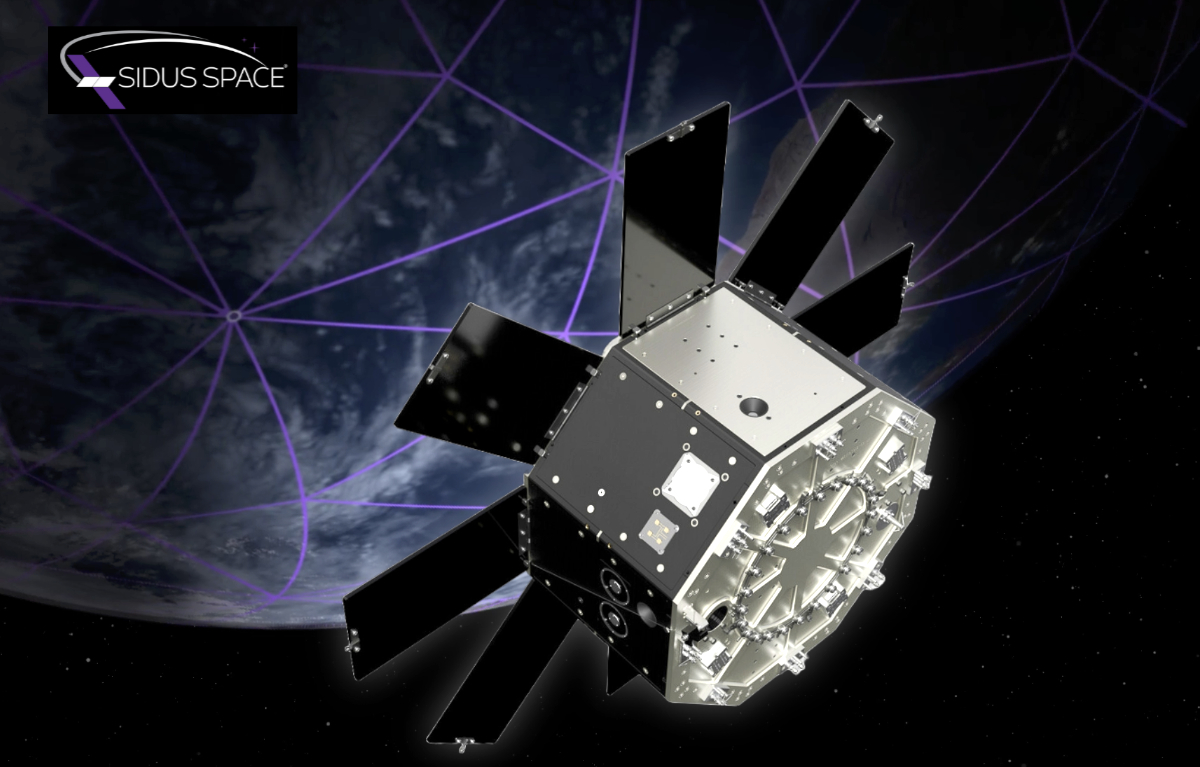
Sidus Space announces the pricing of the company’s public offering

July 28, 2025 by editorial

Sidus Space, Inc. (Nasdaq: SIDU) has announced the pricing of a best-efforts public offering of 7,143,000 shares of its Class A common stock.

Each share of Class A common stock is being sold at a public offering price of $1.05 per share for gross proceeds of approximately $7.5 million, before deducting the placement agent’s fees and offering expenses. All of the shares of common stock are being offered by the Company.

The Company intends to use the net proceeds from the offering for working capital and general corporate purposes. The offering is expected to close on July 29, 2025, subject to customary closing conditions. ThinkEquity is acting as sole placement agent for the offering.

The securities will be offered and sold pursuant to a shelf registration statement on Form S-3 (File No. 333-273430), including a base prospectus, filed with the U.S. Securities and Exchange Commission (the “SEC”) on July 26, 2023 and declared effective on August 14, 2023. The offering will be made only by means of a written prospectus. A preliminary prospectus supplement and accompanying prospectus describing the terms of the offering has been filed with the SEC on its website at www.sec.gov. A final prospectus supplement and accompanying prospectus related to the offering will be filed with the SEC and made available on the SEC’s website. Copies of the final prospectus supplement and the accompanying prospectus relating to the offering may also be obtained, when available, from the offices of ThinkEquity, 17 State Street, 41st Floor, New York, New York 10004.

Filed Under: News

MicroCarb launched

July 27, 2025 by editorial

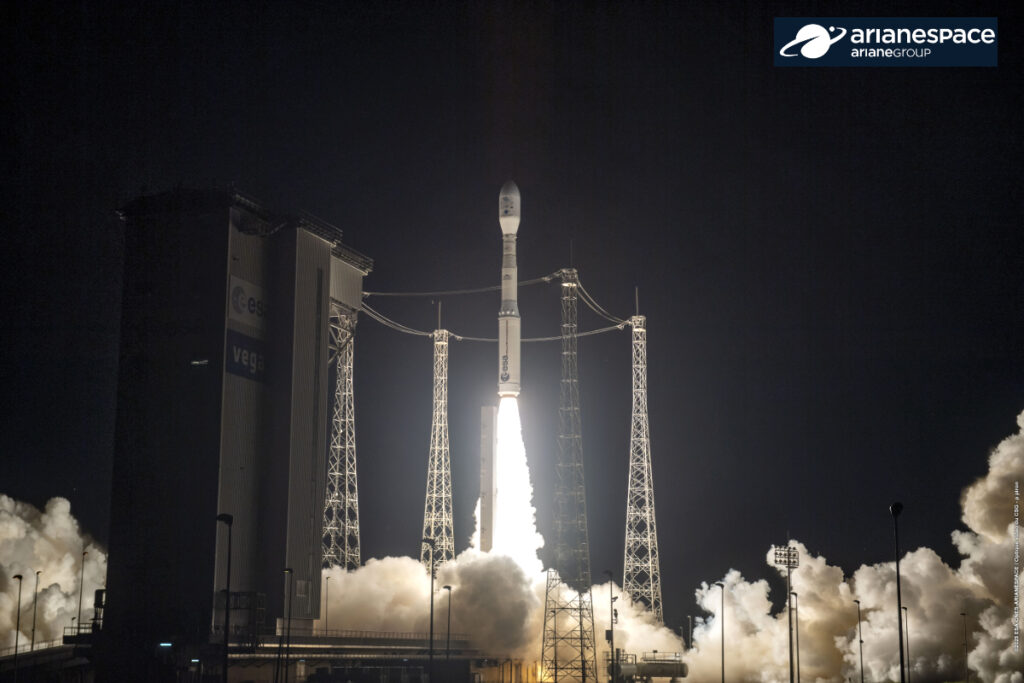
The launch of the MicroCarb satellite from Korou, French Guiana, by Arianespace.

The scientific mission, MicroCarb, led by the French space Agency CNES, was successfully launched from Europe’s Spaceport in Kourou, French Guiana.

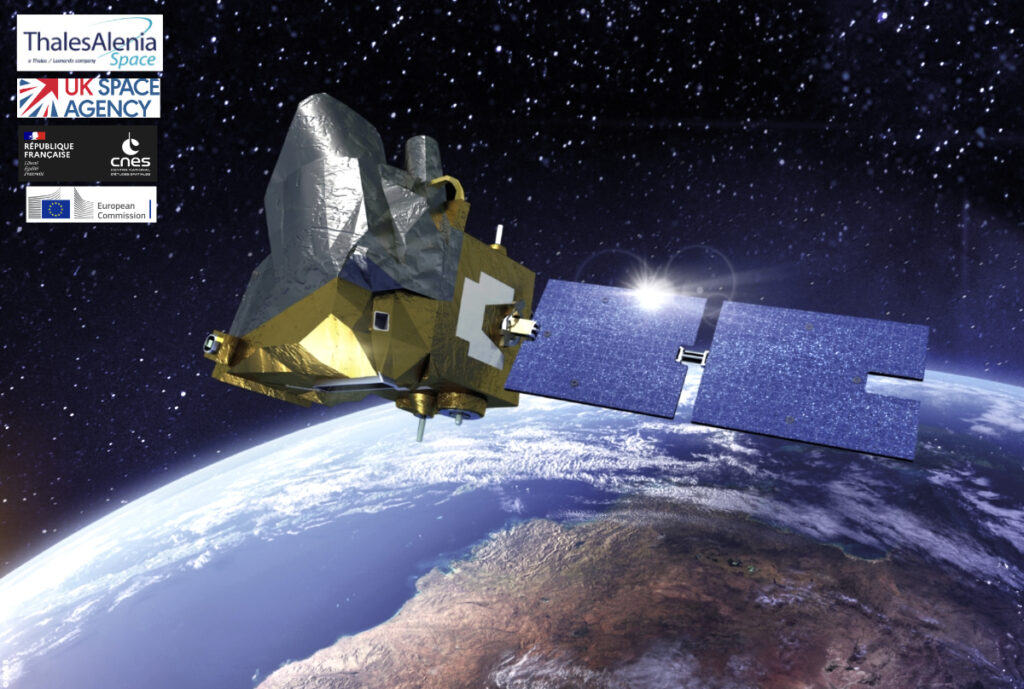
Artistic rendition of MicroCarb on-orbit

MicroCarb is a joint mission between the UK Space Agency and French Space Agency, Centre National d’Études Spatiales (CNES), serving as the prime contractor. The mission is co-financed by these two agencies, as well as by the European Commission and the French government within the framework of the Investments for the Future Program (PIA), managed by the National Research Agency (ANR).

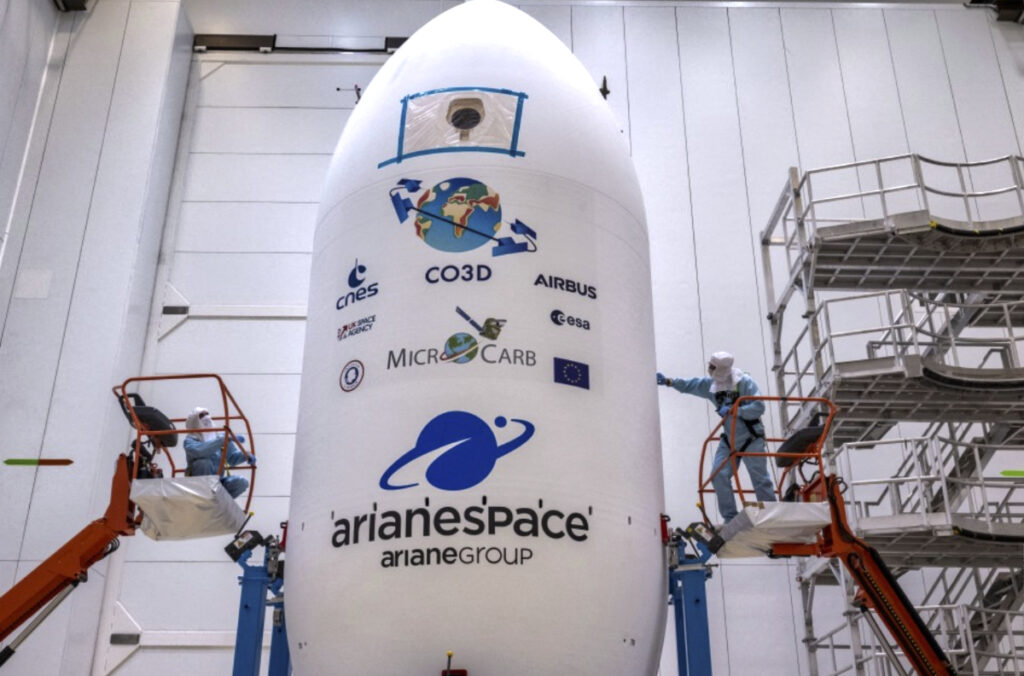
Working on the fairing for Vega-C flight VV27.
Photo credit: ESA-CNES-ARIANESPACE/Optique vidéo du CSG–S. Martin

The satellite is designed to precisely map atmospheric carbon dioxide (CO₂), capturing detailed data on emissions from human activities as well as absorption by natural sinks such as oceans and forests.

The satellite is built on the CNES Myriade platform. Thales Alenia Space, a joint venture between Thales (67%) and Leonardo (33%), completed the assembly, integration, and testing of the satellite platform at RAL Space in Harwell, UK, and was responsible for launch preparations. Airbus Defence and Space provided the instrument payload, the infrared spectrometer.

MicroCarb will operate in LEO at an altitude of 650 km and serves as a precursor to the European Union’s Copernicus Anthropogenic Carbon Dioxide Monitoring (CO2M) mission—a constellation of three satellites, with payloads supplied by Thales Alenia Space, that will deliver precise measurements for human-induced atmospheric carbon dioxide and methane. MicroCarb complements the CO2M mission by providing early observations and valuable data, enhancing our capability for CO₂ and methane monitoring to inform climate policy makers.

Additionally, a special city-scanning mode will enable the mapping of CO₂ distribution within urban areas, which are responsible for the majority of global emissions.

Richard Thorburn, CEO of Thales Alenia Space in the UK, said, “I am immensely proud of the contribution our teams in the UK and France have made to MicroCarb – Europe’s pioneering satellite for mapping carbon dioxide on a global scale. Huge thanks to CNES and to the UK Space Agency for the trust they have placed in us, enabling Thales Alenia Space to play a key role in advancing Europe’s leadership in climate monitoring and environmental science, and helping to protect our planet.”

Filed Under: News

SpaceX to launch Starlink Group 17-2 smallsats on Saturday

July 25, 2025 by editorial

For Fernando, a farmer from Taquaritinga, in the countryside of São Paulo, Starlink solved a problem that once seemed unsolvable. “We had tried other internet solutions before, but none of them were satisfactory,” says Fernando, who runs an agricultural business with his two brothers.

SpaceX’s Falcon 9 will launch on Saturday, July 26, Group 17-2 a batch of 24 smallsats for the Starlink mega-constellation into low Earth orbit at 1:34 – 10:28 am PDT, from Space Launch 4E, Vandenberg SFB, California.

The Falcon 9 first stage B1075 will attempt to land on ASDS Of Course I Still Love You (OCISLY) after its 19th flight. Booster B1075 last launched 05/23/2025 and has seen 18 successful launches and landings. Falcon 9 Block 5 booster first used for the Starlink Group 2-4 mission.

The second ASDS barge, Of Course I Still Love You (OCISLY) services launches in the Pacific Ocean and was the site of the first landing of a SpaceX Falcon 9 first stage during CRS-8, the launch of a Dragon spacecraft to the International Space Station.

Filed Under: News

INNOSPACE partners with STEP Lab to enhance launch precision and to expand global market reach

July 25, 2025 by editorial

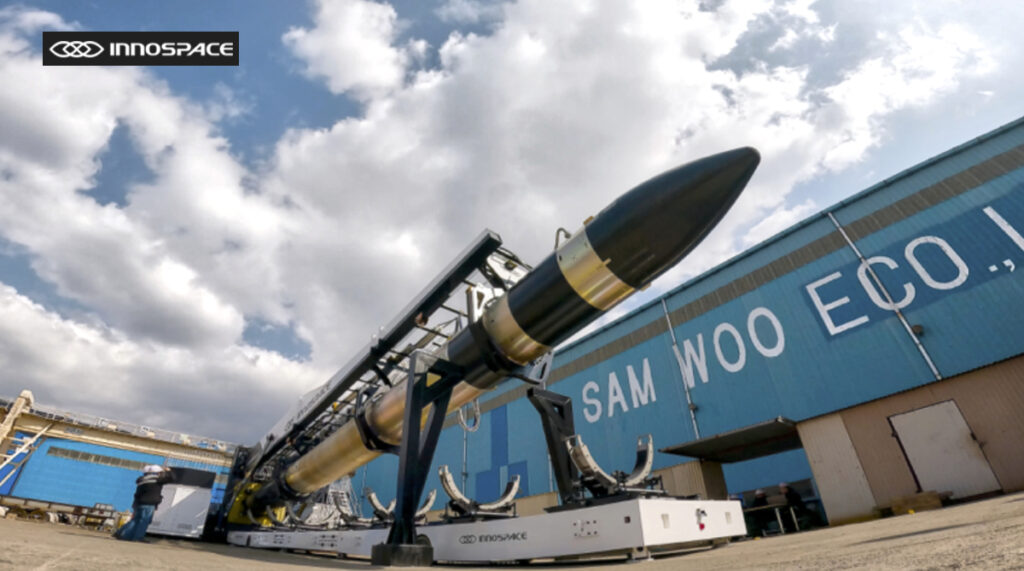
HANBIT Nano launcher, photo courtesy of INNOSPACE

INNOSPACE (KS:462350) has signed a strategic Memorandum of Understanding (MoU) with STEP Lab, to enhance the HANBIT launch vehicle’s capabilities for high-precision and multi-satellite deployments and to jointly pursue high-quality, customer-centric launch services.

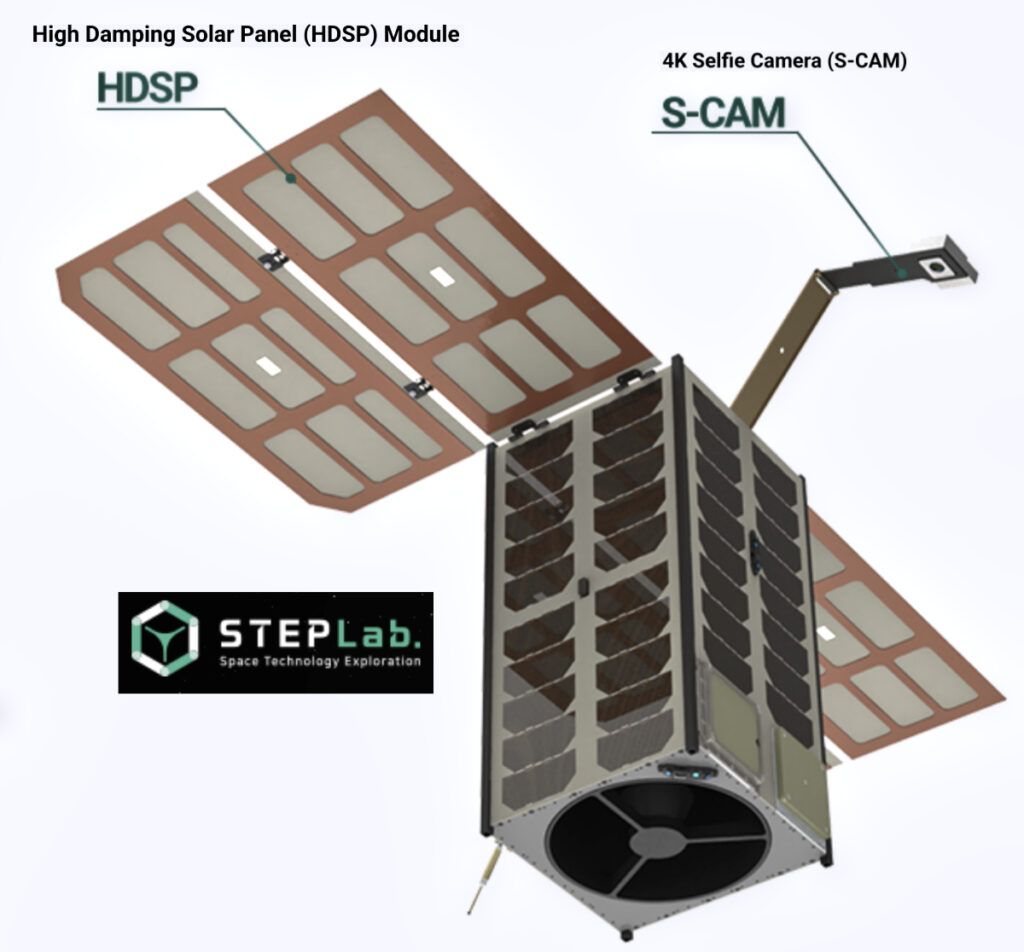
StepLab‘s DeajeonSat-1, photo courtesy of the company.

Under this agreement, the two companies will collaborate on the following key areas:

Technical integration of STEP Lab’s vibration isolation technology into the HANBIT launch vehicle Expansion of customer-tailored launch services by leveraging mutual expertise Commercialization of STEP Lab’s satellite separation systems and cooperation on global market entry

STEP Lab’s vibration isolation technology is designed to significantly reduce the extreme shock and vibrations that occur during rocket launches. This ensures structural integrity for sensitive payloads such as optical instruments, precision sensors, and space-based bio/pharmaceutical equipment. By alleviating design load requirements for satellites, the technology enables more flexible and lightweight satellite designs, contributing to improved payload performance and reductions in development time and cost—aligning with the growing demand for cost-effective and efficient solutions in the global space industry.

STEP Lab’s proprietary vibration and on-orbit, micro-vibration isolation systems have been deployed in various space missions, including South Korea’s national defense satellite launched in 2023, KOMPSAT-7, and the bio-cabinet payload onboard the next-generation mid-sized Satellite-3. The company has also demonstrated its technological reliability and stability through international technology development and export contributions, notably with Germany’s leading satellite system company, OHB Systems AG.

INNOSPACE aims to further enhance satellite operational stability and its capabilities in high-precision and multi-payload launches by applying this technology to the HANBIT launch vehicles. The two companies will also cooperate in proposing and delivering STEP Lab’s satellite deployment solutions based on customer needs, while responding to new customer demands in the global markets.

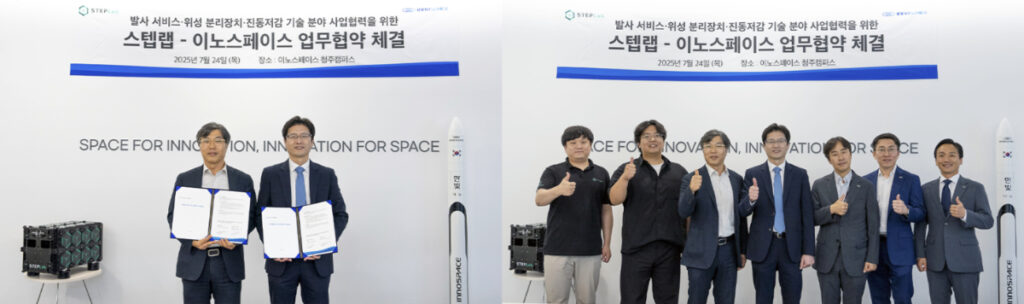
The CEO of STEP lab and the CEO of INNOSPACE pose for a photo after signing a memorandum of understanding (MOU)
Officials from INNOSPACE and STEP Lab for a group photo at the launch vehicle assembly facility in Cheongju, South Korea

“By combining our technologies and expertise in the space sector, we believe this enables us to offer differentiated launch services even for complex missions that demand high precision and orbital stability,” said Soojong Kim, founder and CEO of INNOSPACE. “We will continue expanding technical partnerships that support high-quality, customer-centric services and pursue joint growth within the space industry.”

“This partnership with INNOSPACE marks a key milestone as STEP Lab’s core technologies are formally adopted for use in private space launch vehicles,” said Hyunung Oh, CEO of STEP Lab. “We expect the integration of our vibration isolation solutions with the HANBIT series to significantly strengthen competitiveness in the global small launch vehicle market and accelerate our joint expansion into the space sector worldwide.”

Filed Under: News

ThrustMe + Marble Imaging + Reflex Aerospace form strategic partnership for on-orbit demo in 2026

July 24, 2025 by editorial

ThrustMe, Marble Imaging, and Reflex Aerospace have formed a strategic, three-way partnership for an in-orbit demonstration (IOD) of the JPT150, the world’s first low-power, iodine, Hall thruster system.

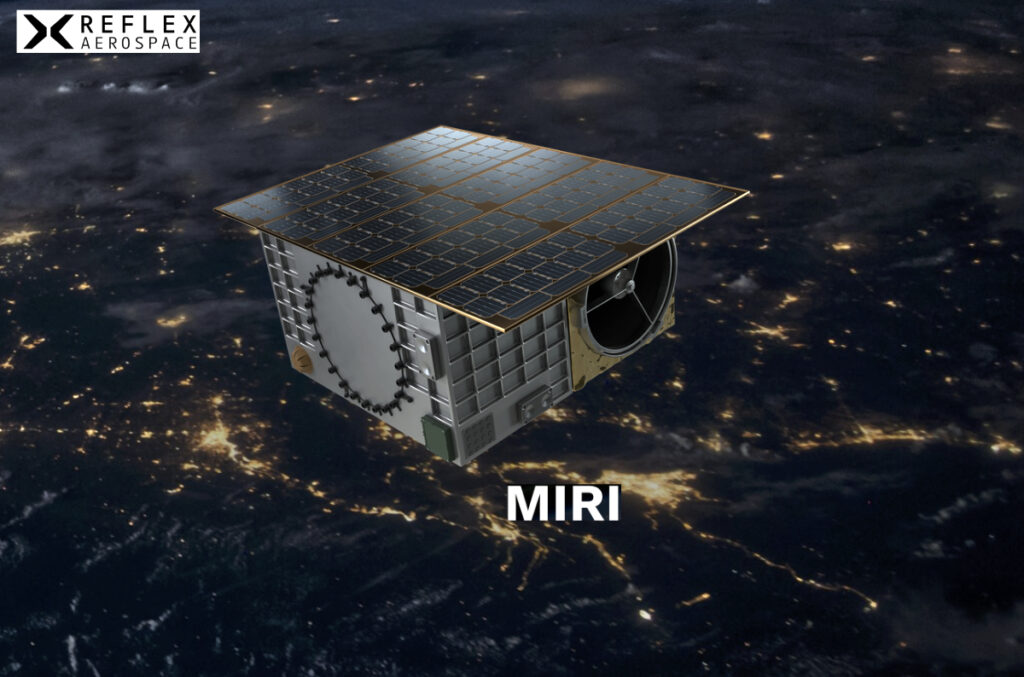
The propulsion system will be integrated into MIRI, a high-performance Earth Observation (EO) satellite developed by Reflex Aerospace for Marble Imaging, where it will provide the precise orbit control and maneuvering capabilities needed to support Marble’s daily, very-high resolution, imaging objectives.

The partnership represents a significant commercial collaboration between three European companies in the small satellite constellation market. With Reflex providing the spacecraft platform and integration, Marble leading satellite operations and IOD execution, and ThrustMe supplying the JPT150 propulsion unit, the collaboration demonstrates how combining mature technologies with agile development can bring next-generation capabilities to orbit quickly and efficiently.

The JPT150 Hall thruster builds on ThrustMe’s space-proven NPT30-I2 propulsion system, incorporating successfully demonstrated subsystems that have accumulated over 12,000 hours of successful in-space operations across more than 100 systems that have been launched to space to date. Like the NPT30-I2, the JPT150 uses iodine as propellant, offering key advantages in storage, handling, performance and system compactness.

The JPT150 has been successfully tested on-ground in a fully integrated prototype, validating its targeted performance levels across thrust, specific impulse, and power efficiency under representative operational conditions. This proven technological foundation reduces development risk while enabling advanced maneuvering capabilities for larger satellite constellations.

The agile approach of all three European companies, combined with the mature technology foundation, enables the partnership to move from a collaboration agreement in July of 2025 to an on-orbit demo in 2026. This accelerated development cycle reflects the efficiency gains possible when proven technology meets strategic commercial partnerships.

“This collaboration shows the agility and innovation driving the New Space economy,” said Ane Aanesland, CEO of ThrustMe. “By building on our proven iodine propulsion heritage, we’re able to rapidly advance Hall thruster technology while maintaining the reliability standards our customers depend on. The JPT150 represents the next evolution in sustainable space propulsion.”

“Working with ThrustMe and Reflex allows us to integrate cutting-edge propulsion capabilities into our satellite operations and to extend the operational lifetime of the MIRI satellite, maximizing mission value. This collaboration showcases the power of strategic partnerships in advancing commercial space missions,” said Robert Hook, CEO of Marble Imaging.

“This partnership shows how space companies can quickly innovate when we combine specialized expertise. The combination of proven technology and agile development approaches enables us to bring advanced capabilities to market efficiently,” said Sascha Weiss, Space Mission Manager at Reflex Aerospace.

Filed Under: News

Viasat expands global IoT capabilities with IoT Nano

July 24, 2025 by editorial

Viasat, Inc. (NASDAQ: VSAT) announced that its Enterprise business, part of the company’s Communication Services segment, launched its next generation IoT Nano connectivity service to deliver powerful, two-way messaging connectivity across the globe.

IoT Nano is designed to meet growing global demand for cost-effective, low-data, low-power, Internet of Things (IoT) services across remote and challenging environments where mobile connectivity is often required. With IoT Nano, businesses can effectively monitor and control fixed and mobile assets across industries like agriculture, transport, utilities, mining, and environmental monitoring—all with ultra-reliable satellite coverage through Viasat’s global L-band network.

IoT Nano is powered by ORBCOMM’s next-generation satellite IoT service, OGx, an evolution of the IDP (IsatData Pro) service that offers faster message delivery speeds, larger message sizes, and new hardware options relative to its predecessor. This new service expands Viasat’s diverse portfolio of IoT connectivity services, which range from ultra-low data rate narrowband IoT services to static VSAT IoT offerings.

IoT Nano delivers near real-time visibility and situational awareness, as well as richer, more actionable data for end customers. The new service will continue to support IDP mode, both preserving existing customer investments in IDP while also enhancing capabilities for reduced power consumption, larger messages, and faster speeds to enable new higher value use cases in OGx mode.

Viasat’s IoT Nano service will help lower costs in some cases by optimizing power usage, resulting in smaller and cheaper solar panels, batteries, and enclosures. The service also offers new capabilities for OEMs and solution providers looking to build their own terminals and devices using embedded third-party modules. This approach will allow OEMs and IoT solution providers to develop hardware that will support a wide variety of IoT applications with a range of data requirements. Viasat offers full development resources through its ELEVATE partner program. Additionally, the service supports a range of ORBCOMM terminals and modules.

Andy Kessler, Vice President, Enterprise and Land Mobile, Viasat, said, “The IoT Nano service represents a significant advancement in providing flexible, scalable, and energy-efficient IoT connectivity to businesses operating in the most remote corners of the world. By leveraging the enhanced capabilities of the ORBCOMM OGx service and equipping our partner ecosystem with new low-cost modules and service capabilities, we are empowering customers with access to smarter data, more frequently, in more places, at a lower cost.”

“OGx delivers faster speeds, larger messages, and lower power usage, all backed by ORBCOMM’s proven terminals, network, and field support,” said Dave Roscoe, President of Satellite IoT at ORBCOMM. “We are excited to partner with Viasat to enable solution providers to build and scale IoT applications across industries including agriculture, transportation, maritime, oil and gas, heavy equipment, and mining. By lowering the cost and increasing the effectiveness of satellite connectivity, OGx makes it possible for our partners to enter new markets, expand use cases, and drive incremental growth.”

Filed Under: News

Forrester’s Digest: Lynk Global, SLAM Corporation part company

July 23, 2025 by editorial

Lynk Global, which is building a satellite-based service targeting cellular users, has abandoned its proposed merger with SLAM Corp, the ‘special purpose acquisition company’ (SPAC), which was working to mounting an IPO for the joint venture.

The JV suffered a series of legal actions between the pair.

The Slam business is headed by former baseball star Alex ‘A-Rod’ Rodriguez.

Luxembourg-based SES is a minor shareholder in Lynk.

Lynk, in a statement from CEO Ramu Potarazu, said, “With the Delaware litigation resolved and the [business combination agreement] mutually terminated, Lynk is now better positioned to pursue a broader set of strategic and commercial opportunities that were previously constrained by the agreement. We remain fully focused on executing our long-term vision and, in partnership with the newly merged SES and our global MNO partners, accelerating our mission to deliver mobile connectivity to anyone, anywhere—directly from space.”

Filed Under: News

Forrester’s Digest: UK signs OneWeb LEO deal

July 22, 2025 by editorial

The UK, an investor in Eutelsat/OneWeb, has signed an agreement with Eutelsat to deliver Low Earth Orbit (LEO) satellite connectivity for UK government operations worldwide.

The agreement is with “trusted distribution partner” NSSLGlobal, to support vital diplomatic, defence, policing, and disaster response operations. NSSL will use capacity on the OneWeb fleet.

This strategic partnership will support a broad range of critical UK government activities worldwide – including diplomatic missions, policing, resilience, defence and other essential operations.

Under the agreement, Eutelsat OneWeb’s LEO’s constellation will provide high-speed, low latency connectivity for British Embassies, High Commissions, and Consulates as well as broader UK government activities globally. NSSLGlobal will deliver fully managed, end-to-end services ensuring seamless support for Foreign, Commonwealth & Development Office (FCDO) missions across all sectors.

Eutelsat’s OneWeb LEO services and user terminals will be deployed to enhance regional resilience and ensure continuity of operations as part of the FCDO’s commitment to hurricane preparedness and response across British Overseas Territories in the Caribbean.

Cyril Dujardin, President of the Connectivity Business Unit at Eutelsat Group, said, “We are proud to support the UK government and its global missions by delivering secure, resilient connectivity worldwide, even in the most remote or challenging environments. This agreement reflects the critical role LEO services play in enhancing operational effectiveness and enabling secure, low-latency communications for government operations.”

Mike Astell, CEO/FCDO Services, said, “This partnership marks an exciting new chapter in FCDO Services’ long history of providing secure satellite communications. By joining forces with NSSLGlobal and Eutelsat OneWeb, we’re enhancing our ability to deliver rapid, secure connectivity anywhere in the world. This reinforces our commitment to meeting the unique needs of our government customers.”

Filed Under: News

Morpheus Space validates next generation electric propulsion with GO-2’s on-orbit demo

July 22, 2025 by editorial

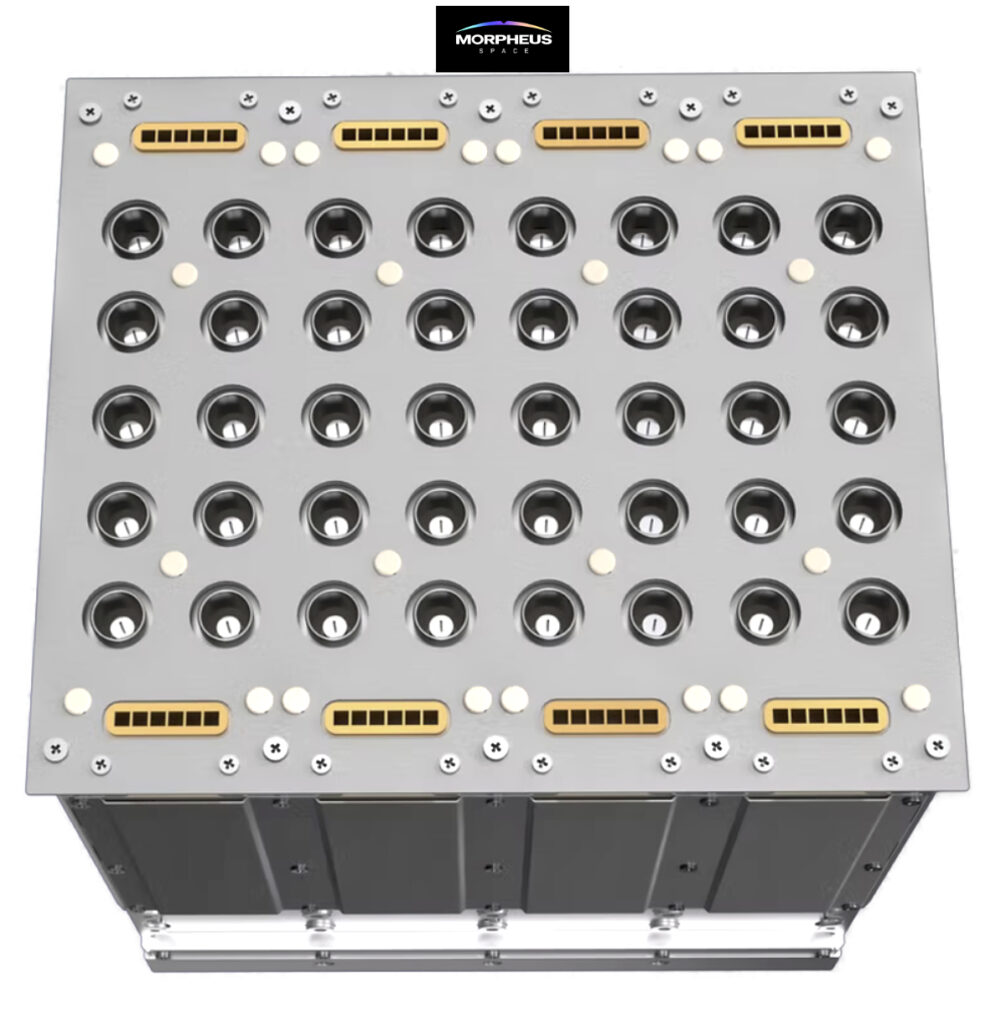
Morpheus Space, earlier this month, completed their on-orbit demo mission in collaboration with space logistics company, D-Orbit—this mission validated the primary objectives of accuracy and performance of Morpheus’ next-generation electric propulsion system, GO-2.

Assembly of the GO-2 satellite, image courtesy of Morpheus Space

The following capabilities were successfully validated:

  • Communication between the host spacecraft and GO-2
  • Electronics and sensors reliably working in LEO
  • Heat up and liquification of metallic propellant, confirming a 35-minute heat-up time
  • Stable hot standby, with expected low power consumption
  • Successful ignition of thrusters and generation of ions in space
  • Accurate individual control of thrusters with sub-second response time
  • Generation of simple and complex thrust profiles

With GO-2 now space-proven, Morpheus Space is ramping up production at its Reloaded Facility, targeting 100 units annually to meet market demand. This marks a major step from validation to full-scale delivery of efficient, reliable electric propulsion for satellite operators worldwide.

This mission represents a major achievement for the Morpheus team,” said Kevin Lausten, CEO of Morpheus Space. “We set aggressive goals for this demonstration, and I’m proud to say we achieved them. From thrust characterization to system validation, our GO-2 unit delivered.”

From day one, GO-2 was built to redefine the standard for in-space propulsion,” said Daniel Bock, CTO and Co-Founder of Morpheus Space. “This mission confirms that vision is now a reality.“

Filed Under: News

SEOPS integrates EPIC Athena on the upcoming TRACERS mission with SpaceX

July 21, 2025 by editorial

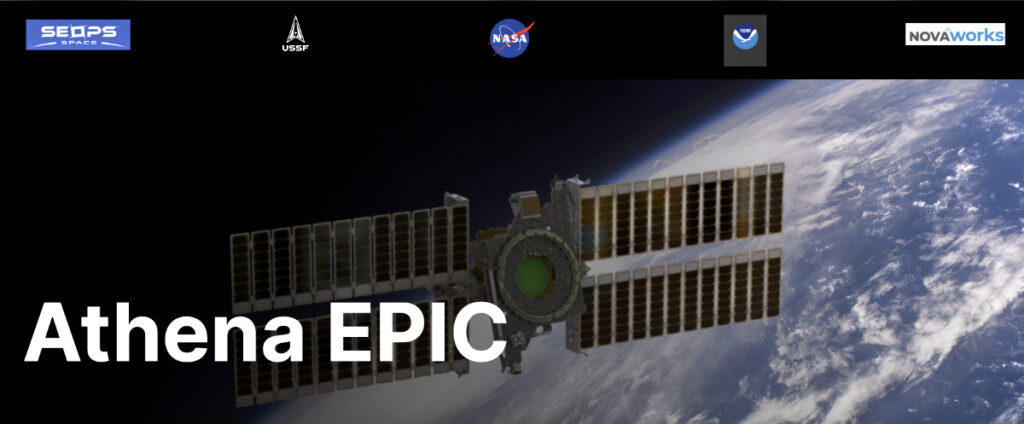
SEOPS Space is providing the capacity, mission management and integration services for EPIC Athena, a 110 kg pathfinder spacecraft funded by NASA, the National Oceanic and Atmospheric Administration (NOAA), and the Department of Defense’s U.S. Space Force (USSF)’s Space Systems Command (SSC).

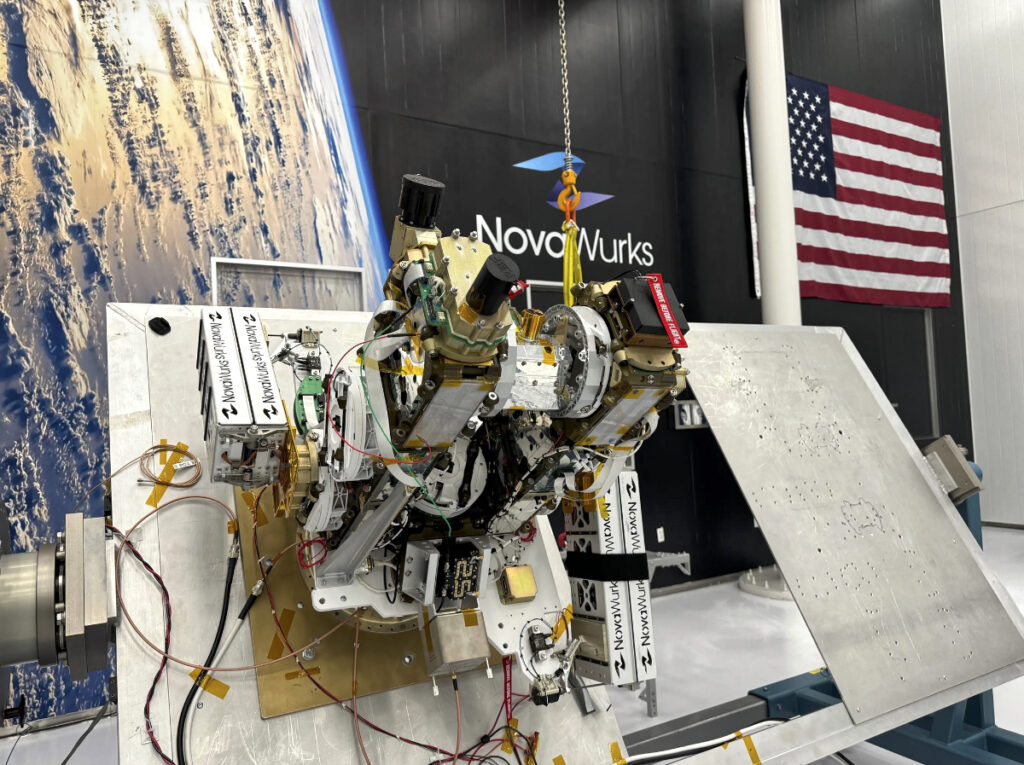
The EPIC Athena prior to the successful integration by SEOPS.

EPIC Athena represents the fifth of six spacecraft to launch under the Rideshare 2024-Blaze contract between SEOPS and the USSF’s SSC.

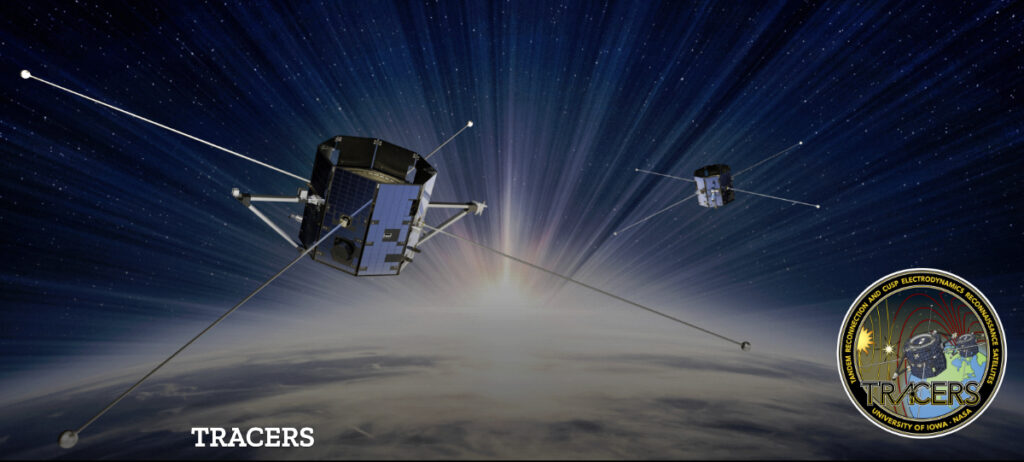
As a secondary rideshare payload on NASA and the University of Iowa‘s upcoming TRACERS mission, EPIC Athena is a Department of Defense (DoD) Space Test Program mission containing a DoD experiment.

SEOPS has provided integration and mission services for more than 400 satellite deployments, including for the U.S. Space Force, NRO and NASA, as well as commercial organizations around the world.

The spacecraft is slated to launch on a SpaceX Falcon 9 later this month from Space Launch Complex 4E (SLC-4E) at Vandenberg Space Force Base in California.

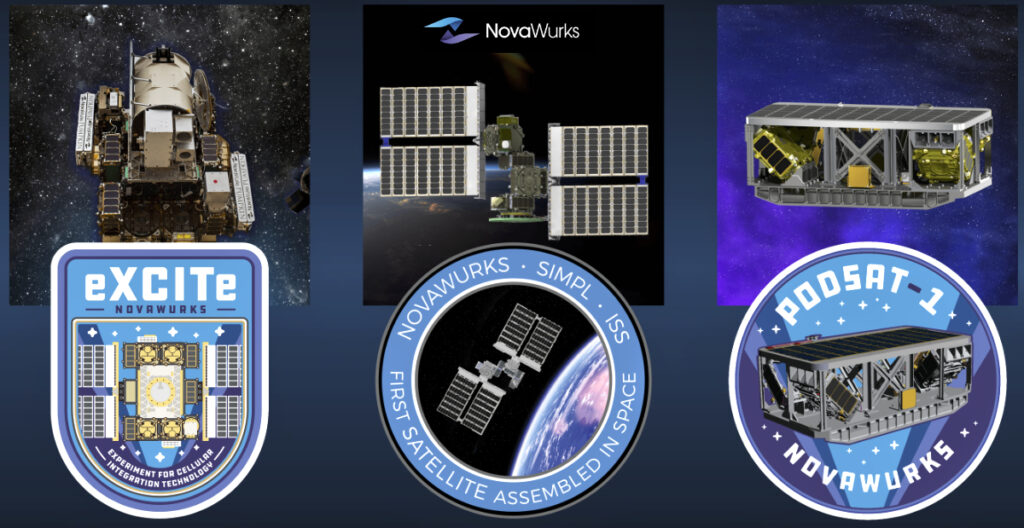
The mission is a technology pathfinder of NovaWurks’ Hyper-Integrated Satlet (HISat) disaggregated satellite platform for making critical Earth science sensing measurements. Equally important is the goal to prove out technical partnerships and processes between multiple federal agencies to create a simple, rapid and highly integrated bus-payload system as a more affordable way to launch missions on a reduced schedule.

NovaWurks designs, manufactures and operates satellites based on the HISats architecture, or SLEGO™, at its production and engineering facilities in Southern California.

It’s always a privilege to work with the federal government on missions, and this one was particularly rewarding because of its goal to advance rapid response capabilities,” said Chad Brinkley, chief executive officer of SEOPS. “It’s in our wheelhouse and aligned with our goals of providing space access without compromise to organizations around the world.”

There’s a lot of promise riding on this spacecraft’s shoulders,” said Dr. Roberta Ewart, chief technology officer for the SSC. “NASA, the Space Force and NOAA have strategically aligned efforts to gain wisdom from the EPIC Athena Sensorcraft, from demonstrating key capabilities to spearheading efficiencies and new ways of collaborating across the federal government, all while creating a transformational advantage for our country.”

Filed Under: News

  • « Go to Previous Page
  • Page 1
  • Page 2
  • Page 3
  • Page 4
  • Page 5
  • Go to Next Page »

Primary Sidebar

WEEKLY NEWSLETTER

Archives

  • April 2026
  • March 2026
  • February 2026
  • January 2026
  • December 2025
  • November 2025
  • October 2025
  • September 2025
  • August 2025
  • July 2025
  • June 2025
  • May 2025
  • April 2025
  • March 2025
  • February 2025
  • January 2025
  • December 2024
  • November 2024
  • October 2024
  • September 2024
  • August 2024
  • July 2024
  • June 2024
  • May 2024
  • April 2024
  • March 2024
  • February 2024
  • January 2024
  • December 2023
  • November 2023
  • October 2023
  • September 2023
  • August 2023
  • July 2023
  • June 2023
  • May 2023
  • April 2023
  • March 2023
  • February 2023
  • January 2023
  • December 2022
  • November 2022
  • October 2022
  • September 2022
  • August 2022
  • July 2022
  • June 2022
  • May 2022
  • April 2022
  • March 2022
  • February 2022
  • January 2022
  • December 2021
  • November 2021
  • October 2021
  • September 2021
  • August 2021
  • July 2021
  • June 2021
  • May 2021
  • April 2021
  • March 2021
  • February 2021
  • January 2021
  • December 2020
  • November 2020
  • October 2020
  • September 2020
  • August 2020
  • July 2020
  • June 2020
  • May 2020
  • April 2020
  • March 2020
  • February 2020
  • January 2020
  • December 2019
  • November 2019
  • October 2019

© 2019–2026 SatNews

Insert/edit link

Enter the destination URL

Or link to existing content

    No search term specified. Showing recent items. Search or use up and down arrow keys to select an item.
      x
      Sign Up Now!

      Enjoy a free weekly newsletter with recent headlines from the global SmallSat industry.

      Invalid email address
      We promise not to spam you. You can unsubscribe at any time.
      Thanks for subscribing! You will now receive weekly SmallSat News updates.
      We love our advertisers.
      And you will too!

      Please disable Ad Blocker to continue... We promise to keep it unobtrusive.
      We promise not to spam you. You can unsubscribe at any time.
      Invalid email address
      Thanks for subscribing!