• Skip to main content
  • Skip to primary sidebar
  • Home
  • News
  • Featured
  • More News ⌄
    • SatNews
    • SatMagazine
    • MilSatMagazine
  • Events ⌄
    • MilSat Symposium
    • SmallSat Symposium
    • Satellite Innovation
  • Contacts
  • SUBSCRIPTION

SmallSat News

You are here: Home / 2026 / Archives for January 2026

Archives for January 2026

Kyivstar Hits 3.0 Million User Milestone for Starlink Direct to Cell Services

January 19, 2026 by editorial

DUBAI and KYIV — On Thursday, January 15, 2026, VEON Ltd. (Nasdaq: VEON) announced that its Ukrainian subsidiary, Kyivstar, has reached 3.0 million registered users for its Starlink Direct to Cell satellite connectivity service. This milestone represents more than 10% of Kyivstar’s total mobile subscriber base and highlights the rapid adoption of non-terrestrial network (NTN) solutions in contested environments.

Rapid Adoption and Regional Resilience

Since the service was launched on November 24, 2025, subscribers have exchanged more than 1.2 million SMS messages via satellite. The technology has proven most critical in Ukraine’s southern and eastern regions, where terrestrial infrastructure is frequently compromised. Usage is currently concentrated in five major urban hubs: Kyiv, Lviv, Vinnytsia, Khmelnytskyi, and Dnipro.

The service is currently accessible at no additional cost to all 15.5 million Kyivstar 4G smartphone users through their existing tariff plans. The technology utilizes Starlink’s “cell tower in space” architecture, which employs advanced phased array antennas to connect directly to standard LTE handsets without hardware modifications.

Leadership on Strategic Connectivity

“The rapid adoption of Starlink Direct to Cell services by Kyivstar subscribers demonstrates the critical importance of enhancing Ukraine’s resilience and our customers’ appreciation for the availability of satellite-based connectivity,” said Kaan Terzioğlu, VEON Group CEO and Executive Chairman of Kyivstar. “We will continue to lead the way in providing innovative services that Ukraine needs to build its digital future.”

Central Asian Expansion and Future Outlook

The success in Ukraine is serving as a blueprint for VEON’s broader regional strategy. In November 2025, VEON’s Beeline Kazakhstan successfully completed the first Direct to Cell WhatsApp call in Central Asia. Following this pilot, Beeline Kazakhstan expects to introduce commercial SMS services via satellite in 2026, pending regulatory approvals.

Currently, SpaceX operates a constellation of approximately 650 Direct to Cell satellites in Low Earth Orbit (LEO). To support increasing demand and reduce latency, SpaceX has filed with the FCC to orbit future cellular satellites at altitudes as low as 326 km. For Kyivstar, this partnership is a key component of VEON’s broader pledge to invest $1 billion in Ukraine’s digital infrastructure between 2023 and 2027.


Filed Under: News

Diffraqtion raises $4.2M to field quantum camera satellites

January 19, 2026 by editorial

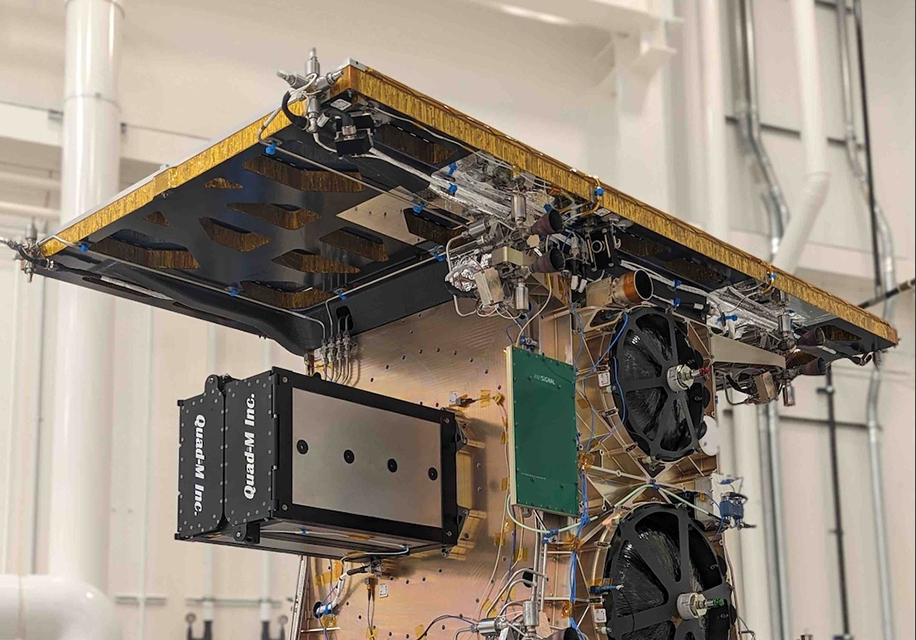
Galileo-1 Visual Sensing and Processing Unit

SOMERVILLE, Mass. — Quantum imaging startup Diffraqtion has secured $4.2 million in pre-seed funding to deploy satellite constellations equipped with proprietary “quantum cameras” designed to bypass traditional optical limits.

The round, announced Jan. 13, was led by QDNL Participations, with additional backing from milemark•capital, Aether VC, ADIN, and Offline Ventures. The total capital includes a non-dilutive DARPA Small Business Innovation Research (SBIR) Direct-to-Phase 2 contract focused on space situational awareness (SSA).

Breaking the Diffraction Limit Diffraqtion’s payload targets the physical “diffraction limit” that restricts the resolution of conventional optical systems based on aperture size. The company’s technology utilizes photon-counting sensors and AI-driven processing to extract higher-fidelity data from incoming light. According to the company, the system offers up to 20 times the resolution and 1,000 times the processing speed of standard cameras.

This architecture is designed to enable small satellites to capture imagery comparable to much larger, heavier telescope systems. The technology aims to support both commercial Earth observation and defense applications, including orbital debris tracking and intelligence gathering.

Leadership and Heritage Spun out of MIT and the University of Maryland, Diffraqtion was co-founded by CEO Johannes Galatsanos, CTO Christine Wang, and Chief Scientific Advisor Saikat Guha. Guha, a professor at the University of Maryland, previously led research with NASA and DARPA that forms the basis of the company’s intellectual property.

The leadership team also includes Head of Product Mark Michael, the former CTO and co-founder of Kepler Communications, who brings operational experience from deploying low Earth orbit (LEO) constellations.

Operational Timeline Diffraqtion is currently refining its hardware as part of the U.S. Space Force Apollo Accelerator. The company plans to conduct “on-sky” demonstrations using ground-based telescopes at the University of California Observatories in early 2026. These tests will validate the sensor’s performance through atmospheric turbulence before the technology is integrated into a space-based platform for orbital demonstration.

The company stated the technology is also being integrated into military defense architectures in collaboration with Space Systems Command.

Filed Under: News

TrustPoint Achieves Key Milestone in Resilient, GPS-Independent Navigation

January 15, 2026 by editorial

HERNDON, Va. — On Thursday, January 15, 2026, TrustPoint announced the first successful demonstration of its Low Earth Orbit Navigation System (LEONS), transmitting time-transfer and tracking signals from a compact ground node to an orbiting spacecraft.

This milestone marks a significant step in the company’s mission to provide a commercial, GPS-independent positioning, navigation, and timing (PNT) capability for satellite operators.

Ground-to-Space Validation via SpaceWERX

The demonstration was conducted as part of the SpaceWERX AltPNT Challenge, a program designed to rapidly field resilient alternatives to legacy Global Navigation Satellite Systems (GNSS). TrustPoint was previously awarded two Direct-to-Phase II contracts by SpaceWERX to accelerate the transition of its C-band LEO architecture from concept to operational deployment. The successful signal transmission validates the “LEONS” ground infrastructure, which is designed to be a rapidly deployable and scalable solution for global PNT coverage.

Addressing Orbital Vulnerabilities

Most Low Earth Orbit (LEO) spacecraft currently rely on GPS or other Medium Earth Orbit (MEO) signals for orbital state and timing data. However, the increasing prevalence of jamming and electronic interference in LEO has created a critical vulnerability, often degrading or completely denying these essential links. TrustPoint’s architecture aims to eliminate this single point of failure by providing an independent, high-performance PNT layer that remains operational in contested environments. This development follows the company’s successful launch and contact with its third satellite in 2023, which served as the primary testbed for these core technologies.

Leadership on Resilient Capabilities

“With the pace of modern threats accelerating, the difference between concepts and capabilities matters,” said Nicole Hilliard, Director of Government Programs at TrustPoint. “This milestone demonstrates that commercial partners can field resilient, GPS-independent PNT capabilities that strengthen national security architectures and justify continued investment in companies that deliver.”

Commercial and Defense Implications

The transition to a GPS-independent architecture is a priority for the U.S. Space Force as it seeks to operationalize the “Proliferated Warfighter” concept. TrustPoint’s C-band service is designed to provide secure, high-precision timing that is less susceptible to the vulnerabilities of heritage L-band signals. Beyond defense applications, the technology is targeted at the emerging autonomous navigation and smart infrastructure markets, where sub-meter precision and high availability are mandatory requirements.

Scaling Toward a 300-Satellite Constellation

Following this successful ground-to-space transmission, TrustPoint plans to scale its LEONS infrastructure to support other LEO operators seeking resilient timing. The company is currently moving out of its internal R&D phase and into broader operational testing with both government and commercial partners. Long-term, TrustPoint aims to deploy a constellation of approximately 300 spacecraft to provide global, commercial GPS-equivalent services with improved security and lower latency.

Filed Under: News

NASA Selects AtmOCube Mission to Study Orbital Wave Interference

January 15, 2026 by editorial

JÜLICH, Germany — On Thursday, January 15, 2026, NASA selected the AtmOCube (Atmospheric Oxygen CubeSat Mission) as part of its Heliophysics Flight Opportunities for Research and Technology (H-FORT) program. The international mission, led by Forschungszentrum Jülich (FZJ) in collaboration with the University of Wuppertal and the University of Colorado Boulder (LASP), will investigate how atmospheric gravity waves disrupt satellite operations and navigation signals.

16U CubeSat Technical Parameters

The mission utilizes a 16U CubeSat designed to operate at an altitude of approximately 500 kilometers. The satellite’s primary payload is an optical interferometer developed by FZJ and the University of Wuppertal. This instrument observes the natural infrared radiation of oxygen in the upper atmosphere to obtain high-resolution temperature profiles. By measuring these profiles, researchers can derive the spatial structure and energy flow of gravity waves—disturbances generated in the lower atmosphere that propagate upward to influence the thermosphere and ionosphere.

Advancing Ionospheric Predictive Capabilities

AtmOCube builds upon nearly a decade of collaborative research between German atmospheric physicists and U.S. space laboratories. Previous iterations of the technology, such as the AtmoCube A1 interferometer concept, were designed to resolve individual emission lines within the oxygen A-band. The current mission seeks to bridge a critical data gap regarding how these waves trigger variability in air density, which directly impacts satellite drag and the reliability of Global Positioning System (GPS) transmissions.

Scientific Leadership on the Selection

“The selection by NASA is a big step for our team and our partners. AtmOCube combines innovative measurement technology with clear social relevance,” said Prof. Dr. Michaela I. Hegglin Shepherd, Director at the FZJ Institute of Climate and Energy Systems and project lead. “The scientific data helps us to make predictions for future satellite operations more reliable while also helping us understand how climate change in the lower atmosphere continues into near-Earth space.”

Timeline for Concept Refinement and 2029 Launch

Following the NASA selection, the AtmOCube team will enter a six-month concept and planning phase. This period will involve refining mission requirements and addressing feedback from the initial review process. The phase will conclude with a System Requirements Review (SRR), which serves as the gate for NASA’s final approval for construction and implementation funding. The mission is currently manifested for a 2029 launch.

Filed Under: Featured, News

Hydrosat Secures €51 Million Series B to Expand Thermal Imagery Constellation

January 15, 2026 by editorial

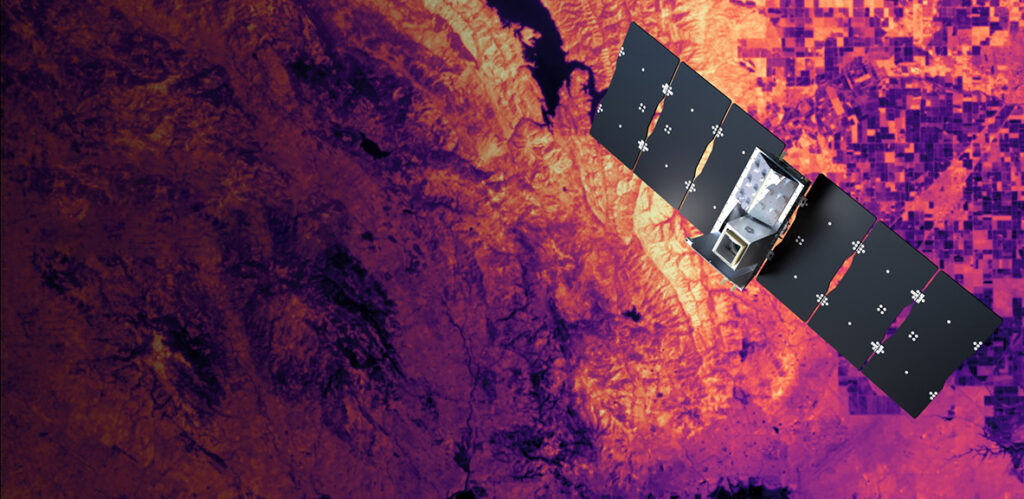
WASHINGTON, D.C. — On Thursday, January 15, 2026, Hydrosat announced the closing of a €51 million ($60 million) Series B funding round. The capital is designated to accelerate the global deployment of the company’s thermal infrared satellite constellation and its AI-driven geospatial analytics platform.

Capital to Combat Global Water Stress

The investment round was led by Hartree Partners, Subutai Capital Partners, and Space 4 Earth, with new participation from Truffle Capital and follow-on support from the Luxembourg Future Fund, OTB Ventures, and Statkraft Ventures. The funding follows an increase in demand for “decision-grade” thermal data as climate change intensifies water scarcity and agricultural volatility. Hydrosat currently serves a range of high-stakes clients, including the National Reconnaissance Office (NRO) and the National Oceanic and Atmospheric Administration (NOAA). The company previously secured a NOAA grant in early 2024 and has active contracts with the U.S. Air Force to improve weather modeling for national defense.

Expanding High-Frequency Thermal Collection

Hydrosat currently operates two thermal infrared satellites on-orbit, providing a daily collection capacity of more than 10 million square kilometers of imagery. Unlike traditional Earth observation data, which can be infrequent or low-resolution, Hydrosat’s sensors deliver high-frequency, field-level insights into soil moisture, crop health, and surface temperature. These data sets are processed through proprietary machine learning models to provide predictive analytics for agribusinesses and government agencies. This operational capacity was bolstered by the company’s 2023 acquisition of IrriWatch, which integrated advanced irrigation management software into the Hydrosat ecosystem.

Global Footprint and Workforce Growth

With the close of this Series B, which follows a $20 million funding round in 2023, the company plans to deepen its presence in key regions including the Middle East and North Africa (MENA), Central Asia, India, and Latin America. Additionally, Hydrosat intends to double its workforce of remote sensing and machine learning specialists at its Luxembourg headquarters by the end of 2026 to support its next phase of constellation development.

Filed Under: News

SmallSat Europe 2026 Issues Final Call for Papers Amid Pivot to Defense and Sovereignty

January 13, 2026 by editorial

Technical stage at SmallSat Europe 2025, spotlighting the future of small-satellite innovation.

AMSTERDAM — With the European space sector undergoing a structural shift toward security and autonomy, organizers of SmallSat Europe 2026 have issued a final call for technical papers. The deadline for abstract submissions is January 23, 2026, leaving engineers and researchers less than two weeks to propose presentations for the continent’s largest dedicated small satellite conference.

The event, scheduled for May 26–28, 2026, at the RAI Amsterdam Convention Centre, is projected to host more than 2,500 attendees, doubling the participation of the 2025 edition. The expansion reflects the region’s urgent focus on dual-use capabilities and sovereign infrastructure, a theme that has replaced the theoretical commercial discussions of previous years with hard requirements for resilience and rapid deployment.

From Theory to Requirements The 2026 technical agenda highlights the engineering challenges inherent in Europe’s new strategic posture. Key solicitation topics include sovereign connectivity architectures, underpinned by the EU’s IRIS² program, as well as alternative positioning, navigation, and timing (PNT) systems independent of GPS.

This pivot aligns with the recently established EU Space Defence Track, a partnership designed to address the integration of commercial technology into military frameworks. Organizers are specifically seeking papers that address defense-civil fusion architectures, cybersecurity for contested environments, and on-orbit AI for threat detection.

Submission Guidelines Technical papers will be presented during 15-minute oral sessions or poster displays and published in the official conference proceedings. The program committee has emphasized a preference for active engineering results over marketing-driven concepts.

  • Systems Design: Integration of sovereign payloads and secure buses.
  • Ground Segment: Architectures supporting multi-orbit constellations (LEO/MEO).
  • Operations: Autonomy and data processing in high-latency or denied environments.

Timeline and Deadlines

  • Abstract Deadline: January 23, 2026
  • Acceptance Notification: February 20, 2026
  • Final Paper Due: April 30, 2026
  • Conference Dates: May 26–28, 2026

Submissions can be made directly via the SmallSat Europe website.

Filed Under: Featured, News

As SpaceX Targets 50,000 Starlink Satellites, China Files for 200,000-Unit Mega-Constellation

January 12, 2026 by editorial

BEIJING – In a significant escalation of the orbital broadband race, China has submitted a major regulatory filing with the International Telecommunication Union (ITU) for a massive satellite constellation totaling approximately 200,000 spacecraft.

The move highlights a strategic ambition to deploy a network that would quadruple the current long-term deployment goals of SpaceX’s Starlink, which is working toward a 50,000-satellite architecture.

The filing indicates that China is moving to operationalize a parallel commercial launch sector, often referred to as a “Shadow Starlink,” to compete directly with Western Low Earth Orbit (LEO) dominance.

Geopolitical Competition in the LEO Sector

This development validates the ongoing “Surge” strategy from Chinese space authorities, specifically focusing on the G60 Starlink and Guowang projects. By filing for such a high volume of orbital slots, China is positioning itself to challenge the primary-occupant status currently held by the United States and its commercial partners.

The scale of this competition directly impacts several industry layers:

  • Regulatory Oversight: Increased pressure on the ITU to manage orbital debris and spectrum allocation for hundreds of thousands of active nodes.
  • National Security: The Federal Communications Commission (FCC) has expressed concerns regarding the geopolitical implications of a Chinese-controlled global broadband network.
  • Commercial Viability: The massive influx of capacity could fundamentally alter the economics of global satellite internet pricing.

The Rise of the G60 Breakout

The filing is part of a broader trend where China seeks a “breakout” from traditional state-run space operations to more agile, commercially modeled constellations. This “G60 Breakout” represents a move toward high-cadence manufacturing and launch capabilities intended to match the vertical integration of the “Musk Stack”.

The strategy focuses on building domestic launch hubs and satellite production facilities that can output thousands of units annually, a necessity if China intends to populate even a fraction of the 200,000 slots requested in the ITU filing.

Outlook: Regulatory and Orbital Hurdles

As China and the U.S. move closer to a 2027 milestone for constellation maturity, the international community faces unprecedented challenges in space traffic management. While the filing for 200,000 satellites represents a declaration of intent, significant technical and regulatory hurdles remain before such a fleet can be successfully deployed.

Future scrutiny from the ITU and the FCC will likely focus on the “bring-into-use” (BIU) requirements, which mandate that a percentage of the filed satellites must be operational within a specific timeframe to retain the spectrum rights. Failure to meet these milestones could lead to a significant reduction in China’s authorized orbital capacity.

Filed Under: Featured, News

SpaceX ‘Twilight’ Mission Deploys 22 Exolaunch Payloads, Including Kepler and HawkEye 360 Assets

January 12, 2026 by editorial

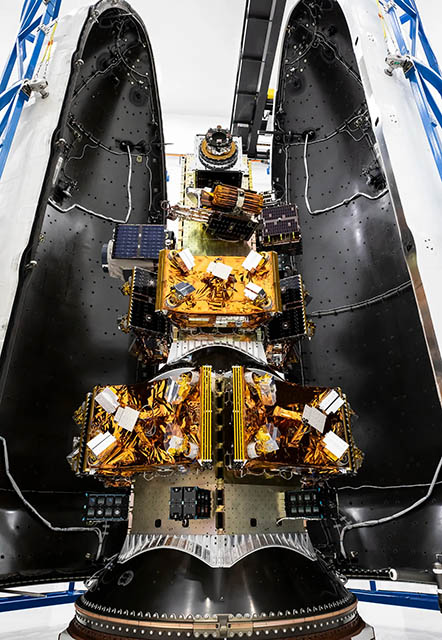
VANDENBERG SFB, Calif. — On Sunday, January 11, 2026, SpaceX successfully launched the “Twilight” rideshare mission, delivering a diverse manifest of commercial and government payloads to a dawn-dusk Sun-Synchronous Orbit (SSO).

The Falcon 9 rocket lifted off from Space Launch Complex 4E at 5:44 a.m. PT, marking a major initial milestone for the 2026 small satellite launch calendar.

Berlin-based Exolaunch coordinated the deployment sequence for 22 spacecraft, representing the integrator’s 42nd mission to date. The deployment phase commenced approximately one hour after liftoff, successfully separating payloads for several high-profile constellation operators.

Strategic Dawn-Dusk Orbital Regime

The mission targeted a specific dawn-dusk SSO, an orbital regime where satellites ride the terminator line between day and night. This positioning ensures near-continuous sunlight for solar power generation, which is essential for energy-intensive operations.

Satellites in this orbit benefit from:

  • Continuous Power: Steady solar exposure for high-performance payloads.
  • Thermal Stability: Reduced thermal cycling compared to standard LEO orbits.
  • Mission Optimization: Ideal conditions for synthetic aperture radar (SAR) and optical communications systems.

Payload and Manifest Breakdown

The manifest included critical infrastructure for four major organizations, ranging from industrial telecommunications to exoplanet research:

  • Kepler Communications: Launched its first tranche of 10 optical relay satellites to establish a real-time, SDA-compatible data network.
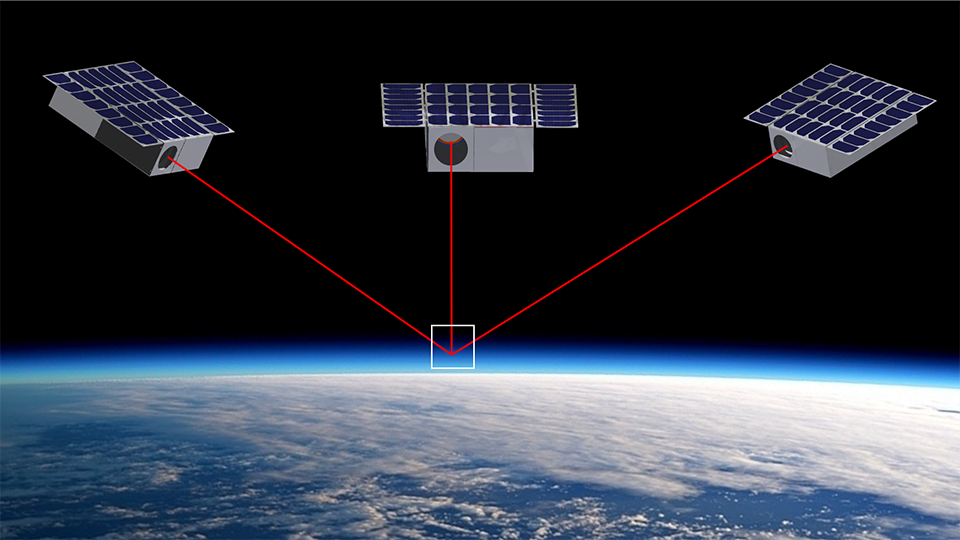
  • HawkEye 360: Deployed “Cluster 13,” a trio of formation-flying satellites designed for global radio frequency (RF) geolocation and ISR requirements.
  • DCUBED: Launched Araqys-D1, a 3U CubeSat intended to demonstrate in-space manufacturing by constructing a 30-centimeter truss in orbit.
  • NASA: Deployed the Pandora SmallSat, a mission dedicated to studying the atmospheric compositions of exoplanets.

Perspective on In-Space Manufacturing

The DCUBED demonstration represents a technical shift toward orbital construction capabilities. By manufacturing structural components in space, the industry aims to bypass the size constraints imposed by rocket fairings.

“We want to make unlimited power in space a reality,” said Thomas Sinn, CEO of DCUBED. “That’s the whole idea: to bring the dollar per watt down into the double digits“.

Post-Deployment and 2026 Outlook

Following the successful separation, mission operators have established contact with their respective assets and commenced the commissioning phase. Kepler Communications confirmed that its initial 10 optical satellites are healthy and transitioning into operational service.

Exolaunch has indicated that this mission is the first of more than 20 deployments planned for its 2026 manifest. The company is currently scaling its Berlin operations to accommodate the increasing global demand for rideshare launch slots.

Filed Under: News

Thermal Equilibrium: The Dual Role of Isotherms in Satellite Operations and Design

January 12, 2026 by editorial

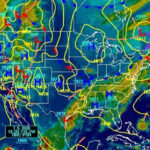
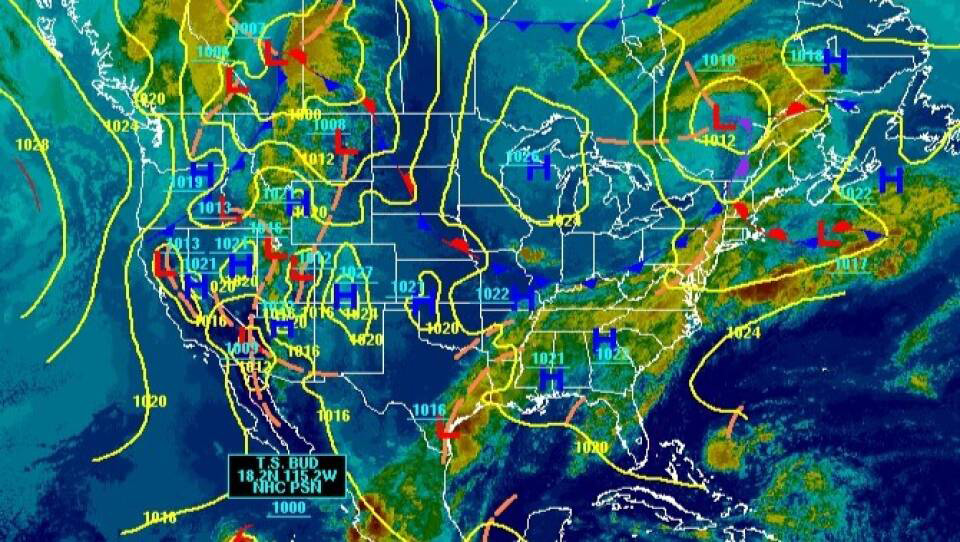
The term isotherm—a line on a map or chart connecting points of equal temperature—is a critical concept in the satellite industry, serving two distinct but equally vital roles: atmospheric remote sensing for weather prediction and the thermal engineering of the spacecraft itself.

Isotherms in Remote Sensing and Meteorology

In satellite-based Earth observation, isotherms are primarily used to analyze the thermal structure of the atmosphere. Infrared sounders and imagers, such as those on the GOES (Geostationary Operational Environmental Satellite) or JPSS (Joint Polar Satellite System) constellations, detect emitted thermal radiation to map temperature gradients.

One of the most significant metrics for satellite operators is the 0°C Isotherm Height (also known as the freezing level). Identifying this boundary is crucial for:

  • Predicting Rain Attenuation: For satellite communications operating at high frequencies (above 10 GHz, such as Ka-band and the emerging Q/V-bands for 5G/NTN), rainfall is the primary cause of signal degradation. The height of the 0°C isotherm determines the “rain height,” allowing engineers to calculate how much a signal will fade as it passes through the melting layer of the atmosphere.
  • Weather Forecasting: Meteorologists use “isotherm extraction” from infrared satellite cloud images to identify the centers of storm systems and predict the development of convective weather.
  • Climate Monitoring: Tracking the movement of isotherms over decades provides direct evidence of global temperature shifts, particularly in the cryosphere (polar ice and snow).

Isothermal Design in Spacecraft Engineering

In satellite manufacturing, particularly for the rapidly growing SmallSat and CubeSat sectors, “isothermal” refers to a design philosophy where the entire structure of the satellite is maintained at a nearly uniform temperature.

Unlike large satellites, which can be divided into distinct “hot” and “cold” thermal zones, small satellites are highly power-dense and have limited surface area for radiators. Thermal engineers strive for an isothermal state to prevent sensitive electronic components from overheating while ensuring batteries stay above freezing.

Key technologies used to achieve an isothermal satellite include:

  • Isothermal Structural Panels (ISPs): These are structural panels embedded with high-conductivity materials or “flat heat pipes” that rapidly spread heat from internal components across the entire outer skin of the spacecraft.
  • Thermal Modeling: Engineers use “single-node” isothermal analysis for initial design phases, assuming the satellite is a single mass. This simplifies the calculation of the satellite’s “gross temperature” along its orbit before moving to complex finite element models.
  • Passive Control: Materials like black smooth vapor-honed finishes (used by companies like KSF Space) are applied to improve thermal emissivity, helping the isothermal structure radiate heat efficiently into the -270°C vacuum of space.

Current Industry Relevance (2026)

As of early 2026, the study of isotherms has gained renewed importance due to the deployment of Direct-to-Device (D2D) and High Throughput Satellite (HTS) networks. Because these systems use complex modulation schemes that are highly sensitive to “fade,” real-time data on atmospheric isotherms is becoming a standard requirement for dynamic power allocation and gateway switching in modern ground segments.

Furthermore, as startups like Reflect Orbital begin testing sunlight-reflecting satellites in 2026, the localized thermal impact and resulting isotherm shifts in the upper atmosphere are being closely monitored by atmospheric scientists to assess potential long-term environmental consequences.

Filed Under: News

FCC Authorizes Deployment of Second-Generation Starlink Constellation

January 9, 2026 by editorial

WASHINGTON D.C. — The Federal Communications Commission (FCC) has granted authorization for the deployment of SpaceX’s second-generation (Gen2) Starlink satellite constellation. This regulatory milestone facilitates the continued expansion of large-scale commercial satellite networks and the reinforcement of global broadband infrastructure.

The approval follows a series of technical reviews regarding orbital safety and spectrum interference, marking a significant step in the evolution of low Earth orbit (LEO) communications.

Gen2 Technical Specifications and Capacity

The Gen2 Starlink system is designed to provide significantly higher capacity and lower latency compared to the original constellation. Key technical parameters include:

  • Increased Throughput: Hardware upgrades allow for greater data density per satellite to meet rising global demand.
  • Direct-to-Cell Capability: Integration of specialized payloads to enable satellite-to-device connectivity for unmodified cellular handsets.
  • Orbital Maneuverability: Enhanced autonomous collision avoidance systems to mitigate space debris risks in increasingly crowded LEO shells.

Strategic Market Rationale

The FCC’s decision arrives as the “sovereign-commercial nexus” becomes a dominant theme in the space industry. By securing the rights to deploy thousands of additional satellites, SpaceX strengthens its position as a primary provider of critical connectivity infrastructure for both commercial and defense sectors.

Regulatory approvals of this scale are pivotal for the industry, as they establish the legal and business frameworks required for long-term capital investment in mega-constellations. This move further consolidates SpaceX’s vertical integration strategy, often referred to as the “Musk Stack,” by aligning launch capability with global service delivery.

Regulatory Outlook and Spectrum Sustainability

While the Gen2 authorization provides a path for near-term expansion, it also introduces more stringent requirements for spectrum sharing and orbital sustainability. Moving forward, the FCC and international bodies like the International Telecommunication Union (ITU) are expected to increase scrutiny on LEO traffic management to ensure long-term access to orbital shells.

SpaceX will be required to provide periodic reports on satellite health and deorbiting performance to maintain its license status through the next decade of operations.

Filed Under: News

  • « Go to Previous Page
  • Go to page 1
  • Go to page 2
  • Go to page 3
  • Go to Next Page »

Primary Sidebar

WEEKLY NEWSLETTER

Archives

  • February 2026
  • January 2026
  • December 2025
  • November 2025
  • October 2025
  • September 2025
  • August 2025
  • July 2025
  • June 2025
  • May 2025
  • April 2025
  • March 2025
  • February 2025
  • January 2025
  • December 2024
  • November 2024
  • October 2024
  • September 2024
  • August 2024
  • July 2024
  • June 2024
  • May 2024
  • April 2024
  • March 2024
  • February 2024
  • January 2024
  • December 2023
  • November 2023
  • October 2023
  • September 2023
  • August 2023
  • July 2023
  • June 2023
  • May 2023
  • April 2023
  • March 2023
  • February 2023
  • January 2023
  • December 2022
  • November 2022
  • October 2022
  • September 2022
  • August 2022
  • July 2022
  • June 2022
  • May 2022
  • April 2022
  • March 2022
  • February 2022
  • January 2022
  • December 2021
  • November 2021
  • October 2021
  • September 2021
  • August 2021
  • July 2021
  • June 2021
  • May 2021
  • April 2021
  • March 2021
  • February 2021
  • January 2021
  • December 2020
  • November 2020
  • October 2020
  • September 2020
  • August 2020
  • July 2020
  • June 2020
  • May 2020
  • April 2020
  • March 2020
  • February 2020
  • January 2020
  • December 2019
  • November 2019
  • October 2019

© 2019–2026 SatNews

Insert/edit link

Enter the destination URL

Or link to existing content

    No search term specified. Showing recent items. Search or use up and down arrow keys to select an item.
      x
      Sign Up Now!

      Enjoy a free weekly newsletter with recent headlines from the global SmallSat industry.

      Invalid email address
      We promise not to spam you. You can unsubscribe at any time.
      Thanks for subscribing! You will now receive weekly SmallSat News updates.
      We love our advertisers.
      And you will too!

      Please disable Ad Blocker to continue... We promise to keep it unobtrusive.
      We promise not to spam you. You can unsubscribe at any time.
      Invalid email address
      Thanks for subscribing! Please check your email for further instructions.