• Skip to main content
  • Skip to primary sidebar
  • Home
  • News
  • Featured
  • More News ⌄
    • SatNews
    • SatMagazine
    • MilSatMagazine
  • Events ⌄
    • MilSat Symposium
    • SmallSat Symposium
    • Satellite Innovation
  • Contacts
  • SUBSCRIPTION

SmallSat News

You are here: Home / Archives for News

News

Impulse Space: The LEO Express-2 + LEO Express-3 missions

August 8, 2023 by editorial

Impulse Space, Inc. and the firm’s LEO Express-2 and LEO Express-3 missions will perform in-space services, including payload hosting, last-mile orbital delivery, constellation deployment, low altitude maneuvers and controlled atmospheric re-entry. They will be using the same Mira vehicle in the previously announced LEO Express-1 mission.

Mira has unparalleled maneuverability for orbital transfers in LEO, enabling customers to reach any altitude, rapidly phase constellations, shift equatorial crossing times and adjust orbital inclination. Mira has a payload capacity of up to 300 kg. and can accommodate a combination of cubesats, smallsats and hosted payloads. Mira uses in-house developed Saiph thrusters to provide rapid maneuvering capability for reaching custom orbits in LEO.

Saiph 5-lbf thruster, photo courtesy of Impulse Space.

Similar to LEO Express-1, the second and third LEO Express missions will launch with SpaceX on their Transporter rideshare missions. Impulse has purchased slots on the SpaceX Transporter-11 and Tranporter-12 missions, which are currently set to launch no earlier than June and October of 2024.

“We are incredibly excited to announce the LEO Express-2 and 3 missions to follow LEO Express-1 set to launch no earlier than November 2023. Our team is dedicated to continually support the growing space economy through rapid, reliable and consistent services.” — Tom Mueller, Founder and CEO, Impulse Space

Filed Under: News

Lockheed Martin: Smallsat rapid development facility opens + also completes the CDR for SDA Tranche 1 Transport Layer satellites

August 8, 2023 by editorial

Lockheed Martin’s Waterton campus in Colorado.

Lockheed Martin (NYSE: LMT) has opened a facility that streamlines small satellite (smallsat) processing to enable high-rate delivery.

The multi-million dollar facility will house the company’s Space Development Agency (SDA) Tranche 1 Transport Layer satellites, among other smallsat programs and technology demonstrators.

The 20,000-square-foot, low bay clean room, located on the company’s Waterton campus, will feature six, scalable, parallel assembly lines and is configurable to host different classifications of missions concurrently. Built with flow and throughput in mind, the center is tailored to accommodate all stages of smallsat development, including spacecraft-level functional and performance testing.

The facility hosts dedicated testing capabilities, including thermal cycle and electromagnetic chambers, scaled to efficiently build and test satellites ranging in size from CubeSats to smallsats. The tailored fit reduces waste and optimizes energy and space, supporting the delivery of 180 satellites or more per year.

Lockheed Martin is currently developing more than 50 satellites for the SDA’s Transport Layer, which will provide military users with low-latency communication links through a resilient network of integrated capabilities from LEO. Lockheed Martin’s 10, Tranche 0 Transport Layer satellites are expected to launch this year, while its 42, Tranche 1 satellites will soon move into processing in the new factory to support a 2024 launch.

“Lockheed Martin is committed to providing advanced satellites of different sizes and capabilities to meet our customers’ needs and support their strategy to achieve greater orbital diversity,” said . “This new facility is one of many investments our company has made to lower costs and to deliver scalable solutions with increased speed and agility, to provide 21st Century Security solutions for our customers.” — Johnathon Caldwell, Vice President and General Manager, Military Space, Lockheed Martin

Lockheed Martin completes CDR for the SDA’s Tranche 1 Transport Layer Satellites

Lockheed Martin’s Tranche 0 Transport Layer satellites are seen in one of its processing facilities

Lockheed Martin’s Tranche 0 Transport Layer satellites are seen in one of the company’s processing facilities.

Lockheed Martin (NYSE: LMT) and the Space Development Agency (SDA) have also successfully completed the Critical Design Review (CDR) for SDA’s Tranche 1 Transport Layer (T1TL) program. The integrated system review validated that Lockheed Martin’s T1TL ground and space designs meet all mission requirements and can proceed to production. 

The initial warfighting capability of the SDA’s Proliferated Warfighter Space Architecture (PWSA), T1TL consists of 126 space vehicles divided into six orbital planes. Lockheed Martin is building 42 of those space vehicles for the transport layer constellation, which will provide assured, resilient, low-latency military data and connectivity worldwide to a full range of warfighter platforms using Link-16 waveforms and laser optical intersatellite links.

During the CDR, which took place eight months after a successful preliminary design review, Lockheed Martin and SDA worked closely to thoroughly validate the company’s T1TL satellite and ground designs, to include supplier designs. The CDR included various design validation tests and a successful system optical communications terminal interoperability test, in addition to many other analyses.

For additional risk mitigation, Lockheed Martin 3D-printed a full-size replica of the Tranche 1 satellite vehicle testbed during the CDR to optimize assembly, integration and testing.

With the completion of CDR, Lockheed Martin now begins the integration and testing phase of the program, which will use the company’s new, 20,000-square-foot small satellite processing facility that is designed for high-rate delivery, hosts dedicated test chambers, and can simultaneously accommodate multiple classes of missions. T1TL will be the first program to be hosted by the new facility, which helps transform our business operations to meet our customer’s needs with speed and agility.   

SDA also contracted Lockheed Martin to build 10, Tranche 0 Transport Layer (T0TL) satellites, which are ready for launch this summer. SDA’s T0TL constellation serves as the first step toward building an interoperable, connected secure mesh network to support Joint All-Domain Operations.

“Between SDA’s critical support and engagement and Lockheed Martin’s lessons learned from our work on Transport Layer Tranche 0, we were able to achieve a precise review with successful results” said . “The strength of our relationships and thoroughness of the review positions Lockheed Martin to deliver the T1TL satellites on time for SDA’s 2024 launch.” — Chris Winslett, Lockheed Martin’s Director for the SDA Transport Layer programs

Filed Under: News

NASA releases Small Spacecraft Reliability Knowledge Base Tool v3.0

August 8, 2023 by editorial

NASA’s Small Spacecraft Reliability Initiative (SSRI) Knowledge Base v3.0 was deployed on June 28, 2023.

The enhancements featured in this version include: an upgrade to the search bar to facilitate search of all content and the addition of fields for each “Best Practices and Lessons Learned” item.

These new fields will allow users recommending content to provide more context and detail and will enable the Knowledge Base to support rich lessons learned content collection during the NASA Learning from Experiences, Achievements, and Resolution Navigation (LEARN) Forum.

The SSRI KB Tool is available to the entire small satellite community and can be accessed at this direct infolink…

Filed Under: News

Benchmark unveils 1st autopilot for satellites + engages in new partnership with Kayhan Space

August 8, 2023 by editorial

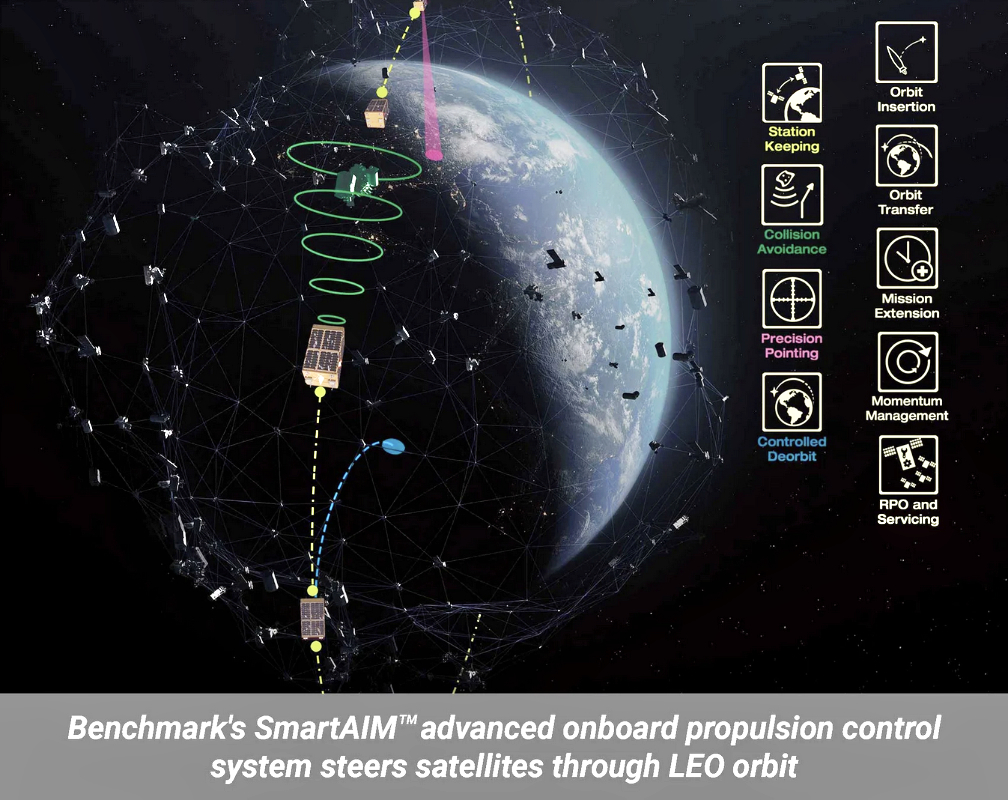
With operational smallsat constellations scaling fast, and regulatory controls for sustainability quickly emerging, Benchmark Space Systems has announced the commercial launch of the first-ever, driver assist, control system capable of managing highly precise, satellite maneuvers and travel through increasingly congested space.

The category-defining, propulsion solution, called SmartAIM™ (Smart Advanced In-Space Mobility), features an onboard software control solution embedded in Benchmark’s non-toxic chemical, electric and hybrid propulsion systems. Having a more intelligent and integrated mobility solution extends the guidance, navigation, and control (GNC) capability of any spacecraft to offer unprecedented tiers of autonomous flight – ranging from assisted ‘cruise control’ for station keeping and payload pointing to full-blown maneuver planning and execution for collision avoidance.

SmartAIM™ is now available in Benchmark’s common control system across product lines and will reduce operational costs and lead times associated with mission planning and system integration.

Benchmark also announced a strategic partnership with Kayhan Space to integrate the company’s Pathfinder spaceflight safety service with the SmartAIM™ platform. Pathfinder’s capabilities for optimized maneuver planning and autonomous space traffic coordination provide a unique and complementary offering when paired with Benchmark’s SmartAIM™ propulsion solution. This alliance will ultimately drive the full value of SmartAIM™ for collision avoidance and sustainable space operations. Benchmark plans to add Kayhan and other SSA companies to its extensive network of partners with complementary technology and services.

Benchmark has designed, developed, and thoroughly tested its SmartAIM™ intelligent propulsion offering, in part with funding and R&D support from the Air Force Research Lab (AFRL), and expects the first SmartAIM™-assisted flights to launch in 2024. The cooperative effort among Benchmark’s commercial and government partners has focused on eliminating the laborious, iterative manual satellite control functions, which have become cost prohibitive and unmanageable for many operators as their constellations dramatically scale.

Benchmark’s SmartAIM™ intelligent guidance, navigation and control solution runs on multiple streams of real-time data, from onboard sensors and data relays, that provide vivid situational awareness. The low-latency information feeds and onboard processing include the state of the propulsion system and satellite, where it’s been, where it’s headed, and efficient travel routes around potential issues or threats nearby or on the horizon.

The company expects the first SmartAIM™ systems to launch next year, beginning with collision avoidance and station keeping capabilities in space. The company’s technology roadmap includes next-generation features, which include advanced operator-assist and autopilot functions, in the late 2024 through 2025 timeframe.

Established propulsion providers are at an advantage when developing GNC capabilities. The integration goes beyond hypotheticals and is designed with the detailed specificities of existing avionics and propulsion systems for maximum optimization. By working in unison with additional effectors like momentum wheels, torque rods, and ACS thrusters – the GNC framework is designed for optimizing each maneuver, whether that be for power conditions, fuel preservation, or speed.

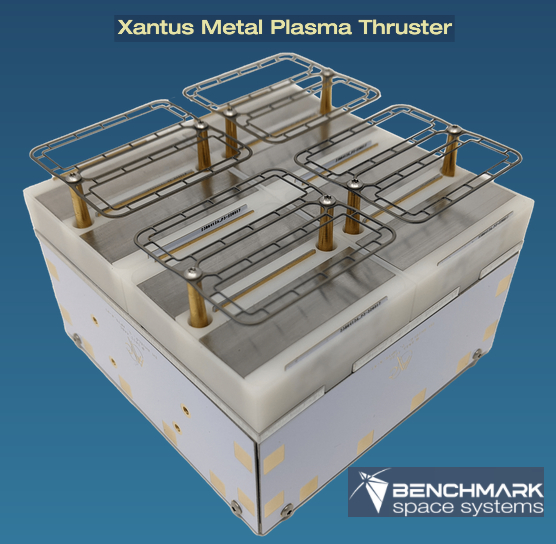
The company is laser focused on providing non-toxic chemical, electric and hybrid propulsion systems capable of enabling in-space mobility and the emerging space economy. Benchmark is currently fulfilling contracts for dozens of its new Xantus electric metal plasma thrusters (MPTs), with some on the verge of playing a key role in upcoming in-space servicing, assembly, and manufacturing (ISAM) satellite docking demonstration missions.

The company is also producing hundreds of its 2N Lynx bi-propellant (HTP + fuel) thrusters this year to meet increasing demand for LEO and cislunar missions. The intelligent maneuver control enabled by SmartAIM™ is being considered by a growing number of missions and operators deploying Benchmark thrusters and propulsion systems.

“The Low Earth Orbit ecosystem is not sustainable without driver assist technologies like SmartAIM™. Benchmark is in full production mode on propulsion systems for several government and commercial missions. Operators are not just looking to Benchmark to provide propulsion hardware, but a full life cycle partnership and innovative bundled mobility solutions to maneuver safely and confidently through space. Large constellations aren’t technically or economically feasible in today’s busy orbits if they’re being controlled with traditional manual and multi-step procedures. SmartAIM™ makes watching over constellations of dozens to hundreds of satellites far more manageable and sustainable. The operational equivalent of falling asleep at the wheel could lead to a Kessler scenario that wipes out a trillion-dollar global infrastructure.” — Chris Carella, Chief Commercial Officer for Benchmark Space Systems

“The game-changing benefits of having SmartAIM™ tightly integrated with Benchmark’s propulsion systems, the host spacecraft resources, and additional effectors, aids in scalability, performance efficiency and sustainability, and operator peace of mind. Operators can lean on Benchmark’s unrivaled propulsion expertise and not get bogged down with the technical details needed for scalable mobility operations in space. The efficiency of the driver-assist and autopilot modes enable operators to get a lot more mileage out of their propulsion systems – driving up mission sustainability while reducing overhead.” — Jeff Gibson, Head of Engineering, Benchmark

“The Kayhan Space mission is all about empowering satellite operators with the information and streamlined autonomous capabilities they need to safely and efficiently navigate through an increasingly congested space environment. We are thrilled to partner with Benchmark Space Systems and integrate with their SmartAIM™ intelligent propulsion solution to maximize safe and sustainable space operations.” — Siamak Hesar, Co-Founder and CEO, Kayhan Space

Filed Under: News

Pale Blue to supply water based propulsion systems

August 7, 2023 by editorial

Pale Blue has been awarded a new contract with Yonsei University in South Korea to provide the Resistojet (0.5U sized water vapor) propulsion system for a pair of 6U satellites.

The propulsion system will be used to do formation flying for a laser crosslink system between the two smallsats in LEO as well as conduct optical communications. The laser crosslink payload employs a deployable, optical telescope to compensate for the compact bus capability of a typical CubeSat platform. With this novel design, a stable communication link can be achieved at a distance of up to 1000 km. The proposed data rate is at least 1 Gbps., which is a challenging objective given the efficient and low cost nature of the systems.

Asia is experiencing a rapid space industry growth and Pale Blue aims to boos its presence in in this region as well as contribute to the development of space technologies.this region as well as contribute to the development of space technologies. Throughout collaboration with Yonsei University, Pale Blue will expand the business by strengthening partnerships in Asia. The company will create mobility capabilities that are core to the space industry, while providing the waterwater–based propulsion systems to the global market.

“We are thrilled to work together with Pale Blue on this project. Our mission aims for demonstrating cutting edge laser communication, with orbital maneuvering and formation keeping playing a central role. These thrusters perfectly meet our requirements and offer the advantage of being not only environmentally friendly, but also free from regulatory constraints. We look forward to continuing this successful collaboration in ou r future missions.” — Sang Young Park, Professor, Department of Astronomy, Yonsei University

“I am truly grateful for this opportunity to cooperate with Yonsei University on their project,” said . “I am sure our water based thrusters can contribute to the satellite’s formation control and establishment of their outstanding communication technology. l and establishment of their outstanding communication technology. We are honored to be selected, and continue to support Yonsei University going forward.” — Jun Asakawa, CEO and Co Founder, Pale Blue

Filed Under: News

Ovzon receives SaaS order from the Italian Border Police

August 7, 2023 by editorial

Ovzon has received a 12 month order to deliver Ovzon SATCOM-as-a-Service (SaaS) to be used by the Italian Border Police.

The service will be used in their important and difficult work to manage the complex situation with the surge in number of refugees arriving at the island of Lampedusa, the most southern island of Italy, which is a major destination for migrants seeking to enter European Union countries.

The number of migrants arriving on Italy’s shores by boats more than tripled in the first two months of 2023 compared to previous year and has grown dramatically every month since then, according to Italy’s interior ministry.

The order was received through Sielte S.p.A., the large Italian TLC infrastructure, service and ICT provider owned by the Turrisi family since 1999. The service will be operational from the middle of August 2023.

Satellite communications plays a crucial role in the Italians Border Police work as there are no other means of guaranteed connectivity, communication, and coordination of critical operations in the areas where they operate.

“Satellite communications is particularly important in Italy. Mountains, remote areas, and islands can be impossible to reach with traditional terrestrial networks. The Italian Border Police is doing a fantastic job in supporting a variety of mission critical activities handled by the Ministry of Interior and its operational government agencies such as the Italian Fire and Rescue Services and now also with the Italian Border Police. Ovzon’s SATCOM-as-a-Service both for On-The-Move and On-The-Pause solutions is ideal for the Italian Border Police important work in taking care of refugees and the most fragile and those in need of help. We are proud to support another Italian vital function with our unique mobile satellite connectivity solution.” — Per Norén, President and CEO, Ovzon

Filed Under: News

SpaceX’s Sunday Starlink launch sends 22 small satellites soaring

August 7, 2023 by editorial

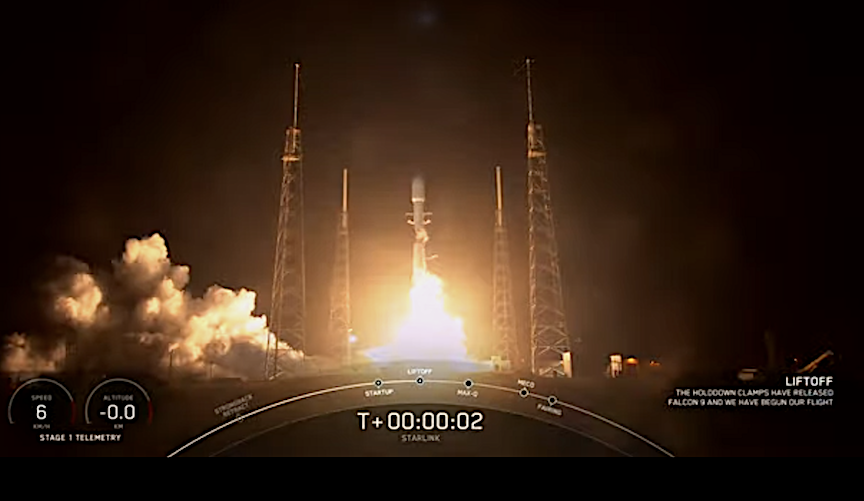
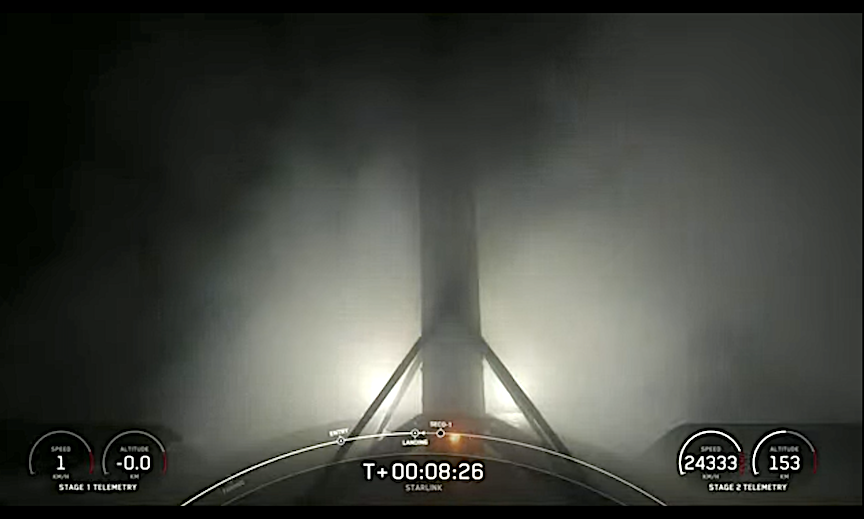
SpaceX was successful with the Falcon 9 launch of 22 Starlink satellites today, Sunday, August 6 at 10:41 p.m. ET (02:41 UTC on August 7) to low-Earth orbit from Space Launch Complex 40 (SLC-40) at Cape Canaveral Space Force Base in Florida.

This is the fourth flight for the first stage booster supporting this mission, which previously launched Crew-6, SES O3b mPOWER, and one Starlink mission. To date SpaceX has launched 4,881 Starlink spacecraft.

A successful stage separation, resulted in the first stage landing on the A Shortfall of Gravitas droneship, stationed in the Atlantic Ocean.

Filed Under: Featured, News

NuLIoN smallsat contact established by NuSpace Pte Ltd. + NUS CRISP

August 7, 2023 by editorial

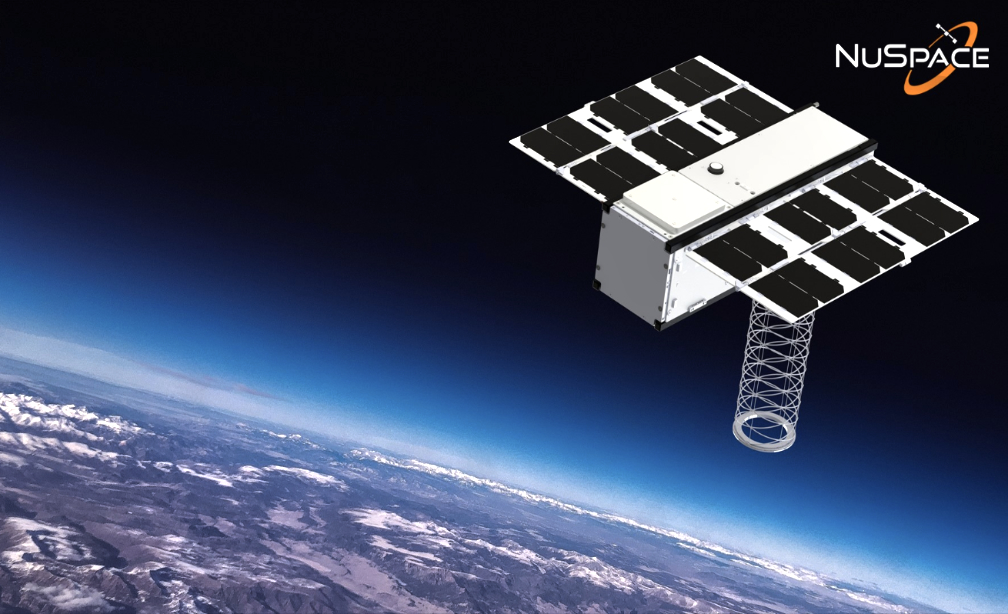
On July 30th., an Indian Space Research Organization (ISRO)_PSLV C56 carried the NuSpace Pte Ltd.‘s NuLIoN smallsat as one of the mission’s ride share payloads to orbit.

Upon successful insertion, the company attempted to contact the satellite using the firm’s own ground station, following the planned operating procedure. Initially, contact with the satellite on its first few passes was unsuccessful.

NuSpace LoRaWAN Internet-of-Things Network (NuLIoN) is an advanced, 3U, smallsat that enables seamless IoT connectivity in urban and remote locations. The smallsats empowers terrestrial sensors to effortlessly transmit data directly to the satellite, eliminating the complex infrastructure and high costs that are associated with mass deployment of IoT applications in remote areas.

Fortunately, NUS CRISP (an operational ground station) reached out to the company and offered to assist — they began tracking NuLIoN with their spare capacity. NUS CRISP picked up a short blip on their spectrum analyzer, which corresponded to NuLIoN’s frequency. NuSpace quickly integrated the firm’s ground equipment into the NUS CRISP their station and the wait was on. In a subsequent pass, scrambled data was noted coming in but was being discarded — finally, the first decoded beacon packet was received.

NuLIoN is operating nominally and the solar panels and communication antenna are fully deployed. In the upcoming weeks, the company will continue to test the satellite and commission it phase by phase until the smallsat is ready for its mission.

NuSpace writes, “This success would not have been possible without the help of NUS CRISP and their unwavering and continuous support.”

Filed Under: News

SpaceX readies for Sunday Starlink launch

August 6, 2023 by editorial

SpaceX is targeting Sunday, August 6 at 10:41 p.m. ET (02:41 UTC on August 7) for a Falcon 9 launch of 22 Starlink satellites to low-Earth orbit from Space Launch Complex 40 (SLC-40) at Cape Canaveral Space Force Base in Florida. If needed, there are two additional launch opportunities at 11:31 p.m. ET (03:31 UTC) and 12:22 a.m. ET on August 7 (04:22 UTC). Up to five backup opportunities are also available on Monday, August 7 starting at 8:35 p.m. ET (00:35 UTC August 8) until 11:57 p.m. ET (03:57 UTC).

This is the fourth flight for the first stage booster supporting this mission, which previously launched Crew-6, SES O3b mPOWER, and one Starlink mission. Following stage separation, the first stage will land on the A Shortfall of Gravitas droneship, which will be stationed in the Atlantic Ocean.

A live webcast of this mission will begin about five minutes prior to liftoff.

Filed Under: News

Beam-hopping JoeySat passes on-orbit tests

August 6, 2023 by editorial

Photo of JoeySat’s deployment, courtesy of ESA.

An advanced broadband satellite that is providing high-speed internet services that demonstrate nexgen 5G connectivity has passed initial, on-orbit tests.

JoeySat’s separation, photo courtesy of ESA.

As they can swiftly switch their coverage between different locations, beam-hopping satellites can connect people living in, or traveling over, wide geographical areas. They can also vary the power of their signals, enabling them to respond rapidly to surges in customer demand, for example, during natural disasters when emergency responders need to communicate with each other.

The beam-hopping satellite — nicknamed JoeySat after a baby kangaroo — will soon demonstrate the technology that will enable a beam hopping satellite in LEO to connect thousands of people traveling by air, sea or on land.

Photo of the JoeySat satellite, courtesy of ESA.

JoeySat was launched into orbit on May 20th., exactly two years after ESA and OneWeb signed the contract to collaborate on the satellite’s creation.

Since then, JoeySat has completed commissioning tests of its platform and payload and initiated its one-year test campaign that includes a digitally regenerative, on-board processor, a multi-beam phased array that incorporates beam-steering as well as beam-hopping antennas.

JoeySat is in a near-polar orbit and will send signals via ground stations in Norway and Sweden to demo the full capabilities of flexible payloads in nexgen constellations with global connectivity. Experiments will include end-to-end communications with dynamic resource allocation, and 5G pilot tests with the University of Surrey.

Developed under the Sunrise Partnership Project between ESA and telecommunications operator OneWeb, with support from the UK Space Agency, JoeySat is demonstrating key technologies for OneWeb’s nexgen constellation.

JoeySat’s fully digital and state-of-the-art payload was built using off-the-shelf components, new space best practices and a lean management style in less than a year. The satellite’s advanced, digital regenerative payload was built by communications equipment company Satixfy and the payload environmental tests were completed in the UK.

“It is exciting to see OneWeb’s JoeySat pass its initial in-orbit tests so that it can move on to demonstrate the huge potential of its innovative beam-hopping technology to enhance connectivity and improve people’s lives, whether that means better broadband services in remote places, or the ability to respond more effectively to emergency situations. The UK Space Agency has supported the mission with more than £50 million to fund both the game-changing technology behind JoeySat’s creation and the development of a wider ecosystem that will ensure a reliable and sustainable end-to-end service. We look forward to watching its next-generation capabilities come to life.” — Harshbir Sangha, Missions and Capabilities Delivery Director, UK Space Agency

“We are proud of this ESA Partnership Project with a large telecommunications operator that also includes small and medium-sized enterprises. By working in a lean style using commercial off-the-shelf components and flexible project management to bring innovative technologies to market in response to commercial needs, ESA is helping to foster innovation in next-generation 5G connectivity. ESA Partnership Projects help European space companies succeed in the highly competitive global market for telecommunications satellites.” — Javier Benedicto, Acting Director of Connectivity and Secure Communications, ESA

Filed Under: News

  • « Go to Previous Page
  • Page 1
  • Interim pages omitted …
  • Page 107
  • Page 108
  • Page 109
  • Page 110
  • Page 111
  • Interim pages omitted …
  • Page 339
  • Go to Next Page »

Primary Sidebar

WEEKLY NEWSLETTER

Archives

  • September 2026
  • August 2026
  • July 2026
  • June 2026
  • May 2026
  • April 2026
  • March 2026
  • February 2026
  • January 2026
  • December 2025
  • November 2025
  • October 2025
  • September 2025
  • August 2025
  • July 2025
  • June 2025
  • May 2025
  • April 2025
  • March 2025
  • February 2025
  • January 2025
  • December 2024
  • November 2024
  • October 2024
  • September 2024
  • August 2024
  • July 2024
  • June 2024
  • May 2024
  • April 2024
  • March 2024
  • February 2024
  • January 2024
  • December 2023
  • November 2023
  • October 2023
  • September 2023
  • August 2023
  • July 2023
  • June 2023
  • May 2023
  • April 2023
  • March 2023
  • February 2023
  • January 2023
  • December 2022
  • November 2022
  • October 2022
  • September 2022
  • August 2022
  • July 2022
  • June 2022
  • May 2022
  • April 2022
  • March 2022
  • February 2022
  • January 2022
  • December 2021
  • November 2021
  • October 2021
  • September 2021
  • August 2021
  • July 2021
  • June 2021
  • May 2021
  • April 2021
  • March 2021
  • February 2021
  • January 2021
  • December 2020
  • November 2020
  • October 2020
  • September 2020
  • August 2020
  • July 2020
  • June 2020
  • May 2020
  • April 2020
  • March 2020
  • February 2020
  • January 2020
  • December 2019
  • November 2019
  • October 2019

© 2019–2026 SatNews

Insert/edit link

Enter the destination URL

Or link to existing content

    No search term specified. Showing recent items. Search or use up and down arrow keys to select an item.
      x
      Sign Up Now!

      Enjoy a free weekly newsletter with recent headlines from the global SmallSat industry.

      Invalid email address
      We promise not to spam you. You can unsubscribe at any time.
      Thanks for subscribing! You will now receive weekly SmallSat News updates.
      We love our advertisers.
      And you will too!

      Please disable Ad Blocker to continue... We promise to keep it unobtrusive.
      We promise not to spam you. You can unsubscribe at any time.
      Invalid email address
      Thanks for subscribing!