• Skip to main content
  • Skip to primary sidebar
  • Home
  • News
  • Featured
  • More News ⌄
    • SatNews
    • SatMagazine
    • MilSatMagazine
  • Events ⌄
    • MilSat Symposium
    • SmallSat Symposium
    • Satellite Innovation
  • Contacts
  • SUBSCRIPTION

SmallSat News

You are here: Home / Archives for News

News

RTX Trilogy: Contract to develop platform agnostic BLOS SATCOM solution / New large form factor CubeSat / DARPA award for AI to human values

August 11, 2023 by editorial

Collins Aerospace, an RTX (NYSE: RTX) business, has been awarded a $36 million contract from the U.S. Air Force Research Laboratory to develop and demonstrate a platform-agnostic, Beyond-Line-Of-Sight (BLOS), SATCOM pod.
The communications pod will provide warfighters resilient, high bandwidth, low latency communications and data directly to the cockpit. The pod brings together military and commercial satellites to add resiliency to the host platforms; and will switch between services from different vendors with little or no hardware modification, while providing the ability to utilize future constellations as they come online.

“It is critical in a contested environment that the warfighter can communicate with operators regardless of communication path. This resilient communications terminal is designed for survivability in degraded environments to offer military leaders enhanced situational awareness to make better decisions, faster across the battlespace.” — Ryan Bunge, Vice President, Communication & Networking Solutions, Collins Aerospace

RTX debuts largest CubeSat form factor

RTX‘s (NYSE: RTX) smallsat manufacturer and mission services provider, Blue Canyon Technologies (BCT), has introduced the XB16 CubeSat, now the largest form factor in the company’s CubeSat product line.

The XB16 CubeSat offers 14U of payload volume with a cannister-dependent option for an additional 12,000 cubic centimeters of volume, all while maintaining BCT’s robust power systems, secure data handling, resilient performance, and ultra-precise attitude control systems. The larger payload volume capacity of the XB16 provides an ideal solution for remote sensing, earth observation, and in-space communications.

This addition to the BCT array of peak-performance and cost-effective spacecraft solutions continues the company’s ability to support all types of academic, commercial and government space missions.

The new XB16 will be developed at BCT’s Spacecraft Manufacturing Center located in Boulder, Colorado. The office and laboratories are designed specifically for high-volume production of spacecraft systems and components, with the manufacturing capability to handle large constellations of small spacecraft.

“Our flight-proven products are known for their fine-pointing and agility on orbit. Now we are able to offer a larger payload volume with the same high level of accuracy and orbit lifetime.” — John Carvo, Executive Director of CubeSats, Blue Canyon

Blue Canyon Technologies (BCT), RTX’s smallsat manufacturer and mission services provider, offers a diverse portfolio of innovative, reliable, and affordable spacecraft and components that enable a broad range of missions and technological advancements for the new space economy. The company currently supports numerous unique missions with over 100 cumulative spacecraft orders.

RTX to attune AI decisions to human values for DARPA

RTX’s (NYSE: RTX) Raytheon BBN division received a contract award to support DARPA’s “In The Moment” program — ITM aims to develop the foundations needed for algorithms that are trusted to independently make decisions in scenarios like mass casualty triage and disaster relief, where complex and rapid decisions are needed in dynamic situations where there is often no human consensus and no clear right answer.

The Raytheon BBN-led team, which includes Kairos Research, MacroCognition, and Valkyries Austere Medical Solutions, will use a cognitive interviewing technique to understand how experts—in this case, medical professionals and first responders—evaluate information and make tough trade-offs to act decisively at critical decision points.

This qualitative information will be used to design scenario-based experiments to study how differences in an individual’s decision-making attributes can explain their choices, and how the alignment of attributes between two different people impacts the willingness to delegate decisions to another. This will enable AI to be tuned to match an expert population, or even to be tuned to match an individual expert.

DARPA is bringing together multiple teams to collaborate on this program. Other teams will focus on the development of prototype AI decision-makers that start with baseline knowledge and can then be tuned to match a set of target attributes.

The research products from this program will be integrated and evaluated to determine how well the algorithmic agents were able to make decisions consistent with the target human attributes when faced with difficult scenarios. The program will also test whether human experts trust these aligned agents over the baseline agents or other actual humans. In these program evaluations of trust, the human experts will be shown a record of decisions in difficult scenarios without knowing whether the decision-maker was an AI or a human.

Work on this contract, which is sponsored by DARPA and the Air Force Research Lab, is being performed in Cambridge, Massachusetts; Dayton, Ohio; and Anniston, Alabama.

“ITM is about more than getting AI to provide the correct answer in very controlled scenarios. We’re not talking about training AI on labelled data to help identify a cancerous tumor on an X-Ray,” said . “What we’re trying to accomplish instead is the ability to create AI systems that humans would allow to make decisions independently in uncontrolled environments. To accomplish this, we need to determine how human experts make really difficult decisions and assess whether to trust the decisions of others. We’ll be conducting both decision-making research and trust research.

“Because the way we make decisions varies from person to person, it’s unlikely that a one-size fits all trusted AI model exists. Instead, in theory, we should be able to create AI systems that adapt to the user and domain. Decisions are difficult because of uncertainty and trade-offs between competing goals. We want to be able to tune an AI’s attributes such as risk tolerance, process focus, or willingness to change plans to better match a user or a group of users.” — Alice Leung, Principal Investigator, Raytheon BBN

Filed Under: News

Europe’s HyPrSpace and Precious Payload team up as a sort of SpaceX service

August 11, 2023 by editorial

French rocket startup, HyPrSpace, and Precious Payload, a satellite launch provider, have teamed up to simplify the process for payload developers to reserve launches using HyPrSpace’s Orbital Baguette-1 (OB-1) rockets. These rockets can deliver 250 kg to LEO, with the maiden launch set for 2026. HyPrSpace caters to the needs of smallsats and satellite constellations with dedicated launches and rideshare opportunities.

The OB-1, (pronounced like the Star Wars character Obiwan), promises launches at half the cost of traditional micro-launchers. Its hybrid propulsion system employs a patented innovation, significantly reducing R&D and industrialization costs. Its architecture requires fewer components and has simpler geometry than traditional systems, eliminating the need for turbopumps. HyPrSpace was founded in 2019 by a team of space engineers who created its Orbital Baguette-1 (OB-1) micro-launcher and innovative hybrid propulsion technology, to provide cheaper, safer, and greener space access.

“HyPrSpace’s hybrid engines represent the next generation in space propulsion technology. We believe their approach, which can be scaled to serve a family of launch vehicles and space tugs, and have a potential to lower barriers to space access and enhance in-space mobility,” said Andrew Maximov, CEO and founder of Precious Payload.

Precious Payload is a space tech company that developed Launch.ctrl, a marketplace for satellite operators to book a launch and the necessary services to take their payloads from the ground to space. This process revolutionizes the way space access is bought and sold, with a wide range of launch providers listed on their platform.

HyPrSpace’s hybrid engines are non-explosive, posing less of a fire hazard compared to liquid propulsion. Embracing a greener approach, HyPrSpace’s technology can use various types of solid fuels, including recycled and plant-based HDPE, a type of plastic, commonly found in items like soap bottles, milk containers, and plastic bags.

Sylvain Bataillard, Co-Founder & COO of HyPrSpace, said, “The OB-1 is our leap towards a future of cheaper, safer, and more efficient space access. After two successful engine tests in 2022, we’ve scheduled full-stage configuration ground testing this year, supported by the General Directorate of Armament (DGA), which brings us a step closer to achieving our goal.”

HyPrSpace’s recent collaboration with the French Ministry of Armed Forces’ DGA, which grants access to the DGA Missile Testing site in Gironde, validates the way for further innovation and testing. This strategic alliance strengthens HyPrSpace’s potential to ‘disrupt the launch market’. This unique opportunity enables the company to plan its debut suborbital test launch in 2025.

Filed Under: News

BlackSky signs on for 5 Rocket Lab launches

August 10, 2023 by editorial

Photo of a Rocket Lab Electron launch, courtesy of the company.

Rocket Lab USA, Inc. (Nasdaq: RKLB) has signed another block buy deal for five Electron launches with BlackSky (NYSE: BSKY), a leading provider of real-time, geospatial intelligence and global monitoring services.

Rocket Lab has launched six Electron missions for BlackSky since 2019, becoming the primary launch provider for BlackSky’s constellation. With these five new launches added to the manifest, BlackSky has contracted more Electron launches than any other single, commercial customer. The launches are expected to begin in 2024 from Rocket Lab’s Launch Complex 1 in Mahia, New Zealand.

Photo of Rocket Lab’s Launch Complex 1 in New Zealand, courtesy of the company.

BlackSky’s nexgen Gen-3 satellites are designed to produce images with up to 35 centimeter resolution. Increased resolution and enhanced spectral diversity extend BlackSky’s ability to provide real-time insights to its customers in a broad set of conditions, including nighttime, low light and challenging weather.

The new BlackSky launches join a busy Electron manifest in 2024 that featured missions for commercial constellation operators Capella Space, Kinéis, Hawkeye 360, and Synspective, as well as a variety of government missions.

“After four years of launching for BlackSky, we’re delighted to continue our partnership with more dedicated launches on Electron,. Building and maintaining a constellation requires precision deployment to unique orbits and a dependable launch schedule. We’re proud to deliver this dependable and tailored capability launch after launch, year after year.” — Peter Beck, Founder and CEO, Rocket Lab

Filed Under: News

ICEYE US receives 1st NASA Commercial SmallSat Data Acquisition program Task Order

August 10, 2023 by editorial

ICEYE US Inc. has received the firm’s first Task Order under a Blanket Purchase Agreement (BPA) with NASA, announced earlier this year.

The Task Order enables NASA to acquire ICEYE’s synthetic-aperture radar (SAR) data for evaluation by scientific and academic communities to determine suitability for advancing NASA’s Earth Science research objectives. The BPA is funded by the Earth Science Division of the Science Mission Directorate.

Since 2020, NASA’s Commercial Smallsat Data Acquisition (CSDA) program has been identifying, evaluating, and acquiring data from commercial sources aligned to NASA’s Earth Science Division objectives.

The agreement between ICEYE US and NASA represents a significant milestone for commercial SAR in the United States. This is the first example of NASA gaining access to data from a radar imaging constellation, including an archive of tens of thousands of ICEYE images. Such access offers the distinct benefit of supporting advanced time series analysis of Earth’s surface – measurements that have not been previously available to the NASA community.

ICEYE SAR data is being provided with broad licensing authority to maximize the collaborative utility for research. ICEYE SAR data joins other types of satellite data from commercial remote sensing systems that have proven critical and complementary to NASA’s capabilities.

SAR offers a distinct advantage over traditional electro-optical (EO) imagery. While EO imaging requires a light source to illuminate locations – much like a camera does – SAR uses electromagnetic waves to construct images. This means SAR satellites can detect what is happening on land or sea, day or night, in any weather, without being obscured by cloud cover, dust or smoke.

“NASA is excited to evaluate ICEYE data in the context of our Earth Science Research, Analysis, and Applications portfolios. With the advent of SAR from commercial sources like ICEYE, we are interested in how these small satellite constellations can complement existing NASA datasets and capabilities. Ultimately, we aim to utilize these data to provide new perspectives to the science priorities of the Earth Science Division.” — Will McCarty, NASA CSDA Program Scientist

“We are privileged to support NASA’s Earth Science goals with our radar satellite imagery through this first Task Order. ICEYE sensors provide a persistent source of information for important research concerning geology, topography, and climate change among other fields. The CSDA program is an excellent example of NASA leveraging private sector investments for public benefit, in this case increasing the resilience of society by deepening our understanding of Earth’s evolution.” — Eric Jensen, CEO, ICEYE US

ICEYE US operates satellites from a Missions Operations Center in Irvine, California. The company owns and operates a constellation of SAR satellites, each weighing about 220 pounds, which provide persistent monitoring of locations anywhere on Earth in near-real time.

Filed Under: News

Umbra Space releases highest resolution commercial satellite image

August 9, 2023 by editorial

Umbra has successfully produced a 16 cm. resolution Synthetic Aperture Radar (SAR) image — the highest-resolution commercial satellite image ever released. The company also announced that the company is now able to provide customers with the highest-quality data the firm’s satellites are capable of capturing — in all formats and resolutions, including complex data better than 25 cm., for the first time.

Umbra’s ability to expand its industry-leading, high-resolution data product offerings for commercial customers is a direct result of NOAA removing the temporary licensing conditions under which Umbra previously operated.

Umbra offers single-looked, spotlight mode at an unrivaled 25 and 35 cm. resolution, as well as 50 cm., 1 meter resolutions, and multi-looked spotlight modes, which features longer dwell times to reduce speckle and aid visual interpretation. All of Umbra’s spotlight products can be delivered with GEC, SICD, SIDD, and CPHD formats. Umbra data is also provided with a Creative Commons license, which means users can do anything they want with it, as long as they credit Umbra as the source.

Umbra also regularly captures and publicly shares high-resolution SAR data from diverse locations around the world via its Open Data Program (ODP). Recently, Umbra crossed more than $1 million of free SAR data released into the ODP.

Umbra has released more open data than all other SAR providers combined. The ODP is updated several times a week and offers users the opportunity to analyze the time-series data to detect changes at each location. Following the NOAA licensing update, Umbra added 25 cm. imagery with the newly unlocked phase history data into the Open Data Program.

Umbra provides easy access to the highest quality commercial satellite data available, which is an indispensable tool for the growing number of organizations monitoring the Earth to make data-driven decisions that address global issues. Umbra’s constellation is able to identify and monitor surface-level changes globally, and can be used for a variety of efforts, including remote wildlife habitat protection, pollution and plastic waste tracking, oil spill detection, military intelligence gathering, live flooding estimation during storms, and more.

“The removal of the temporary license conditions by NOAA is impactful news for both Umbra and our customers. This means that we are finally able to offer customers the highest resolution images that our satellites are capable of capturing, setting the stage for even further expansion of products to customers.” — Gabe Dominocielo, Umbra’s co-founder and president.

Umbra is a technology company that offers intelligence data as a service to commercial and government customers. Our cutting-edge products help customers solve complex business and security challenges. Umbra is a U.S.-owned and operated company headquartered in Santa Barbara, California, and has a presence in Austin, Texas, and Washington, D.C.

Filed Under: News

Redwire selected by True Anomaly for SSA cameras + navigation tech

August 9, 2023 by editorial

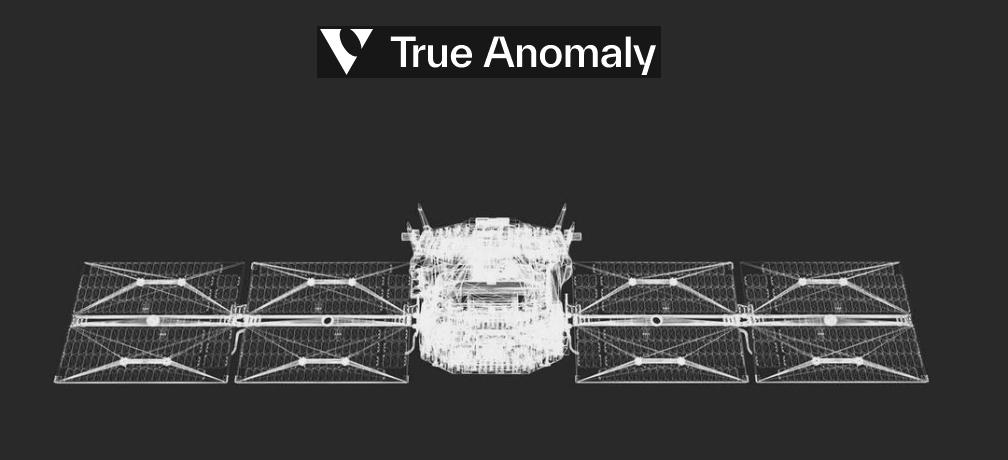
Redwire has been selected by True Anomaly to provide navigation technology and space situational awareness cameras for its Jackal autonomous orbital vehicle (AOV).

Jackal

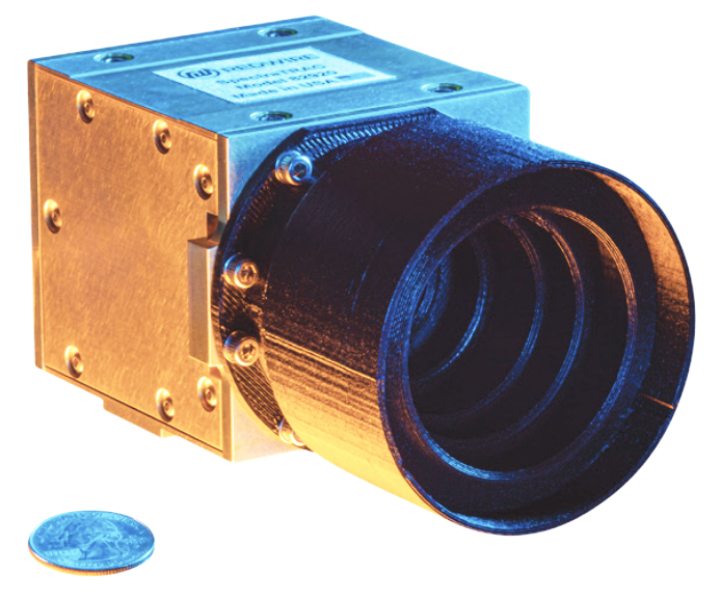
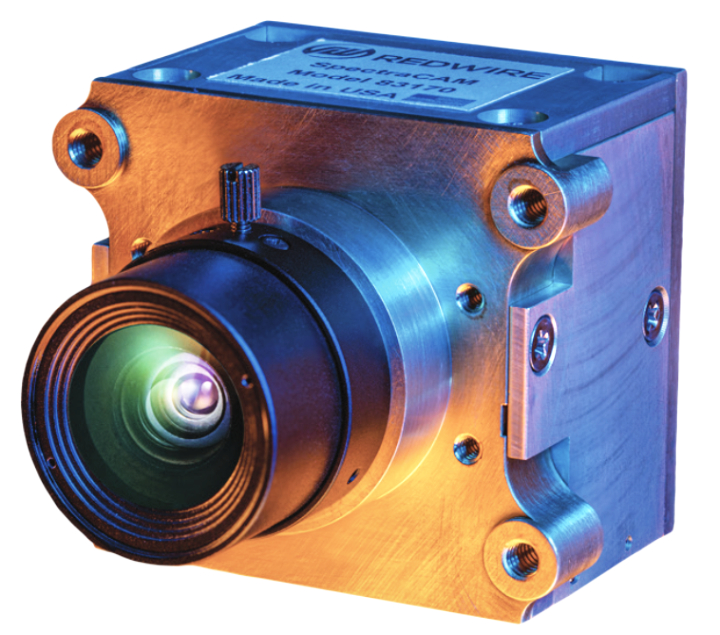
Under the agreement, Redwire is providing SpectraCam cameras and SpectraTRAC star trackers customized for the Jackal autonomous orbital vehicles (AOVs). Redwire’s SpectraTRAC star tracker and SpectraCam camera will enable relative navigation, object detection, and imaging for Jackal AOVs.

The Jackal spacecraft is designed for a wide range of training, test, and Space Domain Awareness (SDA) missions in LEO, GEO and other orbits.

Redwire’s SpectraTAC star tracker.
Redwire’s SpectraCAM.

Redwire’s nexgen SpectraTRAC star tracker is a low-cost, high-performance star tracker that supports civil, commercial, and defense missions with navigation capability.

SpectraCAM, a high-resolution Flight Camera engineered for LEO applications including docking, navigation, inspection, and situational awareness, will provide high-resolution imaging of select objects that are of interest for Jackal missions.

Filed Under: Featured, News

Firefly Aerospace + Xtenti collaborate in support of the NRO

August 9, 2023 by editorial

Launching aboard Firefly’s Alpha vehicle, mission will demonstrate the responsive capabilities of Firefly’s Elytra orbital vehicle and Xtenti’s FANTM-RiDETM payload dispenser

Firefly Aerospace, Inc. has a new agreement with Xtenti, LLC., to conduct a responsive space mission with Firefly’s orbital vehicle, Elytra, and Xtenti’s smallsat dispenser, FANTM-RiDE™.

Scheduled to launch in 2024, the mission supports Xtenti’s follow-on study contract with the National Reconnaissance Office (NRO) to demonstrate FANTM-RiDE’s rapid payload reconfiguration capabilities prior to launching on Firefly’s Alpha vehicle and performing multiple responsive, on-orbit deployments on Elytra.

Upon launching on Alpha, Firefly’s Elytra vehicle will use the FANTM-RiDE dispenser to first deploy commercial rideshare payloads in Sun-Synchronous Orbit (SSO) and then perform an on-orbit maneuver and stand ready to deploy U.S. government payloads on-demand. Formerly known as Firefly’s Space Utility Vehicle, Elytra offers a more robust vehicle line to provide rapid on-orbit mobility, hosting, and services when and where customers need them.

Xtenti’s Flight Agnostic Non-interfering, Tunable Mass Rideshare Dispenser Equipment (FANTM-RiDE) enables customers to add, replace, or remove payloads from a manifest within hours before launching without invalidating existing mission loads analyses. With a predetermined common interface, FANTM-RiDE also enables entire loaded dispensers to be quickly interchanged between launch vehicles. FANTM-RiDE further protects multiple payloads on-orbit within a container that can open and close on-demand.

As Firefly’s second responsive space operation, the mission offers additional rideshare opportunities for commercial customers. Firefly is currently working to complete the final readiness milestones for its first responsive space mission for the U.S. Space Force before entering the stand-by phase and waiting for the 24-hour launch notice.

“Firefly is honored to support this critical mission that will further advance our nation’s responsive space capabilities and debut Firefly’s Elytra vehicle that’s filling a void in the on-orbit servicing market. As the first of many missions utilizing multiple Firefly vehicles, this operation will lay the groundwork for Firefly’s end-to-end mission services, proving our capabilities to rapidly launch, maneuver, and deploy satellites at a time and place of our customers’ choosing.” — Bill Weber, CEO, Firefly Aerospace

“Responsive delivery of space capabilities to orbit needs a paradigm shift, and Xtenti is excited to demonstrate two of FANTM-RiDE’s game-changing capabilities that enable responsive space. FANTM-RiDE not only enables rapid launch with its Rapid Rideshare Reconfiguration (R3) capability that eliminates slow and costly analytical barriers to fast payload hot-swaps, but it also enables on-orbit pre-positioning of payloads already stored on orbit for quick deployment on demand.” — Dan Lim, President and CEO, Xtenti

Filed Under: News

SSTL + Neumann Space partner to test Australian made propulsion system on demo mission

August 9, 2023 by editorial

Surrey Satellite Technology Ltd. (SSTL) and Neumann Space have agreed to work together to test an Australian designed and manufactured, in-space propulsion system as part of the CarbSAR In Orbit Demonstration Mission.

SSTL and Neumann Space will commence work this year to integrate the nexgen Neumann Drive® as an IOD payload on board the SSTL CarbSAR satellite that is scheduled for launch during the second half of 2024. The companies will collaborate over the course of the mission to test, demonstrate and verify the performance of the Neumann Drive® whose unique propulsion technology uses a solid metallic propellant.

The opportunity to be a part of the CarbSAR Demo Mission will provide Neumann Space with the ability to further grow its space heritage and is an active demo of SSTL’s commitment to collaborate with the Australian Space industry to stimulate local growth and competitiveness.

The CarbSAR Demo Mission is a partnership between SSTL and Oxford Space Systems to build and launch an OSS Wrapped Rib antenna mounted to an SSTL CarbSAR satellite. This mission is designed to prove a groundbreaking Synthetic Aperture Radar (SAR) concept with implications for near to medium term, UK defence, ISR strategies.

“Our participation in the CarbSAR Demo Mission and our first piece of work with SSTL is significant for Neumann Space and for the commercialization of our innovative propulsion technology. This is an important addition to our program of in orbit demonstrations, providing us with the opportunity to validate the performance of our sovereign capability on SSTL’s latest generation 150+kg. satellite platform, and to work more closely with a leader in the UK’s space industry for commercial and defense applications.” — Herve Astier, Neumann Space’s CEO

“CarbSAR is an important development for SSTL and so are our activities in Australia. We are, therefore, delighted to welcome this collaboration with Neumann Space and look forward to growing our partnership here and on future small satellite missions.” — Andrew Cawthorne, Business Development Director, SSTL

“The Australian Space Agency established the UK-Australia Space Bridge with our counterparts to encourage exactly this type of collaboration between our nation’s space companies. This agreement is further evidence of the global space sector’s interest in what Australia’s innovators have to offer, and the mutual benefit that can be gained from working together with our partners. I look forward to seeing the continuing development of this innovative Australian propulsion technology and how Neumann Space can use this space heritage to continue to grow and create economic and career opportunities here at home.” — Enrico Palermo, Head of the Australian Space Agency

Filed Under: News

KSAT Ka-band network expanded + optimized for smallsat constellations.

August 8, 2023 by editorial

KSAT has introduced the world’s first, commercial, fully automated, Ka-band ground network optimized for smallsat constellations.

KSATlite Ka-band services represent the nexgen of ground network solutions, offering unparalleled bandwidth and performance for communicating with satellites in LEO and beyond. The KSATlite Ka-band solution will be optimal for data-intensive applications currently being planned and developed by the innovators in the smallsat constellation segment.

Powered by advanced Ka-band technology, this service opens new possibilities for high-speed data transfers, making it the ideal choice for space operators seeking efficient and reliable connectivity. Downlink capabilities of 10 Gbps and more will be enabled with the right selection of radios.

This fully automated, tri-band, satellite communication network will enable seamless communication across multiple frequency bands using a standardized 4-channel, baseband unit. By integrating S-band uplink and downlink, X-band downlink, and Ka-band downlink capabilities, KSATlite Ka-band services offer flexibility, coverage and high speeds, unlocking the full potential of high-throughput applications such as Earth observation, data-intensive research, and real-time communication.

The KSATlite Ka-band network follows the same innovative principles of KSATlite, a world leading ground network service for smallsat constellations. Fully integrated with the KSATlite services and the KSAT API ecosystem, the KSATlite Ka-band network will initially be deployed on six ground station locations with multi-mission ground systems.

Adding Tri-band antennas at these selected sites around the world will further streamline operations, enhance resource allocation for optimal performance and ensure reliable and secure communication regardless of geographical constraints.

With the extended coverage, the network will connect remote and challenging locations, while at the same time prioritizing robust security by deploying advanced encryption protocols and authentication mechanisms to ensure secure communication across the tri-band network.

“KSAT continues to invest in new technologies and remains at the forefront of Ground Network advancements. The launch of the KSATlite Ka-band network showcases our ability to provide seamless and versatile connectivity solutions to our customers, with exceptional reliability and unmatched performance.” — Marte Indregard, KSAT Chief Commercial Officer.

Filed Under: Featured, News

Spire Global awarded a GHGSat contract for satellite constellation expansion

August 8, 2023 by editorial

Spire Global, Inc. (NYSE: SPIR) has been awarded a space services contract by GHGSat, wherein Spire will build, launch and operate four additional, 16U smallsats, that will carry GHGSat payloads to monitor greenhouse gas emissions. This builds on Spire’s initial agreement with GHGSat for three, 16U satellites, that will launch by the end of 2023.

Spire Space Services, with a $39 billion total addressable market, allows organizations to leverage the Company’s established infrastructure to put their business in space and quickly scale a constellation with its rapid development, manufacturing, launch and operations capabilities.

The addition of these satellites will expand GHGSat’s global emissions monitoring and measurement capacity. The data collected by the new payloads will be used to monitor emissions from carbon-intensive industries, such as oil and gas, coal mining, waste management and agriculture.

The launch of the four 16U satellites is scheduled for no earlier than 2024.

“Our Space as a Service model is designed to support the rapid pace at which our customers are growing, allowing companies like GHGSat to focus on their mission and services, while we deploy their payload into space safely, quickly and in a cost-effective manner. We are proud to expand our partnership with GHGSat as they scale their constellation to bring transparency to the global issue of greenhouse gas emissions.” — Frank Frulio, general manager and global head of Space Services, Spire

“GHGSat provides the best emissions intelligence in the world. By expanding our satellite services agreement with Spire, we can continue to focus on performance for our customers rather than on satellite manufacturing and operations.” — Stephane Germain, CEO, GHGSat

Filed Under: News

  • « Go to Previous Page
  • Page 1
  • Interim pages omitted …
  • Page 106
  • Page 107
  • Page 108
  • Page 109
  • Page 110
  • Interim pages omitted …
  • Page 339
  • Go to Next Page »

Primary Sidebar

WEEKLY NEWSLETTER

Archives

  • September 2026
  • August 2026
  • July 2026
  • June 2026
  • May 2026
  • April 2026
  • March 2026
  • February 2026
  • January 2026
  • December 2025
  • November 2025
  • October 2025
  • September 2025
  • August 2025
  • July 2025
  • June 2025
  • May 2025
  • April 2025
  • March 2025
  • February 2025
  • January 2025
  • December 2024
  • November 2024
  • October 2024
  • September 2024
  • August 2024
  • July 2024
  • June 2024
  • May 2024
  • April 2024
  • March 2024
  • February 2024
  • January 2024
  • December 2023
  • November 2023
  • October 2023
  • September 2023
  • August 2023
  • July 2023
  • June 2023
  • May 2023
  • April 2023
  • March 2023
  • February 2023
  • January 2023
  • December 2022
  • November 2022
  • October 2022
  • September 2022
  • August 2022
  • July 2022
  • June 2022
  • May 2022
  • April 2022
  • March 2022
  • February 2022
  • January 2022
  • December 2021
  • November 2021
  • October 2021
  • September 2021
  • August 2021
  • July 2021
  • June 2021
  • May 2021
  • April 2021
  • March 2021
  • February 2021
  • January 2021
  • December 2020
  • November 2020
  • October 2020
  • September 2020
  • August 2020
  • July 2020
  • June 2020
  • May 2020
  • April 2020
  • March 2020
  • February 2020
  • January 2020
  • December 2019
  • November 2019
  • October 2019

© 2019–2026 SatNews

Insert/edit link

Enter the destination URL

Or link to existing content

    No search term specified. Showing recent items. Search or use up and down arrow keys to select an item.
      x
      Sign Up Now!

      Enjoy a free weekly newsletter with recent headlines from the global SmallSat industry.

      Invalid email address
      We promise not to spam you. You can unsubscribe at any time.
      Thanks for subscribing! You will now receive weekly SmallSat News updates.
      We love our advertisers.
      And you will too!

      Please disable Ad Blocker to continue... We promise to keep it unobtrusive.
      We promise not to spam you. You can unsubscribe at any time.
      Invalid email address
      Thanks for subscribing!