• Skip to main content
  • Skip to primary sidebar
  • Home
  • News
  • Featured
  • More News ⌄
    • SatNews
    • SatMagazine
    • MilSatMagazine
  • Events ⌄
    • MilSat Symposium
    • SmallSat Symposium
    • Satellite Innovation
  • Contacts
  • SUBSCRIPTION

SmallSat News

You are here: Home / Archives for News

News

LICIACube named AIAA Small Satellite Mission of the Year

August 17, 2023 by editorial

Argotec has been honored for the reliability and technical excellence of the company’s LICIACube mission with the American Institute of Aeronautics and Astronautics Small Satellite Mission of the Year award.


Announced annually at the AIAA and Utah State University Small Satellite Conference, this award recognizes missions that demonstrate a significant improvement in the capability of smallsats.

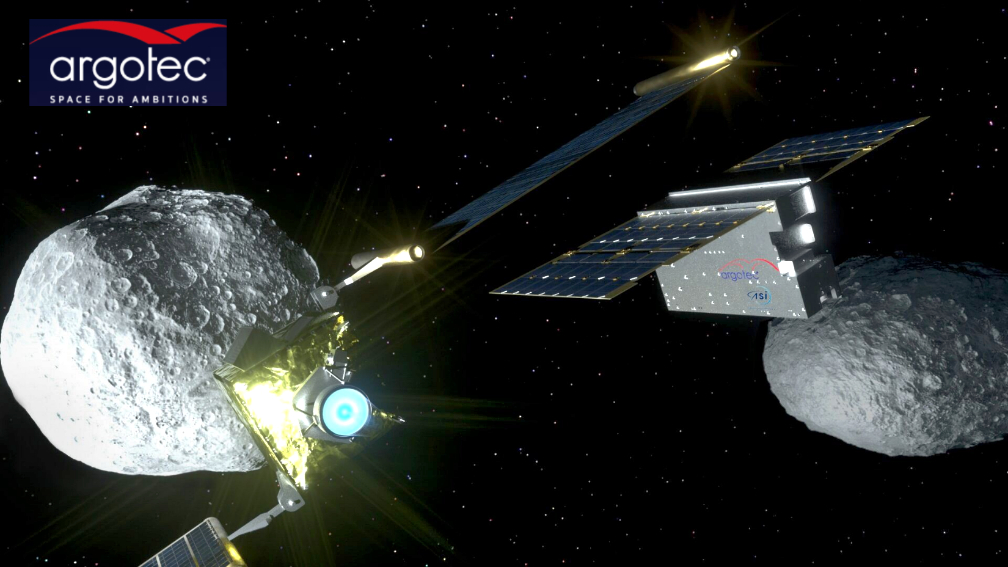
LICIACube, funded by the Italian Space Agency, was part of NASA’s Double Asteroid Redirection Test mission, the first attempt to target, impact and move an asteroid in space, in September 2022. The smallsat was the only secondary mission aboard NASA DART and its objective was to document the impact between the DART probe and the asteroid Dimorphos. LICIACube is the first deep space smallsat to attempt such a mission.

Argotec’s Mission Control Center recorded LICIACube performing an asteroid fly-by at 4.35 miles per second, or more than 15,650 m.p.h., under fully autonomous navigation. The smallsat took 627 photos showing debris streaming from Dimorphos.

Argotec recently announced a multimillion-dollar investment to start operations and build a facility in Largo, Maryland. The AIAA award speaks to Argotec’s commitment and the results the company is already achieving in the U.S. market.

Furthermore, Argotec has begun construction on the firm’s new SpacePark in Turin, Italy, to be completed by early 2025. The new facility will include nearly 120,000 square feet of covered space for a highly automated production plant and more than 180,000 square feet of green space as part of Argotec’s commitment to sustainability.

“With LICIACube, we once again demonstrated the incredible performance and reliability of our platform. This award recognizes the hard work and technical expertise of the Argotec team. And we are excited for our continued work on projects and missions in LEO and deep space, especially as we expand our presence in the United States.” — David Avino, Argotec CEO and founder

Filed Under: News

SpaceX readies Falcon 9 for Wednesday launch of 22 Starlink smallsats

August 17, 2023 by editorial

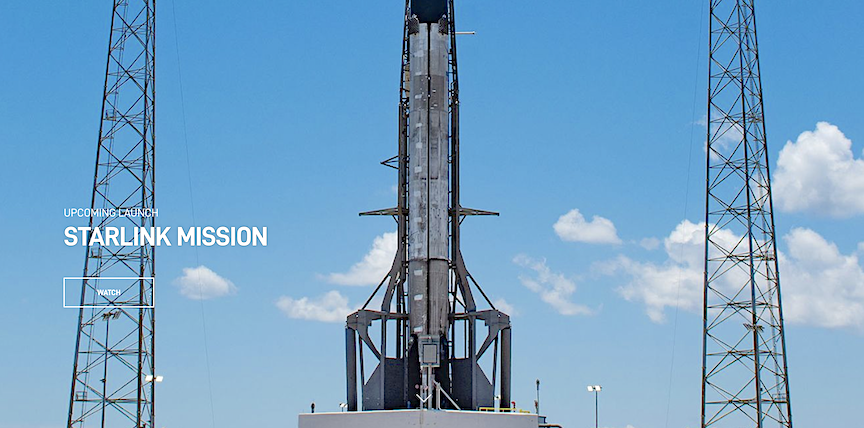
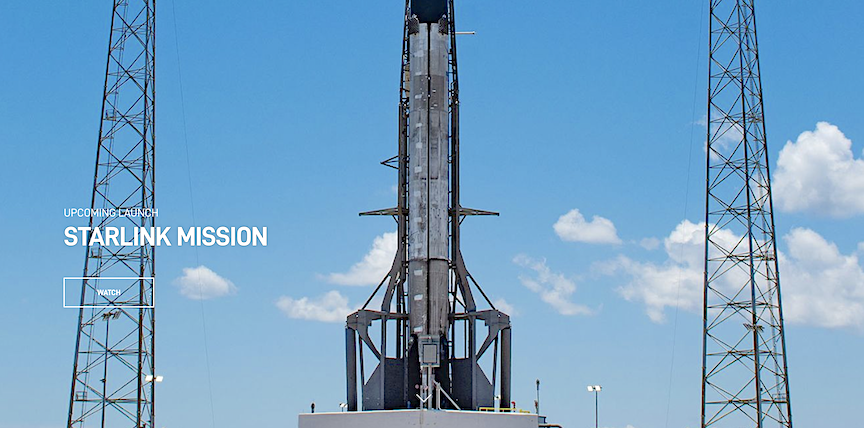
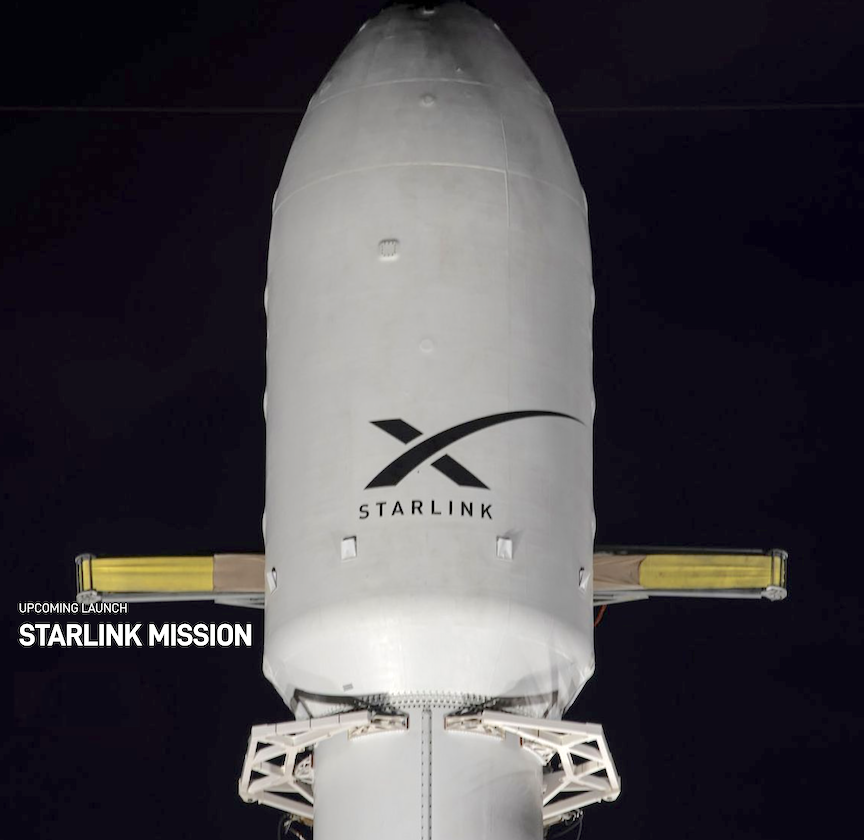
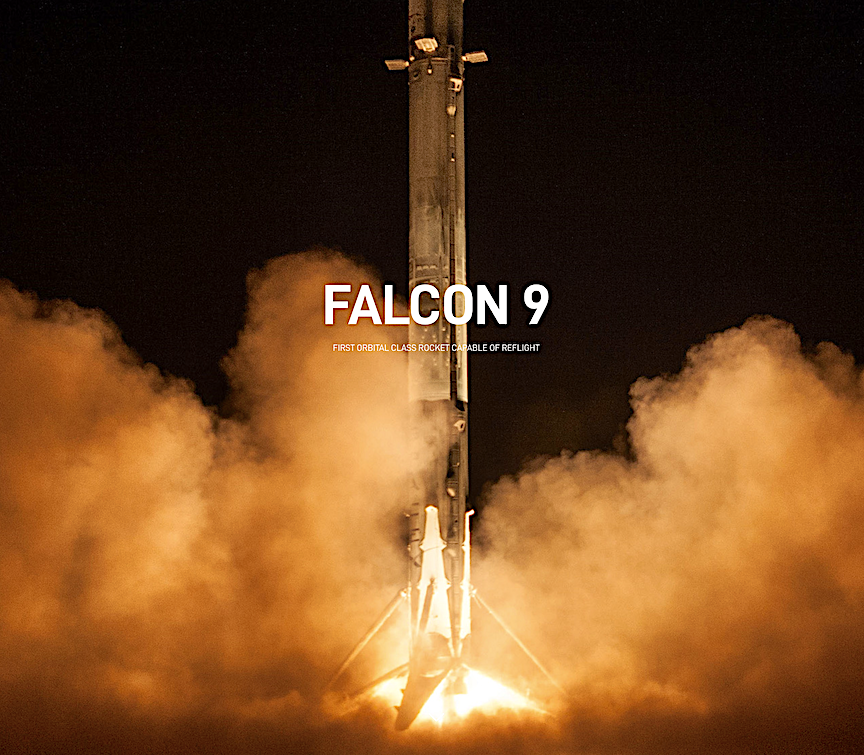
SpaceX is targeting Wednesday, August 16 at 1:42 a.m., ET, (08:42 UTC on August 17) for a Falcon 9 launch of 22 Starlink satellites to low-Earth orbit from Space Launch Complex 4E (SLC-4E) at Cape Canaveral Space Force Station in Florida.

If needed, four additional opportunities are available starting at 9:07 p.m. ET (1:07 UTC on August 17) until 12:00 a.m. ET on August 17 (4:00 UTC). Four backup opportunities are also currently available on Thursday, August 17 starting at 7:49 p.m. ET (23:49 UTC) until 11:11 p.m. ET (3:11 UTC on August 18).

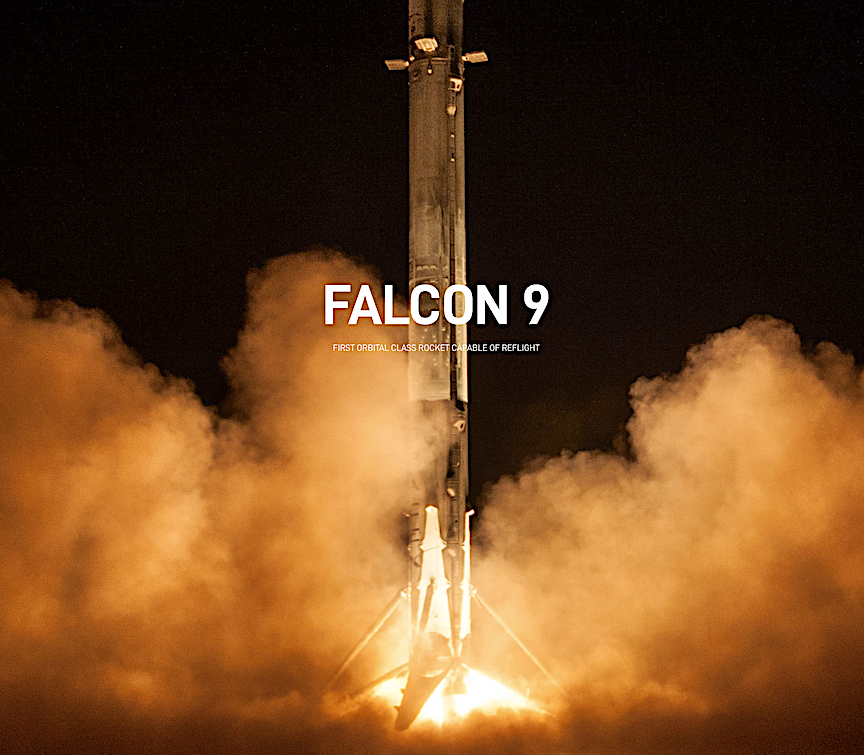
This is the 13th flight for the first stage booster supporting this mission, which previously launched CRS-22, Crew-3, Turksat 5B, Crew-4, CRS-25, Eutelsat HOTBIRD 13G, mPOWER-a, PSN SATRIA, and four Starlink missions. Following stage separation, the first stage will land on the A Shortfall of Gravitas droneship, which will be stationed in the Atlantic Ocean.

Filed Under: News

SpaceX readies Falcon 9 for Wednesday launch of 22 Starlink smallsats

August 16, 2023 by editorial

SpaceX is targeting Wednesday, August 16 at 8:14 p.m. ET (00:14 UTC on August 17) for a Falcon 9 launch of 22 Starlink satellites to low-Earth orbit from Space Launch Complex 40 (SLC-40) at Cape Canaveral Space Force Station in Florida.

If needed, four additional opportunities are available starting at 9:07 p.m. ET (1:07 UTC on August 17) until 12:00 a.m. ET on August 17 (4:00 UTC). Four backup opportunities are also currently available on Thursday, August 17 starting at 7:49 p.m. ET (23:49 UTC) until 11:11 p.m. ET (3:11 UTC on August 18).

This is the 13th flight for the first stage booster supporting this mission, which previously launched CRS-22, Crew-3, Turksat 5B, Crew-4, CRS-25, Eutelsat HOTBIRD 13G, mPOWER-a, PSN SATRIA, and four Starlink missions. Following stage separation, the first stage will land on the A Shortfall of Gravitas droneship, which will be stationed in the Atlantic Ocean.

Filed Under: News

Forrester’s Digest: AST SpaceMobile raises million$$$ in extra funding

August 16, 2023 by editorial

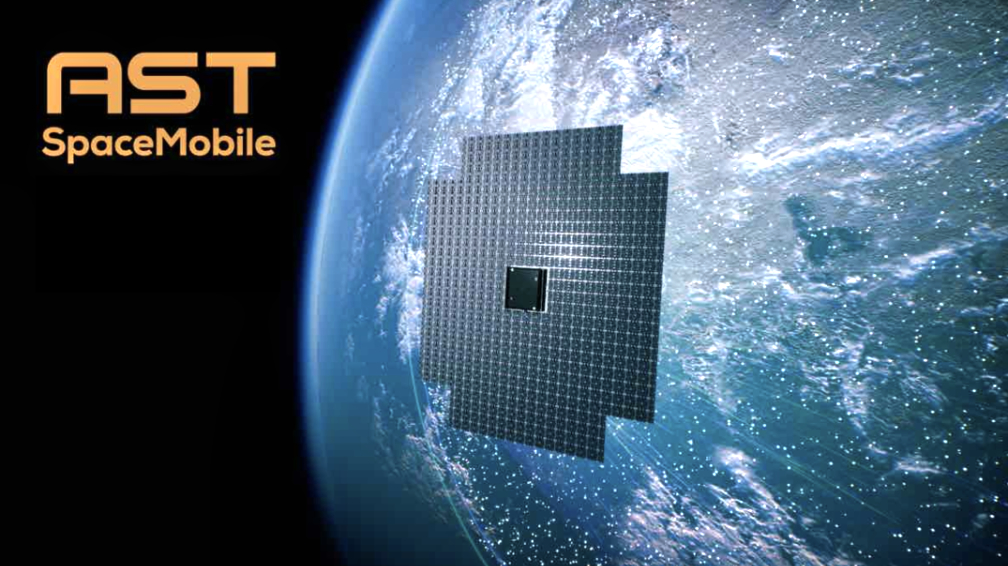
AST SpaceMobile is building what the company claims will be the “first and only” space-based cellular broadband network accessible directly by standard smart phones.

“AST SpaceMobile continues to make history. This quarter we achieved space-based 4G LTE cellular broadband capabilities to everyday smartphones, reaching speeds above 10 Mbps during BlueWalker 3 testing alongside AT&T, Vodafone and Nokia”, said Abel Avellan, Chairman/CEO of AST SpaceMobile, as the company reported their Q2 numbers. “We are now laser-focused on the manufacturing of our BlueBird satellites. The first five satellites are fully-funded with a planned launch in Q1 2024 as we target to offer initial commercial service in 2024.”

AST states the company has received “multiple offers” of outside investments.

“We are happy to announce the completion of a comprehensive financing package providing us up to $179 million of cash and liquidity”, said Sean Wallace, CFO/AST SpaceMobile. “This financing package is comprised of an up to $100 million Senior Secured Credit Facility and a $15 million Equipment-Backed Loan completed today, in addition to a $57 million previously announced common stock offering in June 2023 and $7 million raised under the ATM program during the second quarter of 2023.”

AST added that the firm has signed more than 40 Memorandums of Interest (MoI) and agreements with Mobile Network Operators (MNOs) and a potential 2.4 billion subscribers.

“As of June 30th 2023, we had cash, cash equivalents, and restricted cash of $191.5 million. After June 30, 2023, added incremental cash and liquidity of up to $115 million from an up to $100 million Senior Secured Credit Facility with an initial gross draw of $48.5 million and a $15 million Equipment-Backed Loan,” said the company.

Filed Under: News

Rocket Lab to launch a NASA research mission

August 15, 2023 by editorial

Rocket Lab USA, Inc. (Nasdaq: RKLB) has signed a double-launch deal with NASA to deliver the Agency’s climate change, research-focused mission, PREFIRE, to LEO in 2024.

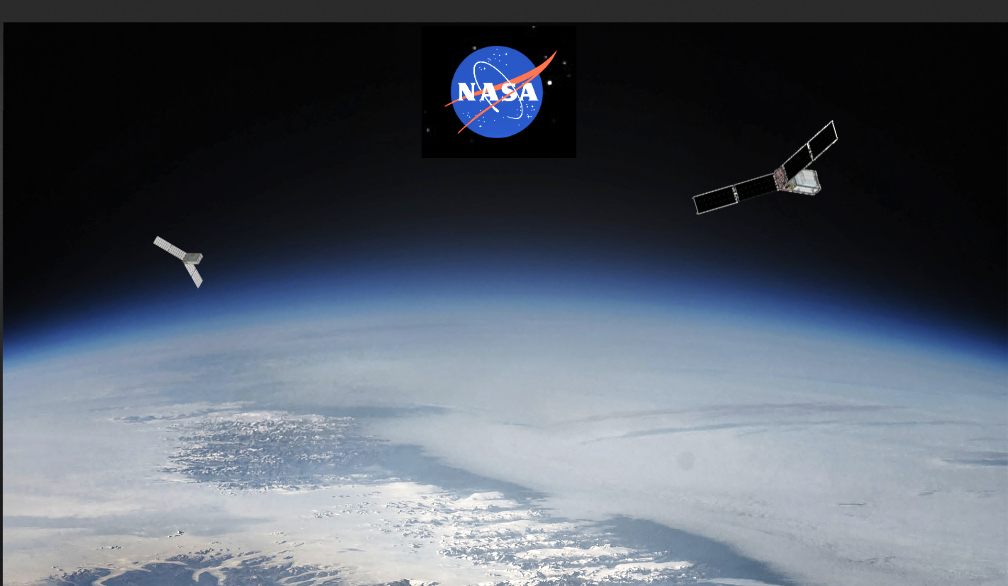
Artist’s concept of PREFIRE CubeSats in space. Image is courtesy of NASA/JPL.

The two dedicated missions on Electron will deploy one smallsat each to a 525 km. circular orbit from Rocket Lab Launch Complex 1 in New Zealand from May of 2024. The PREFIRE mission has specific LTAN (Local Time of the Ascending Node) requirements and a need for the second satellite to be deployed to space shortly after the first, which is made possible by Electron’s ability to deploy dedicated small satellite missions on highly responsive timelines. The launches will be the 7th and 8th missions Rocket Lab has launched for NASA since 2018.

Rocket Lab’s Launch Complex 1 in New Zealand. Photo is courtesy of the company.

NASA’s PREFIRE (Polar Radiant Energy in the Far-InfraRed Experiment) mission will help close a gap in understanding of how much of Earth’s heat is lost to space, especially from the Arctic and Antarctica. Analysis of PREFIRE’s measurements will inform climate and ice models, providing better projections of how a warming world will affect sea ice loss, ice sheet melt, and sea level rise. Improving climate models can ultimately help to provide more accurate projections on the impacts of storm severity and frequency, as well as coastal erosion and flooding. PREFIRE consists of two, 6U CubeSats with a baseline mission length of 10 months.

The PREFIRE mission was awarded to Rocket Lab through NASA’s Venture-class Acquisition of Dedicated and Rideshare (VADR) program, a $300 million dollar five-year contracting vehicle for placing NASA’s science and technology payloads on U.S. commercial launchers.

PREFIRE joins a long list of NASA missions awarded to Rocket Lab, including the CAPSTONE mission to the Moon on Rocket Lab’s Electron launch vehicle and Lunar Photon satellite bus, the back-to-back launches in May 2023 of the TROPICS satellites for NASA’s hurricane monitoring mission, and the NASA Starling mission launched last month on Rocket Lab’s most recent Electron recovery launch.

“Missions like these are core to the whole reason why Rocket Lab was founded in the first place – to open up access to space to improve life on Earth – and climate change is a hugely urgent cause for us all. It’s a privilege to be able to support this important mission and an honor to be a continued trusted launch provider for small satellite missions with big impact.” — Peter Beck, Founder and CEO, Rocket Lab

Filed Under: News

Warpspace selected for NEDO’s “SBIR Program” for FY2023

August 15, 2023 by editorial

Warpspace has reported that the company’s proposal, “Development of a modem and router to realize a multi-protocol platform for optical communications in space,” has been selected by the National Research and Development Agency New Energy and Industrial Technology Development Organization (NEDO) for the Japanese “SBIR Program” (one-stop-shop type) for fiscal year 2023.

Conventional communication methods, mainly radio frequencies, have a problem because data in space cannot be transmitted smoothly to the Earth. The company aims to solve this problem by realizing a near-real-time optical communication service in space using smallsats and contributing to disaster prevention and primary industry by increasing the number and speed of satellite data that can be provided on the ground to meet their data needs.

Through this project, Warpspace will develop optical communication modems and routers that are compatible and interoperable in satellite optical communication networks.

Following the Basic Plan for Space Policy approved by the Cabinet in 2020, Japan’s policy is strengthening the comprehensive infrastructure that supports space activities using optical communications. In this context, competition for satellite optical communication networks has begun with a large amount of public and private capital being invested worldwide, with the U.S. leading the way.

The market is demanding the expansion of nexgen space networks such as Beyond 5G or the internet in space, and compatibility and interoperability are required to connect all of these networks across the board.

In this context, Warpspace recognizes the need for spacecraft, such as satellites, to translate and relay each communication network protocol to link independently developed communication networks into a single network. The development of equipment with this function is the initiative adopted this time.

Based on the technology developed through this project, our company aims to become the hub of the entire satellite optical communication network and realize a grand space internet.

The “SBIR Program” in Japan supports the R&D and commercialization of small and medium-sized enterprises and start-up companies working on R&D themes presented by the relevant government agencies, aiming to solve social issues and accelerate Japan’s innovation. With the adoption of this project, the company aims to become a firm that further contributes to society by developing new technologies.

“We are heartened that our proposed optical router/modem project has been selected for the SBIR Program for FY2023. Japan is one of the few countries researching and developing inter-satellite optical communication technology. Industry, government, and academia in Europe and the United States are devoting significant resources to applying this technology to revolutionize data communications worldwide. We believe that our selection for the “SBIR Program” will give us the confidence and strong support to face the global market with technology from Japan. We will do our utmost to develop this technology to realize our vision of the future with optical communications.” — Hiromitsu Azuma, CEO, Warpspace

Filed Under: News

Telesat contracts MDA as Prime for advanced Telesat Lightspeed LEO constellation + now fully funded

August 14, 2023 by editorial

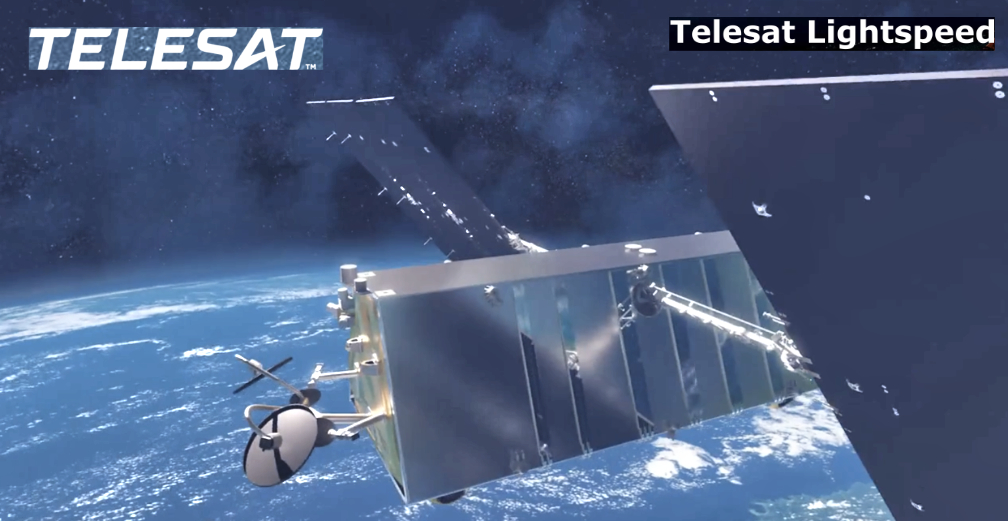
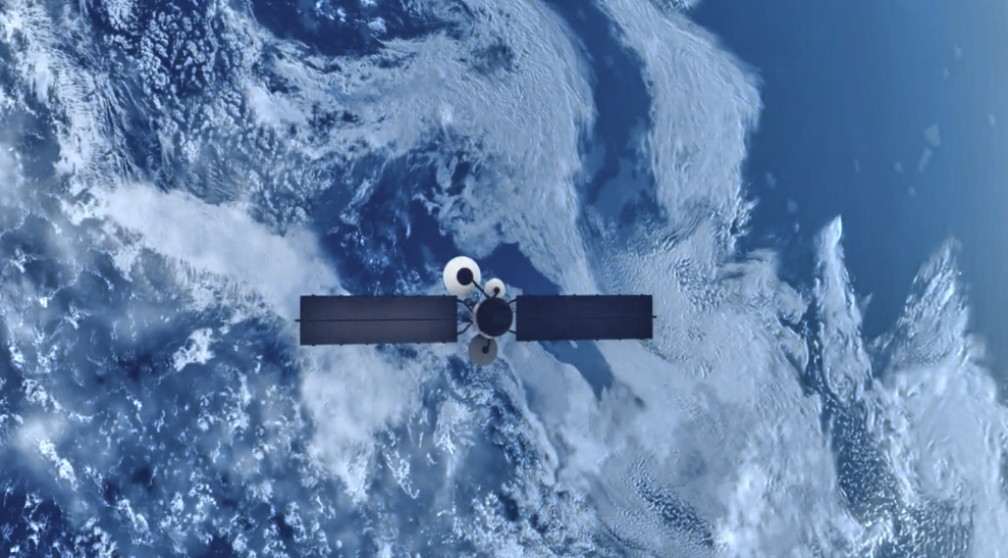
Telesat (NASDAQ and TSX: TSAT) has announced that MDA Ltd. (TSX: MDA) will build 198 advanced satellites for the Telesat Lightspeed Low Earth Orbit (LEO) program.

Telesat also announced that Telesat Lightspeed is now fully funded through global service delivery taking into account the company’s own equity contribution, certain vendor financing, and aggregate funding commitments from its Canadian federal and provincial government partners.

By taking advantage of key technology advances, including MDA’s digital beamforming array antennas and integrated regenerative processor, the re-designed Telesat Lightspeed network will achieve increased network efficiency and enhanced flexibility to focus and dynamically deliver capacity to users. These technology advances allow each satellite to be slightly smaller than the satellites Telesat was previously considering while still maintaining the highest levels of service performance, resiliency and overall usable capacity in the network.

Importantly, these state-of-the art satellites are also highly cost effective, resulting in an anticipated total capital cost savings for the 198-satellite program of approximately $2 billion compared to Telesat’s prior capital estimate. This substantial savings facilitates the funding of the program and meaningfully improves what were already compelling projected financial returns.

Leveraging Telesat’s 54 year history of engineering excellence, the Telesat Lightspeed network was designed from inception to serve the demanding, mission-critical connectivity requirements of enterprise and government users. Service offerings for the optically-linked mesh network in space include multi-Gbps data links, Layer 2 MEF 3.0 standards, and highly secure, resilient, low-latency broadband connectivity anywhere in the world. With the signing of this contract, the Telesat Lightspeed program begins immediately, with satellite launches scheduled to commence in mid-2026 and polar and global services scheduled to begin in late 2027.

“I’m incredibly proud of the Telesat team for their innovative work to further optimize our Telesat Lightspeed design – which was already a highly advanced and high performing LEO network – resulting in dramatically reduced costs with unmatched enterprise-class service offerings,” stated . “MDA is a world class satellite prime contractor with an impressive track record and a number of recent high profile, strategic space programs announced, and it is a privilege to be working side-by-side with them on the flagship, game-changing Telesat Lightspeed constellation. MDA’s deep expertise as a LEO prime contractor, as well our own leading expertise in satellite operations and systems engineering, gives us the highest level of confidence in meeting our objectives.” — Dan Goldberg, President and CEO, Telesat

“True to our values, MDA has been committed to being a trusted Telesat Lightspeed mission partner since the beginning, and our proven performance as a LEO constellation satellite prime contractor will now be leveraged to take the constellation forward,” said . “We believe in Telesat’s mission and vision and are excited that our software-defined digital satellite product will be a key enabler in meeting their goals as we work together to usher in the next generation of space-based satellite communications.” — Mike Greenley, CEO, MDA

Telesat Lightspeed Program Funding

Telesat now has in place aggregate funding commitments from its Canadian federal and provincial government partners in the combined amount of up to approximately $2 billion, demonstrating their strong commitment and confidence in the program and the importance of the New Space Economy for Canada. The finalization of this funding is dependent on a number of conditions, including completion of confirmatory due diligence and the conclusion of definitive agreements.

This funding, combined with Telesat’s own approximately $1.6 billion equity contribution, as well as certain vendor financing, would provide the Telesat Lightspeed program with sufficient funds to launch global service, which will occur once the first 156 satellites are in orbit. Telesat will continue adding satellites that are funded using Telesat Lightspeed cash flow to complete the initial 198 satellite constellation. In addition to the approximately $2 billion in anticipated capital savings, Telesat also expects substantial savings due to significantly reduced financing costs relative to the company’s prior plan.

The capital investment for the Telesat Lightspeed program is approximately $3.5 billion and includes 198 Telesat Lightspeed satellites, satellite launch vehicles, a global ground network of landing stations and operations centers, business and operations support systems, and expenditures to support the further development of a portfolio of user terminals for Telesat’s target markets.

Telesat Lightspeed is the largest space program ever conceived in Canada and will be among the most innovative, cutting-edge broadband satellite networks in the world. MDA will manufacture the Telesat Lightspeed satellites in its state-of-the-art satellite systems design and high-volume manufacturing facilities in Quebec. The program will help bridge the digital divide, create and maintain approximately 2,000 high-quality Canadian jobs, spur Canadian-driven innovation and the development of valuable intellectual property, generate billions of dollars in economic growth, and drive domestic investment and exports.

“As a global leader in the new space economy, Canada is proud to see two domestic champions join forces on this flagship Canadian program to create high-skilled jobs and support cutting-edge innovation in the telecom industry, helping unlock economic and social opportunities in Canada’s rural and remote communities. Canada remains a strong supporter of Telesat Lightspeed and will continue to help solve some of the most pressing challenges we face here on Earth, from bridging the digital divide, to health, climate change, national security, and more.” — The Honorable François-Philippe Champagne, Minister of Innovation, Science and Industry

“We are grateful and proud to have the strong support of the Governments of Canada, Quebec and Ontario in the Telesat Lightspeed program.” — Dan Goldberg, President and CEO, Telesat

Filed Under: Featured, News

Germany’s DCUBED to be the first “disruptive enabling technology” demonstrating in-space manufacturing

August 13, 2023 by editorial

DCUBED, the German NewSpace hardware manufacturer, announced it will demonstrate in-space manufacturing as part of a demonstration mission expected in Q1 2024. This will be the first time ever that a product has been manufactured in free space.

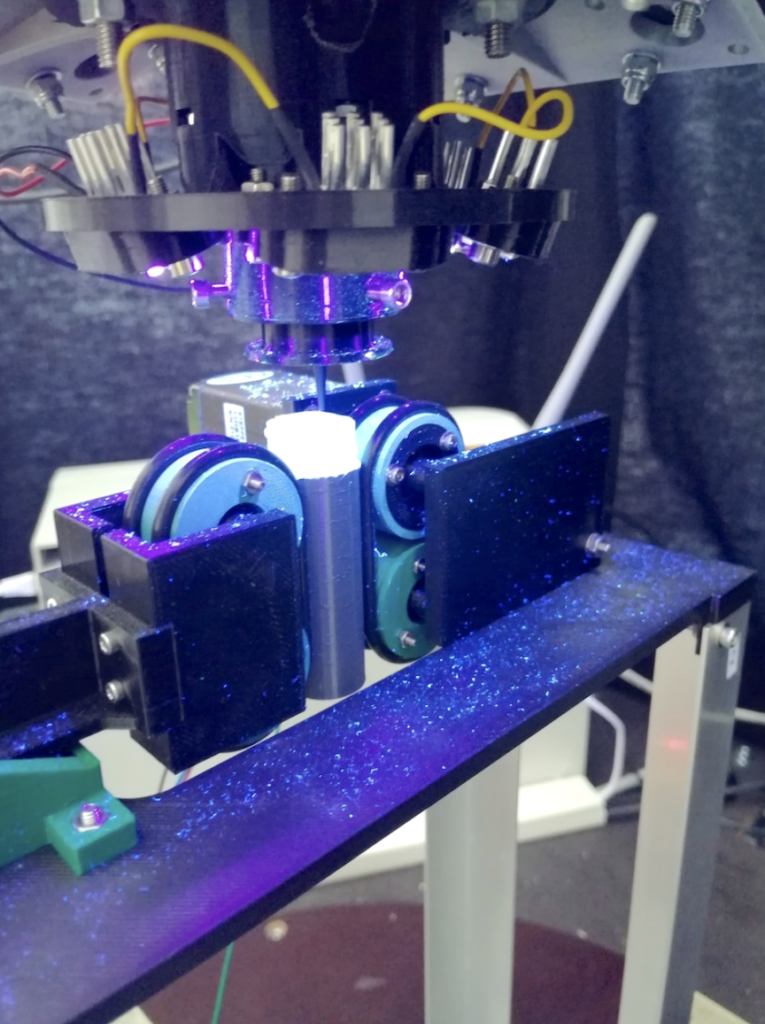
The demonstration will see the production of a roughly 30 centimeter high, 3D printed truss structure, and is designed to prove the efficacy of in-space manufacturing and highlight the game-changing potential that such capabilities promise to deliver for production in-orbit.

Revolutionizing Space Exploration: In-Space Manufacturing with DCUBED

“Payload limitations and costs are real barriers hindering the use of space for the benefit of mankind. There is an urgent need for large structures in orbit to support an ecosystem providing services as diverse as internet from space, IoT, and Earth observation. The establishment of our new key business division shows that we at DCUBED always want to push the boundaries of what is possible, enabling our partners and customers to think big in space. Our demonstration of manufacturing in free space promises to revolutionize in-space fabrication and repair of space structures and trigger a paradigm shift in how we approach the production of space hardware, opening many doors which we can’t even imagine right now. This is a truly disruptive enabling technology.” Dr. Thomas Sinn, CEO & Founder, DCUBED.

The upcoming demonstration is a major milestone in DCUBED’s efforts towards establishing in-space manufacturing capabilities for larger space structures, especially for SmallSat applications, due to be demonstrated by the company in the next couple of years. This program includes an in-orbit experiment of truss-structure manufacturing in 2025 and an in-orbit mission demonstration, in 2026, for a multiple kilowatt (KW) SmallSat solar arrays.

A space mechanism builder with 15 products already in orbit, DCUBED, which is headquartered outside Munich, Germany, is establishing an office in Broomfield, Colorado, an ideal location within the key United States space market.

Filed Under: News

SCOUT awarded million$ by SpaceWERX

August 11, 2023 by editorial

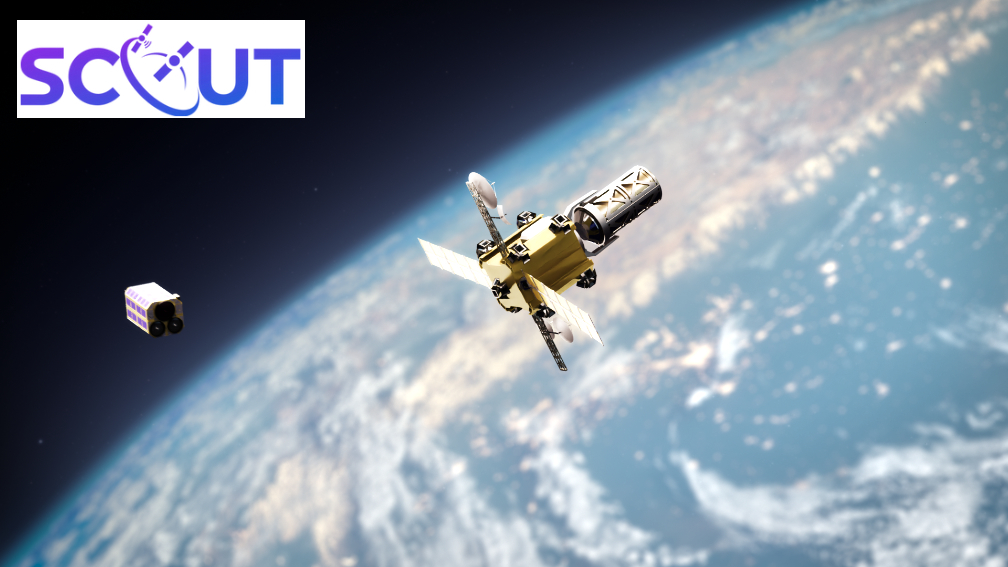
SCOUT Space Inc. has been selected by SpaceWERX for a Phase II STTR (Small Business Technology Transfer) in the amount of $1.5 million, focused on “Robust Cross-Domain Optical Navigation with Space-Based Sensors” to address the most pressing challenges in the Department of the Air Force (DAF).

SCOUT was awarded the Phase II Orbital Prime STTR in collaboration with Stanford University’s Space Rendezvous Laboratory (SLAB), founded and led by Professor Simone D’Amico.

SCOUT will collaborate with SLAB to enhance Space Mobility and Logistics capabilities by exploring the boundary between characterization of resolved and non-resolved imagery, and working to bridge it for space-based sensing.

The Air Force Research Laboratory and AFWERX have partnered to streamline the Small Business Innovation Research (SBIR) and STTR process by accelerating the small business experience through faster proposal to award timelines, changing the pool of potential applicants by expanding opportunities to small business and eliminating bureaucratic overhead by continually implementing process improvement changes in contract execution.

The DAF began offering the Open Topic SBIR/STTR program in 2018 which expanded the range of innovations the DAF funded and now, SCOUT Space will start its journey to create and provide innovative capabilities that will strengthen the national defense of the United States of America.

“The characterization of location, motion, and other data of objects in space for space domain awareness requires well-defined processes for processing sensor data. Our work with Prof. D’Amico’s lab is exciting because it lets us tackle an environment – the semi-resolved domain – which is very indeterminate today, and in which few algorithms are proven. We hope to facilitate decision-making across the entire range of rendezvous and proximity operations by achieving continuity and convergence in state estimation from these different phenomenologies.” — Sergio Gallucci, Co-Founder and CTO, SCOUT

“We are poised to increase the technology readiness level of new algorithms at the intersection of astrodynamics, nonlinear estimation, and machine learning to enable new mission concepts in the area of In-Space Servicing, Assembly, and Manufacturing (ISAM). The US Space Force and SCOUT are giving us a unique opportunity to reach flight readiness with spacecraft navigation technologies that would have normally taken several years to accomplish.” — Professor Simone D’Amico, Founder and Director, SLAB

Filed Under: News

SpaceX’s Falcon 9 launch of Starlink V2 mini small sats delayed and rescheduled

August 11, 2023 by editorial

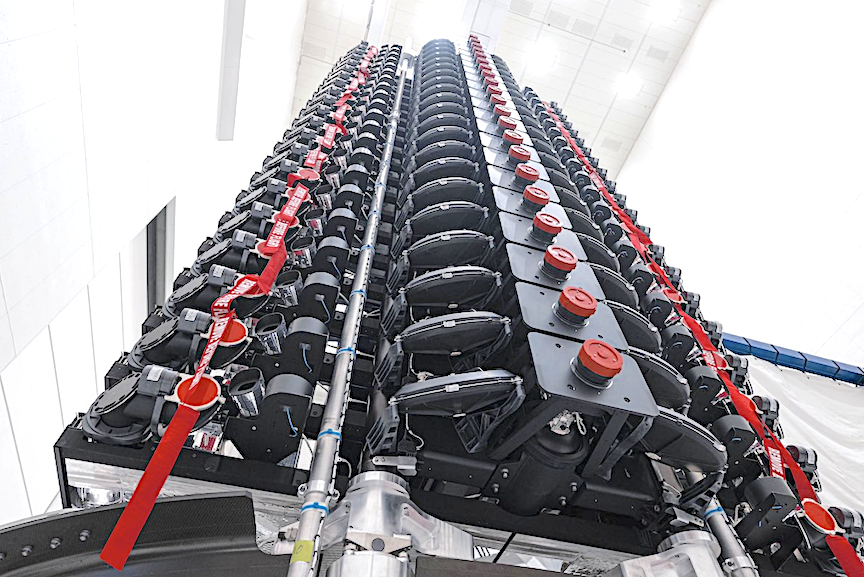
SpaceX‘s Falcon 9 rocket originally scheduled to launch 22 of the second-generation “V2” mini satellites, that are larger and have four times the bandwidth of the previous models, is now rescheduled to 12:27 a.m. EDT (0427 UTC) early Friday morning. The 22 Starlink satellites will head into low-Earth orbit from Space Launch Complex 40 (SLC-40) at Cape Canaveral Space Force Station in Florida.

SpaceX’s photo of its Starlink V2 Mini satellites at Cape Canaveral.

If needed, an additional launch opportunity is available at 1:17 a.m. ET (5:17 UTC). Five backup opportunities are also currently available on Friday, August 11 starting at 9:30 p.m. ET (1:30 UTC on August 12) until 12:52 a.m. ET on August 12 (4:52 UTC). This will be the 11th launch of the V2 minis.

The company’s internet service is available in more than 60 countries and has more than 1.5 million subscribers according to reports in May of this year.

The first stage booster previously launched the Cargo Dragon CRS-24, Eutelsat Hotbird 13F, OneWeb 1, and SES-18/SES-19 missions, plus four Starlink deployment flights. Its last flight was the Starlink 5-12 mission on June 23, 2023.

After separating from the second stage about two and a half minutes into flight, the first stage booster, that had previously flown the Crew-6, SES O3b mPOWER and the Starlink 4-4 mission, will target landing on the drone ship, Just Read the Instructions stationed east of the Bahamas in the Atlantic. The booster’s last launch was 37 days ago.

The booster had previously flown the Crew-6, SES O3b mPOWER and the Starlink 4-4 missions. Its last launch was 37 days ago.

Filed Under: News

  • « Go to Previous Page
  • Page 1
  • Interim pages omitted …
  • Page 105
  • Page 106
  • Page 107
  • Page 108
  • Page 109
  • Interim pages omitted …
  • Page 339
  • Go to Next Page »

Primary Sidebar

WEEKLY NEWSLETTER

Archives

  • September 2026
  • August 2026
  • July 2026
  • June 2026
  • May 2026
  • April 2026
  • March 2026
  • February 2026
  • January 2026
  • December 2025
  • November 2025
  • October 2025
  • September 2025
  • August 2025
  • July 2025
  • June 2025
  • May 2025
  • April 2025
  • March 2025
  • February 2025
  • January 2025
  • December 2024
  • November 2024
  • October 2024
  • September 2024
  • August 2024
  • July 2024
  • June 2024
  • May 2024
  • April 2024
  • March 2024
  • February 2024
  • January 2024
  • December 2023
  • November 2023
  • October 2023
  • September 2023
  • August 2023
  • July 2023
  • June 2023
  • May 2023
  • April 2023
  • March 2023
  • February 2023
  • January 2023
  • December 2022
  • November 2022
  • October 2022
  • September 2022
  • August 2022
  • July 2022
  • June 2022
  • May 2022
  • April 2022
  • March 2022
  • February 2022
  • January 2022
  • December 2021
  • November 2021
  • October 2021
  • September 2021
  • August 2021
  • July 2021
  • June 2021
  • May 2021
  • April 2021
  • March 2021
  • February 2021
  • January 2021
  • December 2020
  • November 2020
  • October 2020
  • September 2020
  • August 2020
  • July 2020
  • June 2020
  • May 2020
  • April 2020
  • March 2020
  • February 2020
  • January 2020
  • December 2019
  • November 2019
  • October 2019

© 2019–2026 SatNews

Insert/edit link

Enter the destination URL

Or link to existing content

    No search term specified. Showing recent items. Search or use up and down arrow keys to select an item.
      x
      Sign Up Now!

      Enjoy a free weekly newsletter with recent headlines from the global SmallSat industry.

      Invalid email address
      We promise not to spam you. You can unsubscribe at any time.
      Thanks for subscribing! You will now receive weekly SmallSat News updates.
      We love our advertisers.
      And you will too!

      Please disable Ad Blocker to continue... We promise to keep it unobtrusive.
      We promise not to spam you. You can unsubscribe at any time.
      Invalid email address
      Thanks for subscribing!