• Skip to main content
  • Skip to primary sidebar
  • Home
  • News
  • Featured
  • More News ⌄
    • SatNews
    • SatMagazine
    • MilSatMagazine
  • Events ⌄
    • MilSat Symposium
    • SmallSat Symposium
    • Satellite Innovation
  • Contacts
  • SUBSCRIPTION

SmallSat News

You are here: Home / Archives for News

News

Bright Ascension’s new product suite

August 3, 2023 by editorial

Bright Ascension Ltd. expects to release significantly more information on the firm’s upcoming product suite launch at the Small Satellites Conference in Logan, Utah, at Booth 194, from August 5th through 10th.

2023 has been the busiest year for Bright Ascension, with ten software deployments launched onboard three SpaceX rockets in the first half of the year. The satellites, developed for a diverse mix of applications, ranged from tracking hidden maritime activity for increased intelligence capability to delivering hyperspectral imaging data to benefit the agricultural sector. These satellites comprise the highest number of the company’s software deployments that have been launched within any six month period and take Bright Ascension’s current total to 44 spacecraft on-orbit.

The 2023 SpaceX Transporter launches are an important steppingstone to building and solidifying Bright Ascension’s flight heritage and credibility within the sector ahead of the highly anticipated launch of its innovative suite of end-to-end space software products later in the year.

Bright Ascension is introducing a complete, new product suite covering the entire space system, from spacecraft flight software and ground operations systems, to service management products and data-insights applications. Harnessing the power of integration and in-built scalability, this end-to-end space software solution will enable operators and space-based service providers to maximize their mission potential by making full use of available assets and save significant costs across development, operations and data delivery.

“So far, any information about our upcoming product suite launch has been a closely guarded secret. We’ve had an incredibly productive first half of 2023 with ten satellite launches and breakthrough product development, and we feel now the time is right to share more detail on our new, innovative and truly unique product suite. Make sure to meet the team at the SmallSat Conference in Utah to find out what sort of savings our new products can give your mission in terms of cost, effort and time.” — Peter Mendham, CEO, Bright Ascension

Bright Ascension will be exhibiting on Booth 194 at the Small Satellites Conference in Logan, Utah, on August, 5-10.


Filed Under: News

Satcom Direct + Gilat sign a strategic agreement

August 2, 2023 by editorial

Satcom Direct and Gilat Satellite Networks Ltd. (Nasdaq: GILT, TASE: GILT) have signed a strategic agreement to develop and supply new, ultra-low profile, electronically steered antennas (ESA) to support in-flight connectivity (IFC) for business, government, and defense.

Available from 2025, and designed for optimized compatibility with the OneWeb LEO constellation, the hardware strengthens the Plane Simple® Antenna Series portfolio with the addition of the Gilat advanced ESA that will unlock the full broadband potential of OneWeb.

The collaboration will see Gilat develop the antenna system while Satcom Direct Avionics will work with OneWeb to develop the SD Modem Unit to harness the full potential of the LEO constellation. To meet soaring data demands, customers will also benefit from the antenna’s full-duplex performance, a key capability in a small-form, power efficient device that allows data to be sent and received simultaneously.

This ESA terminal, including the radome, will aim to provide an industry-leading compact form factor (around 2.5 inches or 64 millimeters) that will unlock the highest possible bandwidth from the OneWeb network. The addition to the Plane Simple antenna series reflects the SD agnostic philosophy, which enables customized connectivity solutions tailored for every mission requirement with a common terminal architecture, simplified upgrades, and flexible pricing plans.

“We already have a strong relationship with OneWeb and have engaged with Gilat, due to their long SATCOM, aviation, and radio frequency pedigree, to create the next generation ESA in support of creating a solution that provides more options to our customers seeking reliable high-speed connectivity or additional redundancy. The ESA terminal will provide genuine global coverage and superior bandwidth performance, complemented by ease of installation. This most advanced terminal will also address customer requests to lower aircraft drag, weight and fuel burn. We’re excited to add this new state-of-the-art antenna from Gilat to our portfolio. We know customers will welcome the reality of the truly global coverage from such a small format terminal.” — Chris Moore, President, Satcom Direct

“We are honored to have been selected by Satcom Direct to provide them with our expertise to develop this new ESA product. Together, we will create a next-generation ESA to support the dynamic connectivity demands of the global business aviation sector with a best-in-class antenna. The agreement gives us the opportunity to expand our proven technology know-how in commercial aviation and to showcase our expertise alongside Satcom Direct, the only company dedicated to delivering satcom connectivity to business and government aviation worldwide. It is a major milestone for Gilat as we extend our global IFC leadership in commercial aviation to business aviation, as well as into our strategic focus area in government and defense.” — Adi Sfadia, CEO, Gilat

“The combined expertise of Satcom Direct Avionics, Gilat and OneWeb will deliver customers faster, more consistent broadband services across the globe. In the dynamic connectivity landscape, it is essential we team with premium partners, which is why we’re delighted to be part of this powerful offering as we reinforce our presence and service in the business aviation sector.” — Neil Masterson, CEO, OneWeb

Filed Under: Featured, News

Astroscale partners with Astro Digital US

August 2, 2023 by editorial

Astroscale has a new partnership with Astro Digital US Inc. that will see Astroscale’s Generation 2 Docking Plate incorporated into Astro Digital’s modular satellite bus for end-of-life (EOL) servicing preparation.

Astroscale’s Gen 2 Docking Plate offers a new benchmark for on-orbit servicing and promises to usher in a new era of responsible, sustainable and smart satellite operations in space, aligning with international best practices and guidelines. Astro Digital is set to receive its first Astroscale Docking Plate for integration later this year, with launch expected in Q4 2024.

Astroscale’s Docking Plate and end-of-life services provide bus manufacturers and satellite operators with a solution for striking a balance between developing and growing our activities in space while ensuring space remains viable for future generations.

“We are excited to deliver our Gen 2 Docking Plate to Astro Digital. Equipping their platforms with the Astroscale Docking Plate demonstrates leadership among bus manufacturers to provide a spacecraft that is ready for potential servicing or removal, allowing satellite operators to remain flexible and act responsibly in space. With the Docking Plate in place, on-orbit servicing spacecraft such as Astroscale’s ELSA-M servicer can securely dock with the client satellite and relocate it or remove it from orbit for safe and simple disposal, offering a low-risk, practical and future-proof solution for the industry.” — Andrew Faiola, Commercial Director, Astroscale Ltd.

“We want to empower and accelerate innovative companies and their space-based initiatives. At the same time, Astro Digital and our customers want to operate responsibly and ensure that space remains viable in the future. We see space debris mitigation as a crucial activity for sustainable space, and we recognise that Astro Digital has a role to play. Incorporating Astroscale’s Docking Plate into our satellite bus design supports our goals of being responsible operators. The simple and compatible design allows easy integration, making it straightforward for us to enable our customers to keep space sustainability alongside their day-to-day operations.” — Chris Biddy, Co-Founder and CEO, Astro Digital US Inc.

Filed Under: News

ISRO: The PSLV-C56 / DS-SAR mission successfully accomplished

August 1, 2023 by editorial

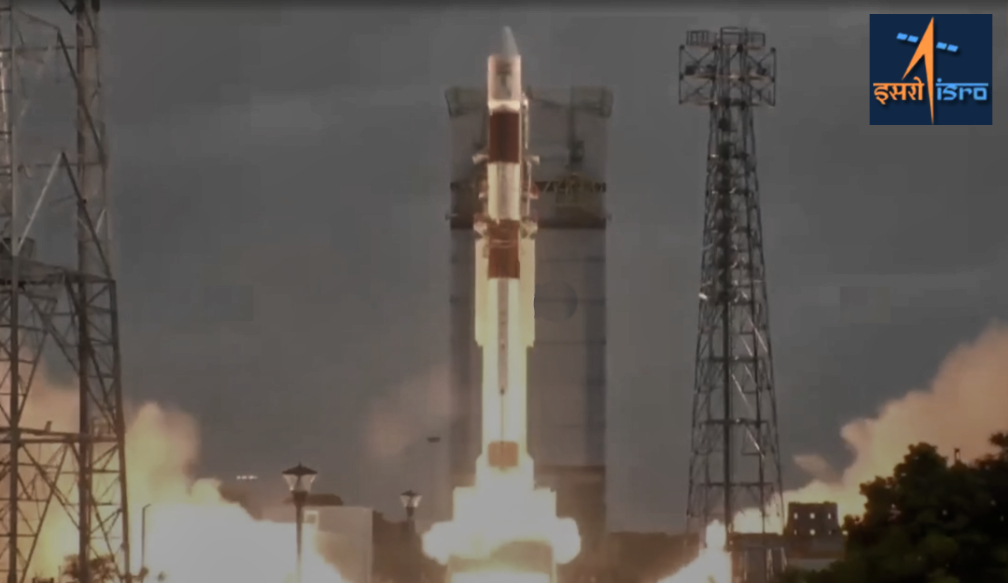
The launch of PSLV-C56, carrying the DS-SAR satellite along with six co-passengers from the first launch-pad at SDSC-SHAR, Sriharikota, was accomplished successfully by ISRO on July 30, 2023, at 06:30 hrs IST. The DS-SAR radar satellite was developed and produced by Israel Aerospace Industries (IAI).

First launch pad SDSC-SHAR, Sriharikota. Photo is courtesy of ISRO.

PSLV-C56 was configured in its core-alone mode, similar to that of C55. The DS-SAR, a 360 kg. satellite, was launched into a Near Equatorial Orbit (NEO) at 5 degrees inclination and at an altitude of 535 km.

The DS-SAR satellite was developed under a partnership between DSTA (representing the Government of Singapore) and ST Engineering. Once deployed and operational, it will be used to support the satellite imagery requirements of various agencies within the Government of Singapore. ST Engineering will use the satellite for multi-modal and higher responsiveness imagery and geospatial services for their commercial customers.

DS-SAR carries a Synthetic Aperture Radar (SAR) payload developed by Israel Aerospace Industries (IAI). This allows the DS-SAR to provide for all-weather day and night coverage, and capable of imaging at 1 meter resolution at full polarimetry.

The co-passengers for this mission were…

  • VELOX-AM, a 23 kg. technology demonstration smallsat.
  • ARCADE Atmospheric Coupling and Dynamics Explorer (ARCADE), an experimental satellite
  • SCOOB-II , a 3U smallsat flying a technology demonstrator payload
  • NuLIoN by NuSpace, an advanced 3U smallsat enabling seamless IoT connectivity in urban and remote locations.
  • Galassia-2, a 3U nanosatellite that will be orbiting at LEO.
  • ORB-12 STRIDER , satellite developed under an International collaboration

Tests have begun on the IAI DS-SAR satellite built for Singapore’s military and commercial use which entered orbit on July 30th. and transmitted the first data to the ground station. The satellite will be handed over to its Singaporean customers at the end of testing.

The DS-SAR satellite builds on IAI’s experience in developing observation satellites such as OptSat and TecSAR, which have been developed in new generations for 35 years. The synthetic aperture radar sensor payload is designed to enable the collection of a wide range of data, in terms of both coverage and resolution, day and night, and under all weather conditions.

The satellite will be used for maritime surveillance with the Singapore Ministry of Defence’s Defence Science and Technology Agency and provide commercial services through ST Electronics alongside TELEOS 1 Earth Observation.

Filed Under: News

Skykraft’s first ever air traffic management with space-based VHF communication

August 1, 2023 by editorial

 A world first trial of space-based VHF voice communications has been successfully completed by Skykraft as part of their development of satellites to provide space-based aviation communications and surveillance services. This trial supports the work on operational space-based aviation VHF services leading up to the World Radio Congress 2023 (WRC-23). 
  

Voice radio communications in the VHF band are used for communications between pilots and air traffic controllers. VHF radios are standard aircraft equipment around the world and are vital in ensuring the safety of air travel. Currently, VHF voice communications services are only available when the aircraft is within range of a ground-based radio. This means that large areas of the Earth’s surface, including much of the world’s oceans, are not covered.  

Skykraft’s space-based Air Traffic Management Service

Skykraft’s trial of space-based voice communications in the VHF aviation band demonstrates the feasibility of satellite communication directly with aircraft using existing equipment. The use of satellites in place of ground-based radio systems will enable global real-time communications between pilots and air traffic controllers for the first time.  

The testing took place in the southern area of Australia’s Flight Information Region. Skykraft worked in collaboration with Airservices Australia to implement appropriate test protocols that ensured that there was no interference to the operational Air Traffic Management (ATM) system. 

“We are proud to have taken another step to bringing this world-first capability to market,” said Dr. Michael Frater, CEO of Skykraft.  

Artist’s impression of Skykraft’s satellite in orbit. Image credit: Skykraft

“VHF voice and data communication that covers the entire extent of an aircraft’s journey is the missing piece for Air Traffic Management and will unlock efficiency gains globally.”  

The five satellites used for this trial of VHF voice services have undergone six weeks of successful operational testing prior to the trials of space-based ATM services. Skykraft’s initial constellation continues to be under rapid development with two launches already in 2023, and more planned for 2024. 

“The success of the current round of test activities is a tribute to the capabilities of the engineering team at Skykraft. We recognized the need to deliver these space-based ATM services to ANSPs (Air Navigation Service Providers) as soon as possible and our team of engineers, project managers andtechnicians has delivered” noted Mark Skidmore, Chair of Skykraft. 

Skykraft’s Air Traffic Management Constellation 

Skykraft is developing a constellation of more than 200 satellites in low-Earth orbit to provide global ATM services from space, providing: 

  • Surveillance services using ADS-B and UAT. 
  • Multilateration services for:
    • validation of ADS-B and UAT messages received from aircraft, and 
    • independent aircraft position data in the event of GNSS failure. 
  • VHF voice communications. 
  • VHF data communications. 

Skykraft’s initial constellation will enter service in 2025.  

A highlight of Skykraft’s next space mission in Q2 2024 will be a demonstration of multilateration to provide independent aircraft position data in the event of GNSS failure. 

Filed Under: News

Forrester’s Digest: China wanted to buy OneWeb + is Viasat is going to alter Inmarsat’s LEO plans??

August 1, 2023 by editorial

There was reportedly once an attempted takeover of OneWeb by Chinese interests. An article in the Sunday Telegraph stated that the UK’s MI5 security service investigated the China involvement, and this prompted the UK government to step in and buy a major stake in OneWeb.

There was also a further complication in that OneWeb is being merged with Paris-based Eutelsat, which already has a major Chinese shareholder. OneWeb operates 600 LEO satellites providing broadband connectivity around the planet.

The UK government purchased a £400 million stake in OneWeb as the company emerged from bankruptcy. The purchase in OneWeb also gives the UK a ‘golden share’ and thus a strong influence in what happens to the business.

The newspaper claims that a report from the UK’s GCHQ (the UK government’s intelligence, security and cyber agency) as well as the UK’s parliamentary Intelligence & Security Committee, investigated the Chinese interests.

Chinese bidders, including the state-owned China Aerospace Science and Technology Corporation, were considering investment in OneWeb.

However, OneWeb is now on the verge of being acquired and merged into Eutelsat. The acquisition is expected to formally close by the end of September.

China is already a shareholder in Eutelsat with China Investment Corporation (CIC), described as a sovereign wealth fund that manages part of the People’s Republic of China’s foreign exchange reserves. CIC is frequently said to be a “passive” investor in Eutelsat and does not influence board decisions.

The Chinese stake in Eutelsat was engineered when Michel Rosen was CEO at Eutelsat in 2012. CIC obtained a 7 percent stake from Spanish infrastructure company Abertis.

Is Viasat changing Inmarsat’s plan for LEOs?

Inmarsat, prior to its acquisition by US-based Viasat, had planned to launch a fleet of LEO satellites (Orchestra) and now it seems that Viasat is re-thinking the scheme that would save millions in terms of investment.

Viasat has written to the Federal Communications Commission (FCC) withdrawing its applications for V-band satellite spectrum. The letter from Viasat to the FCC said, “Viasat’s wholly owned subsidiary, Inmarsat Inc., is today withdrawing its application for authority to access the US market with a planned NGSO system using portions of the V band.”

Inmarsat itself has not helped clear any confusion, given that it Tweeted a statement on July 26th stating, “Communication lies at the heart of everything we do and being in touch no matter where you are is an expectation. Orchestra will combine multiple orbits & 5G into a single seamless solution so you don’t have to worry about getting connected – you just are.”

Inmarsat already has a test satellite on-orbit that is testing new concepts and system configurations for Orchestra’s proposed LEO constellation, “which will seamlessly integrate with geosynchronous orbit (GEO) and highly elliptical orbit (HEO) satellites, and a terrestrial 5G network, to deliver a uniquely powerful global communications solution for mobility and government customers,” said Inmarsat as long ago as December of 2021.

Inmarsat claimed, “Orchestra the first global network of its kind; creating a global, multi-dimensional, dynamic mesh network that will redefine connectivity at scale with the highest capacity for mobility worldwide and at hot spots across the world. It will deliver the fastest average speeds and the lowest average latency of any network, planned or in existence.”

Rajeev Suri, CEO of Inmarsat and now a Viasat board member, speaking in 2021, said, “Our vision for Orchestra is a network that uses the right technology for the right purpose. We are not beholden to a single approach and believe that the best way to meet customer needs is a multidimensional approach that includes GEO, LEO and terrestrial 5G in a dynamic mesh that brings capacity to where it is needed in the most efficient way possible. [The] announcement is yet another testament to the fact that Inmarsat is a company with commercial momentum and technology leadership.”

Filed Under: Featured, News

AAC Clyde Space: xSPANSION project moves into final phase

August 1, 2023 by editorial

AAC Clyde Space and partners have agreed to move into the phase 3B of the xSPANCION project, wherein the project will be completed with the manufacturing of ten novel spacecraft, of which four will be launched within the project’s framework — the UK Space Agency, through the ESA Pioneer Partnership Projects, will co-fund the Group’s investments in the project with 4.5 million (approx. SEK 51.7 million).

The xSPANCION project aims to develop an innovative satellite constellation service and is expected to be operational in Q4 2024. The decision to move into phase 3B was taken while completing the phase 3A with satellite platform qualification, scaling production capacity with increased automation and the development of cloud-based software for delivery of data services to users. The first four Earth observation satellites will become part of AAC Clyde Space’s Space Data as a Service (SDaaS) constellation, whereas the six following satellites will be offered for client payloads.

Through Space Data as a Service agreements, customers can access space-based data more quickly and cheaply, without the need to own and operate space assets. Customer agreements can take three different forms; pay-per-access, non-exclusive access by annual subscription, or exclusive access under a capacity subscription. Since the Group aims for a flexible and dynamic constellation, it has, together with its partners, agreed to move into this final phase before finalizing customer agreements. Larger customer agreements will be announced when they are finalized.

The xSPANCION project is structured as a Public Private Partnership, wherein AAC Clyde Space Ltd. and its partners, Bright Ascension Ltd., the University of Strathclyde, D-Orbit UK, Alden Legal UK and the Satellite Applications Catapult are working in partnership with the UK Space Agency and the European Space Agency to develop a Space Data as a Service offering.

“Good quality and timely data are key aspects of our SDaaS offering and we are delighted to see the xSPANCION project move into its final stretch. These satellites will offer customers new data sets, in a timely manner, opening a variety of opportunities to collect information that will improve life on Earth.” Luis Gomes, CEO, AAC Clyde Space

Filed Under: News

Momentus deploys all payloads from Vigoride-6 mission + offers updates

July 31, 2023 by editorial

Momentus Inc. (NASDAQ: MNTS) has deployed all customer payloads from its Vigoride-6 Orbital Service Vehicle that launched in April of 2023 aboard the SpaceX Transporter-7 mission.

To date, Momentus has deployed a total of 15 customer satellites over three missions conducted over the past year and has also placed three Vigoride Orbital Service Vehicles (OSVs) into orbit. While these initial three missions were demonstration missions focused on testing the performance of the Vigoride OSV, Momentus orbited a number of customer satellites in the missions summarized below:

Vigoride-3 launched in May of 2022: Momentus’ inaugural mission deployed six satellites for FOSSA Space Systems and the SelfieSat satellite for Orbit NTNU from Vigoride. The Company also used a third-party deployer to deliver a satellite to orbit for CalPoly Pomona for a total of eight satellites deployed from Vigoride-3 and a third-party deployer.

Vigoride-5 launched in January of 2023: Momentus’ second mission included the deployment of the Qosmosys Zeus-1 payload. The Company is providing ongoing hosted payload services to Caltech’s Solar Power Project Demonstrator (SSPD) mission. Caltech reports that its payload recently demonstrated its ability to wirelessly transmit power in space and to beam detectable power to Earth. Momentus will continue to provide hosted payload support to SSPD over the coming months as it continues its operations.

During the Vigoride-5 mission, the Momentus team also tested its Microwave Electrothermal Thruster (MET) that uses water as a propellant. This included 35 firings of the thruster that demonstrated its ability to perform its intended use cases in LEO.

Momentus Vigoriride-5 tug on-orbit, powered by the company’s Microwave Electrothermal Thruster. Image is courtesy of the company.

Vigoride-6 launched in April of 2023: The Vigoride-6 mission successfully deployed the REVELA payload for ARCA Dynamics, the VIREO CubeSat for C3S LLC., the DISCO-1 CubeSat for Aarhus University, and the IRIS-C payload for an Asian customer booked through ISILAUNCH.

During the Vigoride-6 mission, Momentus also deployed two CubeSats into LEO as part of the NASA LLITED (Low-Latitude Ionosphere/Thermosphere Enhancements in Density) mission. These two CubeSats, housed behind a single deployer door, were released from the Vigoride OSV earlier than scheduled.

While the CubeSats were deployed at the intended altitude of 495 km., they were deployed at a different inclination than the intended target orbit needed for the science experiment. NASA has confirmed the two CubeSats are functional and the team will be able to operate the science instruments onboard. Momentus conducted a thorough investigation and identified the root cause as human error in the mapping of a software command. The Company is implementing corrective actions to prevent a recurrence.

LLITED launched in April as ELaNa 40 (Educational Launch of a Nanosatellite) managed by NASA’s CubeSat Launch Initiative.

The TASSA features 11-meter-long metal sheets with flexible solar cells bonded to them. To stow, they are tightly coiled around a mandrel. After launch, motors unroll the mandrel, deploying the solar array. The goal of the TASSA program is to reduce the cost per watt of power generated by 50% over arrays currently on the market. Momentus aims to drive down vehicle production costs and streamline on-orbit operations, while reducing the cost of power for the satellite, with this technology once operational.

Along with Vigoride-6, Momentus is concurrently operating its Vigoride-5 spacecraft that launched in January of 2023. As mentioned above, the Vigoride-5 spacecraft is providing ongoing hosted payload services to Caltech’s SSPD mission.

The Company’s next flight is targeted for no earlier than November of 2023 aboard the SpaceX Transporter-9 mission. During this mission, Momentus will use a deployer to place three satellites into Low-Earth Orbit for three different customers:

  • The AMAN-1 Earth Observation satellite will be deployed for SatRev. The satellite can also be used for other services such as land survey, precision agriculture, weather, environmental and smart cities.
  • The JINJUSat-1 satellite will be deployed for CONTEC Co. of the Republic of Korea. JINJUSat-1 is spearheaded by three entities: Jinju City, Korea Testing Laboratory, and Gyeongsang National University. Once on-orbit, cameras mounted on the satellite will carry out a mission to take pictures of the Earth.
  • The Picacho satellite will be deployed for Lunasonde – a U.S. sub-surface imaging company with the goal of making underground resources – such as water and minerals – easier to find. The Picacho CubeSat is a technology demonstration of Lunasonde’s sensors. It will measure the power spectral density of low-frequency radio signals in the ionosphere, which will help inform designs for the company’s future satellites.

Additionally, Momentus now plans to launch its Vigoride-7 OSV, originally scheduled for launch in October of 2023, on SpaceX’s Transporter-10 mission that is targeted for no earlier than February of 2024. On the Vigoride-7 mission, Momentus will aim to deploy several customer satellites in LEO and provide services to a hosted payload.

The Company will also release a target satellite and maneuver the OSV into proximity with the target satellite for a Remote Proximity Operations demonstration. The revised mission plans will enable Momentus to launch Vigoride-7 with a fuller load of payloads for deployment in LEO with better mission economics, while still meeting the needs of customers requiring orbital delivery in 2023.

“One of the upcoming events that we are looking forward to conducting on the Vigoride-6 mission is a test of the Tape Spring Solar Array (TASSA), a Momentus technology demonstration of a new kind of solar array.” — Krishnan Anand, Vice President of Program Management, Momentus

Filed Under: News

Starlinks sent spacewards

July 28, 2023 by editorial

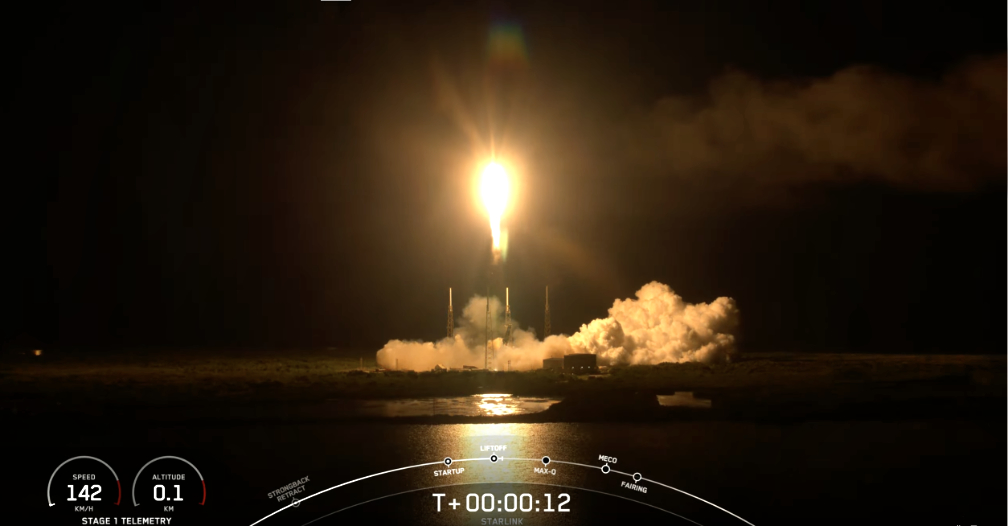
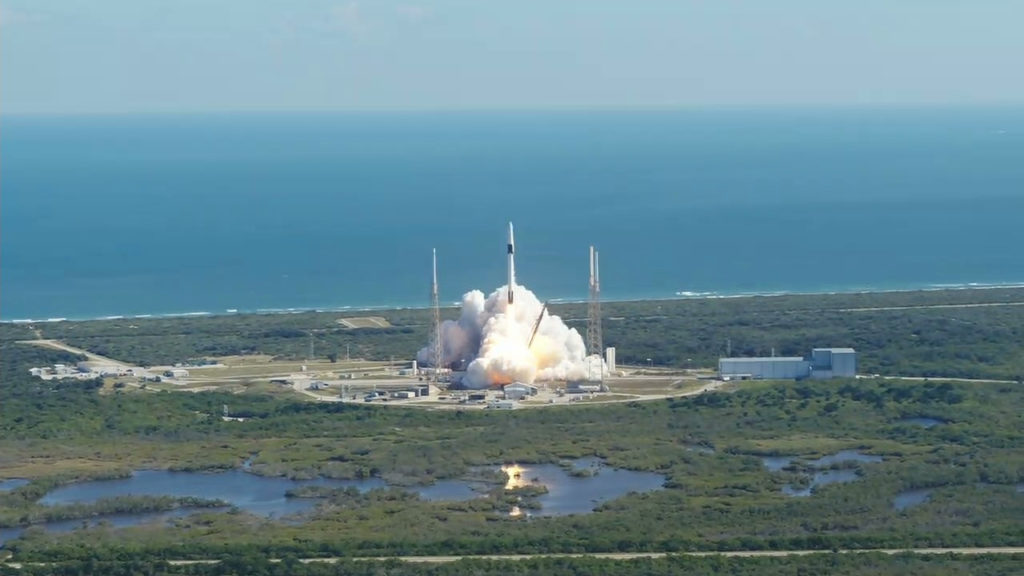
SpaceX engaged the company’s Falcon 9 launch vehicle to send 22 Starlink satellites to LEO from Space Launch Complex 40 (SLC-40) at Cape Canaveral Space Force Base in Florida.

This is the 15th flight for the first stage booster supporting this mission, which previously launched GPS III Space Vehicle 04, GPS III Space Vehicle 05, Inspiration4, Ax-1, Nilesat 301, OneWeb Launch 17, ARABSAT BADR-8, and seven Starlink missions.

Photo of an earlier SpaceX Falcon 9 launch from Space Launch Complex 40 at Cape Canaveral SFB.

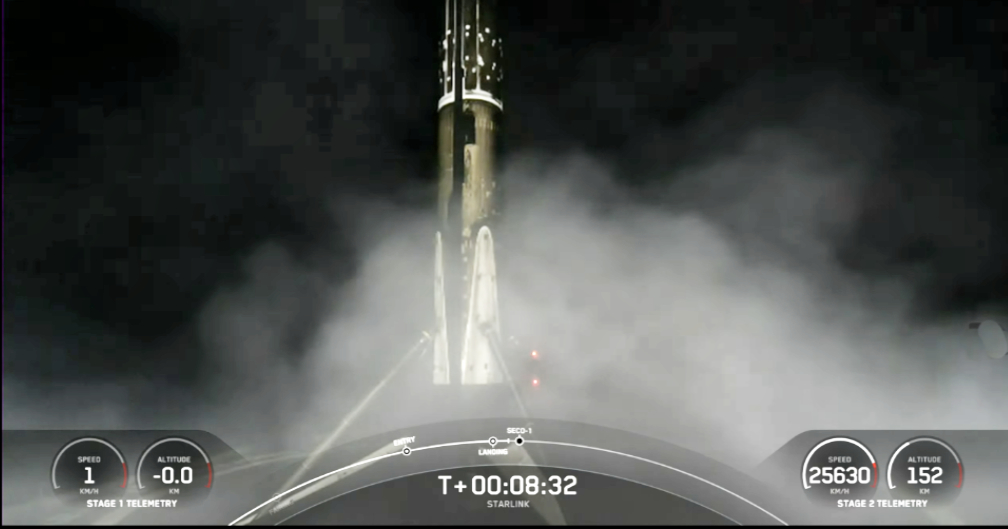
Following stage separation, the first stage landed on the A Shortfall of Gravitas droneship stationed in the Atlantic Ocean.

Filed Under: News

OneWeb Technologies demos seamless LEO and GEO multi-orbit services for the U.S.M.C.

July 28, 2023 by editorial

OneWeb Technologies, Inc. has successfully concluded a series of demonstrations during the U.S. Marine Corps’ 1st Air Naval Gunfire Liaison Company (ANGLICO) “Exercise Red Flag.”

The demonstrations showcased the seamless integration of a combined multi-orbit, LEO and GEO solution to deliver high-bandwidth, reliable communications in denied and degraded environments.

Exercise Red Flag showcased 1st ANGLICO’s ability to support Large Force Employment training across the full spectrum of conflict, including air superiority, precision engagement, close air support, command and control, intelligence coordination, and personnel recovery.

The demonstration consisted of OneWeb Technologies’ global, low-latency LEO communications network, Kymeta Corporation’s LEO terminal for low-latency and high-bandwidth connectivity, along with Viasat’s high-capacity, and multi-band, multi-mission terminal (MMT) connecting to the Viasat GEO Global Network (VGNet). The solution used Viasat’s NetAgility™ SD-WAN router to connect the LEO and GEO networks together.

A key part of this training was demonstrating the ability to interoperate with other systems, and multiple orbital planes. The combined OneWeb Technologies, Viasat and Kymeta solution showcased multi-orbit capability and connectivity is possible between solution providers, which is an important component of the 1st ANGLICO’s automated primary, alternate, contingency, and emergency (PACE) plan.

The PACE plan supports the maneuvering warfighting function’s (WFF) mission command requirement to maintain communications, seamlessly by transitioning connectivity across multiple networks.

The trial followed OneWeb Technologies’ participation in a similar successful demonstration, known as “Exercise Northern Edge,” held at the Joint Pacific-Alaska Range Complex (JPARC) in Alaska.

“Connectivity in a denied and degraded communications environment is an essential safety requirement, and I am proud of OneWeb Technologies’ ability to support the 1st ANGLICO at Exercise Red Flag. We are looking forward to future opportunities to enable Marine Corps operations with advanced satellite communications (SATCOM) solutions. Our collaboration with Kymeta and Viasat highlights our commitment to leveraging cutting-edge technologies and strategic partnerships to offer our government customers the mission-critical connectivity solutions they require.” — Kevin Steen, CEO, OneWeb Technologies

“Viasat is pleased to collaborate with partners like OneWeb Technologies and Kymeta to demonstrate multi-network mission capabilities with the optionality and increased resilience required to operate in contested environments. Our advanced network orchestration technology is a critical component, enabling assured connectivity and a seamless user experience across a multi-orbit, multi-network SATCOM solution that offers the operational flexibility warfighters need.” — Craig Miller, President, Viasat Government Systems

“Kymeta has been steadily working on ruggedized and hardened communications on the pause and move tactical systems. The combination of our terminals and OneWeb’s low latency, high data rate, and satellite communications available through OneWeb Technologies will provide warfighters with the tactical edge they need today.” — Walter Berger, President and Co-CEO, Kymeta

Filed Under: Featured, News

  • « Go to Previous Page
  • Page 1
  • Interim pages omitted …
  • Page 108
  • Page 109
  • Page 110
  • Page 111
  • Page 112
  • Interim pages omitted …
  • Page 339
  • Go to Next Page »

Primary Sidebar

WEEKLY NEWSLETTER

Archives

  • September 2026
  • August 2026
  • July 2026
  • June 2026
  • May 2026
  • April 2026
  • March 2026
  • February 2026
  • January 2026
  • December 2025
  • November 2025
  • October 2025
  • September 2025
  • August 2025
  • July 2025
  • June 2025
  • May 2025
  • April 2025
  • March 2025
  • February 2025
  • January 2025
  • December 2024
  • November 2024
  • October 2024
  • September 2024
  • August 2024
  • July 2024
  • June 2024
  • May 2024
  • April 2024
  • March 2024
  • February 2024
  • January 2024
  • December 2023
  • November 2023
  • October 2023
  • September 2023
  • August 2023
  • July 2023
  • June 2023
  • May 2023
  • April 2023
  • March 2023
  • February 2023
  • January 2023
  • December 2022
  • November 2022
  • October 2022
  • September 2022
  • August 2022
  • July 2022
  • June 2022
  • May 2022
  • April 2022
  • March 2022
  • February 2022
  • January 2022
  • December 2021
  • November 2021
  • October 2021
  • September 2021
  • August 2021
  • July 2021
  • June 2021
  • May 2021
  • April 2021
  • March 2021
  • February 2021
  • January 2021
  • December 2020
  • November 2020
  • October 2020
  • September 2020
  • August 2020
  • July 2020
  • June 2020
  • May 2020
  • April 2020
  • March 2020
  • February 2020
  • January 2020
  • December 2019
  • November 2019
  • October 2019

© 2019–2026 SatNews

Insert/edit link

Enter the destination URL

Or link to existing content

    No search term specified. Showing recent items. Search or use up and down arrow keys to select an item.
      x
      Sign Up Now!

      Enjoy a free weekly newsletter with recent headlines from the global SmallSat industry.

      Invalid email address
      We promise not to spam you. You can unsubscribe at any time.
      Thanks for subscribing! You will now receive weekly SmallSat News updates.
      We love our advertisers.
      And you will too!

      Please disable Ad Blocker to continue... We promise to keep it unobtrusive.
      We promise not to spam you. You can unsubscribe at any time.
      Invalid email address
      Thanks for subscribing!