
• Skip to main content
  • Skip to primary sidebar
  • Home
  • News
  • Featured
  • More News ⌄
    • SatNews
    • SatMagazine
    • MilSatMagazine
  • Events ⌄
    • MilSat Symposium
    • SmallSat Symposium
    • Satellite Innovation
  • Contacts
  • SUBSCRIPTION

SmallSat News

You are here: Home / Archives for News

News

DARPA releases Lunar Assay via Small Satellite Orbiter (LASSO) solicitation

May 5, 2025 by editorial

In collaboration with NASA’s Space Technology Mission Directorate, DARPA recently released the Lunar Assay via Small Satellite Orbiter (LASSO) solicitation.
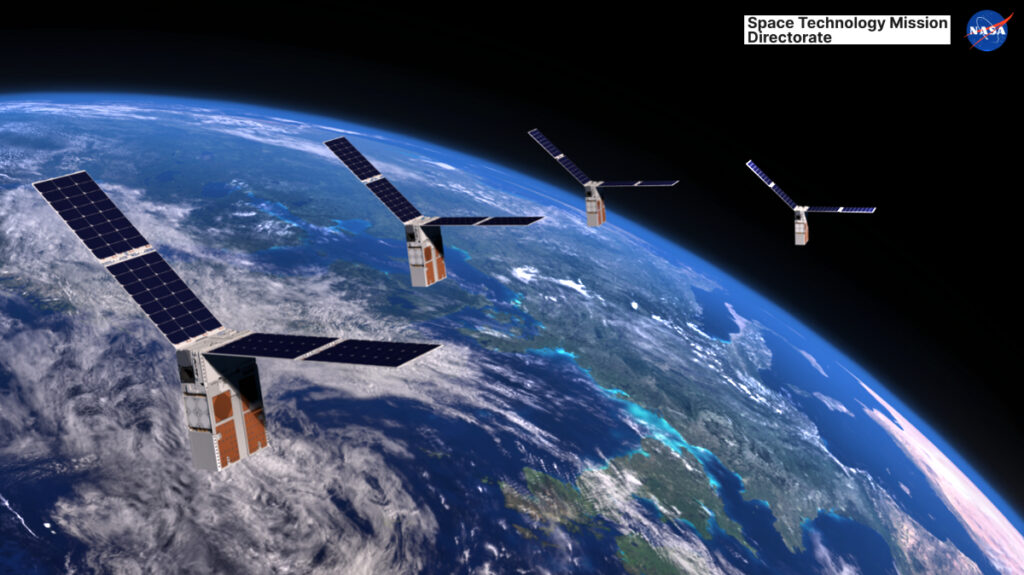
The LASSO program aims to develop technologies to support significantly increasing the U.S.’ ability to conduct operations in support of space situational awareness (SSA) by developing autonomous satellite navigation in stressing orbital conditions and increasing satellite maneuverability through continuous dynamic repositioning based on changing conditions, with the added benefit of creating a proven reserve model for resources relevant to ISRU (In-Situ Resource Utilization) on Earth’s Moon.

LASSO supposes that high resolution measurements of resources across the entire lunar surface is the most compelling commercial application to drive optimized performance in propulsion system and GNC design.

The program seeks performers to design, test, build, and deliver a spacecraft capable of determining all areas on the Moon that contain greater than 5% water concentration with a resolution of no larger than four-square kilometers.

LASSO is focused on developing technologies for use in lunar orbit and does not intend to use any equipment on the lunar surface.

To download all of the solicitation attachments and links,
access this direct SAM.Gov infolink…
Filed Under: News

AAC Clyde Space wins 570,000 euros order for power systems

May 5, 2025 by editorial

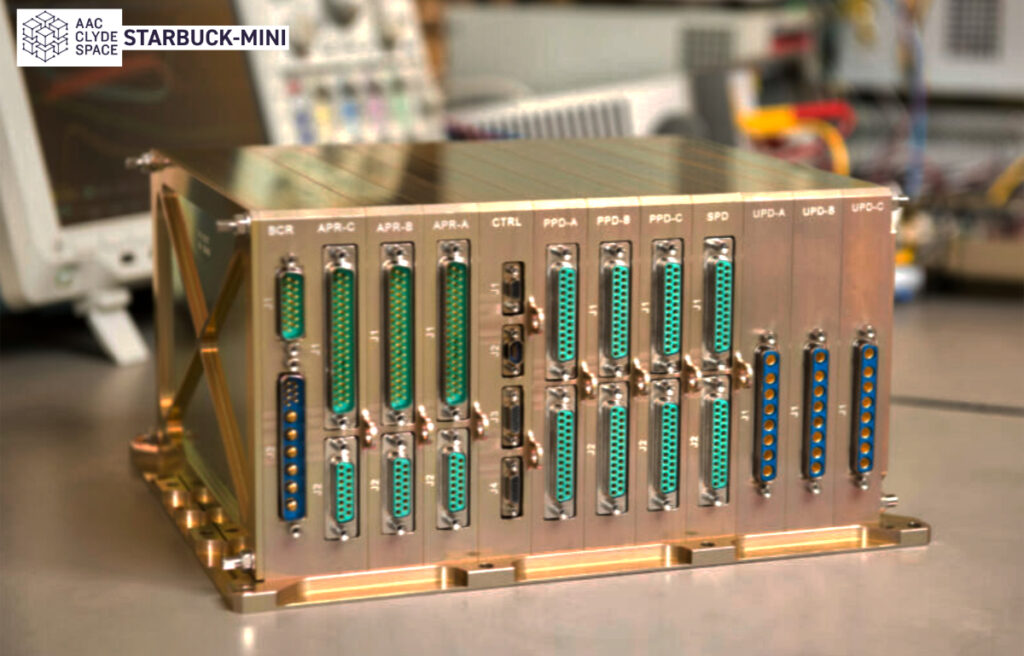
AAC Clyde Space has won an order valued at 570,000 euros for PCDU-systems (Power Conditioning and Distribution Unit)—delivery is scheduled for March of 2026. The costumer is a European satellite manufacturer.

We are proud to see our Starbuck MINI technology continuing to earn the trust of leading players in the space sector. Its proven reliability and performance make it a preferred choice for advanced satellite missions,” said AAC Clyde Space CEO Luis Gomes.

About Starbuck MINI
Starbuck MINI is an advanced PCDU developed by AAC Clyde Space. Often described as the electrical heart of a satellite, it manages and distributes power to all onboard systems, ensuring stable and efficient operation throughout the mission.

Originally designed for small satellites, Starbuck MINI has become a trusted standard in the industry thanks to its reliability, robust design and strong performance. It is used in a wide range of leading-edge space missions, including ESA’s Arctic Weather Satellite, Astroscale’s orbital debris removal service, and the lunar lander Nova-C developed by Intuitive Machines.

Filed Under: Featured, News

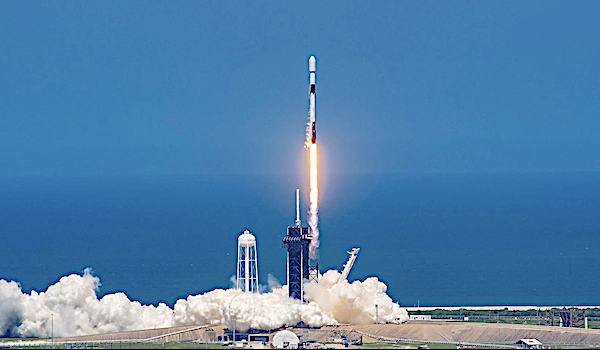
SpaceX delays Sunday Starlink launch of Group 15-3 smallsats to Friday

May 4, 2025 by editorial

In 2023, the Manitoba government, Manitoba Association of Chiefs of Police, and Manitoba Keewatinowi Okimakanak came together to figure out how they could engage more remote First Nations communities with the local justice system.

The launch of SpaceX’s Starlink Group 15-3 has been moved out several times most recently appearing as through mid-day Saturday and then Sunday would be the day at Vandenberg. However, the mission disappeared from the list of upcoming SpaceX launches and federal notices that warn pilots of upcoming launch plans. Additionaly, they have been removed without a mention of a new targeted attempt. SpaceX did not explain the reason for the delay.

Lompoc Valley residents on Friday, witnessed SpaceX conducting a static fire test that counts down and fires the engines while the rocket remains standing at Space Launch Complex-4.

Even though the test to check various systems and detect any possible problems seemingly went well causing SpaceX to confirm plans to attempt to launch the rocket this weekend, obviously that didn’t happen.

The most current information now indicates Friday, May 9th, at 5:00 PM – 9:00 PM PDT.

The forecast next Friday calls for a temperature of 57°F, broken clouds, 82% cloud cover and a wind speed of 14mph.

SpaceX weather delays Starlink launch of Group 15-3 smallsats

In East Carroll Parish, Louisiana, 63 percent of households do not have internet access. Louisiana State and Delta Interfaith, a coalition of local churches, are aiming to improve digital accessibility through increased connectivity, and so far have secured Starlink for 120 households in the parish. Now more students can access remote learning, and their parents can advance their careers by applying for and accepting remote jobs.

It’s no surprise that the potential weather issues on May 3, with 100% cloud cover was the reason that the Starlink Group 15-3 of 29 smallsats launch was scrubbed and is tentatively rescheduled for Sunday, May 4 from Vandenberg Space Force Base. Liftoff is targeted for 4:53 a.m. ET, with backup opportunities available until 8:48 a.m. ET. If needed, additional opportunities are also available on Monday, May 5 starting at 4:22 a.m. ET.

A live webcast of this mission will begin about five minutes prior to liftoff, which you can watch here and on X @SpaceX. You can also watch the webcast on the new X TV app.

This is the 20th flight for the first stage booster supporting this mission, which previously launched Crew-6, SES O3b mPOWER-B, USSF-124, Bluebird 1-5, and 15 Starlink missions. Following stage separation, the first stage will land on the A Shortfall of Gravitas droneship, which will be stationed in the Atlantic Ocean.

The weather forecast for Vandenberg Space Force Base includes overcast clouds, 100% cloud cover, and 21 mph winds. This launch was expected to deploy 26 Starlink satellites into low Earth orbit, and will further add to the Starlink smallsat constellation.

The Falcon 9 first stage will attempt to land on ASDS OCISLY in the Pacific Ocean after its flight. The mission costs $52 million.

SpaceX’s Saturday launch of Starlink’s Group 15-3 smallsats may have weather issues

On Saturday, May 3, Falcon 9 will launch 26 smallsats of Starlink Group 15-3 into low Earth orbit at 11:27 AM – 3:55 PM PDT from Vandenberg for the Starlink smallsat constellation.

The forecast calls for a temperature of 56°F, overcast clouds, 100% cloud cover and a wind speed of 21mph.

The Falcon 9 first stage will attempt to land on ASDS OCISLY in the Pacific Ocean after its flight. The mission costs $52 million.

Filed Under: News

Terran Orbital selected by USSF for $237 million STEP 2.0 smallsat buses contract

May 4, 2025 by editorial

Terran Orbital Corporation has been selected by the U.S. Space Force as one of 12 companies awarded a position on the Space Test Experiments Platform (STEP) 2.0 contract.

This 10-year, $237 million, Indefinite Delivery/Indefinite Quantity (IDIQ) contract, administered by Space Systems Command, supports the Department of Defense’s broader Space Test Program (STP) to accelerate the deployment and validation of advanced space-based technologies.

As part of STEP 2.0, Terran Orbital will compete for task orders to develop and deliver modular small satellite buses capable of hosting a wide range of experimental payloads, from new sensors to cutting-edge communications and navigation systems. These spacecraft, typically the size of a microwave or small refrigerator, serve as adaptable platforms to carry out critical technology demonstrations that will inform future military space architectures.

The STEP 2.0 contract is designed to streamline the path from concept to orbit for Department of Defense experiments by leveraging commercial space industry capabilities. The initiative also aims to reduce historic delays associated with aligning payload availability and launch opportunities by bundling multiple experiments onto standardized spacecraft and enabling frequent commercial rideshare launches.

Terran Orbital’s proven manufacturing scalability, rapid integration capabilities, and mission flexibility make it uniquely positioned to support this critical program and contribute to the modernization of U.S. military space operations.

Other companies selected for the contract include Lockheed Martin, General Atomics, Blue Canyon Technologies, Loft Orbital, Spire Global, York Space Systems, and several emerging space technology providers.

Terran Orbital is proud to be selected for the STEP 2.0 initiative and to continue our long-standing partnership with the U.S. Space Force,” said Peter Kraus, President and Chief Executive Officer of Terran Orbital. “This award underscores our commitment to advancing national security through innovative, flight-proven small satellite solutions.”

About Terran Orbital
Terran Orbital, a Lockheed Martin Company, is a leading manufacturer of satellite solutions. It provides end-to-end mission services for commercial and government customers. Terran Orbital specializes in designing, building, and operating advanced satellite systems, leveraging cutting-edge technologies to support national security, scientific research, and commercial applications.

Filed Under: News

Aerospacelab stellar JAXA spacecraft contract through Mitsui Bussan Aerospace

May 3, 2025 by editorial

Aerospacelab, in partnership with Mitsui Bussan Aerospace (MBA), proudly announces its selection by the Japan Exploration Agency (JAXA) to supply the platform that will host JAXA’s SAMRAI payload as part of a demonstration mission—this contract represents an important step in showcasing innovative international satellite solutions. 

This first partnership with both MBA and JAXA highlights Aerospacelab’s expansion into new markets and underscores its emergence as a trusted global partner in high-performance, cost-effective satellite platforms, further strengthening its position in the growing Japanese space market. This commercial agreement was made possible through the strategic support of Mitsui Bussan Aerospace, whose deep market knowledge and facilitation were key to establishing this partnership. 

This partnership with Mitsui Bussan Aerospace and JAXA represents a major milestone for us”, said Benoît Deper, CEO of Aerospacelab. “Being selected and recognized as a trusted partner by JAXA is a tremendous honor and a clear endorsement of our technology, innovation, and commitment to delivering competitive, high-performance spacecraft. We’re especially grateful to Mitsui Bussan Aerospace for their invaluable support in enabling this mission. We are beyond excited to embark on this journey.”

Morihiro Aoki, CEO of Mitsui Bussan Aerospace, said, “We are honored to provide our service with Aerospacelab to JAXA playing a great role in the space development here in Japan. By combining our expertise with innovative technology and experience by Aerospacelab, we will dedicate all our strength to achieve success in this groundbreaking project.” 

Further details regarding this contract between Aerospacelab, MBA and JAXA and its broader scope will be disclosed in the coming months as additional aspects are unveiled. This initial announcement serves as the foundation for what promises to be a pioneering endeavor in the field of space technology. 

Aerospacelab, founded in 2018, develops, manufactures, and operates cutting-edge Earth Observation and Telecommunications satellites at scale. In 2024, the successful acquisition of AMOS marked an important milestone, further enhancing optical capabilities and introducing high-end payloads to Aerospacelab’s growing portfolio, while strengthening its global position.   

With operations strategically positioned, including its Headquarters in Belgium and a factory in the U.S. (California), Aerospacelab is able to deliver innovative solutions to an expanding customer base worldwide. In 2026, Aerospacelab is set to unveil The Megafactory, Europe’s upcoming largest satellite manufacturing facilities, demonstrating its ambitious vision to shape the future of the aerospace industry. 

Filed Under: News

SSC’s Space Test Experiments Platform 2.0 to bolster USSF spacecraft procurement—12 companies selected

May 2, 2025 by editorial

The U.S. Space Force (USSF) Space Systems Command’s (SSC) Department of Defense (DOD) Space Test Program (STP) office is paving the way to procure full lifecycle solutions for Science & Technology experiments through a Space Test Experiments Platform (STEP) 2.0 contract awarded to 12 vendors.

STEP 2.0 establishes a 10-year multi-award Indefinite Delivery Indefinite Quantity (IDIQ) contract with a $237 million ceiling to bolster spacecraft procurement within STP. The first STEP 2.0 Delivery Order is scheduled to start in January 2026.

Under the purview of Space Systems Command, STP plays a crucial role in facilitating experimental payload access to the space domain. Working in collaboration with government agencies, industry, and academia, the program aims to demonstrate promising technologies to aid the warfighter. By leveraging commercially developed spacecraft and fostering industry partnerships, STEP 2.0 aims to accelerate the development of cutting-edge space technologies over the next decade for the DoD and their mission partners.

The 12 vendors selected for this award are:

Axient LLC
Blue Canyon Technologies, LLC
General Atomics
Lockheed Martin Corp.
Loft Orbital Federal LLC
Lynk Global LLC
Orbit Systems LLC
Spire Global Subsidiary Inc.
Turion Space Corp.
Tyvak Nano-Satellite Systems Inc.
Utah State University Space Dynamics Lab
York Space Systems LLC

The DoD Space Test Program will gain measurable value from leveraging industry insights and capabilities to provide proven spacecraft to host the DoD’s next generation of space technologies,” said SSC director of the DoD Space Test Program, USSF Lt. Col. Brian Shimek.

SSC is the USSF’s field command responsible for acquiring, developing, and delivering resilient capabilities to protect our nation’s strategic advantage in, from, and to space. SSC manages a $15.6 billion space acquisition budget for the Department of Defense and works in partnership with joint forces, industry, government agencies, academic, and allied organizations to outpace emerging threats. Our actions today are making the world a better space for tomorrow.

Filed Under: News

Myriota expands agreement with Spire Global for 16 additional satellites

May 1, 2025 by editorial

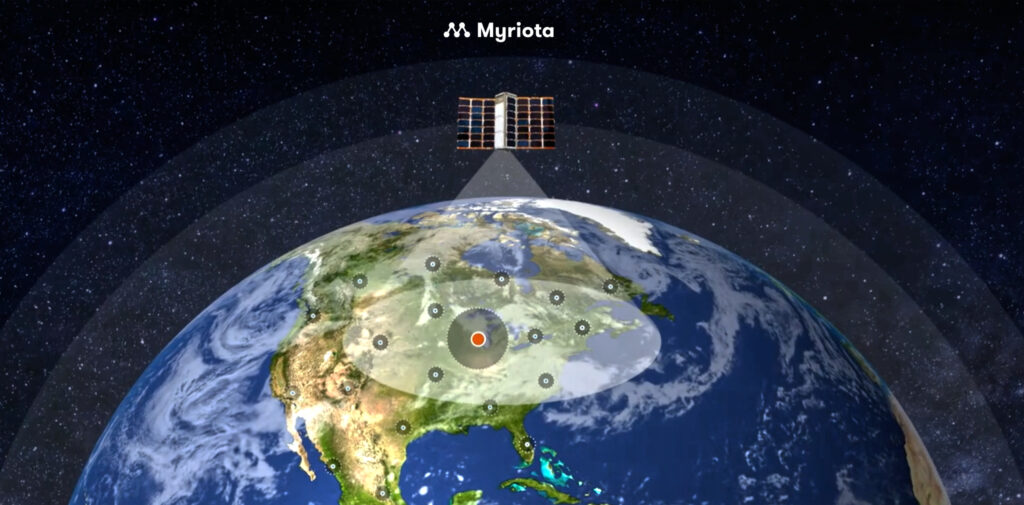
Spire Global, Inc. (NYSE: SPIR) now has an expanded space services agreement with Myriota to design, build and operate 16 satellites with enhanced, second-generation payloads for the IoT provider.

These new launches will see Myriota’s IoT connectivity become operational across 40+ satellites. Since initially partnering in 2021, Myriota has scaled its IoT connectivity platform rapidly and cost effectively by deploying its network software on Spire satellites that are optimized to host and run Myriota’s advanced network in space. With this agreement, Myriota is expanding into satellite hardware in space through Spire Space Services.

Satellites on-orbit enable IoT services and products to meet their users’ needs anytime, anywhere, unlocking economic potential where traditional cellular connectivity struggles

The expansion of Myriota’s global space infrastructure will allow for more scalable and reliable IoT connectivity for smart devices worldwide. Myriota customers will have enhanced security, faster data access, reduced latency, and improved device control and firmware updating capabilities.

In a world where IoT connectivity is increasingly crucial, satellites and space technology are more than just tools; they are foundational to the future of global communication networks,” said Theresa Condor, CEO of Spire Global. “As Myriota’s constellation grows, so does our collaboration with them, expanding from software to hardware with payloads that address the critical gaps in IoT communication. With Spire Space Services we are thrilled to continue our long-term work with Myriota in reimagining how the world connects.

Across sectors from agriculture and water to logistics, satellite-connected IoT sensors offer unparalleled insights into operations and are driving dramatic improvements in operational efficiency,” said Ben Cade, CEO of Myriota. “At Myriota we are working with customers around the globe delivering ultra-low power networks, with sensor battery lives measured in years. We are delighted to be working with Spire to further extend our network to help more industries, in more countries gain critical intelligence from the field, and apply this to deliver better outcomes for industry, society and the planet.”

Filed Under: Featured, News

NEXT Semiconductor Technologies collaborates with BAE Systems to develop next generation space-qualified chips

April 30, 2025 by editorial

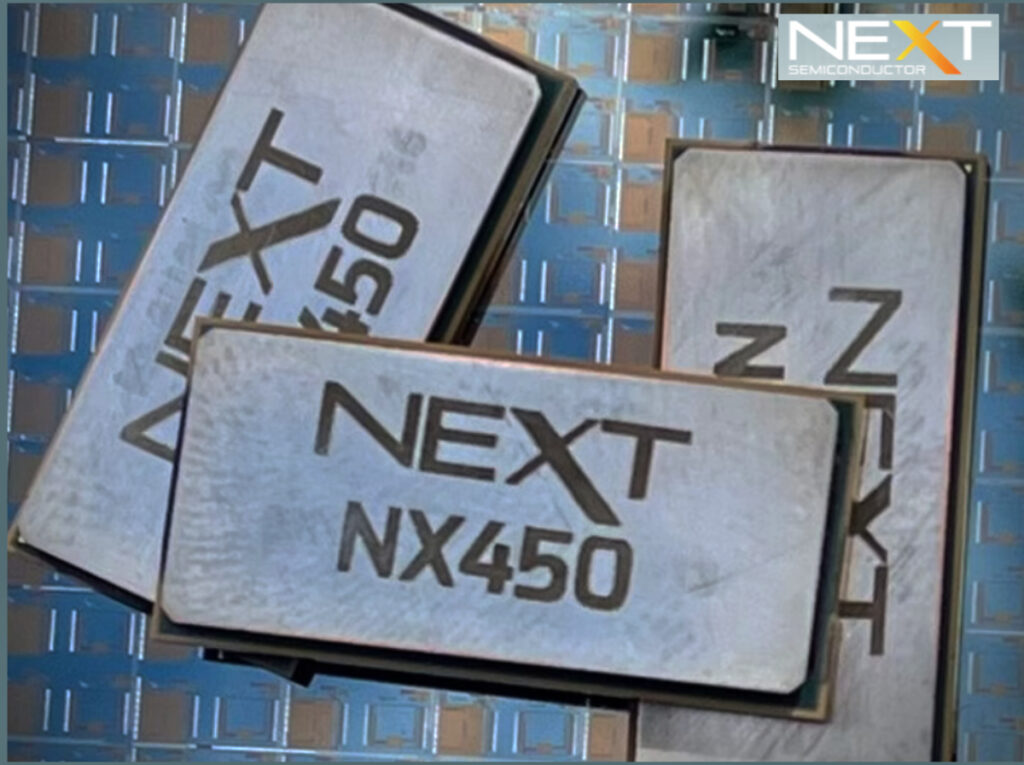
NX450 Antenna Processor in 11x23mm BGA Package

NEXT Semiconductor Technologies is collaborating with BAE Systems to accelerate the insertion of its latest, ultra-wideband, antenna processor units (APUs) into high-performing, radiation-hardened, electronic subsystems to support future space missions.

NEXT’s APUs combine agile signal acquisition and generation with on-board high-reliability digital processing that offer unprecedented quantity, quality and efficiency of information processing for next generation satellite sensors and transmitters. This effort will enable efficient and resilient wideband RF (radio-frequency) signal processing capabilities not yet available to the space market.

NEXT’s latest APU, the NX450, is the world’s first 200 GS/s (200 billion samples per second) antenna processor with 100-GHz of instantaneous RF bandwidth split across four independent receive and transmit channels respectively. The NX450 simplifies sensor design by pushing signal digitization and processing closer to the edge—redefining electronic warfare capabilities while reducing sensor SWaP (size, weight, and power). The NX450 is manufactured in an onshore Global Foundries 12LP (12 nanometer) FinFET process, features embedded application processor redundancy and has been radiation tested for space qualification.

As satellite networking proliferates, the demand for greater data payloads and on-orbit processing is driving the advancement of System-on-Chip (SoC) solutions such as APUs that define the capabilities and performance of satellite antenna systems. The NX450 is the first device of its kind to specifically address the emerging demands for secure ultra-wide bandwidth communication links between satellites and ground stations.

BAE Systems will provide support of the NX450 APU for use in proliferated Low Earth Orbit (pLEO) missions. The company may also work with NEXT to incorporate its own application specific integrated circuit technology and expertise for use in future SoC products. These next-generation, radiation-hardened solutions are the key enabler gating wide bandwidth capabilities in demanding space environments.

NEXT is firmly entrenched in the development of high-reliability SoC solutions for next generation satellite payloads. We are eager to collaborate with BAE Systems to address future space missions with our unique SoC capabilities,” said Mike Kappes, President and Chief Strategy Officer at NEXT Semiconductor.

By leveraging our decades of space electronics experience, we can apply our radiation-hardened techniques to a commercial off-the-shelf product to deliver a new capability addressing our space customers’ needs,” said Jim LaRosa, Space Systems program director at BAE Systems. “Our collaboration with NEXT allows for the development of future solutions with dramatically increased mission and environmental performance.”

NEXT Semiconductor is a newly formed fabless semiconductor company focused on high reliability system-on-chip solutions for demanding space applications. NEXT offers a roadmap of SoC products addressing the emerging demand for low-SWaP electronics for on-orbit and terrestrial platforms. Evaluation systems are available on request.

Filed Under: News

SFL Missions Inc. continues legacy of smallsat development from Space Flight Laboratory (SFL)

April 30, 2025 by editorial

SFL Missions Inc. is continuing the development of barrier-breaking, budget-aggressive, small satellite missions for commercial, government and academic customers worldwide by building upon the extraordinary legacy of Space Flight Laboratory (SFL). This evolution of customer-oriented service expands upon SFL’s 26-year highly successful experience of small satellite innovation and mission delivery.

Building on the SFL heritage that produced 86 operationally successful missions and 370+ cumulative years in orbit, SFL Missions Inc. is developing nano-, micro-, and small satellites and constellations using space-proven bus designs for Earth observation, communications, environmental monitoring, maritime situational awareness, space astronomy, scientific research and more.

SFL Missions will continue the tradition of devising and implementing innovative technologies for low-mass spacecraft, including precision attitude control, accurate sensor pointing, autonomous formation flying, scalable power & propulsion, and deployable antennas. In addition, SFL Missions is offering a Flex Production program that will give customers the option of having satellites developed in their own location, at a third-party site, or at the SFL Missions facility.

Additionally, SFL Missions will soon announce the launch of a new Apprenticeship Program to train the next generation of small satellite aerospace engineers.

The market for small satellite missions has evolved rapidly in recent years, especially in the NewSpace era,” said SFL Missions Founder, Dr. Robert E. Zee. “We have created SFL Missions with the right combination of business responsiveness, expertise, and capabilities needed to meet smallsat mission challenges now and far into the future. We are expanding our spacecraft development capacity in Toronto and are signing new mission contracts now—our order book is filling fast.””

About SFL Missions Inc.
SFL Missions Inc. generates bigger returns from smaller, lower cost satellites. Small satellites built by SFL Missions consistently push the performance envelope and disrupt the traditional cost paradigm. We build quality small satellites at low cost that work the first time and enable NewSpace companies to mass produce through our Flex Production program. Satellites are built with advanced power systems, stringent attitude control and high-volume data capacity that are striking relative to the budget. We arrange launches globally and maintain a mission control center accessing ground stations worldwide. The pioneering and barrier-breaking work of SFL Missions is a key enabler to tomorrow’s cost-aggressive satellites and constellations.

Filed Under: Featured, News

UP42 + Maxar partner to broaden global access to advanced commercial geospatial intelligence

April 30, 2025 by editorial

UP42 has partnered with Maxar to make that company’s very high-resolution satellite imagery and tasking products available in the UP42 platform, broadening global access to the most advanced commercial geospatial intelligence.

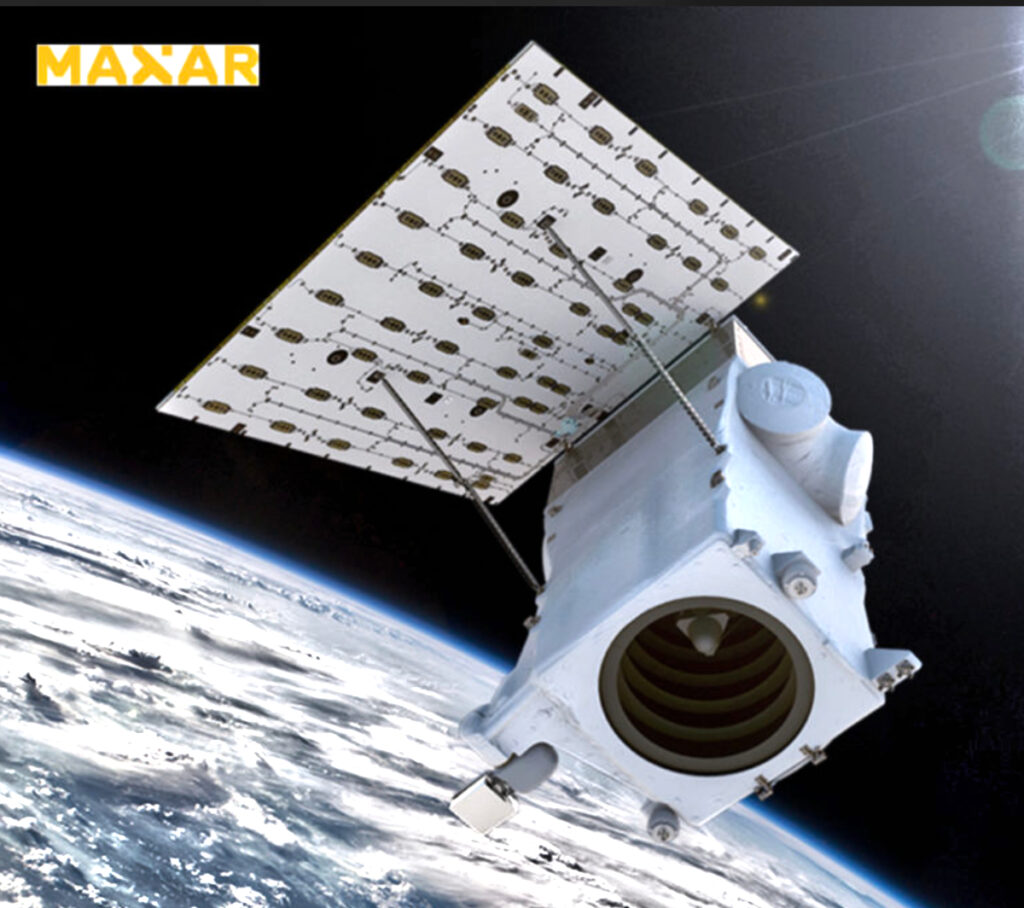
Artistic rendition of a Maxar Worldview Legion satellite on-orbit, courtesy of the company.

UP42 customers can now directly task Maxar’s very high-resolution constellation, including its WorldView Legion satellites. With Maxar’s constellation able to revisit some Earth locations up to 15 times per day, UP42 customers will be able to access this advanced geospatial intelligence in near real-time. Soon, customers will also be able to order 30 cm-class and 50 cm-class imagery from Maxar’s archive, which can be combined with advanced AI and machine learning technologies to analyze patterns of life.

UP42’s streamlined satellite tasking interface unlocks multi-AOI uploads, instant price estimates, and order tracking. This enables customers across civil government and a wide range of commercial industries—including oil, gas, mining and energy—to tackle some of their biggest real-world challenges, from infrastructure monitoring to environmental compliance.

Customers can now task Maxar’s very high-resolution multispectral and panchromatic imagery on the UP42 platform in both mono and stereo formats.

Maxar’s integration marks a major milestone for UP42, providing our customers with greater flexibility, scale, and precision,” said Jussi Koski, CPO at UP42. “The ability to directly task Maxar satellites, along with upcoming archive access, makes UP42 a comprehensive source for leading geospatial data.”

UP42 is a mission-critical partner for civil and commercial customers around the world, and by joining Maxar’s Partner Ecosystem, UP42 can give those customers access to more advanced geospatial intelligence that helps them act and decide with more confidence,” said Anders Linder, SVP and General Manager of Maxar Intelligence’s International Government business.

Filed Under: News

  • « Go to Previous Page
  • Page 1
  • Interim pages omitted …
  • Page 33
  • Page 34
  • Page 35
  • Page 36
  • Page 37
  • Interim pages omitted …
  • Page 339
  • Go to Next Page »

Primary Sidebar

WEEKLY NEWSLETTER

Archives

  • August 2026
  • July 2026
  • June 2026
  • May 2026
  • April 2026
  • March 2026
  • February 2026
  • January 2026
  • December 2025
  • November 2025
  • October 2025
  • September 2025
  • August 2025
  • July 2025
  • June 2025
  • May 2025
  • April 2025
  • March 2025
  • February 2025
  • January 2025
  • December 2024
  • November 2024
  • October 2024
  • September 2024
  • August 2024
  • July 2024
  • June 2024
  • May 2024
  • April 2024
  • March 2024
  • February 2024
  • January 2024
  • December 2023
  • November 2023
  • October 2023
  • September 2023
  • August 2023
  • July 2023
  • June 2023
  • May 2023
  • April 2023
  • March 2023
  • February 2023
  • January 2023
  • December 2022
  • November 2022
  • October 2022
  • September 2022
  • August 2022
  • July 2022
  • June 2022
  • May 2022
  • April 2022
  • March 2022
  • February 2022
  • January 2022
  • December 2021
  • November 2021
  • October 2021
  • September 2021
  • August 2021
  • July 2021
  • June 2021
  • May 2021
  • April 2021
  • March 2021
  • February 2021
  • January 2021
  • December 2020
  • November 2020
  • October 2020
  • September 2020
  • August 2020
  • July 2020
  • June 2020
  • May 2020
  • April 2020
  • March 2020
  • February 2020
  • January 2020
  • December 2019
  • November 2019
  • October 2019

© 2019–2026 SatNews

Insert/edit link

Enter the destination URL

Or link to existing content

    No search term specified. Showing recent items. Search or use up and down arrow keys to select an item.
      x
      Sign Up Now!

      Enjoy a free weekly newsletter with recent headlines from the global SmallSat industry.

      Invalid email address
      We promise not to spam you. You can unsubscribe at any time.
      Thanks for subscribing! You will now receive weekly SmallSat News updates.
      We love our advertisers.
      And you will too!

      Please disable Ad Blocker to continue... We promise to keep it unobtrusive.
      We promise not to spam you. You can unsubscribe at any time.
      Invalid email address
      Thanks for subscribing!