• Skip to main content
  • Skip to primary sidebar
  • Home
  • News
  • Featured
  • More News ⌄
    • SatNews
    • SatMagazine
    • MilSatMagazine
  • Events ⌄
    • MilSat Symposium
    • SmallSat Symposium
    • Satellite Innovation
  • Contacts
  • SUBSCRIPTION

SmallSat News

You are here: Home / Archives for News

News

Hughes launches innovative + compact ESA

April 23, 2025 by editorial

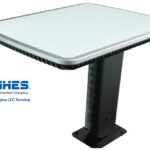
Hughes Network Systems, LLC, an EchoStar company (Nasdaq: SATS), earlier this month informed the industry of the commercial availability of the firm’s HL1100W single panel electronically steerable antenna (ESA), a cost-effective, high performing addition to the Eutelsat OneWeb user terminal family.

Approved by Eutelsat OneWeb for operation in its LEO satellite network, the HL1100W was designed to meet growing market demands for a lighter solution that delivers low-latency, high-speed connectivity to customers around the world. It serves as a continuation of the Hughes innovative product roadmap as we further push the boundaries of technology and what’s possible for connectivity.

The HL1100W delivers reliable connectivity in a compact form factor and is designed for durability. The compatible mounts allow the HL1100W to be installed on a wide variety of buildings and structures, including, trailers, cabinets, and onshore oil rigs, ensuring reliable service in diverse operational environments. The HL1100W follows the successful launch of the HL1120W and is backed by Hughes extensive expertise in satellite technology.

The size, weight, and performance (SWaP), as well as the ease of installation of the HL1100W, make it uniquely suited for global enterprise use. Inventory is already produced and the HL1100W is set to make a significant impact on the market, offering a reliable and affordable solution that addresses the critical challenges of modern connectivity demands.

Hughes Managed LEO service provides a reliable, high-speed option for low-latency applications and services in hard-to-reach places. As a strategic Eutelsat OneWeb distribution partner, Hughes can deploy LEO capacity as a managed broadband service, a multi-orbit mobility, or enterprise solution, or as part of a multi-transport Software-Defined Wide Area Network (SD-WAN) or highly specialized military network.

Connectivity today demands innovative, flexible solutions that can meet customers where they are,” said Royce Hernandez, vice president mobility product management at Hughes. “The introduction of the HL1100W marks another milestone in Hughes leadership in providing scalable and robust connectivity solutions to customers around the world. This device is an evolution of our innovation strategy and a demonstration of our commitment to enhancing global connectivity. We are proud to partner with Eutelsat OneWeb to bring our solution to market for enterprises and governments everywhere.”

The HL1100W brings another dimension of connectivity to our product portfolio and to our customers around the world,” said Filipe De Oliveira, vice president for commercial at Eutelsat OneWeb. “At a time when low-latency, high-performance connectivity has never been more vital, this device will deliver the flexibility and speed that our customers need. We are excited to continue building on our longstanding partnership with Hughes to realize a future of seamless global connectivity, no matter where you are.”

Visit the Hughes website for more information about the Hughes ESA and Managed LEO Service.

Filed Under: Featured, News

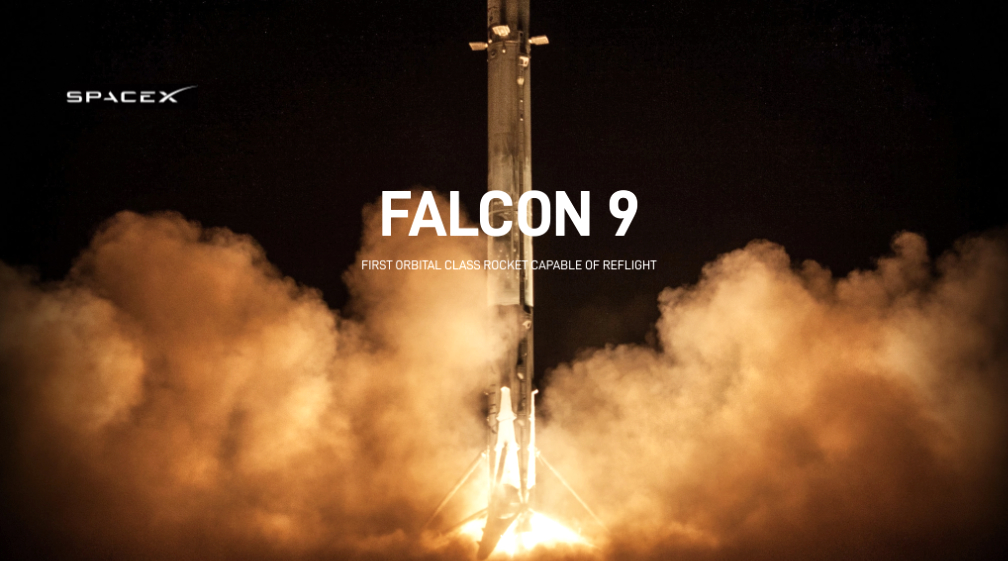
The Bahamas: Future SpaceX Falcon 9 landings pending EIA approval

April 22, 2025 by editorial

The Bahamian Government has revealed it is looking forward to future Falcon 9 booster droneship landings in Bahamian waters, pending the satisfactory completion of the post-landing report and the approval of an Environmental Impact Assessment (EIA) currently being finalized by SpaceX.

As part of the initial landing agreement between The Bahamas and SpaceX, the EIA began immediately following the first Falcon 9 droneship landing in Bahamian waters on February 18, 2025.

The Government is working closely with SpaceX and the Department of Environmental Planning and Protection (DEPP) to ensure that there was no impact to the environment prior to future landing. DEPP Director Dr. Rhianna Neely-Murphy stated that the report is to confirm that environmental conditions that existed prior to the launch remained unchanged after the launch.

The EIA is expected to be completed and submitted this summer, at which point a series of public town hall meetings will be held to inform and engage Bahamians on the environmental considerations surrounding the landings.

The Falcon 9 booster droneship landings are a key component of the company’s efforts to reduce the cost and environmental footprint of spaceflight.

The Government views the Falcon 9 landing agreement with SpaceX as a pioneering opportunity to diversify the national economy, support technological advancement, and showcase The Bahamas as a future-forward, globally connected destination.

Deputy Prime Minister, the Hon. I. Chester Cooper, said, “We are excited about what the future holds for The Bahamas as we become a part of this dynamic and fast-moving sector. SpaceX has been a progressive partner, and we look forward to the continuation of this relationship. We are committed to ensuring that innovation and sustainability go hand in hand, and that our people remain informed and engaged as we help shape the future of space technology from right here in The Bahamas.”

Vice President of Launch at SpaceX, Kiko Dontchev, said, “We’re looking forward to the continued collaboration with The Bahamas. The Bahamas really is an ideal droneship landing location for our Falcon 9 landings, which we conduct with extreme precision. We are committed to working hand-in-hand with the Bahamian people to make this a successful and responsible endeavor.”

Filed Under: News

EUTELSAT OneWeb + E-SAT sign a distribution partnership agreement

April 22, 2025 by editorial

Under this partnership, E-Sat will be selling a full suite of LEO connectivity solutions powered by Eutelsat’s OneWeb constellation to Maritime and Enterprise customers across Europe

These high-speed, low-latency offerings, made possible by Eutelsat’s OneWeb LEO constellation, will extend existing E-Sat service portfolio, and enable low-latency connectivity solutions to reach customers out of traditional coverage on land and offshore.

Combining Eutelsat OneWeb’s resilient, secure, high-performance connectivity with E-Sat’s commitment to end-to-end service excellence will ensure that customers receive the best satellite connectivity experience coupled with the best customer service experience.

For instance, OneWeb offers new specific market opportunities for maritime users requiring quality services with fast connection speeds and low latency of OneWeb LEO satellites with easy to install hardware and costs savings plans.

We are very enthusiastic to enter into this partnership with Eutelsat OneWeb. This promising collaboration will enable us to offer to our land and maritime customers high-speed, low-latency connectivity solutions with value added services. For more than 25years we have been offering the very best of satellite technology to our customers and we look forward continuing this with OneWeb,” said Sophie Proniewski, E-SAT CEO.

We are delighted to add E-Sat to our list of trusted distributors in a further step in expanding the reach of our OneWeb constellation’s high-performance connectivity solutions in Europe. By adding OneWeb to its suite of offers, we are confident E-Sat will be able to leverage secure, low-latency satellite technology to deliver enhanced service to its enterprise and mobility customers,” said Pascal Fallet, EUTELSAT Group VP Connectivity Europe.

Filed Under: News

Autonomy & Asset Management Group (AAMG) + ORBCOMM® expand partnership to boost growth

April 22, 2025 by editorial

ORBCOMM recently reported that AAMG has joined its SKYWAVE Connect partner program as the first member of its Ascent program—access to this program grants AAMG enhanced technical, sales and marketing support, early access to new products and more.

Based in Australia, AAMG enables their customers in the mining industry to remotely manage, monitor and automate water pumps, vehicles, lighting towers and more. This enables users to quickly identify and address leaks, improve operational efficiency, reduce labor hours, strengthen safety and more. AAMG’s Managing Director, Tim Guinea, says they chose ORBCOMM as a partner for its leading IoT technology.

The SKYWAVE Connect partner program empowers IoT solution providers, system integrators, value-added resellers and other channel partners to accelerate their IoT solution development, expand their market reach and take advantage of new growth opportunities. It features three tracks: Authorized Partners, Ascent Partners with exclusive benefits and Authorized Distributors.

Dave Roscoe, ORBCOMM’s President of Satellite IoT, said, “We’re excited to have AAMG join SKYWAVE Connect as an Ascent Partner,” says Roscoe. “Ascent is designed to support Authorized Partners with strong growth potential. Having the AAMG team onboard further strengthens our growing partner ecosystem in the APAC region, while also helping them enhance their solutions to continue exceeding customers’ expectations and expanding market reach.”

AAMG’s Managing Director, Tim Guinea, said, “ORBCOMM’s connectivity and devices have always been core components of our solutions,” says Guinea. “We’re proud to be in the program, and we look forward to working more closely together to develop the mining IoT solutions of tomorrow.”

Filed Under: News

ISRO: SPADEX mission—successful demo of 2nd docking + power transfer

April 21, 2025 by editorial

The SpaDex smallsats: ScreSDX01, which is the Chaser, and
SDX02, the Target. Images courtesy of ISRO.

On April 20th, the ISRO successfully demo’d the docking of the SpaDex satellites (SDX 01 & SDX 02) .

Subsequently, power transfer from SDX 02 to SDX 01 satellite, and vice versa, was also exercised and accomplished on April21st.. The experiment involved operating a heater element in one of the satellites via power from the other satellite. The duration of power transfer was approximately 4 minutes and the performance of the satellites was as expected.

In the second docking attempt, the docking was completed with full autonomy from an inter-satellite distance of 15 meters until docking, whereas in the first docking attempt, an additional hold point was manually exercised at an inter-satellite distance of 3 meters.

The second docking experiment was preceded by detailed ground simulations and on-orbit trials that incorporated the experience that was gained from first docking and undocking experiments.

The demonstration of the fully autonomous second docking along with power transfer marks the completion of an important milestone in the SPADEX mission.

Filed Under: News

Earth-Moon space now occupied by a three satellite Chinese constellation

April 20, 2025 by editorial

Screnshot

China has successfully established the world’s first three-satellite constellation based on the Distant Retrograde Orbit (DRO) in the Earth-moon region of space, laying a foundation for the exploration and utilization of space, and for future crewed deep-space exploration.

Image provided by the Technology and Engineering Center for Space Utilization (CSU) of the Chinese Academy of Sciences (CAS) and illustrates the three satellite constellation based on the Distant Retrograde Orbit (DRO) in the Earth-moon region of space. (Technology and Engineering Center for Space Utilization of the Chinese Academy of Sciences/Handout via Xinhua)

DRO-A and DRO-B, two satellites developed by the Chinese Academy of Sciences (CAS) and deployed in the DRO, have established inter-satellite measurement and communication links with DRO-L, a previously launched near-Earth orbit satellite.

DRO is a unique type of orbit, and the Earth-moon space refers to the region extending outward from near-Earth and near-lunar orbits, reaching a distance of up to 2 million kilometers from Earth. In the Earth-moon space, DRO is characterized by a prograde motion around Earth and a retrograde motion around the moon, said Wang Wenbin, a researcher at the CAS’ Technology and Engineering Center for Space Utilization (CSU).

Since DRO provides a highly stable orbit where spacecraft require little fuel to enter and stay, it serves as natural space hub connecting Earth, the moon and deep space, offering support for space science exploration, the deployment of space infrastructure, and crewed deep-space missions, Wang said.

On February 3, 2024, the experimental DRO-L satellite was sent into a SSO and began conducting experiments as planned. The DRO-A/B dual-satellite combination was launched from the Xichang Satellite Launch Center in southwest China’s Sichuan Province on March 13, 2024, but failed to enter its intended orbit due to an anomaly in the upper stage of the carrier rocket.

Facing this challenge, the satellite team performed a “life-or-death” rescue operation under extreme conditions, promptly executing multiple emergency orbit maneuvers to correct the trajectory of the two satellites.

After a journey of 8.5 million kilometers, the DRO-A/B dual-satellite combination ultimately reached its designated orbit, according to Zhang Hao, a researcher at CSU who participated in the rescue operation.

On August 28, 2024, the two satellites were successfully separated. Later, both DRO-A and DRO-B established K-band microwave inter-satellite measurement and communication links with DRO-L, testing the networking mode of the three-satellite constellation, Zhang said.

Currently, the DRO-A satellite stays in DRO, while the DRO-B satellite operates in Earth-moon space maneuver orbits, according to CSU. The smallsats ultimately succeeded in entering their designated orbit.

Wang Qiang, deputy director of CSU, said that following the successful networking of the constellation, a series of cutting-edge scientific and technological experiments have been conducted, driving research on the Earth-moon space.

In 2017, the CSU research team initiated studies on DRO in the Earth-moon space and tackled key technological challenges, proposing the concept of a DRO-based spaceport. In February 2022, CAS launched a plan to build the DRO-based, three-satellite constellation in the Earth-Moon space.

The project achieved the world’s first spacecraft entry into DRO with low energy consumption. The team completed a lunar transfer and DRO entry by using just one-fifth of the fuel that is usually required for such a maneuver. This breakthrough has significantly reduced the costs of entry into the Earth-Moon space, paving the way for the large-scale exploration of the Earth-Moon space, Zhang Jun said.

Additionally, the project validated the K-band microwave measurement and communication links between the satellites and the ground at a distance of 1.17 million kilometers, achieving a key-technology breakthrough for large-scale constellation construction in the Earth-moon space, Zhang said.

Addressing challenges such as insufficient ground-based tracking and control precision, as well as the high costs and low efficiency of lunar and deep-space exploration missions, the research team pioneered a satellite-to-satellite, space-based orbit determination system.

By using three hours of in-orbit inter-satellite measurement data, the team achieved an orbit determination precision level that would typically require two days of ground-based tracking. This advancement has significantly reduced operational costs and improved the efficiency of spacecraft in the Earth-moon space, Zhang added.

In the future, the research team will continue investigating the complex and diverse orbits in the Earth-moon space, and study the laws of the lunar space environment. Leveraging the long-term stability of DRO, scientists will carry out fundamental scientific research in such fields as quantum mechanics and atomic physics, according to Wang. (Xinhua)

News article by CHEN Na, Chinese Academy of Sciences

Filed Under: News

ForgeStar®-1 begins journey to orbit for breakthrough in-space manufacturing mission

April 20, 2025 by editorial

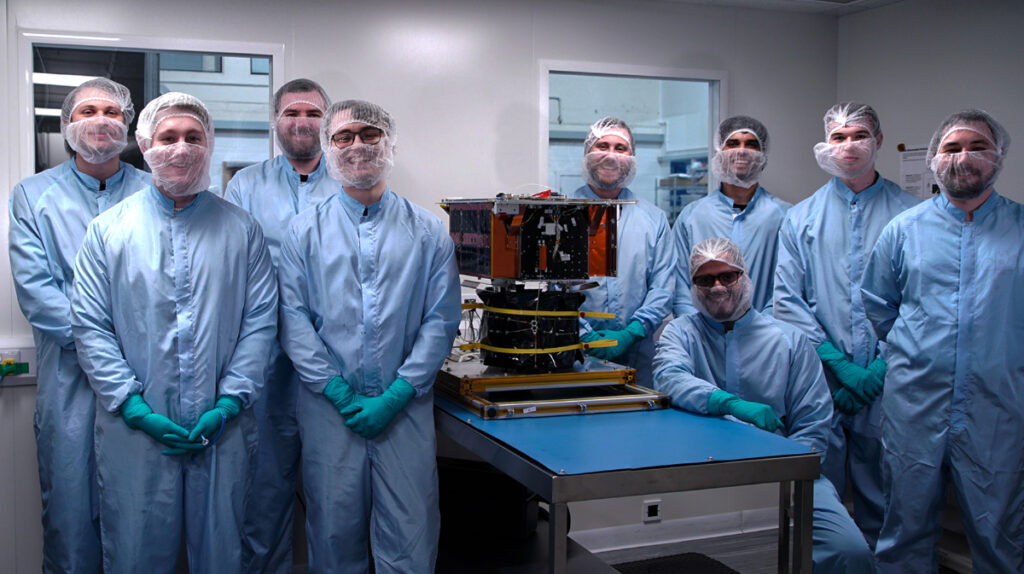
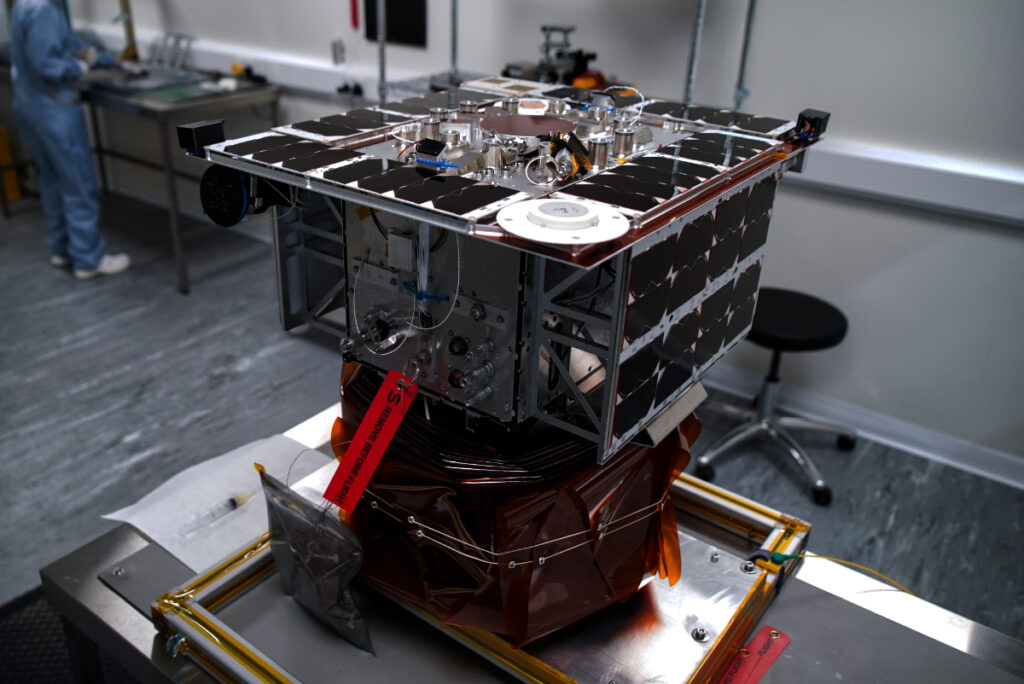
Space Forge has shipped ForgeStar®-1—made in Wales and the UK’s first In-Space Advanced Manufacturing (ISAM) mission—to the U.S. prior to the spacecraft’s launch later this year.

As a next generation materials manufacturer, Space Forge is harnessing the unmatched conditions of space—microgravity, extreme temperatures, and a vacuum environment—to produce materials that are impossible to make on Earth.

These advancements have wide-reaching applications in semiconductors, quantum computing, clean energy, and defence technologies. Research suggests that manufacturing these materials in space could reduce CO2 emissions by 75% in high-value infrastructure—delivering breakthroughs in security, defence, and climate-focused innovation.

ForgeStar-1 will also test the mechanics of the Pridwen shield—Space Forge’s innovative heat shield designed to facilitate safe, reusable satellite re-entry.

This historic mission follows Space Forge becoming the first company to be granted a UK Civil Aviation Authority (CAA) license for ISAM, cementing its leadership in the field and unlocking a new era of sustainable, scalable manufacturing in orbit. ForgeStar®-1 will prove that high-performance semiconductor materials can be manufactured in space and safely returned to Earth.

Joshua Western, CEO and Co-founder of Space Forge, said, “This is the moment we’ve been working towards. This upcoming in-orbit mission is more than just a test flight—it’s a critical step toward building an entire infrastructure that can support us back on Earth with space-made materials. With this mission laying the groundwork, the next is all systems go for commercial manufacturing—returning materials that will transform entire industries.”

The UK’s Cabinet Secretary for Economy, Energy and Planning, Rebecca Evans, said, “Space Forge is a real space success story, providing more than 60 highly skilled technical roles and supporting another 1000 in the immediate supply chain, and we are delighted to be supporting them to realize their huge ambitions. It was fascinating to see the work ongoing at Space Forge recently and I wish them the best of luck for the launch of ForgeStar-1.”

Filed Under: News

AAC Clyde Space’s weather technology praised by ESA—supports future EPS-Sterna constellation

April 18, 2025 by editorial

AAC Clyde Space’s technology onboard the European Space Agency’s (ESA) Arctic Weather Satellite (AWS) has received strong praise for its performance, marking an important milestone towards the future EPS-Sterna constellation.

Left: Smallsat PCDU: STARBUCK-MINI | Right: Smallsat PCDU: STARBUCK-MINI MCC

The satellite, launched in 2024, carries a cutting-edge microwave radiometer developed by AAC Clyde Space’s subsidiary AAC Omnisys in Gothenburg, as well as the spacecraft’s “brain” and “heart”—the SIRIUS avionics and STARBUCK power system—both flagship, high-volume products developed and produced at AAC Clyde Space’s facility in Uppsala.

The Arctic Weather Satellite (AWS) is a prototype mission designed to demonstrate how high-quality atmospheric data can be delivered quickly and cost-effectively to improve short-term weather forecasting, particularly over the Arctic. ESA has now confirmed that AWS is performing on par with larger, traditional weather missions—a significant validation of the New Space approach and of AAC Clyde Space’s advanced technology.

AWS forms the basis for the proposed EPS-Sterna program, a constellation of Weather Satellites planned by EUMETSAT. The constellation would dramatically improve temporal coverage of microwave weather observations, benefiting both regional and global forecasts. A decision on the program is expected in the second half of 2025.

ESA and leading European meteorological institutions have confirmed the performance of the AWS radiometer, including its novel 325 GHz sounding channel—a frequency never before used for operational weather forecasting. The data have already shown measurable benefits for short-term forecasting, especially in Arctic regions where weather can change rapidly.

In February of 2025, AAC Clyde Space announced that the company had received an order from OHB Sweden to procure key instrument components for the EPS-Sterna program. These long lead-time components will be delivered by the end of 2025, with a total order value of 1.0 million euros. The procurement is part of a risk mitigation measure by EUMETSAT to ensure timely deployment of the initial constellation.

We are proud to see our advanced technology helping shape the future of weather forecasting. This recognition from ESA reinforces our position at the forefront of space-based weather intelligence,” said Luis Gomes, CEO of AAC Clyde Space.

About the EPS-Sterna Program
The EPS-Sterna Program is a new EUMETSAT mission that will develop a comprehensive system, including a constellation of small satellites, launcher services, and the ground segment necessary for 13 years of operations. The mission aims to complement microwave sounding observations from Metop-SG and NOAA JPSS polar-orbiting meteorological satellites, improve the accuracy of global Numerical Weather Prediction (NWP) models by increasing microwave

Filed Under: News

HRL Laboratories + Boeing’ key milestone in Quantum Entanglement Swapping satellite mission

April 17, 2025 by editorial

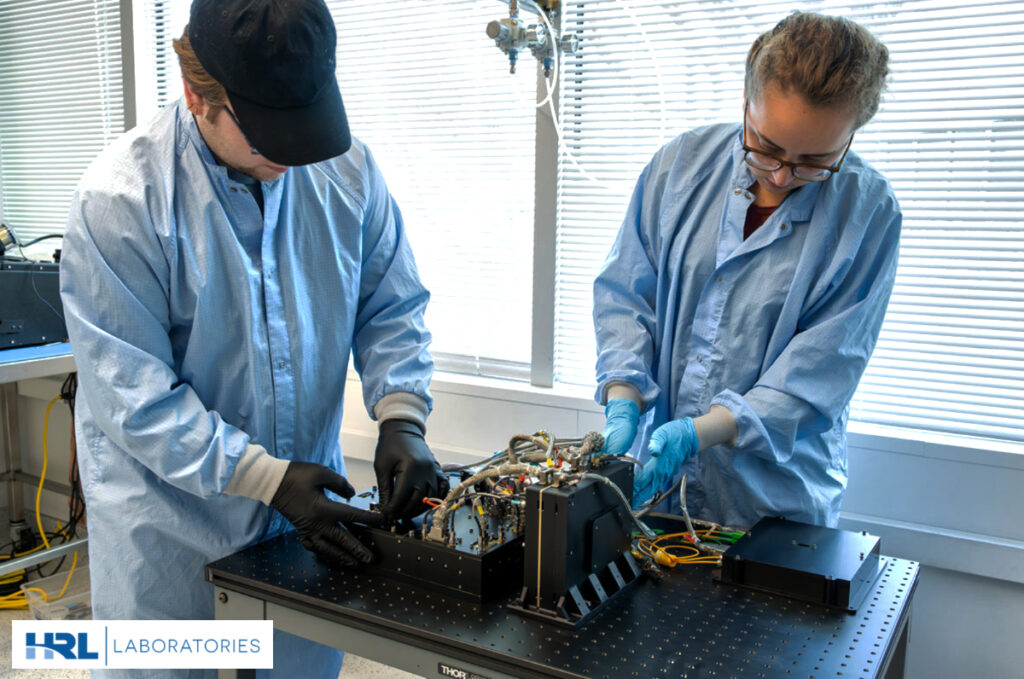
HRL Laboratories prepares the Q4S subassembly build for Boeing environmental testing—a key milestone toward the future space mission to demonstrate quantum entanglement swapping in space.

HRL Laboratories and Boeing have completed construction and technical validation on a quantum communication subassembly for Boeing’s Q4S satellite mission— a first-of-its-kind effort to demonstrate four-photon quantum entanglement swapping in space—this powerful capability is essential to enabling future secure communications and distributed quantum networks.

With this milestone, HRL has successfully completed construction of the fully integrated, space-grade subassembly, a significant step toward flight readiness. The build brings together our optical board, control electronics and final thermo-mechanical packaging into a single, space-ready system. It has already passed initial end-to-end software verification.

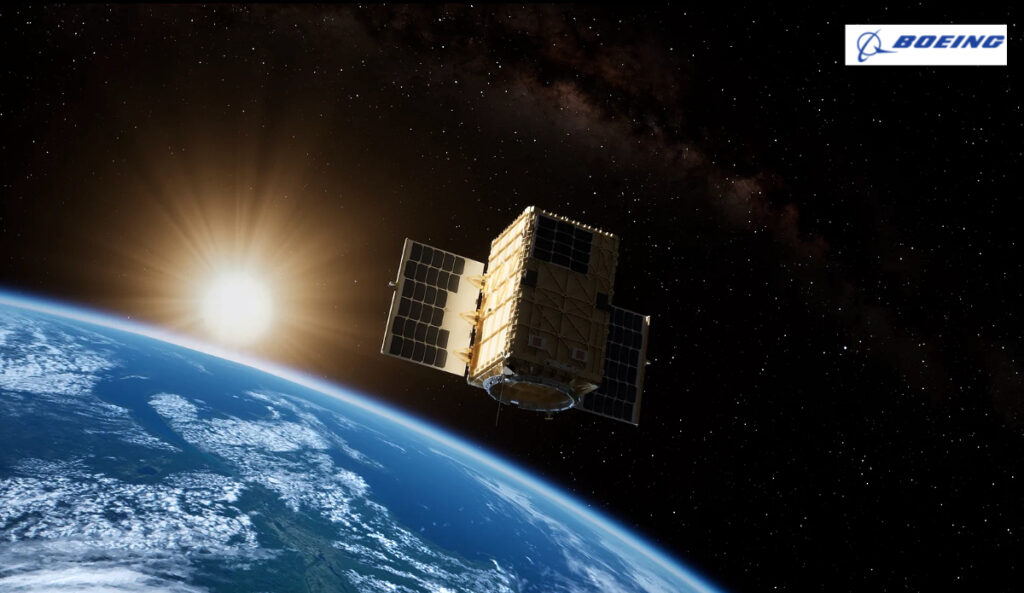
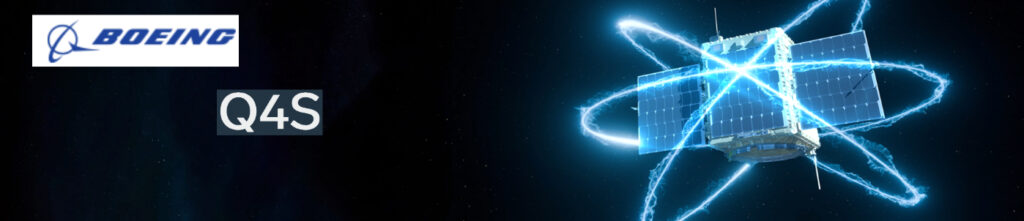
Artistic rendition of the Q4S satellite on-orbit, Boeing’s quantum leap into space as they prepare to launch a self-funded quantum networking test satellite.

In validation tests, the team demonstrated quantum entanglement for each of the two sources in this subassembly.To ensure reliable performance in orbit, the team rigorously tested the subassemblies of the single photon sources.Each source performed well, showing strong signal quality (fidelity between 0.8 and 0.9) and detecting over 2,500 matching photon pairs per second, enough to meet the project’s requirements for accurate quantum measurements.

The Q4S mission—slated for launch in 2026 to SSO—highlights Boeing’s desire to push the boundaries of quantum technology and its applications.

HRL has delivered an optical lab’s worth of capability in a compact, 15kg integrated space-capable assembly,” said Jay Lowell, Chief Scientist of Boeing’s Disruptive Computing, Networks & Sensors organization. “After validating the space qualification of our subassembly in our Boeing El Segundo Space Simulation Laboratory, this payload subassembly will serve as the ground twin to mirror the on-orbit payload which is currently in production.”

Demonstrating entanglement swapping between these two entangled photon pairs, will enable us to entangle previously unconnected nodes, a foundational breakthrough for building secure, scalable quantum computing and sensing networks in space,” said Jennifer Ellis, Principal Investigator at HRL.

Validation and environmental testing are critical milestones on the path to a successful space mission,” said Rob Vasquez, CEO of HRL. “We’re proud to partner with Boeing on this pioneering demonstration and lay the groundwork for secure communications in space.”

Filed Under: News

SpaceX’s second launch on Wednesday, Starlink Group 6-74

April 15, 2025 by editorial

On Wednesday, April 16th, from 7:24 PM – 11:55 PM PDT SpaceX’s Falcon 9 will launch Group 6-74 smallsats to low Earth orbit for the Starlink mega-constellation’s space-based internet communication system. The launch will take place at the Space Launch Complex 40, Cape Canaveral SFS, Florida.

The forecast calls for a temperature of 69°F, clear skies, 0% cloud cover and a wind speed of 11m

Filed Under: News

  • « Go to Previous Page
  • Page 1
  • Interim pages omitted …
  • Page 35
  • Page 36
  • Page 37
  • Page 38
  • Page 39
  • Interim pages omitted …
  • Page 339
  • Go to Next Page »

Primary Sidebar

WEEKLY NEWSLETTER

Archives

  • August 2026
  • July 2026
  • June 2026
  • May 2026
  • April 2026
  • March 2026
  • February 2026
  • January 2026
  • December 2025
  • November 2025
  • October 2025
  • September 2025
  • August 2025
  • July 2025
  • June 2025
  • May 2025
  • April 2025
  • March 2025
  • February 2025
  • January 2025
  • December 2024
  • November 2024
  • October 2024
  • September 2024
  • August 2024
  • July 2024
  • June 2024
  • May 2024
  • April 2024
  • March 2024
  • February 2024
  • January 2024
  • December 2023
  • November 2023
  • October 2023
  • September 2023
  • August 2023
  • July 2023
  • June 2023
  • May 2023
  • April 2023
  • March 2023
  • February 2023
  • January 2023
  • December 2022
  • November 2022
  • October 2022
  • September 2022
  • August 2022
  • July 2022
  • June 2022
  • May 2022
  • April 2022
  • March 2022
  • February 2022
  • January 2022
  • December 2021
  • November 2021
  • October 2021
  • September 2021
  • August 2021
  • July 2021
  • June 2021
  • May 2021
  • April 2021
  • March 2021
  • February 2021
  • January 2021
  • December 2020
  • November 2020
  • October 2020
  • September 2020
  • August 2020
  • July 2020
  • June 2020
  • May 2020
  • April 2020
  • March 2020
  • February 2020
  • January 2020
  • December 2019
  • November 2019
  • October 2019

© 2019–2026 SatNews

Insert/edit link

Enter the destination URL

Or link to existing content

    No search term specified. Showing recent items. Search or use up and down arrow keys to select an item.
      x
      Sign Up Now!

      Enjoy a free weekly newsletter with recent headlines from the global SmallSat industry.

      Invalid email address
      We promise not to spam you. You can unsubscribe at any time.
      Thanks for subscribing! You will now receive weekly SmallSat News updates.
      We love our advertisers.
      And you will too!

      Please disable Ad Blocker to continue... We promise to keep it unobtrusive.
      We promise not to spam you. You can unsubscribe at any time.
      Invalid email address
      Thanks for subscribing!