• Skip to main content
  • Skip to primary sidebar
  • Home
  • News
  • Featured
  • More News ⌄
    • SatNews
    • SatMagazine
    • MilSatMagazine
  • Events ⌄
    • MilSat Symposium
    • SmallSat Symposium
    • Satellite Innovation
  • Contacts
  • SUBSCRIPTION

SmallSat News

You are here: Home / Archives for 2026

Archives for 2026

SpaceX ‘Twilight’ Mission Deploys 22 Exolaunch Payloads, Including Kepler and HawkEye 360 Assets

January 12, 2026 by editorial

VANDENBERG SFB, Calif. — On Sunday, January 11, 2026, SpaceX successfully launched the “Twilight” rideshare mission, delivering a diverse manifest of commercial and government payloads to a dawn-dusk Sun-Synchronous Orbit (SSO).
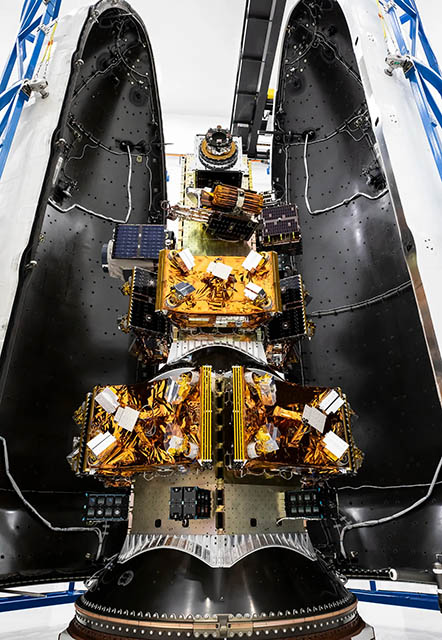
The Falcon 9 rocket lifted off from Space Launch Complex 4E at 5:44 a.m. PT, marking a major initial milestone for the 2026 small satellite launch calendar.

Berlin-based Exolaunch coordinated the deployment sequence for 22 spacecraft, representing the integrator’s 42nd mission to date. The deployment phase commenced approximately one hour after liftoff, successfully separating payloads for several high-profile constellation operators.

Strategic Dawn-Dusk Orbital Regime

The mission targeted a specific dawn-dusk SSO, an orbital regime where satellites ride the terminator line between day and night. This positioning ensures near-continuous sunlight for solar power generation, which is essential for energy-intensive operations.

Satellites in this orbit benefit from:

  • Continuous Power: Steady solar exposure for high-performance payloads.
  • Thermal Stability: Reduced thermal cycling compared to standard LEO orbits.
  • Mission Optimization: Ideal conditions for synthetic aperture radar (SAR) and optical communications systems.

Payload and Manifest Breakdown

The manifest included critical infrastructure for four major organizations, ranging from industrial telecommunications to exoplanet research:

  • Kepler Communications: Launched its first tranche of 10 optical relay satellites to establish a real-time, SDA-compatible data network.
  • HawkEye 360: Deployed “Cluster 13,” a trio of formation-flying satellites designed for global radio frequency (RF) geolocation and ISR requirements.
  • DCUBED: Launched Araqys-D1, a 3U CubeSat intended to demonstrate in-space manufacturing by constructing a 30-centimeter truss in orbit.
  • NASA: Deployed the Pandora SmallSat, a mission dedicated to studying the atmospheric compositions of exoplanets.

Perspective on In-Space Manufacturing

The DCUBED demonstration represents a technical shift toward orbital construction capabilities. By manufacturing structural components in space, the industry aims to bypass the size constraints imposed by rocket fairings.

“We want to make unlimited power in space a reality,” said Thomas Sinn, CEO of DCUBED. “That’s the whole idea: to bring the dollar per watt down into the double digits“.

Post-Deployment and 2026 Outlook

Following the successful separation, mission operators have established contact with their respective assets and commenced the commissioning phase. Kepler Communications confirmed that its initial 10 optical satellites are healthy and transitioning into operational service.

Exolaunch has indicated that this mission is the first of more than 20 deployments planned for its 2026 manifest. The company is currently scaling its Berlin operations to accommodate the increasing global demand for rideshare launch slots.

Filed Under: News

Thermal Equilibrium: The Dual Role of Isotherms in Satellite Operations and Design

January 12, 2026 by editorial

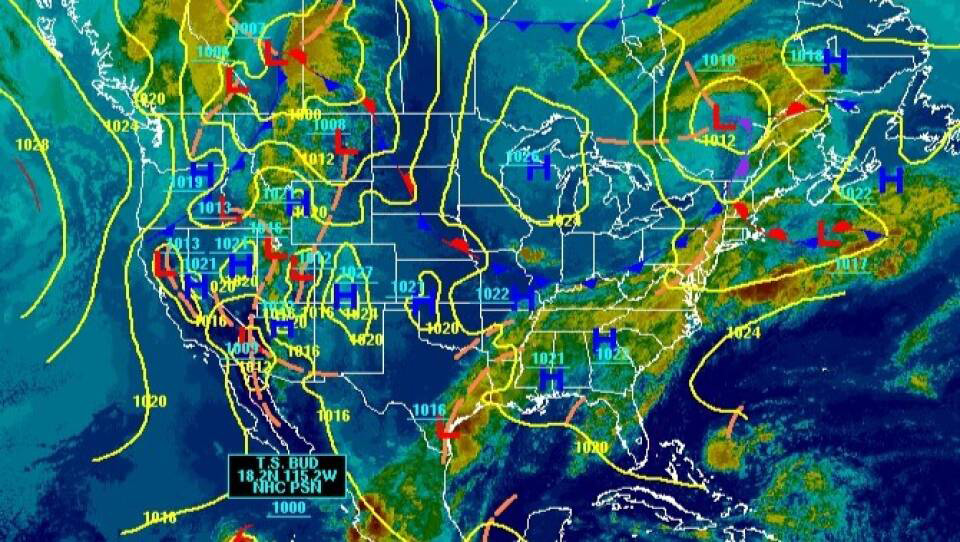
The term isotherm—a line on a map or chart connecting points of equal temperature—is a critical concept in the satellite industry, serving two distinct but equally vital roles: atmospheric remote sensing for weather prediction and the thermal engineering of the spacecraft itself.

Isotherms in Remote Sensing and Meteorology

In satellite-based Earth observation, isotherms are primarily used to analyze the thermal structure of the atmosphere. Infrared sounders and imagers, such as those on the GOES (Geostationary Operational Environmental Satellite) or JPSS (Joint Polar Satellite System) constellations, detect emitted thermal radiation to map temperature gradients.

One of the most significant metrics for satellite operators is the 0°C Isotherm Height (also known as the freezing level). Identifying this boundary is crucial for:

  • Predicting Rain Attenuation: For satellite communications operating at high frequencies (above 10 GHz, such as Ka-band and the emerging Q/V-bands for 5G/NTN), rainfall is the primary cause of signal degradation. The height of the 0°C isotherm determines the “rain height,” allowing engineers to calculate how much a signal will fade as it passes through the melting layer of the atmosphere.
  • Weather Forecasting: Meteorologists use “isotherm extraction” from infrared satellite cloud images to identify the centers of storm systems and predict the development of convective weather.
  • Climate Monitoring: Tracking the movement of isotherms over decades provides direct evidence of global temperature shifts, particularly in the cryosphere (polar ice and snow).

Isothermal Design in Spacecraft Engineering

In satellite manufacturing, particularly for the rapidly growing SmallSat and CubeSat sectors, “isothermal” refers to a design philosophy where the entire structure of the satellite is maintained at a nearly uniform temperature.

Unlike large satellites, which can be divided into distinct “hot” and “cold” thermal zones, small satellites are highly power-dense and have limited surface area for radiators. Thermal engineers strive for an isothermal state to prevent sensitive electronic components from overheating while ensuring batteries stay above freezing.

Key technologies used to achieve an isothermal satellite include:

  • Isothermal Structural Panels (ISPs): These are structural panels embedded with high-conductivity materials or “flat heat pipes” that rapidly spread heat from internal components across the entire outer skin of the spacecraft.
  • Thermal Modeling: Engineers use “single-node” isothermal analysis for initial design phases, assuming the satellite is a single mass. This simplifies the calculation of the satellite’s “gross temperature” along its orbit before moving to complex finite element models.
  • Passive Control: Materials like black smooth vapor-honed finishes (used by companies like KSF Space) are applied to improve thermal emissivity, helping the isothermal structure radiate heat efficiently into the -270°C vacuum of space.

Current Industry Relevance (2026)

As of early 2026, the study of isotherms has gained renewed importance due to the deployment of Direct-to-Device (D2D) and High Throughput Satellite (HTS) networks. Because these systems use complex modulation schemes that are highly sensitive to “fade,” real-time data on atmospheric isotherms is becoming a standard requirement for dynamic power allocation and gateway switching in modern ground segments.

Furthermore, as startups like Reflect Orbital begin testing sunlight-reflecting satellites in 2026, the localized thermal impact and resulting isotherm shifts in the upper atmosphere are being closely monitored by atmospheric scientists to assess potential long-term environmental consequences.

Filed Under: News

FCC Authorizes Deployment of Second-Generation Starlink Constellation

January 9, 2026 by editorial

WASHINGTON D.C. — The Federal Communications Commission (FCC) has granted authorization for the deployment of SpaceX’s second-generation (Gen2) Starlink satellite constellation. This regulatory milestone facilitates the continued expansion of large-scale commercial satellite networks and the reinforcement of global broadband infrastructure.

The approval follows a series of technical reviews regarding orbital safety and spectrum interference, marking a significant step in the evolution of low Earth orbit (LEO) communications.

Gen2 Technical Specifications and Capacity

The Gen2 Starlink system is designed to provide significantly higher capacity and lower latency compared to the original constellation. Key technical parameters include:

  • Increased Throughput: Hardware upgrades allow for greater data density per satellite to meet rising global demand.
  • Direct-to-Cell Capability: Integration of specialized payloads to enable satellite-to-device connectivity for unmodified cellular handsets.
  • Orbital Maneuverability: Enhanced autonomous collision avoidance systems to mitigate space debris risks in increasingly crowded LEO shells.

Strategic Market Rationale

The FCC’s decision arrives as the “sovereign-commercial nexus” becomes a dominant theme in the space industry. By securing the rights to deploy thousands of additional satellites, SpaceX strengthens its position as a primary provider of critical connectivity infrastructure for both commercial and defense sectors.

Regulatory approvals of this scale are pivotal for the industry, as they establish the legal and business frameworks required for long-term capital investment in mega-constellations. This move further consolidates SpaceX’s vertical integration strategy, often referred to as the “Musk Stack,” by aligning launch capability with global service delivery.

Regulatory Outlook and Spectrum Sustainability

While the Gen2 authorization provides a path for near-term expansion, it also introduces more stringent requirements for spectrum sharing and orbital sustainability. Moving forward, the FCC and international bodies like the International Telecommunication Union (ITU) are expected to increase scrutiny on LEO traffic management to ensure long-term access to orbital shells.

SpaceX will be required to provide periodic reports on satellite health and deorbiting performance to maintain its license status through the next decade of operations.

Filed Under: News

GomSpace Secures €2.9 Million Contract for North American Lunar Mission

January 9, 2026 by editorial

LUXEMBOURG – GomSpace Luxembourg announced on Friday, January 9, 2026, that it has been selected by a leading North American space company to design two state-of-the-art spacecraft for a lunar exploration mission. The contract, valued at 2.9 million EUR (31.7 million SEK), tasks the small-satellite specialist with the initial design phase of the deep-space platforms.

The project will largely be executed at GomSpace’s Luxembourg facilities, expanding the nation’s specialized capabilities in delivering complex systems for exploration missions beyond Earth orbit.

Deep Space Heritage and Technical Foundation

The new spacecraft will leverage technology and expertise derived from GomSpace’s previous contributions to high-profile interplanetary programs. This includes the company’s work on the European Space Agency (ESA) HERA mission, specifically the Juventas CubeSat, which was designed to perform radar imaging of the Didymos asteroid system.

GomSpace is also a key partner in the ESA RAMSES mission, which targets the asteroid 99942 Apophis. For the lunar mission, GomSpace will apply these flight-proven modular architectures to meet the rigorous demands of the cislunar environment, focusing on:

  • Advanced Propulsion and Navigation: Requirements for precise lunar orbit insertion and station-keeping.
  • Modular Deep-Space Platforms: Utilizing low-cost, agile small-satellite designs to reduce mission overhead.
  • Spacecraft Resiliency: Hardened subsystems capable of surviving the higher radiation levels found in deep space.

Strategic Partnerships in Lunar Exploration

“This partnership opens exciting possibilities for humankind, for our country, and for GomSpace,” said Edgar Milic, Managing Director of GomSpace Luxembourg. “It is a testament to the strength of our team, our deep-space heritage, and our growing ability to deliver complex missions with agility, precision, and purpose”.

The collaboration underscores a broader industry shift where commercial space agencies are increasingly utilizing small satellite platforms for secondary and primary science missions in the solar system.

Timeline to 2026

The initial design phase is scheduled for execution during the first half of 2026. Successful completion of this phase is expected to lead to subsequent hardware manufacturing and integration milestones as the North American partner moves toward its launch window.

Filed Under: News

KSF Space Commercializes Additive-Manufactured PA11 CubeSat Structures

January 9, 2026 by editorial

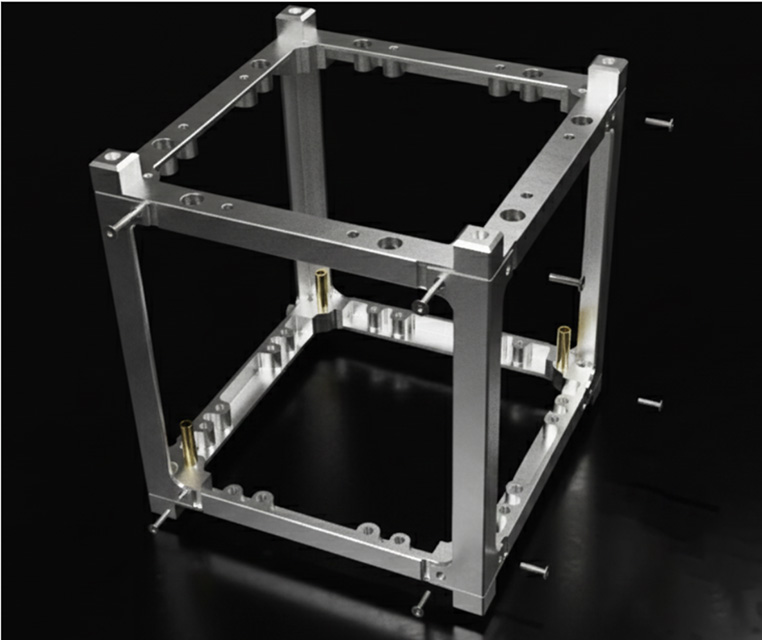
MIAMI – KSF Space announced on Friday, January 9, 2026, the commercial availability of an expanded lineup of CubeSat structures, positioning the series as the most affordable solution currently on the global market. The new offerings include 1U, 2U, and 3U form factors specifically engineered to reduce financial barriers for university researchers and emerging national space programs.

The launch follows the company’s previous efforts to lower orbital access costs, including the development of the Jupiter Rocket suborbital testing platform and their Flexible CubeSat Kit 2.0.

Material Properties: PA11 vs. Aluminum 6061-T6

A central feature of the release is the option for mission prime contractors to choose between industrial-grade polymer and traditional aerospace metals. The polymer structures utilize PA11 processed through industrial HP Multi Jet Fusion (MJF) technology.

Technical specifications for the PA11 variants include:

  • Mass Efficiency: PA11 provides an approximate 40% mass reduction compared to aluminum, allowing for increased battery density or payload capacity.
  • Impact Resilience: The ductility of PA11 facilitates improved absorption of mechanical shocks and high-frequency vibrations during launch vehicle separation.
  • Vacuum Stability: Verified Total Mass Loss (TML) of less than 1.0%, meeting requirements to protect sensitive optical sensors from molecular contamination.

For high-power missions, KSF Space continues to provide CNC-machined Aluminum 6061-T6/7075 structures. These metallic frames function as superior heat sinks for high-power transmitters and feature hard-anodized rails to prevent cold welding during deployment in Low Earth Orbit (LEO).

Verification and Engineering Standards

Every unit is developed and verified under the NASA-GSFC-STD-7000 (GEVS) framework. KSF Space utilizes SOLIDWORKS Flow Simulation and Finite Element Analysis (FEA) to ensure structural integrity at Max-Q (maximum dynamic pressure). The structures are designed to maintain a ±10°C thermal margin relative to predicted orbital temperatures, protecting internal avionics throughout the mission lifecycle.

[Image showing a Finite Element Analysis (FEA) thermal map of a CubeSat structure during orbital simulation]

Mission Readiness and Integration

“Our goal has always been to democratize space,” said Dr. Mohamed ElKayyali, Chairman of KSF Space. “By providing a CubeSat structure that is both affordable and technically rigorous, we are enabling the next generation of researchers to move from conceptual design to orbital reality faster.”

The structures are compatible with the PC/104 mounting standard and are available in two tiers: Educational Models for lab prototyping and Professional Flight Models, which are delivered clean-room ready with full flight qualification. KSF Space also offers these structures bundled with its NEP Certification program to support the training of university-level satellite engineers.

2026 Mission Timeline

The PA11 structures are currently available with a lead time of one to two weeks, while custom aluminum frames are shipping on a four-to-six-week cycle. KSF Space is now accepting technical quotes for 2026 mission integration.

Filed Under: News

Satellogic Secures Seven-Figure Monitoring Contract with Strategic Partner

January 8, 2026 by editorial

MONTEVIDEO, Uruguay – On Thursday, January 8, 2026, Satellogic Inc. (NASDAQ: SATL) announced it has signed a new multi-year, seven-figure monitoring agreement with a strategic customer. The contract focuses on high-frequency satellite monitoring services, further expanding the company’s footprint in the commercial Earth Observation (EO) sector.

Under the terms of the deal, Satellogic will provide persistent monitoring capabilities, leveraging its constellation to deliver high-resolution imagery and data. The agreement highlights a growing market trend where sovereign and commercial entities require reliable, continuous data for applications ranging from national security to environmental oversight.

High-Frequency Revisit and Resolution Capabilities

The monitoring service is powered by Satellogic’s vertically integrated satellite constellation, which is designed to provide:

  • Daily Revisits: Capability to capture images of specific points of interest on a daily basis to track changes over time.
  • Sub-Meter Resolution: High-resolution coverage that supports proactive decision-making and situational awareness for defense and security operations.
  • Scalable Data Access: Integration of satellite-based monitoring into existing customer workflows for environmental and infrastructure management.

Market Shift Toward Persistent Earth Observation

This agreement validates the increasing demand for persistent EO capabilities as the industry shifts away from sporadic imaging toward continuous monitoring. By securing a seven-figure commitment, Satellogic reinforces its position as a key provider of the “sovereign-commercial nexus,” where private satellite operators support government-level requirements for high-cadence data.

“The announcement of a seven-figure agreement is a significant financial event for a publicly traded space company,” noted industry observers regarding the NASDAQ-listed firm. The contract underscores the viability of high-frequency revisit models in meeting the evolving needs of global strategic customers.

Filed Under: News

SpaceX and ISRO Coordinate Concurrent Rideshare and Constellation Launch Schedules

January 7, 2026 by editorial

SpaceX successfully initiated its 2026 flight manifest with the deployment of 29 Starlink satellites, marking a rapid start to a year defined by high-cadence orbital operations.

This mission, launched from Space Launch Complex 40 at Cape Canaveral Space Force Station, serves as a technical precursor to a significant week in the launch sector. While SpaceX continues the internal expansion of its low-Earth orbit constellation, the company is also preparing for a collaborative rideshare window that aligns with the upcoming Indian Space Research Organisation (ISRO) mission scheduled for Monday, Jan. 12.

The upcoming ISRO mission, designated PSLV-C62, will carry the EOS-N1 Earth observation satellite alongside 18 secondary payloads from the Satish Dhawan Space Centre. This flight follows a period of organizational transition for the Indian agency, now led by Chairman V. Narayanan, who assumed the role in early 2025 to oversee the expansion of India’s commercial launch services. The PSLV-C62 mission is notable for its use of the PS4 fourth stage as an orbital platform, which will host the Kestrel Initial Demonstrator capsule, a technology developed in partnership with Spanish startup Orbital Paradigm.

Historical Context of SmallSat Rideshare Growth

SpaceX and ISRO have increasingly found common ground in the Sun-Synchronous Orbit (SSO) market, where the demand for precise Earth observation windows has created a backlog of smallsat customers. To address this, SpaceX has maintained its Transporter series, most recently highlighted by the success of Transporter-12 in early 2025, which deployed 131 payloads.

The current coordination between these two entities illustrates a shift toward a globalized rideshare infrastructure where commercial customers can choose between the high-volume capacity of the Falcon 9 and the cost-effective, dedicated orbit-insertion capabilities of the Polar Satellite Launch Vehicle (PSLV).

Technical Specifications for SSO Missions

The technical advantages of SSO remain the primary driver for these concurrent missions. By placing satellites in an orbit where they pass over any given point of the Earth’s surface at the same local solar time, operators of Earth observation and meteorological constellations can maintain consistent lighting conditions for imagery and data collection.

The Starlink satellites launched on Jan. 4 utilize this orbital characteristic to optimize their laser cross-link efficiency, ensuring that the network maintains high throughput even as the constellation grows toward its second-generation capacity of over 9,000 active units.

Rationale Behind Strategic Cooperation

Strategic competition and cooperation in the launch sector have intensified as ISRO moves to privatize its Small Satellite Launch Vehicle (SSLV) and PSLV production lines. This effort to increase launch frequency is a direct response to the “Musk Stack” model, where SpaceX dominates the vertical integration of launch and satellite manufacturing. Under the management of President Gwynne Shotwell,

SpaceX has leveraged its reusable booster technology to lower the price floor for SSO access, forcing international competitors to innovate in both propulsion and payload integration. The ISRO PSLV-C62 mission serves as a counterpoint, offering a proven, reliable track record that dates back to historic successes like the PSLV-C58 mission, which demonstrated India’s ability to support complex scientific payloads alongside commercial rideshares.

Looking forward to the remainder of January 2026, the industry anticipates a sustained surge in activity. Following the Jan. 12 ISRO launch, SpaceX is expected to conduct two additional Falcon 9 missions within the same seven-day window, further populating the Starlink v2-mini shells. These operations are critical for maintaining the bandwidth requirements of global defense and civil contracts. As both agencies refine their rideshare protocols, the availability of frequent, predictable access to SSO is expected to reduce the time-to-orbit for emerging space startups in the Asian and North American markets.

Filed Under: News

Symbiotic Nexus: The Consumer Electronics Show is Powering the $1 Trillion Space Economy

January 6, 2026 by editorial

At CES 2026, the relationship is no longer a one-way street; it has evolved into a symbiotic loop where neither can reach its $1 trillion potential without the other. However, as of this week’s kickoff in Las Vegas, Satellite Technology is currently the primary driver of consumer hardware cycles, while Consumer Electronics (CE) acts as the engine of scale.

How Satellite Tech Drives CES

For the 2026 product cycle, satellite connectivity has transitioned from a “niche emergency feature” to a baseline consumer expectation.

Major OEMs are using satellite integration to differentiate their hardware. We are seeing the launch of “Satellite-First” laptops and ruggedized wearables that offer Direct-to-Device (D2D) messaging as a standard service, not just for emergencies but for routine travel.

Aand the mass adoption of GaN-based amplifiers (like those from Mission Microwave has allowed satellite hardware to shrink enough to fit into standard consumer form factors without sacrificing battery life.

How CES Drives Satellite Tech

Conversely, the massive scale of the consumer market is forcing satellite operators to abandon “old space” business models.

Satellite constellations like Starlink, AST SpaceMobile, and Telesat Lightspeed require millions of users to be financially viable. The “Consumer” in CES provides the volume that justifies the multi-billion dollar cost of these LEO (Low Earth Orbit) fleets.

Coupled with the demand for satellite features, CES is forcing the industry to adopt unified standards (like 3GPP Release 17/18), allowing satellites to function as “cell towers in the sky” that work with the phone already in your pocket.

The 2026 Verdict: A “Symbiotic Nexus”

As the world moves toward a $1 trillion space economy, the “vice versa” argument is resolved by the Sovereign-Commercial Nexus. Governments are now piggybacking on consumer tech—such as the UK’s Emergency Services Network (ESN) eye-ing D2D satellite tech to fill coverage gaps—demonstrating that consumer demand at CES is actually hardening national infrastructure.

Consider the Following Three Products To Be Featured

Samsung: The Satellite-Native Galaxy S26

Samsung took the stage to announce that the entire Galaxy S26 lineup now features the Exynos 6000 chipset, which includes a native Non-Terrestrial Network (NTN) modem.

  • The Capability: Unlike previous generations limited to emergency SOS, the S26 allows for standard 2-way SMS and low-resolution photo sharing through its partnership with Skylo and the Telesat Lightspeed network.
  • The “Always-On” Promise: Samsung’s “Ubiquity Mode” automatically switches to satellite when 5G signal drops below a specific threshold, ensuring zero coverage gaps during international travel.

Apple: iPhone 17 “Satellite Live”

While the iPhone 17 launched late last year, Apple will use CES to debut “Satellite Live,” a software-hardware integration leveraging Globalstar’s newest LEO satellites.

  • Real-Time Video SOS: This feature enables high-compression Live Video streaming during emergency calls in remote areas, providing first responders with immediate visual context.
  • Find My Anywhere: Apple has expanded its “Find My” network to utilize a low-power heartbeat signal that can be picked up by satellites even when the device is powered down.

SpaceX / Starlink: “Starlink Direct” Goes Global

SpaceX uses a side-event at CES to announce that “Starlink Direct” (Direct-to-Cell) has officially exited beta and is now live for unmodified 5G phones across its partner carriers, including T-Mobile (USA), KDDI (Japan), and Optus (Australia).

  • Broadband-Lite Performance: Testing at the show demonstrated speeds of 15-20 Mbps downlink, sufficient for HD video streaming and full web browsing in previously total “dead zones”.
  • OEM Agility: SpaceX confirmed that any smartphone utilizing a 3GPP Release 17 compliant modem—which includes most flagship devices launched at CES this week—is now “Starlink-ready” without a hardware upgrade.

In short: Satellite Tech provides the “Where,” but Consumer Electronics provides the “Who.”

Filed Under: News

UK Space Agency Seeks Satellite Direct-to-Device Solutions for Delayed Emergency Services Network

January 5, 2026 by editorial

The UK Space Agency (UKSA), acting on behalf of the Home Office’s Emergency Services Mobile Communications Programme (ESMCP), has officially invited industry input to integrate satellite direct-to-device (D2D) technology into the national Emergency Services Network (ESN).

The move aims to leverage Low Earth Orbit (LEO) constellations to eliminate terrestrial coverage gaps that have plagued the project for over a decade.

Solving the “Final 5%” Coverage Gap

The ESN is intended to replace the aging Airwave TETRA-based radio system with a modern 4G/5G platform provided by EE (BT Group). While terrestrial infrastructure covers most of the population, significant “not-spots” remain in rural and coastal areas.

By utilizing D2D technology, the UKSA hopes to provide emergency personnel with seamless connectivity using standard smartphones, bypassing the need for specialized satellite handsets or external antennas. The integration focuses on Mission-Critical Messaging, SMS and location data in remote locations.

Further, future-proofing for high-bandwidth video and voice-over-LTE via satellite as constellations mature. Providing a redundant backup to terrestrial cell towers during network outages or natural disasters will be a critical component of the project.

Key Contenders and Partnerships

Several major space players are positioned to support the ESN expansion:

  • SpaceX (Starlink): Currently the most mature D2C provider. Notably, BT Group (EE’s parent company) signed a broadband agreement with Starlink in 2025, making them a front-runner for any ESN satellite extension.
  • AST SpaceMobile: Partnered with Vodafone Group, AST expects to provide “intermittent nationwide” LEO service in 2026, with continuous service planned for later in the year as more BlueBird satellites are deployed.
  • Eutelsat OneWeb: The UK-backed LEO operator is also developing D2D capabilities to complement its existing enterprise and government broadband offerings.

Regulatory and Program Milestones

The timing of the UKSA’s request for information coincides with Ofcom’s new regulatory framework, which came into force in late 2025. This framework allows Mobile Network Operators (MNOs) to use their existing terrestrial spectrum for satellite-to-phone links, removing legal barriers for a 2026 commercial launch.

However, the ESN project itself remains a “high-risk” endeavor. Originally slated for 2017, the full transition from Airwave is now not expected until December 2029, with total program costs estimated to exceed £11 billion.

Looking Ahead

The Home Office is currently finalizing a £1.11 billion framework for ESN-compliant end-user devices, which is expected to be awarded in summer 2026. These devices will likely be the first to feature the integrated satellite-terrestrial roaming capabilities currently being explored by the UKSA.

Filed Under: Featured, News

  • « Go to Previous Page
  • Page 1
  • Interim pages omitted …
  • Page 14
  • Page 15
  • Page 16

Primary Sidebar

WEEKLY NEWSLETTER

Archives

  • September 2026
  • August 2026
  • July 2026
  • June 2026
  • May 2026
  • April 2026
  • March 2026
  • February 2026
  • January 2026
  • December 2025
  • November 2025
  • October 2025
  • September 2025
  • August 2025
  • July 2025
  • June 2025
  • May 2025
  • April 2025
  • March 2025
  • February 2025
  • January 2025
  • December 2024
  • November 2024
  • October 2024
  • September 2024
  • August 2024
  • July 2024
  • June 2024
  • May 2024
  • April 2024
  • March 2024
  • February 2024
  • January 2024
  • December 2023
  • November 2023
  • October 2023
  • September 2023
  • August 2023
  • July 2023
  • June 2023
  • May 2023
  • April 2023
  • March 2023
  • February 2023
  • January 2023
  • December 2022
  • November 2022
  • October 2022
  • September 2022
  • August 2022
  • July 2022
  • June 2022
  • May 2022
  • April 2022
  • March 2022
  • February 2022
  • January 2022
  • December 2021
  • November 2021
  • October 2021
  • September 2021
  • August 2021
  • July 2021
  • June 2021
  • May 2021
  • April 2021
  • March 2021
  • February 2021
  • January 2021
  • December 2020
  • November 2020
  • October 2020
  • September 2020
  • August 2020
  • July 2020
  • June 2020
  • May 2020
  • April 2020
  • March 2020
  • February 2020
  • January 2020
  • December 2019
  • November 2019
  • October 2019

© 2019–2026 SatNews

Insert/edit link

Enter the destination URL

Or link to existing content

    No search term specified. Showing recent items. Search or use up and down arrow keys to select an item.
      x
      Sign Up Now!

      Enjoy a free weekly newsletter with recent headlines from the global SmallSat industry.

      Invalid email address
      We promise not to spam you. You can unsubscribe at any time.
      Thanks for subscribing! You will now receive weekly SmallSat News updates.
      We love our advertisers.
      And you will too!

      Please disable Ad Blocker to continue... We promise to keep it unobtrusive.
      We promise not to spam you. You can unsubscribe at any time.
      Invalid email address
      Thanks for subscribing!